Zhouzhuang
Zhouzhuang, People's Republic of China
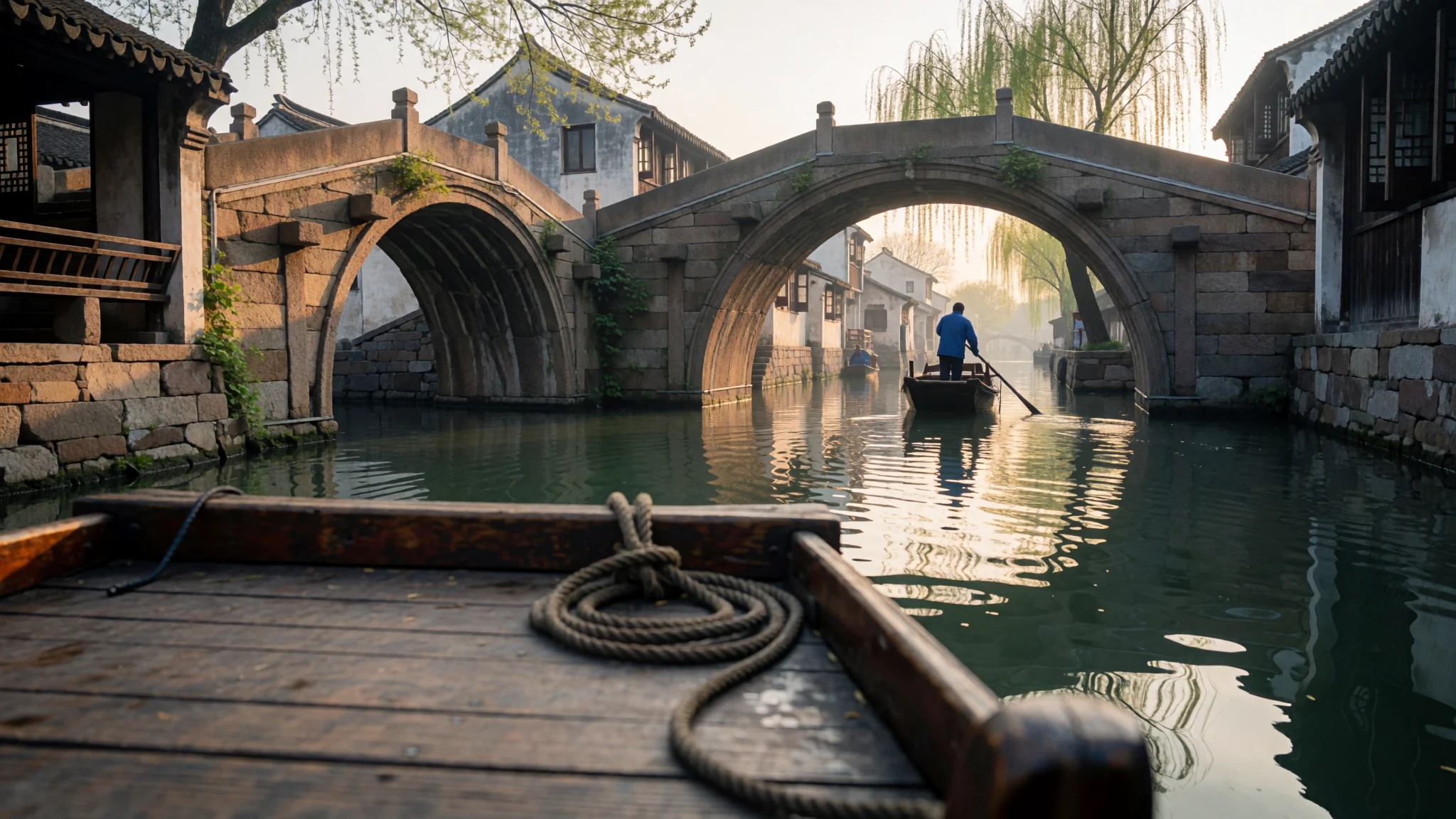
Zhouzhuang offers a glimpse into ancient canal life with its centuries-old courtyard houses and stone arched bridges.
The place
Zhouzhuang is a historic water town situated within the administrative borders of Kunshan in the Jiangsu province of the People's Republic of China. Positioned southeast of Suzhou, this settlement is defined by an intricate network of waterways, grey-tiled residential architecture, and ancient brick archways that reflect centuries of regional craftsmanship. Classified as a high-tier tourist attraction by national authorities, the settlement draws travellers seeking to witness traditional southern canal landscapes. The townscape is characterised by narrow alleys running alongside sluggish canals where wooden boats regularly pass under stone bridges. While the urban footprint remains compact, the density of original courtyards and historic street patterns creates an immersive atmosphere reminiscent of earlier dynasties. Visitors navigating the alleys encounter a blend of preserved heritage and active commercial life, with local vendors operating out of ancient shopfronts that line the waterways. The geographic setting has historically facilitated trade and transport, turning the locality into a focal point for regional exchange. Despite heavy visitor numbers, particularly during peak holiday periods, the core layout preserves the distinctive urban planning of historic southern river settlements, making it an essential destination for those exploring the aquatic heritage of the region.
Its story
The history of Zhouzhuang stretches back to antiquity when the area was known as Zhenfengli during the Spring and Autumn period, serving as part of the regional fief of Yaocheng. Centuries later, during the Northern Song dynasty, a devout resident named Zhou Digong made a transformative contribution by donating land to the local Quanfu Temple. In recognition of this generous act, the community was renamed in his honour, establishing the identity it carries to this day. By the mid-Yuan dynasty, the settlement experienced a profound economic shift due to the activities of Shen Wansan, a prominent merchant who leveraged the local waterways to establish a major distribution hub. Through his commercial networks, goods such as silk, ceramics, food supplies, and local crafts flowed outward, positioning the town as a vital trading centre in the southern reaches of the empire. The wealth generated during this era enabled the construction of grand residential complexes, many of which survived successive dynastic changes. Over subsequent generations, the community maintained its architectural traditions, resisting complete modernisation by preserving the ancient layout of its waterways, bridges, and private ancestral halls. Today, these historical layers remain visible in the brickwork, timber framing, and spatial organisation of the surviving buildings, offering tangible proof of an enduring maritime and mercantile heritage.
What to see
- Shen's Residence — Southeast side of Fu'an Bridge
Built in the eighteenth century near Fu'an Bridge, this extensive residential complex belonged to the descendants of a wealthy early dynasty merchant. Spanning numerous rooms arranged across three distinct sections, the property features a private water gate for mooring boats, an elegant main reception hall adorned with intricate wood carvings, and comfortable two-storey living quarters.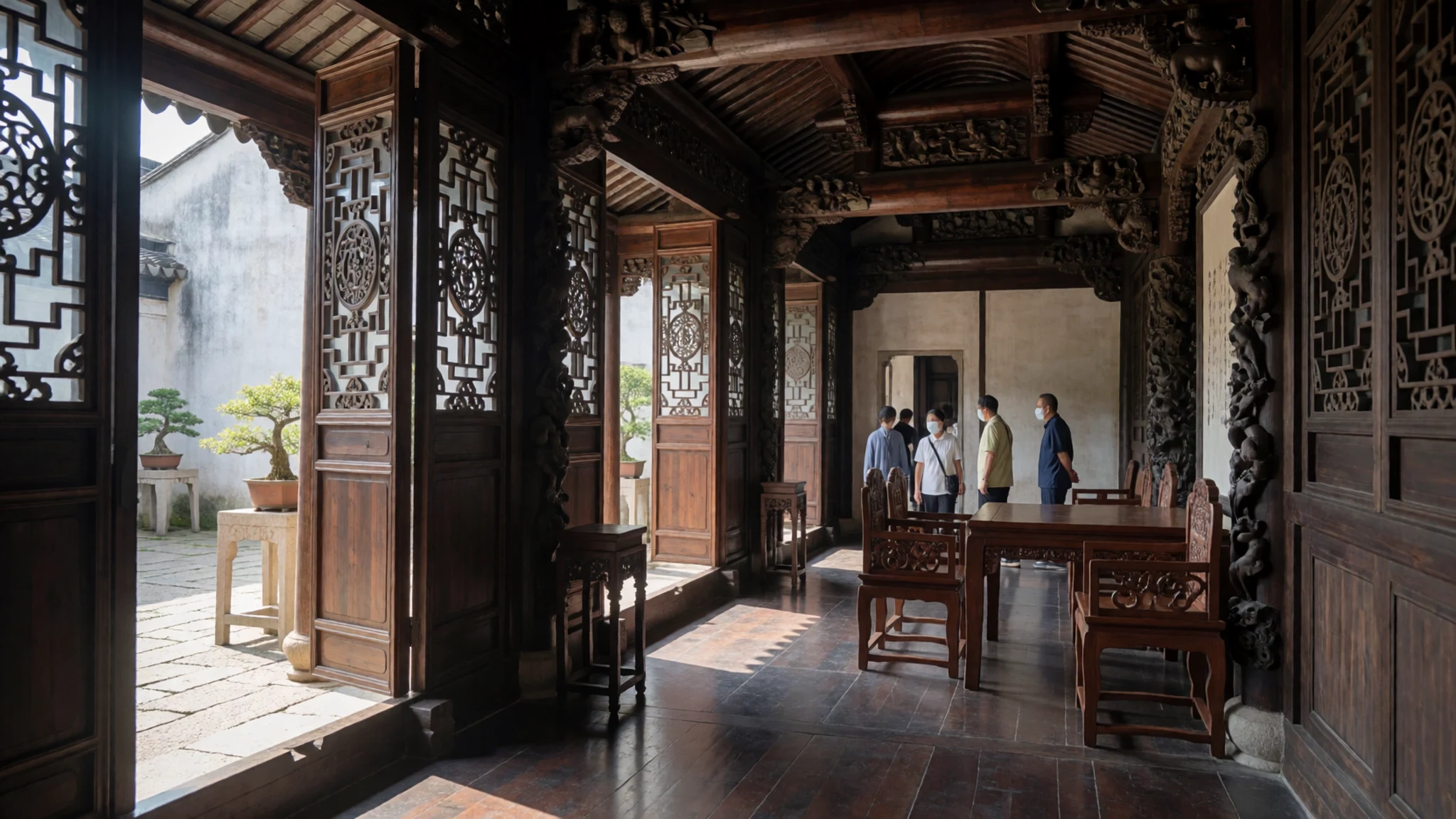
- Zhang's Residence — South of the Double Bridge
Established during the Ming dynasty and later acquired by the Zhang family, this historic compound contains dozens of rooms arranged around quiet courtyards. A small canal flows directly through the interior of the property, creating an unusually graceful spatial design while providing natural light and ventilation to the surrounding halls and domestic quarters.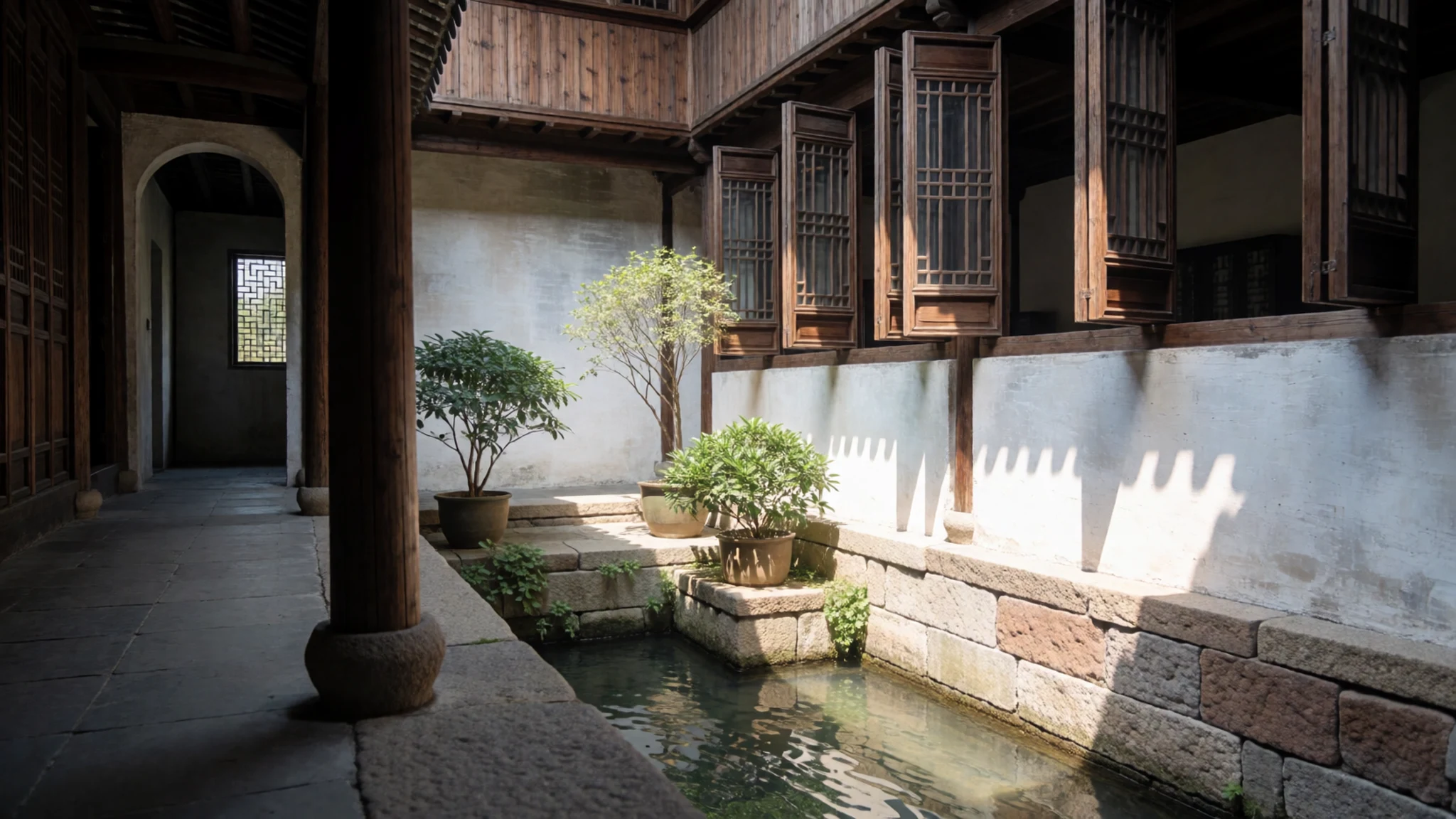
- The Double Bridge — Central canal intersection
Composed of two distinct structures meeting at a right angle, this landmark serves as the primary visual symbol of the settlement. The formation consists of a round-arched span running east-west alongside a square-arched span running north-south, together creating a silhouette that resembles a traditional Chinese door key used in past centuries.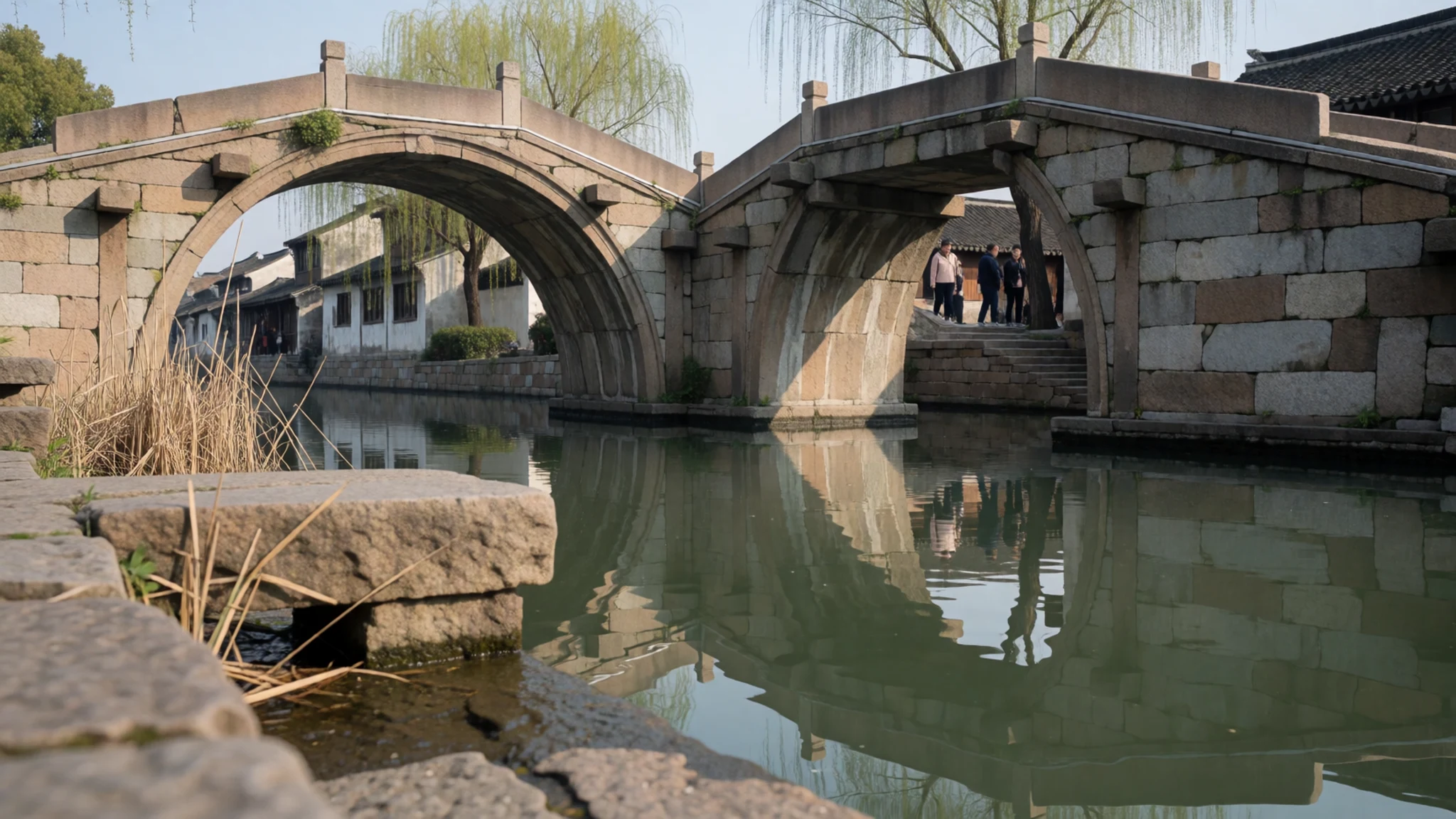
- Zhenfeng Street — Zhenfeng Street district
This traditional thoroughfare preserves the atmosphere of an old commercial lane, featuring small workshops where artisans demonstrate heritage crafts. Visitors can observe local practitioners engaged in traditional paper cutting, bamboo weaving, blacksmithing, clay sculpture, and manual textile production using methods passed down through generations.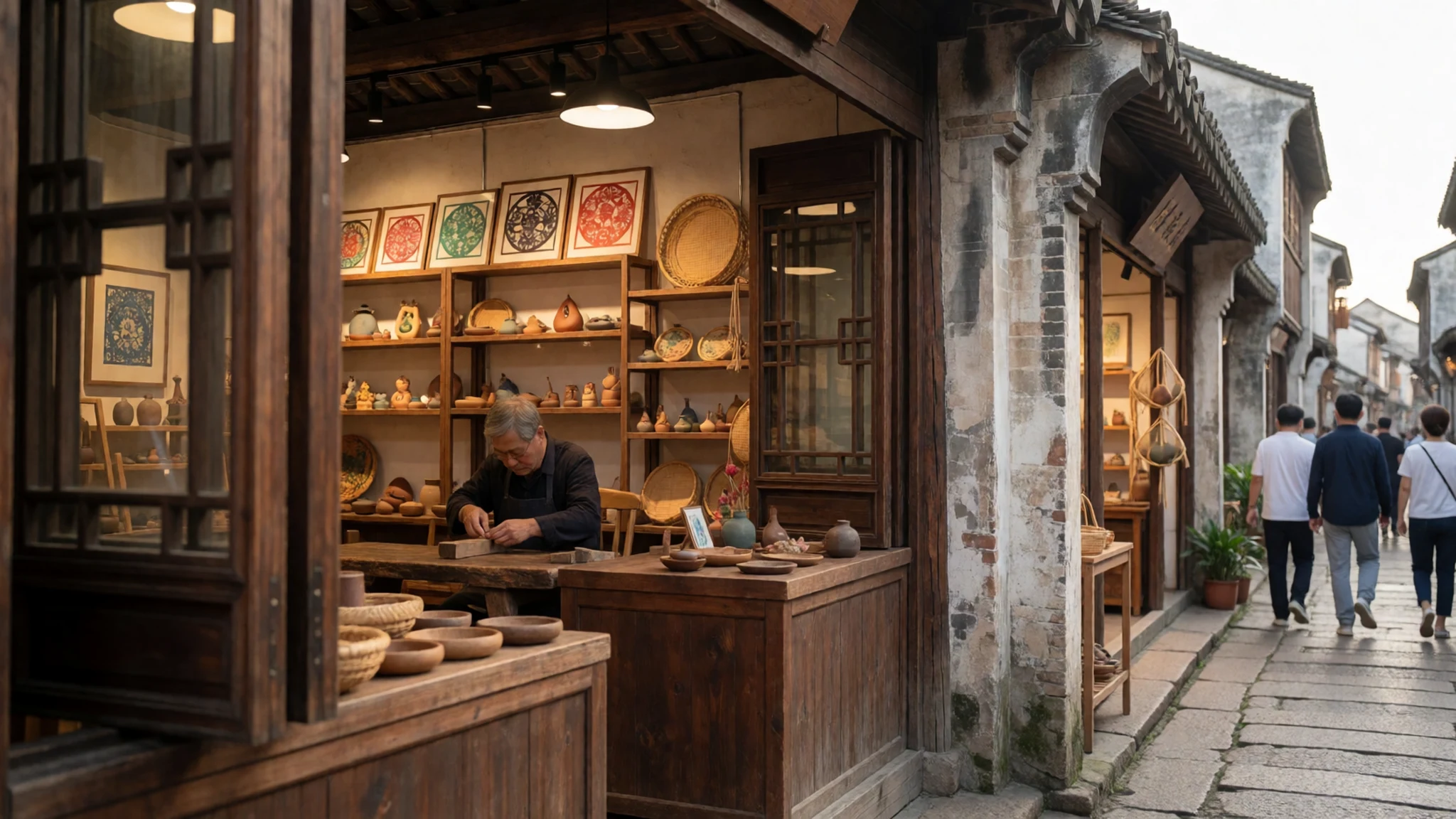
- Ancient Stage — Cultural performance area
Located near the water, this historic performance platform serves as a venue for traditional regional arts, including folk songs, local theatrical performances, and musical storytelling. The structure reflects the cultural importance of public entertainment in traditional canal society, offering visitors an auditory experience connected to local history.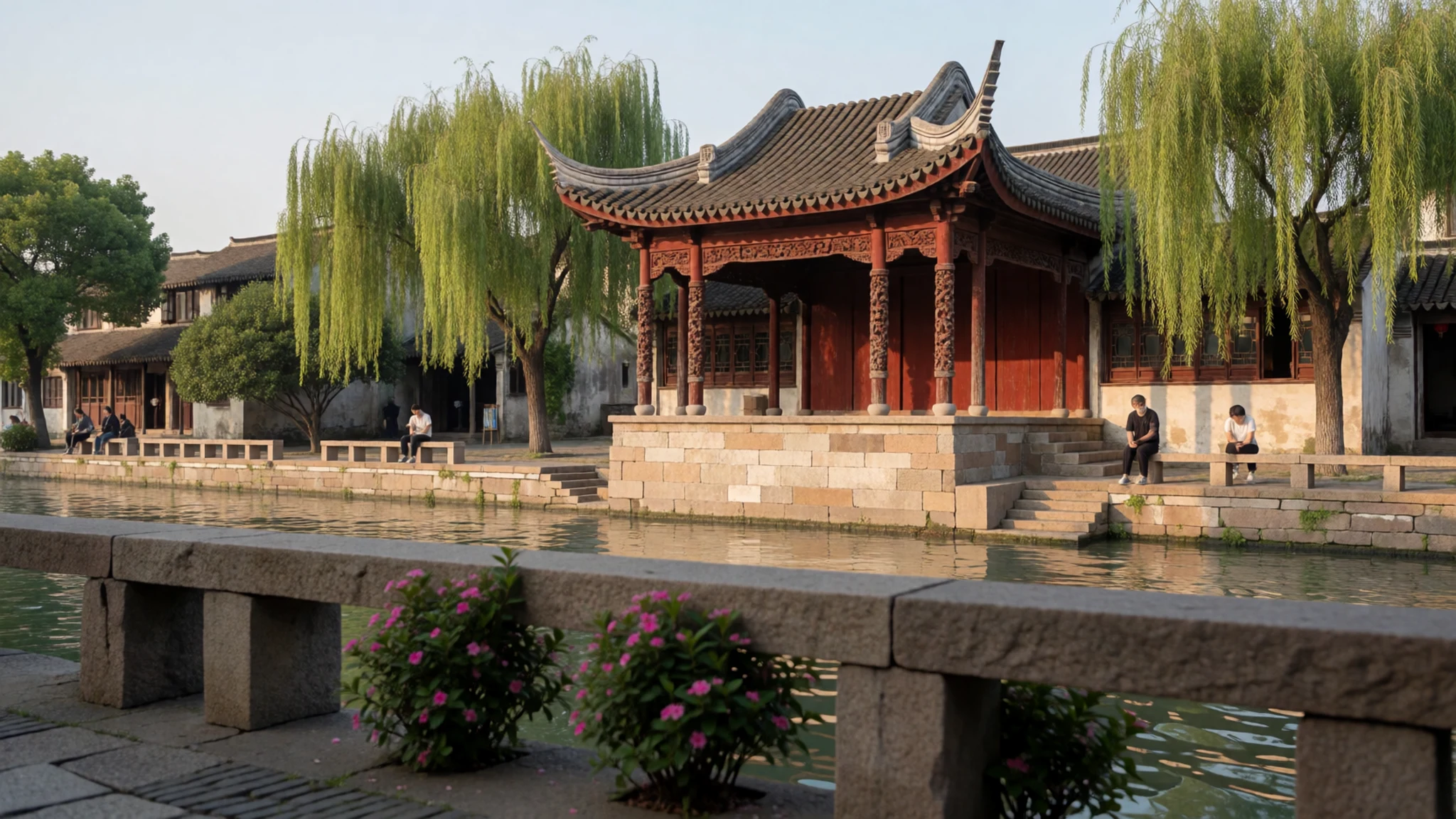
Culture
Culture in Zhouzhuang is deeply intertwined with its identity as an ancient water town, where daily life has historically revolved around canal navigation, communal gatherings, and traditional trade craft. The local heritage reflects influences from centuries of merchant enterprise and Buddhist devotion, visible in the preservation of ancestral halls, traditional street markets, and folk performance arts such as local ballads and theatrical shows. Festivals and community events often draw upon historical legends connected to early mercantile figures and temple benefactors. While tourism now plays a dominant role in the local economy, traditional craftsmanship in textiles, brewing, and paper arts continues to be practised in small workshops along the narrow lanes. Visitors should respect local properties, maintain quiet behaviour in residential courtyards, and avoid blocking narrow bridges and walkways during peak tourist congestion.
What to wear
Traditional dress in the region historically drew upon classic Jiangnan styles suited to a damp, temperate canal environment, featuring lightweight layers of cotton and silk designed for ease of movement during daily labour and trade. Historic garments incorporated subtle fasteners and wraparound cuts typical of regional attire during earlier dynastic eras. Today, residents dress in standard contemporary clothing, wearing modern urban styles for daily activities and business. Visitors walking through the historic lanes will find that comfortable, practical footwear is essential due to the uneven stone paving of the pathways and numerous bridge steps. Modest casual wear is appropriate for exploring the historic sites, residential compounds, and local temples. Because the weather can vary significantly between damp winter chills and humid summer conditions, dressing in adaptable layers is recommended for anyone planning to spend a full day outdoors exploring the canal network.
What to eat
- Wansan's Pig Shank — Local specialty restaurants throughout the town
Often referred to as Wansan's elbow or hoof, this famous braised pork dish originated with the historic merchant family and is traditionally served when entertaining guests. The meat is slow-cooked until exceptionally tender and rich, seasoned with regional spices and soy.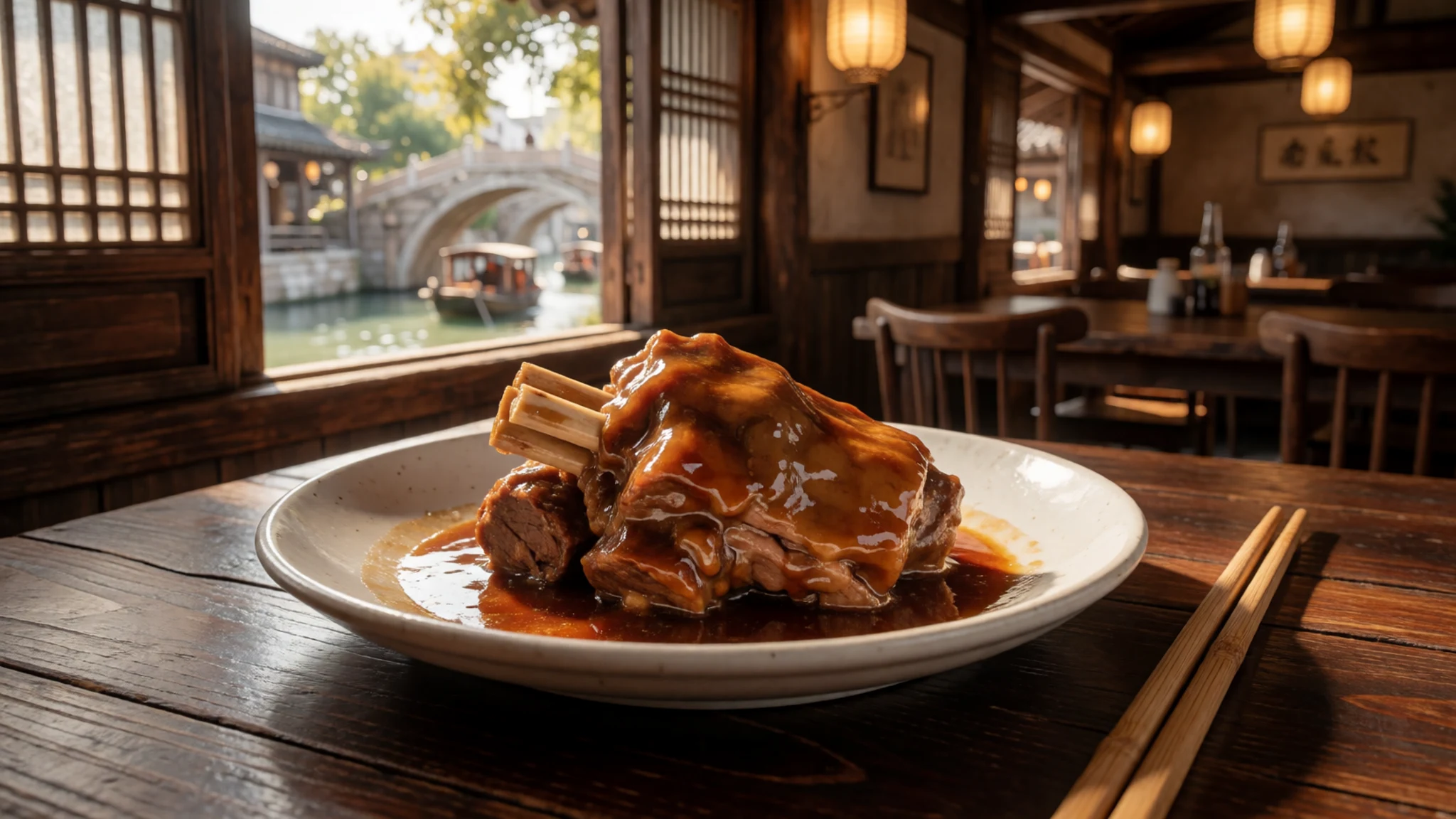
- Wansan Cakes — Traditional bakeries along Zhenfeng Street
A selection of traditional sweet pastries including sesame cakes, peanut cakes, walnut cakes, and salt-and-pepper cakes. These baked treats are prepared using local grains and nuts, offering a crisp texture and traditional sweet flavours.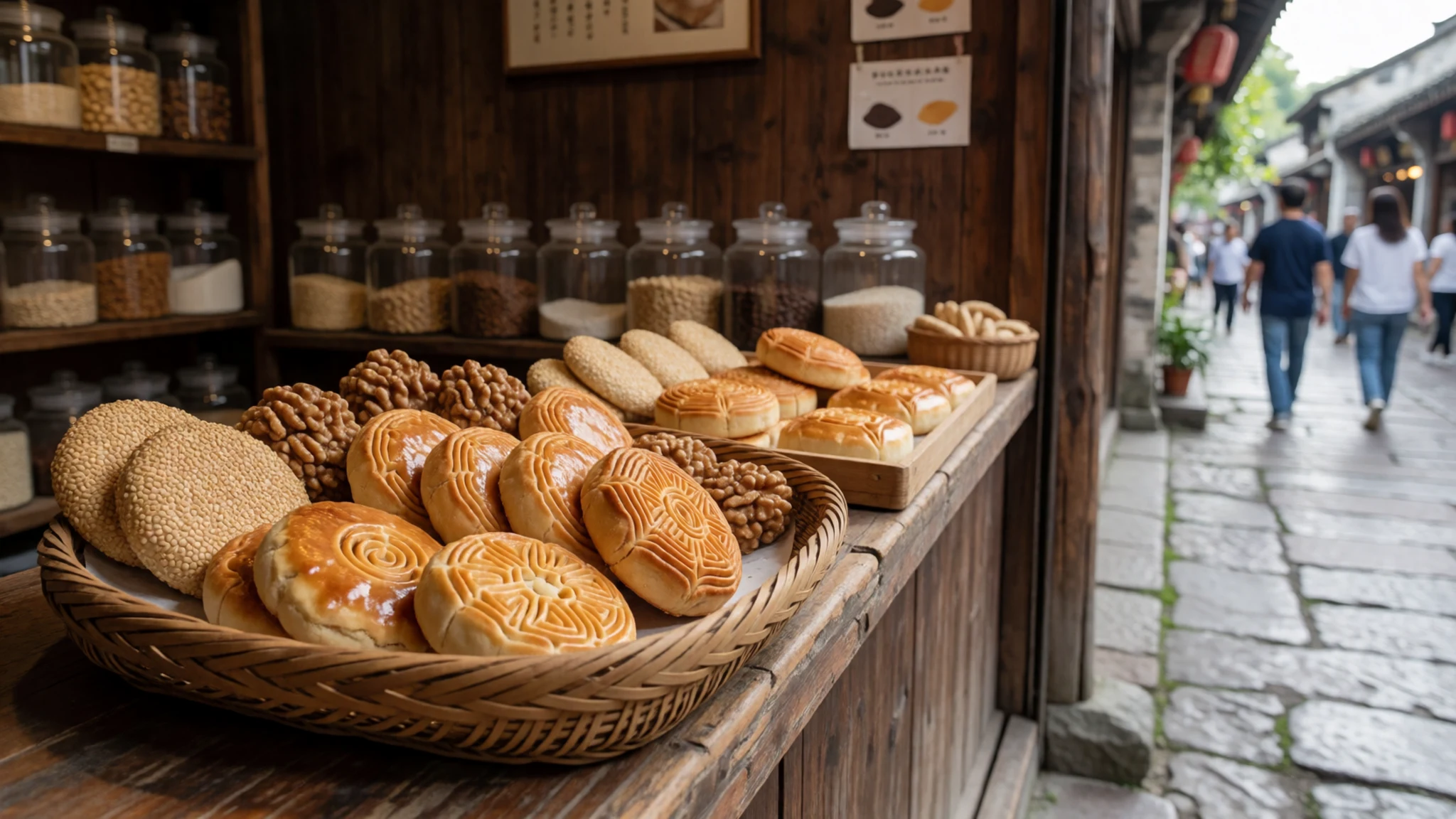
- Chuncai Soup — Local eateries and lakeside dining spots
A light, clear soup featuring Chuncai, a distinct aquatic vegetable harvested from the local freshwater lakes and canals. The vegetable provides a unique gelatinous texture that is prized in regional culinary traditions. - Freshwater Whitebait and Perch — Canal-side dining establishments
Fresh fish and delicate whitebait caught daily from the surrounding waterways and lakes. These are typically prepared using simple steaming methods to highlight the natural sweetness of the catch. - Steamed Lotus Root and Braised Tofu — Traditional banquet restaurants
Locally grown lotus root stuffed with glutinous rice or served in savoury preparations, accompanied by stewed dried tofu. These dishes represent the agricultural bounty of the surrounding wetlands and rivers.
Plan it
Best time. March to April and October to November offer the most pleasant weather for walking along the canals; June brings the rainy season, and August can be exceptionally hot and humid.
How long. 2–3
Getting there. Accessible by road from nearby urban centres including Shanghai, Suzhou, and Kunshan via regional highways, or by direct tourist buses operating from major transport hubs in Shanghai.
Budget. mid
Tips
- Arrive early in the morning to experience the water town before peak crowds arrive
- Wear sturdy, comfortable walking shoes suitable for stone bridges and uneven paving
- Carry cash for small purchases at traditional handicraft stalls and local snack shops
- Consider visiting the canal lanes after dark when daytime tour groups have departed
Etiquette
- Maintain a respectful noise level when exploring historic residential courtyards and temples
- Ask permission before photographing local artisans or private residents at work
- Avoid blocking narrow bridges and pathways while taking photographs
Nearby
Sources
- Wikidata Q61948 (CC0)
- Wikipedia (rev 1378507325) (CC BY-SA 4.0)
- Wikivoyage (rev 5301085) (CC BY-SA 4.0)
- Photo photos/01-zhouzhuang-2.jpg (CC BY 2.5)
