Zhengzhou
Zhengzhou, People's Republic of China
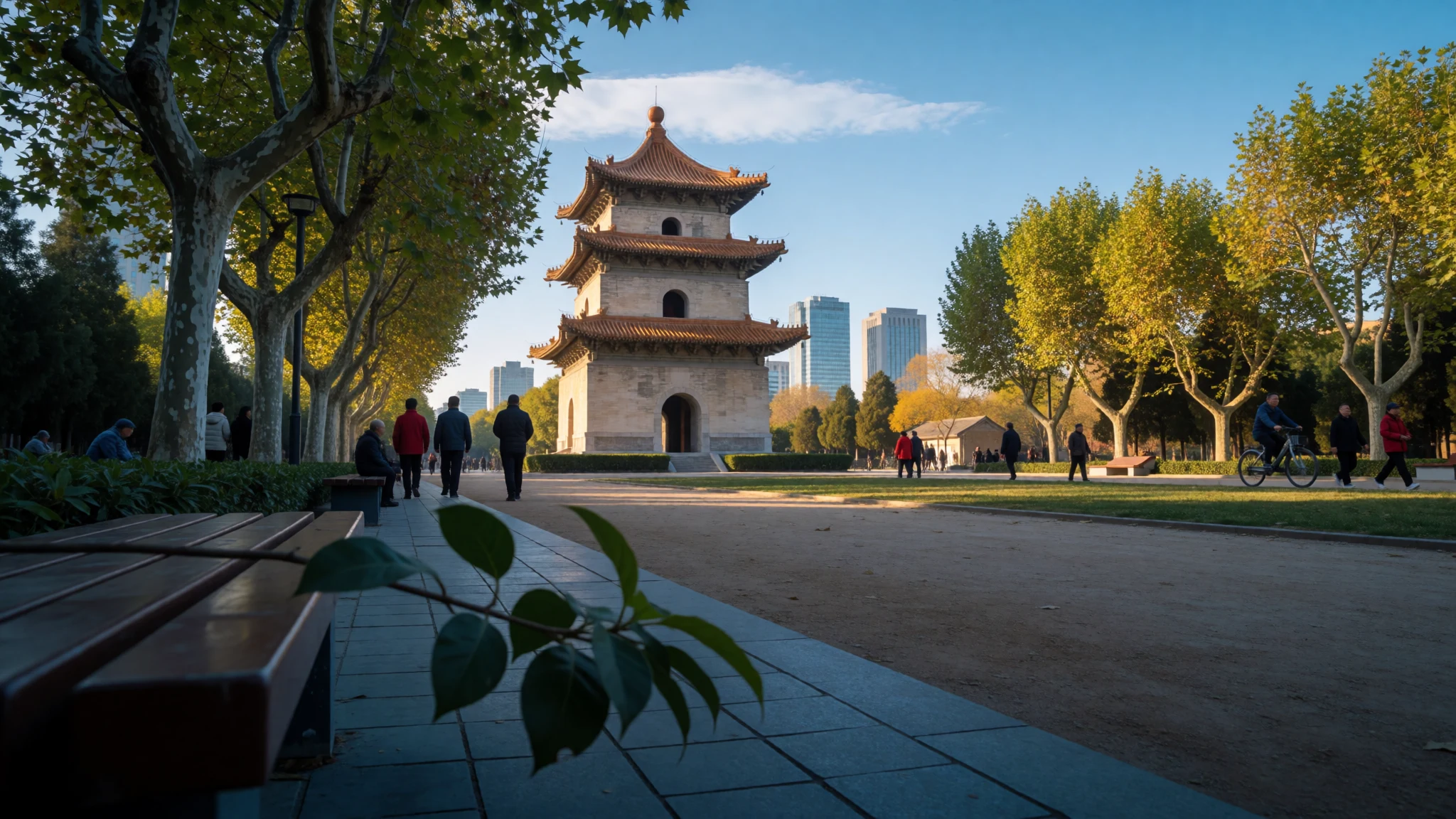
Zhengzhou pairs Shang-era earthen walls with a glassy new district, and sits a short trip from Shaolin's monastery.
The place
Zhengzhou is the capital of Henan province, in north-central China, and with about 12.6 million people it is a city of real weight rather than a quiet provincial seat. It lies on the southern bank of the Yellow River, where the land flattens out from the Xiong'er foothills into the North China Plain. That position explains most of what the city is: a crossing point. Railway lines and motorways meet here, and the airport and high-speed network make it a place many travellers pass through without stopping. The Zhongyuan, or Central Plains, region around it has been settled for thousands of years and is often described as a cradle of Chinese civilisation. Visitors find two cities laid over each other. The old core, around Erqi Square, is dense, busy and a little worn, with markets, older temples and heavy traffic. To the east, the Zhengdong New Area is planned on a grand scale, with wide avenues, a ring of towers around Ruyi Lake and glass business districts that look best at dusk. Summers are hot and sticky, winters are dry and cold, and the air can be hazy, so the shoulder seasons are kinder. Zhengzhou is not a place for a long list of famous monuments. It rewards a short stay built around its ancient walls, its noodles and its use as a base for the mountains and temples of western Henan.
Its story
Zhengzhou's deep past begins with the Shang dynasty, around 1600 BC, when a walled city stood near what is now the historic centre. Archaeologists have uncovered its remains, and some scholars link the site, or a settlement nearby, to the early Shang capitals known as Ao or Bo, though the identification is debated. The Shang rulers moved their capital repeatedly and left the area by the thirteenth century BC, yet people kept living on the site, and later Zhou tombs have been found there. After the Zhou conquered the Shang, one of the Zhou king's brothers was set up as ruler of a small state called Guan in this district. He joined a revolt that failed, but the name survived: Guancheng, 'Guan City', has been a county name ever since. In AD 587, under the Sui, the town became the seat of a prefecture, Guanzhou, and the modern name Zhengzhou, meaning Zheng Prefecture, comes from the same dynasty. For long stretches afterwards it was a regional city, valued for its position on the plain rather than for grandeur. The twentieth century brought a violent episode in June 1938, when Nationalist forces broke the Yellow River dikes at Huayuankou, north of the city, to slow the Japanese advance. That history is easy to miss under the modern skyline, which is mostly very recent.
What to see
- Erqi Memorial Tower — Erqi Square, old centre
Erqi Memorial Tower stands over Erqi Square in the old centre, a double pagoda that is loud in design and impossible to miss. Inside, a small museum traces how the city grew. It is worth a short stop for orientation, and the square around it is a good place to watch local evening life.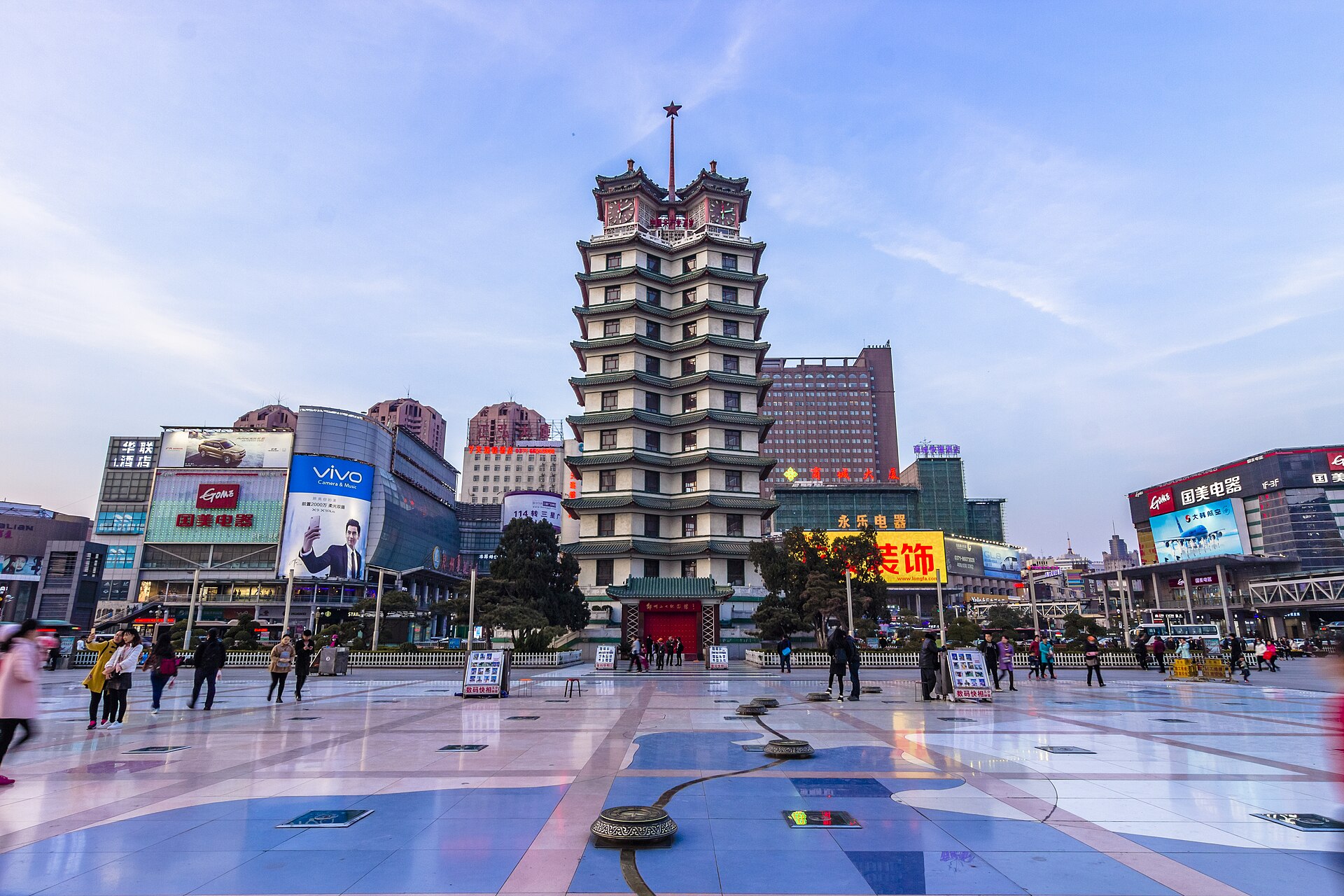
- Shang City wall ruins — Eastern side of the old town
The remains of the Shang city wall run as low earthen mounds on the eastern side of Zhengzhou. They are modest to look at, and visitors expecting stonework will be disappointed. The interest lies in knowing what the mounds are: the outline of a walled town from the dynasty that first put this place on the map. Go for context, not spectacle. - Ruyi Lake and Zhengdong New Area — Zhengdong New Area
Ruyi Lake is the centrepiece of the Zhengdong New Area, ringed by apartment blocks, malls and offices, with the Henan Arts Centre among them. A walk around the water is pleasant in the evening, when the towers light up. It shows the modern face of Zhengzhou better than anywhere in the old centre.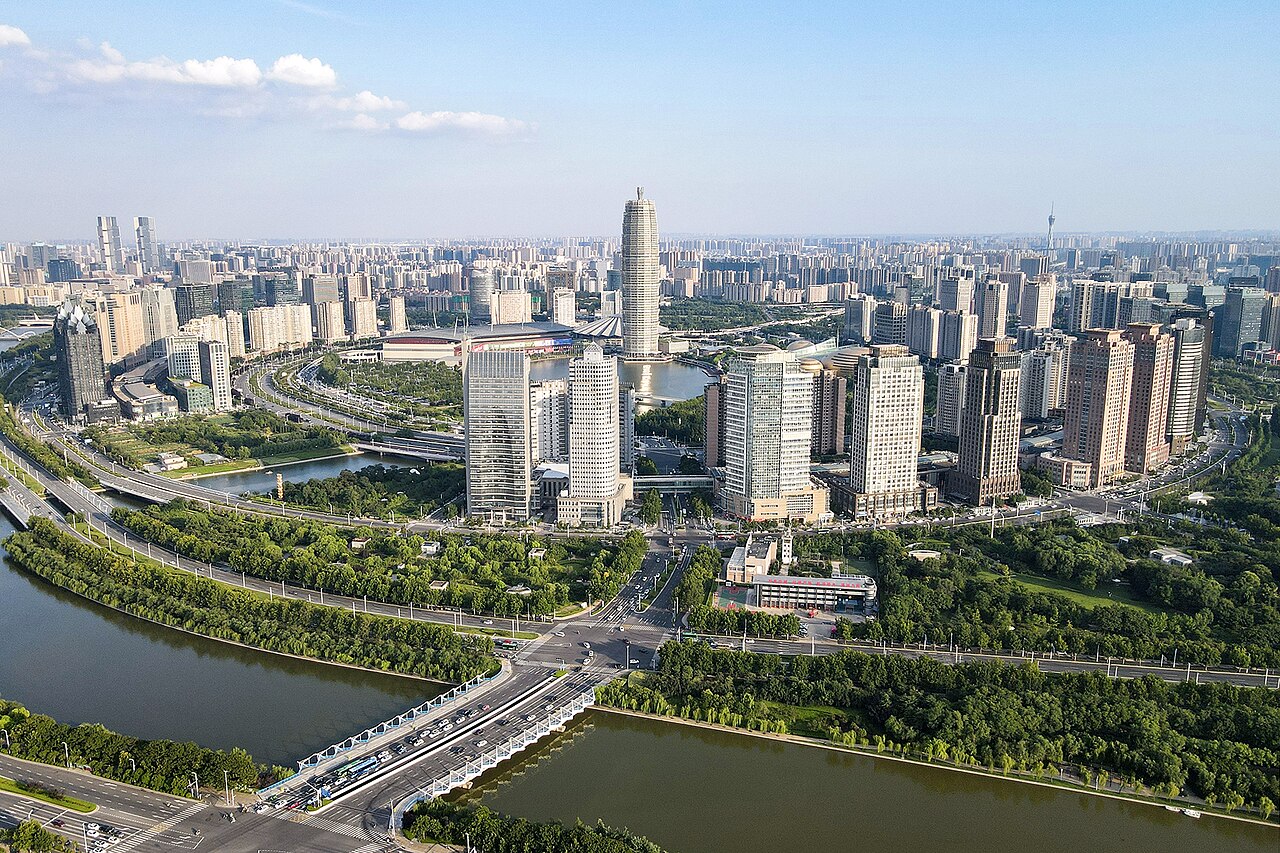
- Henan Geological Museum — Eastern Zhengzhou
The Henan Geological Museum holds rock specimens and a good run of fossils, dinosaurs among them. It suits a wet or very hot afternoon and works well for families. Check the official site or the museum's own channels for opening arrangements before going, as these can change. - Shaolin Temple (day trip) — Hills west of the city
Shaolin Temple lies in the mountains to the west, a day trip from Zhengzhou by road. The Great Buddha's Hall anchors the monastery, and the nearby Pagoda Forest holds the memorial pagodas of monks. Weekends and public holidays are crowded, so start early and allow most of a day.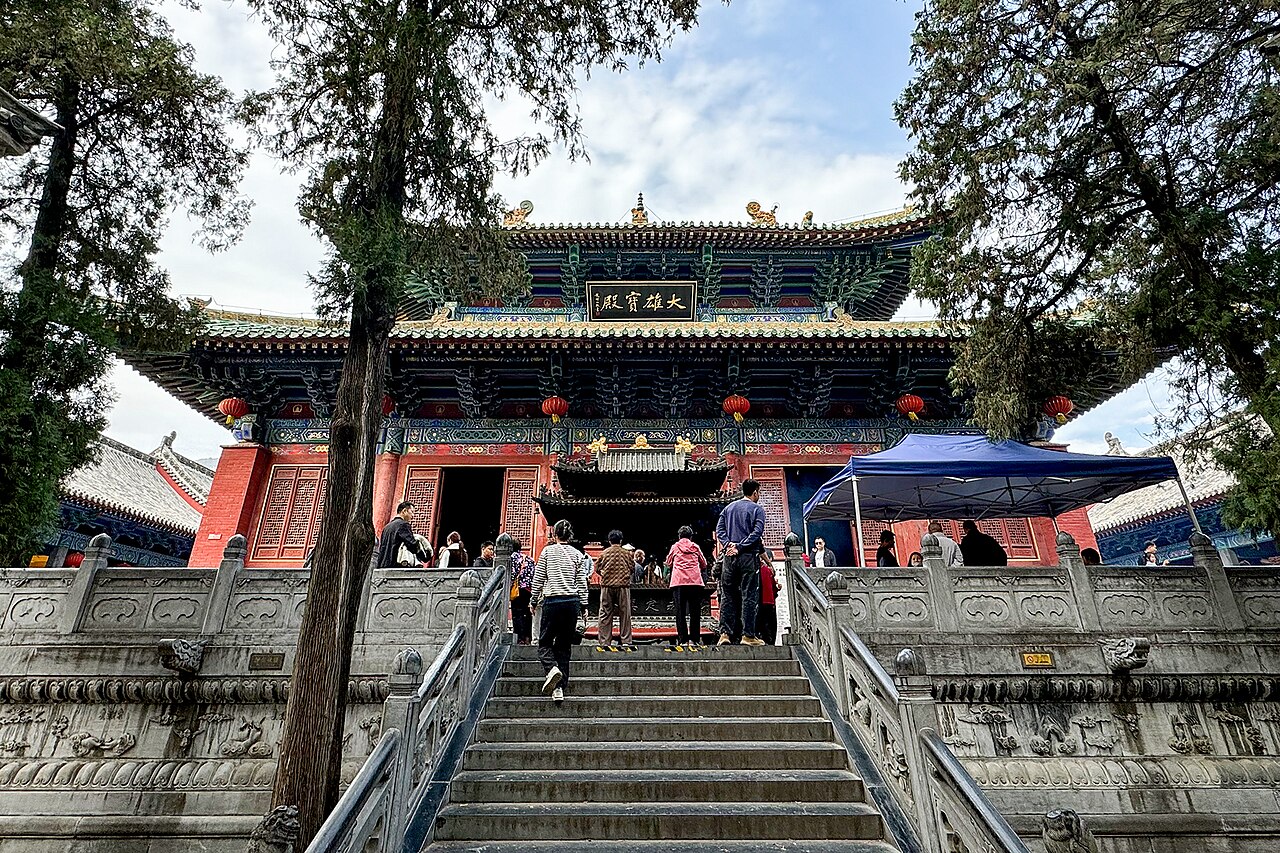
Culture
Zhengzhou sits in the Central Plains, the region Chinese tradition treats as a heartland, and people here carry that with a mix of pride and dry humour. The city is no museum piece. Its character comes from ancient origins, Confucian and Buddhist heritage, and the practicality of a working transport hub. The Confucius Temple and the City God Temple in the older districts recall earlier civic and religious life, and both are quieter than the towers of the new area. Henan speech differs from textbook Mandarin, and locals are usually delighted when a visitor tries a few words. Meals are social and generous, with dishes pressed on guests and plates refilled, so refusing everything can seem cold. Shaolin, in the hills to the west, links the wider area to martial arts and Chan Buddhism. In the evenings, parks and squares fill with card games, dancing and families out for air. English is limited outside large hotels and stations, so a translation app and the place name written in Chinese characters are worth having. At temples in Zhengzhou, keep your voice low, never touch offerings or statues, and ask before photographing monks or worshippers.
What to wear
Zhengzhou has no single regional costume that people wear day to day, but the Central Plains is where much of Chinese dress history is set, and hanfu, the revived Han-style robes, is popular among young people for festivals and photo outings, especially around heritage sites. Traditional garments are made from silk, cotton and linen, with wide sleeves, crossed collars and sashes, and embroidery is a common finish. Tang-style jackets with frog fastenings appear at weddings and new year gatherings. Day to day, the city dresses like any large Chinese city: trainers, jeans, puffer jackets in winter, and smart-casual office wear in the business districts. Younger residents follow fashion from Beijing and Shanghai, and the shopping malls of Zhengdong show it. For visitors, the climate decides most things. Summers are hot and humid, so light cotton or linen, a hat and sun protection are sensible, with a small umbrella for rain. Winters are cold and dry, calling for a proper coat, scarf and layers. Comfortable walking shoes matter, since the city is spread out and temples such as Shaolin involve steps and uneven stone. Religious sites set no strict dress code, but covered shoulders and knees are respectful, and shorts or low tops can feel out of place in a monastery.
What to eat
- Mutton noodles — Noodle shops in the old centre; Hui Ji is a well-known name for traditional Henan food
A bowl of wheat noodles in a rich, peppery mutton broth, a Henan staple eaten at breakfast or lunch. Portions are filling and the soup is the point. Locals add chilli oil at the table to taste. - Huimian (braised noodles) — Dedicated noodle restaurants across the city
Wide, hand-pulled noodles served in a mutton or bone broth with vegetables and seaweed, a defining Henan dish. It is a full meal in one bowl and often comes with a few cold side dishes. - Hulatang — Small breakfast shops and stalls in older residential streets
A thick, peppery soup thickened with flour and filled with shreds of meat or tofu, usually eaten at breakfast with fried bread. It is warming on cold mornings and cheap enough to try more than once. - Night-market skewers and snacks — The night market around Erqi Square
Grilled skewers, fried dough and sweet treats sold in the evenings, a good way to eat while walking and watching the city. Go hungry and share plates so you can taste more. - Hui Muslim dishes — Muslim restaurants in the older districts
Halal lamb, flatbreads and stewed dishes from the city's Hui community. Look for a green sign or Arabic script above the door. It is also a sensible choice for anyone avoiding pork.
Plan it
Best time. April–May and September–October, when temperatures are mild and the air is usually clearer; summers are hot and humid, and winters are cold and dry.
How long. 2–3
Getting there. Fly to the city's airport, which is linked to the centre by a metro extension and by mainline rail to Zhengzhou East Station. Zhengzhou is also a major rail hub, with high-speed trains from Beijing, Xi'an and Shanghai.
Budget. low
Tips
- Book Shaolin as a full-day trip and leave early, as weekends and holidays are crowded
- Carry a translation app and the Chinese names of your destinations for taxis
- Pay by mobile app where you can, but keep some cash and your passport for tickets and hotel check-in
- Use the metro and high-speed trains rather than driving, as city traffic is heavy
- Check the official site, zhengzhou.gov.cn, or each attraction's own channels for opening arrangements
Etiquette
- Keep your voice low and do not touch offerings or statues at temples
- Ask before photographing monks, worshippers or people at prayer
- Accept food and tea offered at the table graciously, even if you only taste it
Nearby
Sources
- Wikidata Q30340 (CC0)
- Wikipedia: Zhengzhou (rev 1384516505) (CC BY-SA 4.0)
- Wikivoyage: Zhengzhou (rev 5388728) (CC BY-SA 4.0)
- Central Business District of Zhengdong New Area — Windmemories (CC BY-SA 4.0)
- ZhengZhou CBD — 白诗棋 (CC0 1.0)
- Erqi Memorial Tower at Erqi Square — 燚惪 (CC BY-SA 4.0)
- Twin towers of Zhengdong Greenland Center — Windmemories (CC BY-SA 4.0)
- The Great Buddha's Hall, Shaolin Temple — Windmemories (CC BY-SA 4.0)
- Pagoda Forest, Shaolin Temple — kevinmcgill (CC BY-SA 2.0)
- City God Temple of Zhengzhou — Windmemories (CC BY-SA 4.0)
- Map of Henan showing Zhengzhou — Not logging in (CC BY-SA 4.0)


