Zadar
Zadar, Croatia
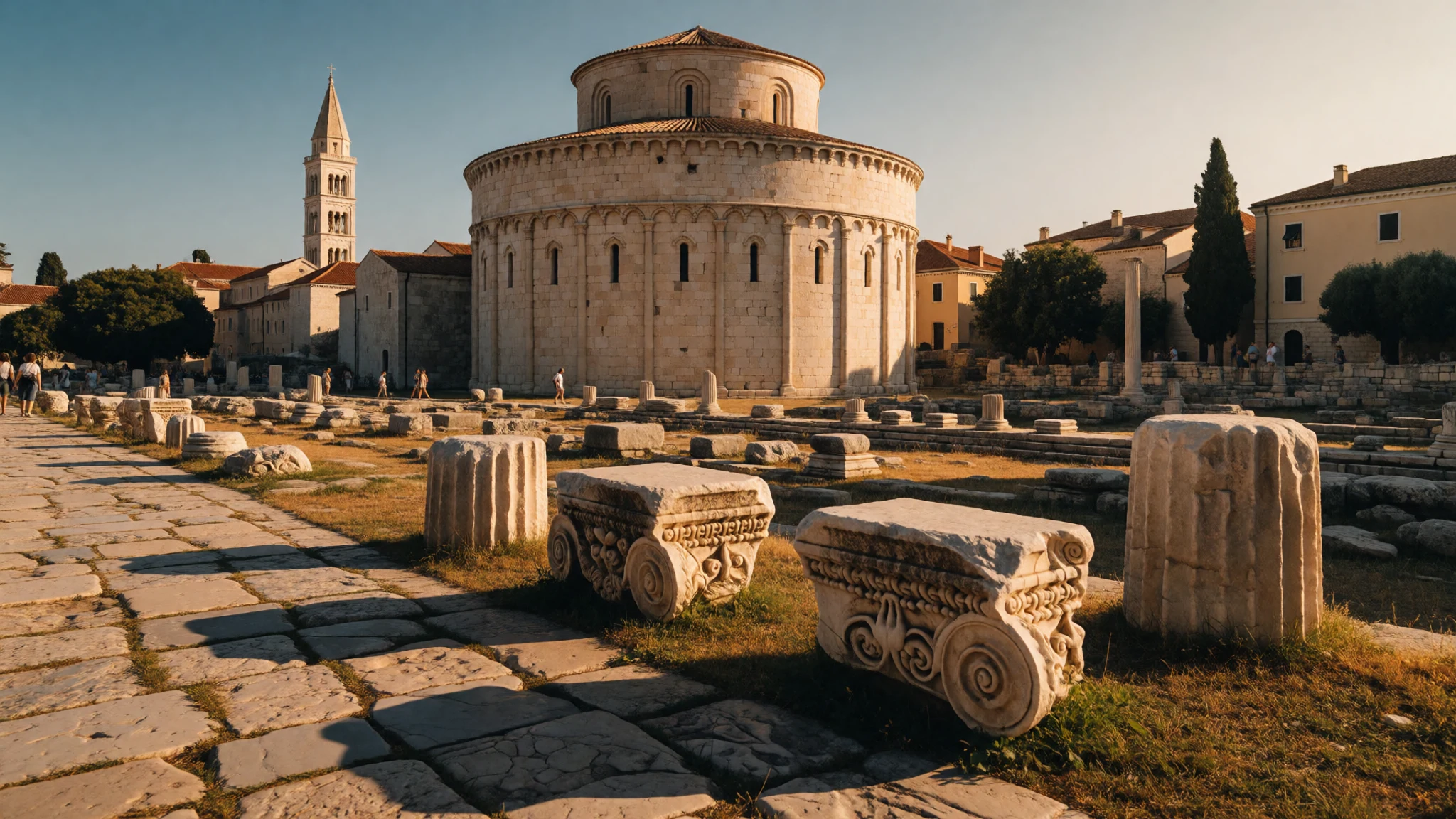
Zadar blends ancient Roman ruins, Venetian fortifications, and modern acoustic art along a gorgeous Adriatic coastline.
The place
Zadar stands proudly on the Adriatic Sea in the northwestern part of the Ravni Kotari region, serving as the cultural heart and administrative seat of northern Dalmatia. As the oldest continuously inhabited city in Croatia, Zadar occupies a distinctive peninsula that juts out into sparkling blue waters, sheltering a dense tangle of white limestone streets, medieval bell towers, and open public squares. The local climate brings warm, sun-drenched summers and mild winters, making outdoor life a constant rhythm of the city. Mornings begin with residents gathering for coffee in bustling public squares, while late afternoons draw crowds toward the waterfront to watch the sunset across the channel toward nearby islands. The surrounding geography ties the settlement closely to both the sea and the rocky hinterland, shaping an economy driven by maritime trade, fishing, agriculture, and tourism. Walking through the historic quarter reveals layer upon layer of architectural heritage, from shattered classical capitals half-buried in grass to sturdy stone ramparts built centuries ago to repel invaders. Despite modern growth and a lively student population tied to its historic higher education institution, Zadar retains an intimate, pedestrian-first character. Visitors find themselves navigating narrow alleyways polished smooth by centuries of footsteps, emerging unexpectedly onto sweeping seaside promenades where the natural environment and human ingenuity meet in striking harmony. The city balances its rich historical weight with an unhurried Mediterranean pace, welcoming travellers to experience a living coastal community where antiquity feels entirely present in everyday life.
Its story
The story of Zadar stretches back deep into prehistory, with human settlement in the district dating back to the Late Stone Age and Neolithic periods. Long before Roman legions arrived, an ancient Mediterranean culture inhabited the area, eventually assimilating with Indo-European settlers between the fourth and second millennia BCE to form the seafaring Liburnian tribe. By the ninth century BCE, these early inhabitants had established a thriving settlement known as Iader. Roman conquest transformed the town into a strategic colony complete with a regular street grid, a monumental forum, and an elevated capitolium. Following the collapse of the Western Roman Empire, Zadar served as the capital of the Byzantine Theme of Dalmatia, enduring shifting allegiances among Frankish rulers, local Croatian kings, and the expanding mercantile power of the Republic of Venice. Medieval Zadar developed a distinct Romance character where the Dalmatian language flourished before gradually giving way to Venetian dialects. The city's fierce independence repeatedly drew the attention of regional rivals. During the infamous Fourth Crusade in twelve hundred and two, Venetian forces aided by crusaders besieged and plundered the city, marking a dark chapter in its long maritime rivalry with Venice. Over subsequent centuries, Zadar changed hands numerous times, passing through Hungarian crowns, Habsburg administration, Napoleonic provinces, and Italian rule before ultimately becoming an integral part of modern Croatia. Each era left indelible marks on its stone fortifications, churches, and civic identity, creating a rich historical tapestry.
What to see
- Crkva svetog Donata — Historic centre
This circular pre-Romanesque church stands as the most recognizable symbol of Zadar. Built with heavy stone blocks and ancient architectural spolia, its unusual round shape and exceptional acoustic properties make it a striking monument from the early medieval period that dominates the old town skyline.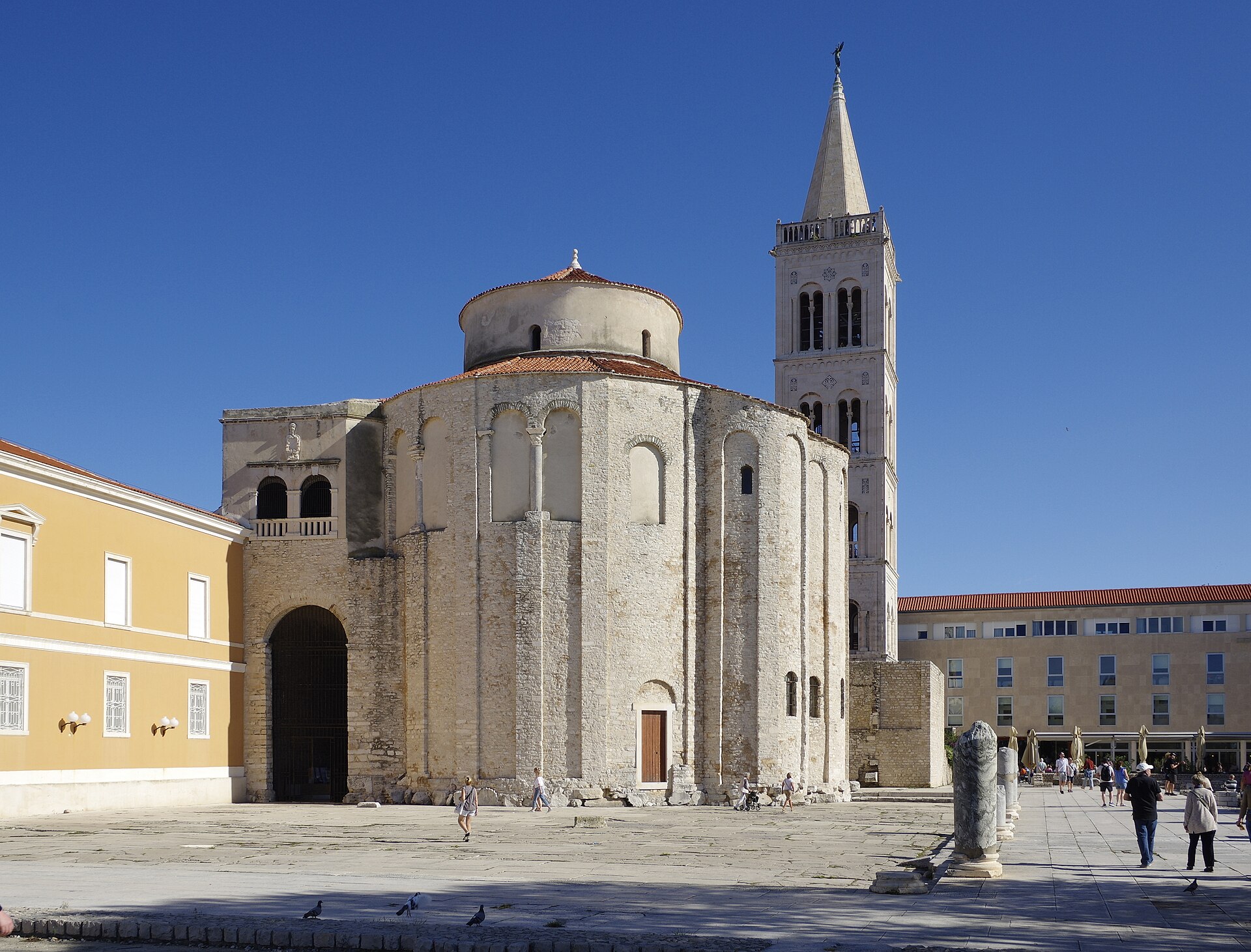
- Katedrala sv. Stošije — Historic centre
Saint Anastasia's Cathedral features a magnificent Romanesque facade adorned with blind arcades and double lancet windows. Inside, visitors find soaring vaulted ceilings and an impressive pipe organ. Climbing the separate bell tower rewards those willing to tackle the steps with panoramic views across the entire peninsula and surrounding islands.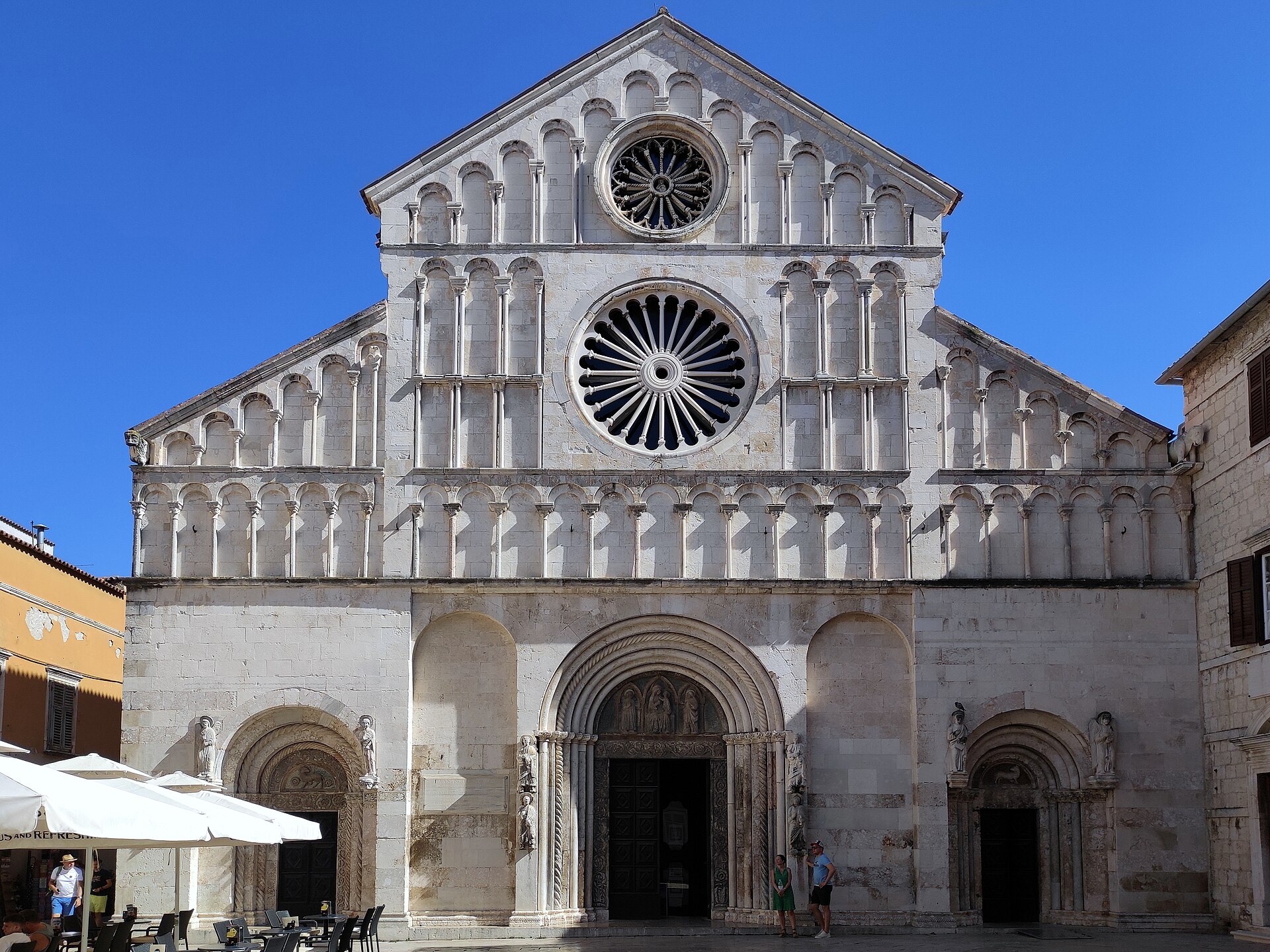
- Forum Romanum — Historic centre
The sprawling ruins of the ancient Roman forum form an open-air archaeological park where fallen columns, carved stone altars, and foundation walls rest directly beneath the open sky. It serves as a casual gathering space where locals and travellers sit among classical antiquities to enjoy sunny afternoons.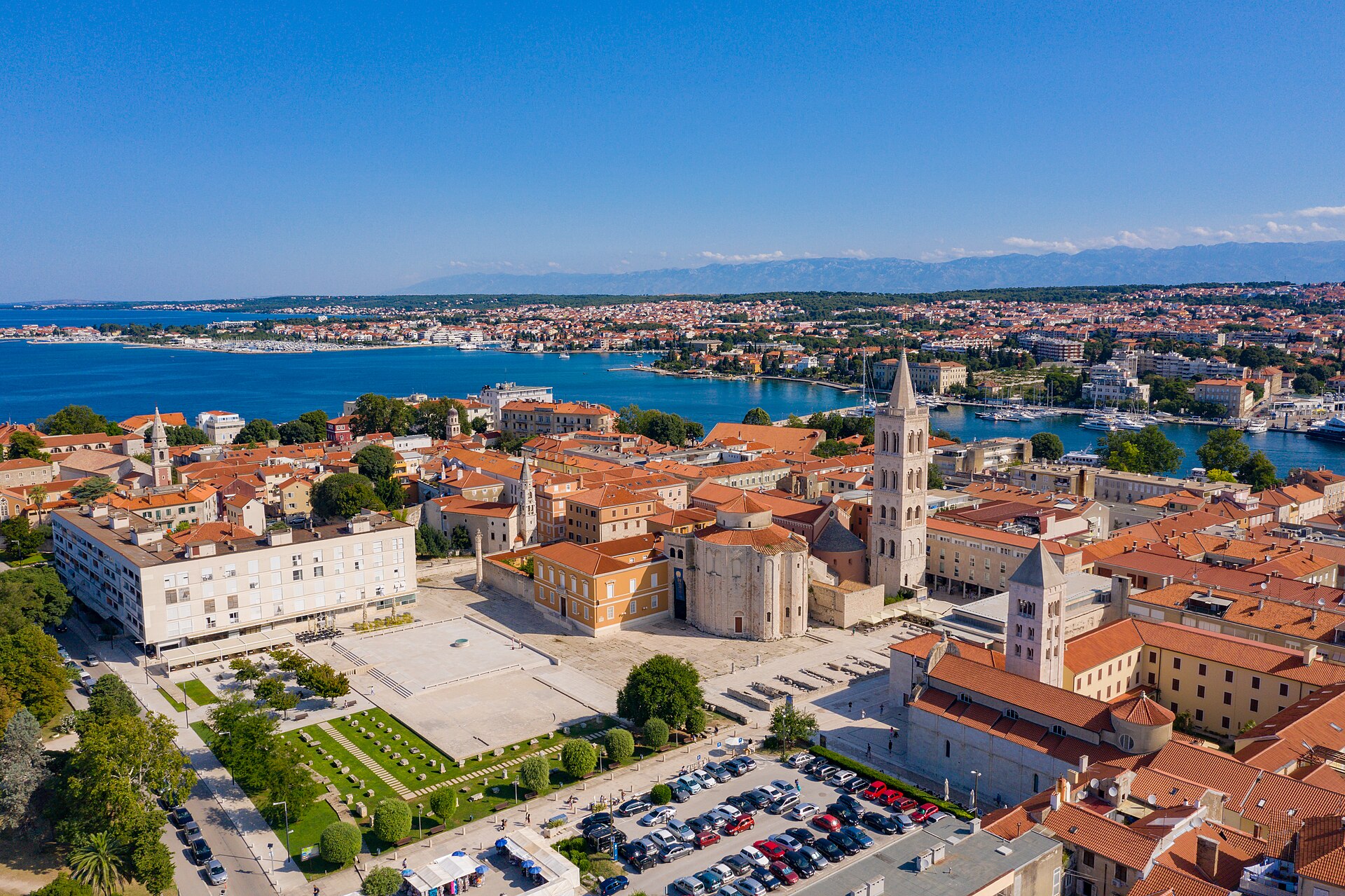
- Morske orgulje — Waterfront promenade
The Sea Organ is an architectural sound art installation carved into the white marble steps leading down into the Adriatic. Underwater pipes driven by the rhythmic motion of waves push air through whistles to create an ever-changing, haunting musical chord that echoes along the promenade.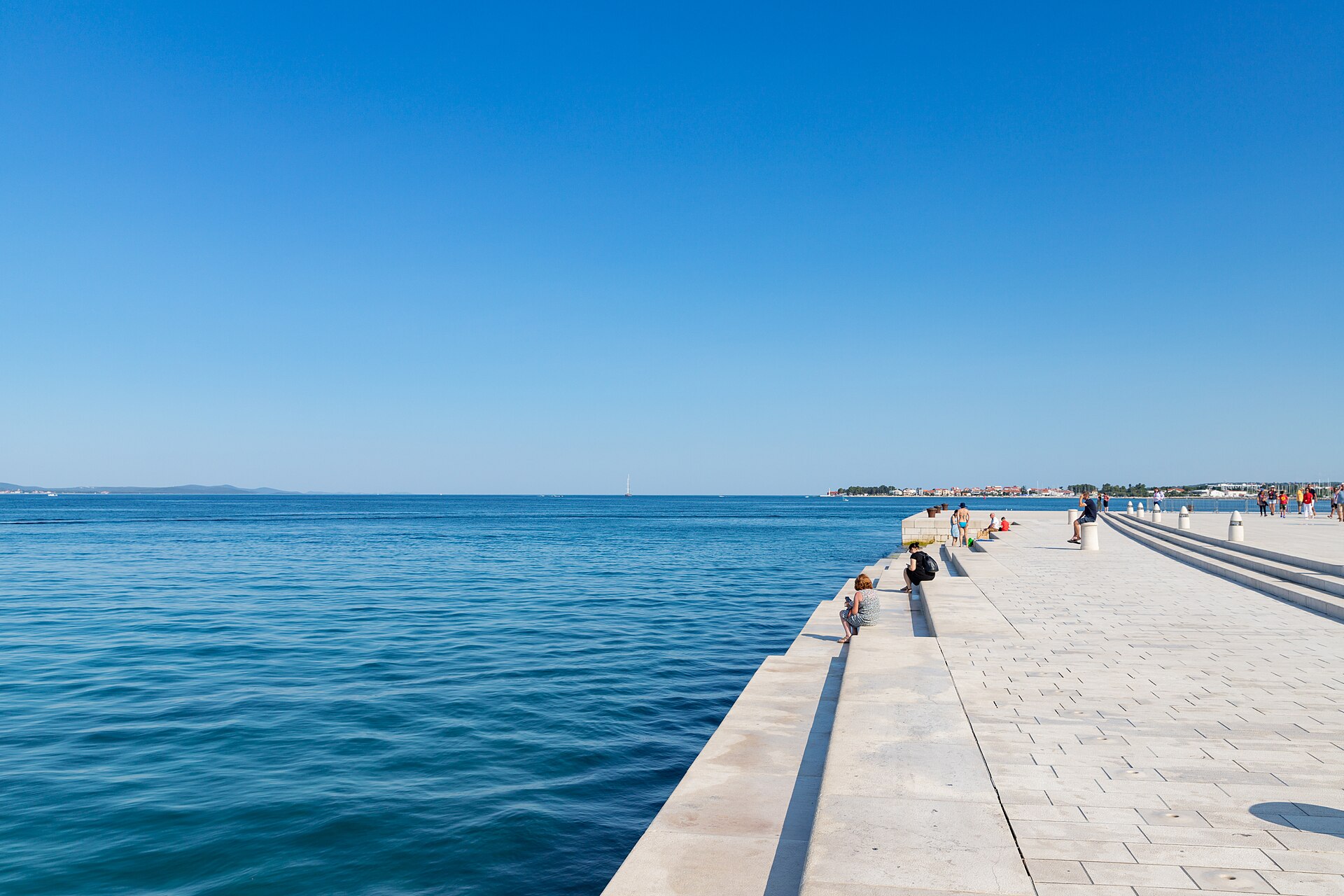
- Kopnena Vrata — Port entrance
The Land Gate served as the historic fortified entrance to the city, built during the Venetian era to a refined Renaissance design. Featuring a central arch carved with the winged lion of Saint Mark alongside municipal coats of arms, this stone portal once welcomed travellers arriving by land.
Culture
Zadar carries a deep-rooted Mediterranean identity shaped by centuries of maritime trade, Venetian governance, and coastal Dalmatian traditions. Daily life moves at an unhurried pace, anchored by the ritual of morning coffee in shaded public squares where friends meet to chat for hours. Music and performance hold a cherished place in the community, blending classical heritage with modern experimental installations along the shore. Families frequently gather for leisurely evening strolls down the marble-paved main street, participating in the traditional promenade culture known locally as the korzo. Traditional crafts, fishing lore, and regional dialects continue to influence everyday interactions, even as university students and international travellers inject a youthful energy into the old town. Respect for sacred spaces and historic architecture remains paramount among residents, who take immense pride in preserving their ancient monuments against the wear and tear of tourism and coastal weather. When entering churches or quiet residential alleys in Zadar, dress modestly and keep noise levels low to respect local worshippers and residents.
What to wear
Traditional attire in Zadar and the surrounding northern Dalmatian countryside historically featured heavy woollen waistcoats, intricately embroidered linen shirts, and pleated skirts or trousers crafted from locally spun textiles, worn during seasonal festivals and folk celebrations. In contemporary Zadar, residents dress with a relaxed yet polished Mediterranean flair, favouring breathable linens, tailored trousers, and smart leather footwear suitable for navigating smooth limestone pavements. For visitors exploring Zadar, lightweight, breathable layers work best during warm summer months, while a windproof jacket is essential when catching evening breezes by the sea. Modest attire covering shoulders and knees is required when entering historic churches and religious monuments. Sturdy walking shoes with non-slip soles are strongly recommended, as centuries of polished marble streets can become surprisingly slick after rain.
What to eat
- Konoba Tovar Fare — Historic centre alleyways
Enjoy rustic Dalmatian comfort dishes prepared with local herbs and olive oil in a charming tavern setting. - Wood-Fired Pizza — Old town pizzerias
Large, shareable pies baked in traditional brick ovens with a soft, chewy interior and crisp outer crust. - Fresh Grilled Seafood — Waterfront seafood eateries
Catch of the day grilled simply over open flames and seasoned with local olive oil, garlic, and fresh parsley. - Local Tavern Grills — Family-run neighbourhood taverns
Generous platters of mixed grilled meats and fish served with seasonal vegetables and regional wines.
Plan it
Best time. May to June and September to October offer warm, pleasant weather with fewer crowds than the peak summer months of July and August.
How long. 2–3
Getting there. Fly into Zadar airport, then take the efficient airport shuttle bus directly to the central bus station and old town, or rent a car.
Budget. mid
Tips
- Visit the Sea Organ and Roman Forum early in the morning to avoid midday crowds and heat
- Wear comfortable shoes with good grip for walking on slick marble paving stones
- Carry some cash for small bakeries, cafes, and market stalls
- Book accommodation well in advance if travelling during peak summer months
Etiquette
- Cover shoulders and knees when visiting churches and sacred sites
- Always greet shopkeepers and servers politely when entering local establishments
Nearby
Sources
- Wikidata Q3370 (CC0)
- Wikipedia (rev 1382022163) (CC BY-SA 4.0)
- Wikivoyage (rev 5423036) (CC BY-SA 4.0)