Yuso Monastery
Yuso Monastery, Spain
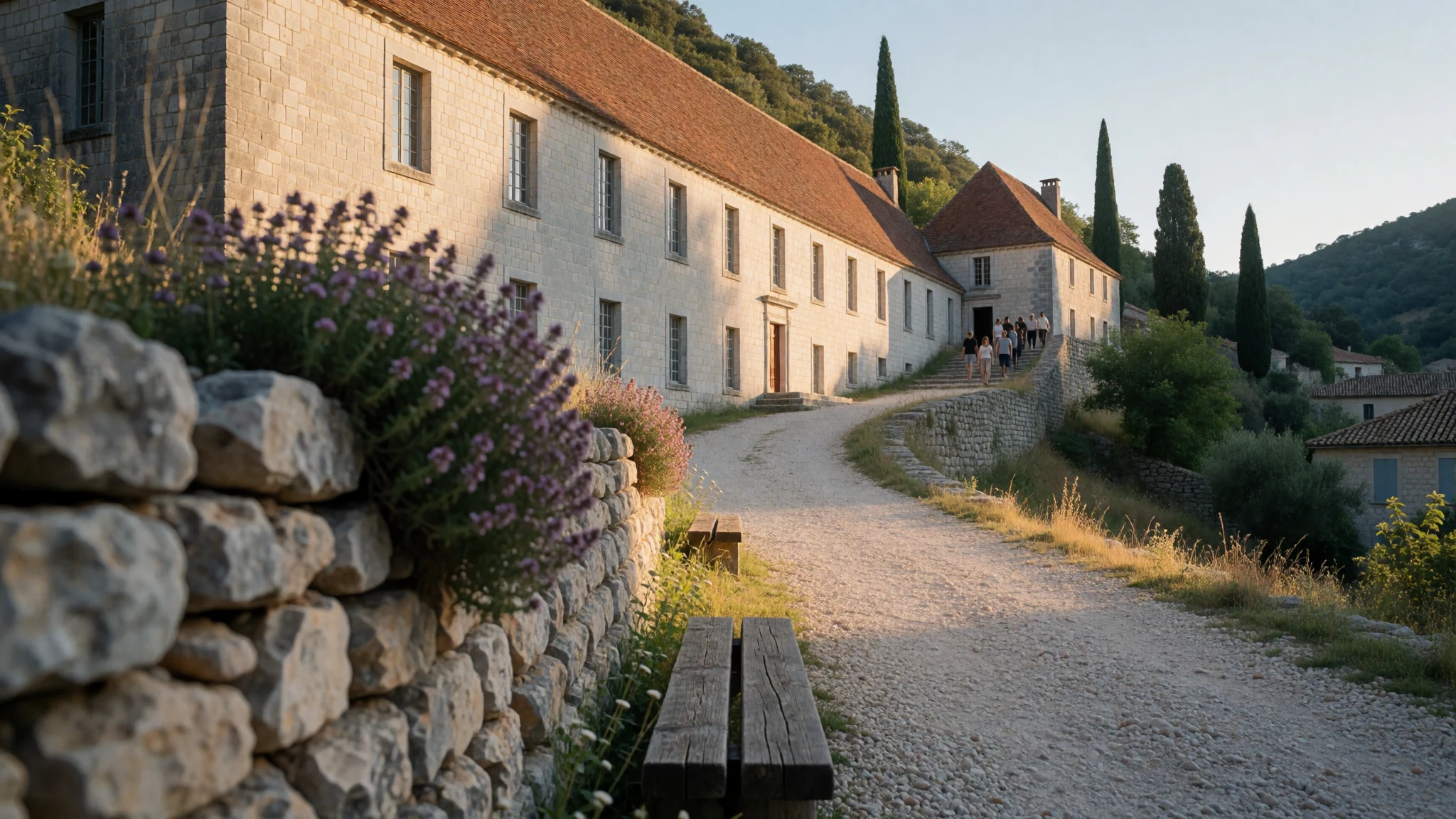
Yuso Monastery is a working monastery in a Rioja valley, linked to the written beginnings of Spanish and a short walk from its older twin.
The place
Yuso Monastery stands in the village of San Millán de la Cogolla, in La Rioja, northern Spain. It is one half of a pair: Suso Monastery sits higher on the hillside, and the two names are archaic Castilian for 'upper' and 'lower'. Together they are listed by UNESCO as the Monasteries of San Millán de la Cogolla, and the website for visits is http://www.monasteriodesanmillan.com/. Yuso is the later and larger building, the one that still functions as a religious house, while Suso is the older and more austere site, said to stand where the hermit Saint Emilian once lived. The village around them is small and quiet, with the feel of a place organised around its monasteries rather than the other way round. Wooded slopes close in on the valley, and the stone and tile buildings are modest in colour, so the setting is calm rather than dramatic. What gives the site its reputation is language. Short notes in early Spanish and in Basque were written in the margins of a Latin text kept at Suso, and these are known as the Glosas Emilianenses. Scholars still argue about whether the Spanish words are early Castilian or a close relative from Navarre and Aragon, but the village is widely treated as a cradle of written Spanish. Visits to each monastery are separate and guided, so the day has a structure to it. Expect a slow, small-scale outing, not a sprawling heritage complex.
Its story
The story of Yuso Monastery begins with Saint Emilian, known in Spanish as San Millán, a hermit whose life in these hills drew followers and later a community. The first monks at Suso lived as hermits, each apart, and the buildings grew around that tradition. Over time the monastic way of life changed. The community moved down the slope and refounded itself at Yuso, where it became a Benedictine house living together under one roof. UNESCO's assessment highlighted just this shift, from solitary hermit life to shared communal life, which can be read in the stonework of the two sites. A scriptorium here produced manuscripts, among them a copy of the Beatus, the illustrated commentary on the Apocalypse, and it kept working through centuries when much of the peninsula was under Muslim rule. The monasteries were not spared hard times. They were sacked during the medieval wars, and in the 19th century Spanish governments confiscated church property on a wide scale. At San Millán this began in the 1820s, earlier than the better-known measures named after Mendizábal. Suso has stood empty of monks ever since. Yuso was abandoned as well, but an Augustinian community later took it over, which is why a religious presence continues there today. The site was inscribed by UNESCO in 1997. The overall picture is one of repeated loss followed by quiet continuity, rather than a single grand founding moment.
What to see
- Yuso Monastery — San Millán de la Cogolla, lower village
The lower monastery is the one still lived in, and visits are by guided tour. Allow time for the tour itself and for the parking area and village beside it. Check the official site for current visiting arrangements before travelling, since opening patterns can change through the year.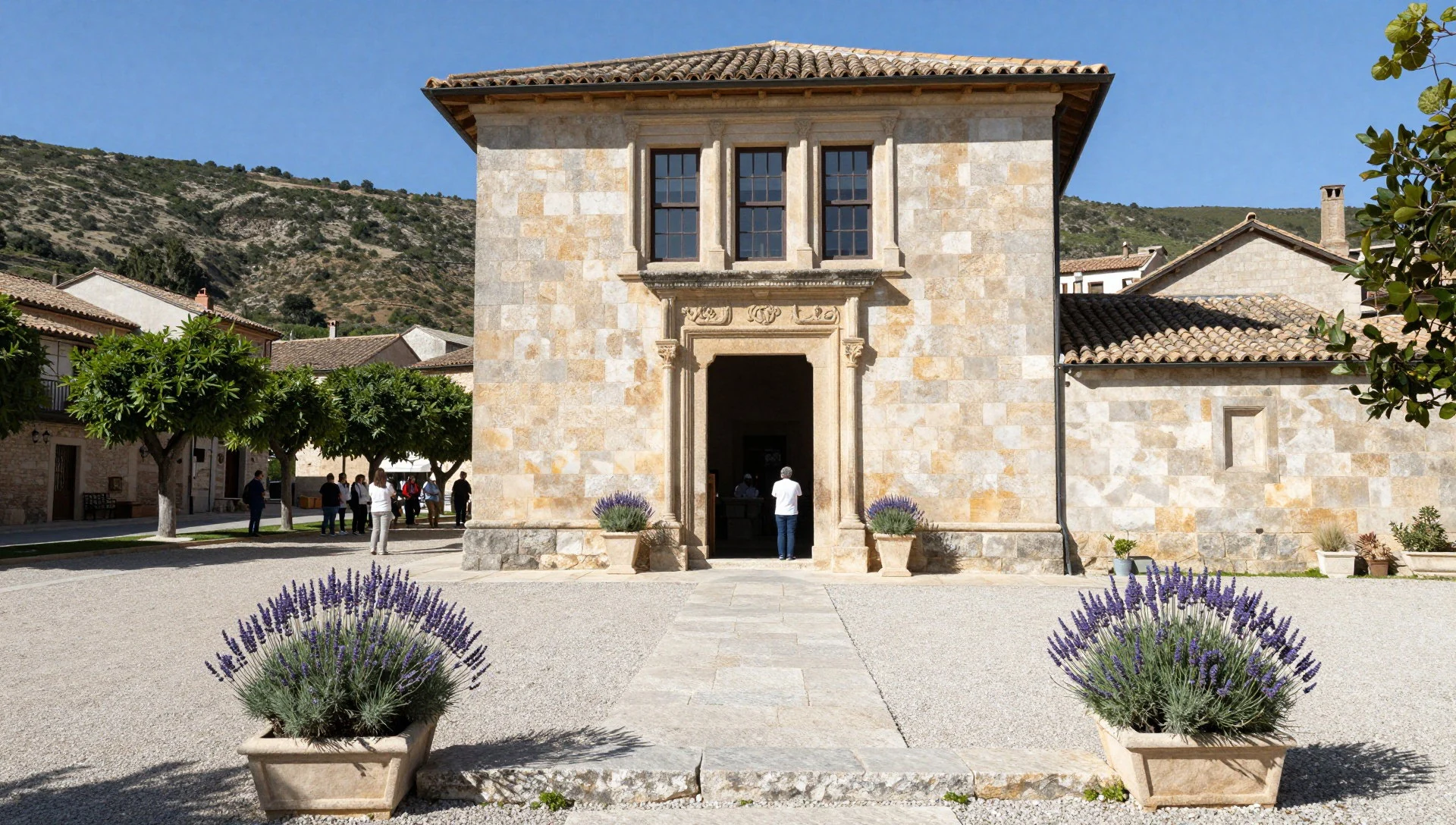
- Suso Monastery — Hillside above San Millán de la Cogolla
The older monastery sits higher up the slope and is entered on its own guided visit, booked separately from Yuso. Private cars are restricted on the approach, so the practical way up is the shuttle from Yuso. Reserve ahead, because places are limited and the visit is not drop-in.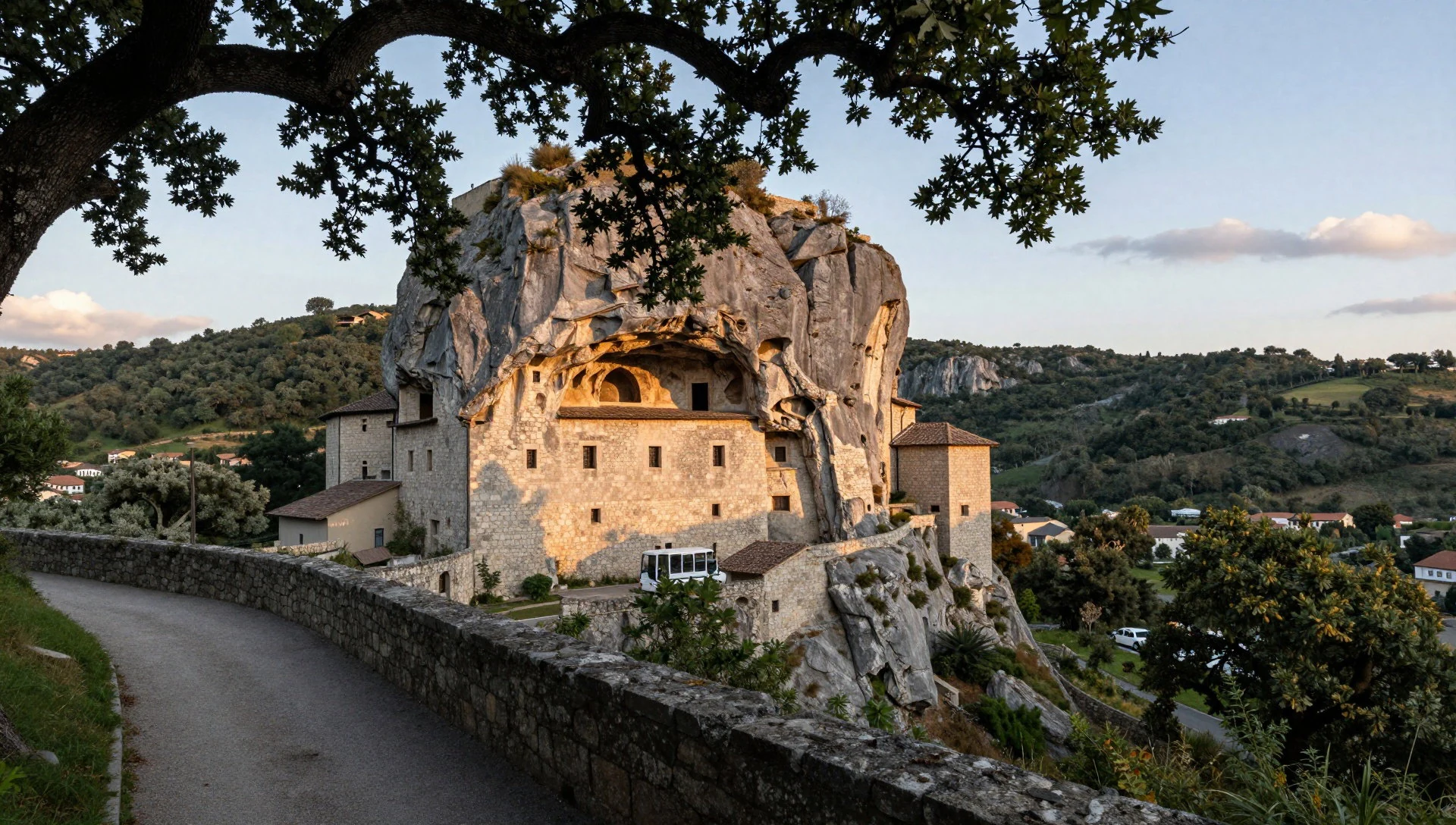
- The Glosas Emilianenses at Suso — Inside Suso Monastery
The glosses are brief handwritten notes in early Spanish and Basque added to a Latin manuscript, and Suso is the place tied to them. The text itself is not the draw; the pull is standing where a vernacular language first reached the page. The interior is plain, dim and calm.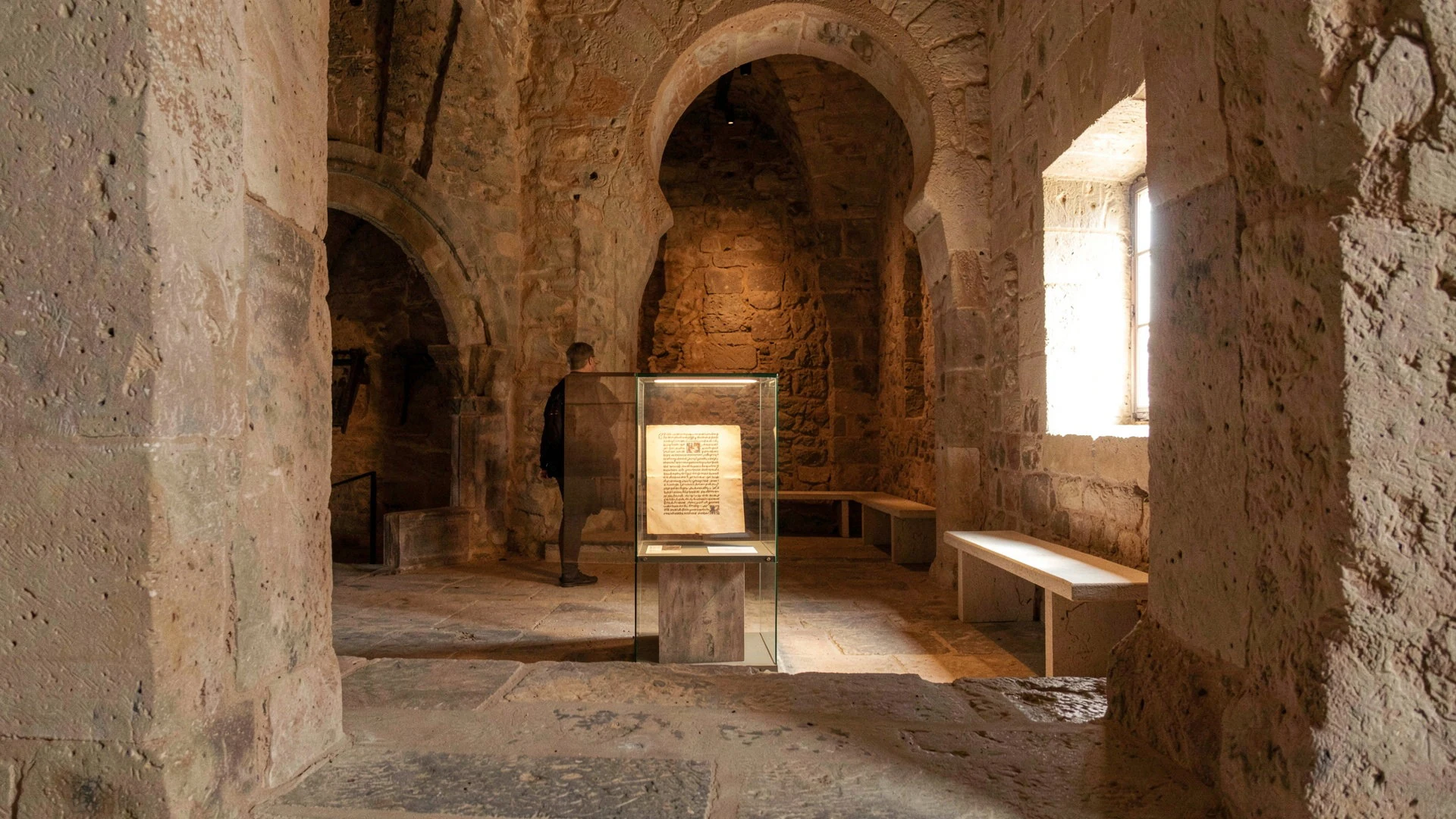
- Berceo — Village next to San Millán de la Cogolla
This neighbouring village gave its name to Gonzalo de Berceo, the earliest Spanish poet whose name has come down to us. It adds a literary strand to a day otherwise spent among monasteries, and it makes an easy, unhurried drive on the same road used to reach San Millán.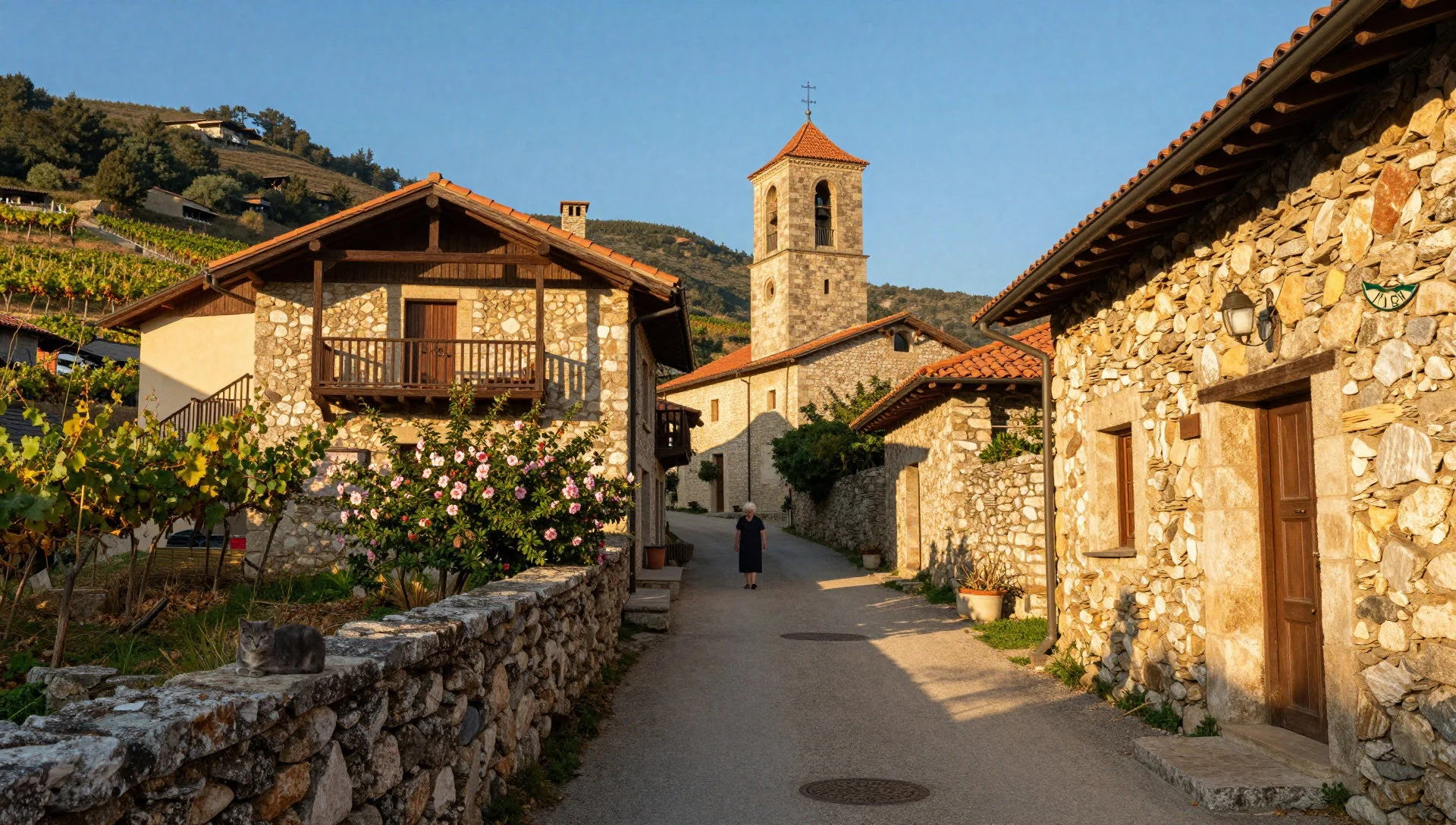
- The shuttle and the village lanes — Between Yuso and Suso
Between the two monasteries runs a free shuttle that leaves at regular intervals during visiting hours. Taking it, or walking the valley road if the weather is kind, lets the two buildings be read as one story: the older hermitage above, the later community below, and village houses between.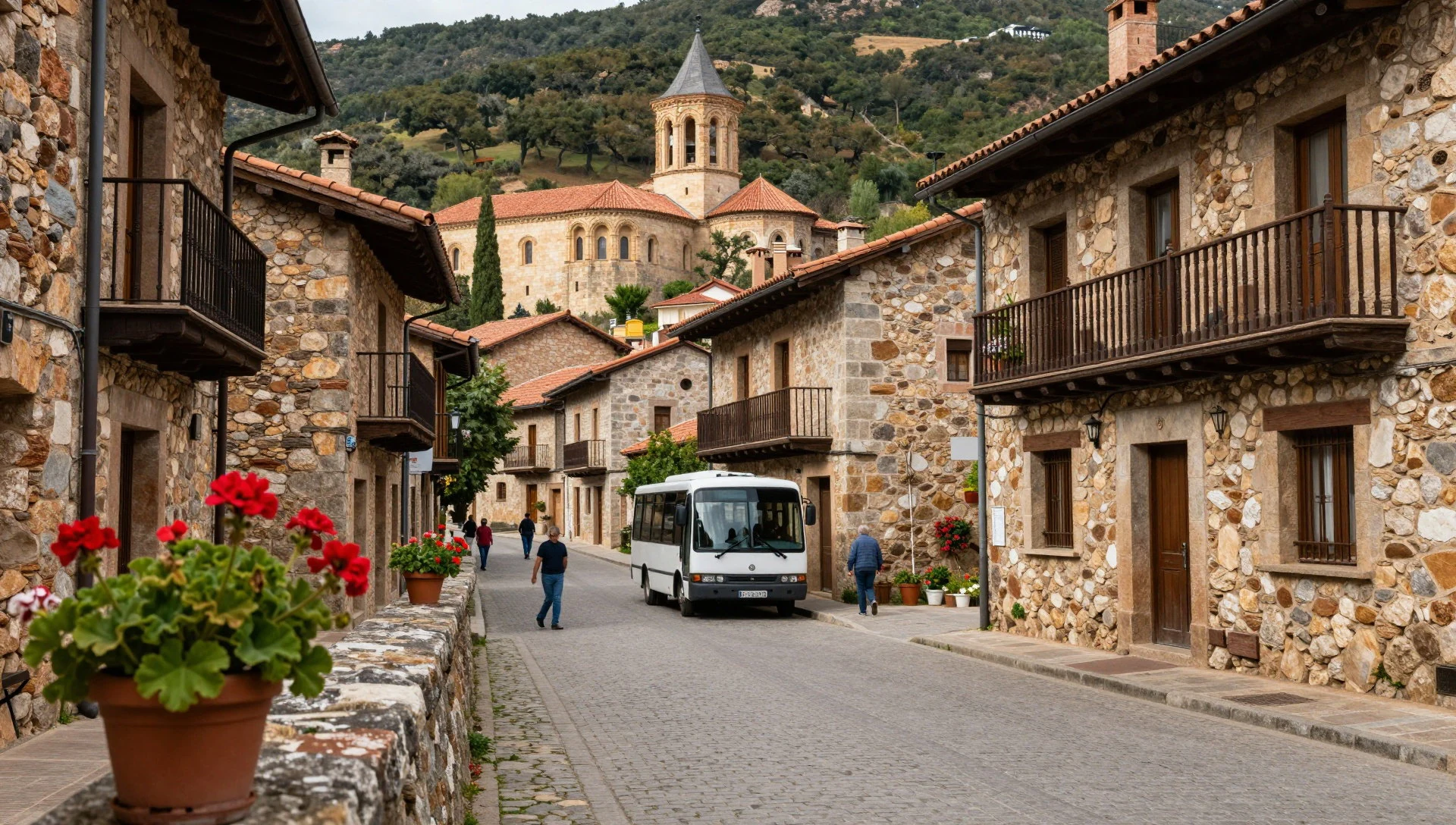
Culture
Yuso Monastery belongs to a living Christian tradition, so the atmosphere is devotional first and touristic second. Saint Emilian is the local patron, and his name appears across the village, from church dedications to the flag-like banners associated with him in La Rioja. The valley's identity is bound up with him, and with the idea that Spanish itself found its first written voice here. The monks and the later Augustinian community have kept the buildings in use through political upheaval, which gives the place a sense of patience rather than display. Language is a quiet theme: Castilian and Basque both appear in the early glosses, and visitors from other countries sometimes find it moving that a few marginal notes carry so much weight. Rioja life more widely revolves around the farming year, local wine and village festivals, and the monastery fits into that rhythm rather than standing apart from it. Guides lead the visits, and the tours are structured, so there is little scope for wandering at will. Expect to follow a route, listen, and move on with the group. Silence in the church and in the manuscript rooms is normal, and conversation is kept low. Visitors should keep voices down, switch phones to silent and follow the guide's instructions on photography, because some rooms restrict it.
What to wear
Traditional dress in La Rioja is mostly a festival matter today. Regional costume for men typically features a white shirt, dark waistcoat, sash and breeches, with rope-soled alpargatas on the feet, while women wear layered skirts, aprons and shawls in wool, linen and cotton, often with bright trim. These outfits appear at village fiestas, folk dances and patron-saint celebrations rather than on ordinary days. In everyday life, people in San Millán dress as in most small Spanish towns: practical jackets, jeans, sturdy shoes and, in winter, heavy coats and scarves, since the valley can be cold. In summer, light cotton and sun hats are common. For a visitor, the sensible approach is to dress for a working religious site. Cover shoulders and knees, avoid beachwear and carry a light layer, because stone interiors stay cool even when the day is hot. Comfortable closed shoes matter more than smart ones: the village lanes can be uneven, and getting up to Suso means slopes and steps. In spring and autumn, bring a waterproof as showers are possible, and in winter pack gloves and a warm hat. Sunglasses and sun cream are useful in the summer months, as there is little shade on the open approach to the monasteries.
What to eat
- Patatas a la riojana — Village restaurants around San Millán de la Cogolla
A comforting stew of potatoes cooked with chorizo and paprika, thick, orange-red and warming. It is a staple of the region and suits a cool day in the valley. Look for it as a daily dish in village restaurants and bars.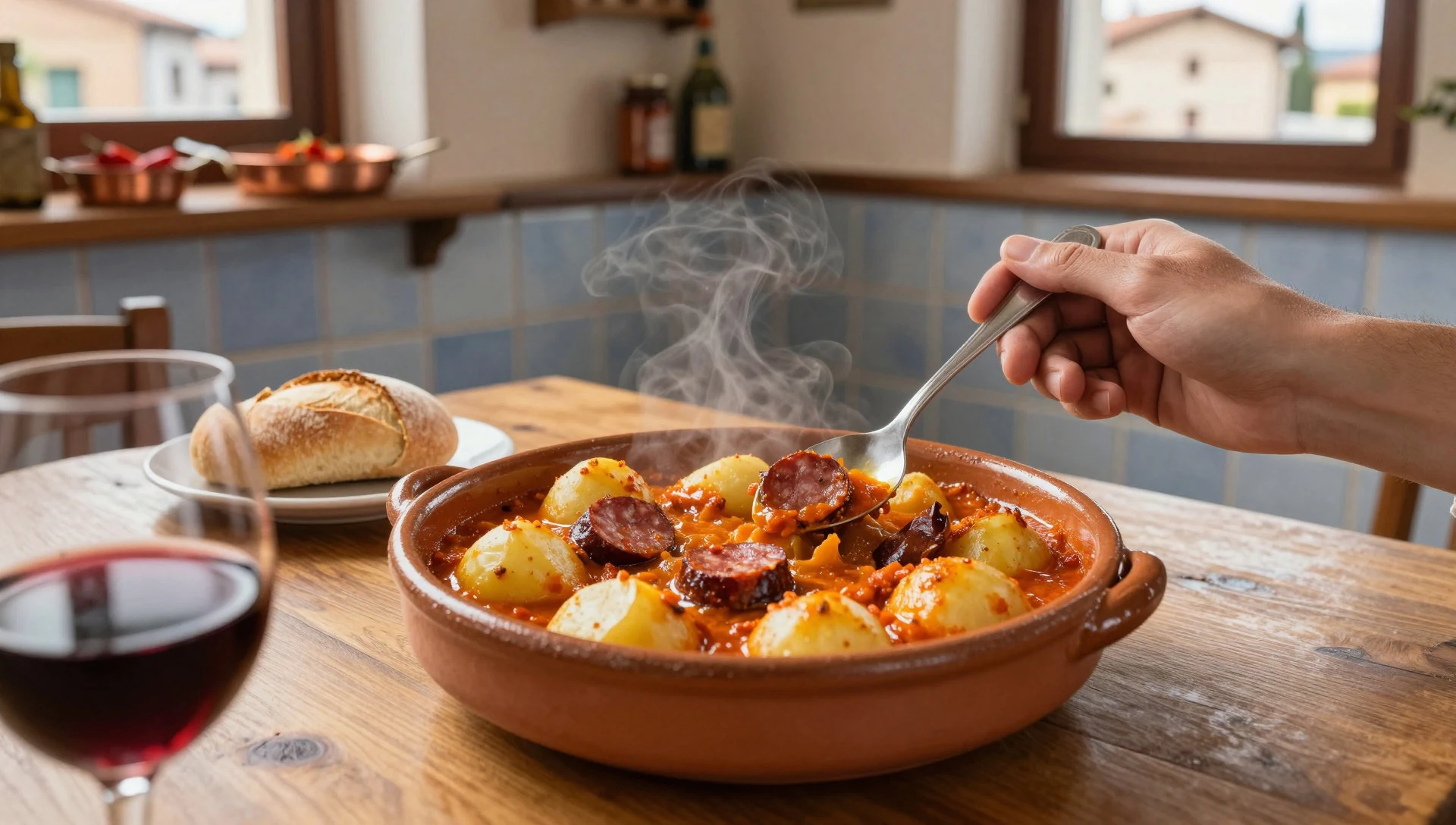
- Menestra de verduras — Set-lunch menus in Rioja towns and Logroño
A mixed vegetable dish built from seasonal produce such as artichokes, peas, asparagus and beans, often with a little ham. The Ebro valley is a farming area, so this is eaten fresh and simply. It appears most often on set lunch menus in spring.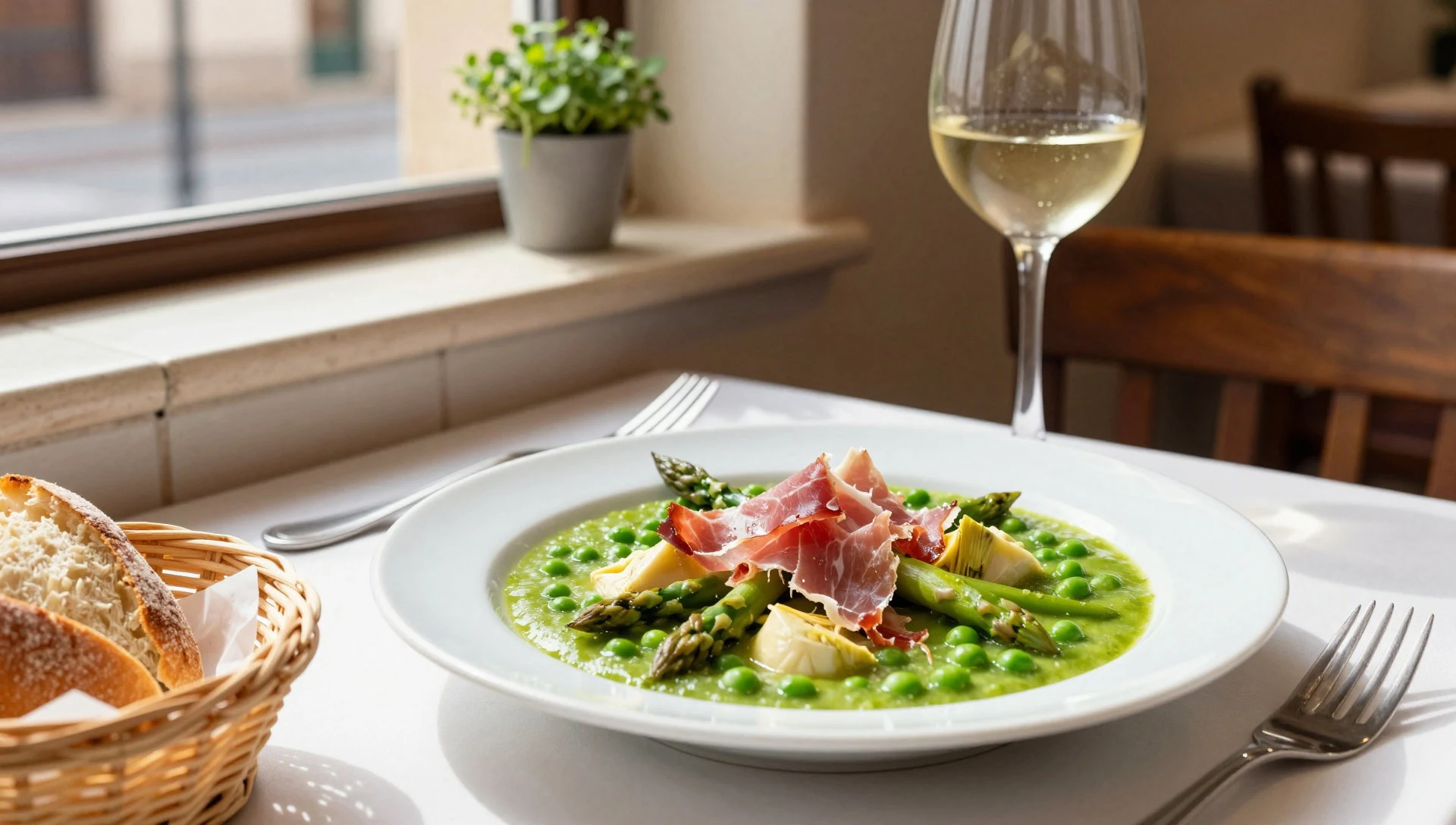
- Chuletillas de cordero al sarmiento — Grill restaurants and cellar-side eateries in the region
Small lamb chops grilled over burning vine cuttings, which give a light smoky flavour. It is a classic of Rioja cooking and shows how closely food and vineyards are tied together. It is best eaten at a grill restaurant. - Pinchos in Logroño — The old-town tapas streets of Logroño
Small snacks on a slice of bread or a cocktail stick, eaten standing at the bar with a glass of wine. Logroño is the usual base for the monasteries, and its tapas streets are a natural stop before or after the trip. - Rioja wine — Local bodegas and wine bars across La Rioja
The region is built around wine, and the reds are the obvious choice with lamb and stews. Whites and rosés are made here too. Many villages have cellars where small tastings can be arranged, though planning ahead helps.
Plan it
Best time. March and April are the most comfortable months. Walking between sites is pleasant then, though nights stay cold, while July and August are the hottest months and November is the wettest, with about 75 mm of rain.
How long. 1–2
Getting there. The usual base is Logroño. Coaches, public and private alike, leave the main bus station for San Millán, yet they go only a few times a day and the weekday schedule is not the same as the weekend one, so check current timetables before planning. By car, take the main road from Logroño towards Burgos, leave at the Nájera exit and follow the signs through Tricio, Arenzana, Badarán and Berceo; the drive takes under an hour.
Budget. mid
Tips
- Book the Suso visit ahead, as it is managed separately from Yuso
- Check the official site for current visiting arrangements before setting out
- Plan around the bus times if travelling without a car, and consider staying overnight
- Use the free shuttle between the monasteries during visiting hours
- Carry a light layer, as the stone interiors are cool
Etiquette
- Dress modestly: cover shoulders and knees inside the monasteries
- Keep voices low and follow the guide's rules on photography
- Arrive in good time for your slot, as visits run in groups
Nearby
Sources
- Wikidata Q2284354 (CC0)
- Wikipedia: Monasteries of San Millán de la Cogolla (rev 1367470102) (CC BY-SA 4.0)
- Wikivoyage: San Millán de la Cogolla (rev 5417188) (CC BY-SA 4.0)
- Photo 01 Monasterio de Suso (2), aherrero (CC BY 2.5)
- Photo 02 Interior del Monasterio de San Millán de Suso, aherrero (CC BY 2.5)
- Photo 03 Bandera de San Millán, Cenobio (CC BY-SA 2.0)
- Photo 04 Bandera San Millán patron, Cenobio (CC BY 3.0)
- Photo 05 San Millán de la Cogolla, xiquinhosilva (CC BY 2.5)
- Photo 06 San Millán de la Cogolla, xiquinhosilva (CC BY 2.5)
- Photo 07 San Millán de la Cogolla, xiquinhosilva (CC BY 2.5)
- Photo 08 San Millán de la Cogolla, xiquinhosilva (CC BY 2.5)


