Yonaguni
Yonaguni, Japan
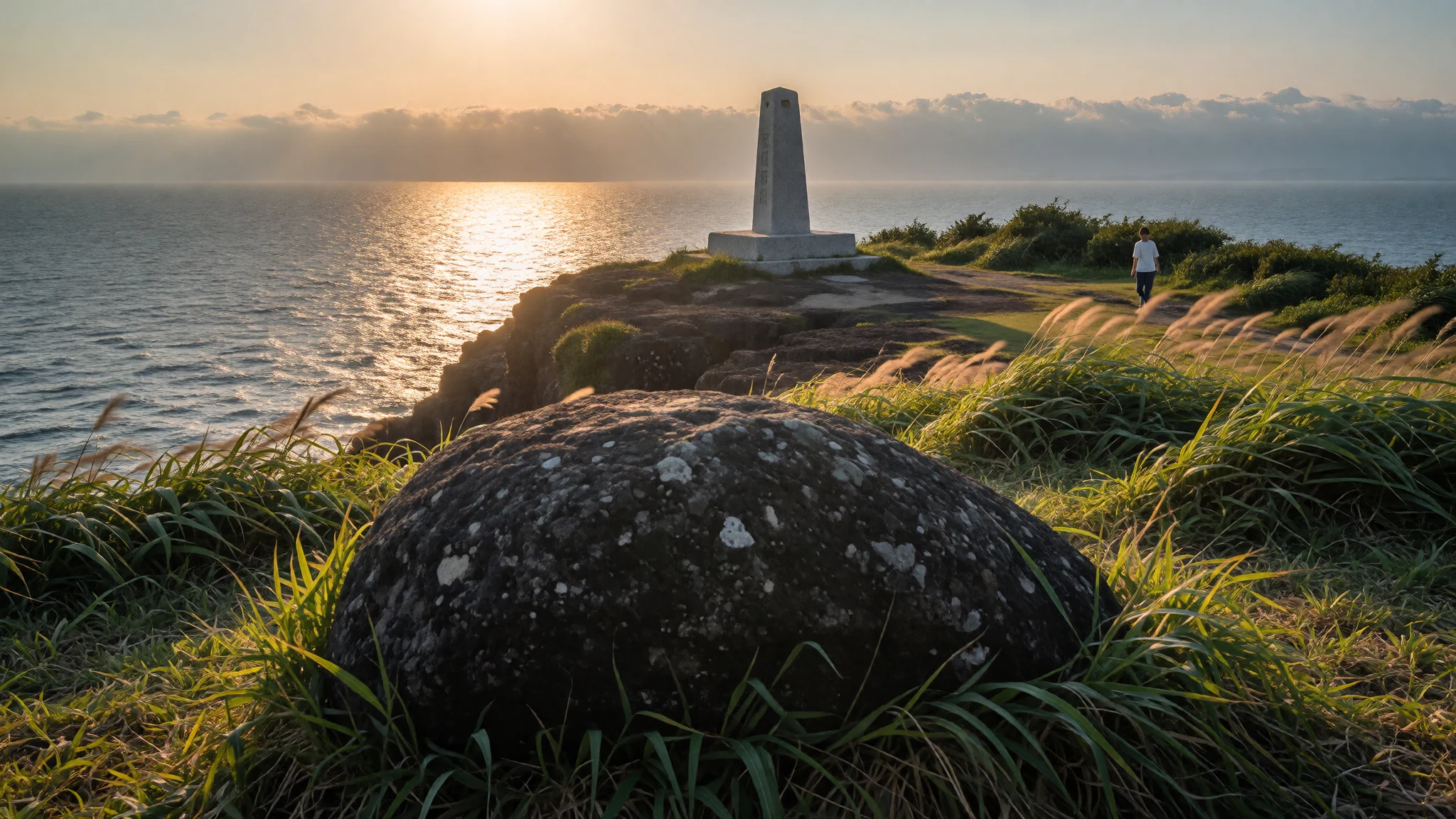
Yonaguni is where Japan simply runs out: a windswept island of cliffs, clear water and last sunsets, closer to Taiwan than to Okinawa's main island.
The place
Yonaguni is the westernmost inhabited island of Japan, a small, windy outcrop in the Yaeyama group of Okinawa Prefecture, lying where the East China Sea meets the Philippine Sea. Taiwan is only 107.4 km away, and in good weather the island can be spotted from the Taiwanese mountains. About 1,500 people live here, mostly in three settlements. Sonai, on the north coast, has the town offices, the breweries and the few small shops. Kubura, a fishing port on the west coast, is where the dive boats and the westernmost point of the country are found. Higawa is a tiny hamlet in the south, beside the island's crescent beach. The land is a mix of sea cliffs, forested hills and open grazing, and the warm Kuroshio Current sweeps past the coast, bringing the clear water that draws divers. The tropical climate means mild winters and hot, humid summers, with typhoons a real risk in autumn. Reaching Yonaguni is slow and costly, and flights and ferries are sometimes cancelled at short notice when the weather turns, so a spare day in the plan is sensible. Most visitors eat breakfast and dinner where they sleep, and lunch through their diving operator, since restaurants are few. There is little to do after dark beyond watching stars and talking. The habu snake that worries people elsewhere in Okinawa is absent here. The real hazard is the sea itself, especially strong currents along the north coast.
Its story
Yonaguni's early history is thin, and the biggest question is how people first arrived. Scholars have long debated migration from Taiwan, and in 2019 a Japanese and Taiwanese team tested the idea by paddling a dugout canoe, built with methods and materials from 30,000 years ago, from Taitung County on the Taiwanese coast to Yonaguni. The crossing took two days, carried by the Kuroshio Current. The first written mention of the island comes much later, in a 1477 Korean record of fishermen from Jeju who were blown off course and washed up here. Local memory holds a stronger figure: Sanai Isoba, a woman said to have ruled the island around the end of the fifteenth century. Stories credit her with extraordinary powers, which she used to defend her people against outsiders, including raiders from the neighbouring island of Miyako. A ritual to honour her is still held once a year. During the fifteenth century Yonaguni came under the Ryukyu Kingdom. When that kingdom was dissolved in 1879, the island was folded into the newly created Okinawa Prefecture of Japan. It stayed part of a wider Yaeyama administrative area for decades and became a village in its own right in 1948. Today it is a town, but the sense of being at an edge, with a larger neighbour visible on clear days, shapes how the island sees itself.
What to see
- Cape Irizaki — Western tip, near Kubura
Cape Irizaki is the western tip of Yonaguni and carries the marker for the westernmost point of Japan. It sits a short walk from Kubura, so it suits an easy morning or evening outing. The headland is exposed and windy, with sea on three sides and very little shelter, so bring water and a hat. - Cape Agarizaki — Eastern tip of the island
Cape Agarizaki, the East Cape, takes its name from the rising sun, and the cliff here is the place to watch dawn arrive. In clear conditions the coast of Iriomote can be made out across the water. It is quiet and windswept, so go early and check the weather first. - Kuburabari — Kubura, west coast
Kuburabari is a cliff beside the northern edge of Kubura's harbour, popular for sunset. It is billed as the place to see the last sunset in Japan, and on a very clear evening the shape of Taiwan can fall across the setting sun. Cloud is common, so treat it as a bonus rather than a promise. - Hikawa Beach — Higawa, south coast
Hikawa Beach is the island's largest beach, a crescent of pale sand in the south. A coral reef offshore keeps the waves low, which makes it one of the calmer places to swim on Yonaguni. It is very quiet, with few facilities, so bring what is needed for the day.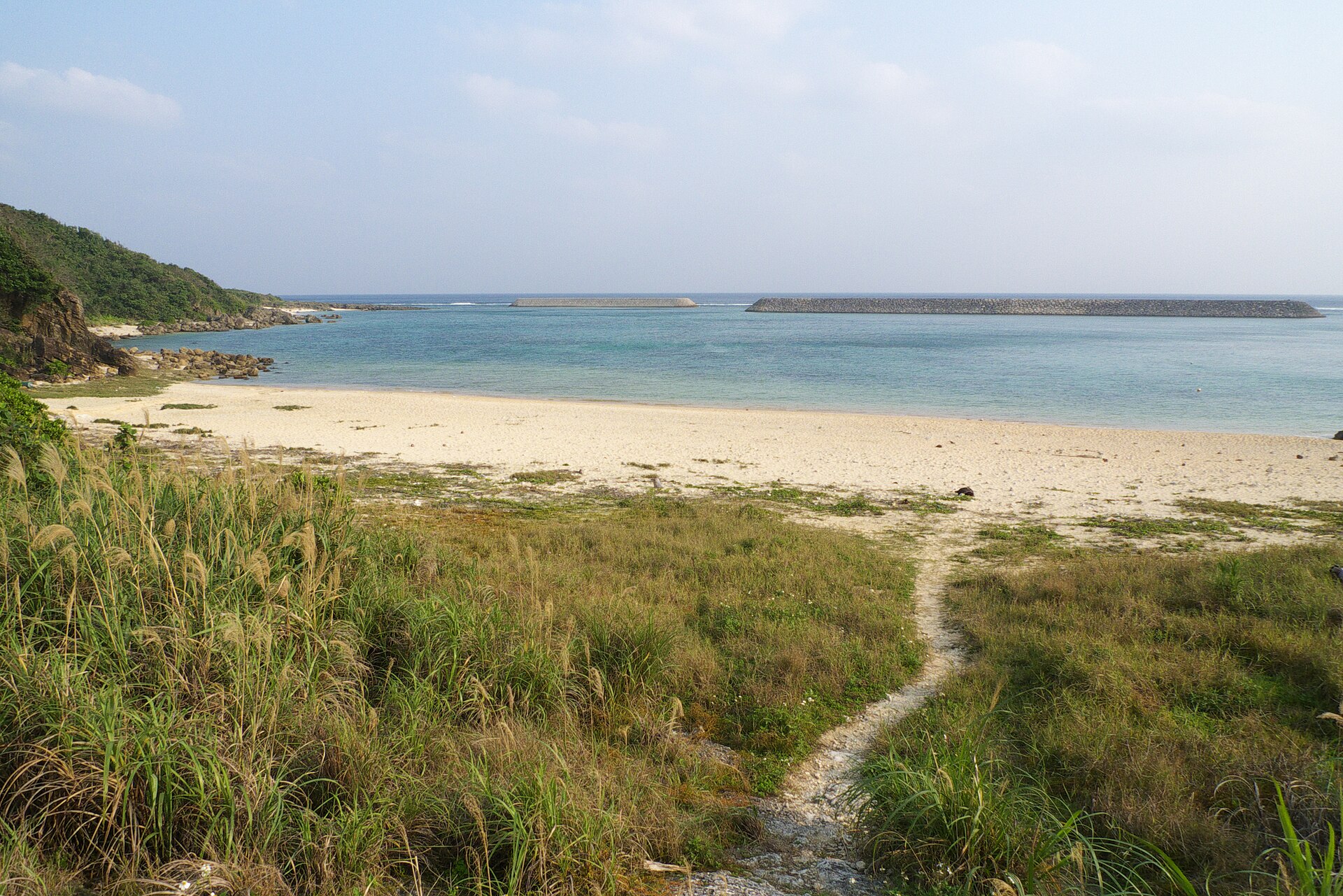
- Tindabana — Above Sonai, north coast
Tindabana is a natural rock formation on a rise above Sonai. The climb is modest, and the reward is a wide outlook over the village, the north coast and the beach at Nandahama. It works well as a first orientation walk on arrival, when the weather is clear and the light is soft. - Jinmen-iwa — South-east forest
Jinmen-iwa is a large rock standing in forest on the south-east side of the island, shaped much like a human face. Whether the likeness is wind and weather or the work of imagination, it makes a fun short stop on a drive around the island's quieter side.
Culture
Yonaguni has its own language, Dunan-chima, which differs from standard Japanese and from the speech of the main Okinawan islands. The island's name in that language, Dunan, still appears on local products. Daily life follows the sea and the seasons: fishing, diving tourism, small farms, and a community small enough that most people know one another. The strongest living tradition is the yearly ritual for Sanai Isoba, the legendary woman ruler, which keeps old stories of defence and protection in public memory. Drinking culture is another thread. The island's signature spirit, hanazake, is a very strong local awamori, traditionally drunk neat. Three breweries in Sonai make it, and the long-standing custom is to sip slowly and with respect, not to treat it as a party drink. The island's position, with Taiwan close by, also shapes local identity, and residents talk matter-of-factly about being at the far end of the country. Visitors will notice how seriously people take the weather, since boats and flights depend on it. Plans change, and patience is expected. Ask before photographing residents, their homes or any ritual, and keep voices low and take all rubbish away when visiting shrines, cliffs and sacred sites.
What to wear
Yonaguni's traditional dress belongs to the wider Ryukyuan family of clothing, made for a hot, humid climate from light cottons and plant fibres such as ramie and banana-fibre cloth. The Yaeyama islands, including Yonaguni, have a long weaving tradition, and woven cloth on the island is tied to local ceremonies and festivals, when older styles of robe and sash may still appear. Check locally for any craft workshop or exhibition, since opening arrangements vary and should be confirmed in advance. In daily life, people wear what suits work in strong sun and sea air: T-shirts, shorts, light trousers, rash vests and sandals, with waterproof jackets for the frequent squalls. Fishermen and divers favour practical, quick-drying kit, and nobody dresses up for dinner. A visitor should pack for heat and wind. Light, breathable layers work best, with a windproof shell for the cliffs and a hat and sunscreen for the open headlands. Wear sturdy sandals or trail shoes for rocky coastal paths, and keep reef-safe habits in the water. Swimwear is fine on the beach and on boats, though it is polite to cover up when walking through Sonai or Kubura. If attending any shrine or ritual, dress modestly with shoulders and knees covered, and follow the lead of local people.
What to eat
- Chōmei-sō noodles — Small restaurants in Sonai and Kubura
Chōmei-sō is a local grass said to promote long life, and on Yonaguni it is often scattered over a bowl of noodles. The flavour is green and slightly bitter, and it makes a good lunch after a morning of walking. - Hanazake — Breweries in Sonai
Hanazake, literally flower sake, is the island's very strong local awamori, traditionally drunk neat. Three island labels exist, Donan, Yonaguni and Maifuna, and the breweries in Sonai offer tastings and explain how it is made.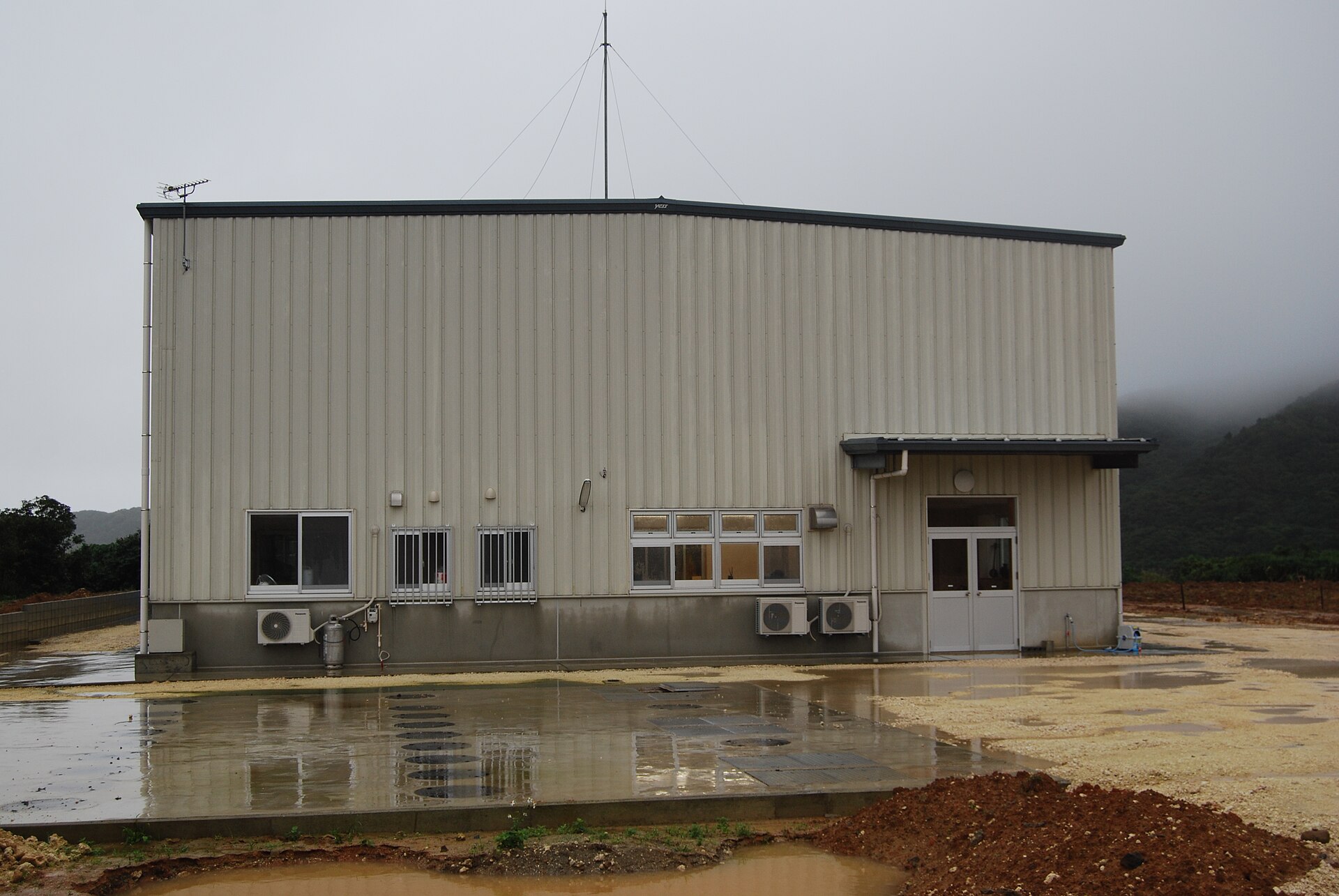
- Island fish set meals — Guesthouse dinners and dive-service lunches
With fishing at the heart of island life, the catch of the day often turns up as sashimi or grilled fish with rice and soup. Most visitors meet it at dinner where they stay, or at lunch arranged by a diving service. - Okinawa soba — Small eateries in Sonai and Kubura
Okinawa soba is a wheat noodle in a pork-based broth, a staple across the prefecture. On Yonaguni it is a simple, filling lunch from the handful of small eateries, usually served with a few simple toppings.
Plan it
Best time. April to July is the most comfortable stretch: warm, with July the driest month, though hot and humid. Winters are mild but windy. September is the wettest month, and autumn brings typhoon risk, so allow spare days if travelling then.
How long. 3–4
Getting there. Yonaguni has no flights or boats to Taiwan at present, so the only way in is from elsewhere in Japan, usually by air via Ishigaki or Naha, with a short final flight to the island's airport near Sonai. Services can be cancelled in bad weather, so check the airline's site close to the date.
Budget. high
Tips
- Book flights and lodging well ahead, since the island is small and seats are limited
- Build a spare day into the end of the trip in case weather cancels the flight out
- Carry cash, as small shops and eateries may not take cards
- Check sea conditions before swimming, especially on the north coast where currents are strong
- Arrange lunch with your lodging or diving service, since restaurants are few and the shop in Sonai is small
Etiquette
- Do not touch sea creatures, including cone shells, some of which can sting dangerously
- Ask before photographing residents, homes or rituals
- Take all rubbish away from cliffs, beaches and viewpoints
Nearby
Sources
- Wikidata Q220701 (CC0)
- Wikipedia: Yonaguni (rev 1380332060) (CC BY-SA 4.0)
- Wikivoyage: Yonaguni (rev 5422936) (CC BY-SA 4.0)
- Photo: Map of Taipei and surrounding areas, Army Map Service, 1954 (Public domain)
- Photo: Yonaguni Island, NASA-Johnson Space Center (Public domain)
- Photo: Yonaguni Monument terraces, Melkov (CC0 1.0)
- Photo: Gunkan-iwa, Sanninudai, Melkov (CC0 1.0)
- Photo: Yonaguni Town Hall, 松岡明芳 (CC BY-SA 4.0)
- Photo: Higawahama in Yonaguni, Yasu (CC BY 3.0)
- Photo: JP Okinawa Yonaguni-jima Location, Tatata (CC BY 3.0)
- Photo: 国泉泡盛本社, donan (CC BY 3.0)


