Yogyakarta
Yogyakarta, Indonesia
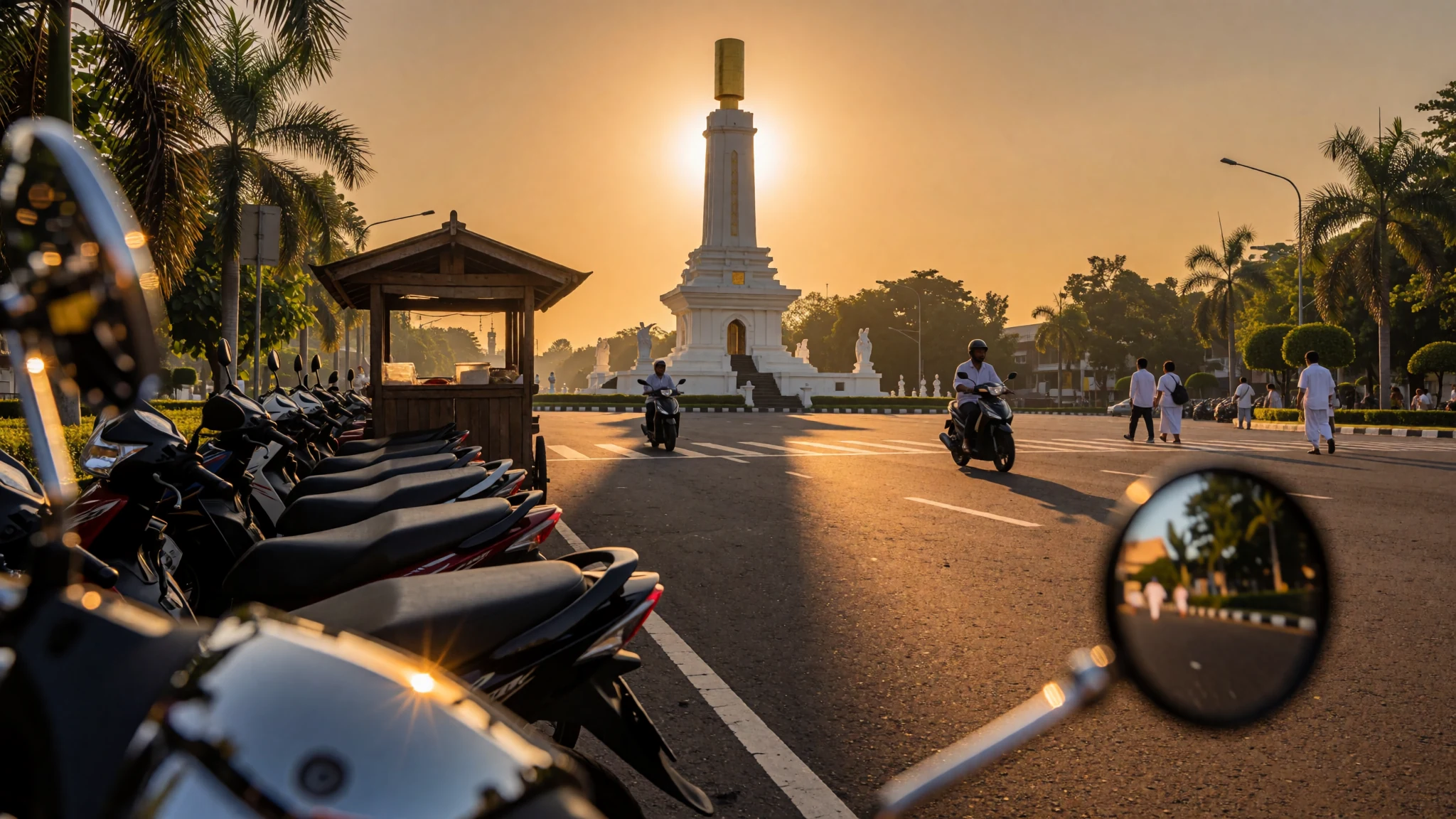
Yogyakarta is Java's living court city, where batik, shadow puppetry and a working sultan's palace make a slow, creative stay worth the heat.
The place
Yogyakarta is the capital of the Special Region of Yogyakarta, in the south-central part of Java, and sits about 113 metres above sea level. The city proper is home to 422,732 people. It is the only royal city in Indonesia still ruled by a monarchy, and that fact shapes much of what you notice: the palace at the heart of town, the regular ceremonies, and the sense that the old court is a living institution rather than a museum piece.
Culture is the second pillar. Batik workshops, silversmiths, puppet makers, gamelan ensembles and classical dance troupes are part of ordinary city life here, not only tourist attractions. Many welcome visitors who simply want to watch, buy or ask questions, and an unhurried half-day at the edge of a workshop often teaches more than a formal tour.
The city is also a university town. Gadjah Mada University, one of the most prestigious institutions in the country, anchors a large student population, and that gives the streets a young, unhurried energy, especially in the cafés and bookshops of the quieter lanes away from the centre.
Yogyakarta works best at a walking and becak pace. Distances are manageable, but the heat builds through late morning and traffic on the main roads can be dense. Plan your energetic sightseeing for the cool hours, then let the afternoons slow down in a shaded courtyard.
Its story
Yogyakarta's story begins well before the modern city existed. From the 8th to the 10th century, the Mataram kingdom had its heart in the valley of the Progo River, which lies on the south flank of Merapi volcano, and it was a sophisticated court that blended Hindu and Buddhist traditions. An inscription dated 732 CE links the Mataram area to a royal seat, and for roughly three centuries the region produced the great temples that now draw visitors, among them Borobudur and Prambanan.
Around 929 CE the centre of power shifted east to Java's eastern side, and the Mataram heartland entered a long quieter period. Later, Kota, a district in the south-east of today's city, served as the capital of an Islamic Mataram Sultanate between 1587 and 1613. Its royal graves at Kotagede still mark that chapter.
The city as we know it took shape in the eighteenth century. It was founded in 1756 as the seat of the sultanate, and the palace complex and the streets around it gave the city its enduring layout. During the Dutch colonial period the court kept a degree of standing, while colonial quarters such as Kotabaru grew up nearby.
Independence brought a brief but important role. From 1946 to 1948, during the Indonesian National Revolution, Yogyakarta served as the national capital, and Gedung Agung, now the presidential palace, was the president's office. That period explains why the city still feels like a place that matters in national memory.
What to see
- Tugu Monument — Downtown Yogyakarta
A downtown landmark built by Sri Sultan Hamengkubuwono VI. Its spire was originally a sphere meant to represent the universe, but in the colonial era it was replaced with a golden cylinder. It makes a useful meeting point and a good first photograph, especially in the late afternoon when the light is softer.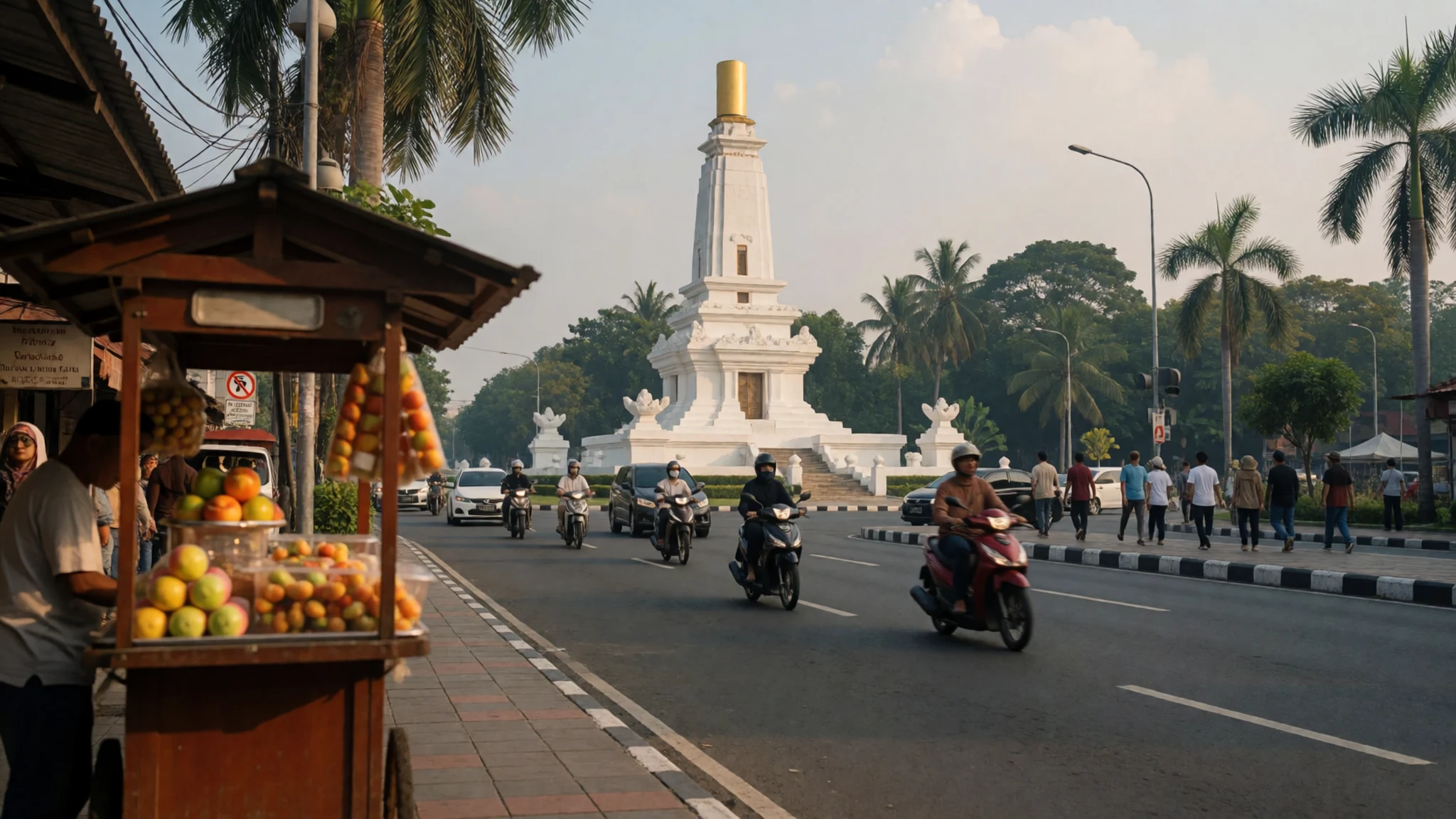
- Benteng Vredeburg — Beside Gedung Agung
A Dutch fort set in front of Gedung Agung, the President's Palace. It is a good example of Dutch colonial military architecture, and its displays cover the city's history. Among the few military items on show is a twin cannon. Allow a relaxed hour to walk round, and check the official site for current opening arrangements before you go.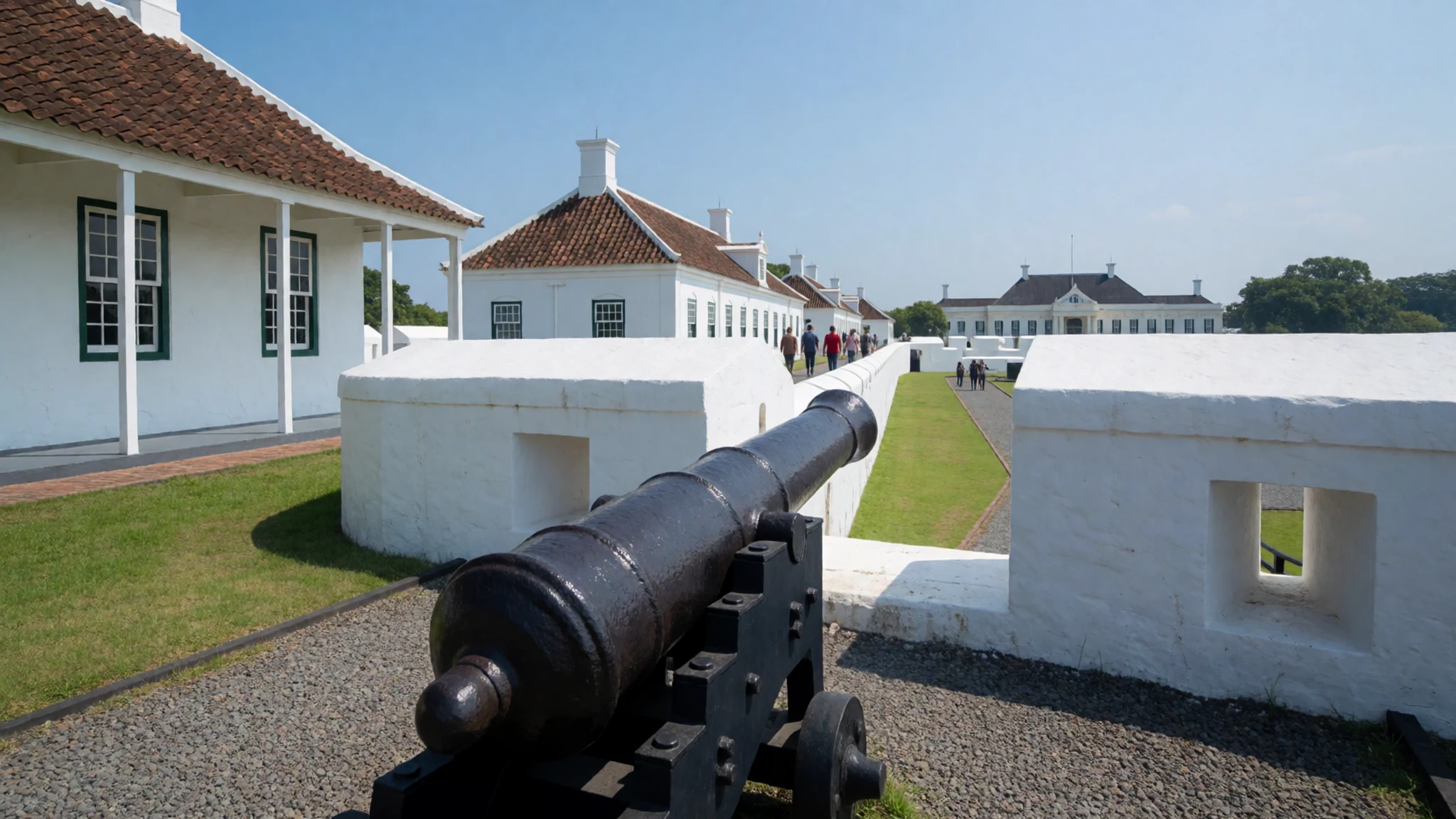
- Kotagede — South-east of the centre
The former capital of the Islamic Mataram kingdom, and the place where its first king, Panembahan Senopati, is buried in a royal graveyard. The lanes are lined with old houses and silversmith workshops, and several gates and mosques here date from that era. Walk slowly, and ask before photographing graves or people at prayer.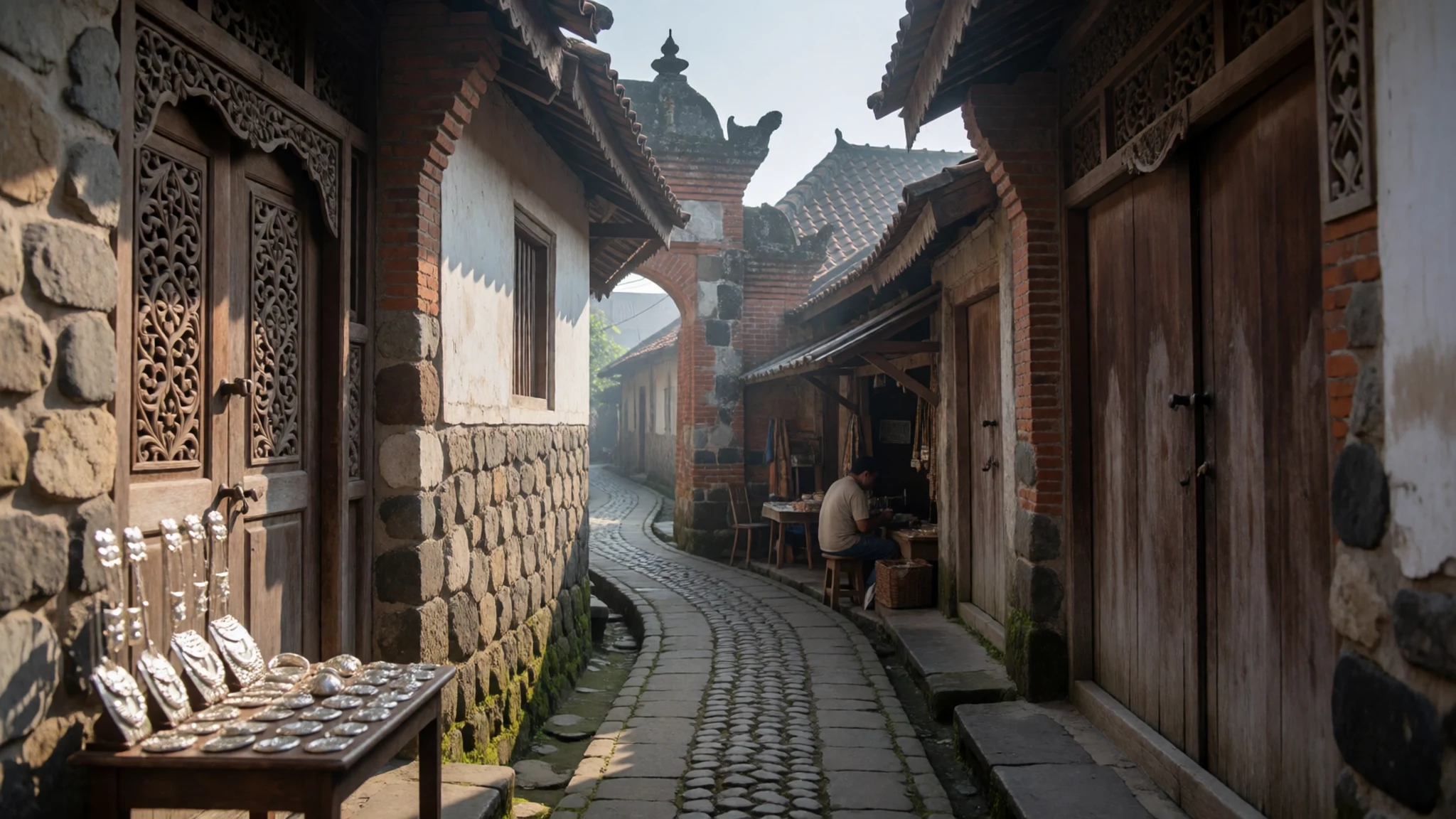
- Kotabaru — East of the centre
The old residential quarter of Dutch officials, with heritage homes, a colonial-style church, the Gereja Kotabaru monastery and the Stadion Kridosono. It is calmer than the centre and suits a slow morning walk. Cafés here serve students as well as visitors, and the area shows clearly how the colonial city was laid out.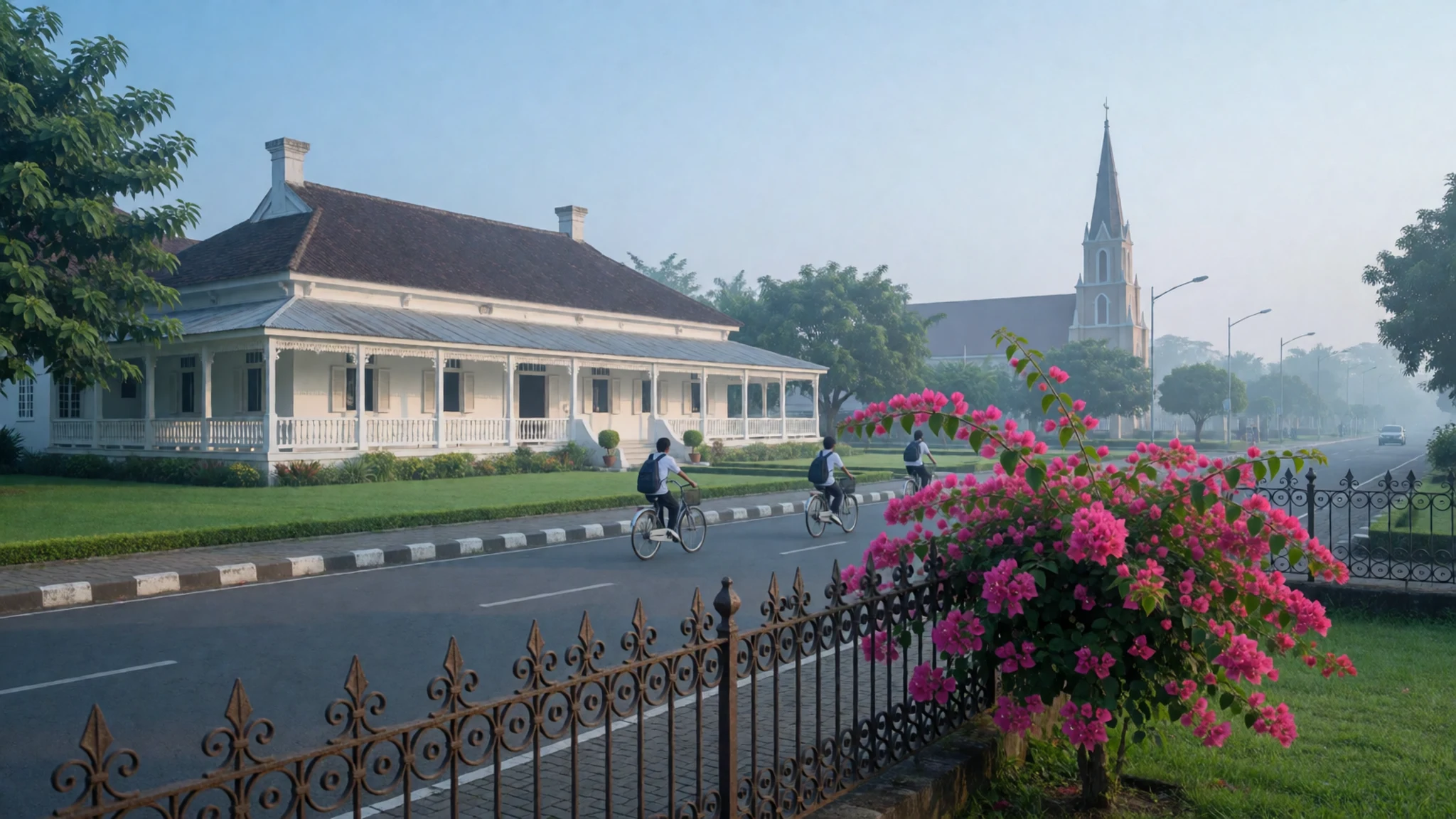
- Northern alun-alun — North of the Kraton
An open square built as a training ground for the Sultan's army. It was opened to the public during the reign of Sultan Hamengkubuwono IX. Today people walk, sit and gather here in the evening, and it makes a natural start to an unhurried walk towards the Kraton.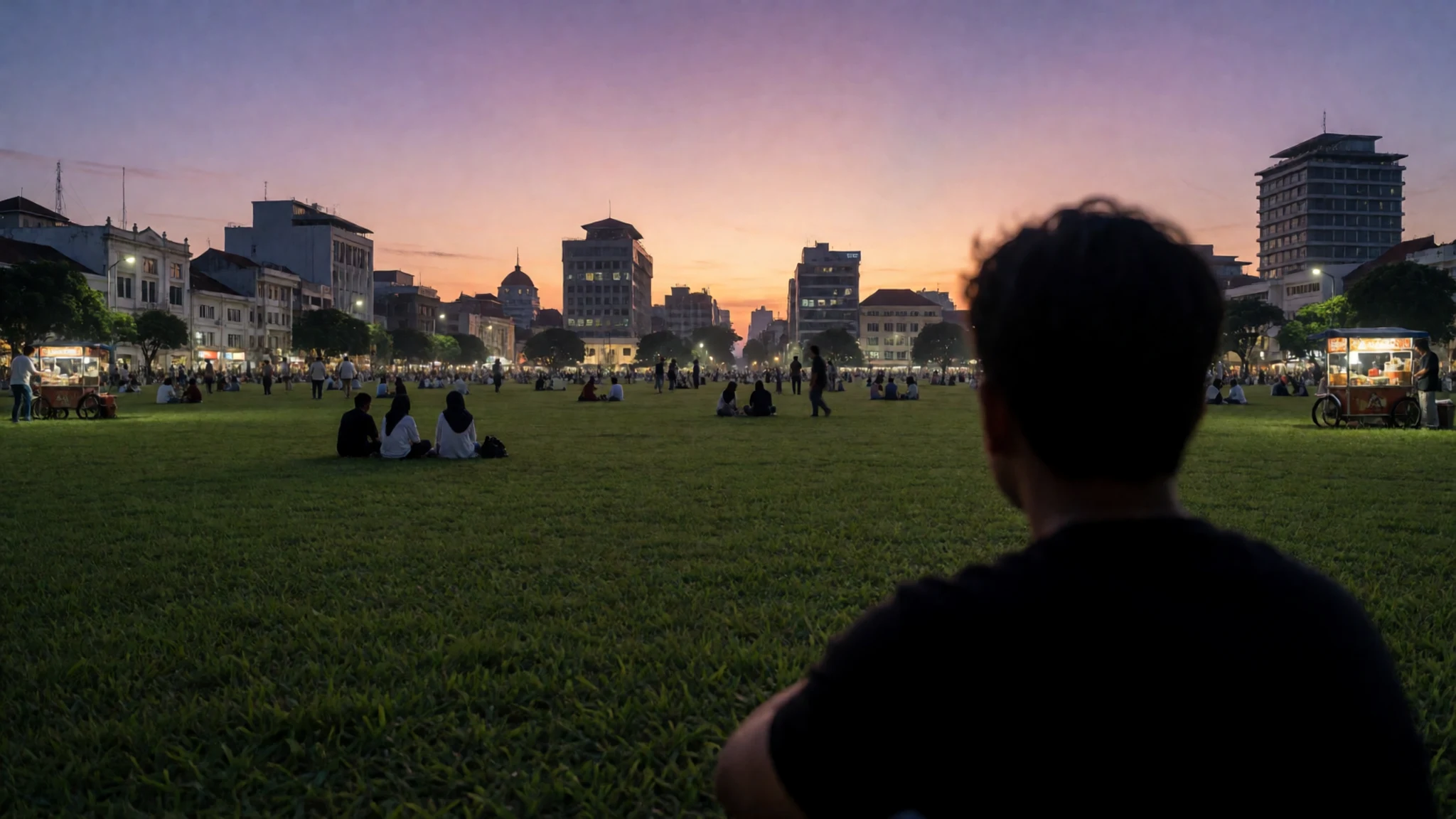
Culture
Yogyakarta's culture is shaped by its court, and the Kraton and its traditions still set the tone. Most people here are Muslim, and Javanese manners prize politeness, restraint and indirect speech. Sit down before you ask a question, keep your voice low in courtyards and palace halls, and accept small kindnesses graciously rather than pressing money on people.
Art is part of everyday life. Batik is made in workshops and sold in markets, wayang puppet performances draw on stories from Hindu epics, and gamelan music can be heard at ceremonies and in the evening. If you attend a performance, arrive a few minutes early, stay until it ends, and follow the lead of the audience on when to applaud.
Religious and royal spaces need care. Remove your shoes where there is a step up or a rack of footwear, and cover your shoulders and knees. Ask before photographing people, especially during prayers, and avoid pointing the soles of your feet at people or at offerings. The graves at Kotagede are a working burial ground, so keep your visit quiet.
Traffic and street life are loud, so patience helps. Bargaining is normal in markets but not in restaurants, and tipping is not expected beyond rounding up a small amount. Take off your shoes before entering any mosque or home where you see a step, and never photograph people in prayer without asking first.
What to wear
In Yogyakarta, traditional dress is closely tied to the court. Batik, cotton dyed with wax-resist patterns, is the city's signature textile, and the palace has its own motifs that were historically restricted to royalty. Men may wear a surjan, a long-sleeved shirt with a patterned sarong called a kain or jarik, sometimes with a blangkon head cloth at formal events. Women wear the kebaya, a fitted blouse, with a batik sarong wrapped at the waist.
Day to day, most people dress simply: short-sleeved shirts, loose trousers or skirts, and sandals or sneakers. Batik appears at offices, schools and celebrations as well as on ceremonial days. Many young people pair a batik shirt with jeans, and modern cuts now carry traditional motifs.
For a visitor, the heat calls for light cotton or linen that breathes. Carry a light long-sleeved layer for air-conditioned rooms and cooler evenings. At the Kraton, mosques and graveyards, dress modestly with covered shoulders and knees, and keep a sarong or shawl in your bag for women. Choose closed shoes that slip off easily, since you will remove them often and the pavements are uneven.
What to eat
- Sego kucing — Angkringan stalls around Tugu, the downtown monument
Small rice packets, usually with a spoonful of sambal, a piece of fried tofu or salted anchovies, served at night from angkringan carts. Sit on the low bench, order a few packets and a drink, and eat slowly while the street moves past you.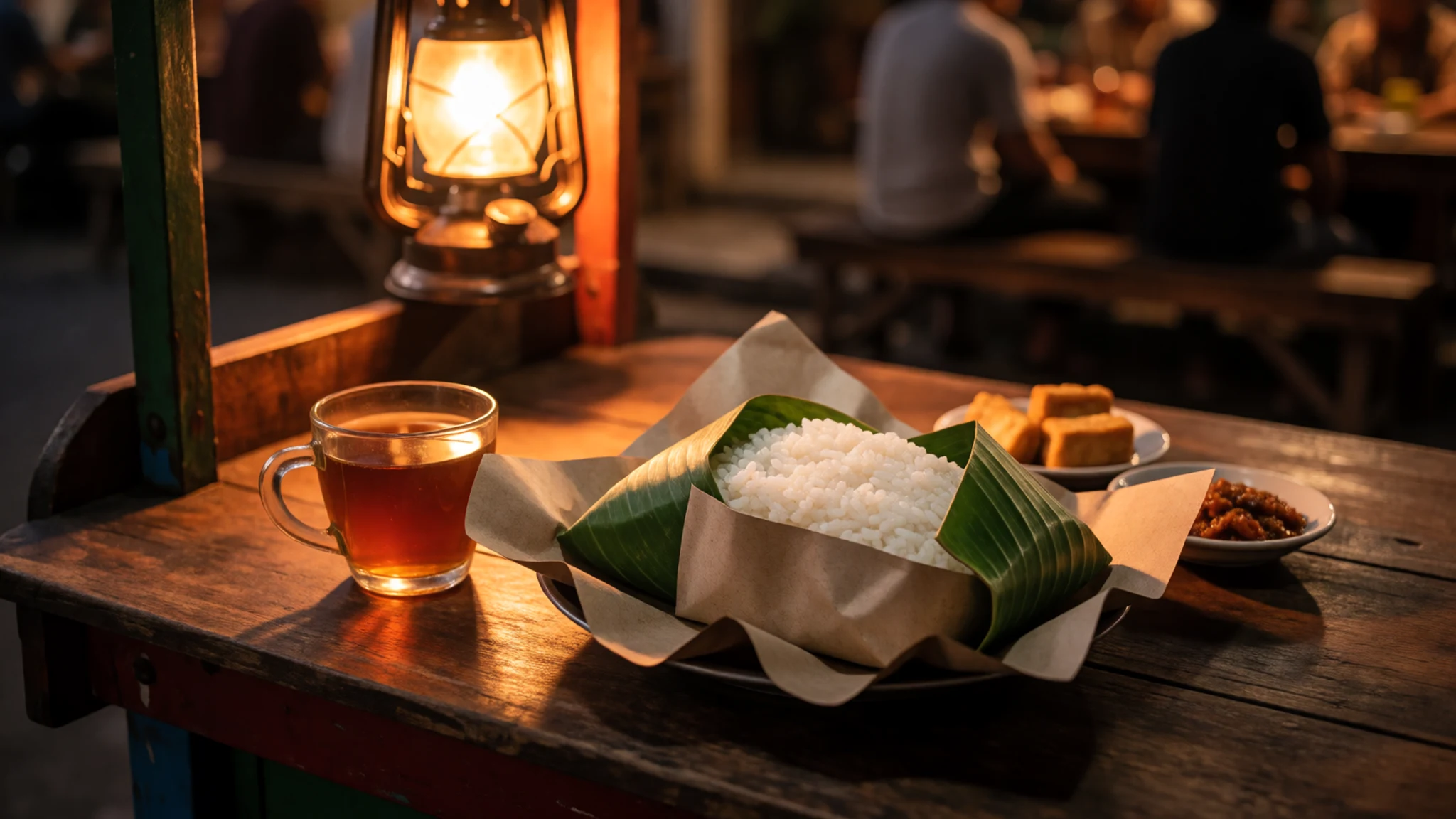
- Kopi joss — Angkringan stalls, late evening
Strong Javanese coffee, traditionally heated by dropping a piece of glowing charcoal into the glass, which gives it a smoky edge. It is often served sweet, and it is a classic partner to sego kucing late at night. Ask for it without sugar if you prefer a sharper cup.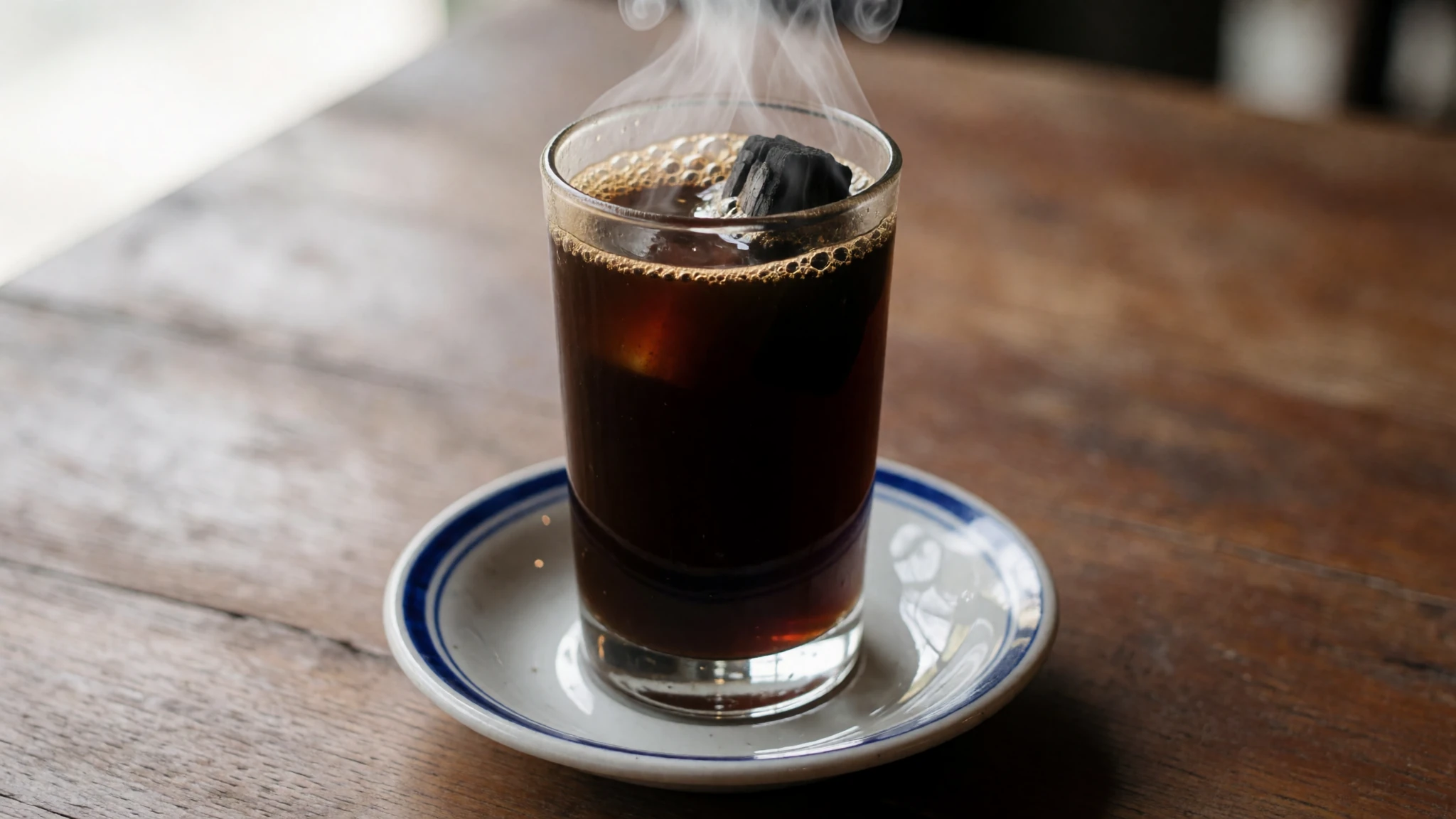
- Bakmi Jawa — Busy noodle houses in the Harjo Geno area, with a beer shop nearby
Javanese fried noodles, often with egg and chicken, and a cold bottle of beer on the side. Expect a long queue at the most popular houses, where waits can stretch to around two hours. Go early, or treat the wait as part of the evening.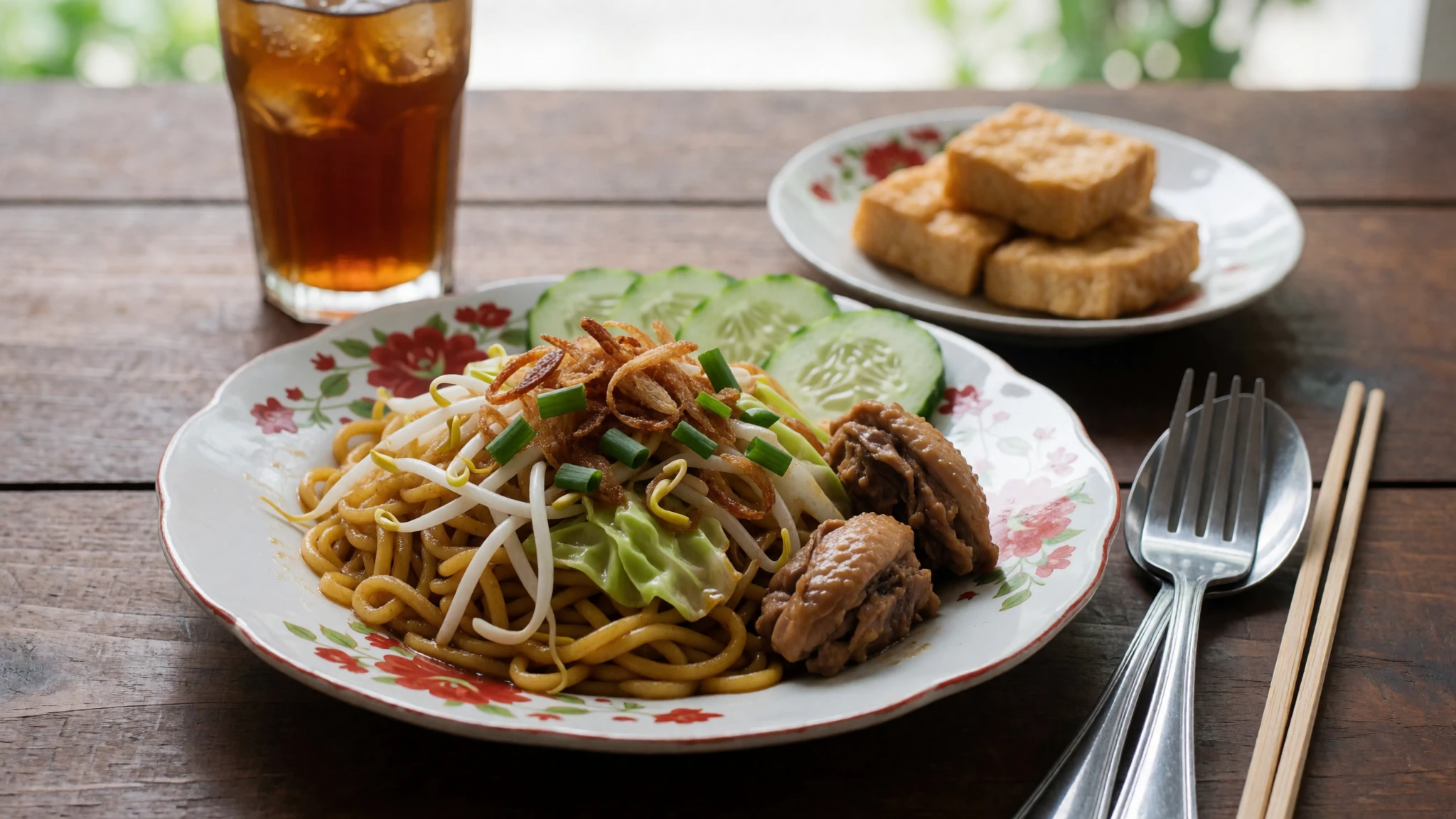
- Gudeg — Gudeg stalls near Tugu, the downtown monument
Young jackfruit stewed slowly in palm sugar and coconut until sweet and brown, served with rice, shredded chicken, a brown hard-boiled egg, areh coconut sauce and hot sambal goreng. Eat it at a Tugu stall, where the pot is topped up through the day. - Vegetarian Javanese cooking — A very small restaurant with meat and vegetarian options, such as Rame Rame Vegetarian
Javanese vegetable and tofu dishes, served with rice in a small, friendly room where the owner is known for her warmth. Ask what is cooked that day. It is a good stop if you want something light between temple visits.
Plan it
Best time. June to September, the drier months, is the usual choice, when afternoon rain is least likely. The wetter months bring heavy showers that can slow travel, and the heat peaks in September and October, so mornings are the most comfortable time to be out.
How long. 2–3
Getting there. Adisucipto International Airport is the closer option to the centre. From arrivals, use the official taxi rank or book a ride-hailing car, and make sure the driver runs the fare by the official tariff. The TransJogja bus 1A runs to Tugu station, and commuter trains from Solo stop at Tugu station, just off Jalan Malioboro.
Budget. low
Tips
- Visit the Kraton and Taman Sari early, before the tour groups and midday heat arrive
- Carry small notes and coins for becak rides, angkringan stalls and entry fees, as some small places do not take cards
- Drink bottled water and carry a hat, since the heat builds quickly by late morning
- Use ride-hailing apps after dark, and confirm the destination before you set off
- Check the official site for current arrangements at the palace and any performances before planning your day
Etiquette
- Remove your shoes at mosques, temples and some homes, where there is a step up
- Ask before photographing people, especially during prayers or ceremonies
- Dress modestly at the Kraton and graveyards, with shoulders and knees covered
Nearby
Sources
- Wikidata Q7568 (CC0)
- Wikipedia, Yogyakarta (rev 1381102876) (CC BY-SA 4.0)
- Wikivoyage, Yogyakarta (rev 5388684) (CC BY-SA 4.0)
- Yogyakarta, Indonesia: Tugu Yogyakarta (CEphoto, Uwe Aranas) (CC BY 3.0)
- Tugu Monument, Yogyakarta (Chainwit.) (CC BY 4.0)
- Pagelaran, Kraton of Yogyakarta (Gunawan Kartapranata) (CC BY 3.0)
- Taman Sari bathing complex (CEphoto, Uwe Aranas) (CC BY 3.0)
- Gedung Agung (ColdCuzAC) (CC BY 4.0)
- Malioboro pedestrian street (Indonesiagood) (CC BY 3.0)
- Kota Gede gate (Gunawan Kartapranata) (CC BY 3.0)
- Kraton main pavilion (User:China_Crisis) (CC BY-SA 2.5)


