Yangon
Yangon, Myanmar
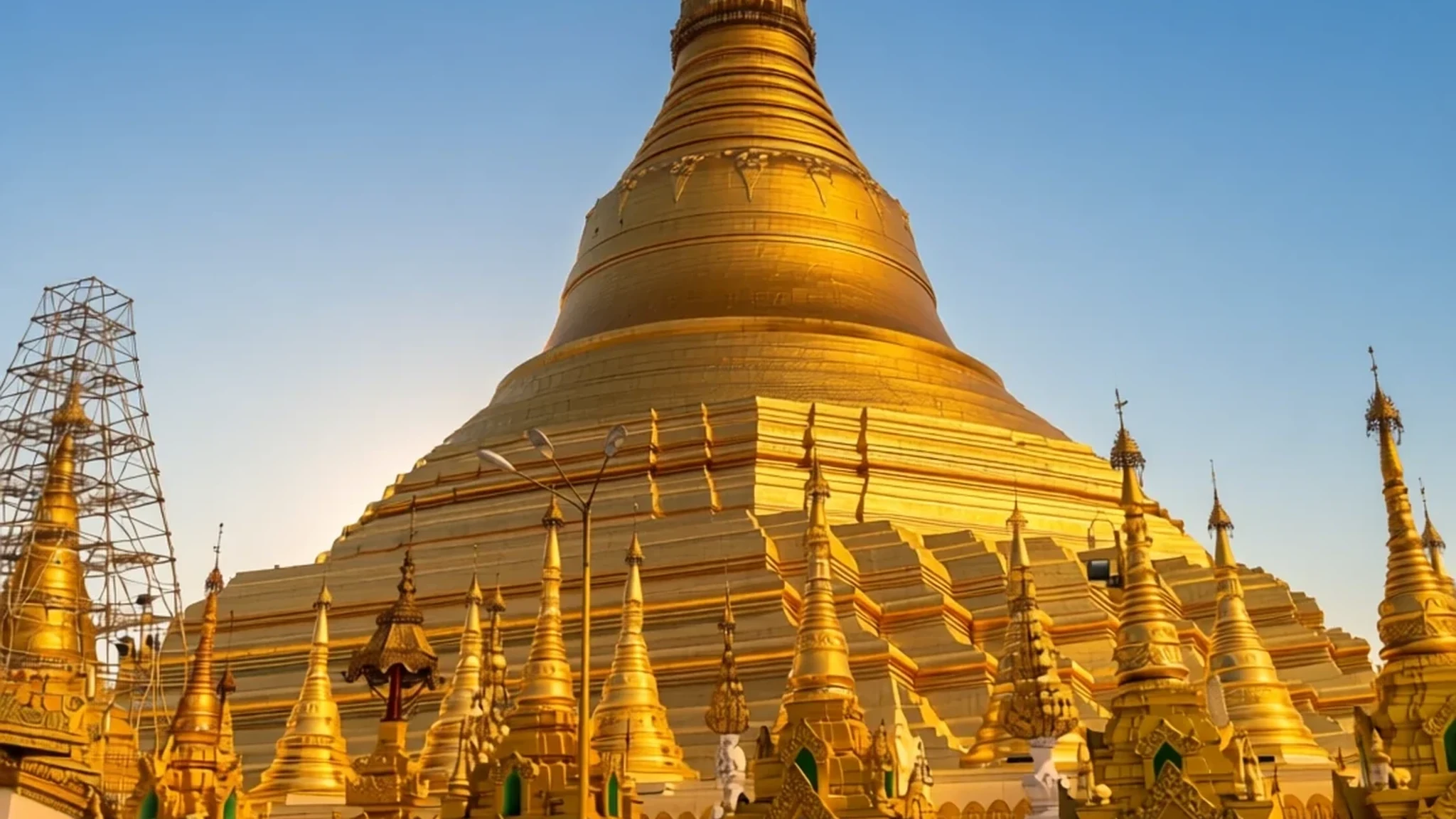
Yangon holds more colonial-era buildings than any other city in Southeast Asia, alongside Myanmar's most sacred pagoda.
The place
Yangon, also written Rangoon in older English sources, is the capital of the Yangon Region and the largest city in Myanmar. It stopped being the national capital when government moved to Naypyidaw in the mid-2000s, but it remains the country's main commercial centre, home to about 6.9 million people. The city sits where the Yangon and Bago rivers meet, not far from the Gulf of Martaban, and its streets run on a grid laid out in the colonial period across low delta land.
Its real draw is the density of old architecture. Yangon has more colonial-era buildings than any other city in Southeast Asia, and the commercial core around the Sule Pagoda has stayed remarkably intact. Many of those brick buildings are peeling, some are being restored, and walking the blocks slowly with a map is the best way to read them.
Above the streets rises the Shwedagon Pagoda, the country's most sacred Buddhist site, its gilded stupa visible from much of the city. Infrastructure is stretched: rail is limited and the outer towns are poor, so central Yangon feels compact and walkable while everything beyond it takes effort to reach. Lakes, markets and tea shops fill the gaps between the sights, and the heat and humidity set the rhythm of the day more than any timetable.
Its story
Yangon began as Dagon, a settlement founded by the Mon people in Lower Burma, and the founding date given for it is 1035. From the fourteenth century, under the Hanthawaddy kingdom, Dagon grew into a pilgrimage town clustered around the Shwedagon, drawing monks and donors from across the delta. Among its governors was Princess Maha Dewi, who held the town for a long stretch in the late 1300s, and her grandniece Shin Saw Pu, who later reigned as queen and built a palace beside the great pagoda, where she spent her semi-retired years.
The town changed hands in the eighteenth century. In 1755 King Alaungpaya took Dagon, enlarged the settlements around it and renamed the place Yangon, a name usually glossed as 'end of strife'. Trading companies followed, and the British seized the city during the First Anglo-Burmese War, returning it after the peace. A fire in 1841 swept through the town and left little of its earlier fabric.
The decisive turn came with the Second Anglo-Burmese War in 1852. Britain took Yangon and the rest of Lower Burma, moved the administration of British Burma to the city from Moulmein, and laid out a new grid on reclaimed delta land, bounded by Pazundaung Creek to the east and the Yangon River to the south and west. The plan was drawn by an army engineer, Alexander Fraser, and it still shapes the walk through the centre. Colonial Rangoon kept its role as the commercial hub until independence in 1948, and the offices, courts and warehouses built in that period are what visitors see today.
What to see
- Shwedagon Paya — The hill above the city centre
The Shwedagon is the gilded centre of Yangon's Buddhist life, a stupa on a hill where pilgrims walk clockwise around the platform in bare feet. Four covered walkways climb up from the plain, and the east walkway is the busiest, lined with stalls selling candles, flowers and gold leaf for offerings. Eight day shrines, one for each day of the week, stand around the base, and many people pray at the one for their birth day.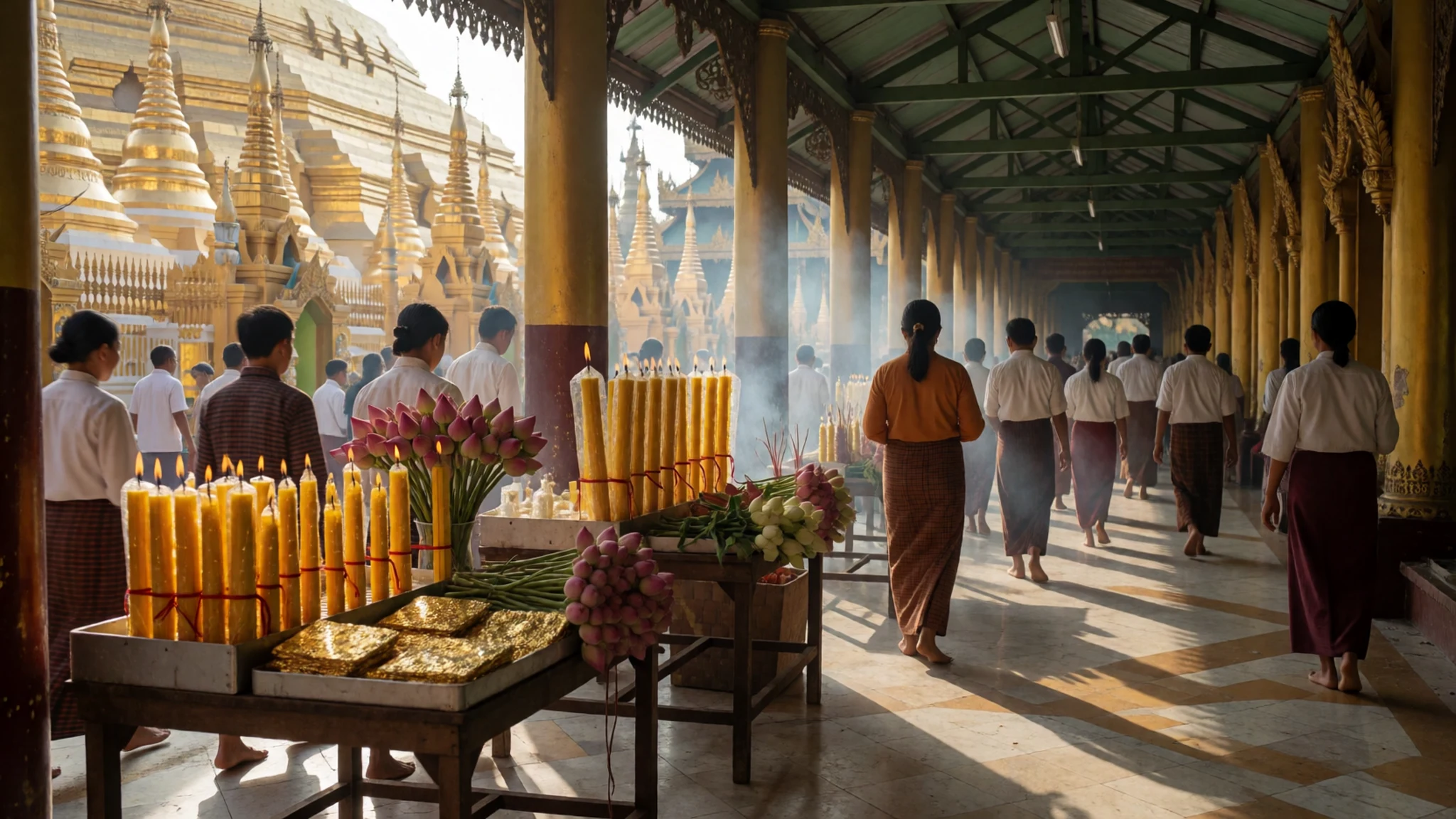
- Sule Pagoda — Downtown, at the centre of the colonial grid
A smaller, older stupa at the heart of the colonial grid, the Sule Pagoda sits in a busy roundabout and anchors the commercial core. Local tradition holds that it is very old, and it remains a working shrine rather than a museum piece. The surrounding streets fill with traders and office workers, so the area is best seen on foot in the cooler hours of the morning.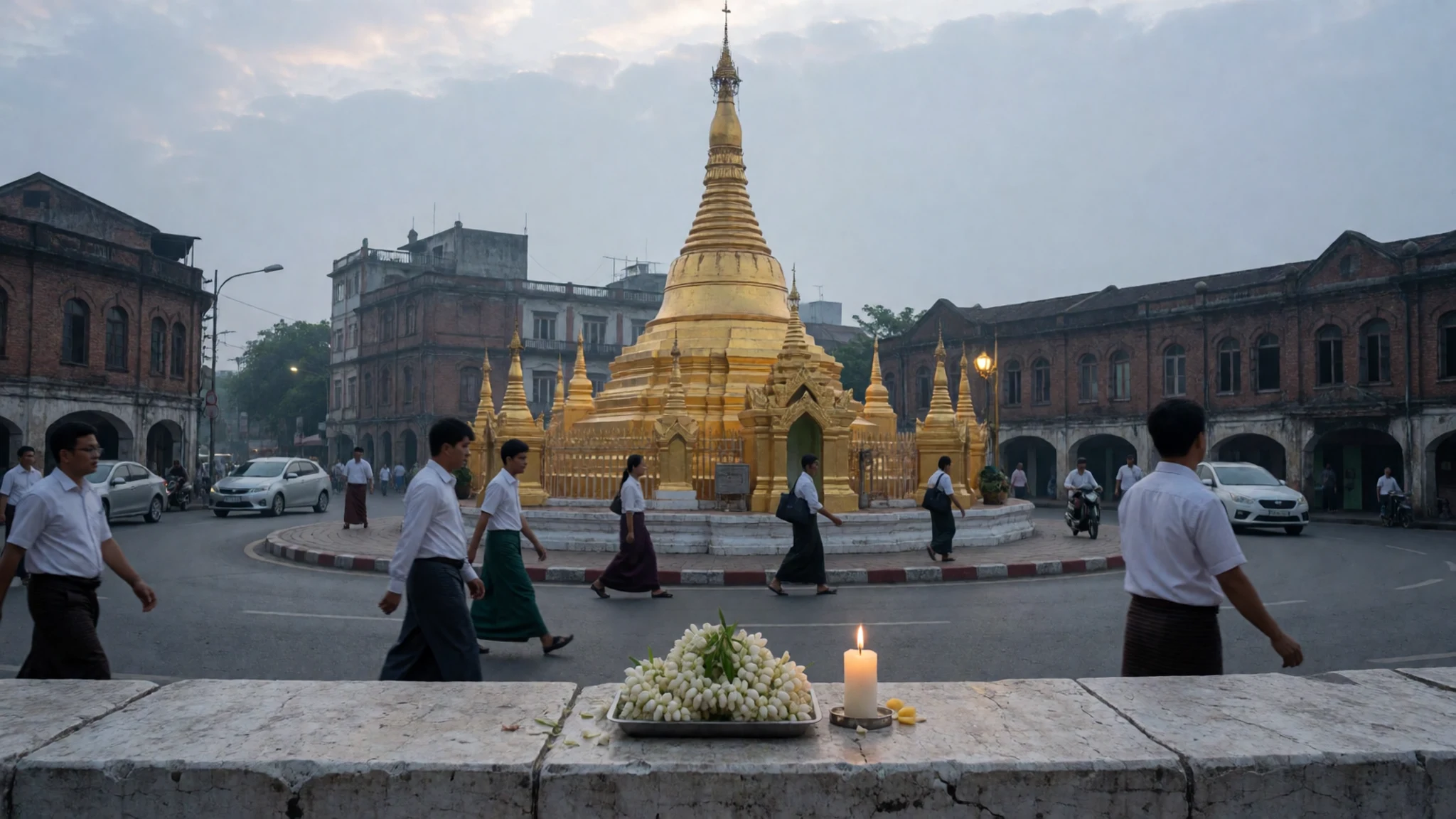
- City Hall — Downtown colonial core
The colonial-era City Hall is one of the civic buildings that give central Yangon its character. Its classical facades and tall windows show a style brought from Britain and adapted to the heat and rain. Photograph it from the street, then walk the nearby blocks to see how the grid runs down towards the river.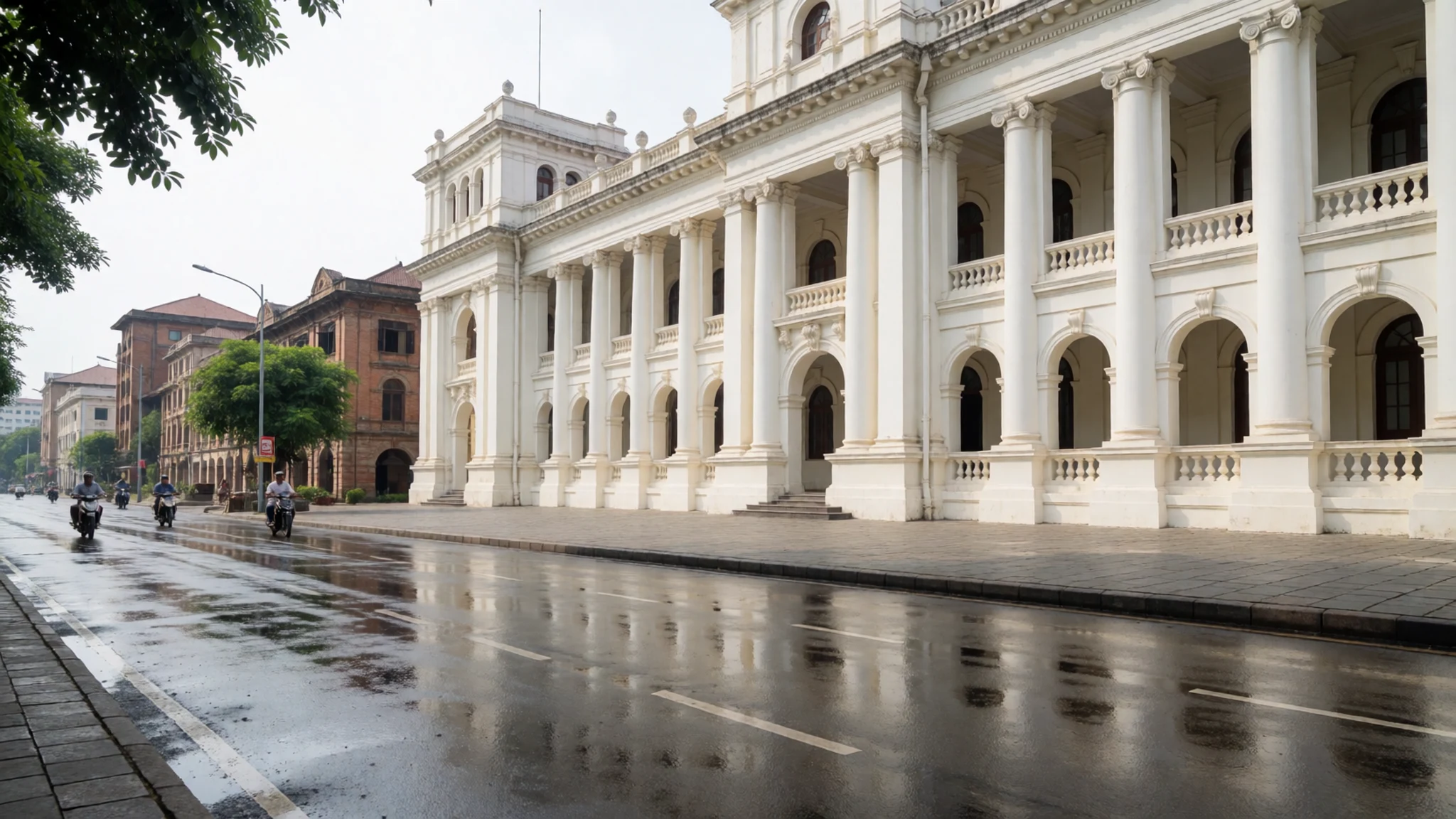
- Former High Court building — Downtown, near the riverside streets
The former High Court is a reminder of the legal system built under colonial rule. Its long frontage now faces busy traffic, and most of the historic buildings in this part of town can be admired from the pavement without going inside. A walk past it on the way to the waterfront makes a good half-hour of gentle sightseeing.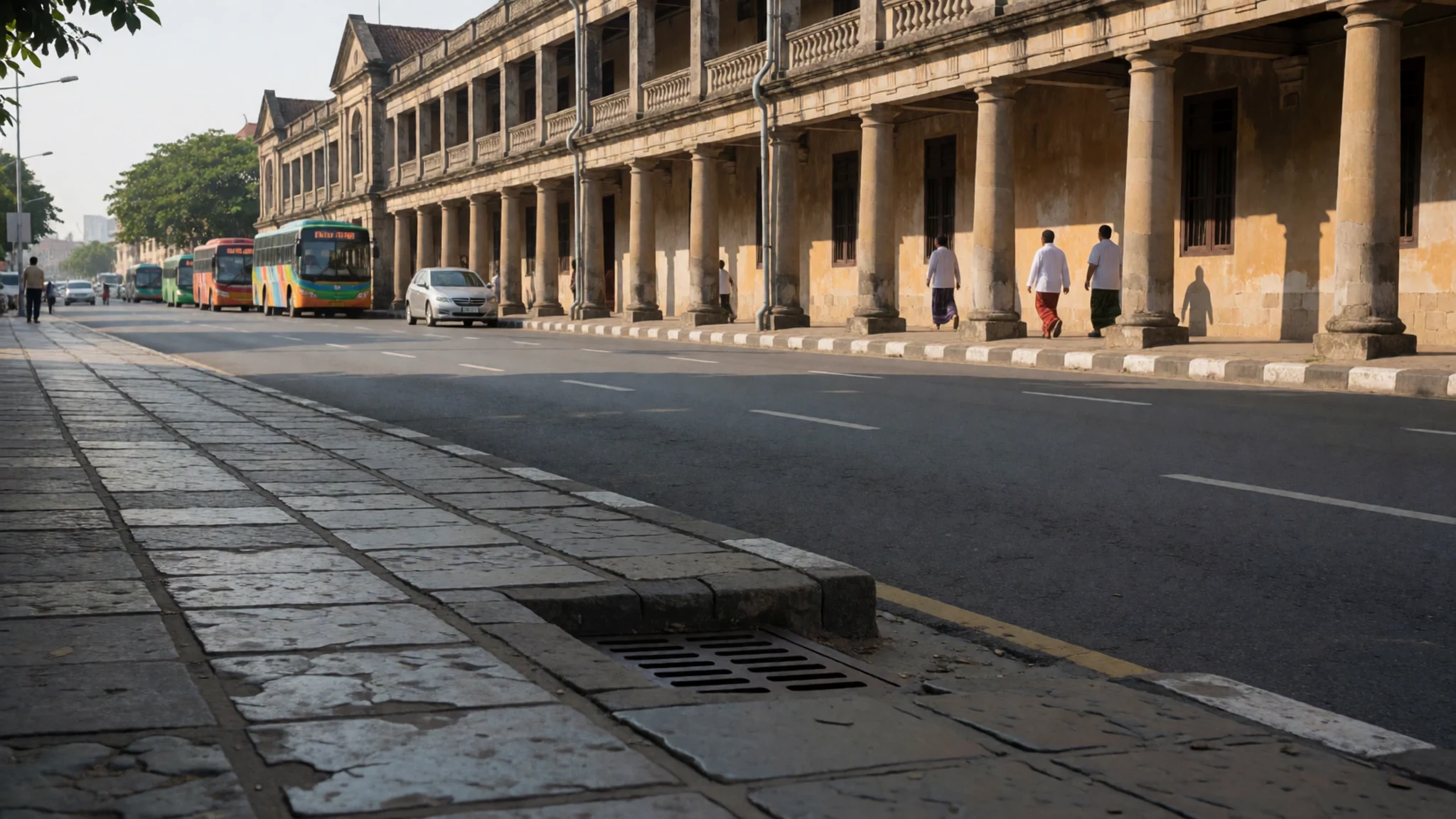
- Kandawgyi Lake — Northern Yangon, in the park around the lake
Kandawgyi Lake is a large park lake on the northern side of the city, with paths around the shore and a barge-shaped restaurant on the water. Locals walk, jog and fish along the banks in the early morning and late afternoon. It is a good place to rest from the heat and watch everyday Yangon going about its routine.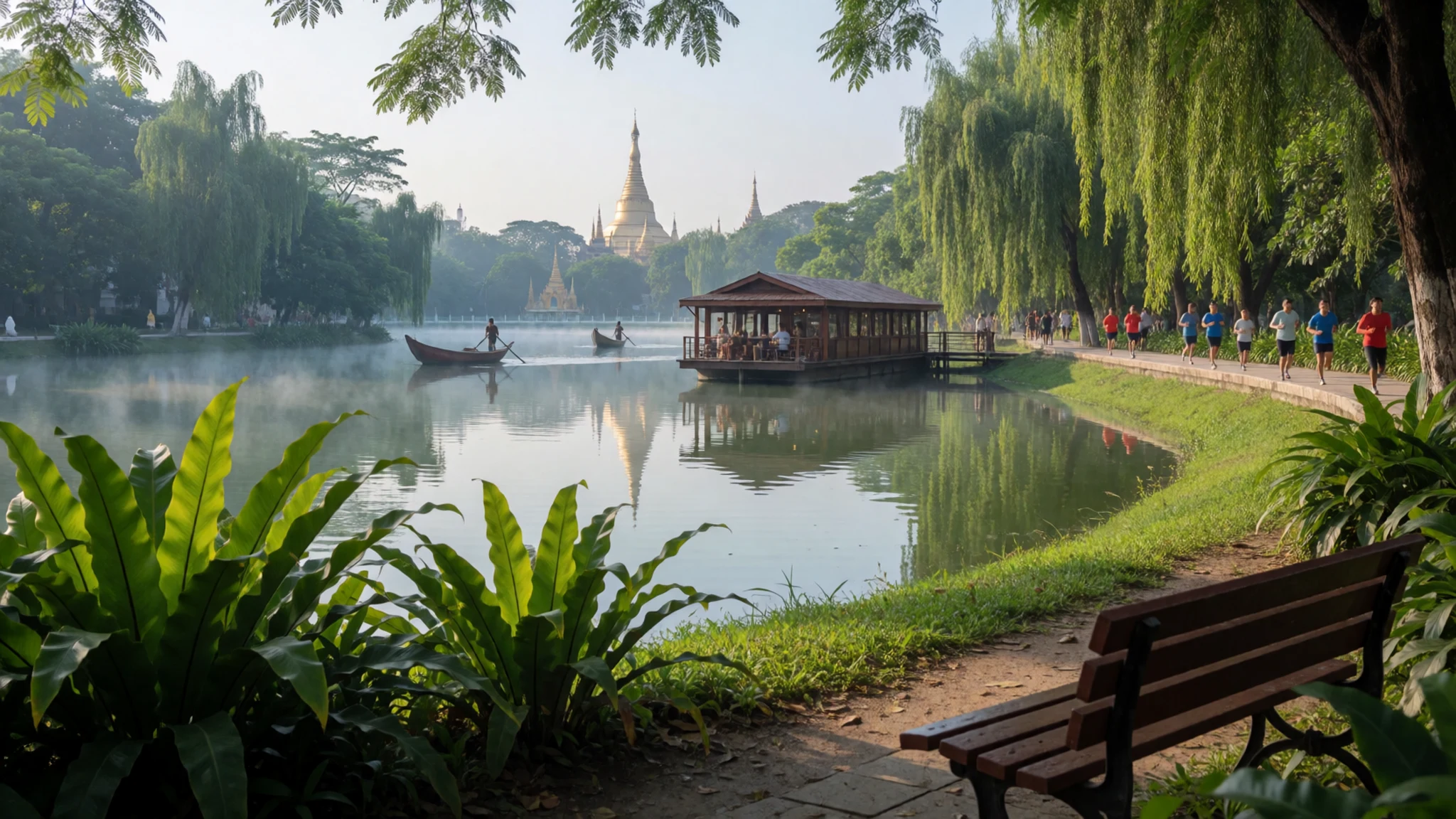
Culture
Yangon's Buddhist sites are working places of worship, and the Shwedagon is the centre of that life. Many people arrive before dawn or in the late afternoon to make offerings of flowers, candles and gold leaf, and to walk clockwise around the stupa. Each of the day shrines corresponds to a day of the week, and locals often pray at the one for their birth day. Monks receive alms in the early morning in many neighbourhoods, and the markets are busy from first light.
Dress and behaviour matter here. Clothes that cover the shoulders and knees are expected at pagodas, and a longyi or light trousers suits the climate. Public displays of affection are unusual. Photographing people, especially monks and older worshippers, works best with a smile and a pause to ask. Avoid touching anyone's head, since the head is regarded as sacred, and never point feet at a Buddha image or at a person. Tipping is not customary in most local eateries, and haggling is normal in markets but not in shops with fixed prices. When you enter a pagoda, take off your shoes and socks at the foot of the stairs and keep your feet turned away from the images.
What to wear
Traditional dress in Yangon centres on the longyi, a tube of cloth wrapped at the waist and worn by men and women alike. Men's longyi are often plain or checked cotton, tied at the front, while women's versions are wrapped more closely, usually in silk or cotton with woven borders. Women also wear the htamein, a sarong-style skirt with a fitted blouse, and thanaka, a pale paste made from ground bark, is applied to faces and arms for sun protection and as a mark of local identity.
Day to day, many people still wear the longyi at home, at markets and at temples, though younger people in the centre mix it with jeans, T-shirts and sneakers. Office workers and students often choose Western clothes, while older men may pair a longyi with a shirt or jacket for formal occasions. Thanaka remains common among women and children.
Visitors should dress lightly and modestly. Cotton or linen in loose cuts copes better with the heat and humidity than synthetic fabrics, and covered shoulders and knees are expected at pagodas. A light longyi bought locally is a practical choice for temples and can be worn over trousers. Sandals that slip on and off suit the pagoda entrances, while closed shoes with good grip cope with uneven pavements. In the wet season, a light rain jacket or umbrella is worth carrying.
What to eat
- Shan noodles — Small Shan noodle shops on the downtown streets
Thin rice noodles served in a savoury broth or as a dry sauce, usually topped with chilli oil, pickled greens and a little chicken or pork. Small shops in the downtown streets serve them quickly, and the busiest ones are at their best at lunchtime, when the staff move fast and the bowls arrive hot.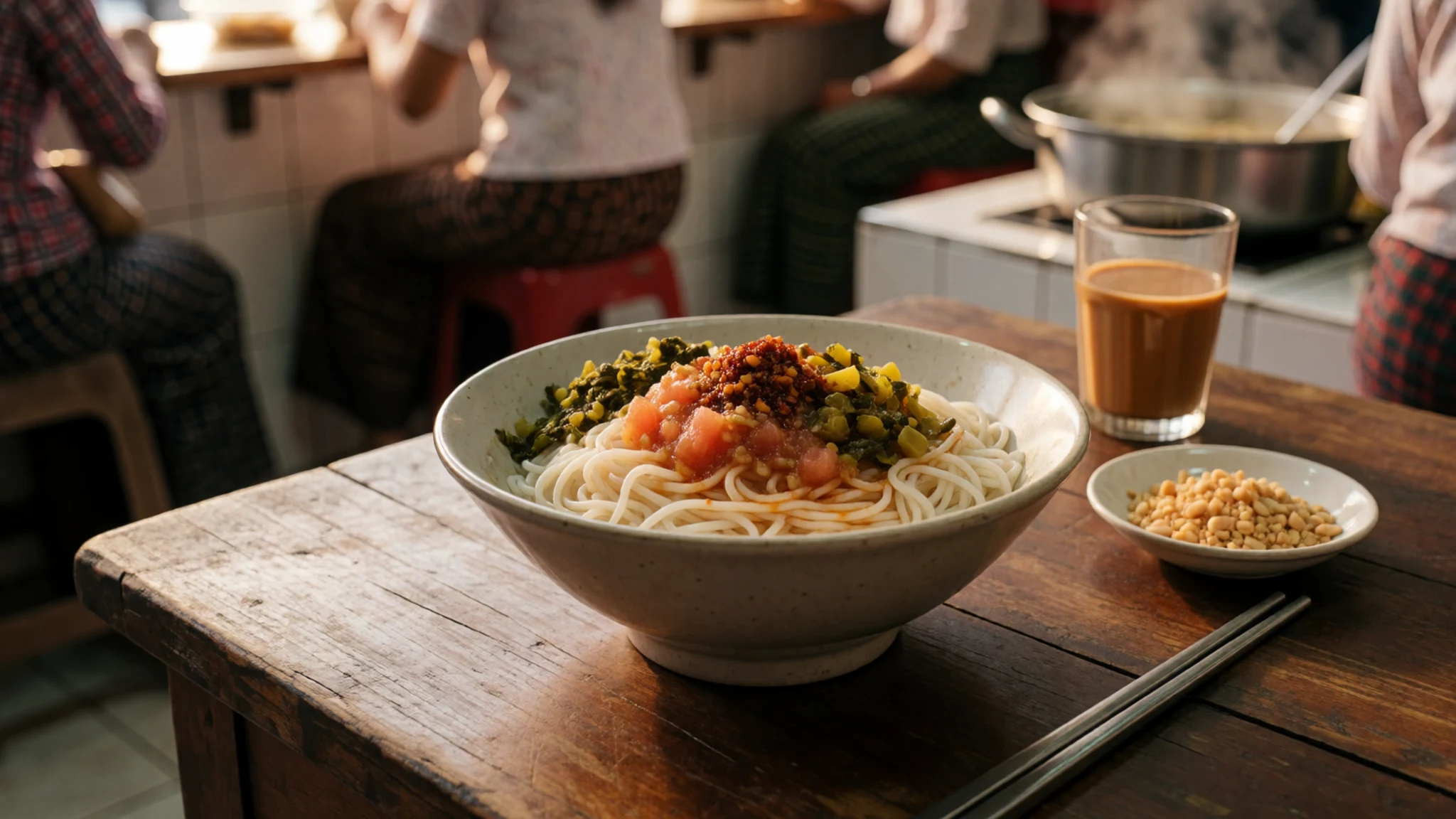
- Burmese curries — Simple curry eateries near the downtown streets, with dishes on show
Fish, chicken or pork curries cooked with onion, garlic and turmeric, served over rice with a few side dishes. Simple eateries display the day's pots on the counter, so you can point at what looks good and eat several flavours in one sitting.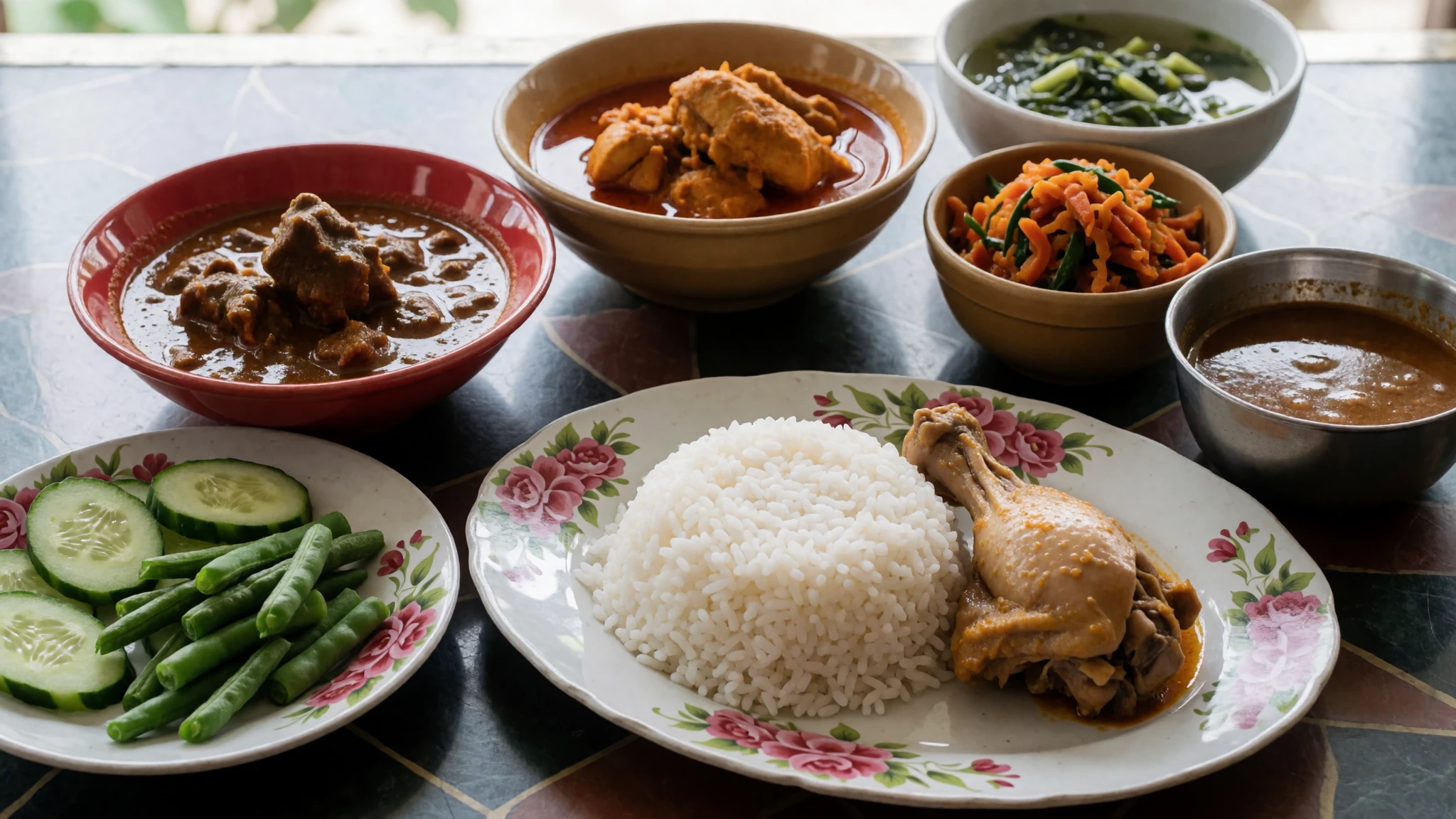
- Burmese-style biryani — Long-running halal eateries in central Yangon
Rice layered with spiced meat and served with a small bowl of soup, shaped by the city's long Indian and Burmese community. Some long-running halal eateries in central Yangon make it, and it is often gentler on chilli than the Indian originals, which suits a long lunch. - Vegetarian thali — Indian vegetarian restaurants around the city centre
A tray of dal, vegetable curries, rice and bread, with small bowls for each dish. Several Indian vegetarian restaurants around the centre offer refills, so a hungry visitor can keep going. It is inexpensive and fits well into a day of walking the colonial streets. - Mohinga and tea-shop breakfasts — Tea shops along the main streets, busiest at breakfast
Mohinga is a fish broth with rice noodles, lemongrass and crisp fritters, usually eaten early in the morning. Tea shops across the city serve it alongside sweet, milky tea and fried snacks. Arrive early, before the morning rush thins out.
Plan it
Best time. The dry season runs from November to April, and December to February is the most comfortable stretch, with cooler nights and little rain. March and April turn hot before the monsoon arrives, April being the hottest month, and May to October is the wet season, with the heaviest rain from June to September and high humidity.
How long. 2–3
Getting there. Yangon International Airport is a taxi ride from the centre; pre-paid taxis and ride-hailing apps are the simplest options, and a public bus runs into town for those who want to travel cheaply. Direct flights connect the city with Bangkok, Singapore, Hanoi, New Delhi, Kolkata and Chennai. Rail links are limited, so air is the usual way in.
Budget. low
Tips
- Visit the Shwedagon early, ideally soon after it opens, before the heat and the crowds build.
- Carry cash in kyat, since many small shops and eateries do not take cards.
- Carry water and a hat; the humidity makes afternoon walking slow.
- Allow a full morning for the colonial core and a relaxed walk round Kandawgyi Lake.
- Check the official city website for current information before you travel.
Etiquette
- Remove shoes and socks before entering the pagoda platforms.
- Dress with covered shoulders and knees at religious sites.
- Ask before photographing monks or people at prayer.
Nearby
Sources
- Wikidata Q37995 (CC0)
- Wikipedia: Yangon (rev 1382601155) (CC BY-SA 4.0)
- Wikivoyage: Yangon (rev 5388657) (CC BY-SA 4.0)
- Photo: The former High Court Building, Yangon (Marcin Konsek) (CC BY-SA 4.0)
- Photo: The Shwedagon pagoda (Jean-Marie Hullot) (CC BY 3.0)
- Photo: City Hall, Yangon (Marcin Konsek) (CC BY-SA 4.0)
- Photo: Yangon Night Scene (Naing Linn Aung) (CC BY-SA 4.0)
- Photo: Strand Road & Pansodan Street View (Kooo311013) (CC BY-SA 4.0)
- Photo: Kandawgyi Lake (ReflectedSerendipity) (CC BY-SA 2.0)
- Photo: Public Gardens, Rangoon (J. Jackson) (Public domain)
- Photo: Rangoon street view (Glenn S. Hensley) (CC BY 2.5)


