Yakushima
Yakushima, Japan
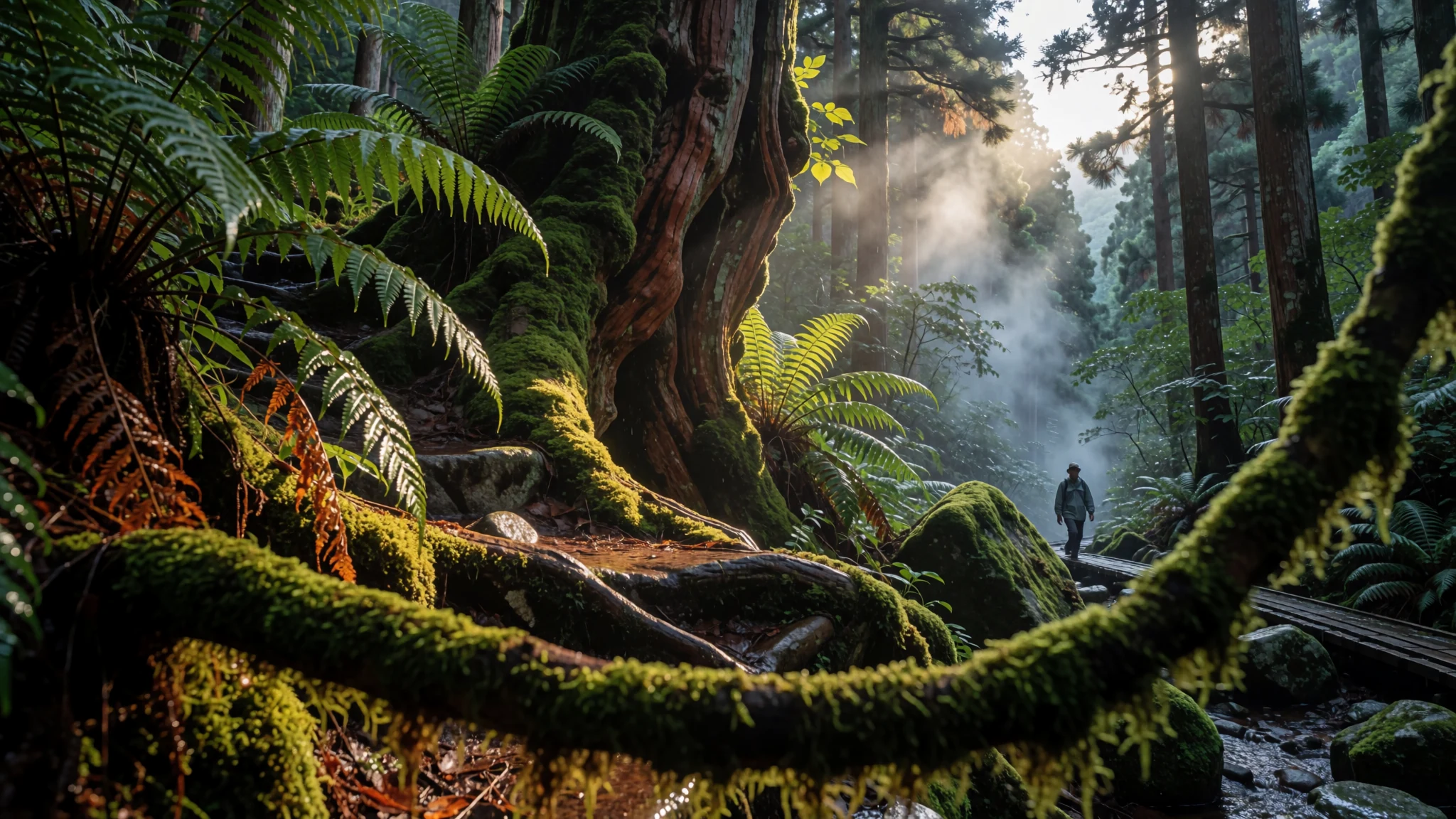
Yakushima is a granite island of ancient cedar forest, mountain streams and waterfalls, best explored slowly on foot.
The place
Yakushima is a roughly round island about 60 kilometres south of the tip of the Ōsumi Peninsula, part of Kagoshima Prefecture in southern Kyushu. Its heart is a block of steep mountains, the highest reaching 1,935 metres, and cloud often hangs on them for days. The bedrock is granite rather than volcanic, so the peaks are weathered and sharp, and streams cut deep gorges that run fast after rain.
About two-fifths of the island lies inside Yakushima National Park, and that protected core is what draws most visitors. Forest covers the slopes, with old cedars, mossy trunks and ferns, while the coast is a narrow fringe of towns, roads and fruit groves. The population is about 13,000, most living in the port towns of Anbō and Miyanoura, with the airport between the two.
The island is also one of the wettest places in Japan. Rain is heavy from spring into early autumn, peaking in June, when landslides are a real risk on steep roads, while late autumn and winter are drier. Summers are hot and humid and winters mild, and the sea stays warm enough that the coast is never really cold. Electricity comes almost entirely from hydroelectric power, which surprises many people who expect an isolated backwater.
Daily life centres on the sea and the forest. Walks range from an hour to a full day, and the best forest light comes early, before the cloud builds.
Its story
Yakushima has been lived on since at least the Jōmon period, the long prehistoric era in which Japan's earliest settled communities took shape. Its name appears in early Chinese records, when an expedition sent in the seventh century noted the islanders as small but fierce, and a later expedition brought one back. The ancient Japanese chronicle Shoku Nihongi places the island within the old province of Tane, so it was already part of the wider Japanese world by the eighth century.
In the Edo period the island belonged to the Shimazu clan of the Satsuma Domain and counted as part of Ōsumi Province. After the Meiji Restoration it became part of Kagoshima Prefecture, where it remains. Timber has long shaped its economy, and the Yakusugi Museum tells the story of logging on the island, from the old trees that were cut to the forests protected today.
The geology explains much of the landscape. Granite rather than lava built the peaks, so there is no active volcano, and the high ground catches heavy rain that feeds rivers and hot springs alike. A narrow strait separates the island from Tanegashima, home to Japan's space centre, and rocket launches there can be seen from Yakushima.
Storms have shaped modern life as much as history. Typhoon Noru struck in 2017 and caused one death, and heavy rain regularly brings landslides to the roads. Ferry timetables are also weather-dependent, since sailings stop in rough seas.
What to see
- Jōmon Sugi — Yakusugi forest, northern interior
The Jōmon Sugi is the island's most famous cedar, and its age is only estimated, perhaps several thousand years. Reaching it is a long day's hike, with shuttle buses that set off before dawn to reach the trailhead. Plan the day properly, carry waterproofs, and expect rain on much of the route, which is slippery with roots and stone steps.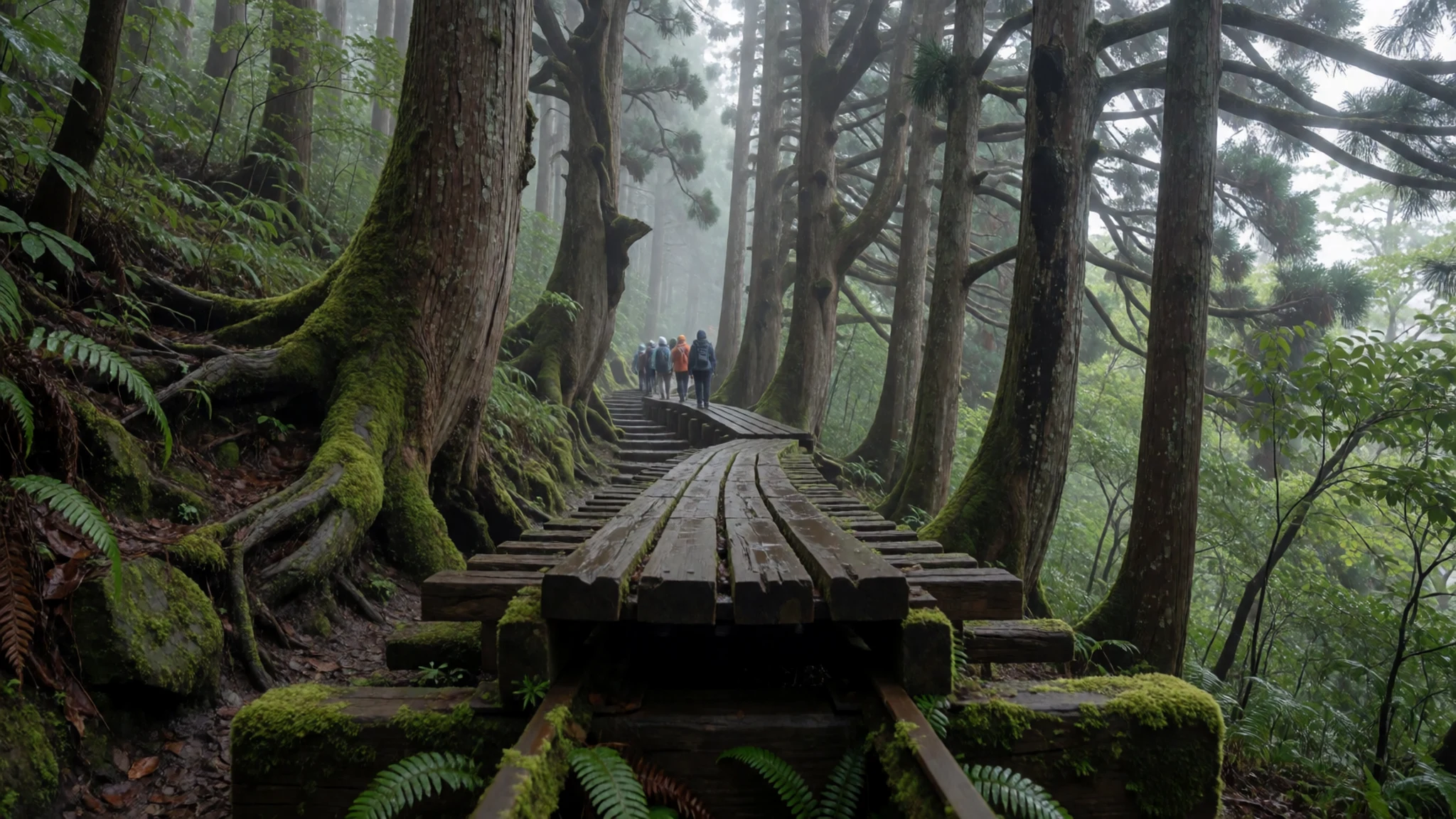
- Shiratani Unsui Gorge — Shiratani valley, interior
This gorge is a forest walk through moss-covered rock and streams, with a map and suggested routes at the trailhead. The shorter option takes three to four hours and passes several large old cedars. The longer option goes deeper into the gorge and needs a full day and good footwear. The longer route is best started early, before cloud and afternoon rain arrive, while the shorter one can wait until later in the day.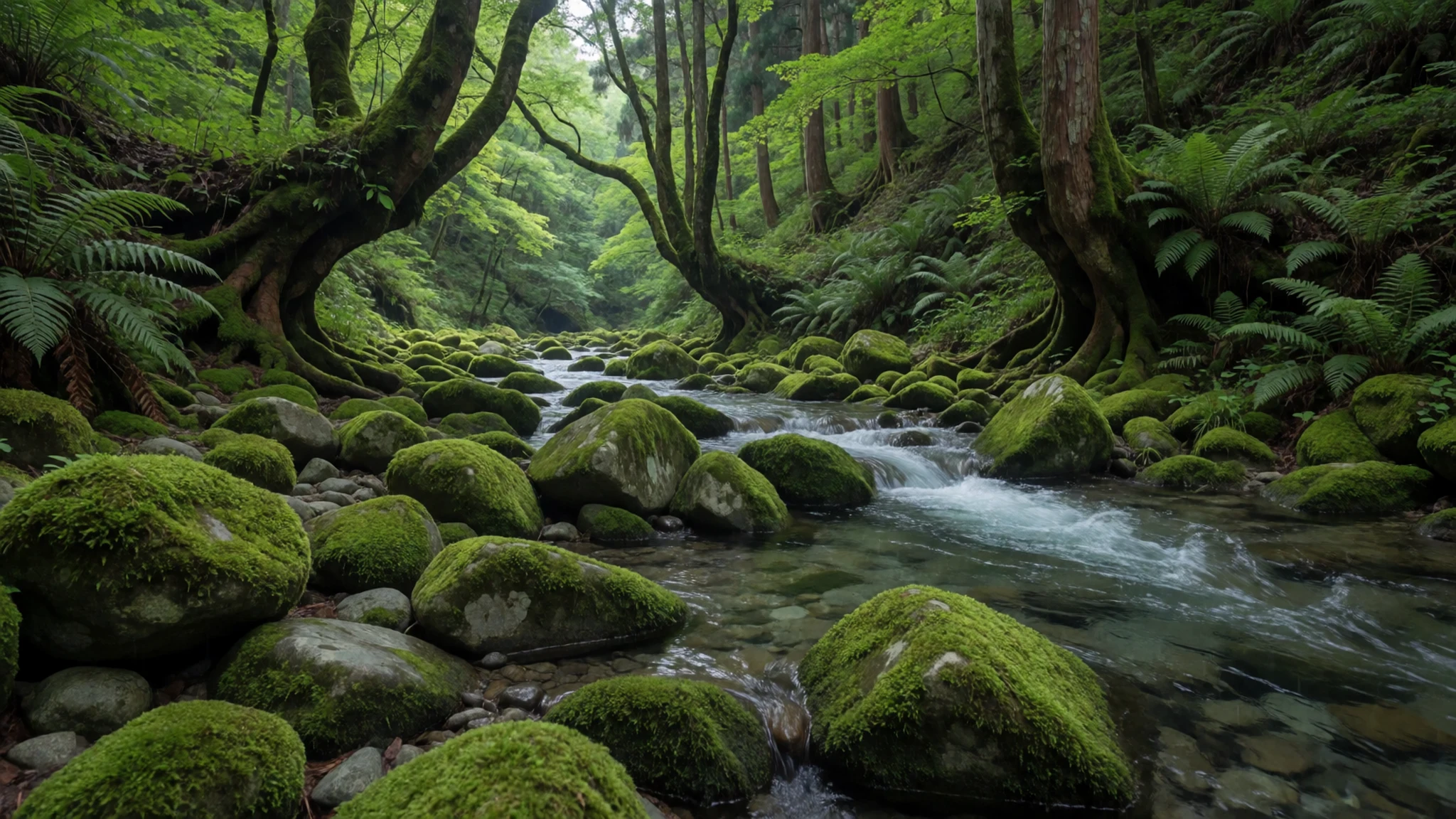
- Ooko-no-taki waterfall — Western coast road
Ooko-no-taki is one of several waterfalls on the island and is widely regarded as one of Japan's best. It is a short walk from the main road along a paved path, so it suits visitors who want a waterfall without a long hike. The falls look their most powerful after heavy rain, when the water runs brown and fast.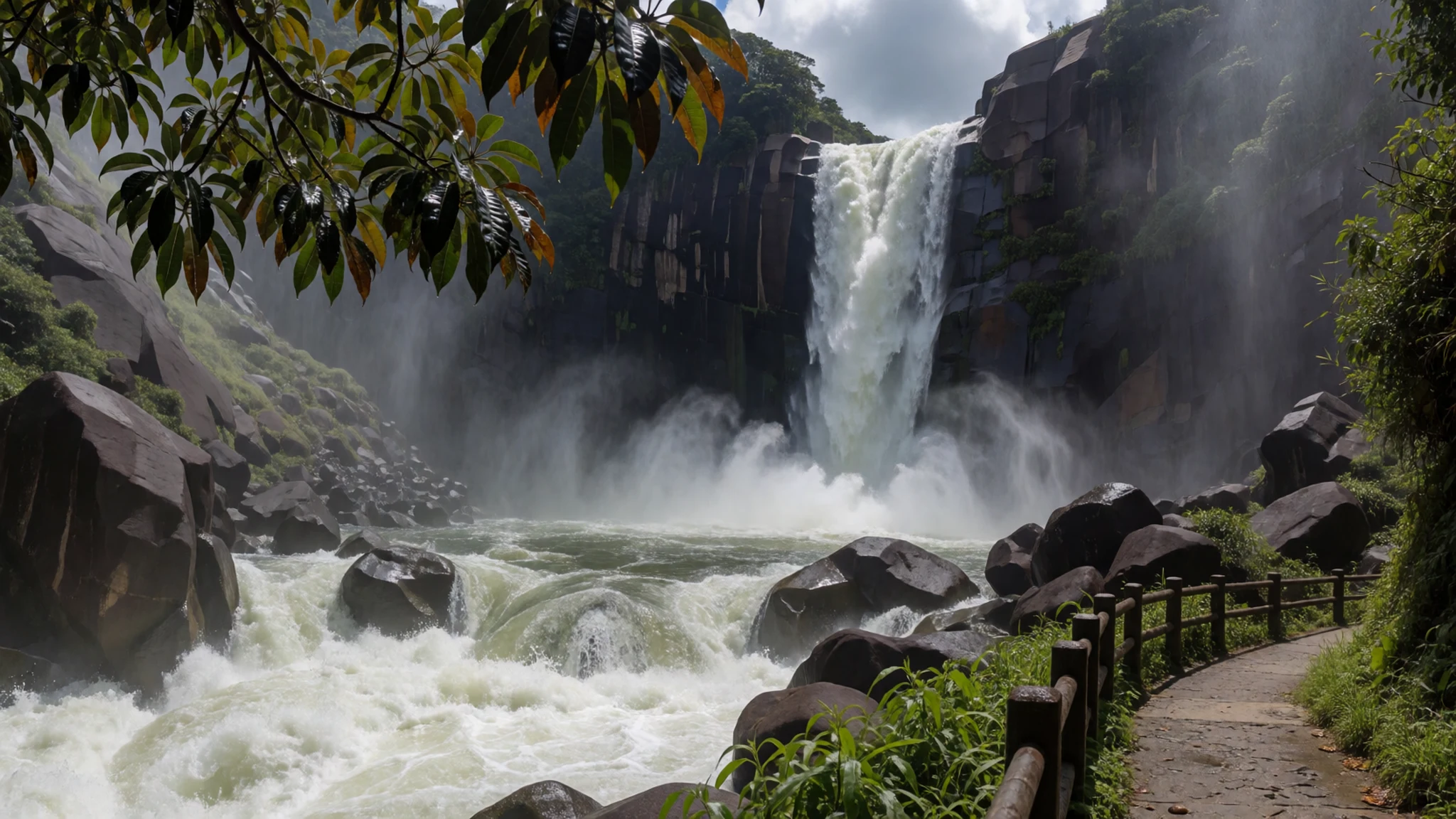
- Yakusugi Museum — Miyanoura area
The museum uses photographs, films and hands-on displays to explain the island's natural wonders and its logging history. An English pamphlet is provided, which helps when reading the exhibits. It makes a useful first stop before walking among the cedars, since the displays explain what you are looking at.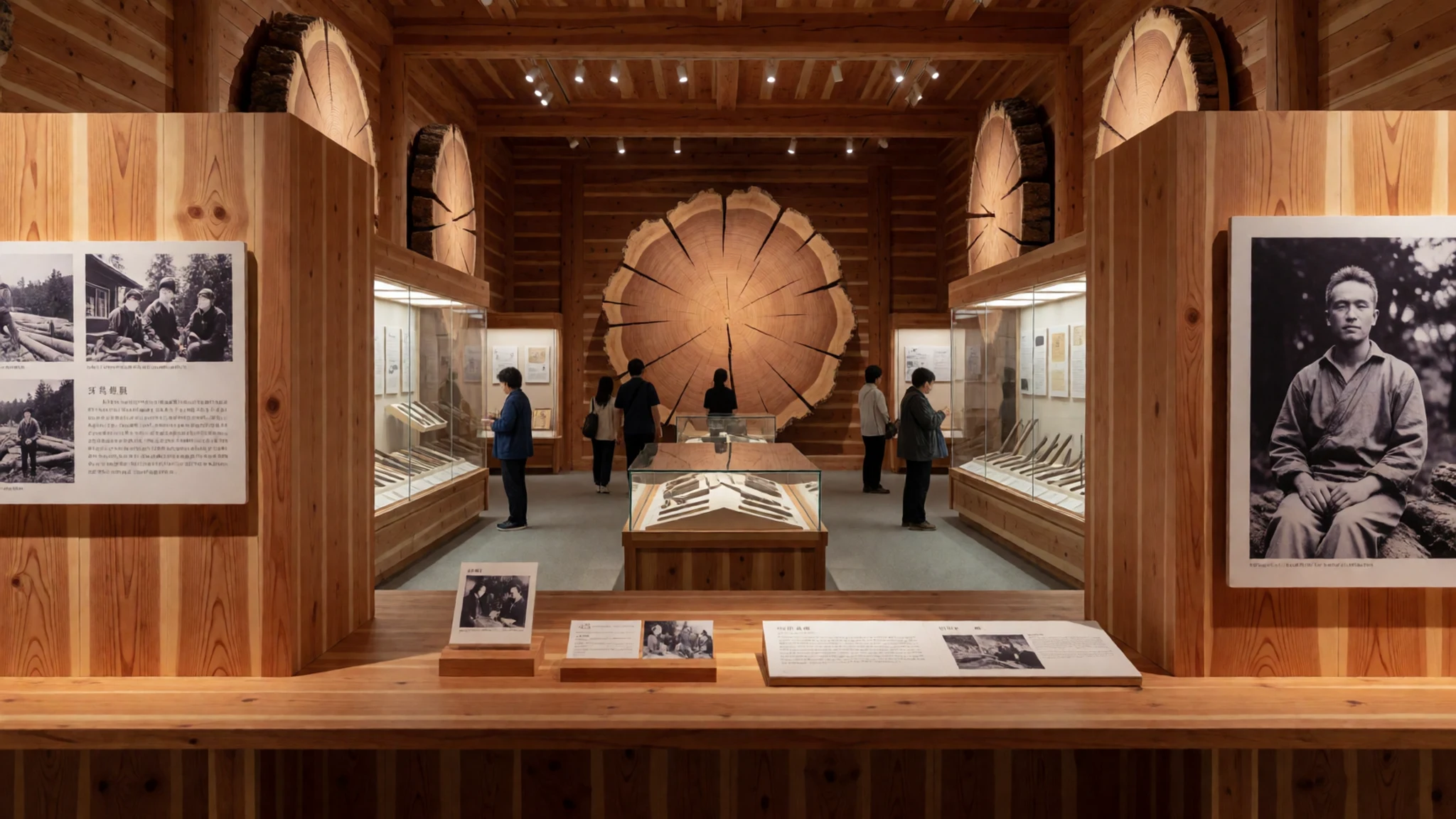
- Hirauchi Kaichū Onsen — Western coast, south of Anbō
This sea-side hot spring can only be used for a few hours either side of low tide, so timing matters more than anything else. It is well known, and the constant flow of visitors can make bathing feel less relaxing than it should. Going early or on a weekday improves the experience.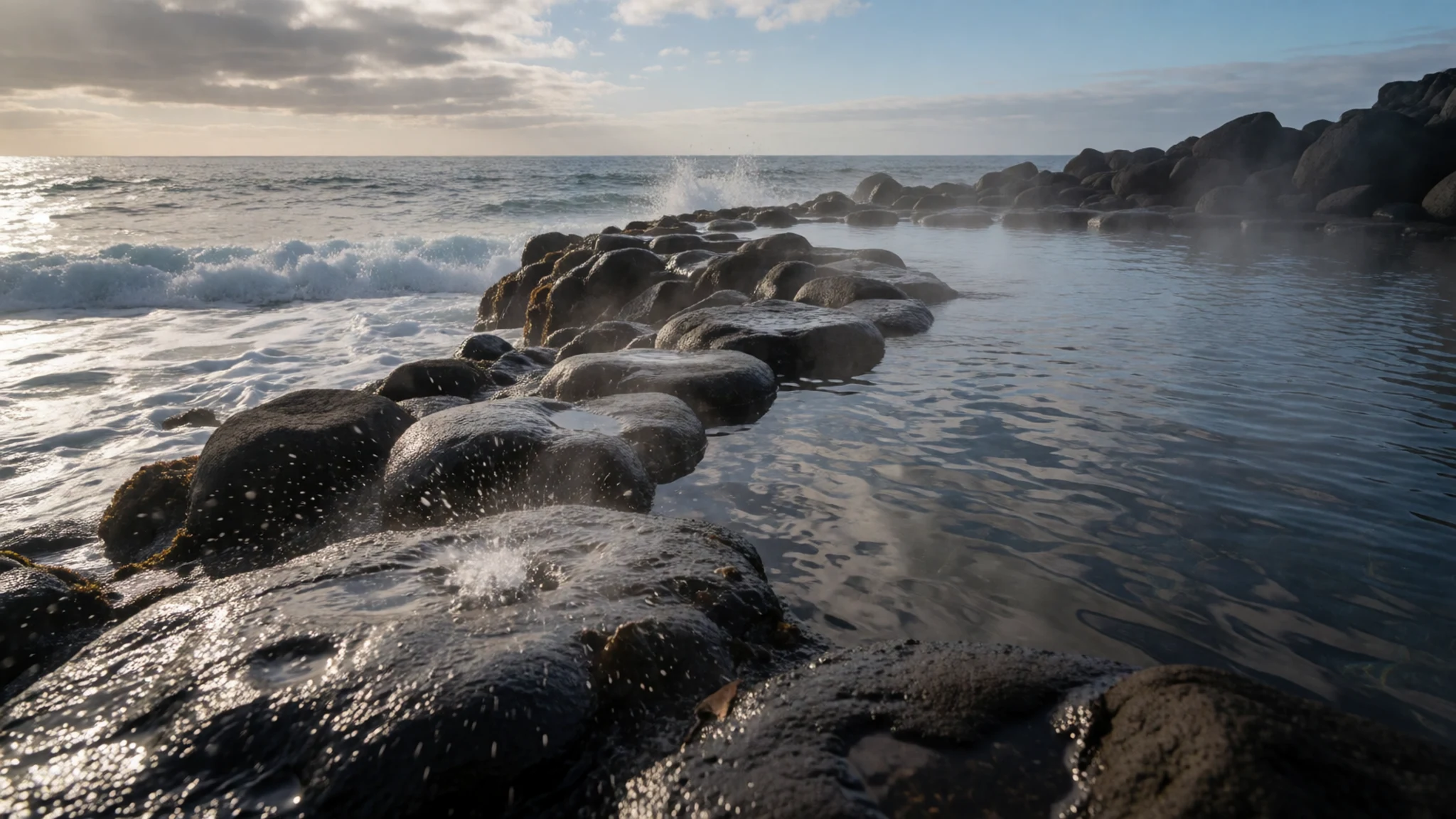
Culture
Yakushima's culture is shaped by its forests and its sea more than by any single temple. Local people are proud of the island, live close to the weather, and expect visitors to respect the places that matter to them. Hot springs are a daily habit here, so wash thoroughly at the basins before entering a bath, keep towels out of the water, and keep voices low, especially early in the morning when locals are soaking. Beaches and onsen call for quiet and courtesy, and crowds at the best-known springs can spoil the experience, so going early or on a weekday helps. Photographing people at work or at local events should be done only after asking, and tipping is not expected. Visitors arriving with boots and packs are a common sight, so there is no need to explain yourself; simply behave as a considerate guest. Stay on marked paths, carry out every scrap of rubbish, and do not take cedar wood, moss or stones from the forest.
What to wear
Yakushima has no separate island costume that the sources I drew on describe, so its traditional dress is the same as the rest of Japan. The kimono, worn in silk or cotton, appears at festivals, weddings and formal occasions, while the lightweight cotton yukata is worn at inns and after a soak in a hot spring. Textiles follow mainland patterns and techniques, and the cloth is chosen for the season: cotton and linen in summer, heavier silk in winter.
Day to day, people here wear practical clothes: T-shirts, shorts, trousers, fleeces and rain jackets. Walking shoes and boots are the norm for anyone heading into the mountains, and sandals appear around the harbour and in the towns. Few people dress up unless they are going somewhere formal.
For a visit, pack quick-drying layers, a waterproof jacket and trousers that dry fast, and sturdy shoes with grip for wet rock and roots. Bring a sun hat and light, breathable clothes for the humid months. Modest, covered clothing suits shrines and temples, and swimwear is for beaches only, with proper dress expected in the towns.
What to eat
- Flying fish (tobiuo) — Harbour restaurants in Anbō and Miyanoura
Flying fish, or tobiuo, is the island's signature catch. Look for it grilled, salted or simmered at small harbour restaurants in Anbō and Miyanoura, where the day's catch sets the menu. Ask what came in that morning.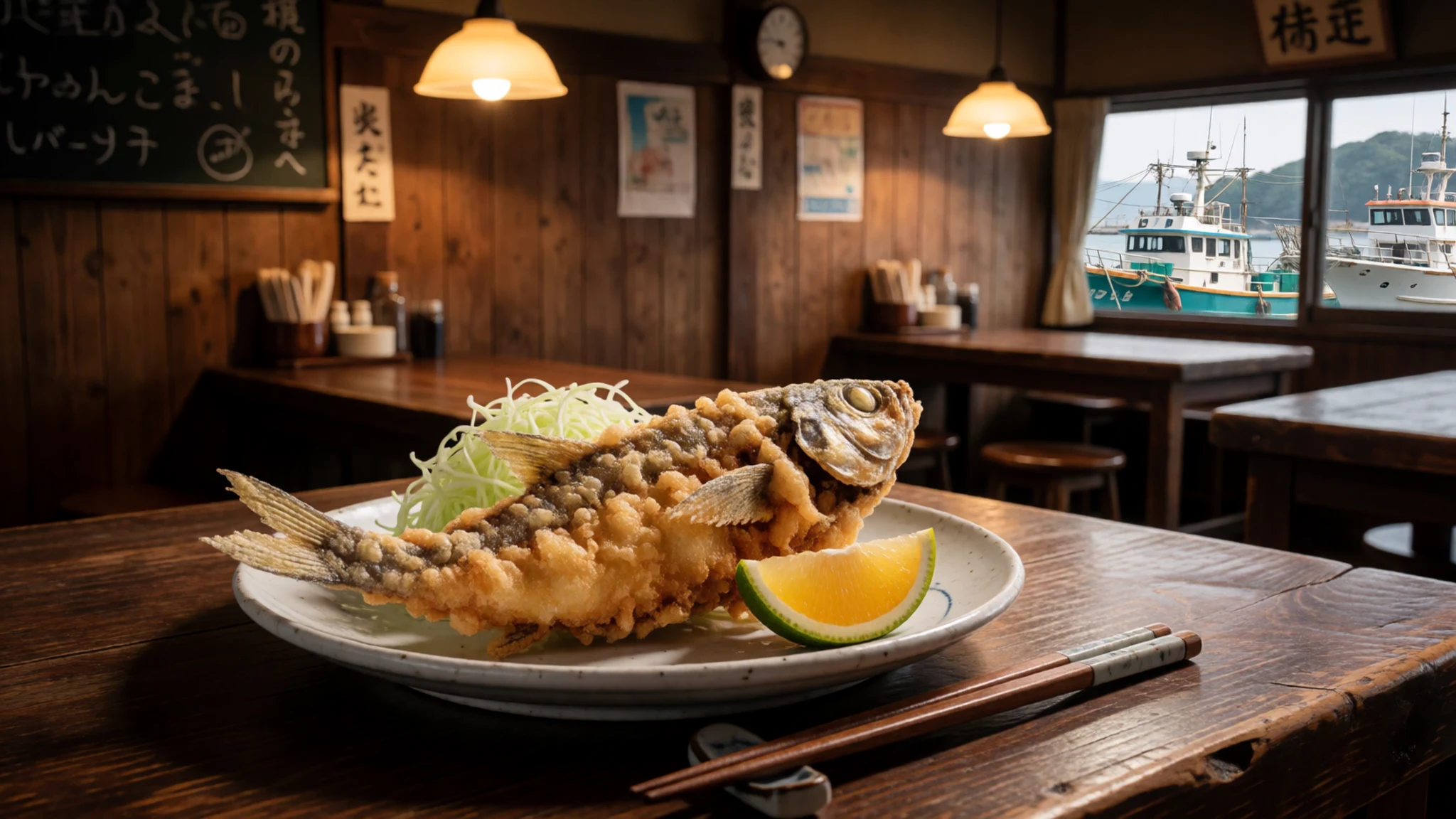
- Tankan citrus juice and ice cream — Produce centre by the Toroki Falls car park, coast road south of Anbō
Tankan is a local citrus, and the produce centre on the coast road south of Anbō sells it as juice and ice cream as well as fresh fruit in season. It sits by the car park for Toroki Falls, making it an easy stop on the drive south.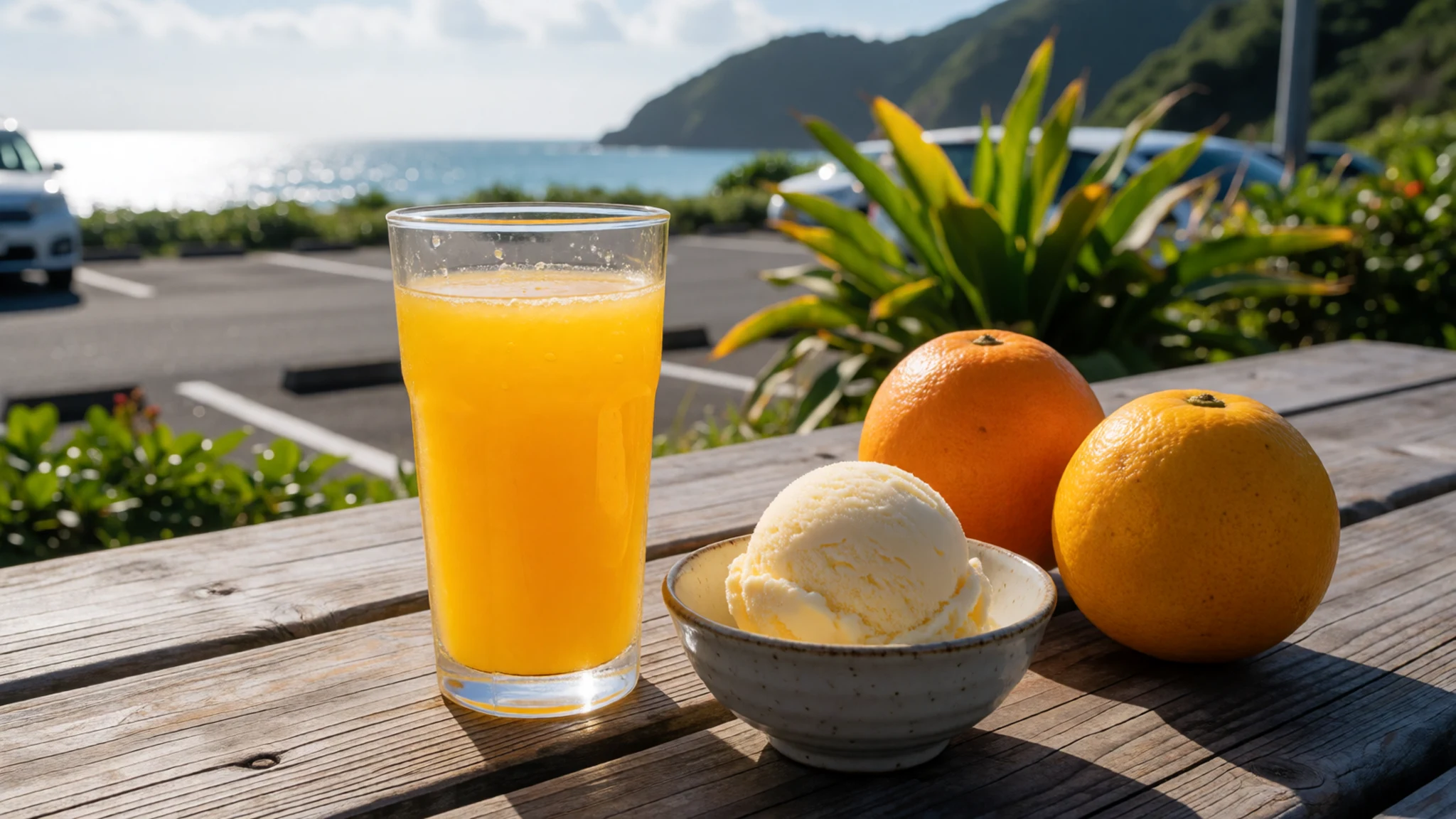
- Ponkan — Fruit shops and roadside stands in Anbō and Miyanoura
Ponkan is a second local orange, eaten fresh or pressed into juice. Look for it in fruit shops and roadside stands in Anbō and Miyanoura, and at the produce centre in season. Buy a bag to eat on the trail. - Yakiniku — Yakiniku restaurants around Miyanoura
Yakiniku is Japanese barbecue, with thin slices of beef and vegetables grilled at the table. Several restaurants around Miyanoura serve it, and it makes a good shared evening meal. Book ahead on busy nights. - Ramen and fried rice — Casual Chinese-style eateries in Miyanoura
Simple Chinese-style eateries serve generous bowls of ramen and chahan, Japanese-style fried rice, in large portions. They are the practical choice for a hungry day after a long walk, and they are easy to find near the centre of Miyanoura.
Plan it
Best time. Late October to November, when the rain eases and the forest is cooler. Spring is wet, and summer is very wet and humid, with the heaviest downpours and landslide risk.
How long. 3–4
Getting there. Fly to Yakushima Airport, which lies between Anbō and Miyanoura, or take a ferry from Kagoshima. The fast jetfoil from Kagoshima is the quicker sea option, though sailings stop in rough weather.
Budget. mid
Tips
- Book the jetfoil and ferries a day ahead, since some sailings fill up
- Start the big walks early, before cloud and afternoon rain arrive
- Carry waterproofs and sturdy shoes for wet rock and roots
- Arrange a car or hire one early, as public transport is limited
- Carry some cash for small eateries and produce stands
- Check tide times before planning a sea-side onsen visit
Etiquette
- Keep to marked trails and take all rubbish away
- Keep voices low in the forest, at onsen and at dawn
- Wash thoroughly before entering a hot spring bath
Nearby
Sources
- Wikidata Q242176 (CC0)
- Wikipedia (rev 1374653010) (CC BY-SA 4.0)
- Wikivoyage (rev 5393369) (CC BY-SA 4.0)
- Photo 01-yakushima-from-ferry-amami-20121116.jpg (CC BY-SA 2.0)
- Photo 02-yakushima.jpg (Public domain)
- Photo 03-yakushima-relief-map-srtm.jpg (Public domain)
- Photo 04-osumi-islands-map-japan.png (CC0 1.0)
- Photo 05-yakushima-mitake.jpg (CC BY 3.0)
- Photo 06-anbo-river-03.jpg (CC BY 3.0)
- Photo 07-ooko-falls-03.jpg (CC BY 3.0)
- Photo 08-senpiro-fall-yakushima-01.jpg (CC BY 3.0)


