Xunantunich
Xunantunich, Belize
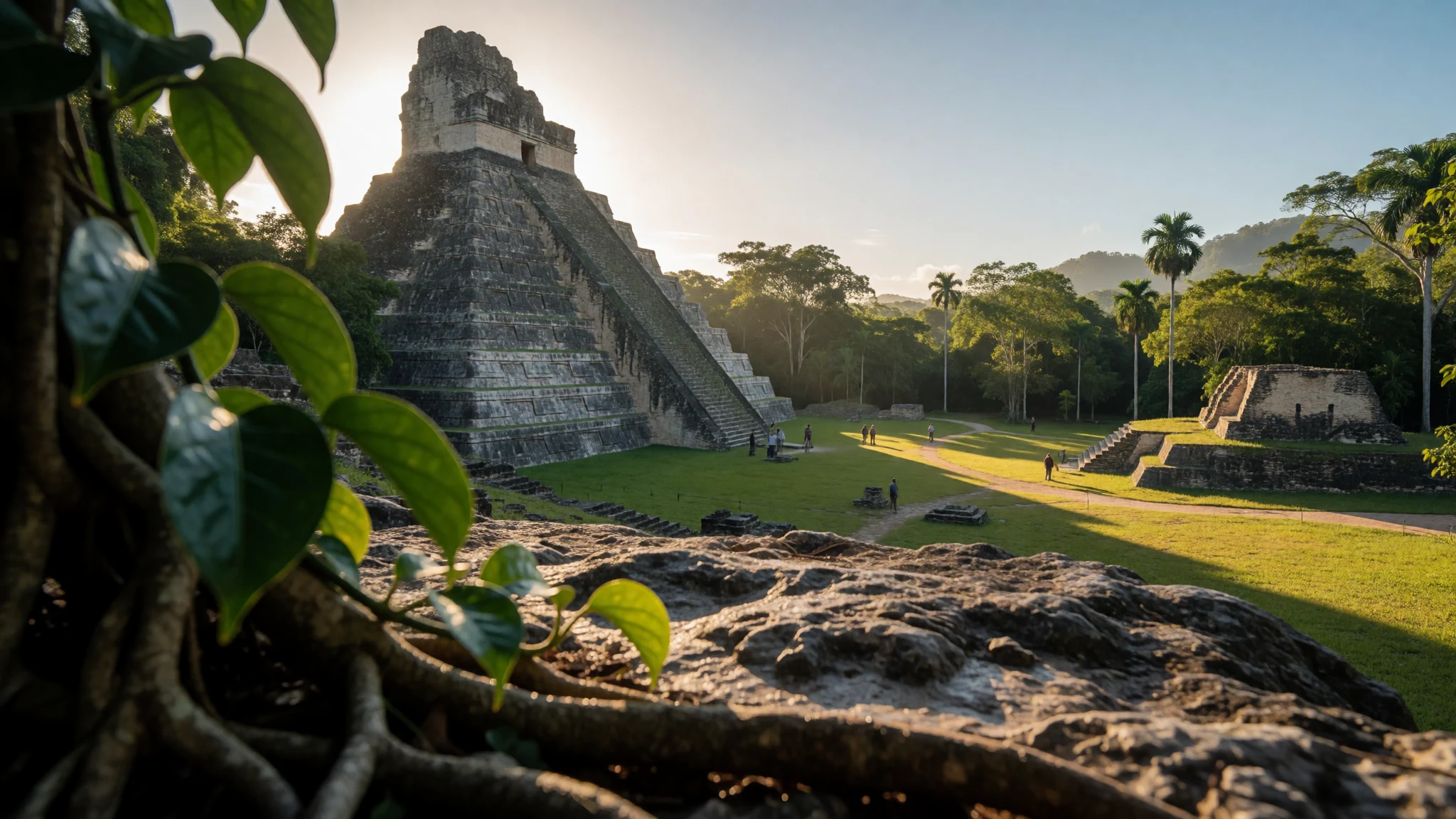
Climb ancient Maya pyramids rising above the Belize river valley and gaze across jungle canopies toward the distant border of Guatemala.
The place
Xunantunich stands upon a natural limestone ridge in the Cayo District of western Belize, elevated above the winding flow of the Mopan River. This ancient Maya archaeological site commands wide views across the fertile Belize River Valley, positioned so close to the international boundary that the neighboring frontier lies just a short distance to the west. The modern name translates in local Maya languages as Maiden of the Rock, combining roots denoting a noble lady and sculpted stone. This moniker preserves local folklore concerning a phantom apparition said to inhabit the ruins, described by generations of residents as a woman draped entirely in white with glowing fire-red eyes who ascends the ancient masonry stairs before vanishing into solid rock walls. Originally functioning as a significant civic ceremonial centre during antiquity, the complex anchored a densely inhabited agricultural landscape where thousands of farmers cultivated crops to sustain regional elites. Today, visitors arrive via a hand-cranked river ferry that crosses the Mopan current, followed by an ascent up a paved incline toward the main plazas. The reserve protects multiple courtyards, residential mounds, and monumental pyramids enveloped by tropical forest. As travellers wander through the courtyards, the calls of howler monkeys echo through the canopy above weathered limestone facades that have endured centuries of weathering in the humid Central American climate. The enduring layout offers an intimate encounter with classic Mesoamerican architecture away from the massive crowds found at larger regional counterparts across the international frontier.
Its story
Xunantunich gained formal academic attention in the final decade of the nineteenth century when colonial officials began documenting its stone mounds and carved monuments. Early explorations led by colonial authorities initiated decades of intermittent excavation, eventually replaced by systematic archaeological projects that revealed complex chronological sequences of pottery and construction. Excavators working at Xunantunich uncovered evidence suggesting that portions of the ceremonial precinct suffered sudden structural damage during antiquity, prompting theories involving severe seismic events that may have contributed to the abandonment of the urban core. Unlike major urban capitals that grew unchecked, this civic center maintained a close connection to the rural communities whose inhabitants lived in scattered kin-based homesteads throughout the surrounding river valley. These agrarian families cultivated maize, beans, and squash, supplying provisions to the ruling hierarchy while maintaining their own modest thatched dwellings. Over succeeding centuries, forest reclaimed the plazas and pyramids, shielding the masonry from further destruction until modern research teams cleared the dense vegetation. Today, ongoing conservation efforts strive to protect the fragile stucco friezes and limestone walls from tropical weather erosion, ensuring that the historical narrative of the ancient builders remains legible for future generations of historians, archaeologists, and curious travellers exploring the Central American interior.
What to see
- El Castillo — Main Plaza
El Castillo serves as the undisputed architectural anchor of Xunantunich, dominating the central plaza with its towering limestone terraces. Visitors who brave the steep flights of stone steps are rewarded with unobstructed 360-degree views stretching across unbroken jungle canopies, neighboring river valleys, and the distant hills of nearby Guatemala. - Structure A-1 — Group A Plaza
Structure A-1 forms part of the primary civic grouping surrounding the main plaza at Xunantunich. This large building complex features extensive lower chambers and elevated platforms that once accommodated administrative functions, offering visitors a clear sense of the spatial organization utilized by ancient nobility. - The Plaza Groups — Archaeological Reserve
The Plaza Groups at Xunantunich encompass six distinct courtyards linked by stone pathways and elevated causeways. Wandering through these interconnected spaces reveals the monumental scale of the ancient civic precinct, where residential foundations, small altars, and public gathering grounds reflect centuries of continuous architectural modification by regional rulers. - Tropical Wings Nature Center — San Jose Succotz
Tropical Wings Nature Center operates just outside nearby San Jose Succotz, providing an engaging stop on the journey to Xunantunich. The facility features a dedicated butterfly sanctuary, informative educational displays highlighting local ecology, and an outdoor disc golf course set amidst pleasant greenery.
Culture
Xunantunich exists within a vibrant cultural landscape where Maya heritage intertwines with contemporary Belizean society, shaped by Mestizo, Kriol, and Garifuna traditions. Traditional customs in the Cayo District emphasize community hospitality, respect for elders, and a deep connection to the surrounding agricultural land and river systems. Local communities near the archaeological reserve celebrate traditional music, storytelling, and culinary heritage passed down through generations. Visitors interacting with local guides and village residents will encounter a warm, multilingual society where English serves as the official language alongside Spanish and Kriol dialects. When exploring archaeological reserves and rural communities around Xunantunich, dress modestly by keeping shoulders and knees covered out of respect for local sensitivities.
What to wear
Fashion around Xunantunich and the wider Cayo District prioritises practical comfort in the face of tropical heat, high humidity, and occasional heavy downpours. Traditional textile heritage in Belize features vibrant embroidery and lightweight cotton garments worn during community festivals and national celebrations. Local residents today typically wear modern, casual attire such as breathable cotton shirts, denim trousers, and sturdy footwear suited for daily activities in warm weather. For travellers visiting Xunantunich, dressing sensibly is essential for an enjoyable excursion across the archaeological site. Wear lightweight, loose-fitting clothing made from natural fibres like cotton or linen to stay cool under the intense sun, paired with robust walking shoes or trainers with good grip for climbing steep, uneven limestone steps. Bring a wide-brimmed hat, UV-blocking sunglasses, and a waterproof jacket or poncho during the rainy months, as tropical showers can arrive swiftly without warning.
What to eat
- Pibil — Benny's Kitchen, near the ferry crossing
Pibil features tender pork marinated in achiote paste, citrus juices, and local spices, traditionally wrapped in banana leaves and slow-cooked until succulent. Enjoy this flavourful dish at Benny's Kitchen near the river crossing, where local newspapers accompany hearty homestyle meals. - Stewed Chicken with Rice and Beans — Local eateries in San Jose Succotz
Stewed chicken served alongside red beans and rice cooked in coconut milk forms a quintessential Belizean comfort meal. Savour this hearty staple dish at local eateries in nearby San Jose Succotz or surrounding village restaurants. - Fry Jacks — Morning food stalls in San Ignacio
Fry jacks are fluffy, deep-fried dough triangles puffed to golden perfection, typically served hot during breakfast alongside refried beans, eggs, and cheese. Find these delicious fried pastries at morning food stalls and local diners throughout the Cayo District. - Fresh Fruit Juices — Roadside vendors near the ferry
Refreshing tropical fruit juices prepared daily from seasonal produce such as papaya, pineapple, and sour orange provide instant relief from the tropical heat. Purchase chilled cups from small roadside vendors and family-run shops near the ferry landing.
Plan it
Best time. November to April offers drier weather and more comfortable temperatures for exploring outdoor ruins, whereas the wet season brings afternoon downpours and humid conditions.
How long. 1–2
Getting there. Take a bus from San Ignacio toward Benque Viejo del Carmen and request a drop-off at the Xunantunich turnoff, then cross the Mopan River on the hand-cranked ferry before walking uphill to the ruins.
Budget. low
Tips
- Arrive early in the morning before midday heat and tour groups peak.
- Carry sufficient drinking water, as on-site refreshment options are limited.
- Wear sturdy footwear with good grip for climbing steep pyramid stairs.
- Keep small denomination cash handy for bus fares, ferry crossings, and park admission.
Etiquette
- Dress modestly with covered shoulders and knees when visiting the archaeological reserve.
- Avoid climbing ancient stone structures during heavy rainstorms when steps become slick.
Nearby
Sources
- Wikidata Q1646630 (CC0)
- Wikipedia (rev 1369074159) (CC-BY-SA 4.0)
- Wikivoyage (rev 5422827) (CC-BY-SA 4.0)
- Photo 01 (CC BY-SA 4.0)
- Photo 02 (CC BY 2.5)
- Photo 03 (CC0 1.0)
- Photo 04 (CC BY-SA 2.0)


