Xi'an
Xi'an, People's Republic of China
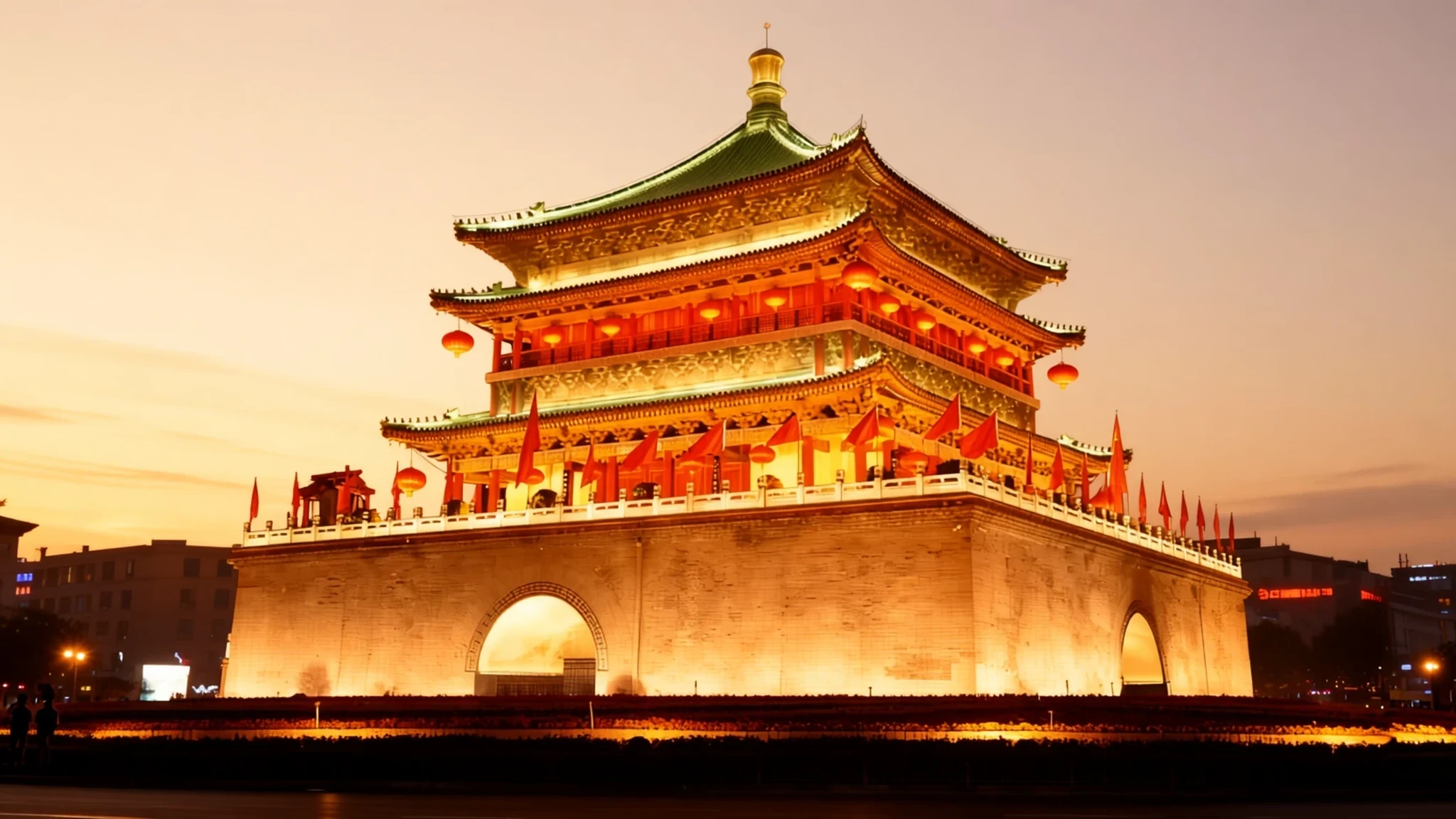
Xi'an is where the Terracotta Army waits in its pits, and where an old city wall and a long history of capital cities still shape the streets.
The place
Xi'an is the capital of Shaanxi province in north-west China, sitting on the Guanzhong plain at an elevation of about 405 metres. Its population is around 13 million, which makes it the most populous city in the province and the largest in north-west China. It holds sub-provincial status, so it carries more administrative weight than most Chinese cities of its size. Its older name, Chang'an, still appears throughout Chinese history, and the city reads as a place built around its past. A city wall encloses much of the old centre, a bell tower stands at its heart, and lanes near the Great Mosque fill with food stalls. Beyond the walls, modern Xi'an has grown into a centre for education, research and industry, with wide avenues and new districts spreading outward. The Mausoleum of the First Qin Emperor lies outside the city centre, and the Terracotta Army draws more visitors than anything else nearby. Crowds are heaviest in summer and during national holidays, when the main sites and market streets feel loud and packed. The city rewards a slower pace: a morning on the wall, an afternoon among the stone tablets, and an evening eating noodles on a busy street.
Its story
Xi'an's history reaches back well before its walls. The Lantian Man was found in 1963 in Lantian County, southeast of the city, and the remains date to at least 500,000 years ago. Closer in, the Banpo site on the eastern edge of the city preserves a Neolithic village roughly 6,500 years old, and the Xi'an Banpo Museum, built in 1957, protects its excavated houses and pottery. The first major political centre here came with the Zhou dynasty in the eleventh century BC, when twin settlements called Fengjing and Haojing formed a capital southwest of today's city. In 738 BC King Ping moved the court east to Luoyang because of political unrest, and the old capital lost its role. Later, after the Warring States period, the Qin dynasty unified China for the first time, with its capital at Xianyang just northwest of the modern city. Under the Western Han, Sui and Tang, the city under the name Chang'an became one of the great capitals of its age, and the name still carries weight locally. Xi'an is counted among China's Five Great Ancient Capitals, a label that reflects the number of dynasties that ruled from here. Later dynasties moved the political centre elsewhere, and the city has since become a provincial capital again, with its ancient layers sitting close together in the streets.
What to see
- Terracotta Army — Mausoleum of the First Qin Emperor, outside the city centre
The Mausoleum of the First Qin Emperor holds the Terracotta Army, rows of clay soldiers buried in pits to accompany the emperor. The excavated ranks are the main reason most visitors come to Xi'an. Arrive early on a weekday if possible, because the main pit fills quickly once tour groups arrive. Allow at least half a day, including the transfer from the city centre, and check the official site for opening arrangements.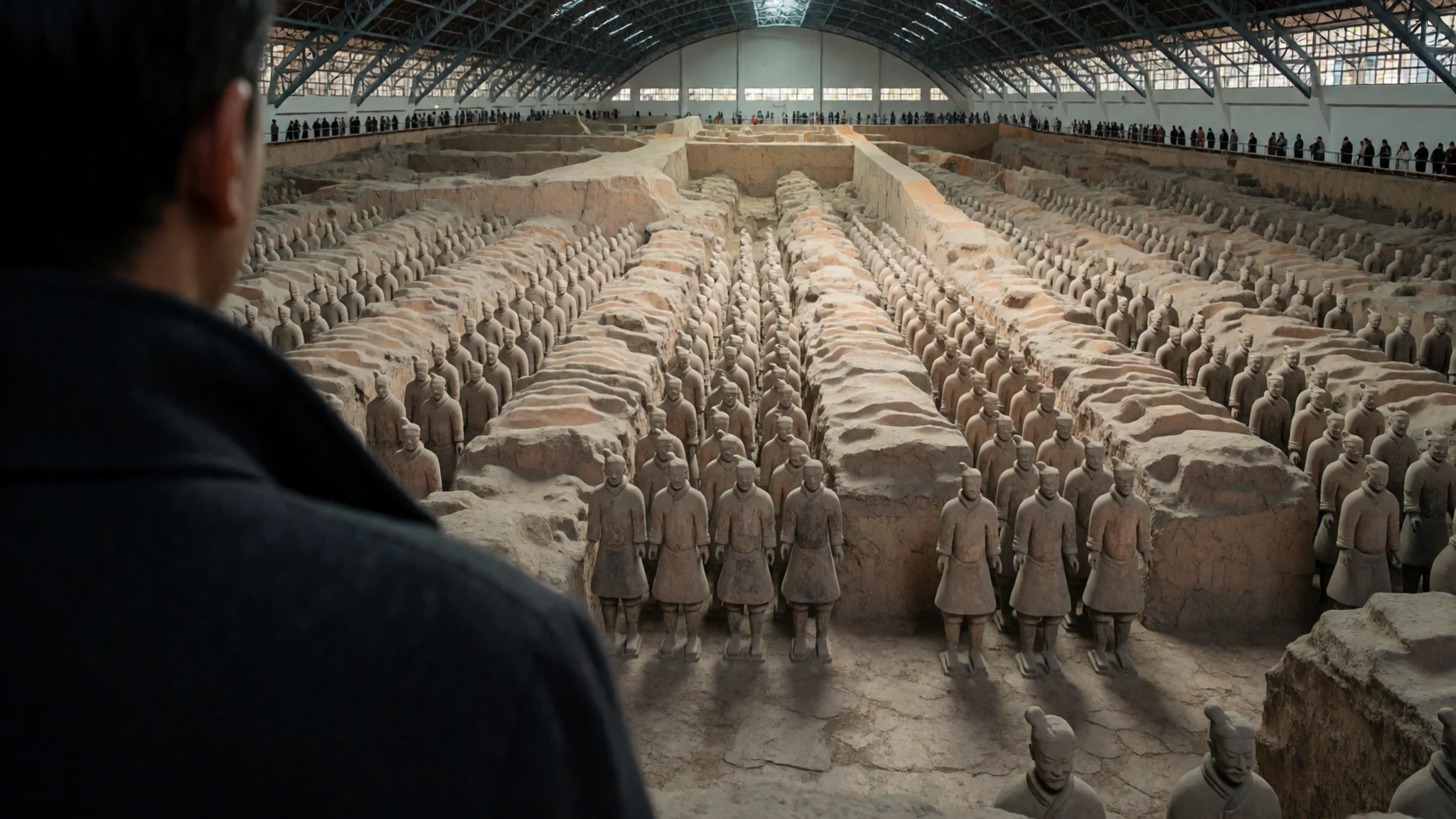
- Xi'an Bell Tower — Central Xi'an, the crossroads of the old city
The Bell Tower stands at the crossroads of the old city, a tiered pavilion with grey tiles on a stone base. It once marked the hours for the city, and the square around it is the usual starting point for walks into the surrounding lanes. The tower looks best in early morning or after dark, when the lighting picks out its eaves and the square is calmer. Midday brings tour buses and vendors, so it is busier then.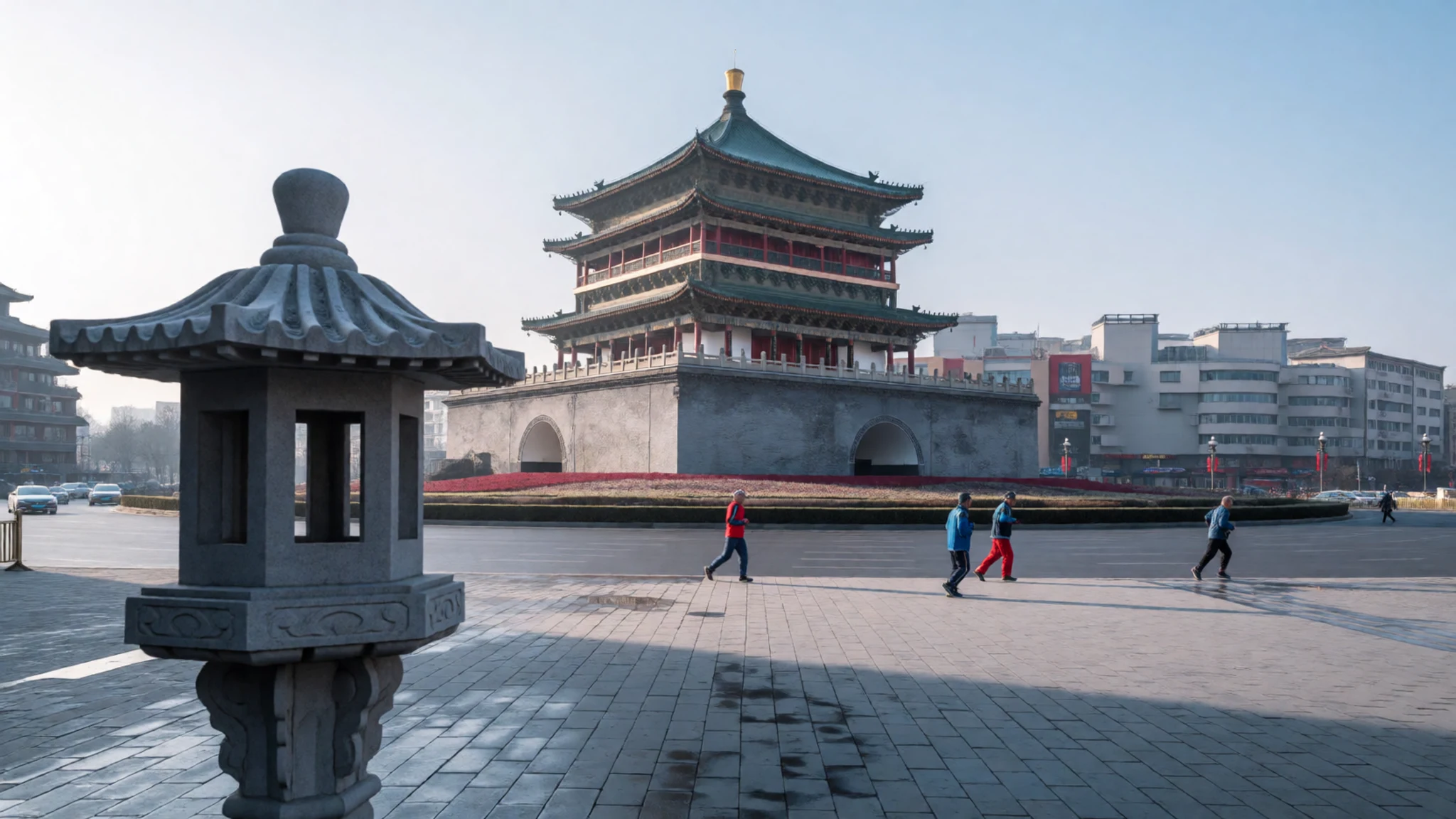
- Beilin (Stele) Museum — Central Xi'an, in the old city
The Beilin Museum holds a collection of around 4,000 inscribed stone tablets. The texts cover scripture, poetry, classic Chinese writing, the achievements of rulers, family histories and practical matters, such as a set of instructions to rebuild a school. It is one of the most useful places in the city to see Chinese writing up close, and it suits visitors who enjoy calligraphy and old texts.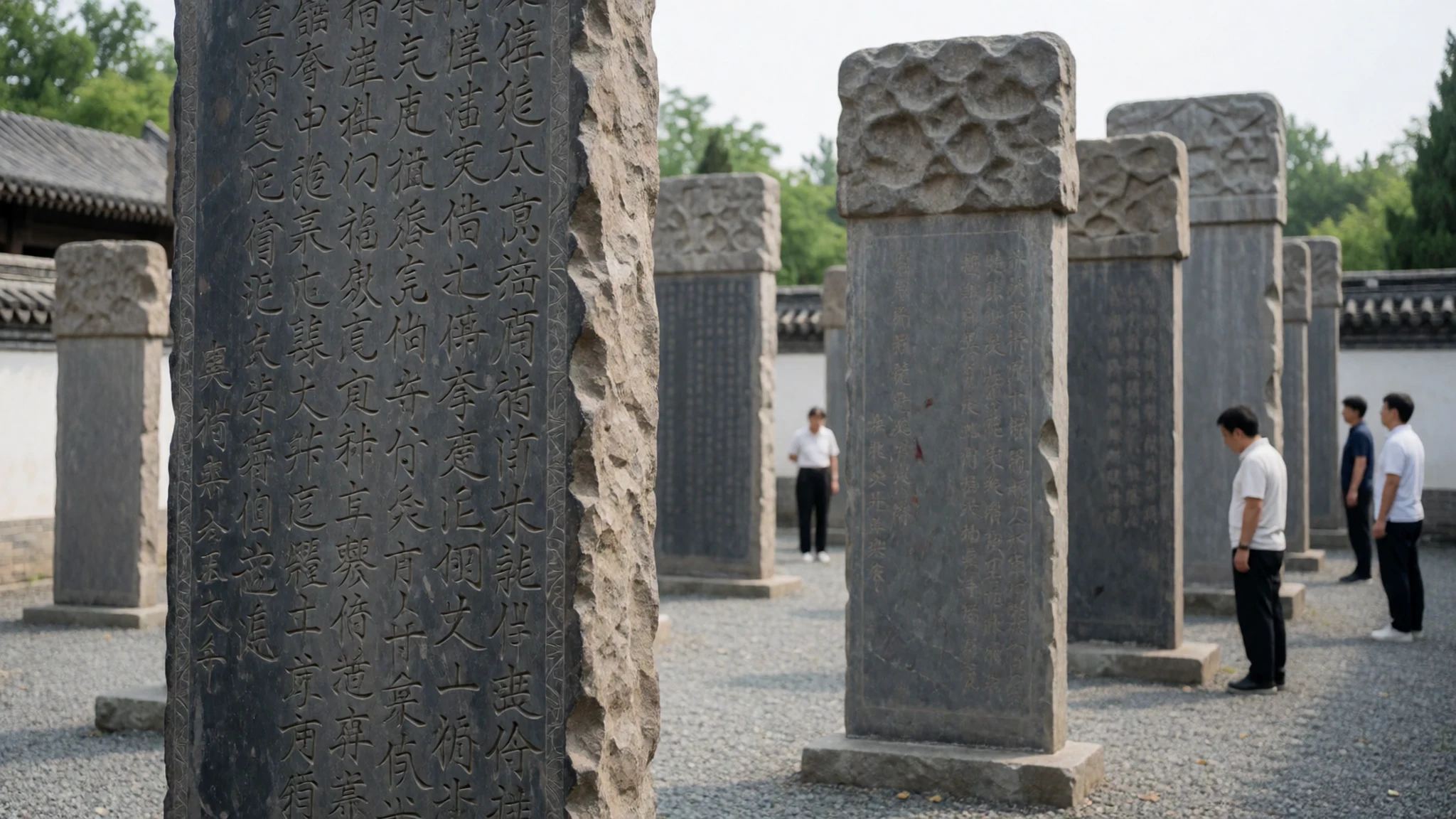
- Shaanxi History Museum — Southern part of Xi'an
The Shaanxi History Museum gathers local artefacts that span the province's past, from the Neolithic period through to the Qing dynasty. It makes a good companion to a visit to the Banpo site and the Terracotta Army, because it shows the long run of settlement and empire in the region. Allow a couple of hours to move through the galleries at an easy pace.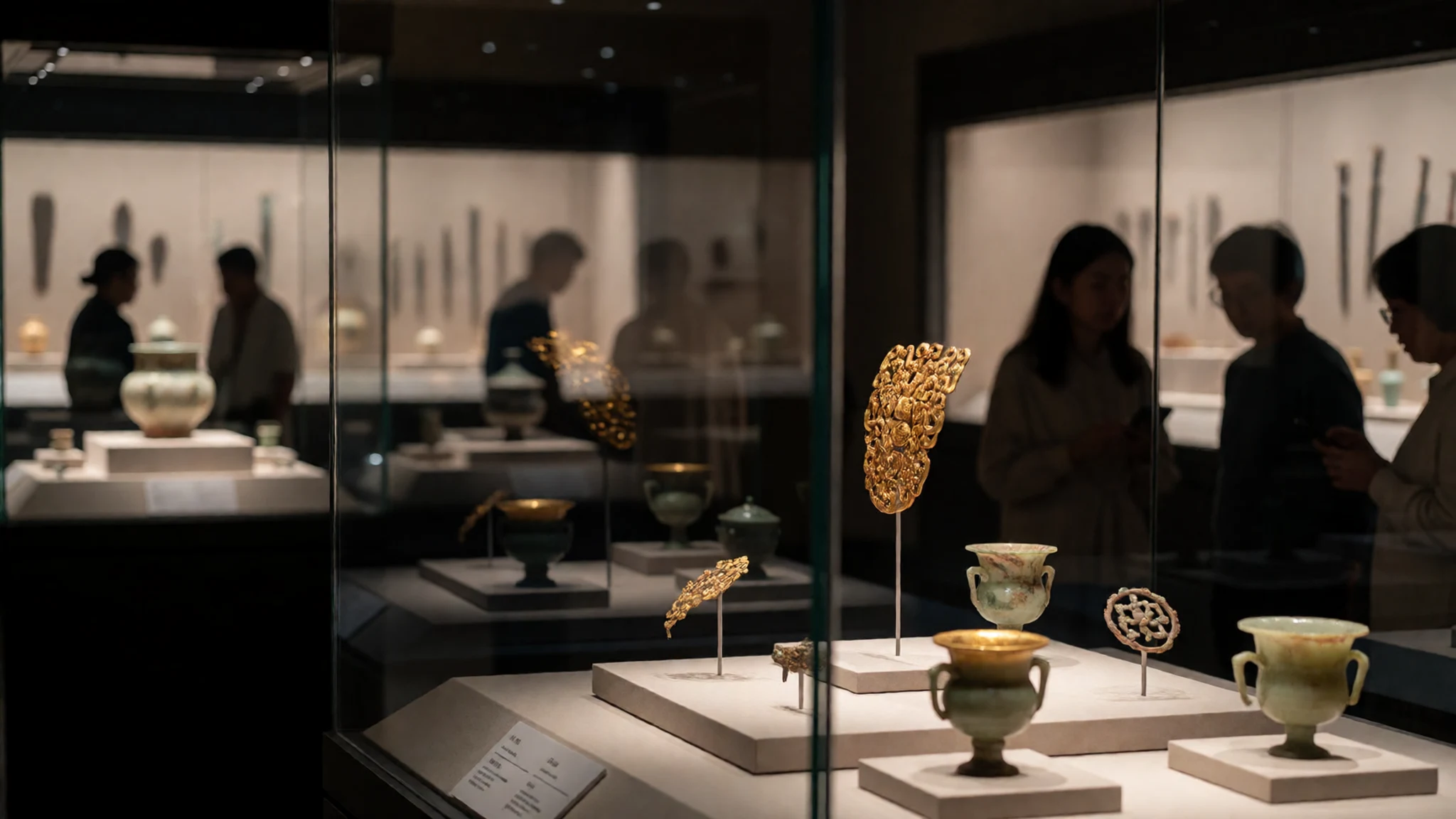
- Shaanxi Art Museum — Central Xi'an, close to the Beilin Museum
The Shaanxi Art Museum is the smaller of the two art museums in the city and is not the same as the Shaanxi Province Art Museum. It mainly displays paintings and calligraphy, and it is a calm place to spend an hour between busier sights. Check the official site for current displays before planning a route around it.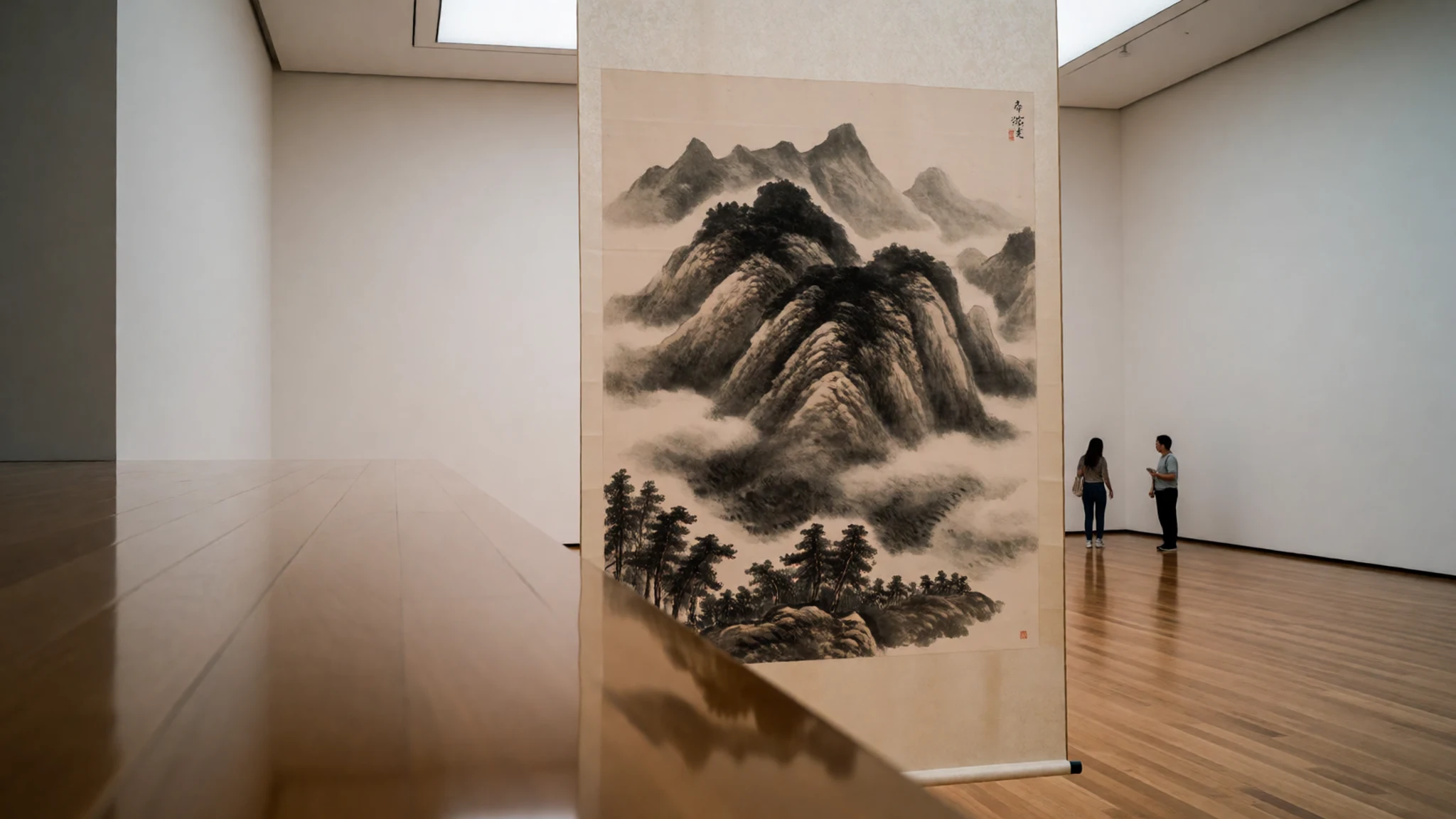
Culture
Xi'an's cultural life runs through its theatre, its museums and its mosques. Qinqiang, sometimes called the Voice of Qin, is one of China's four major operatic traditions and among the oldest, built on singing and percussion that carry the story. The city's contemporary stars include Xu Wei, Zhang Chu and Zheng Jun. Large Tang dynasty dance and music shows also play to visitors, presenting the court style the city knew in its imperial years. The Great Mosque in the old city is a working place of worship, and the lanes around it run to their own rhythm of prayer times, halal food and close community life. Meals in Chinese homes and restaurants are shared, with dishes ordered for the table and tea poured for others before oneself. Ask before photographing vendors, families or worshippers in the night markets and mosque lanes, and dress modestly when you enter the Great Mosque.
What to wear
Traditional dress in Xi'an belongs to the courts of the dynasties that made the city their capital. Tang court dress, with wide-sleeved robes of silk and brocade in bold colours, is the image most often used for the city's costume shows and rentals, and its layered shapes still appear in tourist costume. Silk and embroidery were the textiles of the upper classes, while cotton and hemp were everyday cloth. Day to day, people in Xi'an dress much as people in other Chinese cities do, in jeans, T-shirts and light jackets, with padded coats in winter. Many men and women in the Muslim quarter wear white caps and headscarves, and clothing in the old city tends to be modest and practical. Visitors should pack light, breathable layers for spring and summer, with a hat and sunscreen for the open sites, and a warm coat and something waterproof for autumn and winter. Cover shoulders and knees for the Great Mosque and bring a scarf for head covering. Comfortable shoes with good grip suit the city wall and the long walks between districts.
What to eat
- Yangrou paomo — Lao Sun Jia branches across the city, and the old-town eateries near the Great Mosque
Flat bread torn into pieces and soaked in a rich lamb soup, served with slices of meat and sometimes coriander. It is one of the signature dishes of the city and is very filling. Lao Sun Jia is a cheap chain with branches across town, and it is easy to order here even without English, using pictures or hand signals.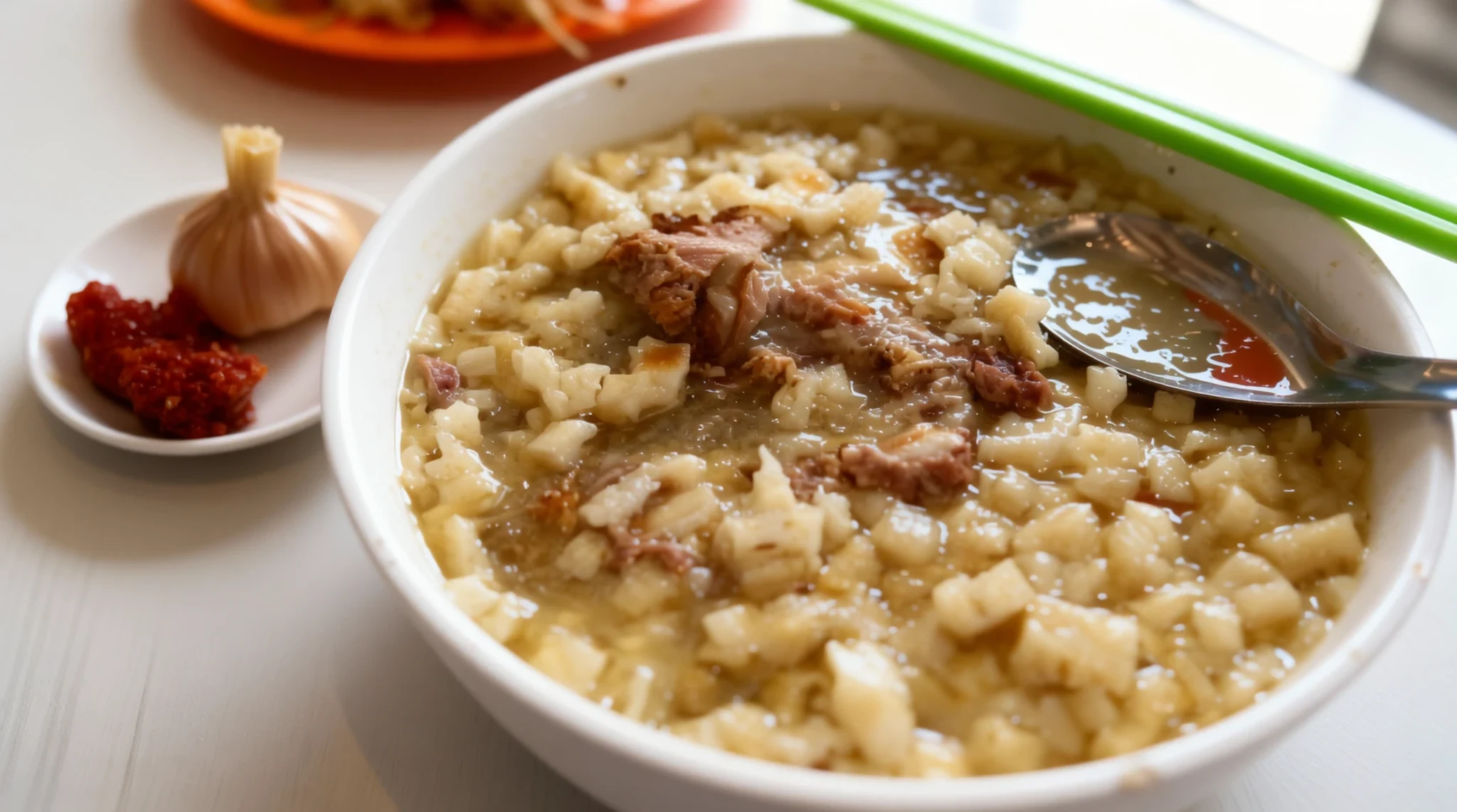
- Liang pi — Street stalls in the old city and near the night markets
Cold wheat or rice noodles dressed with vinegar, chilli oil and garlic. They are light and sharp, which makes them a good choice in summer. Stalls on the busy streets near the night markets serve them quickly, often from a single bowl at the counter.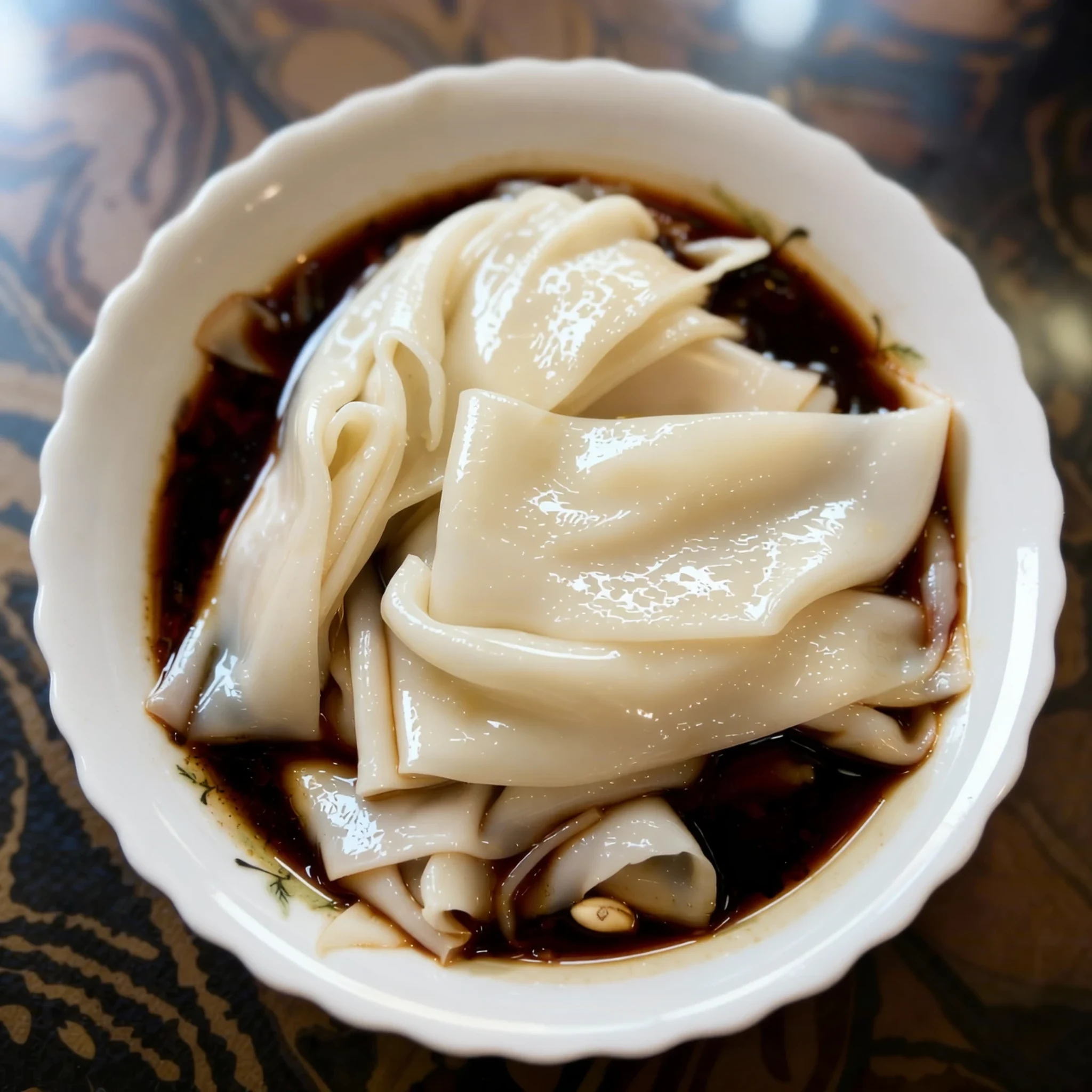
- Biangbiang mian — Noodle shops in the back streets of the old city
Thick, long hand-pulled noodles, usually served with red chilli and oil that is poured over them at the table. Shops that make the noodles to order are easy to find in the back streets, and the noodles are a good meal on a cool evening.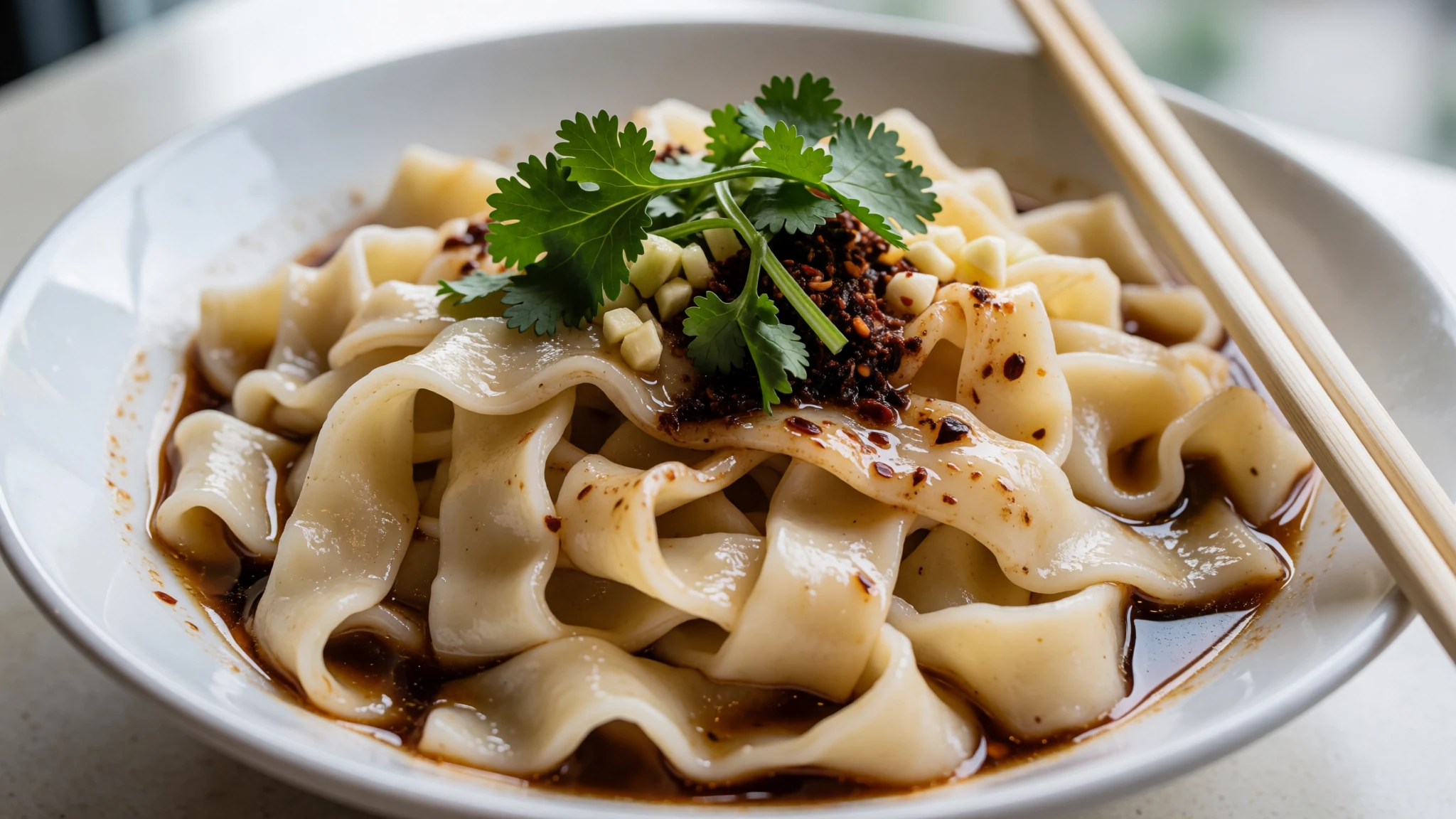
- Roujiamo — Street stalls around the night markets and in the old city centre
A flatbread bun stuffed with slow-cooked pork, a dish often described as Xi'an's answer to a sandwich. It is cheap, filling and eaten standing up or on a small stool. Look for stalls near the busy market streets, where the bread is pressed and filled in front of you. - Jiaozi (dumplings) — Small dumpling eateries in the north-west of the old city
Boiled or pan-fried dumplings filled with pork, leek or vegetables, served in batches. Some small dumpling eateries in the north-west of the old city serve fresh dumplings in many fillings, and they are cheap and quick. Go early in the day, when fresh batches are more likely to be available.
Plan it
Best time. Spring and autumn are the most comfortable seasons, when the weather is mild and the city is easier to walk. Summer is hot and humid, and winter is cold, with grey days more likely.
How long. 3–4
Getting there. Xi'an Xianyang International Airport is the main airport, and airport buses and taxis run into the city from it. Use the official taxi rank and be wary of touts who approach in the arrivals hall. High-speed and conventional trains link Xi'an with other major Chinese cities.
Budget. mid
Tips
- Book Terracotta Army tickets and transport in advance, and check the official site first
- Visit the Terracotta Army early in the day, before tour groups arrive
- Be wary of touts who claim the last airport bus has gone or offer cheap hotel rooms
- Carry some cash for small night-market stalls, though larger places take mobile payments
- Drink water regularly in summer, and plan indoor museum visits for the hottest hours
Etiquette
- Keep voices low in museums, tea houses and the mosque lanes
- Ask before photographing people, especially at market stalls
- Dress modestly for the Great Mosque and remove shoes where a site asks
Nearby
Sources
- Wikidata Q5826 (CC0)
- Wikipedia: Xi'an (rev 1382399881) (CC BY-SA 4.0)
- Wikivoyage: Xi'an (rev 5388636) (CC BY-SA 4.0)
- Photo: ScareCriterion12, Xi'an Bell Tower (CC BY-SA 4.0)
- Photo: xiquinhosilva, City wall of Xi'an (CC BY 2.5)
- Photo: xiquinhosilva, Terracotta Army (CC BY 2.5)
- Photo: xiquinhosilva, Xi'an Bell Tower (CC BY 2.5)
- Photo: Mr. Tickle, Great Mosque minaret (CC BY 3.0)
- Photo: 颐园新居, Giant Wild Goose Pagoda (CC BY 3.0)
- Photo: dayu490301, Ziyun Pavilion at night (CC BY 3.0)
- Photo: Liuxingy, Meibei Lake, Huyi District (CC BY-SA 4.0)


