Würzburg Residence
Würzburg Residence, Germany
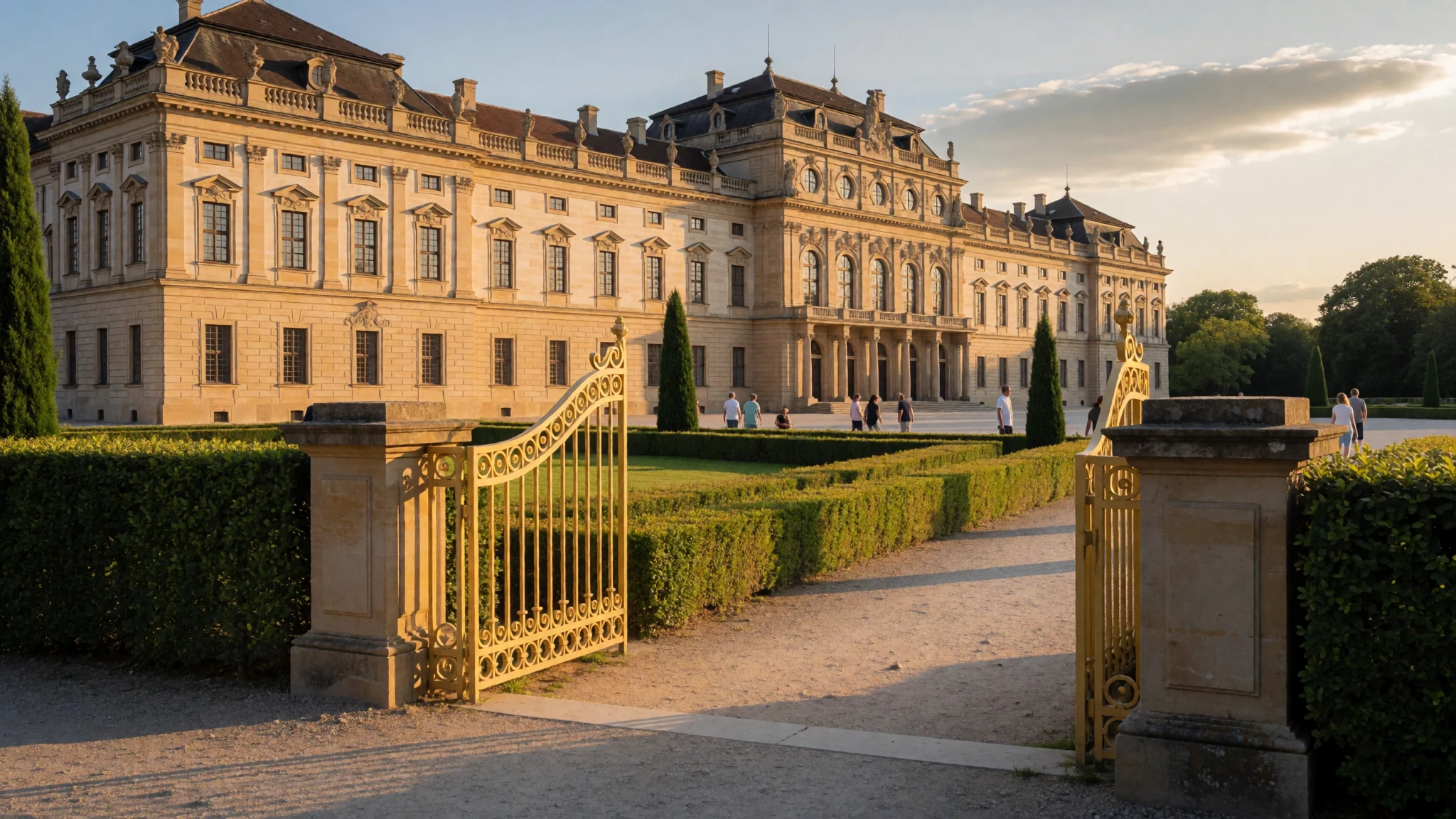
Würzburg Residence is a prince-bishop's Baroque palace of grand staircases, Tiepolo frescoes and formal gardens, rebuilt with care after wartime bombing.
The place
The Würzburg Residence is a Baroque palace in the Bavarian city of Würzburg, Germany, built for the Prince-Bishops once they decided that a hilltop fortress no longer suited a modern court. Its plan is a long central block with two side wings, each wrapped around inner courtyards. On the town side the wings reach forward and half-enclose a ceremonial forecourt, the Cour d'honneur. A formal garden surrounds the palace on its other sides. Balthasar Neumann, the bishop's court architect, held the project together, but the palace is a collaboration: Austrian and south German architects such as Hildebrandt and von Welsch advised, and so did the French designers Robert de Cotte and Germain Boffrand. The result mixes Viennese swagger with Parisian polish. Three interiors draw most attention: the grand staircase, the palace chapel and the Imperial Hall. Giovanni Battista Tiepolo, a Venetian painter, covered ceilings with frescoes, helped by his son Domenico. Napoleon is reported to have called the whole thing the largest parsonage in Europe, which is a fair joke about a palace paid for by churchmen. Wartime bombing damaged it badly, and restoration has gone on since 1945, so some rooms are careful rebuilds. It is a UNESCO World Heritage Site and runs as a museum; the official site, https://www.residenz-wuerzburg.de/, carries current opening and tour details. The old town, the river Main and the Old Main Bridge are a short walk away, so the palace slots easily into a day in the city.
Its story
The story of the Würzburg Residence begins with a bishop who felt cramped. Until the early eighteenth century the Prince-Bishops of Würzburg lived in the Marienberg fortress on the hill west of the Main. Johann Philipp Franz von Schönborn, who took office in 1719, inherited a smaller town palace and judged it unworthy of an absolute ruler. He wanted something to stand beside Versailles or Schönbrunn. A lawsuit he won soon after taking office brought him a fortune, and he chose to spend it on a building that would announce his standing to everyone. His family backed him. His uncle Lothar Franz, Elector of Mainz, admitted to being a 'Bauwurm', a building bug, while his brother Friedrich Carl, imperial vice-chancellor in Vienna, supplied the project with designers and suggestions from his own circle. Friedrich Carl had met the architect Hildebrandt in Vienna while the Belvedere was going up. Work began in 1720 with the north block. Then momentum slipped. The next bishop, Christoph Franz von Hutten, cared little for so vast a scheme and preferred to stop once the north block stood complete. The building did eventually grow beyond that, and the main structure was finished in 1744, though the Venetian Tiepolo was not brought in to paint until 1750. Bombing in the Second World War left the palace heavily damaged, and the restoration that began in 1945 is still the background to any visit.
What to see
- Grand staircase and state rooms — Residence interior
The staircase designed by Balthasar Neumann is the usual first stop, and it is considered a highlight of southern German Baroque. Beyond it lie the Imperial Hall and the palace chapel, the other interiors singled out as masterworks, with Tiepolo's frescoes part of the draw. Many rooms were rebuilt after bombing, so look for the difference.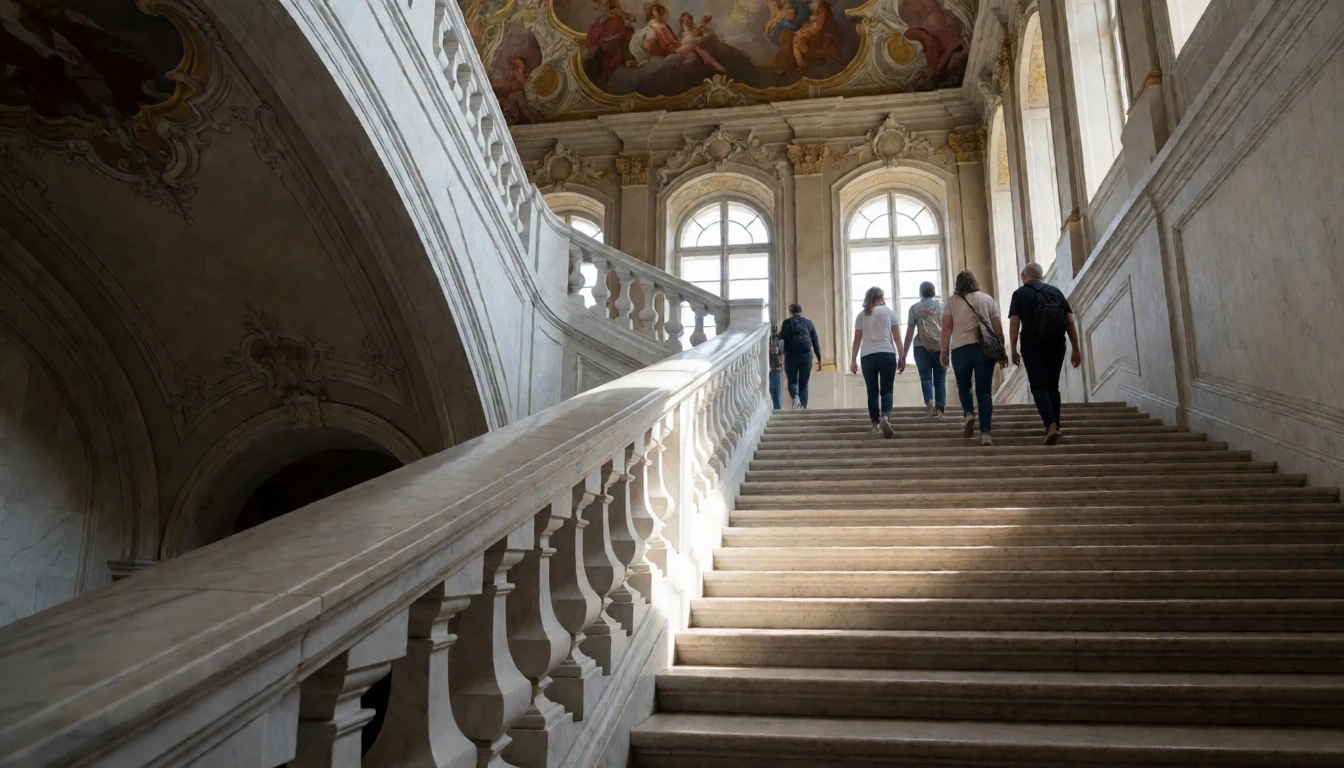
- Façade and Cour d'honneur — Residenzplatz, town side
Seen from the town side, the Residence shows its shape: a central block with two wings projecting forward to hold the forecourt between them. It is a useful place to take in the scale before going inside, and it is quieter in the morning, before tour groups gather on the square.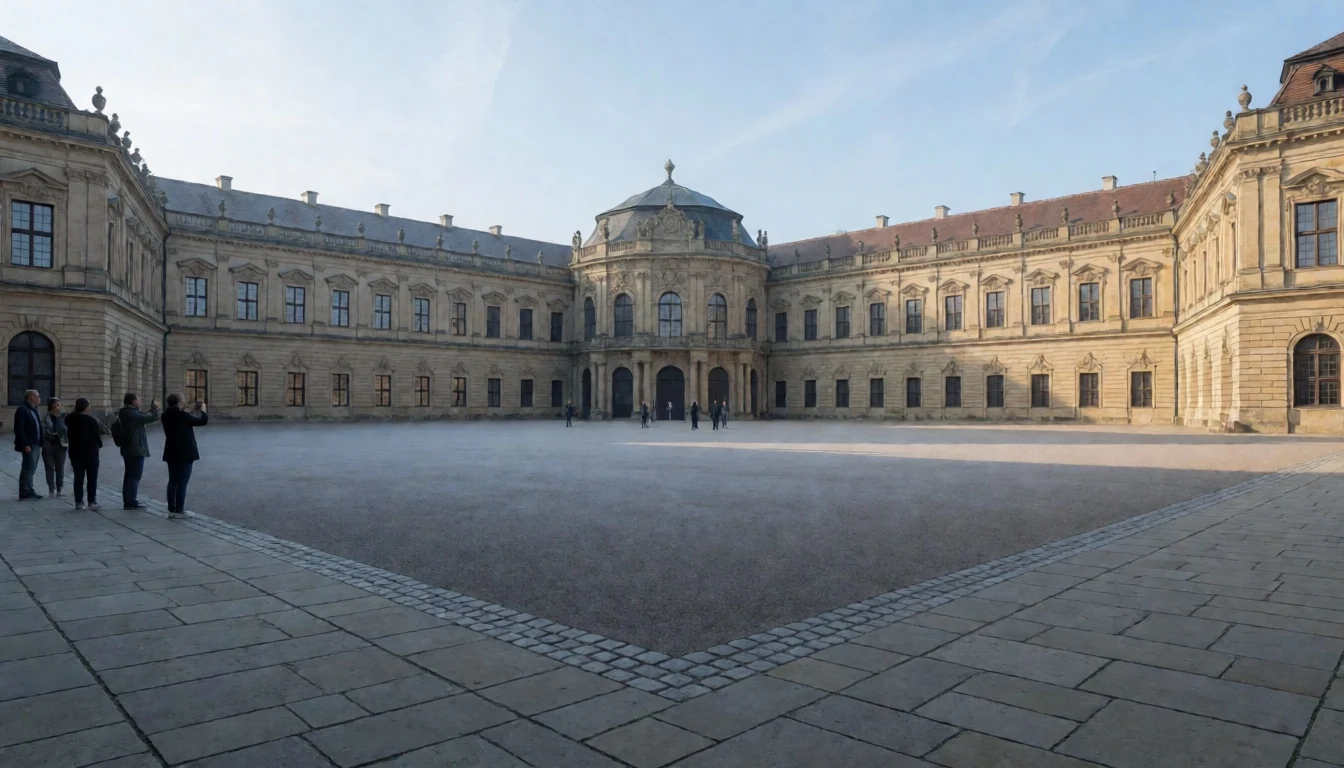
- Court Garden — Behind the Residence
Gardens hug the palace on three sides. Johann Prokop Mayer, from Bohemia, shaped them in a Rococo spirit, while the west garden stayed plainer and was left unfinished. They make a calm walk after the interiors, and the long garden front looks its best from the paths.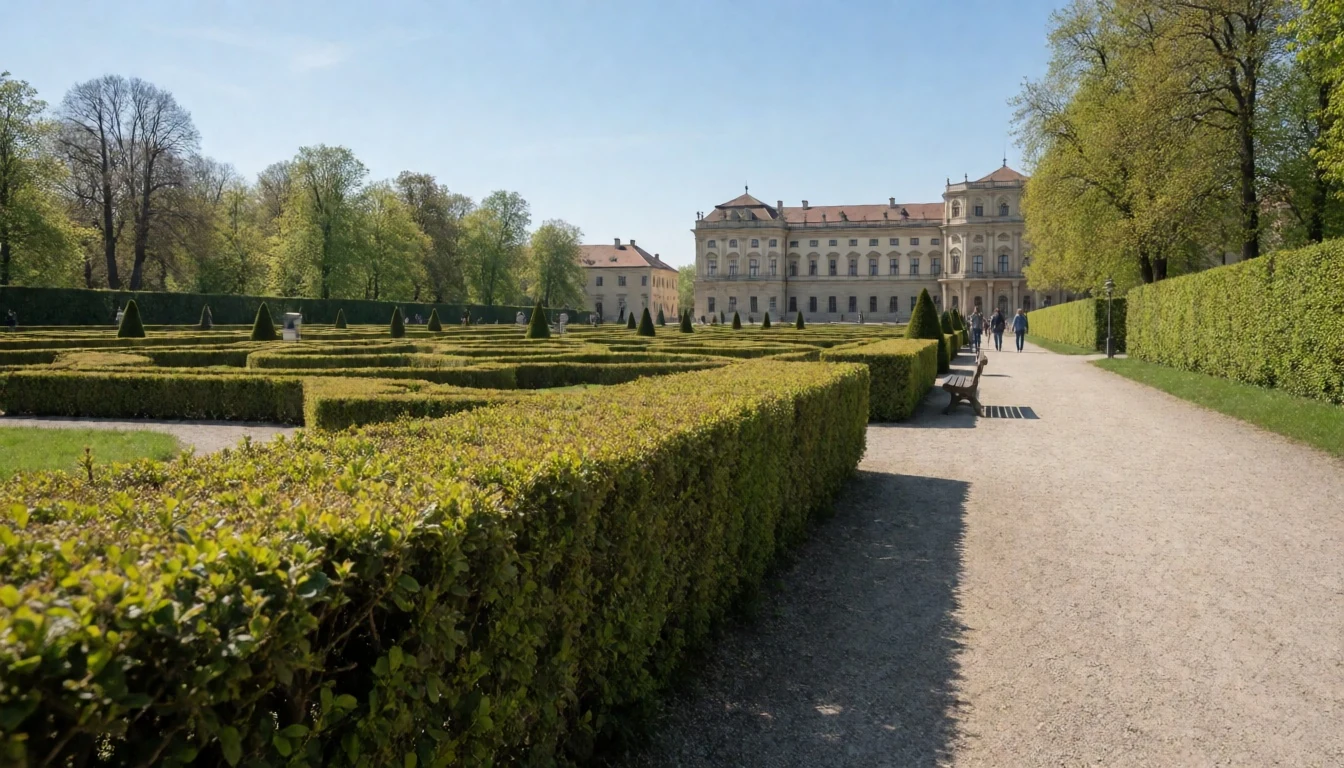
- Festung Marienberg — Hill west of the Main
This hilltop fortress across the Main was the Prince-Bishops' home before the Residence existed. It stands high above the city, so the climb is rewarded with views over rooftops and river. Near its southern flank is the Maschikuli Tower, a Balthasar Neumann addition built to guard that side.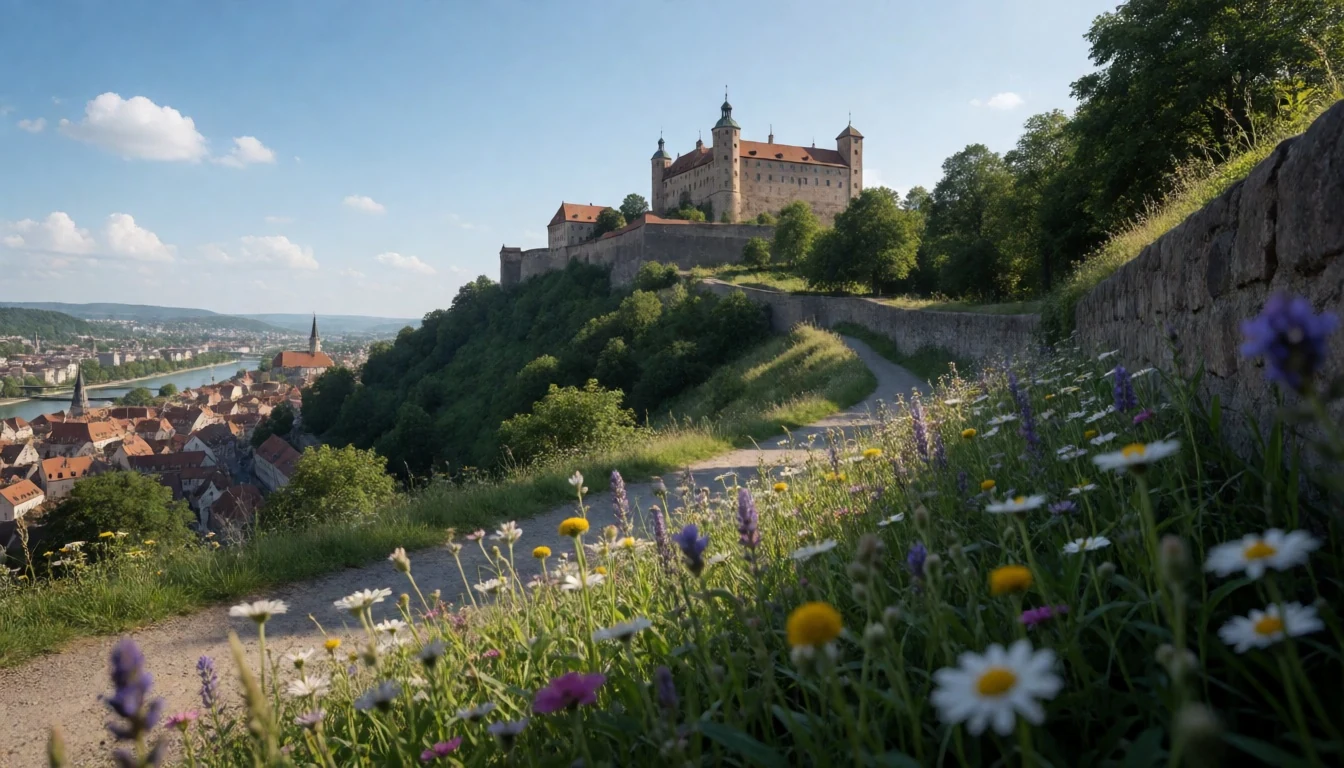
- Old Main Bridge — Over the Main, old town
This pedestrian-only bridge crosses the Main towards the fortress, lined with statues of kings and saints important to Franconian Catholicism. Wikivoyage compares it to Prague's Charles Bridge, though it is smaller. It is a pleasant place for a slow evening walk with a glass of local wine.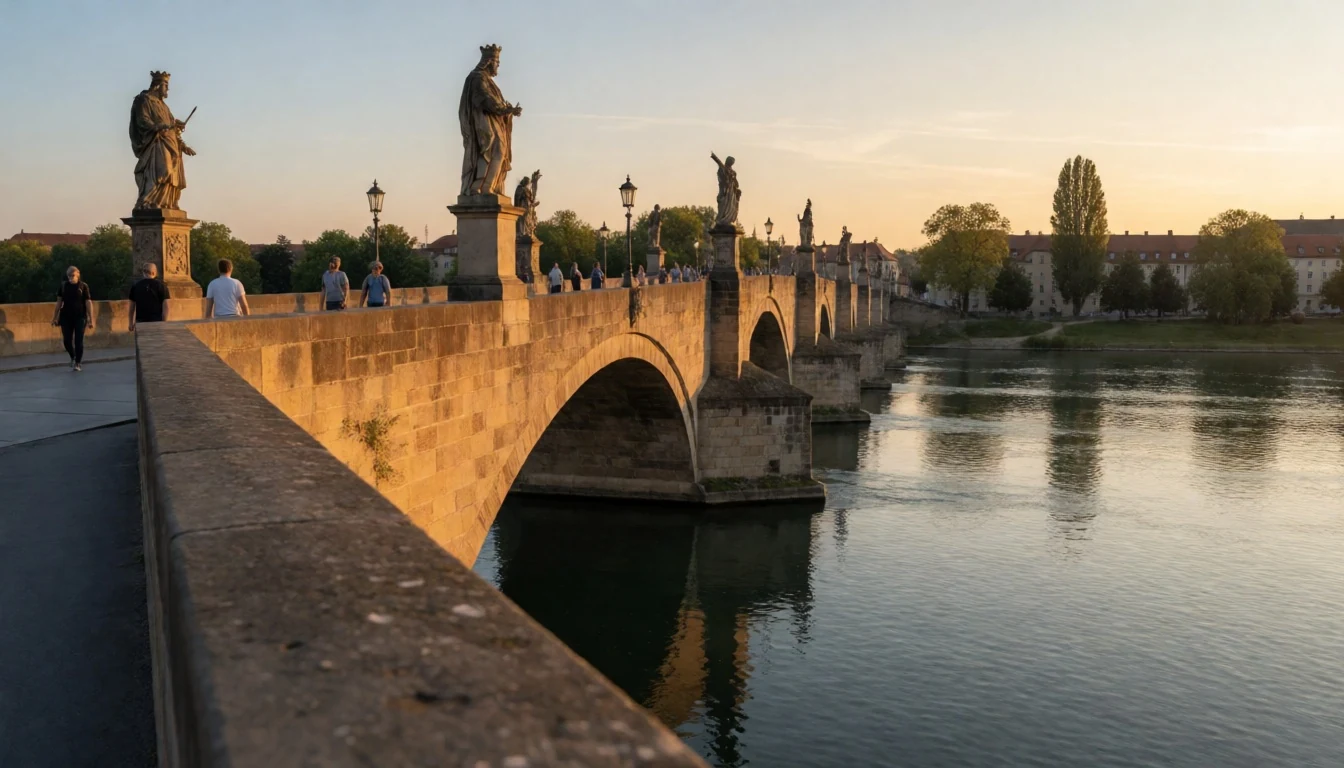
Culture
The Würzburg Residence sits in Franconia, a Catholic part of Bavaria where for centuries the same man was both bishop and prince. That double role explains the palace. It was a house of government, a statement of rank and a showpiece all at once, meant to impress ambassadors and relatives as much as to shelter a court. Family networks mattered enormously. The Schönborns drew architects and painters from Vienna, Mainz, Paris and Venice, and the building still reads as a meeting of styles rather than a single local tradition. Rebuilding is part of the culture too. After wartime bombing, restoration became a long, patient job that has run since 1945, and what visitors see is a mixture of surviving original work and faithful repair. In the city itself, Franconia is wine country, and wine bars and shops with tasting counters in the old town reflect that. Market days on the Marktplatz, a lively riverside and a strong sense of civic pride sit alongside the palace story, so the Residence feels like one layer of a working town rather than a museum island. Spend a little time in the streets around it to feel the contrast between the prince-bishops' grandeur and ordinary Würzburg life. Follow the posted rules on photography, bags and marked routes inside the state rooms, and keep your voice low, since guided groups share the same small spaces.
What to wear
Würzburg Residence lies in Franconia, where traditional dress, known as Tracht, appears mostly at festivals, wine events and civic or church parades rather than in daily life. Franconian costume varies from village to village, but the common ingredients are wool and linen, dark bodices and aprons for women, and waistcoats, felt hats and leather breeches for men. The Alpine dirndl and lederhosen belong more to Upper Bavaria; in Würzburg they tend to be worn for celebrations. Day to day, people dress as in most of Germany: practical, layered and in muted colours, with sturdy shoes, rain jackets and a scarf, and smart-casual for dinner or concerts. For visitors, comfort comes first. The palace has long stone floors and plenty of walking, and the old town is cobbled, so flat, well-cushioned shoes are the sensible choice. Bring a light waterproof in any season and layers in cooler months, since big historic rooms can feel chilly. In summer, a hat and sunscreen help in the garden. There is no dress code for the palace, but cover shoulders and knees when stepping into a church, and keep beachwear for the beach.
What to eat
- Bratwurst in a bread roll — Stalls on the Marktplatz
Franconian bratwurst, grilled and served in a plain roll with mustard, is the standard quick lunch in the old town. A small stall on the Marktplatz draws a queue by midday, though it moves fast. Eat it standing up and go back for a second if needed.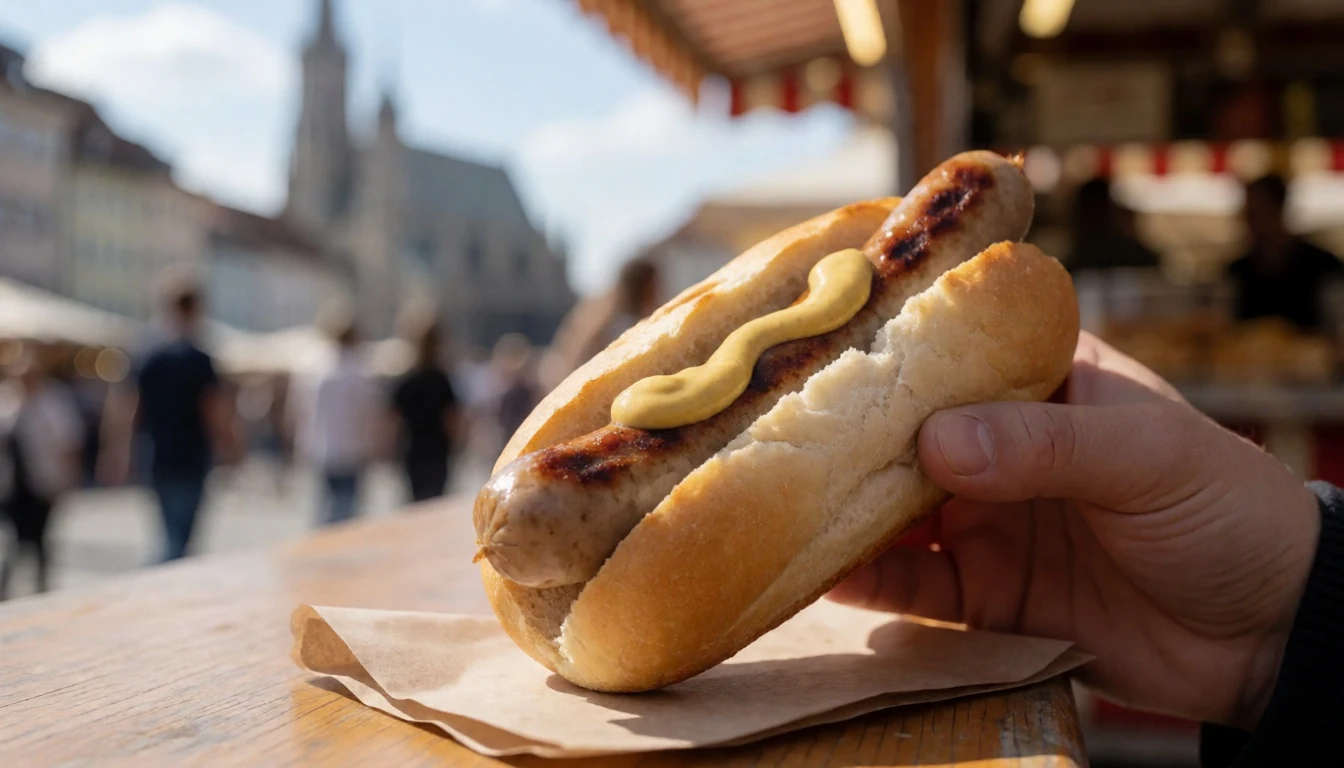
- Döner kebab — Kebab shops in the city centre
Turkish-style döner is the late-night standby in Würzburg, with several city-centre shops open after most restaurants close. The meat is carved from the spit into bread with salad and sauces. It suits a tight budget and a long day of sightseeing.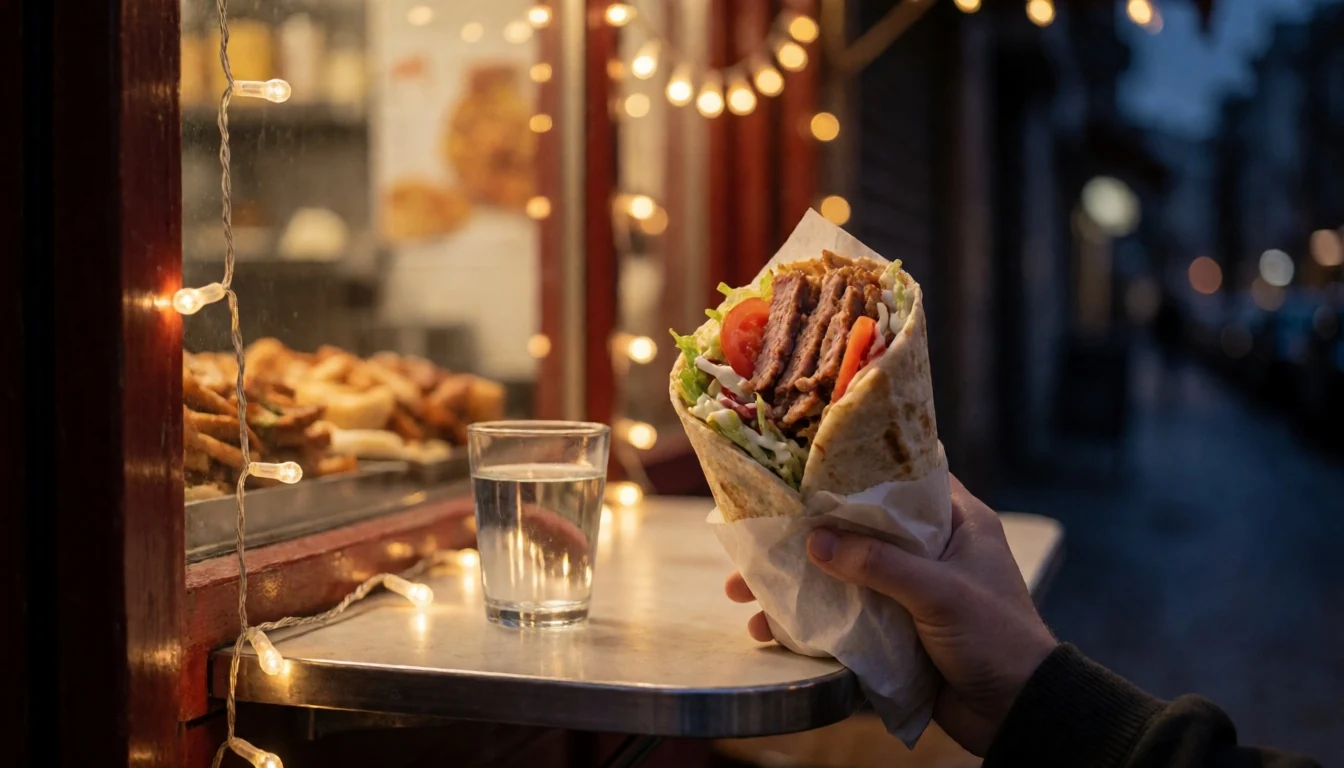
- Cakes, pastries and coffee — Cafés around the Marktplatz
The large cafés on the main square offer cakes, pastries, ice cream and coffee, and they fill with older locals as well as visitors. A slice of cake here is a good way to rest your feet after the palace rooms. - Franconian white wine — Wine bars and shops with a Vinothek counter in the old town
Franconia is a wine region, and local whites are poured by the glass in old-town wine bars and shops with tasting counters. Silvaner is the grape most associated with the area. Ask staff to recommend a dry local glass and expect a food-friendly, crisp style. - Salads, breads and simple desserts — Casual cafés in the old town
For a lighter meal, easygoing cafés serve salads, breads and desserts through the day and often stay open late. They suit solo travellers and anyone wanting something plain between sights, without the formality of a sit-down dinner.
Plan it
Best time. April–May and September–October suit most visitors: the gardens are in leaf, days are long enough for the palace plus a stroll, and crowds are lighter than in high summer, when July and August are at their hottest. Winters are cold and dark, but the interiors stay open, so check the official site for seasonal hours.
How long. 1–2
Getting there. Frankfurt Airport (FRA) is the easiest gateway: its long-distance station has ICE trains to Würzburg main station, about 90 minutes, at least hourly. Nuremberg (NUE) also works, with a faster ICE or a slower regional train. From Würzburg main station, walk or take a short tram ride into the old town.
Budget. mid
Tips
- Check the official site, https://www.residenz-wuerzburg.de/, for current tickets, tours and opening times before you go
- Arrive early or on a weekday to see the staircase and state rooms with fewer groups
- If using regional trains, ask about a Bayern ticket, which covers local transport and regional rail
- Wear comfortable shoes for stone floors and cobbles, and carry a light layer for chilly interiors
- Join the Marktplatz bratwurst queue before or after the lunch rush, and keep a little cash for stalls
Etiquette
- Follow the posted signs on photography and bags in the state rooms
- Keep to marked routes and do not touch walls, doors or frescoes
- Keep voices low in the chapel and the grand rooms where guided groups gather
Nearby
Sources
- Wikidata Q156316 (CC0)
- Wikipedia: Würzburg Residence (rev 1381876755) (CC BY-SA 4.0)
- Wikivoyage: Würzburg (rev 5422802) (CC BY-SA 4.0)
- Wolfram Esser, Wurzburg Residenze garden front (CC BY 3.0)
- Diego Delso, Würzburg Residence, Germany (104) (CC BY-SA 4.0)
- Carsten Steger, Aerial image of Würzburg Residence (view from the east) (CC BY-SA 4.0)
- Rainer Lippert, Würzburger Residenz, Gartenfront (Public domain)
- Christian VisualBeo Horvat, Residenz Würzburg Vorderan (CC BY 2.5)
- Diego Delso, Balthasar Neumann's staircase (75-77 HDR) (CC BY-SA 4.0)
- Diego Delso, Würzburg Residence, Germany (49) (CC BY-SA 4.0)
- Felix Mader, Würzburg Residenz side plan (CC0 1.0)


