Wollongong
Wollongong, Australia
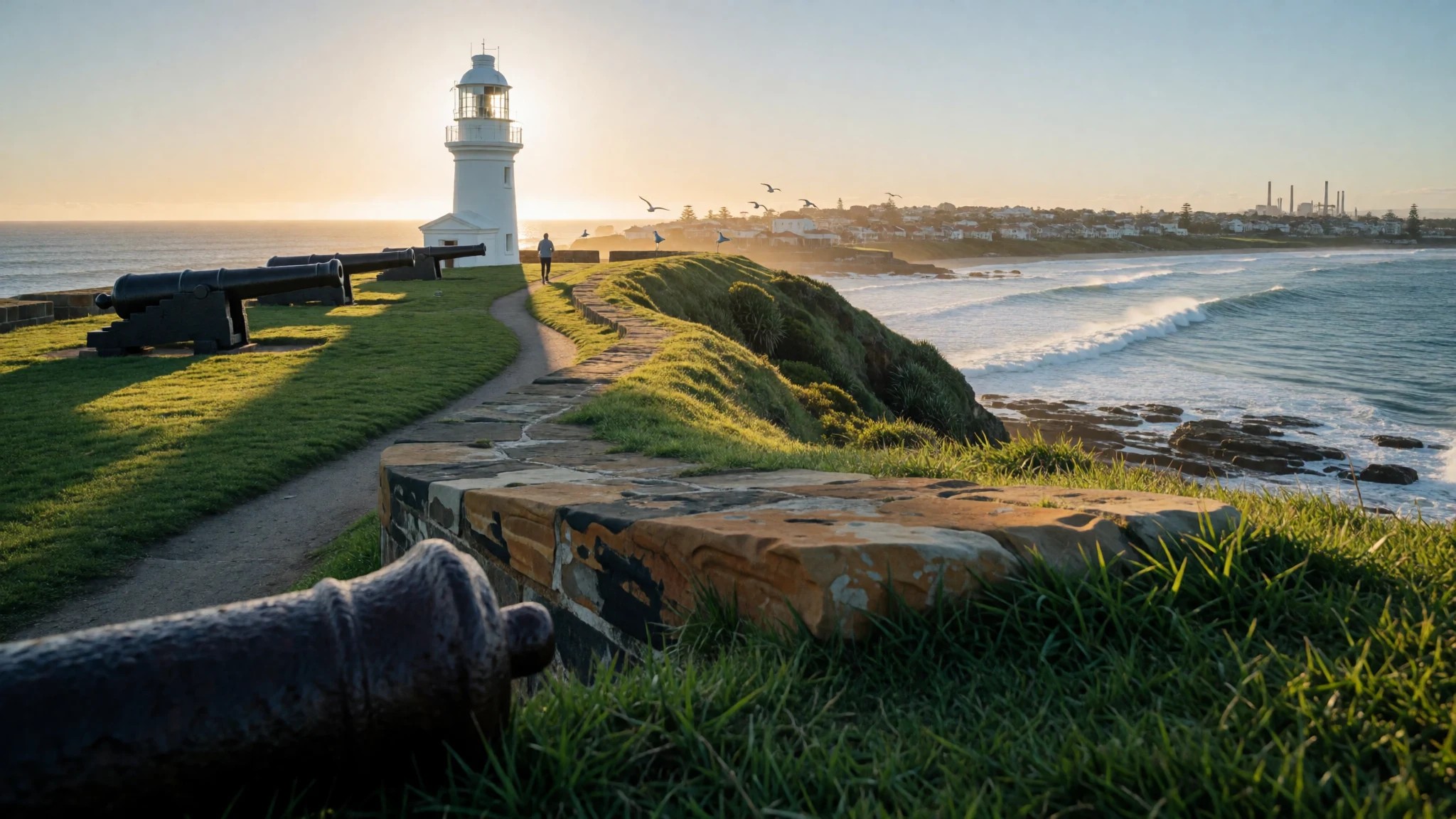
Wollongong packs surf beaches, a working harbour, a rainforest escarpment and a Buddhist temple into one easy coastal day trip south of Sydney.
The place
Wollongong is a coastal city in the Illawarra region of New South Wales, Australia, home to about 280,000 people. It sits roughly 85 kilometres south of Sydney on a narrow shelf of land, with surf beaches on one side and a steep, rainforest-covered escarpment on the other. The city centre stands only about five metres above sea level, yet the wall of the escarpment rises close behind it. That squeeze shapes everything: roads hug the cliffs, suburbs string out along the shore, and the lookouts on the ridge show the whole arrangement at a glance. The name comes from the Dharawal word Woolyungah. Wollongong has long been a working place. Coal came out of the mountainside, a steelworks and a busy port grew along the shore, and heavy industry is still part of the view when seen from the heights. Alongside that sit a university, two cathedrals, churches of many denominations and a large Buddhist temple, which gives the city a more mixed character than a first glance at the smokestacks suggests. It also belongs to Sydney's commuter belt, so weekday afternoons bring slow traffic on the roads north. Visitors tend to come for the beaches, the harbour, the drive along the coast and the walks up the escarpment, then drift on south. It suits an easy few days rather than a checklist.
Its story
Wollongong's recorded history begins with the Dharawal people, who lived on this coast long before any European ship appeared. The explorers George Bass and Matthew Flinders came ashore at Lake Illawarra in 1796, and cedar cutters followed early in the nineteenth century, stripping the forested slopes of valuable timber. Graziers arrived soon after, and a stockman's hut went up in the district. In 1823 Charles Throsby Smith and his wife Sarah Broughton Smith settled where the city now stands, and Charles is remembered as a founding figure. A military barracks near the harbour drew more people, and in 1834 the settlement was formally gazetted as a town on land the Smiths held, with a first court house raised soon after. Getting down from the escarpment was the great practical problem. Convicts built the Bulli Pass road in the mid-1830s, and other passes were cut over later decades. Transport and industry grew together: in 1858 a horse-drawn tramway carried coal from Mount Keira down to the harbour, and a few years later a telegraph line tied the town to Bellambi up the coast. That pairing of coal and harbour set the pattern for the next century, turning a small court-house village into an industrial port that the university and the tourist trade have since softened.
What to see
- Wollongong Harbour and Flagstaff Hill — Harbour and foreshore
The old harbour is the most pleasant place to start. A short walk leads up to Flagstaff Hill, where nineteenth-century guns point out to sea beside a lighthouse. Cove Beach and the foreshore lie right below, so a stroll, a swim and some history fit into one easy morning.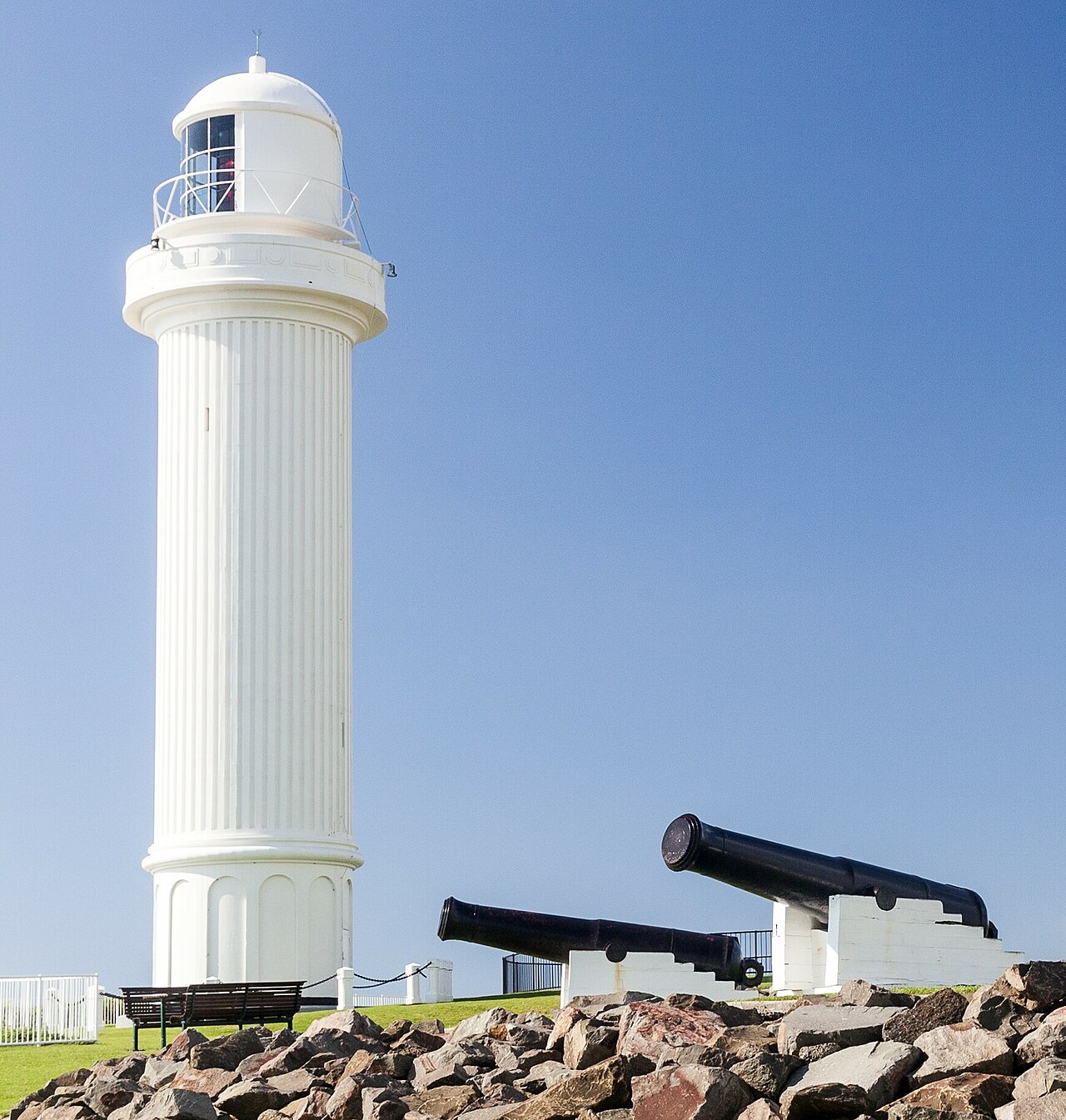
- Mount Keira Lookout — Mount Keira, above the city
The road up Mount Keira ends at a lookout over the city, the port and the coastline running north and south. Hang-gliders launch from the ridge, and there is a cafe at the top. Going near dusk, to watch the town lights come on, is worth the effort.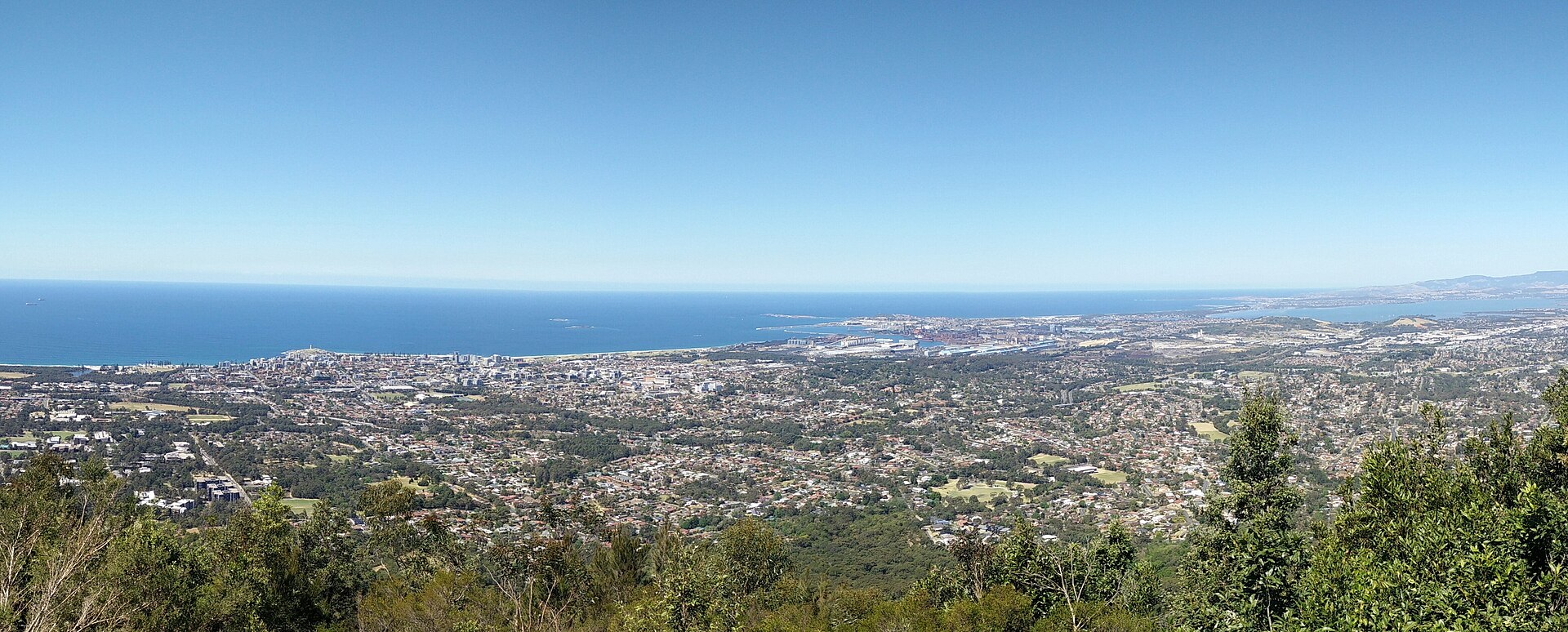
- Nan Tien Temple — Berkeley, south of the centre
Nan Tien Temple is a branch of the Fo Guang Shan Buddhist order, opened in 1995 on the southern edge of the city. The name means Paradise of the South in Chinese. Its courtyards and halls are calm and spacious, and visitors are welcome to wander and sit quietly. - Bulli Pass and the escarpment lookouts — Northern escarpment
Bulli Pass drops steeply off the escarpment towards the coast, and the lookouts at its top give wide views over the city and along the shoreline. Picnic tables, barbecues and kiosks make it a handy stop, particularly when combined with the scenic coastal drive from Sydney.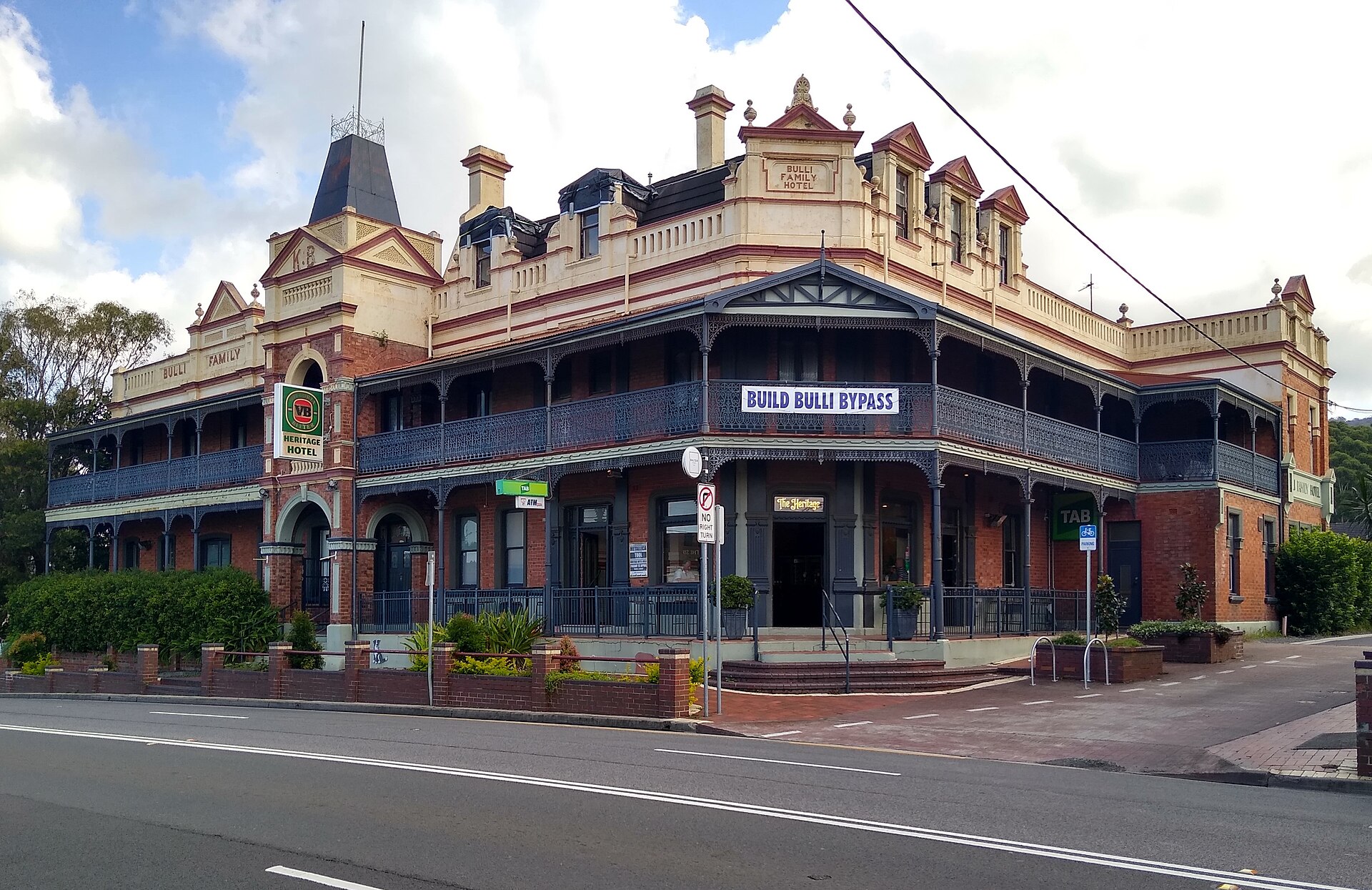
- St Francis Xavier Cathedral — City centre
St Francis Xavier is the seat of the Roman Catholic diocese of Wollongong, standing in the middle of the city. It is a useful landmark for orientation, and a quiet counterpoint to the busy streets and beaches nearby. Check the local parish information for visiting times before going.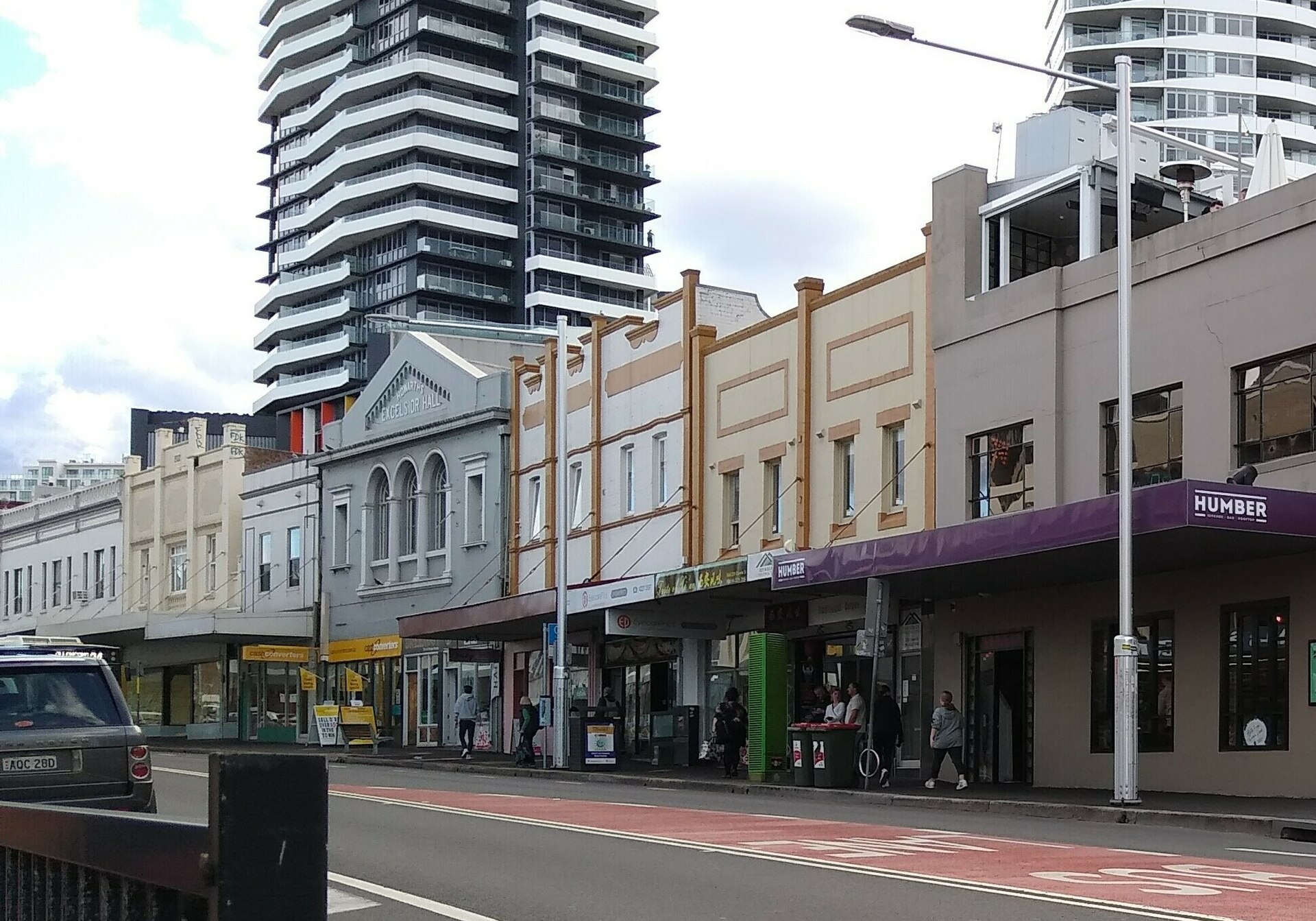
- Science Space — Northern city centre
Science Space is a two-storey hands-on museum aimed at children from toddlers to teenagers, and it keeps parents busy too. It includes a planetarium, with an afternoon show worth planning around. A sensible wet-weather option when the beaches are not appealing.
Culture
Wollongong's cultural life is regional but lively, shaped by a university, a port workforce and a mix of communities that shows up in its restaurants and places of worship. Music has a firm base here: the Wollongong Conservatorium of Music teaches classical, jazz and contemporary styles from Gleniffer Brae, an old manor house in the Botanic Gardens. Theatre centres on the Illawarra Performing Arts Centre, home of Merrigong Theatre Company, which also runs the Town Hall as a civic and community venue. Smaller groups such as the Arcadians, the Phoenix Theatre and Wollongong Workshop Theatre fill out the calendar. Yours and Owls, the city's big annual music festival, pulls in large crowds and overseas acts, and is the date that younger locals mark first. Beach and surf culture runs underneath everything, from early swimmers at the harbour to weekend crowds along the northern beaches. The Dharawal name Woolyungah is a reminder that the coast had a long human history before the town was gazetted. Religion is visible too, with a Catholic cathedral in the centre and the Buddhist Nan Tien Temple to the south. At Nan Tien Temple, dress modestly, keep your voice low and ask before photographing nuns or people at worship.
What to wear
Wollongong has no single traditional costume today, but the Dharawal people and neighbouring groups of the south-eastern coast historically wore cloaks of animal skin, notably possum, for warmth, and such cloaks are still being made and shown in cultural programmes. Settler-era dress was ordinary British working clothes, and the coalfields added hard-wearing moleskin and boots. What people wear now is thoroughly coastal and relaxed: shorts, T-shirts, board shorts, sundresses, flip-flops and sunglasses, with university students and office workers dressing much as they would in Sydney. Surf-brand logos are everywhere, and a hoodie or light jacket comes out for breezy evenings. Hard hats and high-visibility vests remain a familiar sight around the port and industrial areas. For visitors, the sun is the main consideration. Bring a wide-brimmed hat, sunscreen and sunglasses, and expect to be in swimwear or light clothes in summer. Pack a warm layer and a rain jacket for the cooler months and for the ridge lookouts, which can be windy. Sturdy shoes suit the escarpment tracks, as paths can be steep and damp. At Nan Tien Temple, cover shoulders and knees out of respect, and wear shoes that are easy to slip off.
What to eat
- Vietnamese noodle soup and rice plates — Vietnamese restaurants around the city centre
Wollongong has a cluster of Vietnamese eateries, and locals will argue loudly about which is best. Order a fragrant noodle soup or a grilled-meat rice plate, and book ahead at the popular ones on busy evenings. - Chinese and Vietnamese shared mains — Casual Chinese and Vietnamese eateries in the central streets
Generous, inexpensive plates of stir-fried noodles, rice and meat dishes are the standard order at the casual Asian eateries near the centre. Go with a group and share several dishes in a lively room. - Tacos and burritos — Mexican restaurants near the main shopping streets
A casual Mexican scene offers big portions, weekday lunch specials and cheap taco nights, which suit students and families. Expect a loud, relaxed atmosphere and plenty of salsa. - Thai curries on cushions — Thai restaurants in the city centre
One Thai restaurant lets diners choose between low cushion seating and ordinary tables. Fragrant curries, stir-fries and rice dishes are the staples, with a calm, informal feel after a day at the beach. - Burgers, dumplings and plant-based plates — Eclectic bars and cafes around the central dining streets
Several centrally placed cafes and bars mix American and East Asian influences, serving burgers beside dumplings. Vegetarian, vegan and gluten-free choices are common, and outdoor seating makes them good for a long, easy lunch.
Plan it
Best time. March–April and October–November, when beach weather is pleasant and the summer crowds have not yet arrived or have thinned. Summer is warm and busy at the beaches, and winter is cooler, though still fine for walks and lookouts.
How long. 2–3
Getting there. Fly to Sydney Airport, then take a train or drive south to Wollongong; check timetables with the state transport operator. By car, the motorway south from Sydney reaches the city, or the Grand Pacific Drive via Stanwell Park and the Sea Cliff Bridge adds a scenic coastal route.
Budget. mid
Tips
- Avoid the afternoon peak on the road from Sydney, as Wollongong is part of the commuter belt
- Take the Grand Pacific Drive if there is time, as the Sea Cliff Bridge is a highlight
- Go up to Mount Keira or Bulli Pass for sunset or the town lights
- Book popular Vietnamese restaurants ahead on busy evenings
- Check the council site, http://www.wollongong.nsw.gov.au, for events and local updates
Etiquette
- Dress modestly and keep quiet at Nan Tien Temple
- Ask before photographing people at worship
- Swim only at patrolled beaches, between the flags
Nearby
Sources
- Wikidata Q187861 (CC0)
- Wikipedia: Wollongong (rev 1384833573) (CC BY-SA 4.0)
- Wikivoyage: Wollongong (rev 5422700) (CC BY-SA 4.0)
- Photo: Flagstaff Hill Fort, Adam.J.W.C. (CC BY 3.0)
- Photo: Wollongong and Port Kembla from Mount Keira, Andrew Harvey (CC BY 2.5)
- Photo: Wollongong Court House, Clytemnestra (CC BY 3.0)
- Photo: Crown Street, Wollongong, Mx. Granger (CC0 1.0)
- Photo: Wollongong Harbour Flagstaff Lighthouse and Fort, russellstreet (CC BY-SA 2.0)
- Photo: Heritage Hotel, Bulli, Mx. Granger (CC0 1.0)
- Photo: Wollongong Harbour, Cove Beach and Foreshore, Robert Montgomery (CC BY 2.5)
- Photo: Flag of Wollongong (CC0 1.0)


