Winnipeg
Winnipeg, Canada
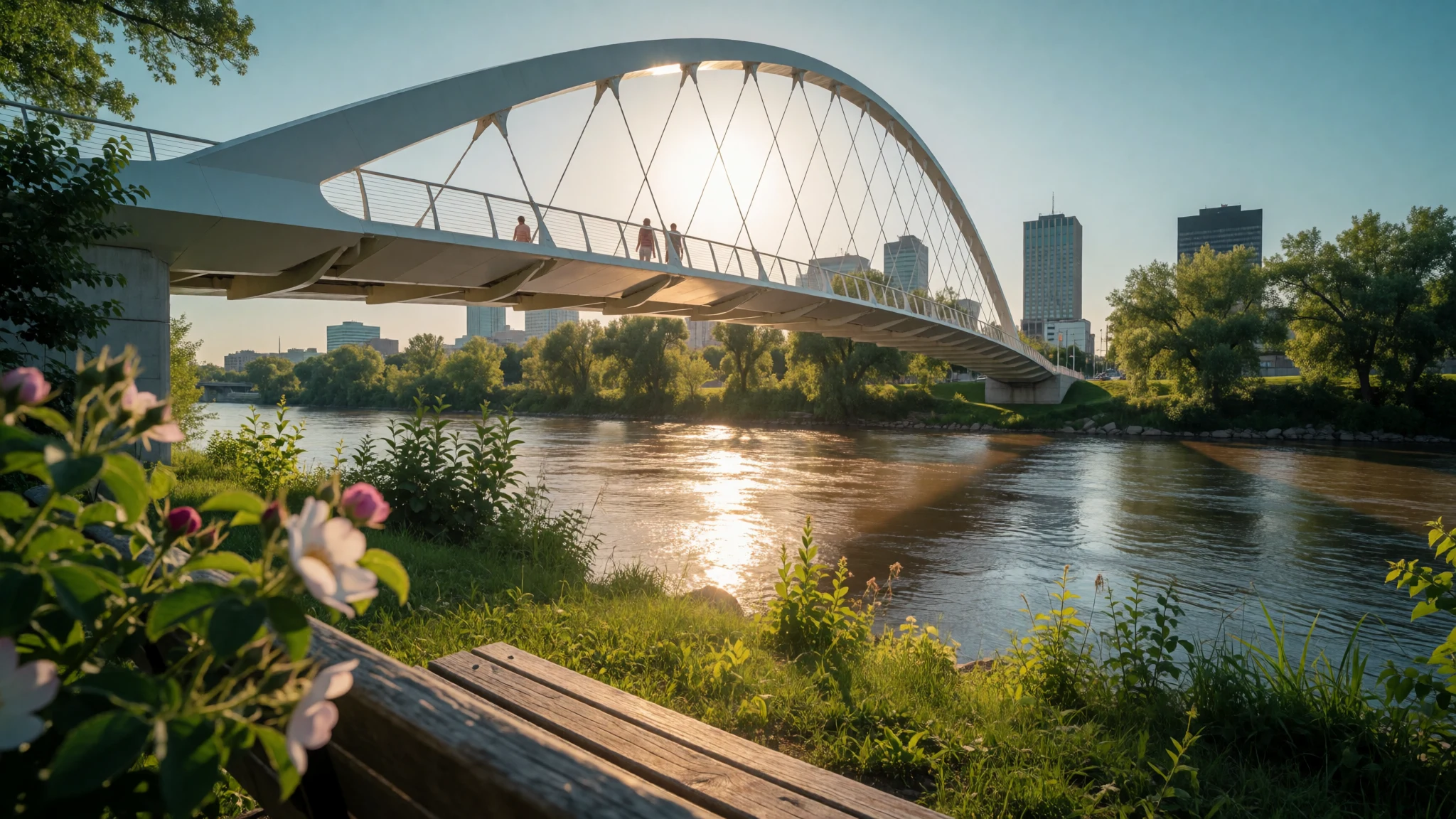
Winnipeg is a river-junction city on the prairie, with serious winters, a strong arts scene, and deep Indigenous and Métis roots.
The place
Winnipeg sits on flat prairie in the middle of Canada, about 238 metres above sea level, where the Red and Assiniboine rivers join. It is the capital of Manitoba and home to 749,607 people, enough to support theatres, galleries and a lively restaurant scene, yet compact enough that the river junction at its heart is an easy walk from much of downtown. The name comes from a Western Cree phrase for muddy water, and the rivers still run brown and unhurried through the city. Distance from any ocean shapes everything. The climate is sharply continental: summer afternoons often reach around 36 °C, while winters are long, dry and bitterly cold, with the rivers frozen solid and turned into skating and walking routes. Summer brings long light evenings, patio tables and, to be honest, a good many mosquitoes near the water. The city grew as a railway and transport hub, and its old nickname, Gateway to the West, still fits. The neighbourhoods feel distinct: the old warehouse streets of the Exchange District, the French-speaking quarter of Saint Boniface across the Red River, the café strip of Osborne Village, and the wide residential avenues beyond. Public life gathers at The Forks, a riverside meeting ground that has served that purpose far longer than the city has existed. Most visitors arrive for a festival or a family visit and end up staying longer than planned.
Its story
Winnipeg grew up around The Forks, the point where the Assiniboine meets the Red River, and people were using that ground long before any city appeared. Archaeology, rock art and oral history point to camping, fishing, hunting, trade and toolmaking here across thousands of years. Canoe routes crossed at the junction, tying northern communities to peoples far to the south along the Missouri and Mississippi. This is traditional territory of the Anishinaabe, Ininew, Oji-Cree, Dene and Dakota, and it is the birthplace of the Métis Nation. Farming along the Red River was under way by the early nineteenth century and grew as traders wanted provisions, while Ojibwe birch-bark maps guided fur traders through the waterways. French traders under La Vérendrye built Fort Rouge here in 1738, the first fur-trading post on the site. Settlers brought by Lord Selkirk formed the Red River Colony in 1812, and the community around the junction was incorporated as the City of Winnipeg in 1873. Rail then made the place, funnelling grain, people and goods through the junction and turning the town into a major stopping point between east and west. The older story has not vanished under the later one. Museums, public art and Indigenous-led galleries now tell the river's longer history, and it makes more sense to begin at The Forks than at any single monument.
What to see
- The Forks — Downtown, at the river junction
The Forks is where the two rivers meet, and it works as the city's shared front room. A riverside path, market buildings, skate park, children's museum and the Canadian Museum for Human Rights sit within a short walk. In winter the frozen river becomes a skating trail; at dusk the docks catch the light.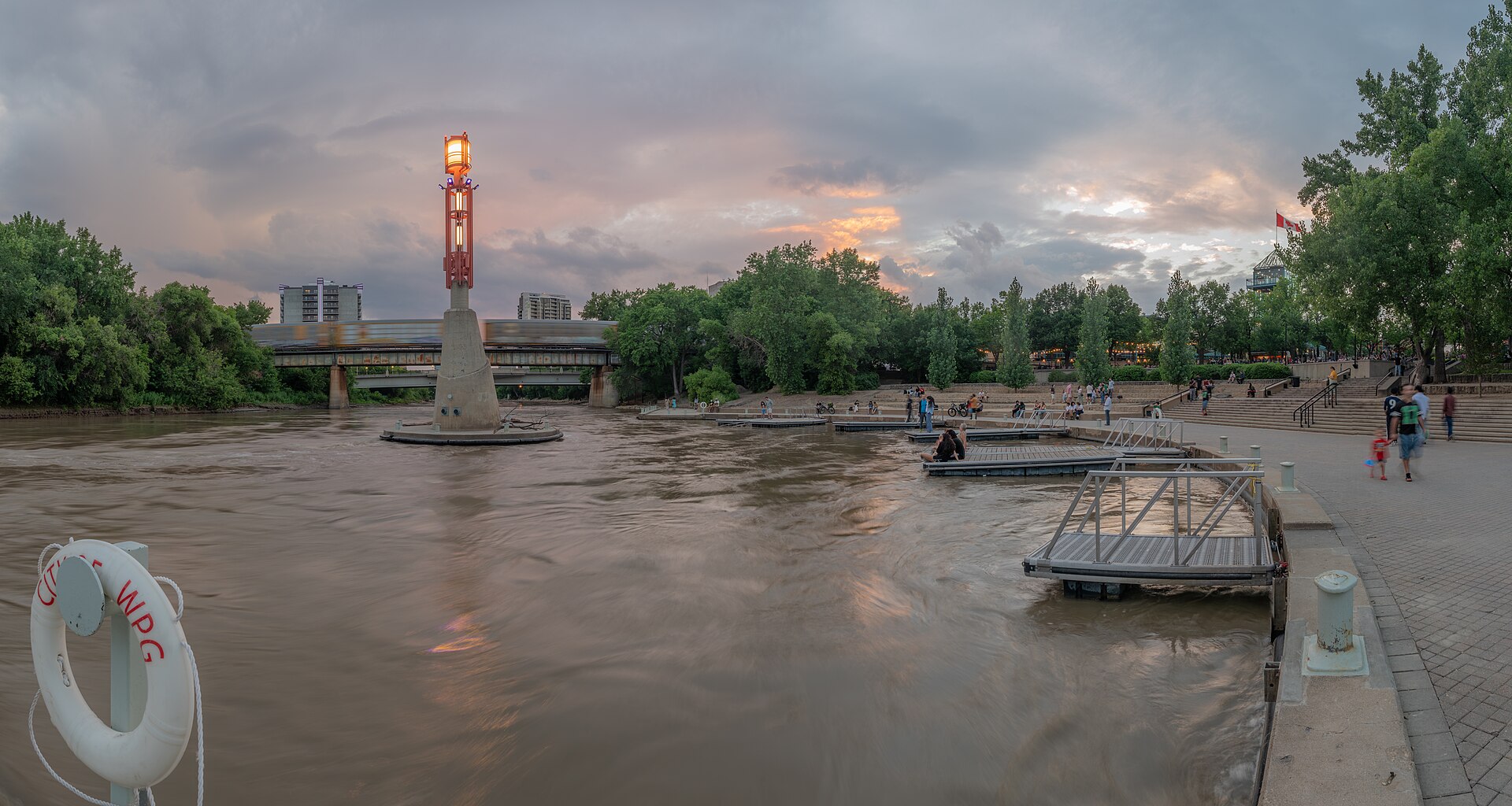
- Esplanade Riel footbridge — Between The Forks and Saint Boniface
The Esplanade Riel is a pedestrian bridge that links The Forks with Saint Boniface across the Red River. Crossing on foot gives a clear view of the water and the downtown skyline, and the walk makes a natural loop with the cathedral on the far bank. Early evening is pleasant in summer.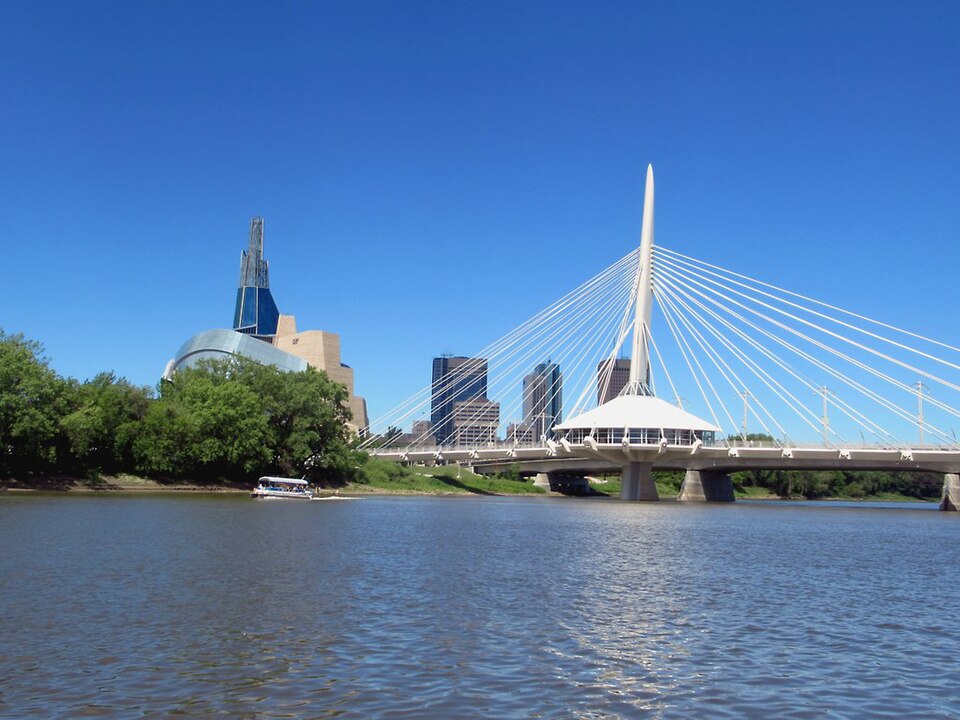
- Saint Boniface Cathedral — Saint Boniface
Saint Boniface Cathedral stands in the French-speaking district across the Red River, and the quarter around it is a good place to feel Winnipeg's francophone and Métis history. Walk the riverside streets, look at the cathedral's façade, and stop at a bakery or café nearby. Check the diocesan website for opening times.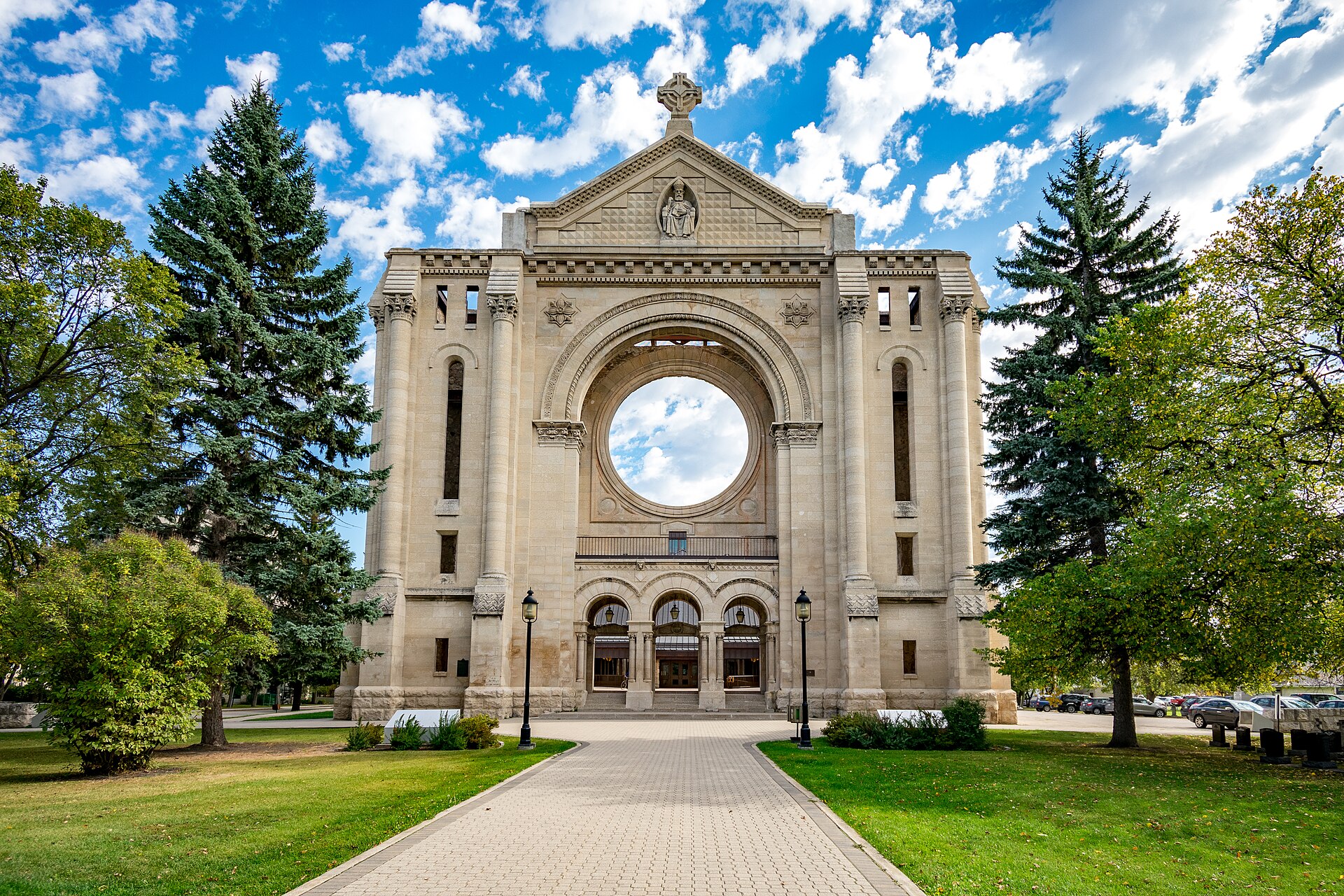
- Winnipeg Art Gallery — Downtown
The Winnipeg Art Gallery shows work by artists from Manitoba, the rest of Canada and abroad, and holds a large Inuit art collection that rewards unhurried time. It sits in the downtown core, a short walk from the Legislative Building. Check the official site for current exhibitions and opening hours before going. - Urban Shaman — Exchange District
Urban Shaman shows contemporary work by Indigenous artists in changing exhibitions, close to The Forks. Small and focused, it pairs well with a walk through the Exchange District and gives context for the city's Indigenous heritage. Check opening days before making the trip. - Manitoba Legislative Building — Near the Assiniboine River, west of The Forks
The Manitoba Legislative Building is the provincial seat of government, a classical stone building with a grand frontage set in grounds near the Assiniboine River. Exterior photographs are easy to take from the lawns. For tours of the interior, check the official provincial website for current arrangements.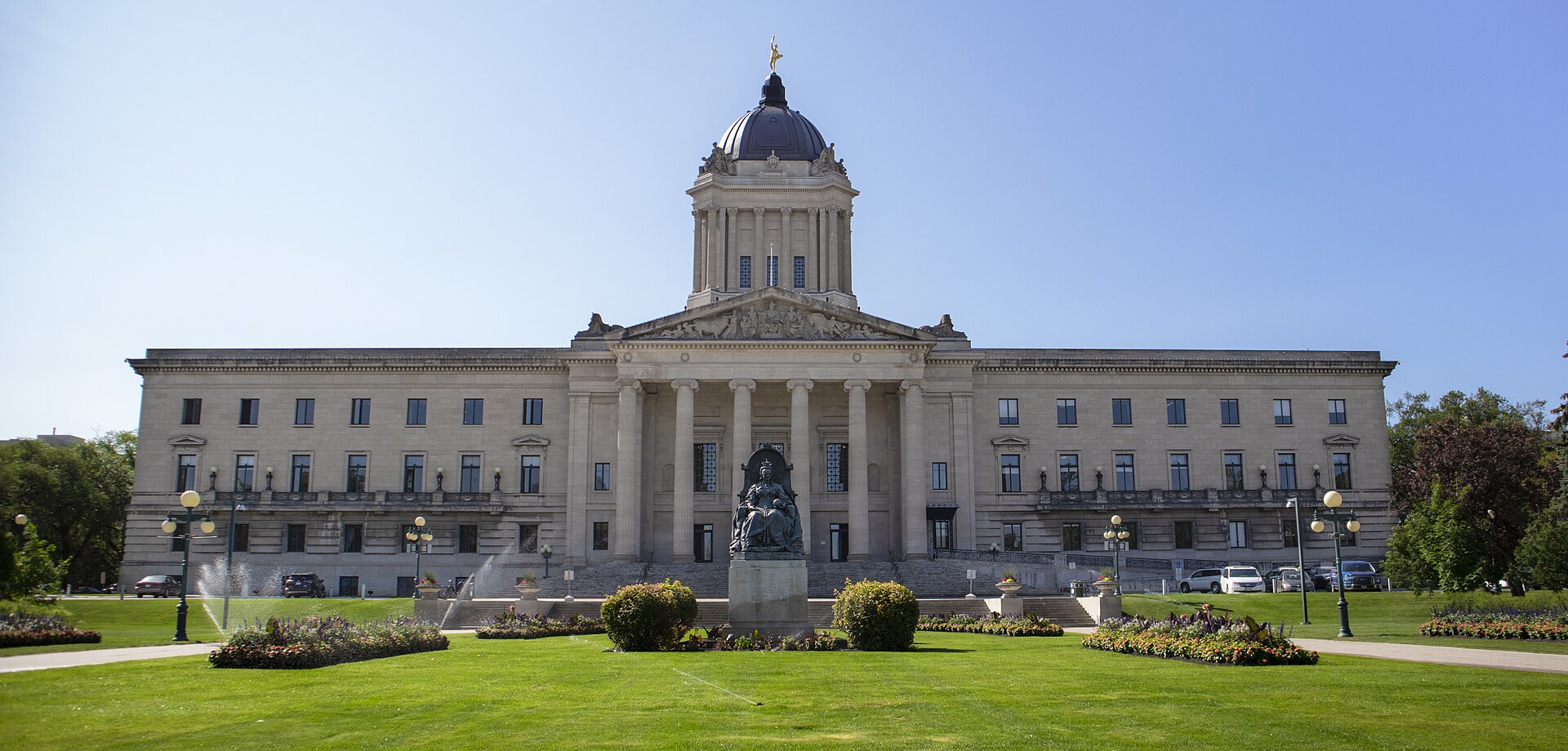
Culture
Winnipeg has a cultural life far bigger than its size suggests, and Canadian Heritage recognised that by naming it a Cultural Capital of Canada. Much of it is organised around The Forks, where galleries, theatre for young audiences, a children's festival and the Canadian Museum for Human Rights share the riverbanks. The city is also layered. Indigenous nations, the Métis, French-speaking families from Saint Boniface and generations of immigrants from many countries have all shaped its food, music and festivals, and summer is crowded with outdoor events. Contemporary Indigenous artists are central to the gallery scene, and many exhibitions are as much about land and history as about aesthetics. Winter shapes manners as well. Neighbours shovel paths, drivers give way on icy roads, and people dress for the weather rather than for show. Hockey, curling and skating are everyday pastimes, and curling is even played on the frozen river at The Forks. Conversation tends to be polite, direct and relaxed, and a remark about the weather is a perfectly respectable way to start one. When visiting Indigenous cultural spaces, ask before photographing people, artworks or ceremonies, and follow any guidance posted at the door.
What to wear
Winnipeg's traditional dress comes from the Indigenous nations and the Métis whose homeland it is. The Métis sash, a woven wool belt in bright colours, is a signature piece, worn at celebrations and cultural events, and floral beadwork on moccasins, jackets and bags is a Métis and First Nations craft. Ojibwe, Cree and other nations also make ribbon shirts and skirts, and dancers at powwows wear regalia whose materials, beads and patterns are personal and carry meaning. These are not costumes, so treat them with care. Day to day, Winnipeg dresses for the weather: padded parkas, toques, mitts and heavy boots in the long winter, and jeans, shirts and sandals from June to September. Smart-casual is enough for restaurants and theatres, and few places enforce a dress code. A visitor in winter needs a proper insulated coat, thermal layers, a hat that covers the ears, a scarf, warm gloves and waterproof boots with good grip, since pavements stay icy. In summer, bring light layers, a sun hat, comfortable walking shoes and insect repellent for evenings by the rivers. For cathedrals and Indigenous ceremonies, modest, respectful clothing is a sensible choice.
What to eat
- Drive-in burgers and shakes — Family-run drive-ins on the main roads
Winnipeg keeps a loyal following for old-fashioned drive-ins, where burgers, fries and thick milkshakes come from small family-run kitchens. Locals argue over favourites, so pick one on a main road and join the queue at lunchtime. - Falafel and Lebanese brunch — Lebanese restaurants in the southern neighbourhoods
Lebanese kitchens in the southern neighbourhoods serve falafel, hummus, salads and generous brunch plates. Order a few dishes to share with the table, and expect a relaxed, unhurried weekend crowd that suits a late start after a long walk. - Vietnamese noodle soups and rice plates — Sargent and Ellice, west of downtown
Vietnamese restaurants west of downtown, especially along Sargent and Ellice, serve noodle soups, rice plates and fresh rolls. A bowl of pho is a sensible answer to a cold afternoon, and portions are usually generous enough to share. - Vegetarian Chinese dishes — Vegetarian Chinese eateries near downtown
Some Chinese eateries near downtown run fully vegetarian menus, with mock prawn and mock fish dishes built from soy and wheat. A useful stop for anyone avoiding meat, and a curious one for everybody else. - Bakery desserts — Bakery-cafés in the southern neighbourhoods
Neighbourhood bakery-cafés around the south of the city are known for cakes, pies and rich desserts. Go after a main meal or in mid-afternoon with coffee, and share a slice, since portions can be large.
Plan it
Best time. June to September for warm weather, long evenings and outdoor festivals, with July highs around 37 °C. Winter is bitterly cold but bright, and suits skating on the frozen rivers if you are properly dressed. Expect mosquitoes near the water through summer, and more of them after wet years.
How long. 2–3
Getting there. Fly into Winnipeg's main airport, which has direct flights from many Canadian cities and from Minneapolis–St Paul. Winnipeg Transit buses reach downtown in about half an hour, and taxis wait at the terminal. Check https://winnipeg.ca for transit details.
Budget. mid
Tips
- Dress in layers and check the forecast, because winter wind chill is severe and summer evenings can be cool
- Carry insect repellent for summer evenings by the rivers
- Downtown, the Exchange District and The Forks are walkable; hire a car or use buses for the wider suburbs
- Check gallery and museum websites for current opening hours before setting out
- Book rooms early for summer festival weekends
Etiquette
- Tip in restaurants, bars and taxis, as is customary in Canada
- Ask before photographing people at Indigenous events or ceremonies
- Give way politely on icy pavements and queue patiently at counters
Nearby
Sources
- Wikidata Q2135 (CC0)
- Wikipedia: Winnipeg (rev 1385107576) (CC BY-SA 4.0)
- Wikivoyage: Winnipeg (rev 5422654) (CC BY-SA 4.0)
- Photo: Skyline of Winnipeg, Manitoba (Quintin Soloviev) (CC0 1.0)
- Photo: Aerial view of downtown Winnipeg (Quintin Soloviev) (CC BY 4.0)
- Photo: Saint Boniface Cathedral (Jessica Losorata) (CC BY-SA 4.0)
- Photo: Esplanade Riel Footbridge (David Stanley) (CC BY 2.5)
- Photo: Manitoba Legislative building (ParsonsPhotographyNL) (CC BY-SA 4.0)
- Photo: Winter Fishing on the Ice of the Assynoibain and Red River (Peter Rindisbacher) (Public domain)
- Photo: The Forks at dusk (Ethan Sahagun) (CC BY 4.0)
- Photo: Curling on the Red River at the Forks (Wpg guy) (CC BY 3.0)


