Windhoek
Windhoek, Namibia
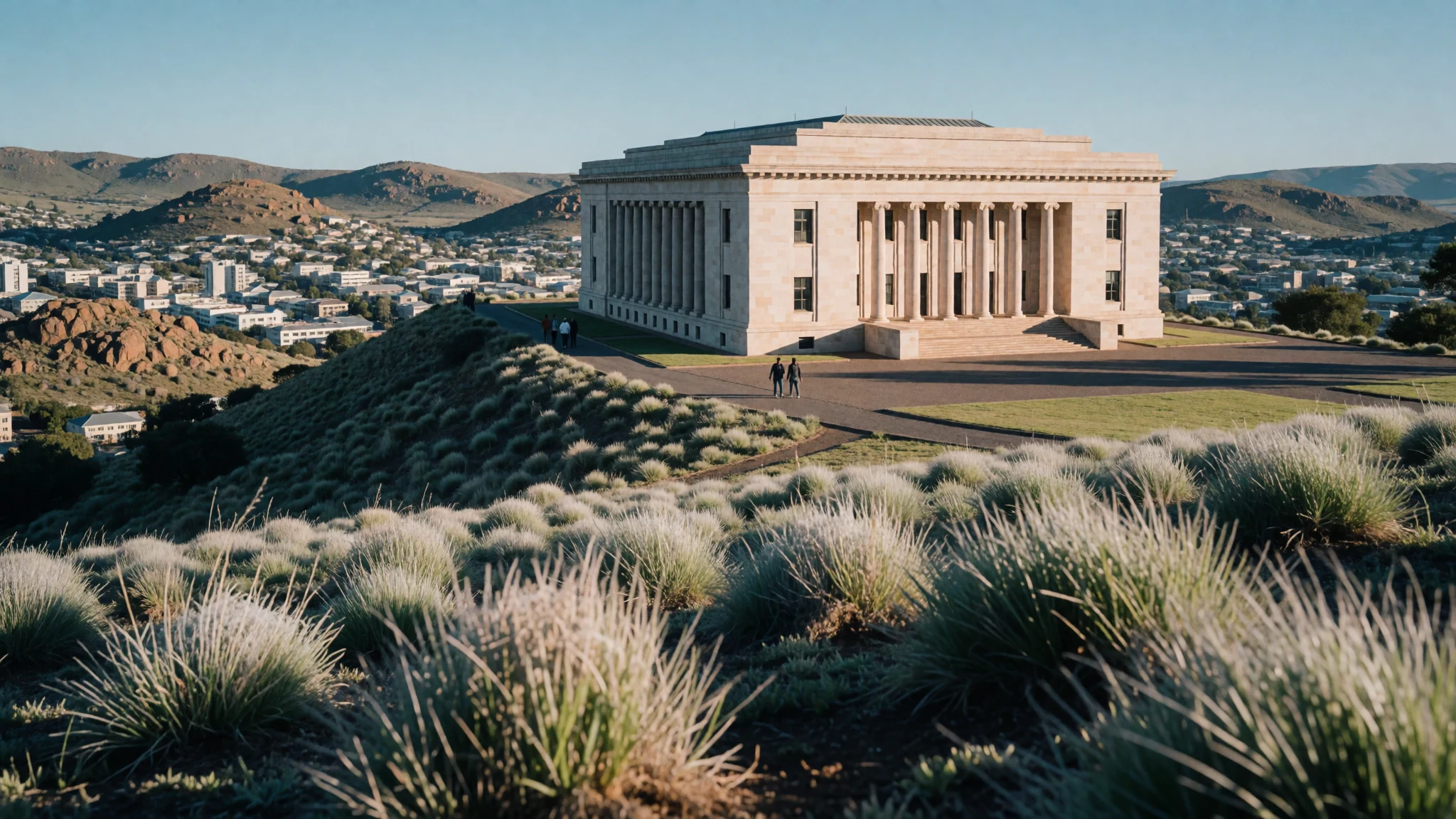
Windhoek is Namibia's highland capital, a working city of colonial churches, independence memorials and plateau light.
The place
Windhoek is the capital of Namibia and the country's largest city, placed on the Khomas Highland plateau near the geographical centre of the territory. The city stands at 1650 metres, where the air is cooler than on the coastal desert and the light falls hard and clear. Stony hills shut the horizon to the south, the east and the west, so opening new ground for building is slow and expensive. The southern fringe is a bad site for factories, because groundwater sits just under the surface. The population is 486169, and it is still climbing as families arrive from other regions of Namibia. Parliament, ministries, company headquarters, campuses and the national cultural houses are concentrated in Windhoek. The result is a capital that the rest of the country reports to, rather than a town laid out only for visitors. Everyday Windhoek runs through shopping centres, office grids and hillside suburbs, while the older centre is still legible in church towers, the railway and street names in German and Afrikaans beside newer Namibian ones. A thermal spring, already familiar to herding communities, is where the settlement first took root. The Orlam leader Jonker Afrikaner chose that water in 1840 and raised a stone church for the people who followed him. Later fighting emptied the place and pulled its buildings down. Under German colonial rule an army officer, Curt von François, planted the town once more, and that colonial grid still frames the centre from which an independent Namibia now governs.
Its story
Windhoek took its present name along a path that historians still dispute. The account heard most often splits an Afrikaans compound: wind, and hoek, a corner. A rival account holds that Jonker Afrikaner transferred the name from the Winterhoek range above the Cape town of Tulbagh, home ground of his family before they moved north. The first known writing-down of Windhoek is a letter Afrikaner sent to Joseph Tindall, a Wesleyan missionary. The Orlam settlement of 1840 stood by a principal hot spring in what is now the suburb of Klein Windhoek. Afrikaner's stone church was roomy enough to serve as a schoolroom as well as a place of worship. Rhenish missionaries Carl Hugo Hahn and Franz Heinrich Kleinschmidt came to work with the community. Their stay was short. Wesleyans Richard Haddy and Joseph Tindall took over the mission, and Hahn and Kleinschmidt left. Plots were planted, and herding plus small trade carried the households for a time. That calm did not last. Repeated wars between Nama and Herero polities burned through the town until little of it remained. When Hahn returned after years away he found nothing standing of the church life and planted plots he had known. The spring was still there; the town he remembered was not. Windhoek's later role as a capital sits on that broken first chapter, which is why the city's story is usually told as an Orlam and missionary settlement that failed, and again as a colonial town that independent Namibia inherited.
What to see
- Parliament of Namibia — City centre
The Parliament of Namibia sits in the old assembly Windhoek calls the Ink Palace, home of both the National Assembly and the National Council. In the apartheid years this was the legislative chamber; both houses of parliament sit there now. Pale walls show clearly from the Independence Memorial Museum above. Public access changes, so the city website is the place to confirm a visit inside.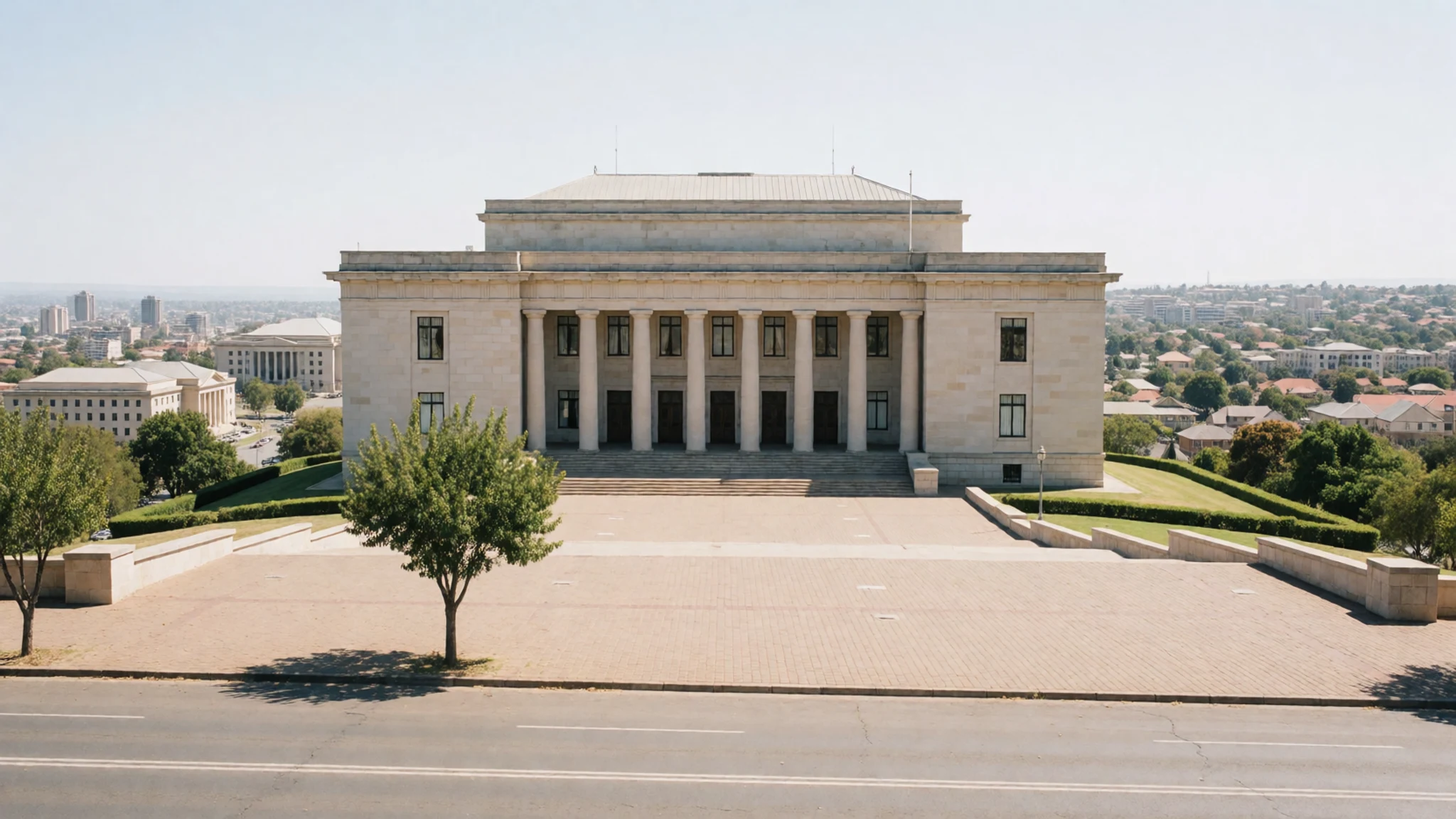
- Independence Memorial Museum — City centre, beside the Alte Feste
The Independence Memorial Museum in Windhoek presents resistance to colonial rule through large, theatrical artworks. The displays are bold and didactic, closer to a political monument than a quiet gallery. A restaurant on the top floor looks over the city and the surrounding hills. Opening hours need a check on the day, because posted times in guides go stale.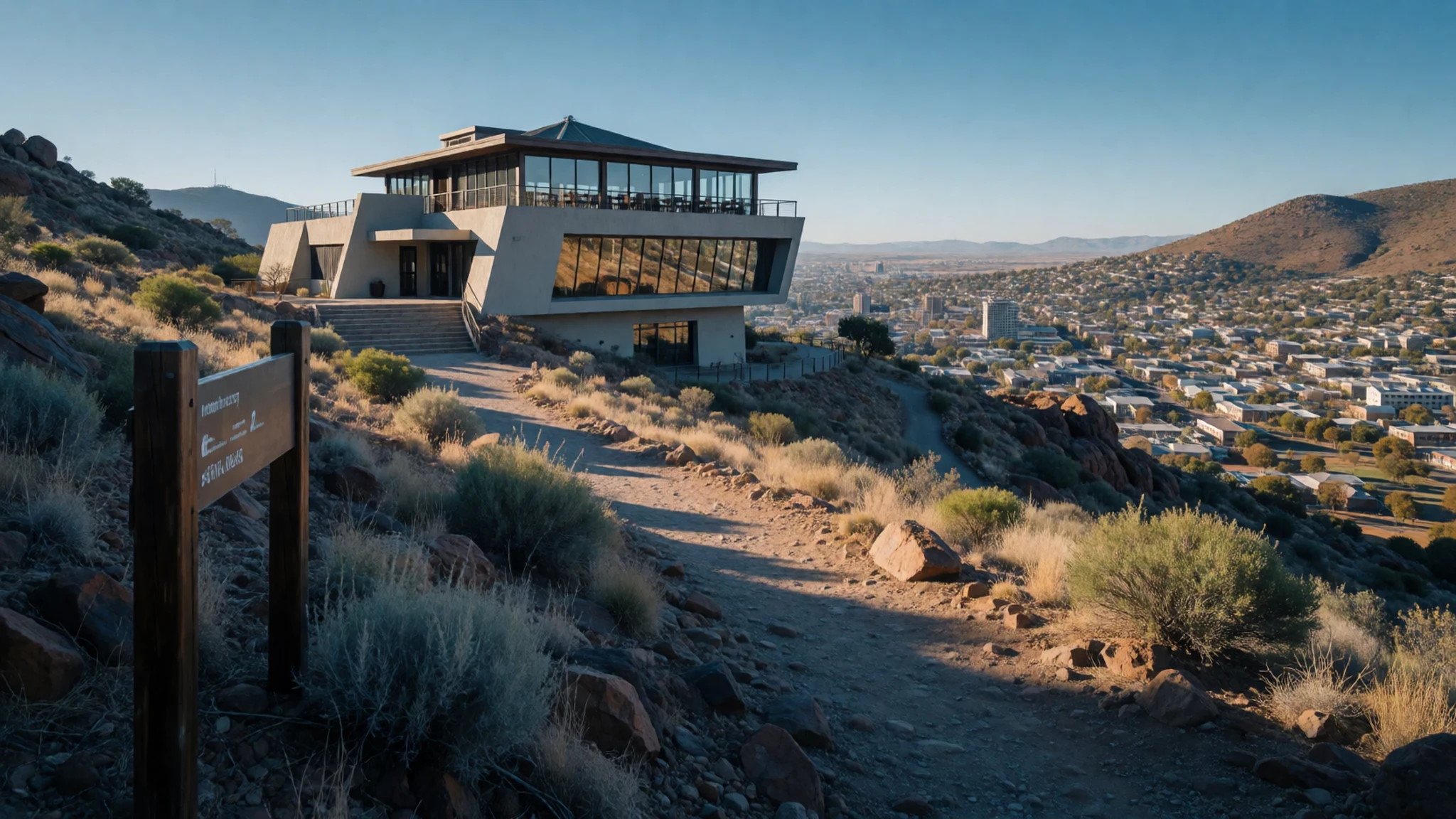
- Christuskirche — City centre
Christuskirche, the old Lutheran church in central Windhoek, is a compact stone building with a round stained-glass window on the street facade. Kaiser Wilhelm II presented the glass to the colonial congregation. Services still take place, so the building works better around worship than as a pause between coaches. Clothing is modest and voices stay low inside.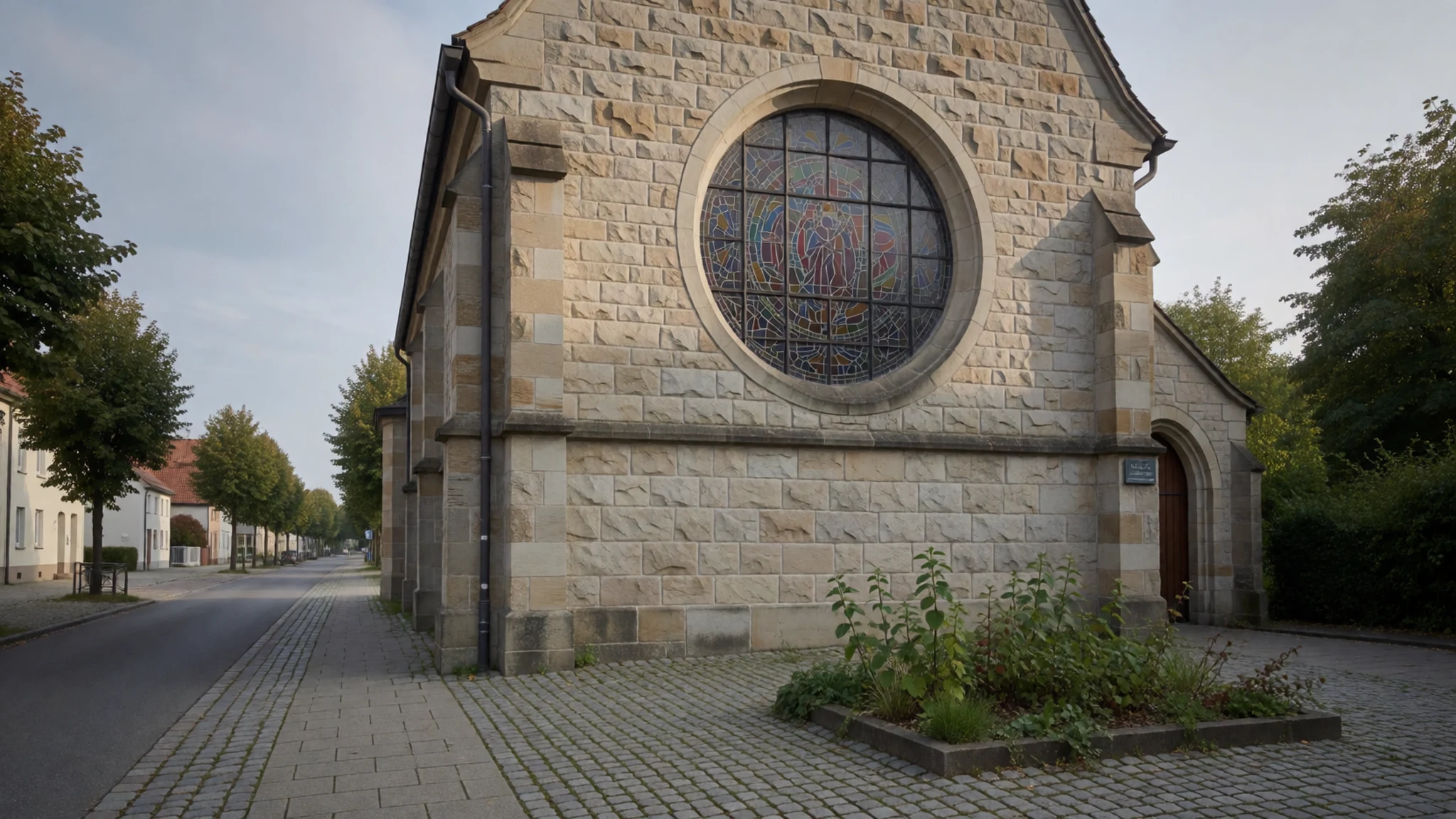
- Heroes' Acre — South of the city
Heroes' Acre, south of Windhoek, is a war memorial laid out with graves and a tall statue of an unknown soldier whose face recalls Sam Nujoma. A North Korean firm designed and built the site, and the solemn, formal style is plain to see. The ground is a place of burial and state ceremony. Quiet clothes and quiet voices suit it.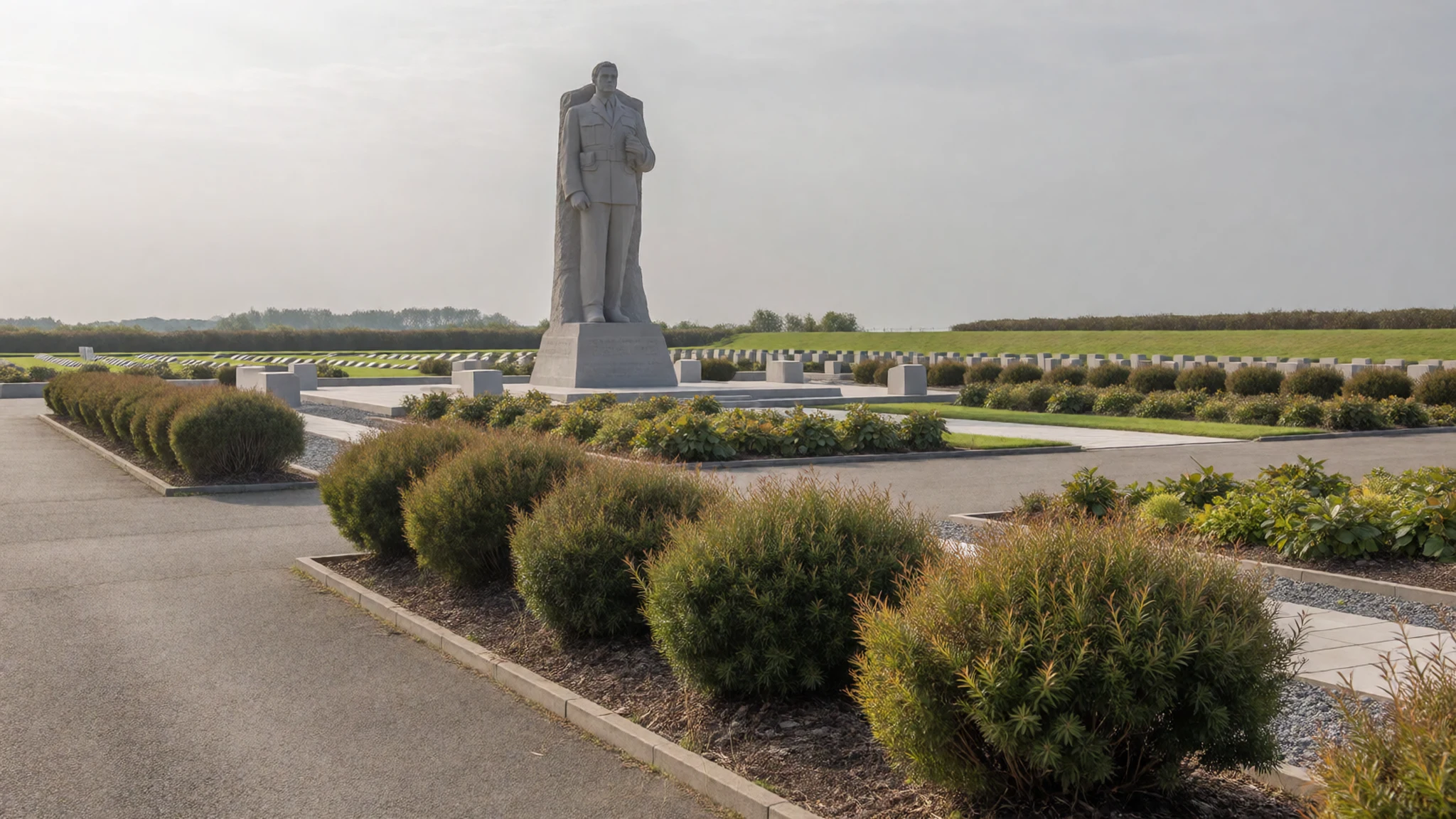
- AJ du Plooy Sports Fields — Windhoek
The AJ du Plooy Sports Fields in Windhoek hold football and rugby pitches, tennis courts and a basketball court, and the grass is also used for picnics. Anyone may use them without a fee. Not every amenity is in good repair. After dark the grounds are not safe, so daytime is the only sensible visit.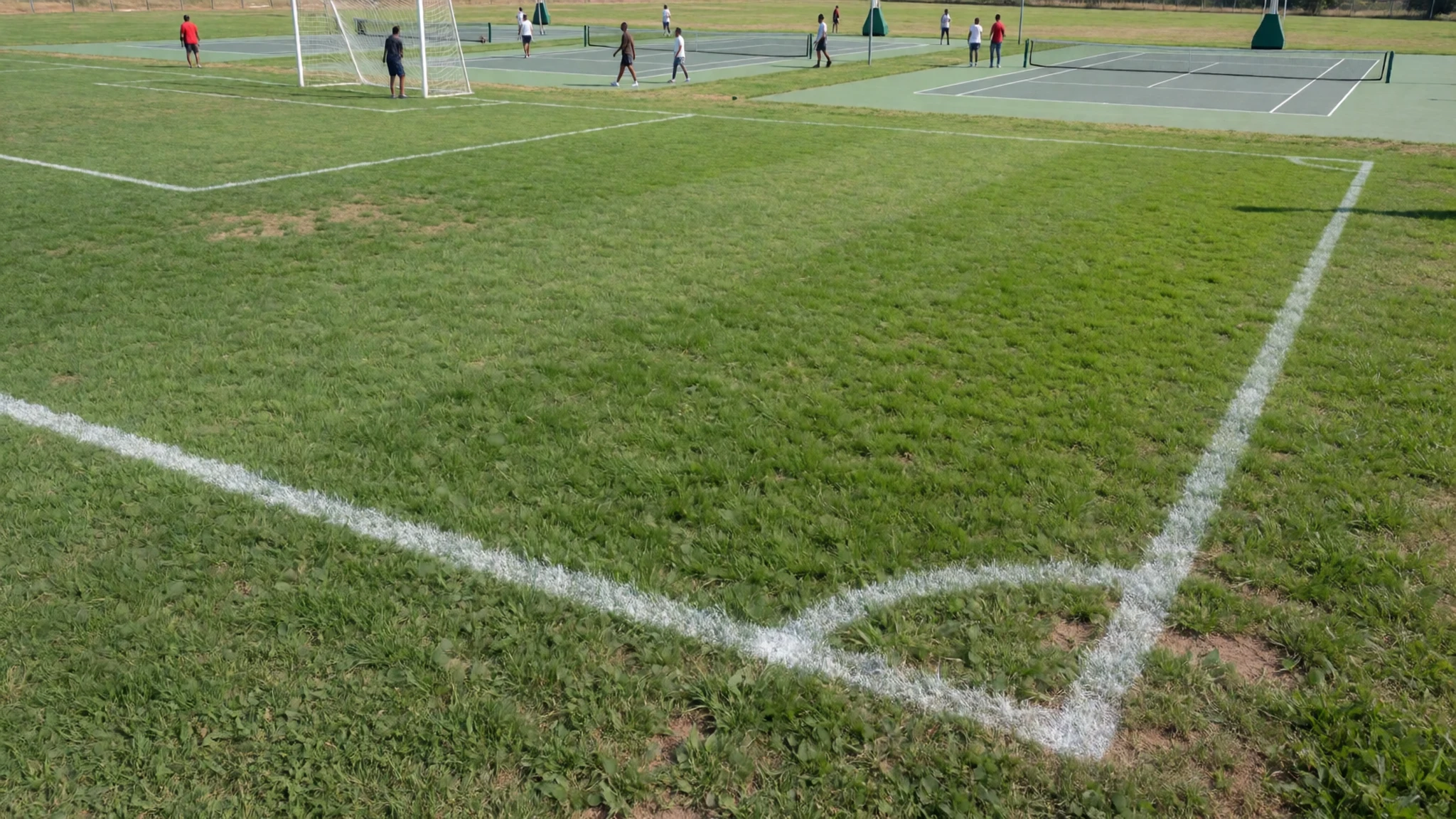
Culture
Windhoek holds the country's main artistic institutions, which is why it is often called Namibia's art capital. The National Art Gallery and the National Theatre are in the city, together with the National Library and the Windhoek Public Library, the public library standing beside the Alte Feste. The national museum collection is divided. In the old fort, the Alte Feste keeps wagons, tools and household goods from the colonial decades under Germany and later South Africa. Across town, the Owela Museum takes its name from a pebble game and mixes natural history with domestic history: rocks and minerals, fossils, meteorites, and scenes of village work. The Independence Memorial Museum adds an openly political account of the struggle against colonial rule. Students, civil servants and weekend visitors share the same small circuit of galleries, libraries and museum rooms. Seen together, these buildings show Windhoek both as a former colonial headquarters and as the capital of a republic that fought its way there. Ask before photographing people in galleries, at church or on the street, and keep silence and modest dress at Christuskirche and at Heroes' Acre.
What to wear
Windhoek is where several Namibian dress traditions meet a modern capital wardrobe. Herero women still wear the long, full Victorian-cut gown known as the ohorokova, in printed cotton, with a wide headdress shaped like cattle horns, especially for church, weddings and heritage days. Nama dress brings patterned shawls and long skirts; Ovambo and Damara formal wear appears at festivals, cultural gatherings and family ceremonies. These clothes are textiles with a history — mission-era cuts, cattle culture, and cloth chosen for colour — and in Windhoek they are living dress, not costume, though they are less common on an ordinary weekday in an office. On Independence Avenue and in the ministries, people mostly wear what any contemporary African capital wears: tailored jackets, collared shirts, jeans, trainers, headwraps and bright printed cotton, with a light jumper or coat once the plateau evening cools. German and Afrikaans surnames in shop windows do not mean dirndls on the pavement. A visitor should pack for 1650 metres and strong sun: a hat, sunscreen, a layer for cool nights, and shoes that can handle paved hills and gravel. Shoulders and knees covered are the right choice at Christuskirche, the museums and Heroes' Acre. Flip-flops suit a poolside afternoon and little else on this rocky ground.
What to eat
- Kapana — Neighbourhood markets, especially Katutura
In Windhoek, kapana is beef cut into strips and grilled over a hot fire, eaten at the stall with spice and pap. It belongs to neighbourhood markets, above all in Katutura, where the smoke and the wait are part of the meal.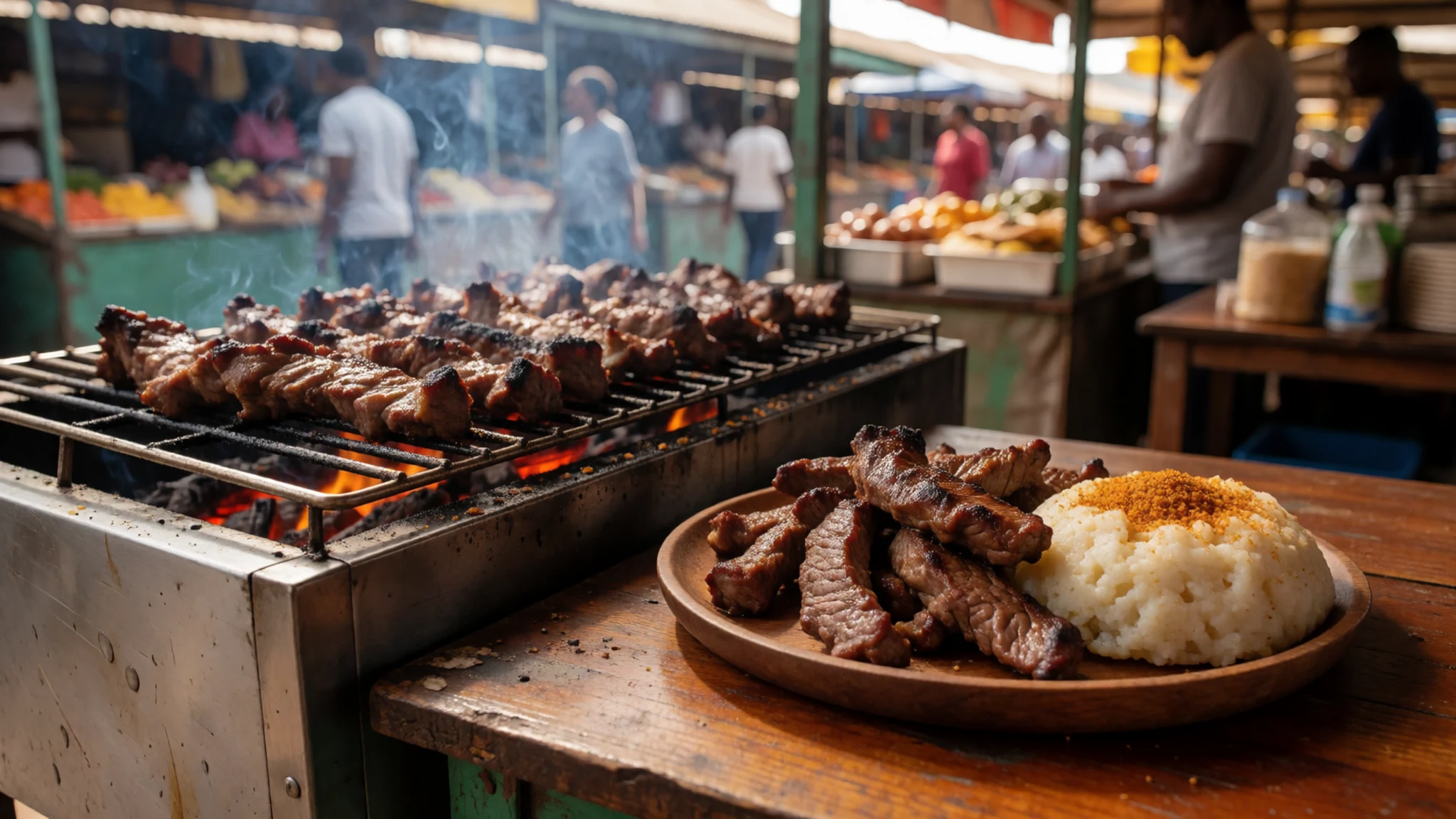
- Braai plate — Large beer-hall restaurants in the city centre
A Windhoek braai plate is usually beef or local game, cooked over coals and served with pap or a simple salad. Large, busy beer-hall restaurants in the centre turn this out daily for a mixed crowd of residents and visitors.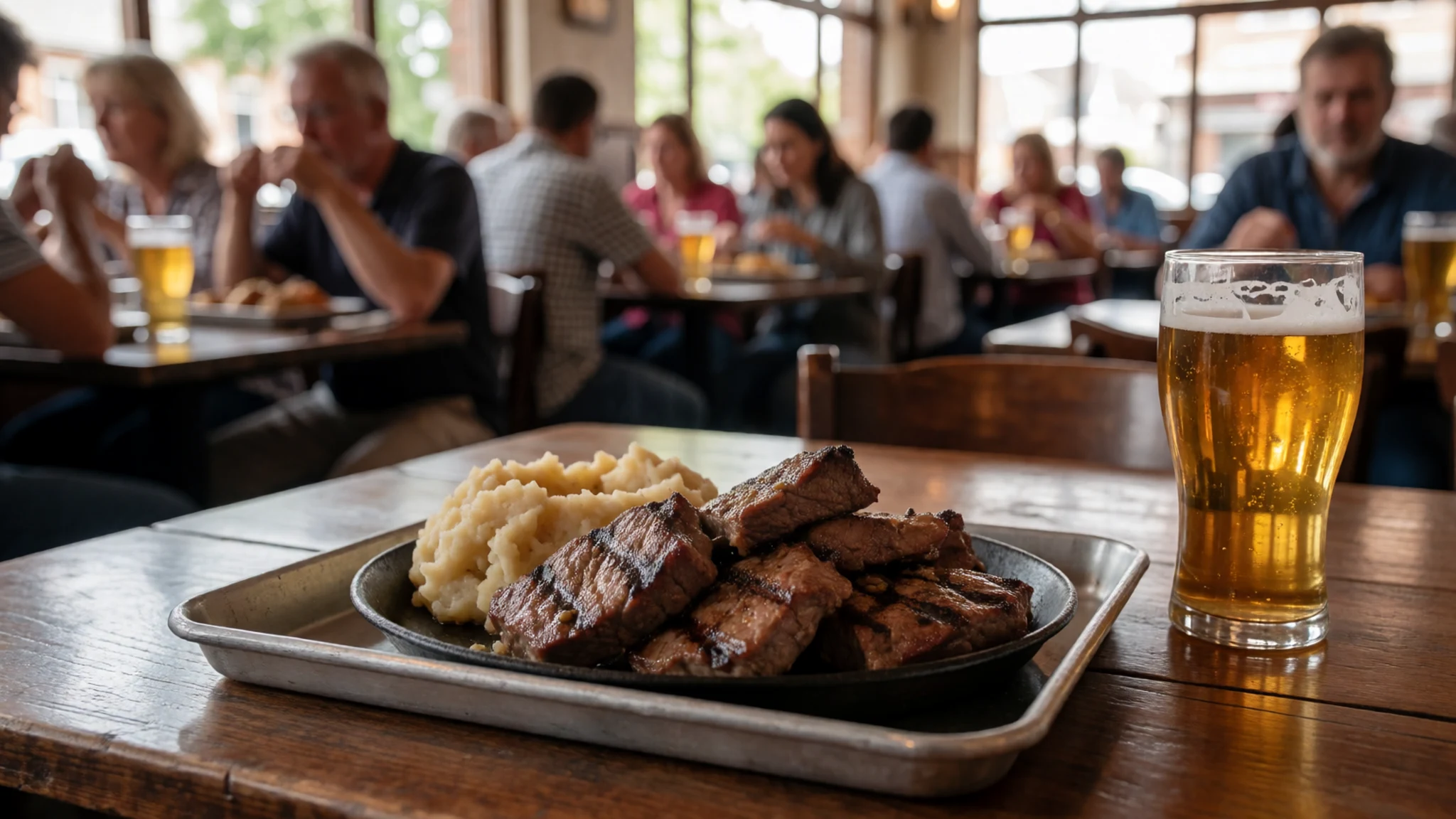
- Mahangu porridge — Home-style eateries serving northern Namibian cooking
In Windhoek, mahangu porridge — a thick millet staple also called pap or oshifima — partners meat and stew. It appears in home-style eateries cooking for people from the north, not only at ceremonies. It is plain, filling and eaten with a spoon or the hand. - Biltong — Butcher counters and city markets
Windhoek treats biltong, air-dried beef or game spiced and cut thin, as a snack rather than a plated course. Butcher counters and market stalls sell it by the piece for a drive or a gap between museums. A busy counter is a good sign. - Lebanese-style cafe plates — Small cafes in the city centre
Small cafes in central Windhoek serve Lebanese-style plates at breakfast and lunch: spiced beans, grilled meat, flatbread and salads with some heat. They suit a light meal between the church and the museum, and several put tables outside when the weather is kind.
Plan it
Best time. Windhoek walks well from May to September, when the highland winter is drier and nights at 1650 metres turn cold. October and November are warmer. January is the hottest month and February the wettest. Take a layer in every month.
How long. 2–3
Getting there. Most flights reach Hosea Kutako International Airport, a compact terminal where passengers walk off the aircraft. The city is a further road leg, so arrange a transfer or hire car before landing. The B1 is the north–south highway, linking Oshakati, Otjiwarongo and Okahandja with Rehoboth, Keetmanshoop and Lüderitz. The B2 crosses east–west from Swakopmund to Gobabis. Shared minibuses run from towns across Namibia. South and west routes, including Mariental, Swakopmund and Keetmanshoop, use the Engen station at Rhino Park, north of the city centre. Northbound routes, including Otjiwarongo, Oshakati and Rundu, use Hakahana Service Station in Katutura. Arranging a seat on Independence Avenue, opposite the SAA office, is often simpler than decoding the ranks.
Budget. mid
Tips
- Book the airport transfer, or a hire car, before arrival; the terminal is well outside the centre.
- See Christuskirche, the Independence Memorial Museum and the parliament hill in the morning, ahead of coach groups and the strong midday sun.
- Carry cash for minibuses, markets and small cafes; cards are widely used in the centre and less so at the ranks.
- Stay out of unlit sports fields and quiet streets after dark. The AJ du Plooy grounds are specifically unsafe once the sun is down.
- Drink water through the day. At 1650 metres the sun is harsher than the mild air suggests.
- For civic notices, use https://www.windhoekcc.org.na/ rather than an old printed timetable.
Etiquette
- Ask before you photograph anyone, at a market, outside a church or on Independence Avenue.
- Inside Christuskirche, cover shoulders and knees and keep your voice low; services still happen there.
- At Heroes' Acre, behave as you would in a cemetery: no climbing on the statue or the graves.
- At minibus ranks, wait your turn, name the destination clearly, and do not push to the front.
Nearby
Sources
- Wikidata Q3935 (CC0)
- Wikipedia (rev 1383911632) (CC BY-SA 4.0)
- Wikivoyage (rev 5422632) (CC BY-SA 4.0)
- Photo photos/01-windhoek-skyline.jpg (CC BY-SA 2.5)
- Photo photos/02-christ-church-in-windhoek-namibia.jpg (CC BY-SA 2.0)
- Photo photos/03-windhuk-independence-memorial-museum-blick-auf-den-tintenpal.jpg (CC BY-SA 4.0)
- Photo photos/04-laika-ac-new-state-house-8406704947.jpg (CC BY-SA 2.0)
- Photo photos/05-bahnhof-windhoek.jpg (CC BY-SA 3.0 de)
- Photo photos/06-sanderburg.jpg (CC BY 3.0)
- Photo photos/07-independence-avenue-windhoek-namibia.jpg (CC BY-SA 2.0)
- Photo photos/08-hosea-kutako-international-airport-namibia-2017.jpg (CC BY-SA 4.0)


