Willemstad
Willemstad, Curaçao
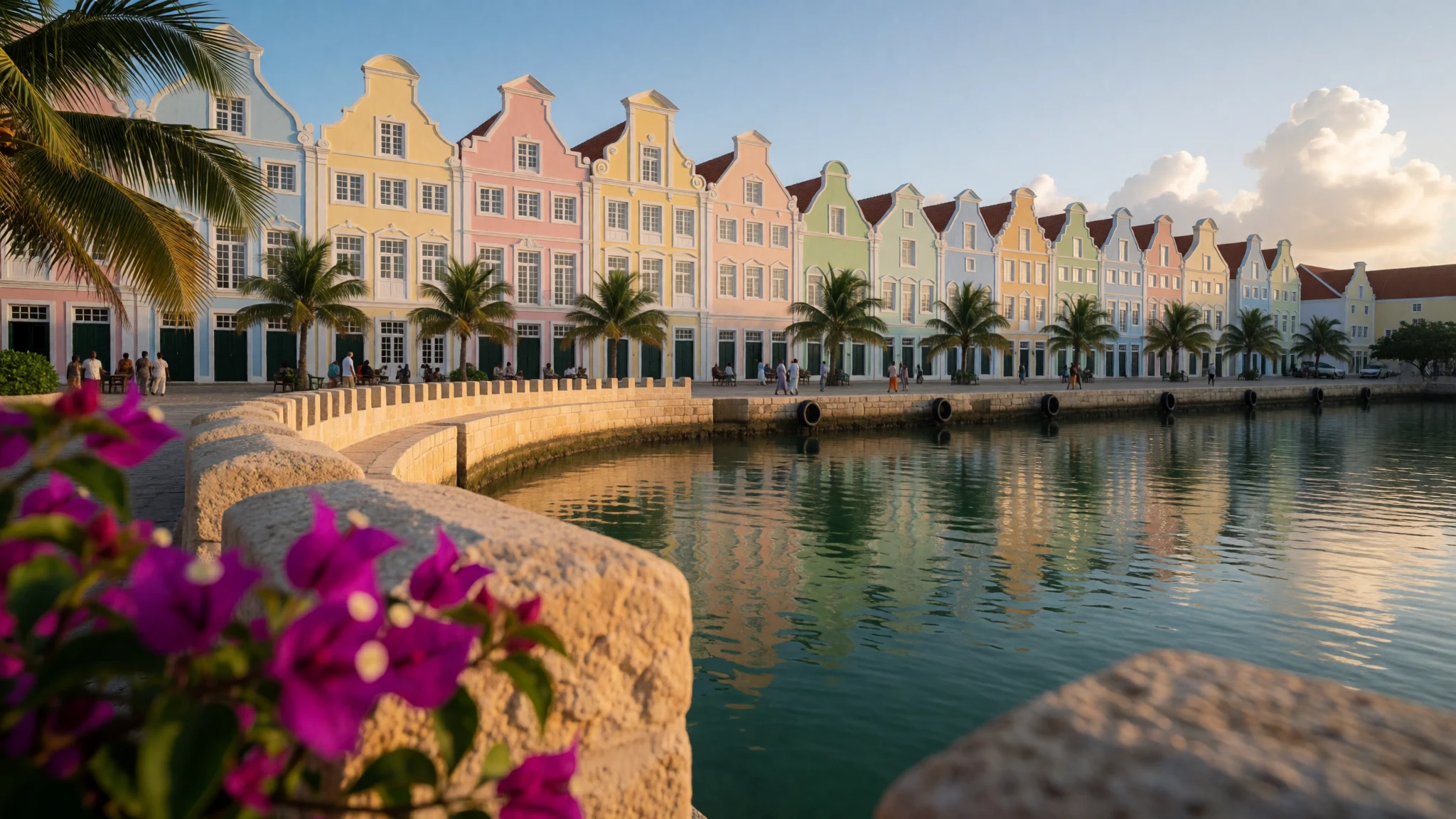
Willemstad is a Dutch-gabled harbour town in Caribbean pastels, where a swing bridge, old quarters and Papiamentu give Curaçao its character.
The place
Willemstad is the capital of Curaçao, an island in the southern Caribbean that belongs to the Kingdom of the Netherlands. About 136,660 people live in the city, the great majority of the island's population, at an elevation of 37 m on a dry coast. The historic core is divided into four quarters. Punda and Otrobanda face each other across Sint Anna Bay, a narrow channel that leads into the Schottegat, a large natural harbour behind the town. Scharloo and Pietermaai Smal sit opposite one another on a smaller inlet, the Waaigat. The quarters are compact, and a floating pedestrian bridge across the channel swings aside when ships need to pass. What visitors notice first is the colour: tall Dutch-style gables painted in pastel yellow, pink, green and blue, so the waterfront looks like an Amsterdam canal moved to the tropics. The harbour entrance and the old centre together hold UNESCO World Heritage status. The climate is hot and semi-arid, with an average temperature near 27°C and steady trade winds from the east that take the edge off the heat. The rainy season runs from October to February. Daily life moves at an unhurried pace, and Papiamentu, a creole language, is heard in shops, buses and offices alongside Dutch and English. Willemstad also works as the island's practical base, with museums, markets and routes out to the beaches and national parks all within a short drive.
Its story
Willemstad began in 1634, when the Dutch West India Company took Curaçao from Spain and built a walled trading town on the point of land now called Punda; the Dutch name de punt simply meant 'the point'. The port quickly became a hub of the Atlantic slave trade, and that traffic drove fast growth, so by the late seventeenth century more than 200 houses stood behind the walls. Sephardic Jewish traders from Amsterdam and Recife, in Brazil, settled here too and had their synagogue built in 1674; Wikipedia describes it as the oldest synagogue still standing in the Americas. Space inside the walls ran short, so in 1675 a new quarter, Pietermaai, was planned outside them, with a strip of open ground kept clear so that the guns of Fort Amsterdam had a free line of fire. The name Willemstad first appears in records in 1680, honouring a Prince William of Orange. Otrobanda, from Papiamentu words meaning 'the other side', was founded in 1707 across the bay, and Scharloo followed. In 1861 the walls were pulled down and houses filled the gap towards Pietermaai. Around 1925, oil and phosphate brought a boom and new neighbourhoods. The city served as capital of the Netherlands Antilles until that federation was dissolved in 2010, and it is now the capital of Curaçao itself.
What to see
- Handelskade and Punda — Punda
The Handelskade is the Punda waterfront, a row of tall gabled houses in sweet pastel colours facing the channel. Walking it early, before the heat builds, works best, then into the lanes behind for small squares and old merchant buildings such as the Penha building. The classic view is from the Otrobanda side at sunset.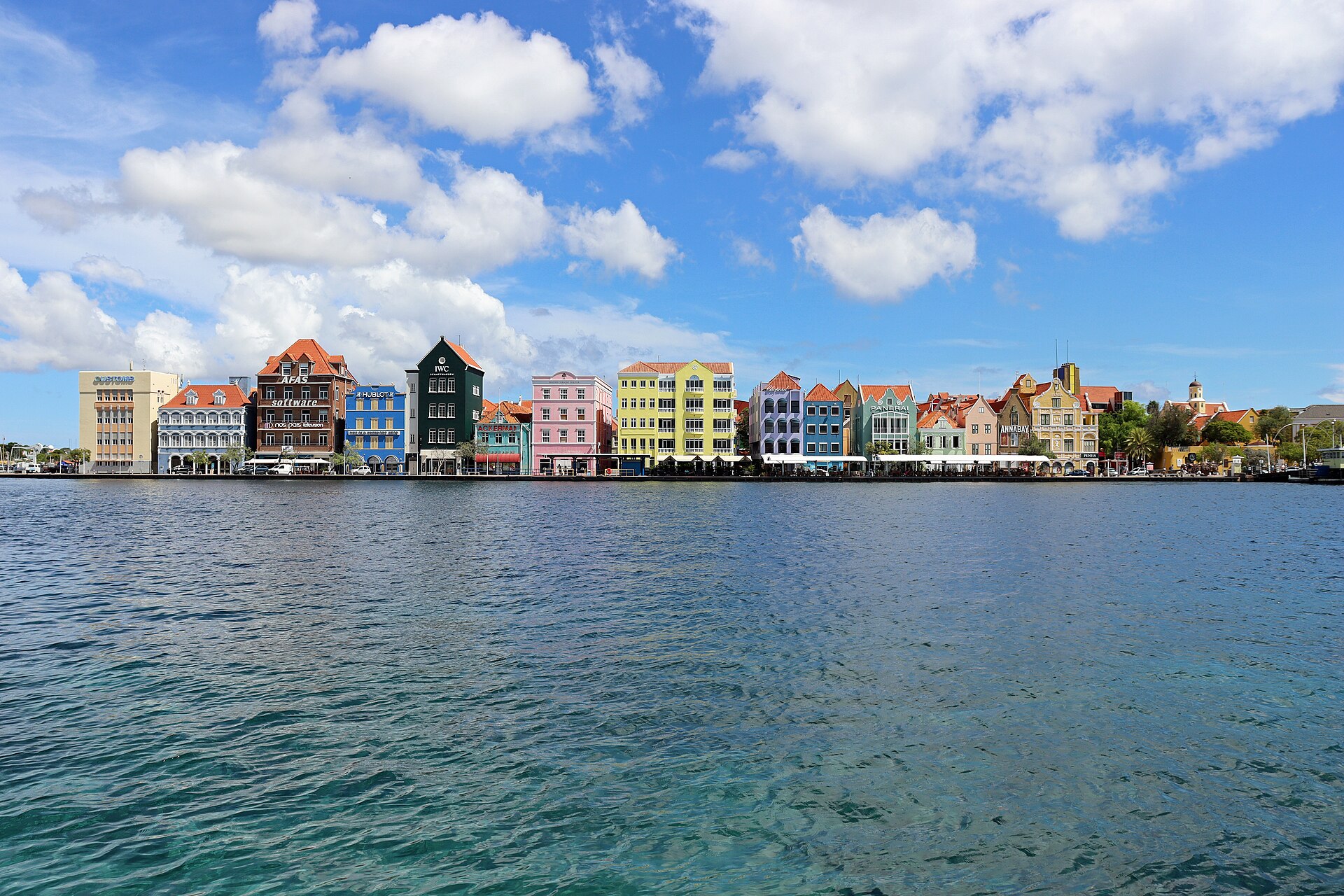
- Queen Emma Bridge — Sint Anna Bay
The Queen Emma Bridge is a floating pedestrian bridge linking Punda and Otrobanda over Sint Anna Bay. It swings open for ships, so a crossing can involve a short wait. Lit after dark it is worth a look from either bank, and crossing a few times shows how the two halves of the city relate.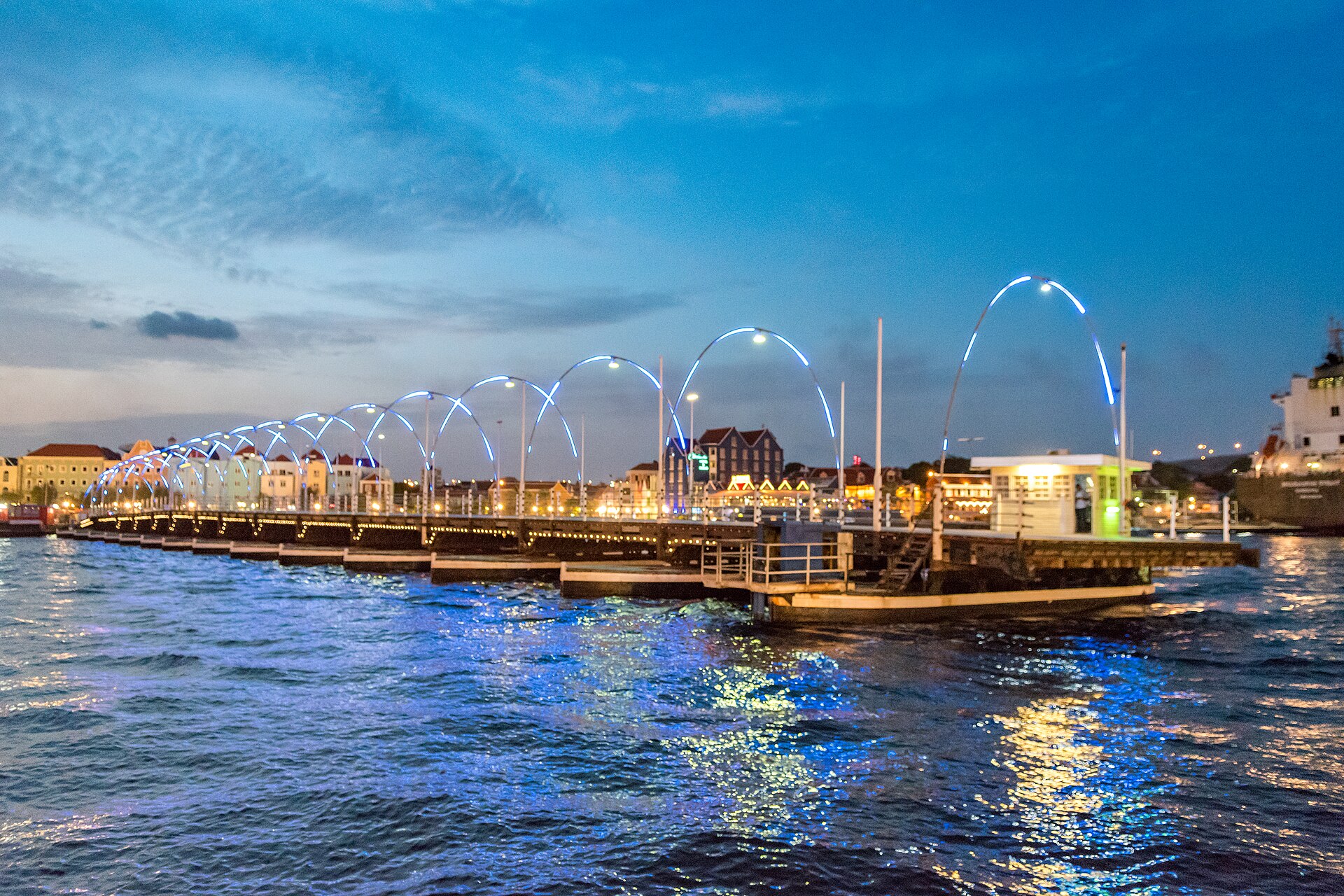
- Otrobanda and St Anna church — Otrobanda
Otrobanda, the 'other side' of the bay, has narrow streets of restored houses, courtyards and small galleries. The Catholic church of St Anna stands here and gives a quiet counterpoint to the waterfront crowds. Wander without a plan, and stop for shade and a cold drink when the sun gets high.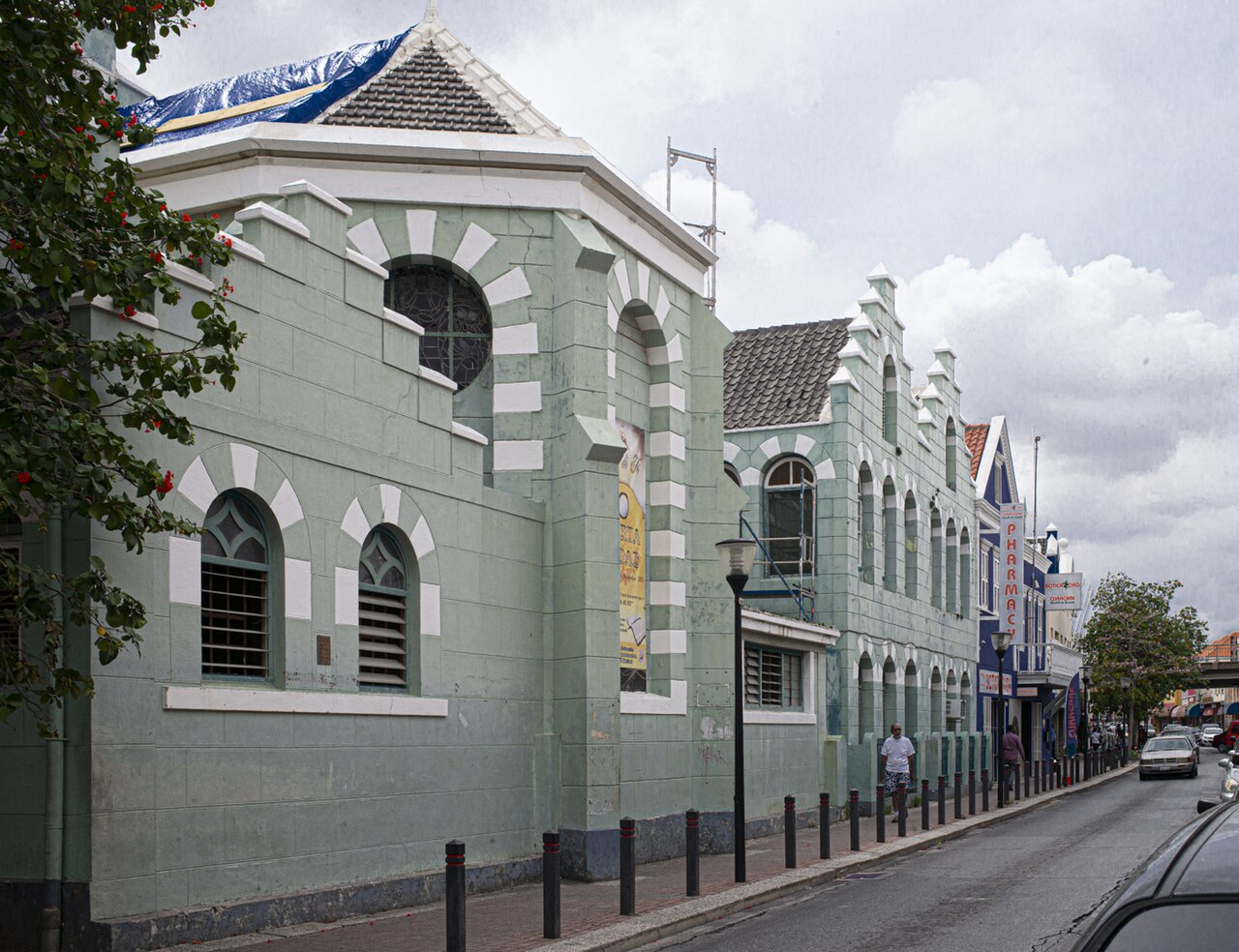
- Museum Kura Hulanda — Otrobanda
This anthropological museum in Otrobanda tells the story of the African slave trade and the cultures that shaped Curaçao. It is a sober but important counterweight to the pretty façades outside, since the harbour's wealth was built on that trade. Allow a couple of hours, and check the official site for opening times. - Maritime Museum — Scharloo waterfront
The Maritime Museum follows the island's seafaring and national history through nautical charts, ship models and navigation instruments. It suits a hot afternoon, and makes sense of why the city sits where it does: a deep sheltered harbour behind a narrow entrance. Check the official site for current opening times. - Scharloo and Pietermaai — Waaigat harbour
Scharloo and Pietermaai are the quieter quarters along the Waaigat, with grand merchant houses, some carefully restored and others still waiting for repair. Pietermaai now has cafés and small guesthouses, so it is a pleasant place for an evening stroll. Go in daylight first to see the architecture properly.
Culture
Willemstad's culture is a blend of Dutch order and Caribbean ease. Papiamentu, the island's creole language, carries words from Portuguese, Spanish, Dutch and African languages, and most people move between it, Dutch and English without fuss. The pace is relaxed, and conversation usually comes before business. The city's heritage is layered. Dutch merchants built the gabled town, Sephardic Jewish families established one of the earliest congregations in the Americas, and enslaved Africans did much of the labour that made the port rich. Museums and memorials in Otrobanda and Punda now tell that history more openly than before, and it is worth reading the plaques rather than only photographing the façades. Religion is visible in the cityscape, with the synagogue and several churches close to one another, and each still serves living congregations. Music, dance and food reflect the same mix of origins, from Dutch cheese and bread to Indonesian and Chinese flavours that arrived with later migrants. Festivals and parades bring the streets alive, and locals are usually happy to explain what is going on if asked politely. Dress and manners in town are informal, but a friendly greeting matters. Greet shopkeepers and staff with a warm good morning before asking for anything, and ask before photographing people or entering a place of worship.
What to wear
Willemstad's traditional dress belongs mainly to festivals and folk events. Women's costume centres on the kabaya, a light cotton blouse worn with a long full skirt and a printed head wrap, usually in cheerful checks, florals or bold stripes. Cotton and calico suit the climate, and the colours echo the painted houses. Men's festive wear is simpler: white or pale shirts, dark trousers and a straw hat. Most people in the city now dress for heat and comfort. Linen shirts, light dresses, shorts, sandals and caps are normal on the street, while offices and banks lean towards smart-casual. Beachwear is worn at the shore, but locals dress more fully in town. Visitors should pack breathable cotton or linen in light colours, a wide-brimmed hat, sunglasses and high-factor sun cream, as the trade winds hide how strong the sun is. Comfortable sandals or trainers help on cobbles and uneven pavements, and a light layer is useful for air-conditioned museums and evening breezes. Churches and the synagogue expect covered shoulders and knees, so carry a scarf or shirt in a day bag. Swimwear is for the beach or boat only, not for walking through town.
What to eat
- Sate with peanut sauce — Local restaurants and eateries across Punda and Otrobanda
Indonesian cooking reached Curaçao via Suriname, and skewers of grilled meat with peanut sauce are now an everyday island dish. They are an easy, filling order, often served with rice or fried plantain, and pair well with a cold drink in the evening. - Chinese snack-bar plates — Snack bars scattered through the neighbourhoods
Small bar-restaurants called snacks serve fried rice, noodles and meat dishes, mostly to local customers. Portions are generous and the food is usually good, which makes them a practical, cheap option when sightseeing, especially away from the main waterfront. - Fresh fish and seafood — Waterfront restaurants and local eateries near the harbour
The Dutch taste for seafood meets a Caribbean island here, so grilled or pan-fried fish with rice, salad and fried plantain is a standard lunch. Ask what was landed that day rather than choosing from the menu alone. - Pastechi — Bakeries and snack counters around Punda
Pastechi are fried pastry pockets filled with cheese, meat or tuna, eaten warm for breakfast or a quick snack. The Dutch cheese influence shows in the favourite cheese version. Two or three make a cheap start to a day of walking. - Keshi yena — Restaurants serving Curaçaoan home cooking
Keshi yena is a baked dish of spiced meat, olives and raisins sealed inside a hollowed round of cheese, a distinctly Dutch-Caribbean creation. It is rich and salty, so share it, and look for it on local menus rather than tourist set meals.
Plan it
Best time. March to June is a sensible window: it sits outside the October–February rainy season, and the steady east trade winds keep the heat of the semi-arid climate bearable. Temperatures average about 27°C all year, so sun protection matters in any month.
How long. 2–3
Getting there. Fly to Curaçao's international airport, then take a taxi or ride-hailing app to Willemstad. A public bus (Konvoi) also leaves from the stop beside Arrivals every one to two hours, cash only. In town, Punda and Otrobanda are linked by the Queen Emma pedestrian bridge.
Budget. mid
Tips
- Complete the Digital Immigration Card on the Curaçao Tourist Board website at least 48 hours before departure, and expect a long immigration queue on arrival.
- Carry some cash for buses and small snack bars.
- Walk the waterfront early, then rest in the shade or museums in the hot afternoon, and carry water.
- Check official sites for museum opening times and for national park access before planning day trips.
- A visa may be required depending on nationality, so check the entry rules well before you travel.
Etiquette
- Greet people politely before asking for help or service
- Cover shoulders and knees in churches and the synagogue
- Ask before photographing people, and keep swimwear for the beach
Nearby
Sources
- Wikidata Q132679 (CC0)
- Wikipedia: Willemstad (rev 1384989591) (CC BY-SA 4.0)
- Wikivoyage: Willemstad (rev 5420832) (CC BY-SA 4.0)
- Handelskade in Willemstad — Coolcaesar (CC BY 4.0)
- St Anna church, Otrobanda — José A. Sánchez Penzo (CC BY-SA 4.0)
- Stadhuis Willemstad — MJBakh (CC BY-SA 4.0)
- Palacio de Curacao — Felix Butto (CC BY-SA 4.0)
- Willemstad Queen Emma Bridge by night — dronepicr (CC BY 2.5)
- Temple Emanuel, Willemstad — Charles Hoffman (CC BY-SA 2.0)
- Penha building, Willemstad — Evandria (CC BY-SA 4.0)
- Curacao Willemstad Pano — dronepicr (CC BY 2.5)


