West Lake
West Lake, People's Republic of China
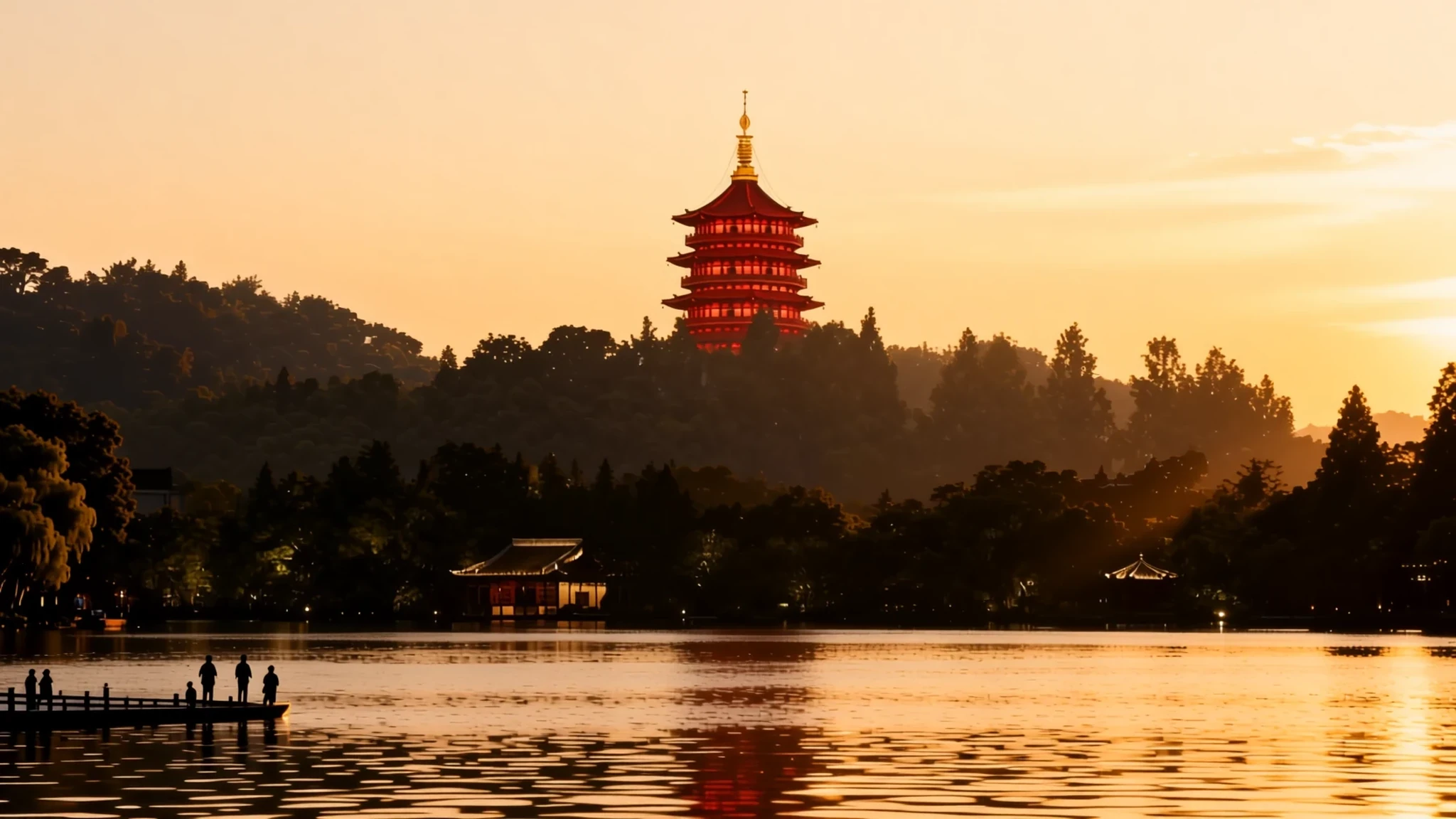
A lake of willows, causeways and pagodas on the edge of Hangzhou, loved by poets for centuries.
The place
West Lake sits on the western side of Hangzhou, the city in Zhejiang province on China's east coast, and it is the reason many visitors come here at all. It is a freshwater lake, though it rarely looks like one: causeways cut across it, small islands rise from the water, and the whole basin is ringed by hills on its north, west and south sides. The lake is the centrepiece of a landscape that people have shaped for centuries, and that shaping is part of its charm. Paths wind along the shore, willows hang over the water, and the view changes with every bend.
Two pagodas stand on opposite banks, Leifeng on the southern shore and Baochu on the north, and together they set the rhythm of the skyline. Leifeng is the one most photographs show, especially at dusk when it is lit up. Beyond the hills to the west are several famous temples, among them Lingyin and Jingci, which make a good half-day outing if you want a break from the water.
The lake is busy. Domestic visitors fill the causeways at weekends and on public holidays, and the most popular viewpoints can feel like a queue with a view. Go early, or walk the quieter western shore. Summer is hot and humid, so the cooler months suit walking best. Hire a bike, take a boat if the queue is short, and leave time to wander rather than tick off sights; the lake rewards slow looking more than checklists.
Its story
West Lake did not begin as a lake. Long ago the land around Hangzhou was still under the sea, and the basin that is now the lake was a shallow bay. Over many centuries the Qiantang River built up sand and stones at its mouth, closing the bay off into a lagoon. Streams from the surrounding hills then freshened the water, but silt kept settling, and the lake slowly began to turn into marsh. The lake people know today owes as much to dredging and repair as to nature.
Local folklore offers a different tale. It says the first emperor of China anchored his fleet beside a huge rock on the northern bank, at a time when the water was still part of the river. Historical records describe him being halted by a strong tide on the Qiantang and forced to detour westward, which gives the legend a grain of plausibility.
Later, an official named Hua Xin is credited with building a seawall that cut the lake off from the sea for good, making a freshwater lake possible. The government seat of Hangzhou moved to a new walled city east of the lake, and the western shore slowly became a place for leisure.
Once the Song dynasty made Hangzhou its capital, the lake grew into a cultural landmark. Poets and painters returned to it again and again, and it became one of the most visited destinations in China. Marco Polo carried its reputation to Europe, and its image later appeared on Chinese banknotes and in the national passport. The causeways, pavilions and pagodas you see today sit on top of those centuries of silt, repair and reinvention.
What to see
- West Lake shoreline walk — Lakeside, all round the lake
Start anywhere along the lakeside and walk clockwise or anticlockwise, the water always on one side. The path passes willows, small pavilions and stone bridges, and it is the simplest way to grasp the lake's shape. Named viewpoints along the way are tied to classic poems and paintings, so a short guide or map helps. Allow a couple of hours at an easy pace, longer if you stop for tea, and expect company on weekends.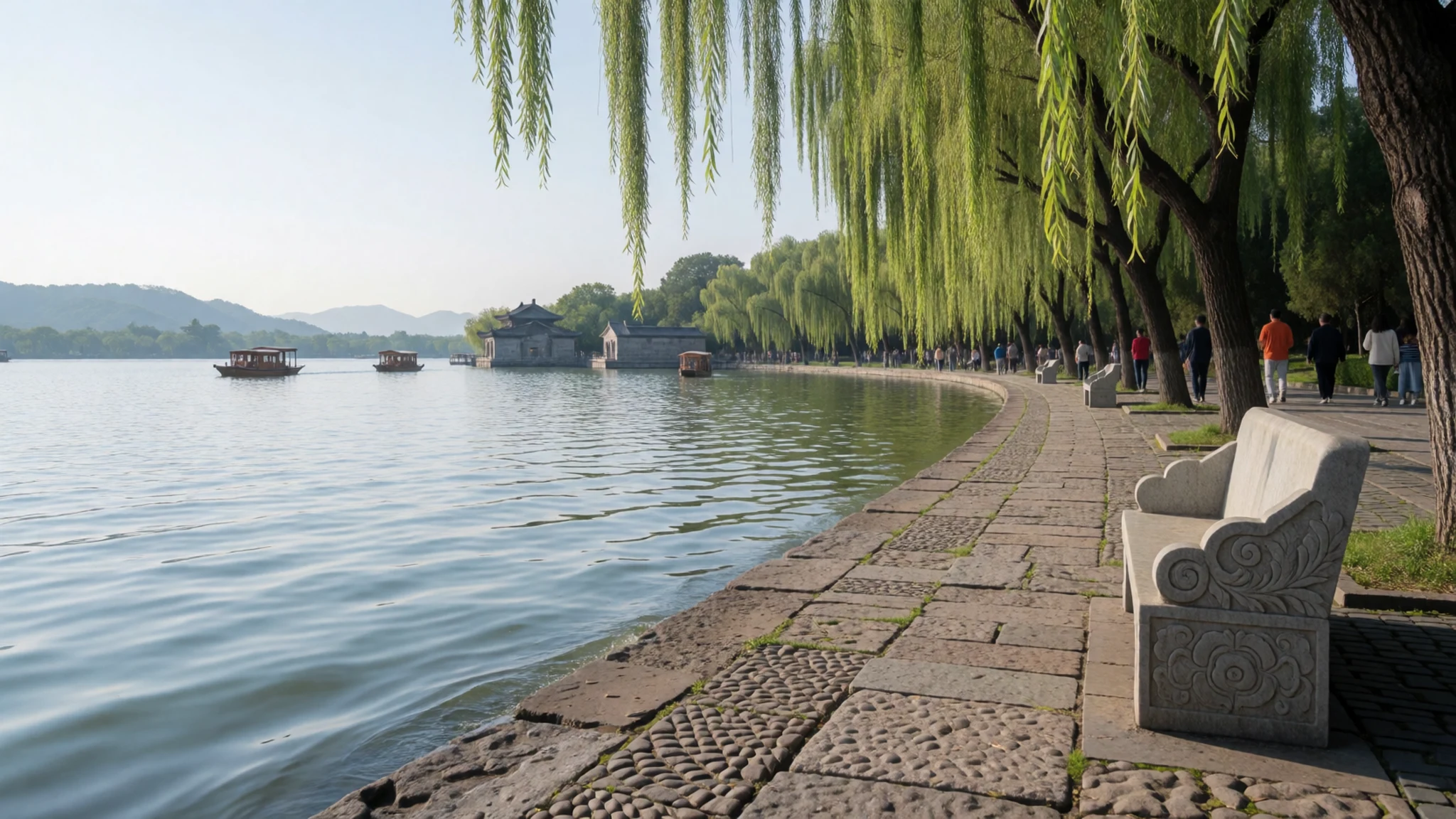
- Su Causeway in spring — Western shore, from near Beishan Road
The causeway runs north to south along the lake's western edge, lined with willows and peach trees. It is at its best in spring, when the blossom is out and the paths fill with families and photographers. Walk the whole length slowly, and stop for tea at one of the lakeside pavilions to watch the boats cross the water.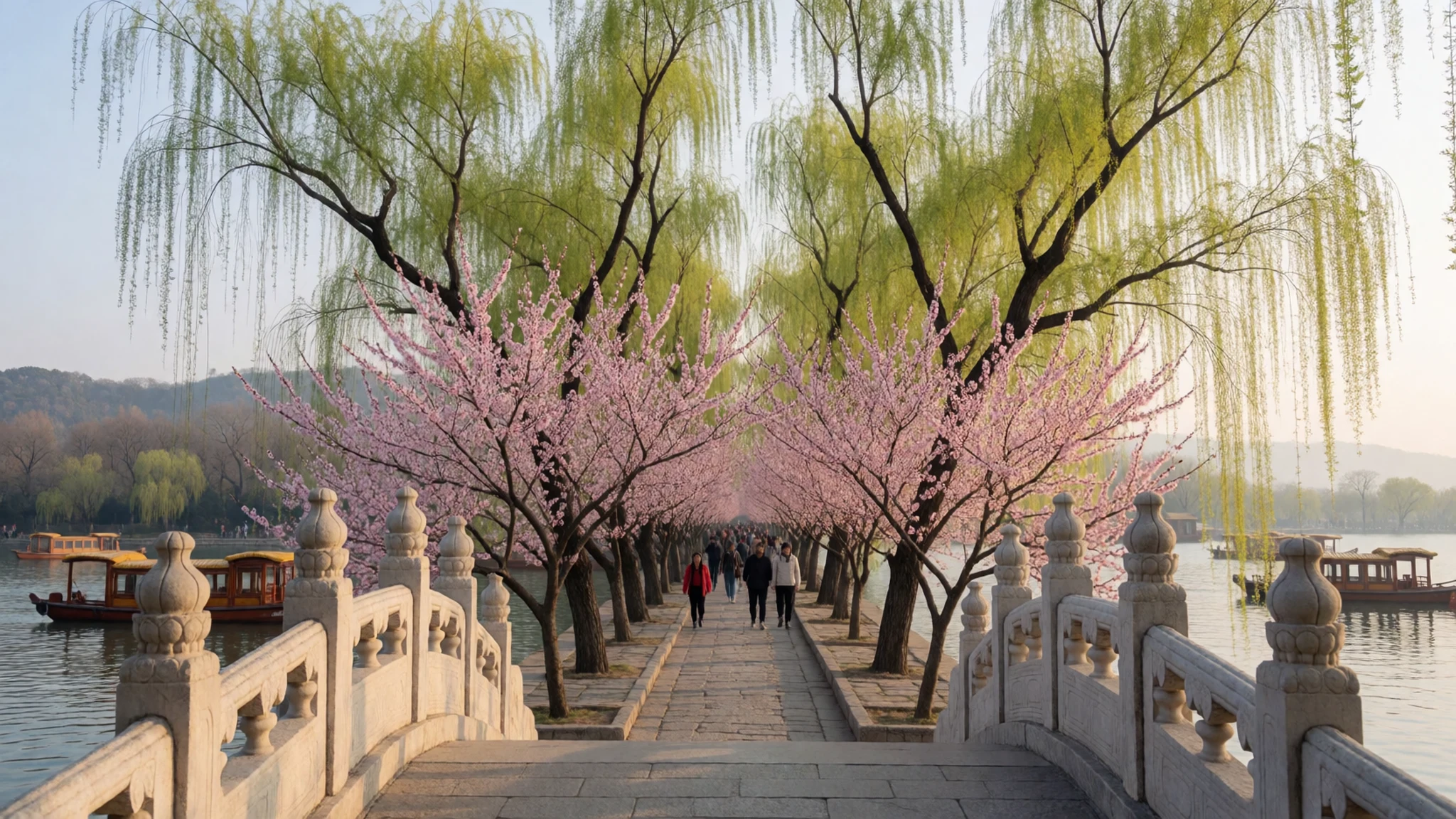
- Lingering Snow on Broken Bridge — Northern lake, near the causeways
The Broken Bridge is a favourite for its romantic reputation. When snow falls on it, the bridge appears to be split in two, with a gap between its halves. Arrive on a cold morning after snowfall if you are lucky; otherwise come at dusk, when lamps reflect in the water. The bridge itself gets crowded, so step to the side to take in the view.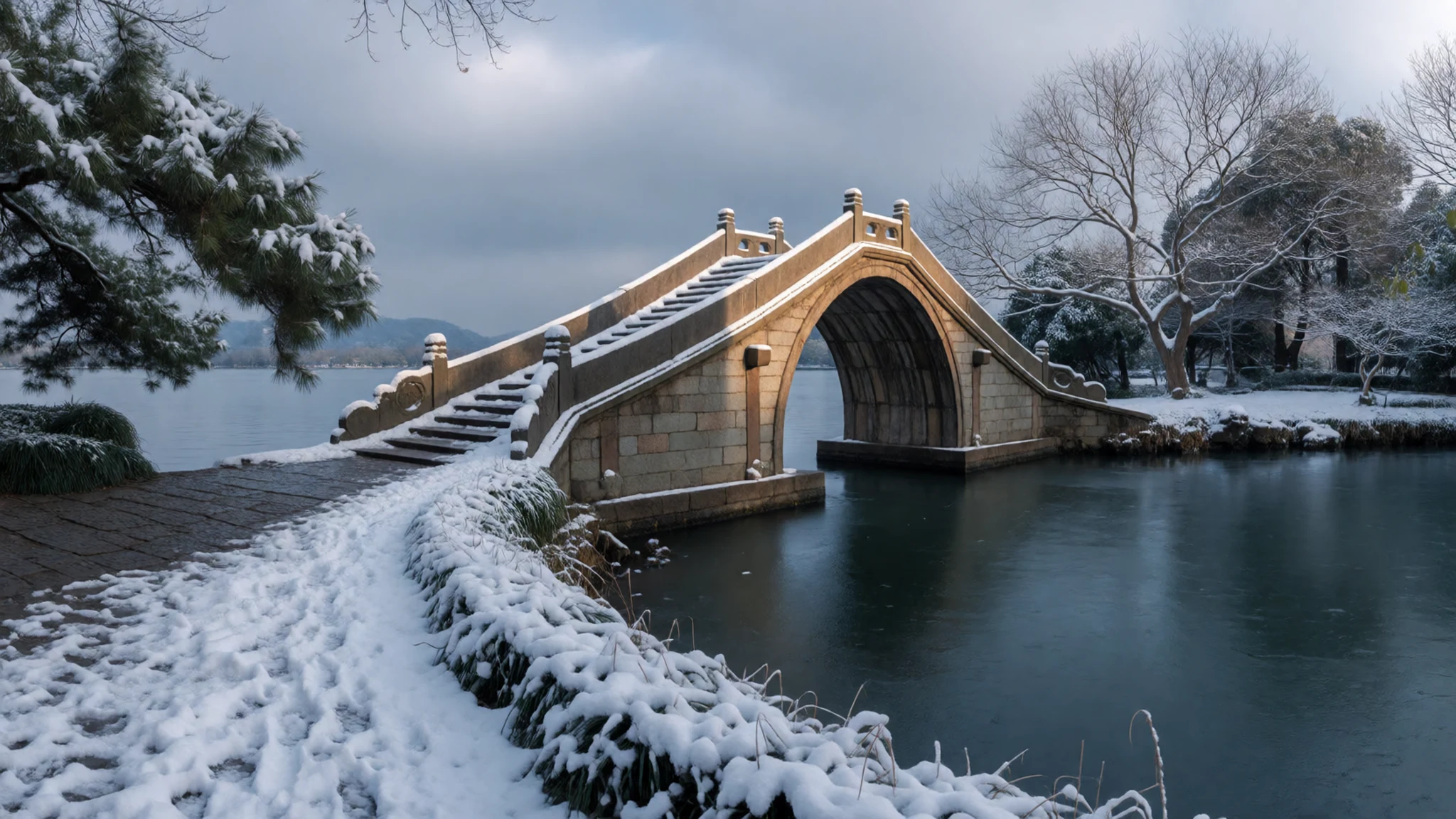
- Leifeng Pagoda — Southern bank of the lake
Standing on the southern bank, Leifeng Pagoda is the lake's signature image, and it is lit up at night. Climb the hill for a wide view across the water to the city and the north shore. The path is steep in places, so shoes with good grip help. Go at sunset, when the pagoda glows in the evening light, and stay on for the lights to come on.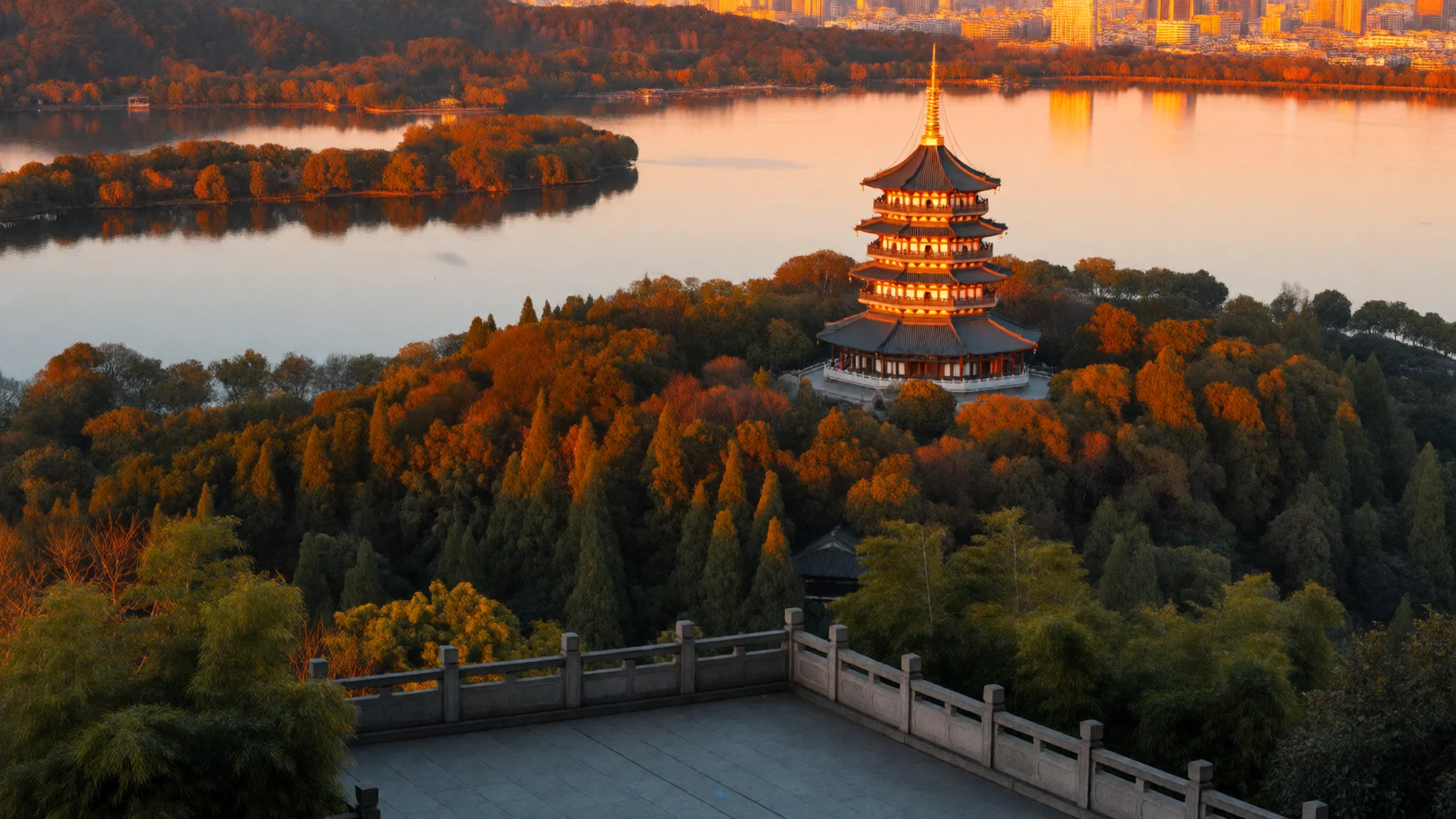
- Yue Fei Temple and the Crooked Courtyard — Western shore, near the Crooked Courtyard
Yue Fei Temple honours the Song general of that name and sits on the western shore, just in front of the Crooked Courtyard. In summer the area fills with shops selling souvenirs and snacks, and the atmosphere is lively. Go in the morning before the tour groups arrive. Check opening times on the official site before you set out.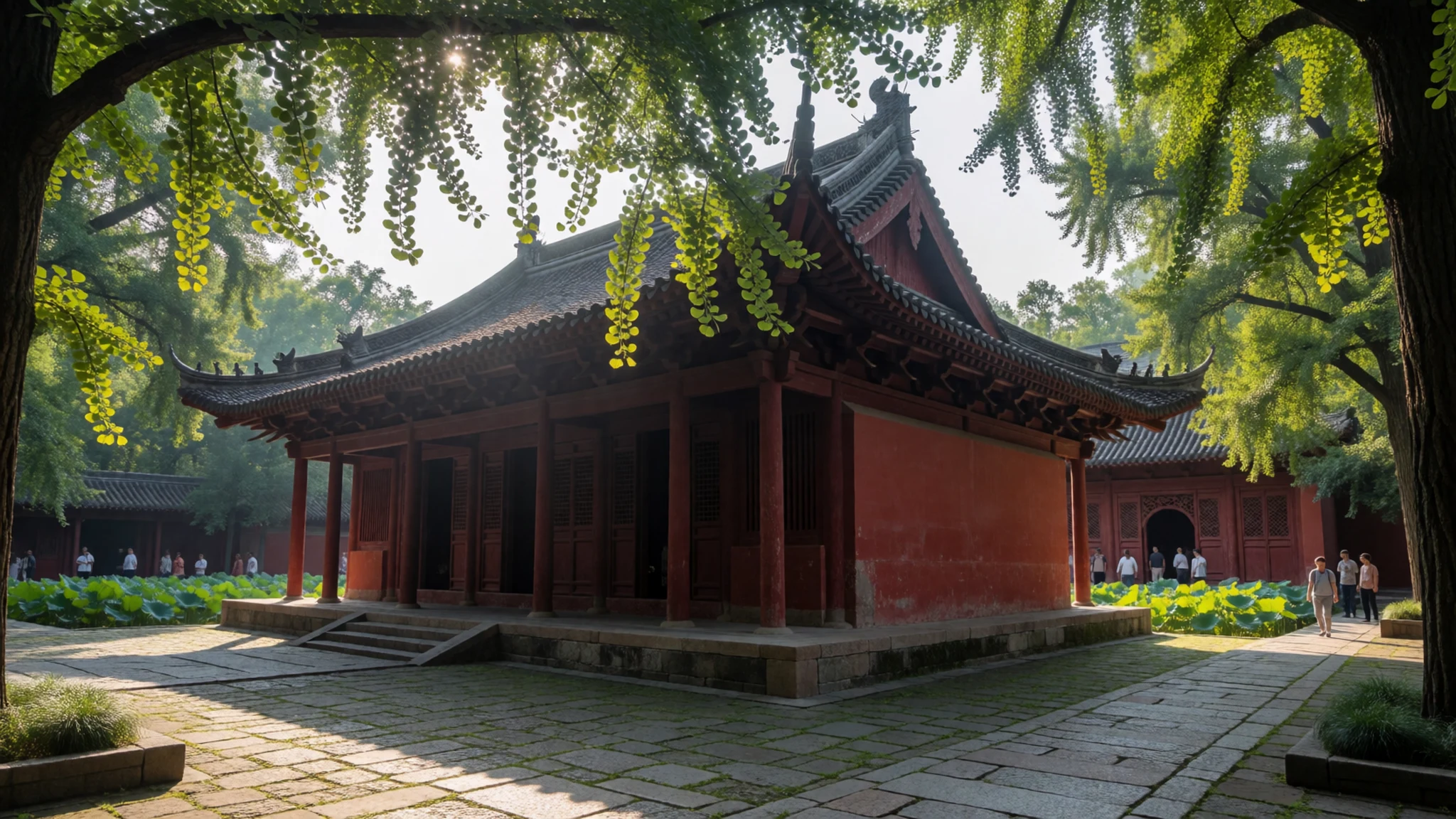
Culture
West Lake is a human-made landscape, and that is central to how people here regard it. Its gardens and paths were arranged so that a visitor stands in one spot and sees a framed view with a poetic name, and the names carry much of the meaning. Chinese landscape painting and poetry have shaped how people look at the lake for generations, so many visitors arrive already knowing a verse about it.
The traditional itinerary invites you to find each named view at the right time of day or season, which is why the paths grow busy at sunset and on holidays. Locals treat the lake as a place for walking, drinking tea and talking, and older residents often exercise along the shore in the early morning. Photographing people in these settings is common, but asking first is considerate. Keep your voice down in temple halls where worshippers are praying, and do not climb on pavilion railings or bridge stonework for a better shot. Remove your hat and keep quiet inside temple halls.
What to wear
West Lake's setting is closely tied to Hangzhou's long silk tradition, and the city has long been associated with fine silk. Traditional dress of the Han majority is the hanfu, a long robe with wide sleeves, usually made from silk or linen and sometimes worn with a sash. Hanfu is now seen mainly at cultural events and photo shoots around the lake, where it is a popular way to dress for the scenery.
On the lakeside, everyday dress is casual and practical. Locals wear loose cotton, trainers and sun hats, and older people often wear simple, comfortable clothes for their morning walks. Few people dress up for the lake itself.
What a visitor should wear depends on the season. In summer the humidity is heavy, so pick light, breathable fabrics and carry a hat and a small umbrella for sudden showers. Bring a layer for cooler evenings in spring and autumn. Sturdy shoes with good grip matter more than style, because the hill paths to the pagodas and the stone steps of the temples can be slippery. At temples, cover shoulders and knees, and dress with the same modesty you would for any place of worship.
What to eat
- Hangzhou-style noodles — Neighbourhood noodle counters on the city side of the lake
Hangzhou's noodle tradition is light and savoury, with clear broth and fresh toppings such as sliced pork, greens or shredded bamboo. Look for a neighbourhood noodle counter on the city side of the lake, where locals queue at lunchtime. It is an inexpensive, filling meal and a good first taste of the city's cooking.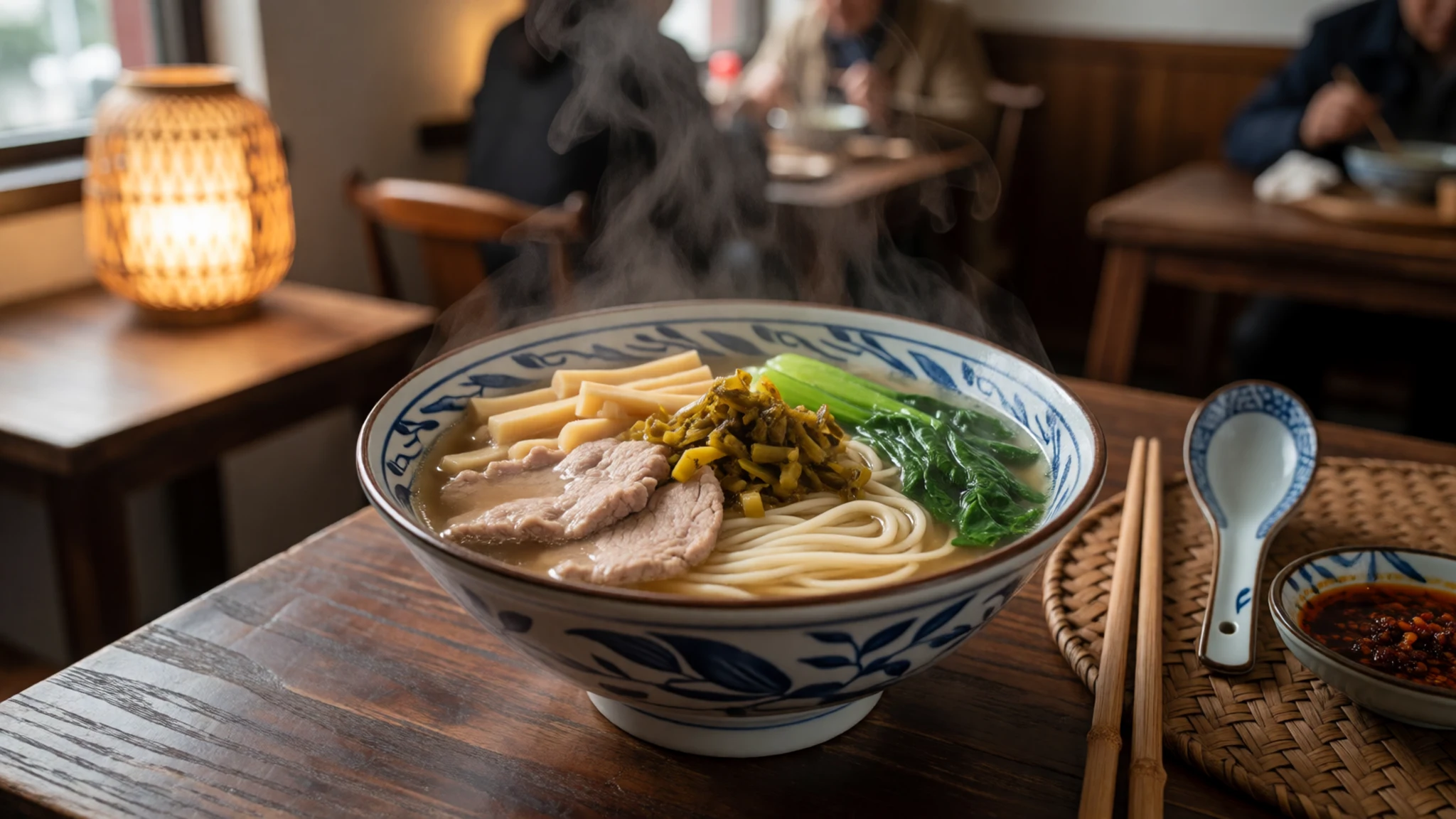
- West Lake fish in vinegar sauce — Traditional restaurants in the old town and on the lake's edge
This dish pairs a freshwater fish, cooked whole or in pieces, with a sweet and sour glaze made from local vinegar and sugar. It is a classic of the lake's cuisine and is often served in restaurants with a view. Order it in a traditional restaurant in the old town for the most authentic version.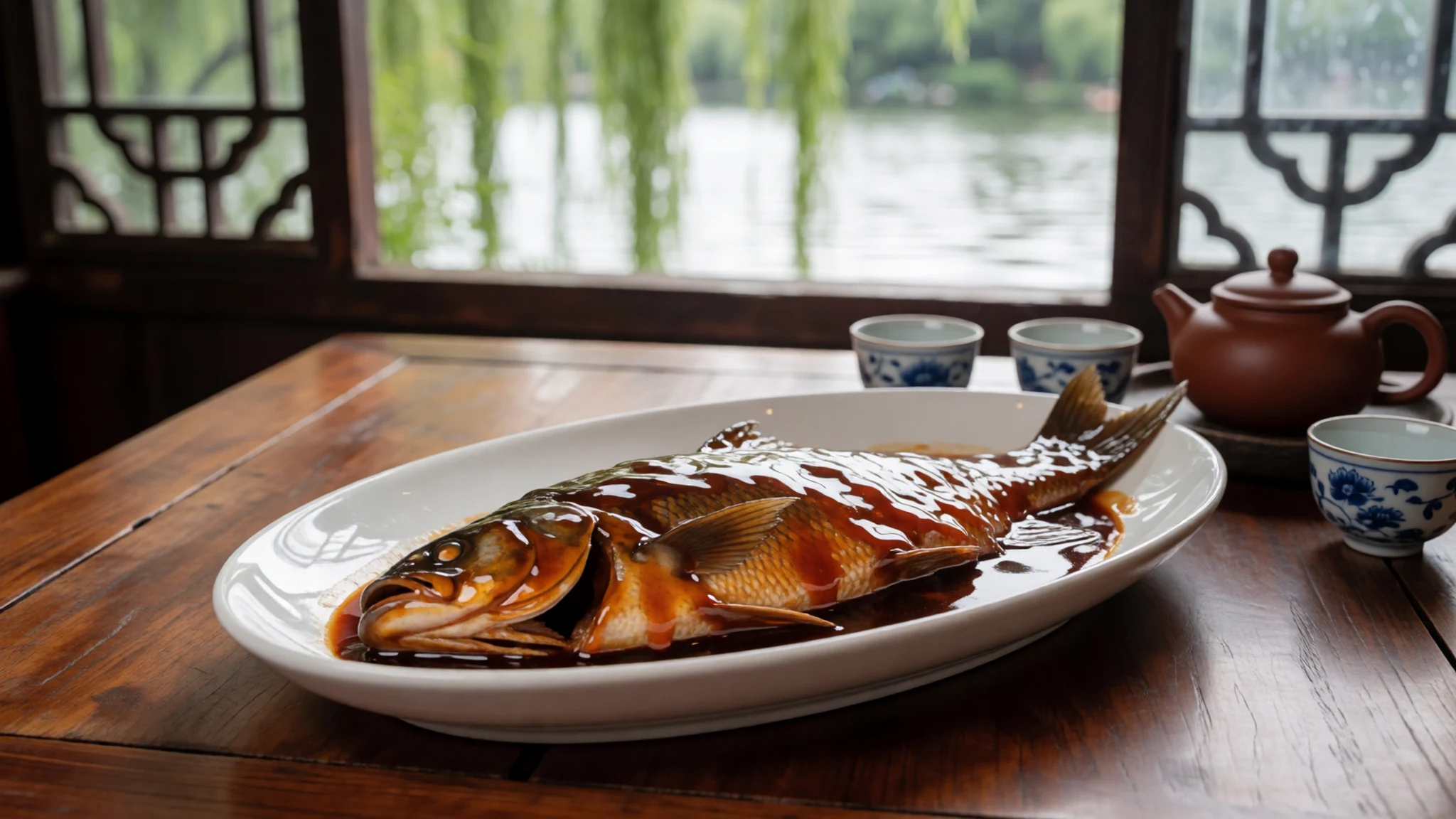
- Longjing tea — Tea houses on the western hills around the lake
Longjing, or Dragon Well, is one of China's best-known green teas, grown on the hills around the lake. Its flat, pan-fired leaves give a nutty, fresh flavour. Sample it in a tea house on the western hills, where you can watch it being brewed in a traditional gaiwan or cup.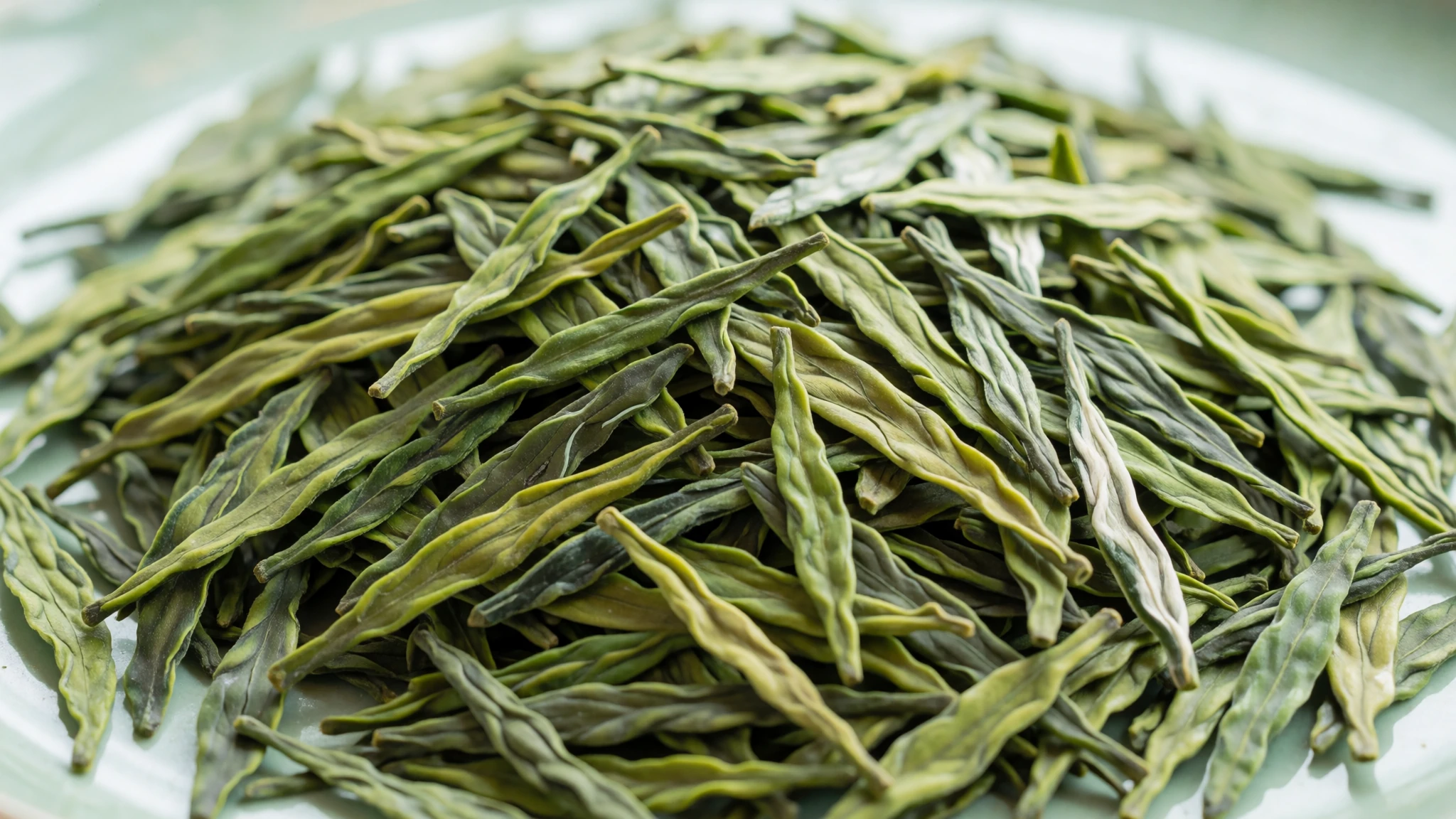
- Dongpo pork — Traditional eateries in the old town
Dongpo pork is braised belly pork, cooked slowly in soy, rice wine and sugar until the fat turns soft and glossy. It is named after the poet Su Dongpo, who is linked with the city and its food. It is rich, so share a plate and pair it with plain rice. - Lotus root and lotus seed snacks — Snack stalls along the lakeside paths and the morning market
Lotus root, sliced and sweetened, and lotus seeds, served in soups or as a dessert, are typical of the lake's gardens. Lotus root is often sold as a crisp snack or in sweet, sticky slices. Look for stalls near the lakeside paths or in the morning market, and try them while they are fresh.
Plan it
Best time. July and August are the hottest months and June the wettest, so the most comfortable walking weather comes in December and January, with highs near 23 C. Summer is hot and humid, and the lake is at its busiest on holidays.
How long. 2–3
Getting there. Hangzhou Xiaoshan International Airport is linked to the city by taxi or shuttle bus, with the taxi usually taking about an hour in good traffic. High-speed trains from Shanghai reach Hangzhou in about an hour. From the station, the lake is a short taxi ride or bus journey away.
Budget. mid
Tips
- Start along the lakeside early in the morning, when the paths are quiet and the light is good.
- Hire a bike or take a boat for the wider lake, as the paths get crowded by midday.
- Carry small notes for stalls and boat tickets, and check which payment methods are accepted before you order.
- In summer bring water and a sun hat, as shade is limited on the open causeways.
- Plan the western hills and the temples as a separate half-day, and check opening times on the official site before you travel.
Etiquette
- Keep to marked paths and do not climb on railings, pavilions or bridge stonework.
- Lower your voice in temple halls and ask before photographing people.
- Take your litter with you, as bins are few along some stretches of the shore.
Nearby
Sources
- Wikidata Q502371 (CC0)
- Wikipedia: West Lake (rev 1366781769) (CC BY-SA 4.0)
- Wikivoyage: Hangzhou (rev 5403664) (CC BY-SA 4.0)
- Photo: West Lake, Hangzhou (Leifeng Pagoda) (CC BY 3.0)
- Photo: West Lake, Hangzhou 2025 (CC BY 4.0)
- Photo: Su Shi's Verse on West Lake by Zhao Mengfu (Public domain)
- Photo: West Lake by Tomita Keisen, 1909 (CC0 1.0)
- Photo: Scenic Attractions of West Lake (11) (Public domain)
- Photo: China Hangzhou Westlake-2 (CC BY 2.5)
- Photo: Yu Fei Temple, Hangzhou (CC BY 4.0)
- Photo: West Lake, Yang Causeway (panoramio) (CC BY 3.0)


