Wat Arun
Wat Arun, Thailand
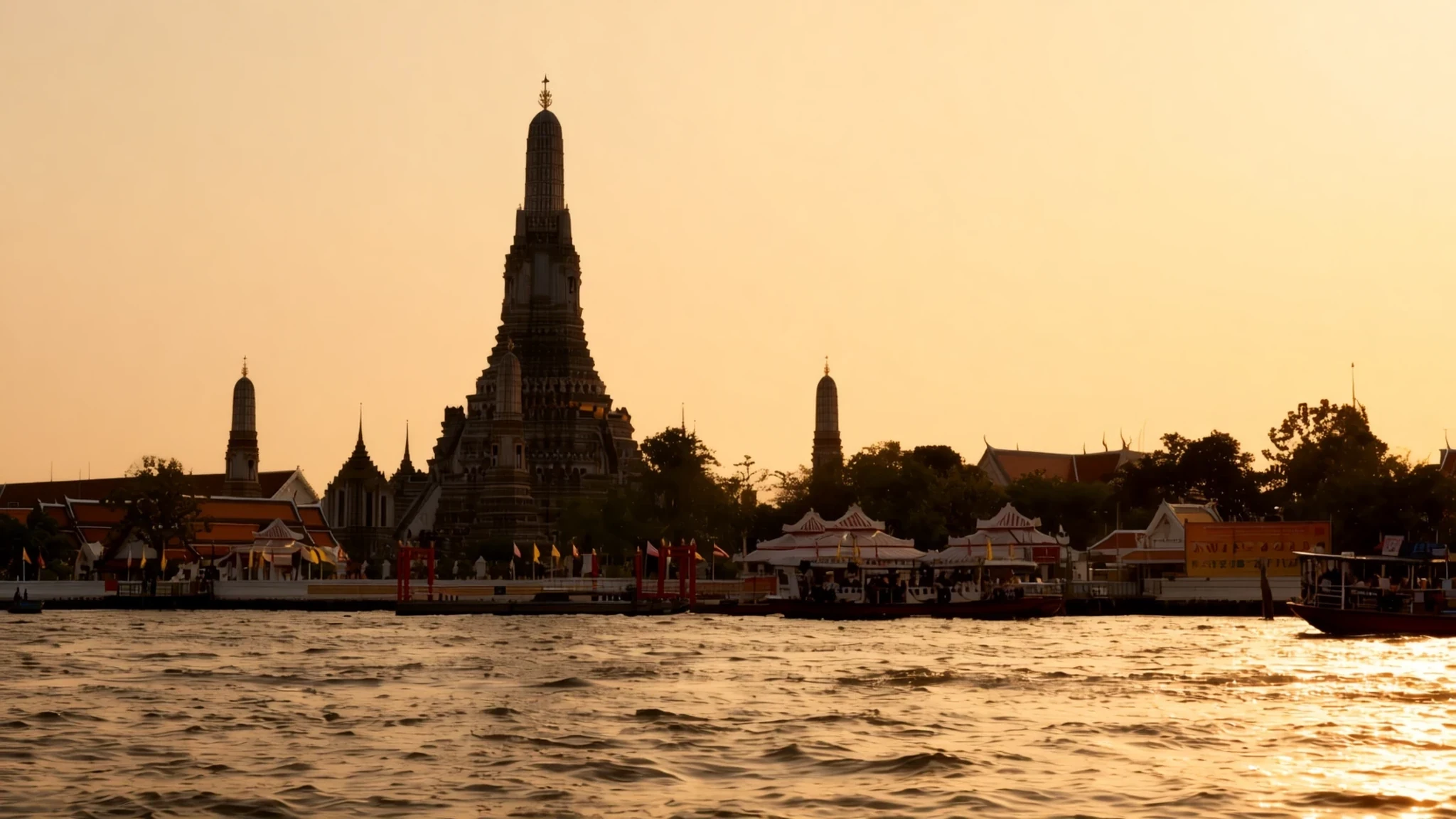
Wat Arun, the Temple of Dawn, is Bangkok's best-known riverside spire, and it looks its finest from the water.
The place
Wat Arun stands on the Thonburi bank of the Chao Phraya River, in the Bangkok Yai district, a short crossing from the busier eastern side of the city. Its name comes from Aruna, a figure in Hindu tradition who personifies the first rays of the sun, which suits a temple whose best-known feature is a tall central spire catching the morning light. The complex blends influences. Indian and Hindu symbolism sit alongside Buddhist meaning and a distinctly Siamese character, and the result feels less like a single style than a conversation between several traditions. The central prang rises in tiers, its upper sections and sides decorated with pieces of coloured ceramic pressed into the stucco, and it changes colour through the day. It glows most in the early morning and again in late afternoon. Around the main tower are smaller prangs, halls and shrines, and the whole site feels calmer and a little more weathered than the gilded temples across the river. It is a working temple, with monks, incense and steady but manageable crowds rather than the feel of a museum. Go early, when the stone is cool and the river is quiet.
Its story
A Buddhist temple stood on this site long before the present spire existed, in the Ayutthaya period, when it was known as Wat Bang Makok. Over time, the temple came to be called Wat Makok, a shorter form named for the village where it stood. In Thai, makok is the word for Spondias pinnata, a tree. The temple appears on French maps from the reign of King Narai, 1656–88, a detail recorded by the historian Prince Damrong Rajanubhab. The fall of Ayutthaya changed its fortunes. When King Taksin made the riverside town of Thonburi his capital in 1767, he renamed the temple Wat Chaeng. According to one tale, he pledged to rebuild the temple once he had passed it at daybreak, and he kept that promise. For a time the Emerald Buddha was housed here before it was moved across the river to Wat Phra Kaew in 1785. The temple then lay neglected until King Rama II had it repaired and drew up plans for a pagoda of about 70 metres. The main prang was finished under Rama III in 1851, after nine years of building. In 1858 the French explorer Henri Mouhot recorded the temple in his travel journals and admired its spire, which he judged the first sight of the capital for anyone coming upriver from the sea. Later kings made it a royal temple of importance, and the spire remains its defining image.
What to see
- The main prang
The central spire is the reason most people come. Its stepped tiers narrow towards the top, and the climb to the lower terraces gives a close view of the decorated surfaces. Look for the porcelain fragments set into the walls, which catch the light differently at each hour. Plan to walk slowly around the base, since the steep stairs are easier to manage in the cooler part of the day.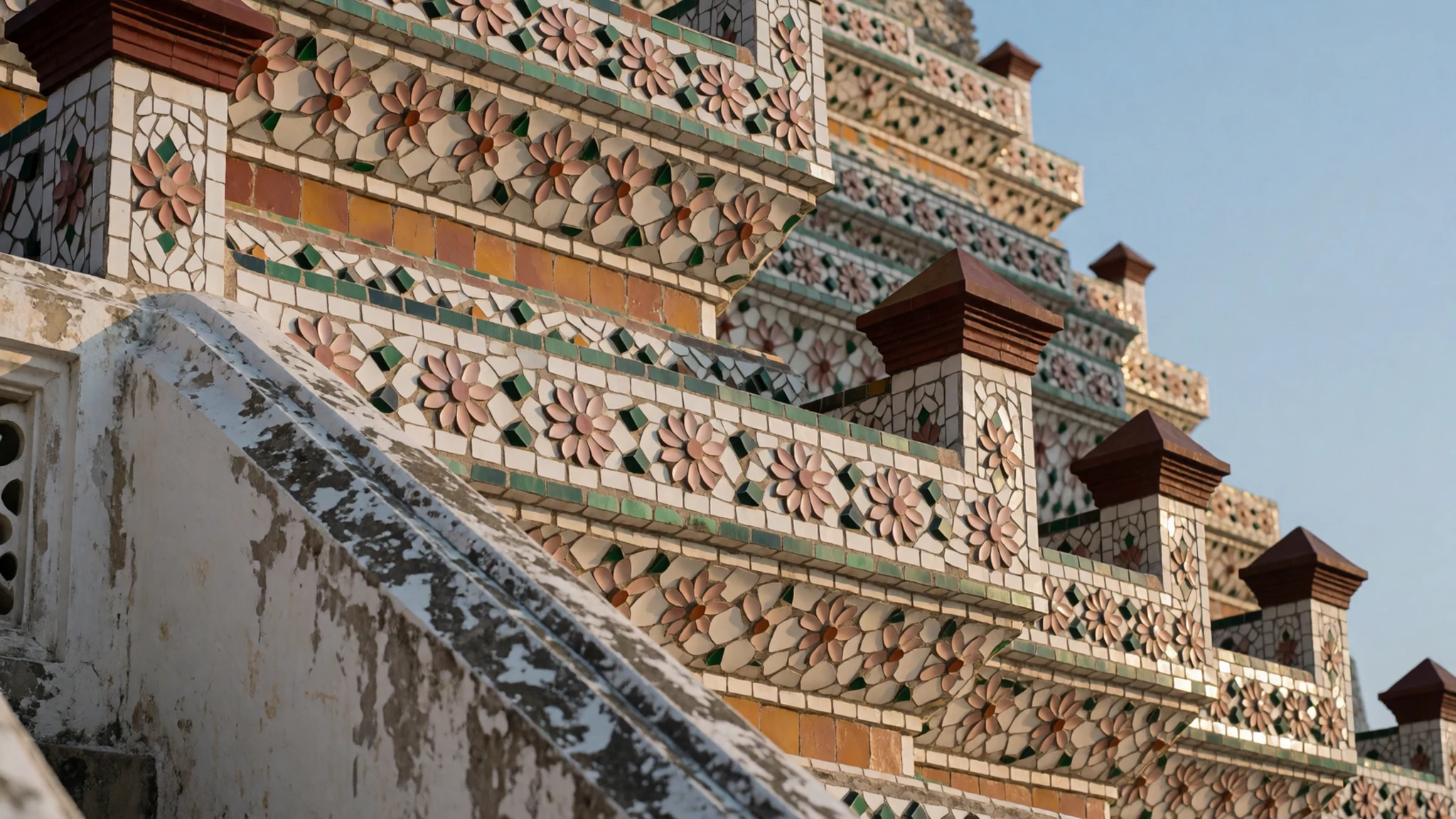
- The river view from the ferry
The temple is at its most striking seen from the Chao Phraya itself. A public ferry crossing from the eastern side gives a slow approach with the spire rising behind the riverbank, and the boat traffic on the water adds to the scene. Early morning and late afternoon make the best light for photographs, and the crossing is inexpensive.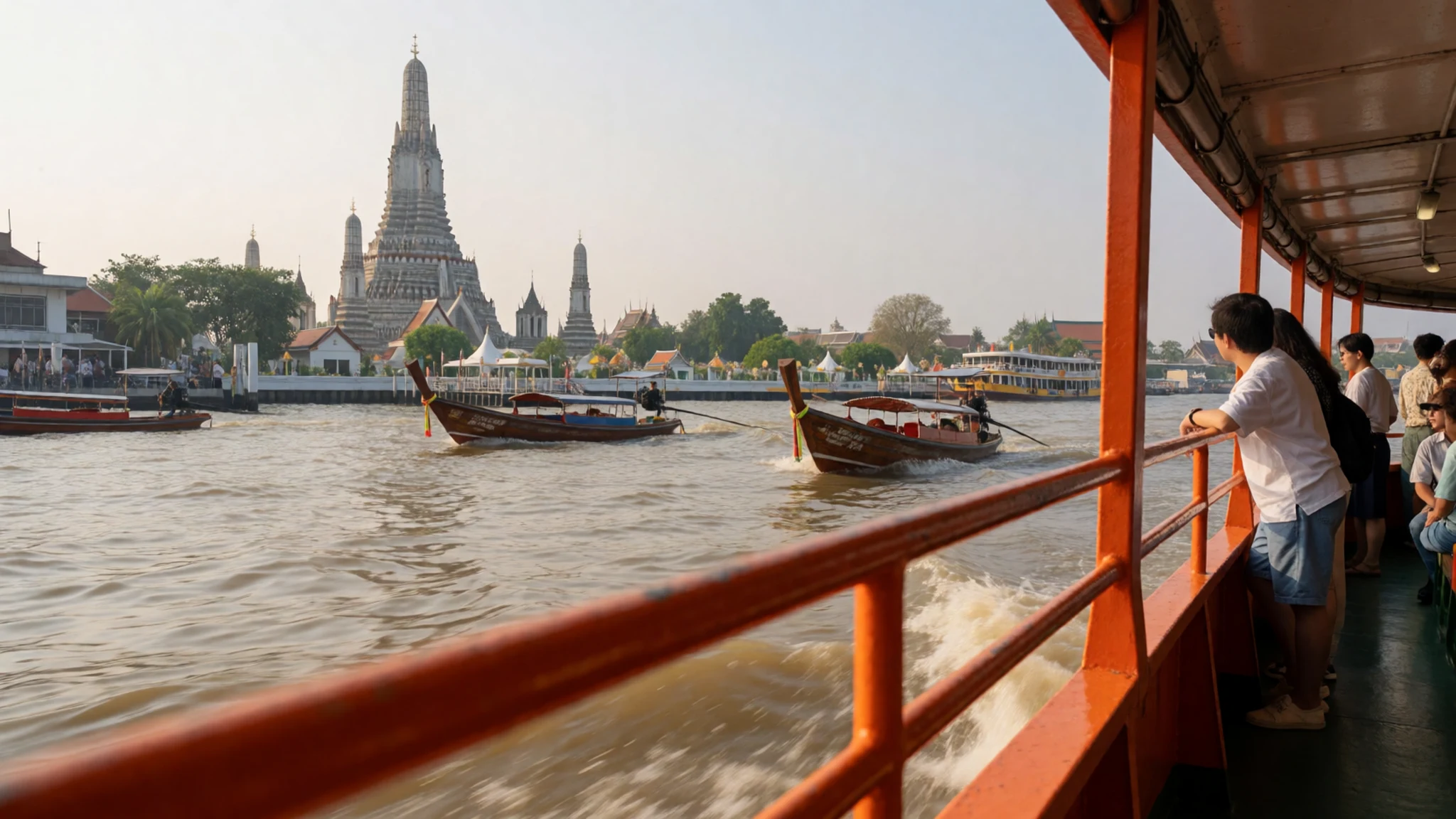
- The yakshas on the prang
Around the base of the prang are ancient Chinese soldiers and animals, while the guardian giants known as yakshas stand at the entranceway to the ordination hall. They are sculpted in a muscular, animated style and carry an air of protection. Compare the figures on the main tower with those on the northeastern secondary prang, where the detail is equally fine. Take time to look at the faces and posture, which show how the carving was built up in layers.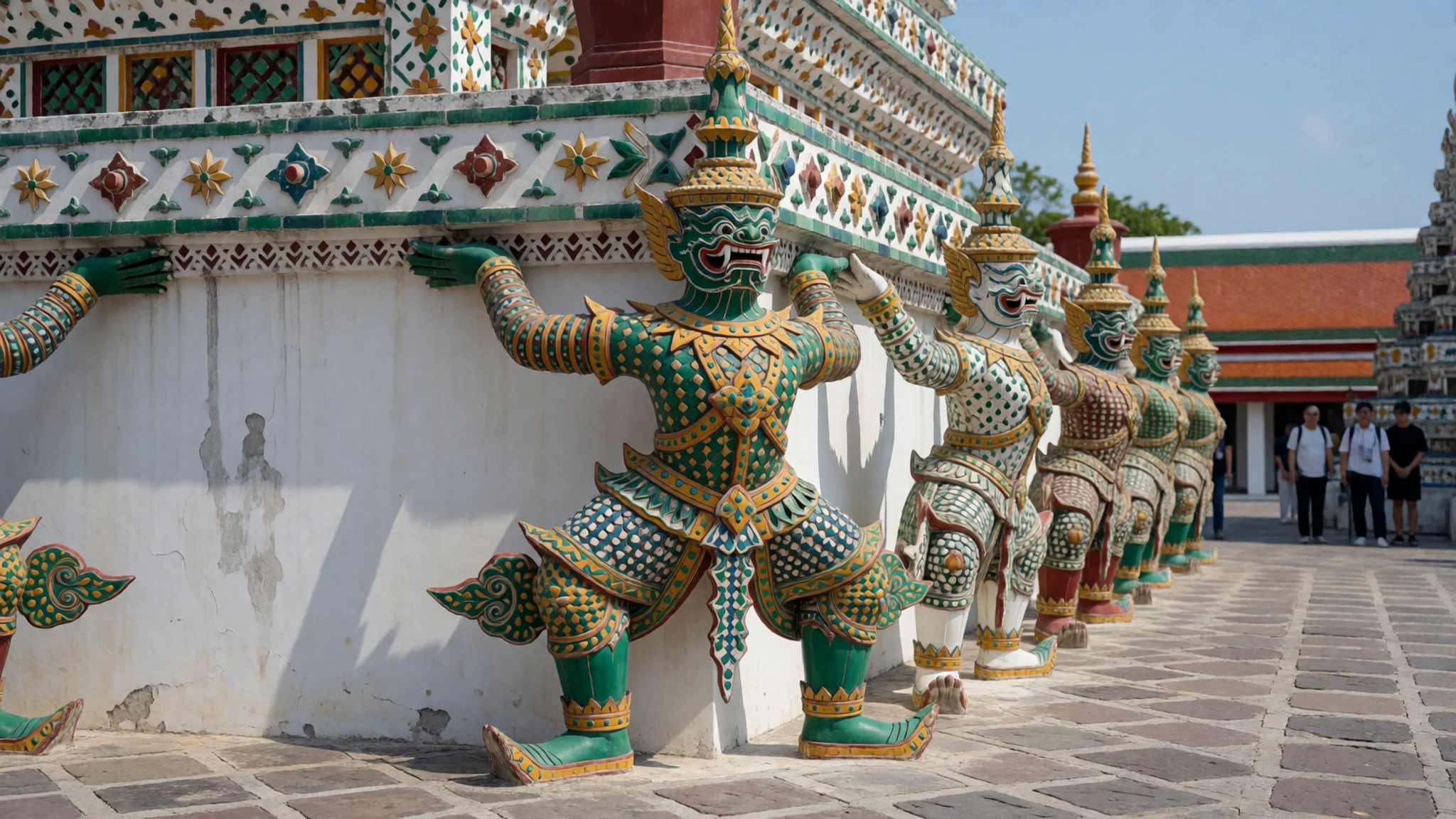
- The temple as drawn in 1858
Mouhot's 1858 drawing of the great tower is a useful reminder of how the spire looked to a nineteenth-century visitor. The proportions are recognisable, though the drawing is more schematic than a photograph. Compare it with the view from the river today to see what has changed and what has survived across more than a century and a half.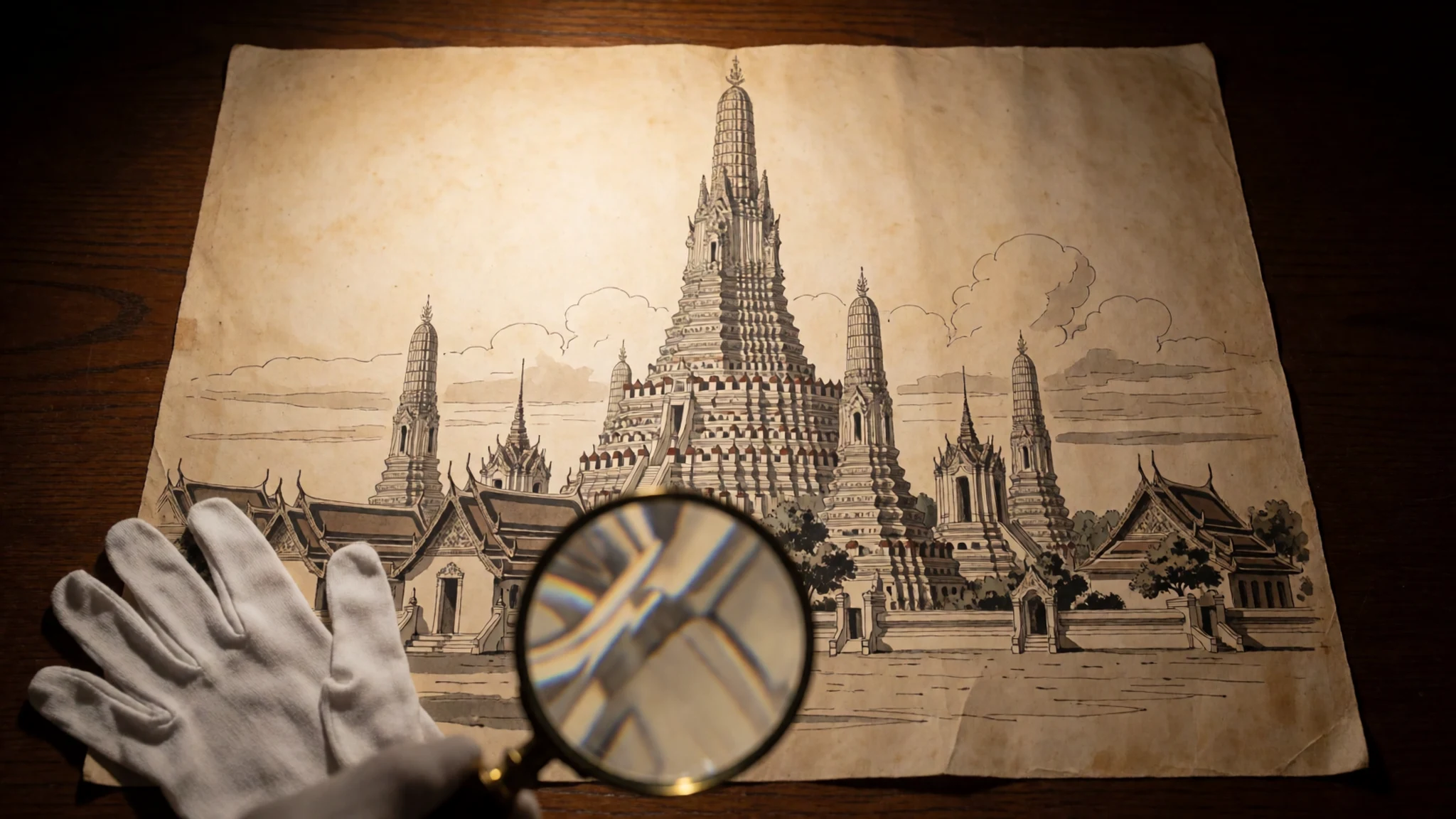
Culture
Wat Arun is an active Buddhist temple, and the rules you would follow at any Thai wat apply here. Visitors are expected to dress modestly, with shoulders and knees covered, and to take off shoes before stepping onto the raised floors of the halls and shrines, where slippers are usually left by the entrance. Inside the halls, the Buddha images are objects of worship, so keep your voice low, avoid turning your back on them when posing for photographs, and never climb on or touch the statues. Monks and novices are part of daily life at the temple. Photographing them is acceptable at a distance, but ask first and do not pose them. Donations are customary and are usually left in the boxes provided, not handed to individuals. Sitting with your feet pointing toward an image is considered disrespectful, so tuck your legs under you or sit on the floor facing the front. Watch for the steps of the prang, which are steep and often crowded, and be patient when people stop to pray. Take off your shoes and cover your shoulders before entering any hall, even if the temple is busy and the rules seem unevenly enforced.
What to wear
The traditional dress of Thailand is built around silk and cotton. Women have long worn the pha sin, a tube skirt wrapped and tucked at the waist, often woven in silk with patterned borders and used for formal occasions. Men traditionally wore the chong kraben, loose wrapped trousers, and a shirt. Thai silk, with its shimmering weave and bold borders, is still the textile most associated with ceremony, and it is worn at temple festivals and royal events. Day to day, people in Bangkok wear whatever suits the heat: light cotton shirts, jeans, dresses and sneakers. Uniforms are common among students and office workers. Some older people still wear the pha sin or sarong style at home and at the temple. For a visit to Wat Arun, dress for heat and for a religious site. Choose loose cotton or linen, with sleeves and a hem that cover shoulders and knees, and a long skirt or light trousers. Slip-on shoes or sandals are a good idea, because you will take them off at every hall, and the stone floors are hot in the sun. A hat, a scarf for your shoulders and a light layer for the air-conditioned spaces will serve you well.
What to eat
- Boat noodles — Noodle stalls near the river piers on the Thonburi bank
Small bowls of rich, dark broth with thin rice noodles, pork or beef and a little blood curd or meatball. They are served in small portions so you can order several. The dish is strongly associated with river life and with the Thonburi side of the city, where stalls cluster near the piers.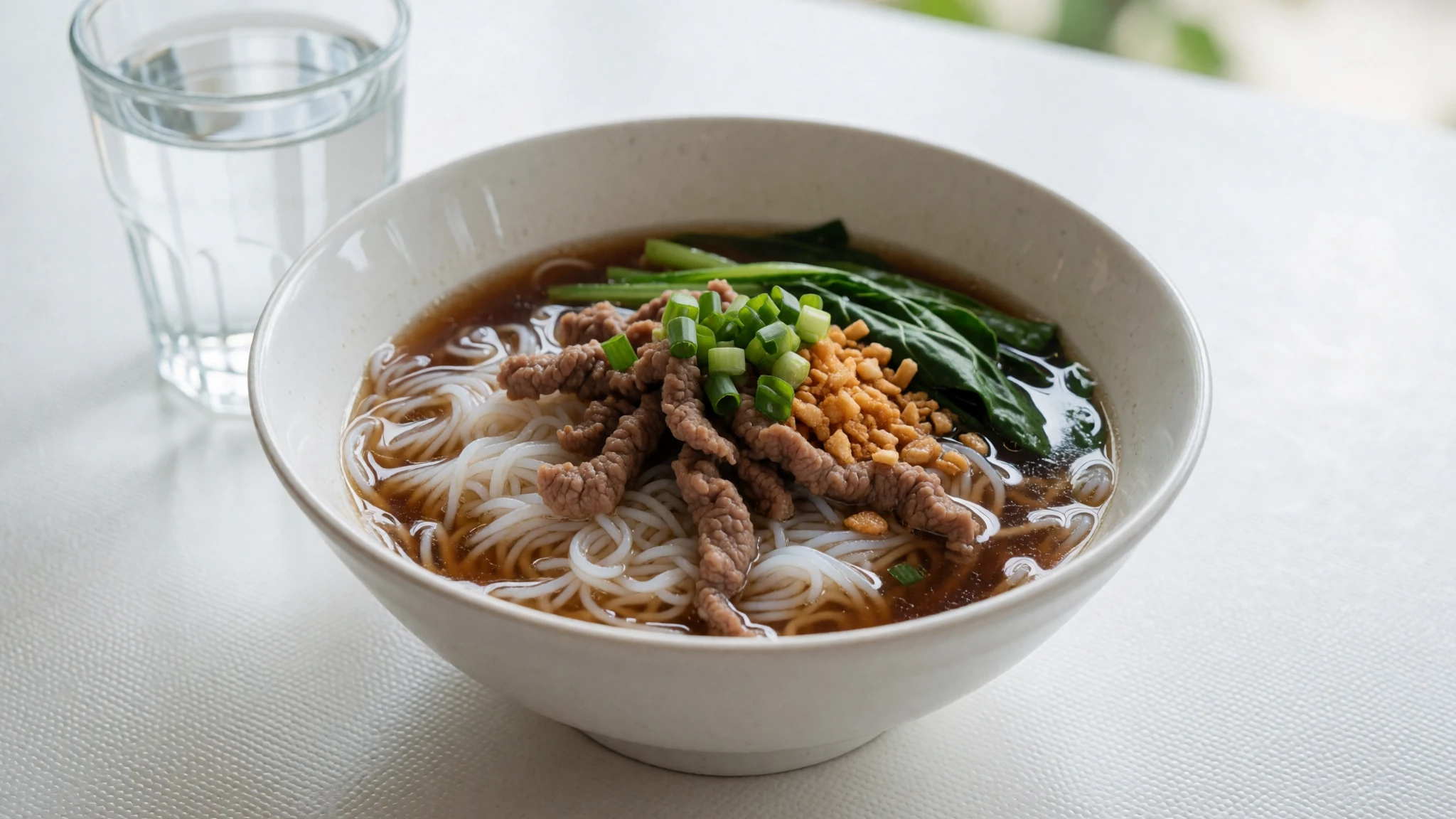
- Khao man gai — Any street cart or small eatery near the temple gates
Poached chicken served on rice cooked in its own stock, with a sauce of ginger, garlic and chilli and a bowl of clear soup. It is a simple, filling breakfast or lunch. Vendors often sell it from carts and it is one of the easiest dishes to find near the temple.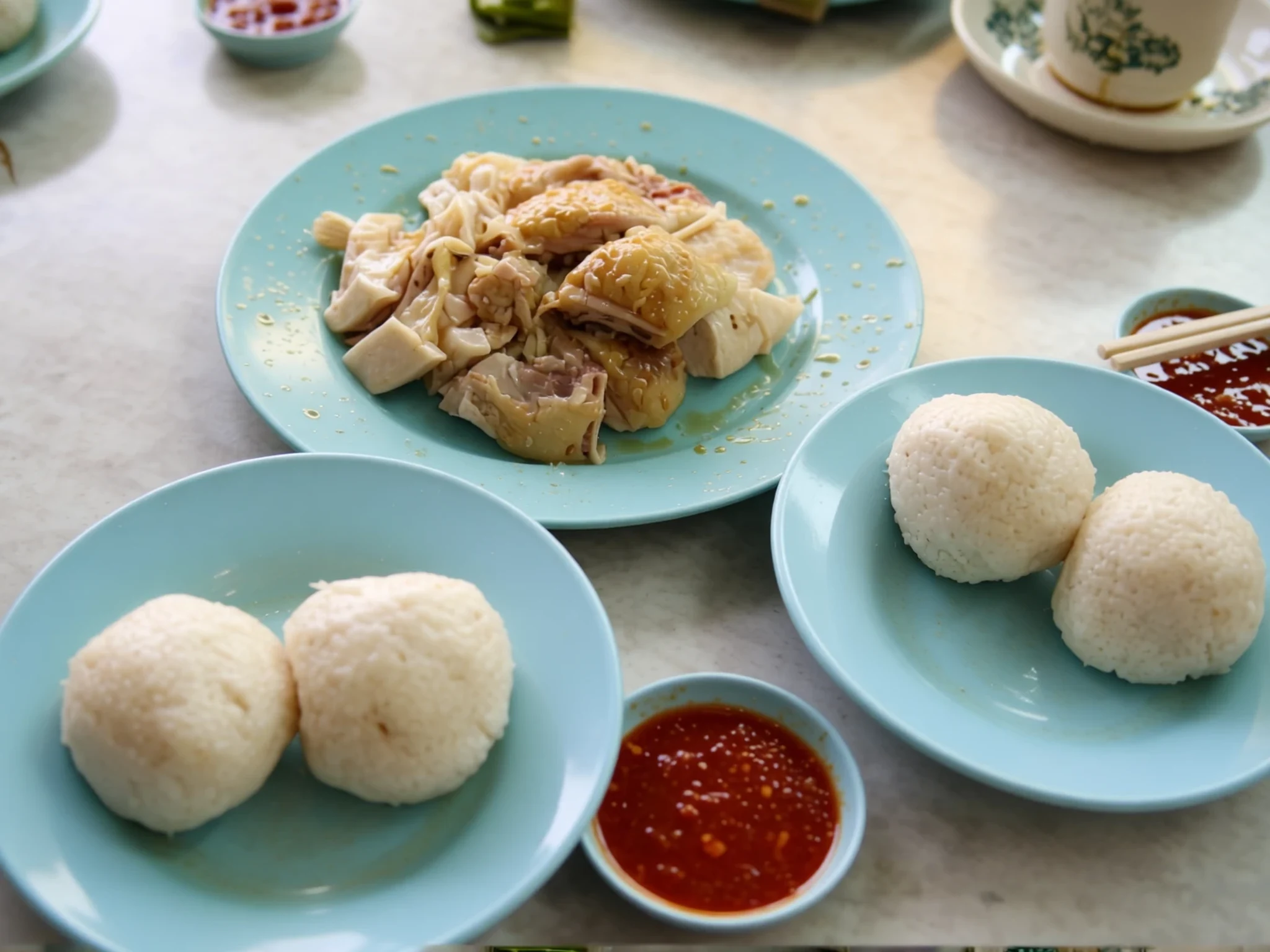
- Som tam — The morning market and the food stalls on the side streets
Shredded green papaya pounded with chilli, lime, garlic, fish sauce and palm sugar. It is hot, sour and crunchy, and it pairs well with grilled chicken and sticky rice. Ask for less chilli if you are unsure of the heat, since vendors will adjust it.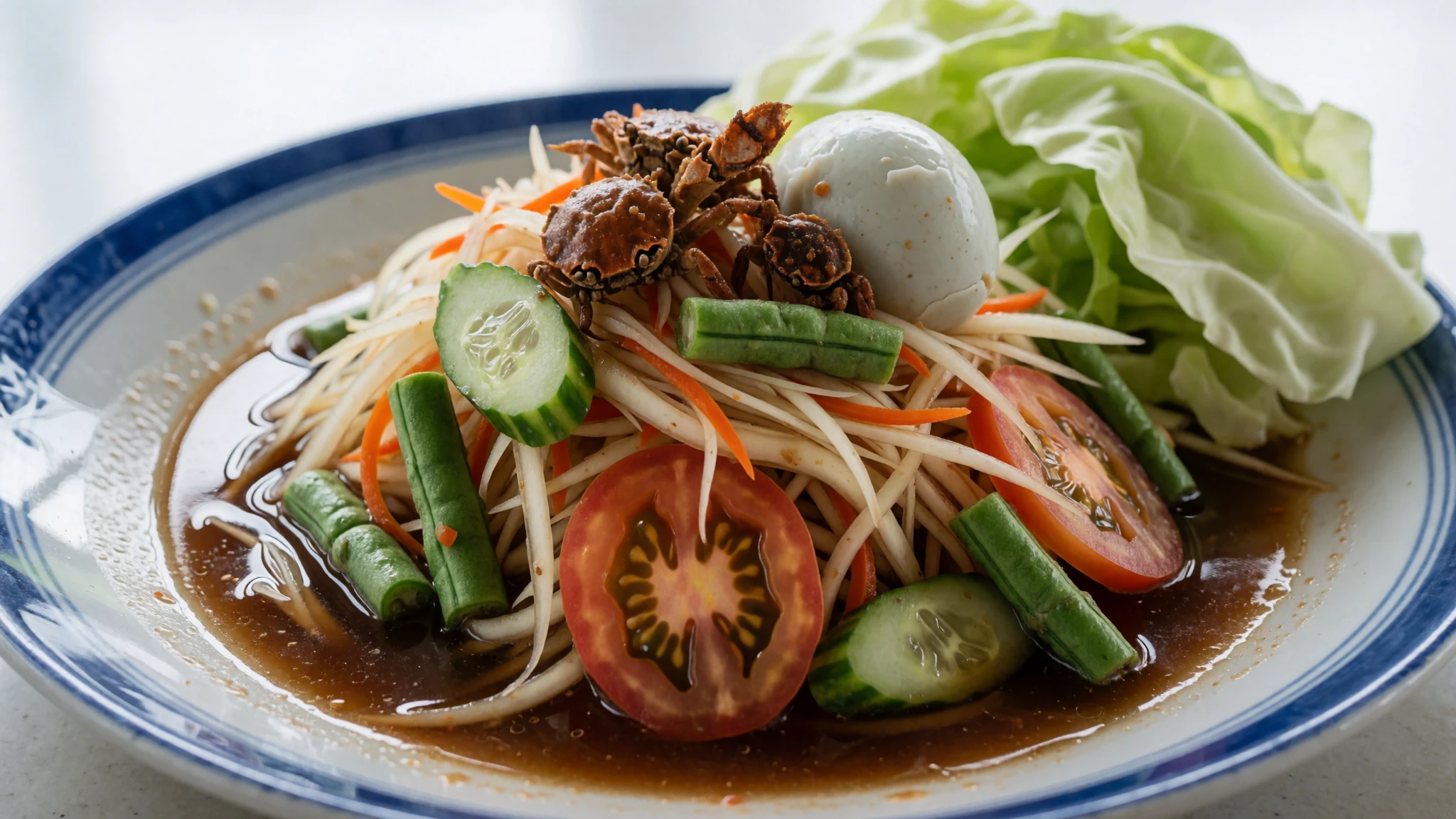
- Grilled pork skewers — Street grills near the riverside and evening food stalls
Thin pieces of marinated pork grilled over charcoal and brushed with a sweet glaze. They are often eaten with sticky rice and a dipping sauce. Smoke from the grills is a good guide to where the stalls are, and they are usually busy in the evening. - Mango sticky rice — Dessert stalls at the morning market
Sweet glutinous rice soaked in coconut milk and served with slices of ripe mango and a little salt-tinged coconut cream. It is a dessert Thais eat through much of the year, and the best versions are sold fresh by stalls that make a batch in the morning.
Plan it
Best time. November to February, when the air is cooler and drier and the temple is easier to explore. March to May is the hottest stretch, with April the peak, and the rains run from May to October, peaking in September, bringing short heavy showers that can disrupt river trips.
How long. 1–2
Getting there. Fly into Suvarnabhumi airport, then take the airport rail link or a taxi into the city. From central Bangkok, cross the Chao Phraya by a public ferry from a river pier to reach the temple, which is the quickest and most pleasant route.
Budget. low
Tips
- Go early in the morning, before the midday heat and the tour groups arrive
- Carry small notes for the ferry, for drinks and for donation boxes
- Bring water and a hat, since the site is open and the sun is strong
- Check the temple's official website before you go for any current opening arrangements
- Combine the visit with a river walk and a meal on the Thonburi side
Etiquette
- Cover shoulders and knees and take off your shoes before entering any hall
- Do not touch or climb on the Buddha images, and keep your voice low
- Ask before photographing monks or novices, and never pose them
Nearby
Sources
- Wikidata Q724970 (CC0)
- Wikipedia: Wat Arun (rev 1381578196) (CC BY-SA 4.0)
- Wat Arun from Chao Phraya River, Diliff (CC BY 3.0)
- Main prang of Wat Arun, Mastertongapollo (CC BY-SA 4.0)
- Siege of Bangkok 1688 fortress map, Jean Vollant des Verquains (Public domain)
- Wat Arun in 1858, Henri Mouhot (Public domain)
- Wat Arun and Royal Barge Suphannahong in BE 2510, Government Public Relations Department (Public domain)
- Bangkok Wat Arun 1976, Gerd Eichmann (CC BY-SA 4.0)
- 024 Yakkhas supporting the Prang, Photo Dharma (CC BY 2.5)
- Wat Arun northeastern prang yakshas, Shesmax (CC BY-SA 4.0)
- Wikivoyage (CC BY-SA 4.0)


