Wadi Shab
Wadi Shab, Oman
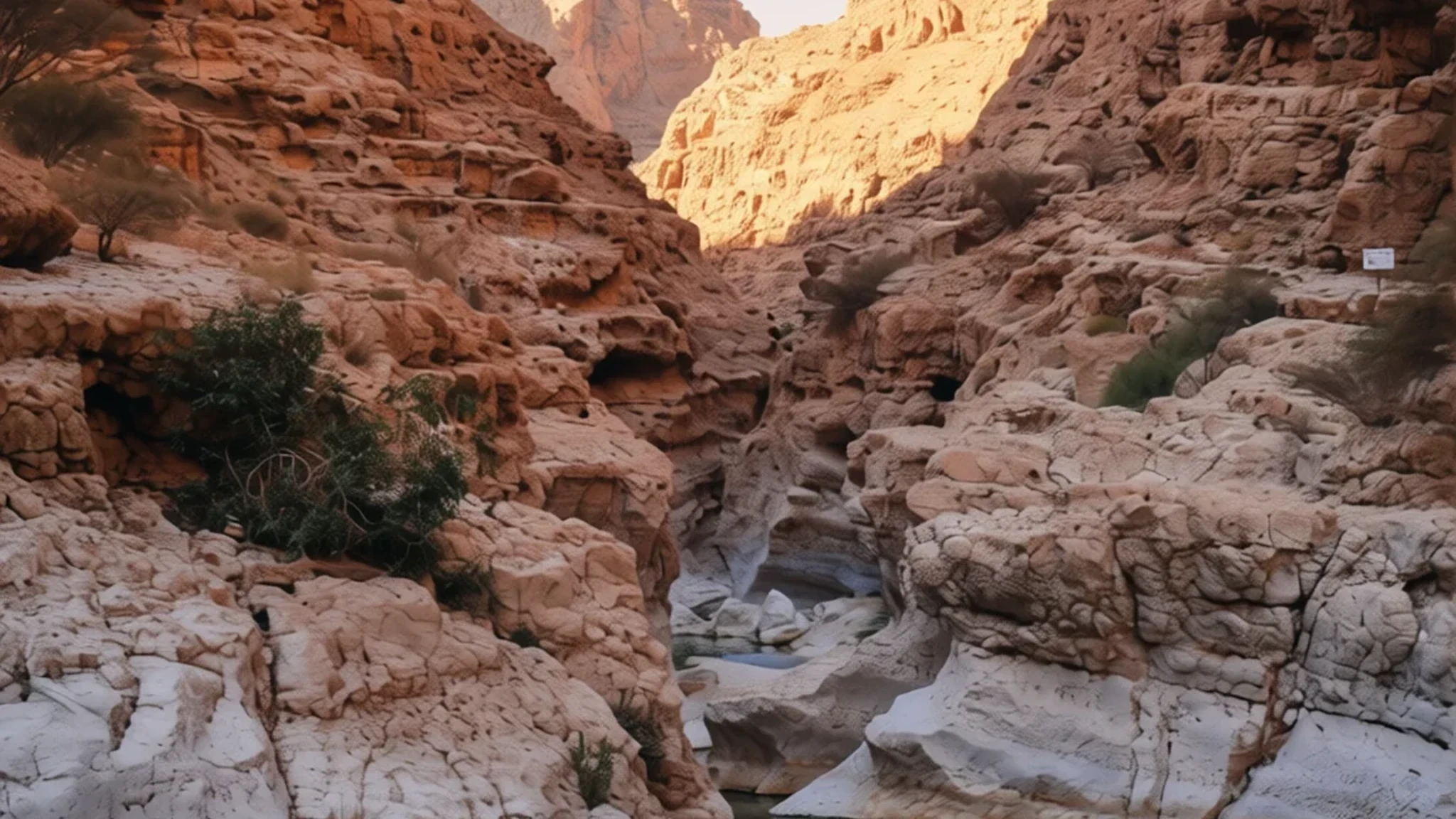
Wadi Shab is a narrow limestone gorge in northern Oman, where a spring-fed stream fills turquoise pools that are reached on foot, with short swims along the way.
The place
Wadi Shab is a wadi, the Arabic word for a valley that carries water after rain, cut into the limestone mountains of northern Oman. Here the water is more dependable than in most wadis. A spring-fed stream runs through the gorge for much of the year, filling a chain of pools whose colour shifts from pale green to deep blue with depth and light. The walls rise close on either side, and in places the sky narrows to a bright strip overhead. Date palms and small vegetable plots line the lower valley, where families have farmed beside the same water for generations.
The gorge lies in the Sharqiyah region, inland from Muscat, and is usually reached by car from the capital. There is no ticket office and no paved path, so the experience is informal and physical. A trail follows the streambed over rock, up small ledges, through shallow water and sometimes across deeper pools. A short boat crossing near the start carries walkers over the deeper stretch, and boatmen work the route through the day.
Wadi Shab works best as a day outing rather than a place to linger. Weekends bring the most visitors, and the pools near the entrance are busiest around midday. The valley is a working landscape as well as a playground, since its water feeds farms downstream and its banks are part of village life. The gorge asks for respect of the weather upstream as much as of the water underfoot, because a storm in the mountains can raise the stream quickly.
Its story
The valley's story is really the story of water. Long before the gorge drew visitors, the limestone mountains above it channelled rain into the wadi, and villages below learned to share that flow through irrigation channels known in Oman as falaj. These channels carried water to date palms and vegetable plots, and settlements in the lower valley grew up around them. The rules about who could draw water and when were kept by the community itself rather than by any office.
The gorge was also a route for herders and farmers moving between settlements, and its pools provided drinking water and a place to wash. Geology shaped the rest. Limestone dissolves slowly under running water, so over long periods the stream carved narrow channels, smoothed rock steps and left pale walls streaked with mineral colour. The pools and their clear water are the product of that slow work.
Once roads improved, the valley became a day destination for families, walkers and photographers, and that changed its rhythm. The farms still depend on the same stream, and the valley is now shared between village life and visitors. Its future depends on how well that balance holds, especially when heavy rain falls in the mountains and the water rises fast through the gorge.
What to see
- The village crossing — Lower valley, at the trailhead
Before the gorge proper, a short boat ride carries walkers over a stretch of deeper water near the lower valley. The boatmen are local men who know the current, and the crossing is the traditional way to reach the start of the path. Expect the boat to be busy at weekends, and keep valuables in a dry bag because spray is common on the crossing.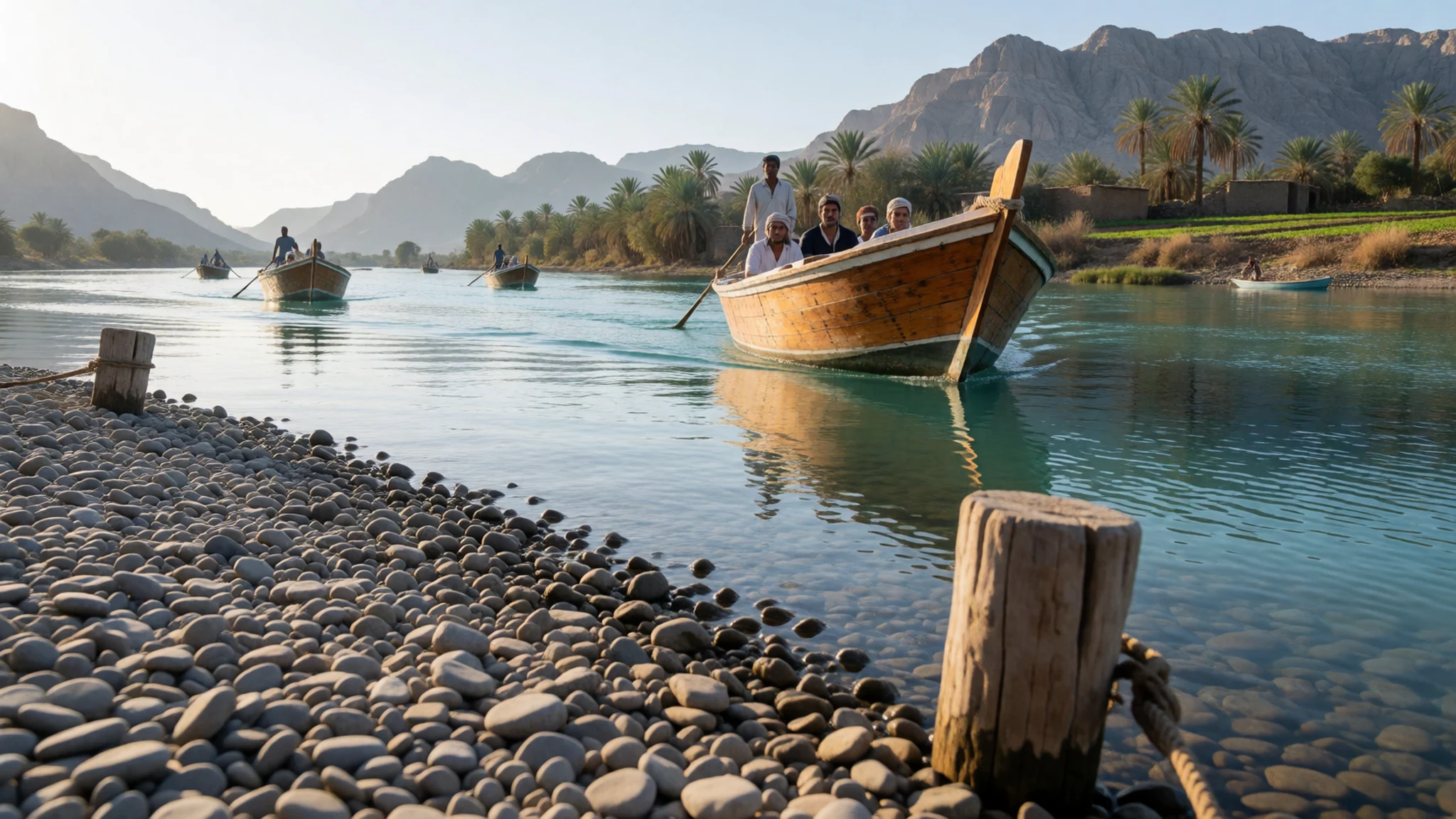
- The first pools — Lower gorge, just beyond the crossing
The first pools lie a short walk past the crossing, where the stream spreads into clear basins between pale rock steps. The water is cool and generally shallow enough to wade, and the colour is the valley's signature turquoise. Small fish and amphibians live in the pools, and palms shade the banks. It is the easiest section to enjoy without swimming and the busiest around midday.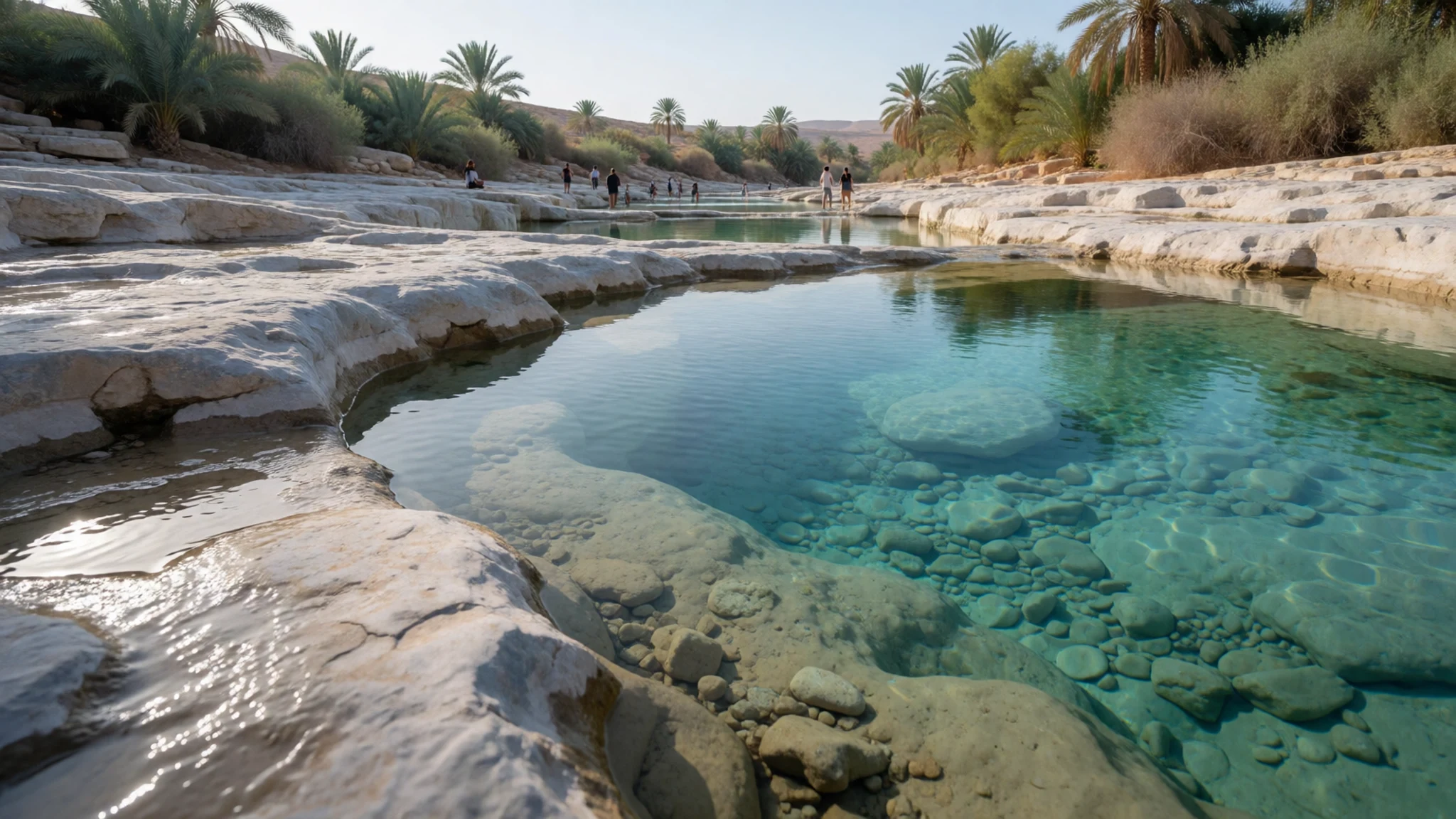
- The middle gorge — Central gorge
Further in, the walls close together and the path climbs over boulders and ledges. Light reaches the stream only in brief patches, so the rock stays cool and the sound of water carries. Several pools here are deeper and need swimming or a careful wade along the edge. Sturdy sandals with good grip work better than flip-flops in this section, which can be slippery.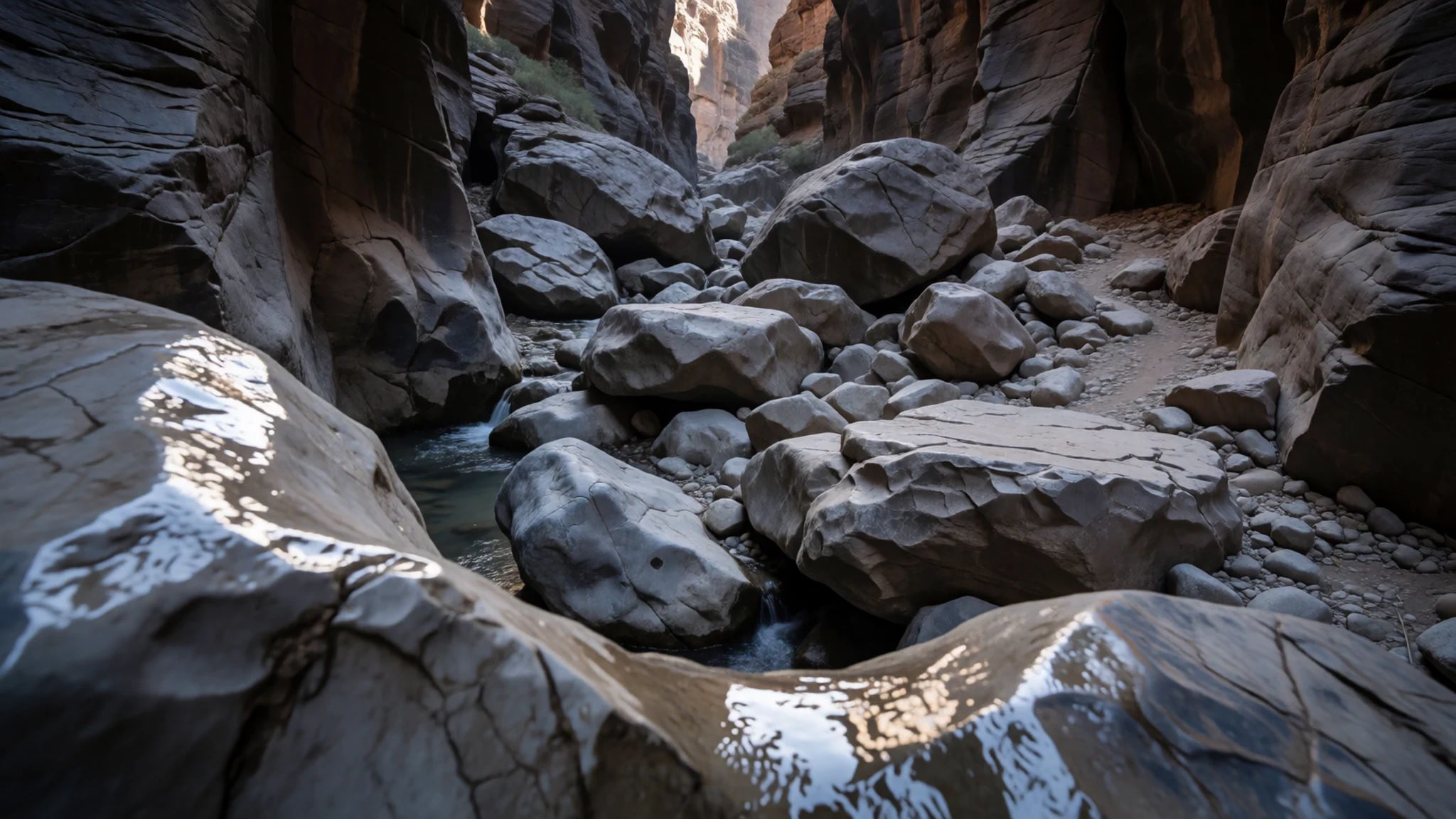
- The cave and waterfall — Upper gorge
Near the far end, the route leads to a cave passage where the gorge narrows, and a waterfall drops into a pool when the stream runs well. Reaching it involves climbing, swimming and some squeezing through rock, so it suits people comfortable in water and on uneven ground. Water levels change quickly after rain, and the approach can become unsafe, so check conditions locally before setting out.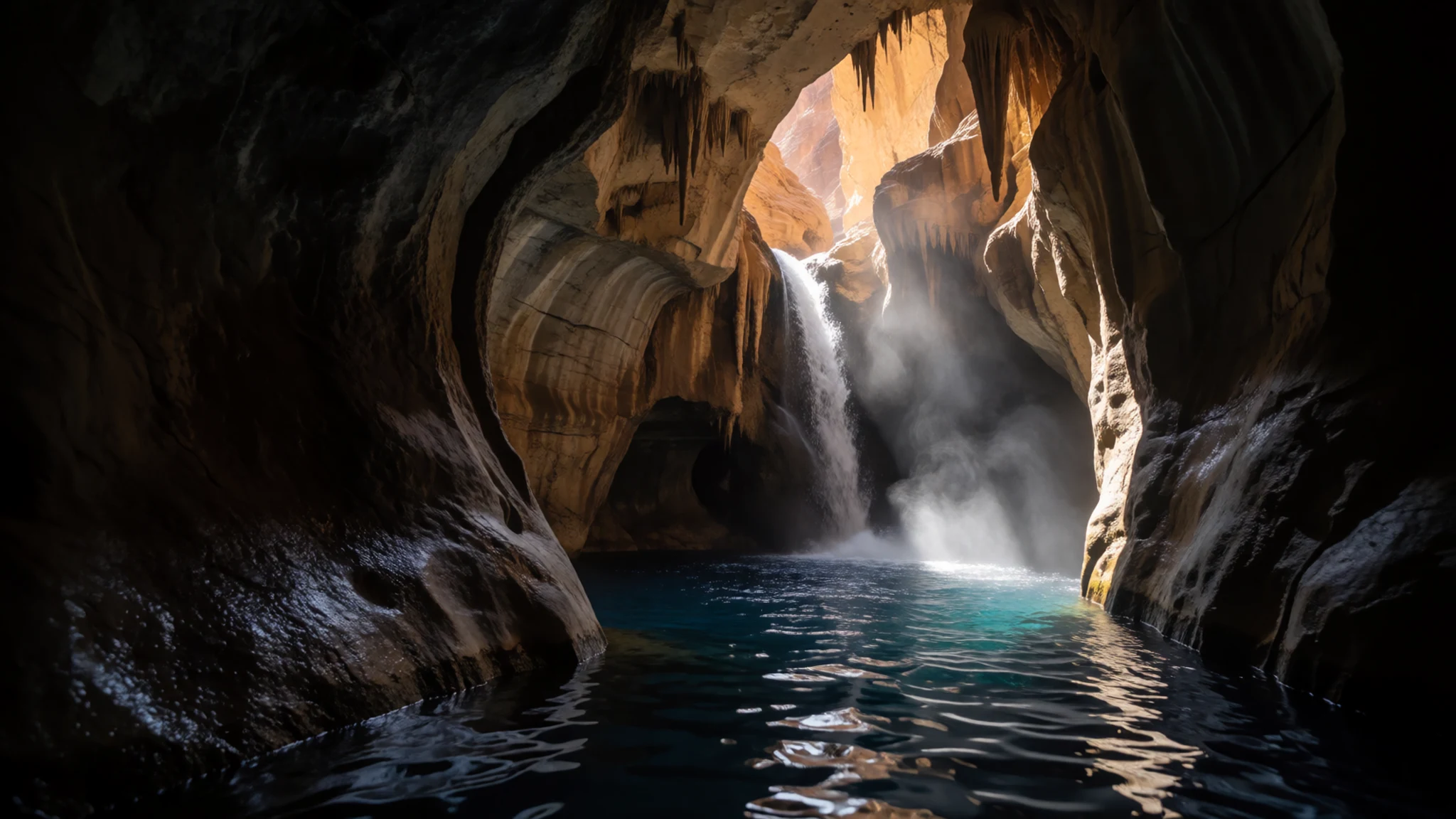
- The lower palm groves — Lower valley, near the village
Below the entrance, the valley opens into palm groves and small irrigated plots. This is the working side of the wadi, where water is shared through channels that have fed farms for generations. Walk slowly through the groves, stay on the paths between fields, and ask before entering private land. It makes a quiet counterpoint to the pools above.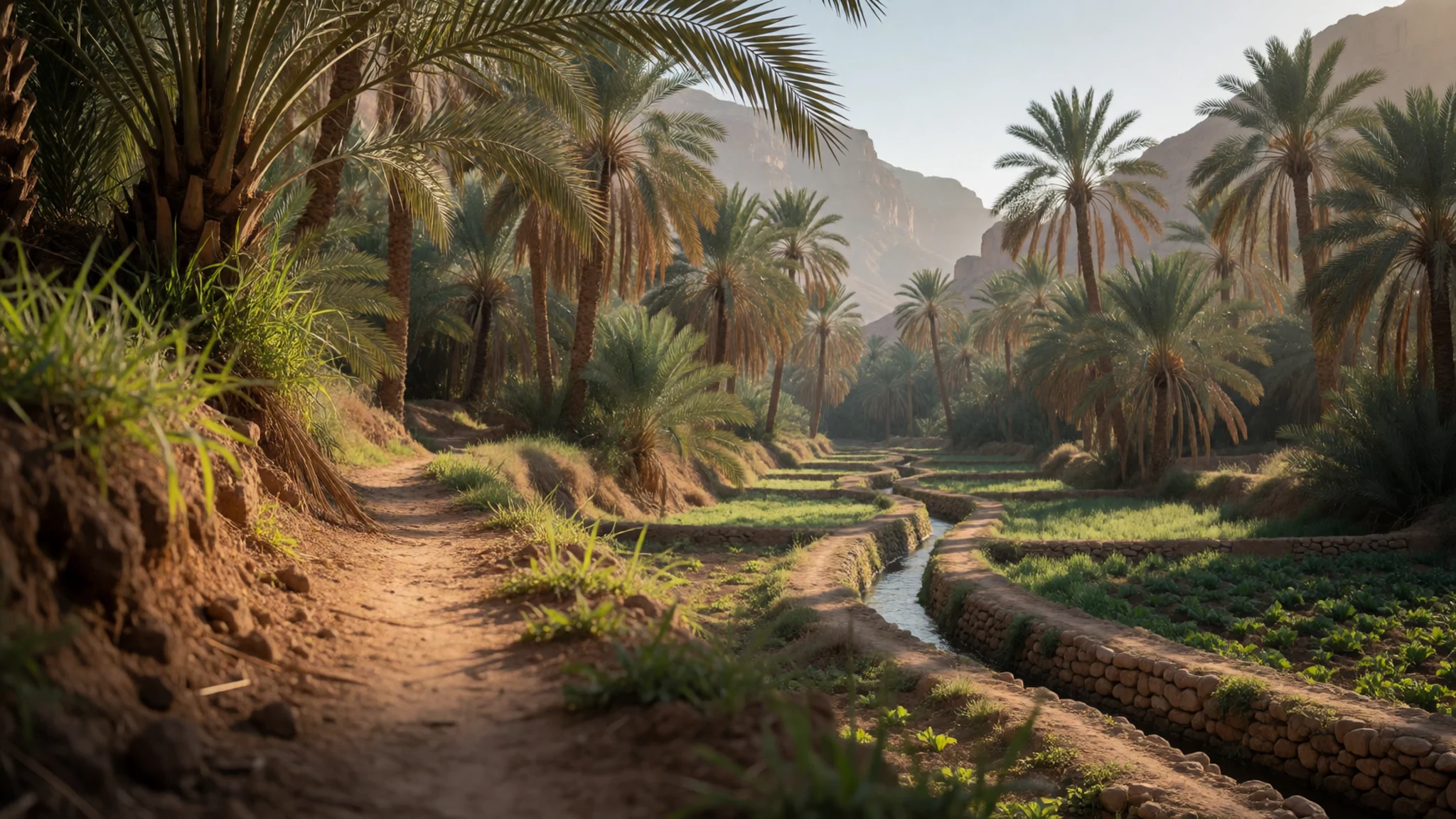
Culture
Wadi Shab lies in a country where Islam shapes daily life, and the rhythm of prayer and family is visible in villages across the region. Life in the lower valley centres on farming and family, and the homes and fields along the water are part of the scene that visitors pass. Greetings matter. A handshake is usual between men, and a warm greeting with a polite word about family or health goes a long way in any village. Public displays of affection are best kept out of sight, and voices stay moderate near homes and places of worship. Swimming and wading are common, but most people dress modestly in water, so a t-shirt and shorts or a loose cover-up is more comfortable than a bikini. Photographs of people, especially women and children, should only be taken after asking, and some families will prefer not to be photographed at all. Shrines and mosques call for covered shoulders and knees, and shoes come off at mosque doors. Ask before photographing anyone in the village and carry all your rubbish out of the valley.
What to wear
Traditional dress in Oman centres on the dishdasha, a long white or pale robe for men, usually worn with a rounded embroidered cap called a kumma. Men at formal occasions may also wear a khanjar, the curved dagger that marks ceremonial dress. Women traditionally wear the abaya, a long dark cloak, with a headscarf called a shayla or sheila, and many embroider their garments with gold or silver thread in local designs. Silver jewellery, including bangles and necklaces, has long been part of Omani dress. Everyday clothing is mostly cotton, with silk and metallic embroidery kept for celebrations.
In daily life, many men still wear the dishdasha and kumma, and many women wear abayas with colourful headscarves. Younger Omanis mix modern clothes with traditional pieces, especially in Muscat, and rural dress tends to be more conservative in practice.
Visitors to the wadi should dress for heat, water and rock. Loose cotton or linen that covers shoulders and knees is comfortable in the valley and respectful in villages, with a light cover-up over swimwear. Footwear needs good grip for wet stone, so water shoes or closed sandals that stay on are better than flip-flops. Bring a hat for the open stretches of the walk.
What to eat
- Shuwa — Larger restaurants in Muscat and Sharqiyah, and festival stalls
Slow-cooked meat, usually lamb, wrapped in leaves and cooked underground for many hours, then served at celebrations. It is most often found in larger restaurants and at festivals in Sharqiyah and Muscat rather than by the roadside. Ask a day ahead where you can.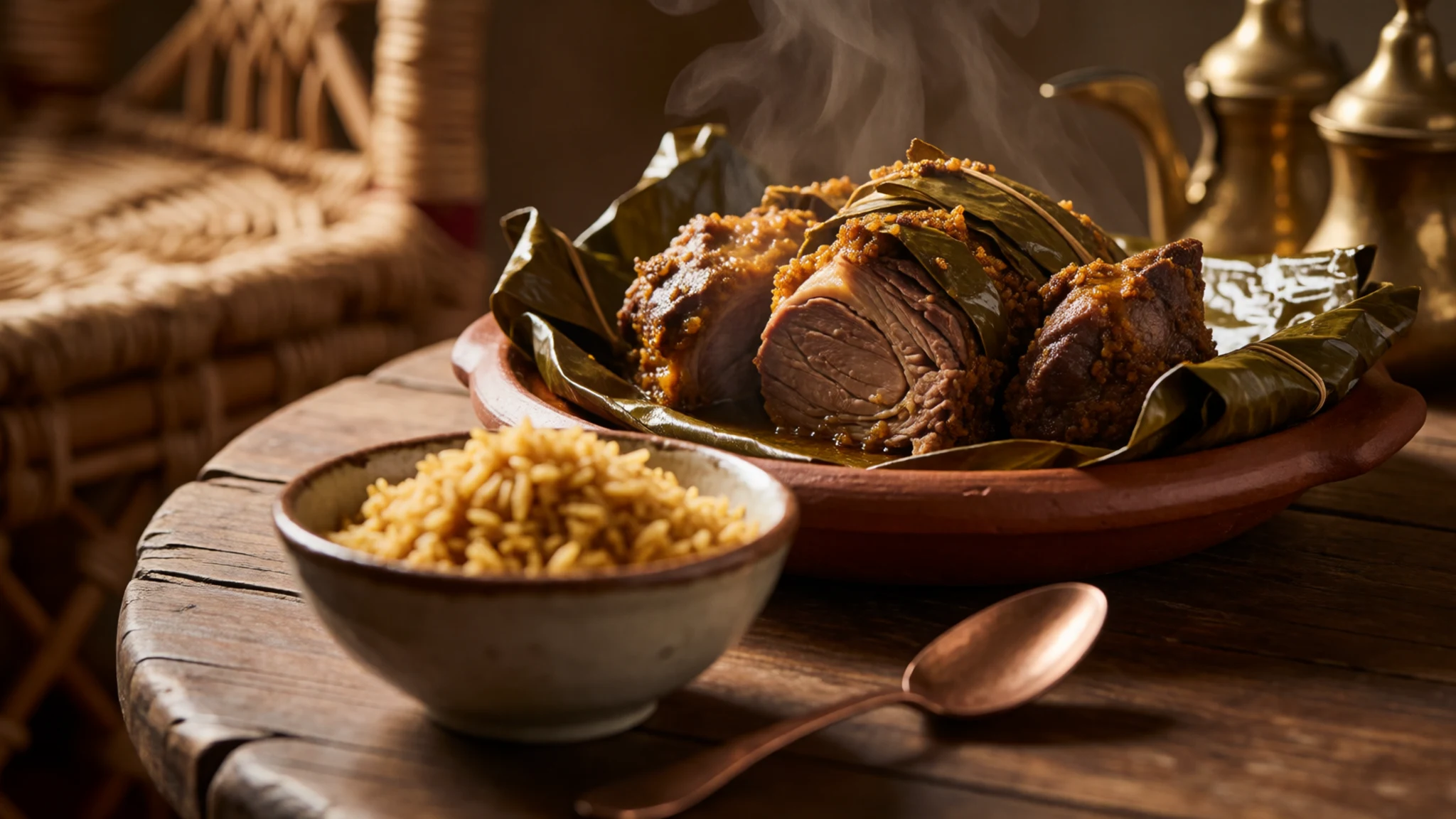
- Omani halwa — The old souq in Muscat
A dense, glossy sweet made from sugar, rosewater, ghee and nuts, often stirred for a long time in a large copper pan. Vendors cut slices for tasting, and it is a good thing to buy by weight to take on the walk.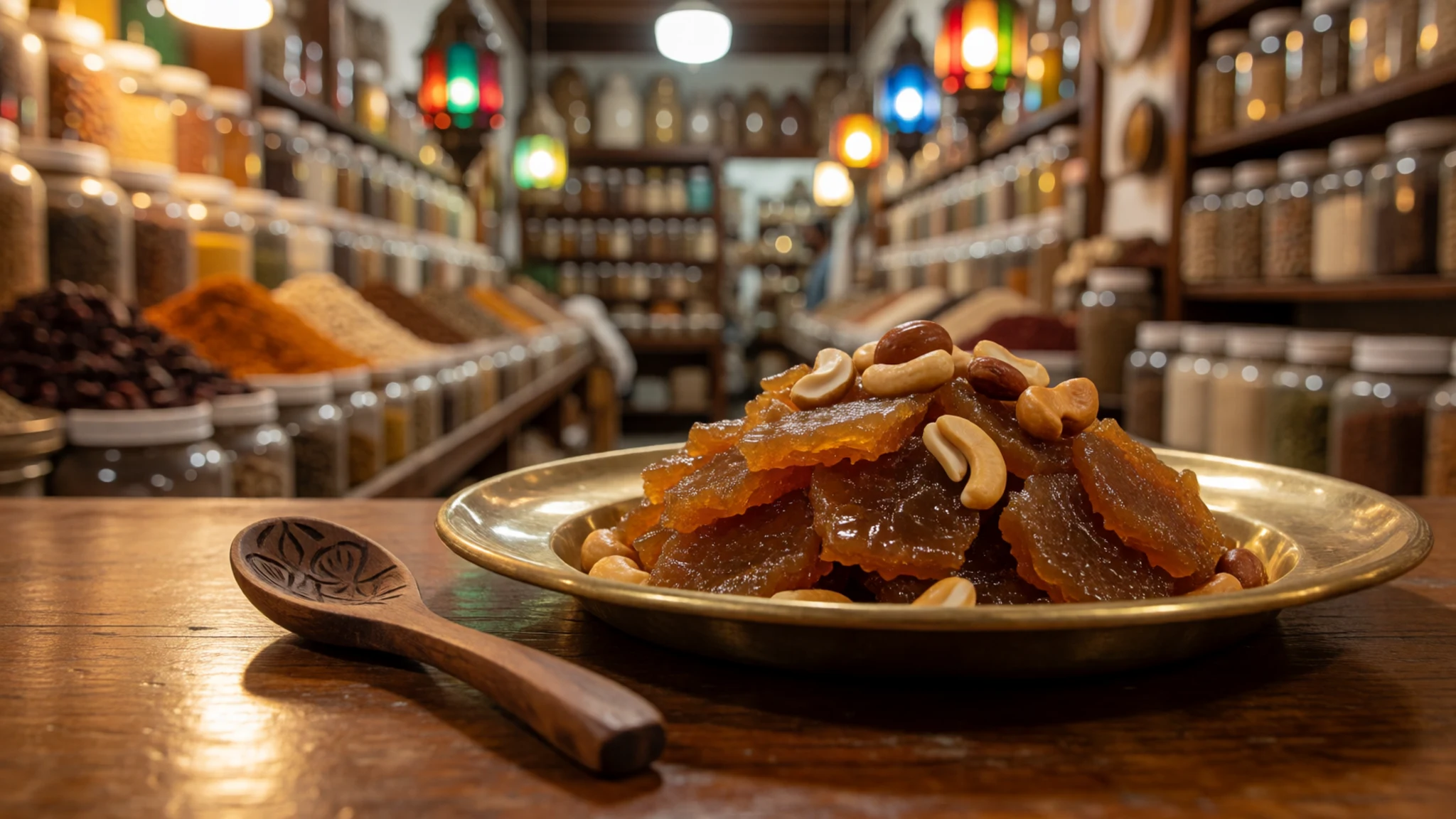
- Majboos — Local restaurants in towns near the valley
Spiced rice cooked with chicken, lamb or fish in a single pot, flavoured with dried lime, cardamom and turmeric. It is the everyday midday meal of many Omani homes and is served in small local restaurants across the country.
- Luqaimat — Sweet stalls in Muscat and village markets
Small fried dough balls, crisp outside and soft inside, soaked in date syrup and sometimes sprinkled with sesame. Sweet stalls sell them warm, and they make a cheap, filling snack between walks. - Kahwa — Roadside cafés and any majlis gathering
Lightly spiced coffee, pale and flavoured with cardamom and saffron, served in small handleless cups alongside dates. It is poured at gatherings and offered at roadside cafés as a sign of welcome.
Plan it
Best time. November to March, when days are mild and the water is cool but pleasant. Summer is very hot, and the gorge is best avoided at midday then. Check flood warnings after heavy rain, since the channel can stay dangerous for some time after a storm.
How long. 1–2
Getting there. Fly into Muscat International Airport, then take a hired car or an organised tour inland to the wadi in Sharqiyah. The last leg is the road to the trailhead village, followed by a walk along the streambed.
Budget. low
Tips
- Start early, before weekend crowds arrive
- Check weather and flood warnings before leaving, since storms in the mountains can raise the water quickly
- Carry a dry bag for phones, cash and cards, and plenty of drinking water
- Wear water shoes with good grip and bring a towel and a spare set of clothes
- Use a local boatman for the crossing and hire a guide for the harder sections if one is available
Etiquette
- Dress modestly in the water and in the village
- Ask before photographing people
- Take all rubbish back out of the valley
Nearby
Sources
- Wikidata Q3409476 (CC0)
- Photo 01-wadi-shab-9.jpg, Andries Oudshoorn (CC BY-SA 2.0)
- Photo 02-at-wadi-shab-23834494314.jpg, Prasad Pillai (CC BY 2.5)
- Photo 03-boat-wadi-shab.jpg, Ji-Elle (CC BY 3.0)
- Photo 04-breathtaking-cave-in-wadi-shab-oman-53697749251.jpg, dronepicr (CC BY 2.5)
- Photo 05-bridge-over-the-entrance-of-wadi-shab-oman-53696859327.jpg, dronepicr (CC BY 2.5)
- Photo 06-bufo-arabicus.jpg, Philipp Weigell (CC BY 3.0)
- Photo 07-cave-climbing-in-wadi-shab-oman-53697961378.jpg, dronepicr (CC BY 2.5)
- Photo 08-cave-entrance-in-wadi-shab-oman-53697751611.jpg, dronepicr (CC BY 2.5)
- Wikipedia (CC BY-SA 4.0)
- Wikivoyage (CC BY-SA 4.0)


