Wadi Bani Khalid
Wadi Bani Khalid, Oman
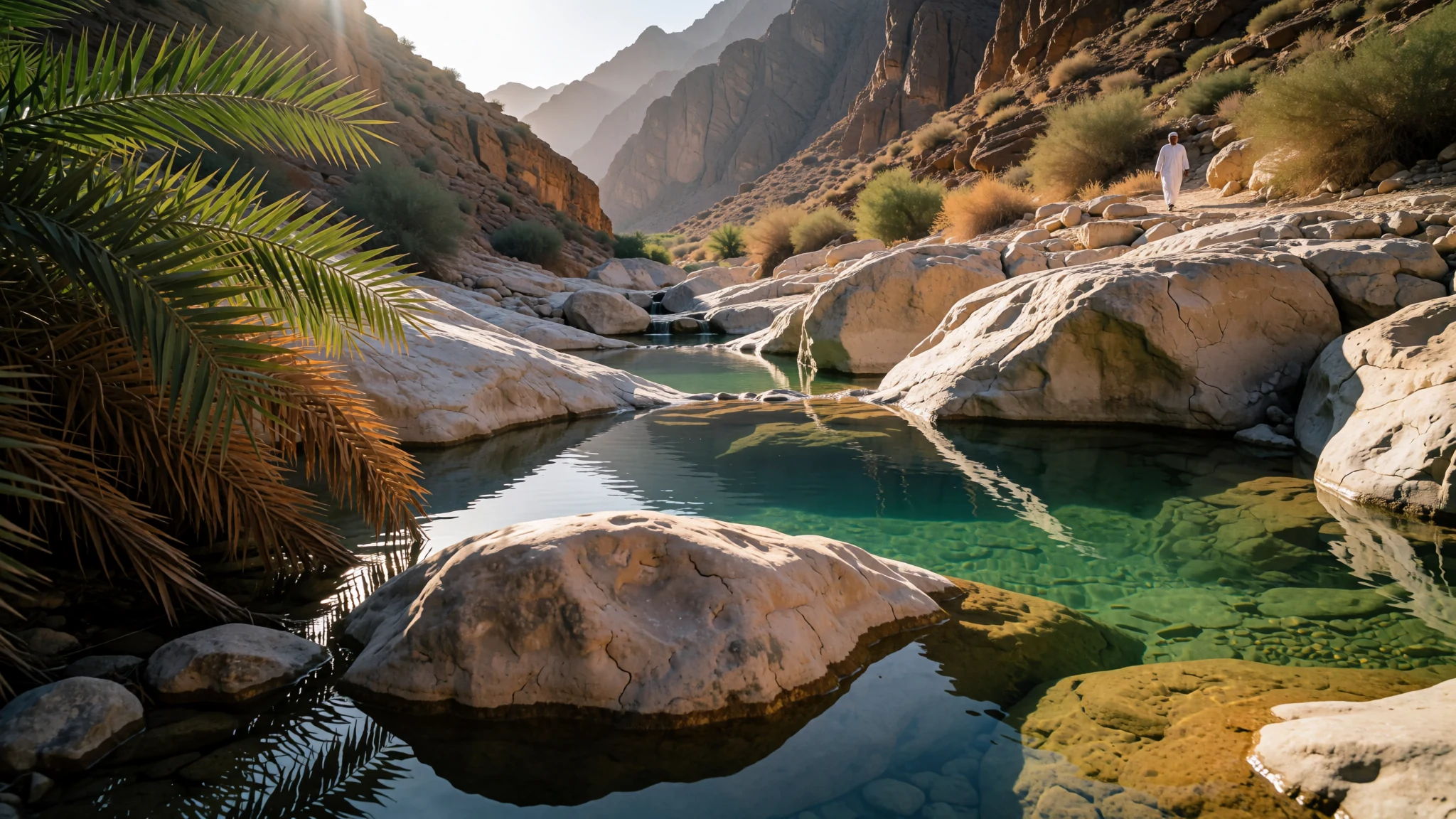
Wadi Bani Khalid is a green gorge of pools and boulders in the Hajar Mountains, best seen on a cool winter morning.
The place
Wadi Bani Khalid sits in the Ash Sharqiyah Region, in eastern Oman, where the land drops from the Hajar Mountains towards the lowlands. A wadi is normally a dry watercourse that fills only after rain, but here water lingers for much of the year, so the valley floor becomes a chain of pools joined by shallow channels and scattered boulders. Palms and greenery line the banks, and the rock walls rise on either side. After the bare, hot hills you drive through to reach it, the change feels sudden.
The valley spreads across both flat lowland and the higher ground of the Hajar range, so it works better as a long route to follow on foot than as a single viewpoint. Caves cut into the rock add to the appeal, Muqal Cave among them, and many people combine a swim with a look inside. Springs and aflaj, the old underground channels that carry water to gardens and villages, run through the area too. They show how settlement here has always depended on handling water with care.
Many visitors drive themselves, and a car with decent ground clearance is worth having on the rougher tracks. Numbers build on weekends and public holidays, particularly around the first pools, so arriving before midday makes walking and swimming far more pleasant. Bring water and shade, because the rock holds heat when the sun is high. Keep phones and valuables in a dry bag for the swim.
Its story
Wadi Bani Khalid is a young attraction, but the ground around it has a long history. Long before written records, people were living in what is now Oman, and the earliest evidence of settled life there goes back to the Stone Age. Clay tablets from Mesopotamia mention a land called Magan, a name that many scholars connect with the copper once mined in Oman's hills. Mining, trade and the building of water systems have shaped the region for thousands of years, and the wadi's springs and falaj channels continue that same tradition of working with scarce water.
For generations the country stayed largely closed to outsiders, and its roads, schools and clinics were limited. Everything changed when Sultan Qaboos bin Said took power after removing his father. Education, public works and tourism began to expand, and the country opened gradually to visitors. Places like this valley, once known mainly to local families who farmed and swam here, became destinations in their own right.
Today the wadi reflects both sides of that history. Families still come to the pools and gardens, and the old channels remain part of the landscape. Visitors who arrive now find a mix of traditional rural life and modern infrastructure, with paved roads reaching the valley edge and a steady flow of day trippers.
What to see
- The main pools — The wadi floor
The pools are the reason most people come. Their levels shift through the year, so the sequence of water and rock can look quite different from one visit to the next. The water is cool enough to be refreshing in the heat. Wear shoes with grip, because the rock is slippery where it is wet, and take a towel and a dry bag for the walk back.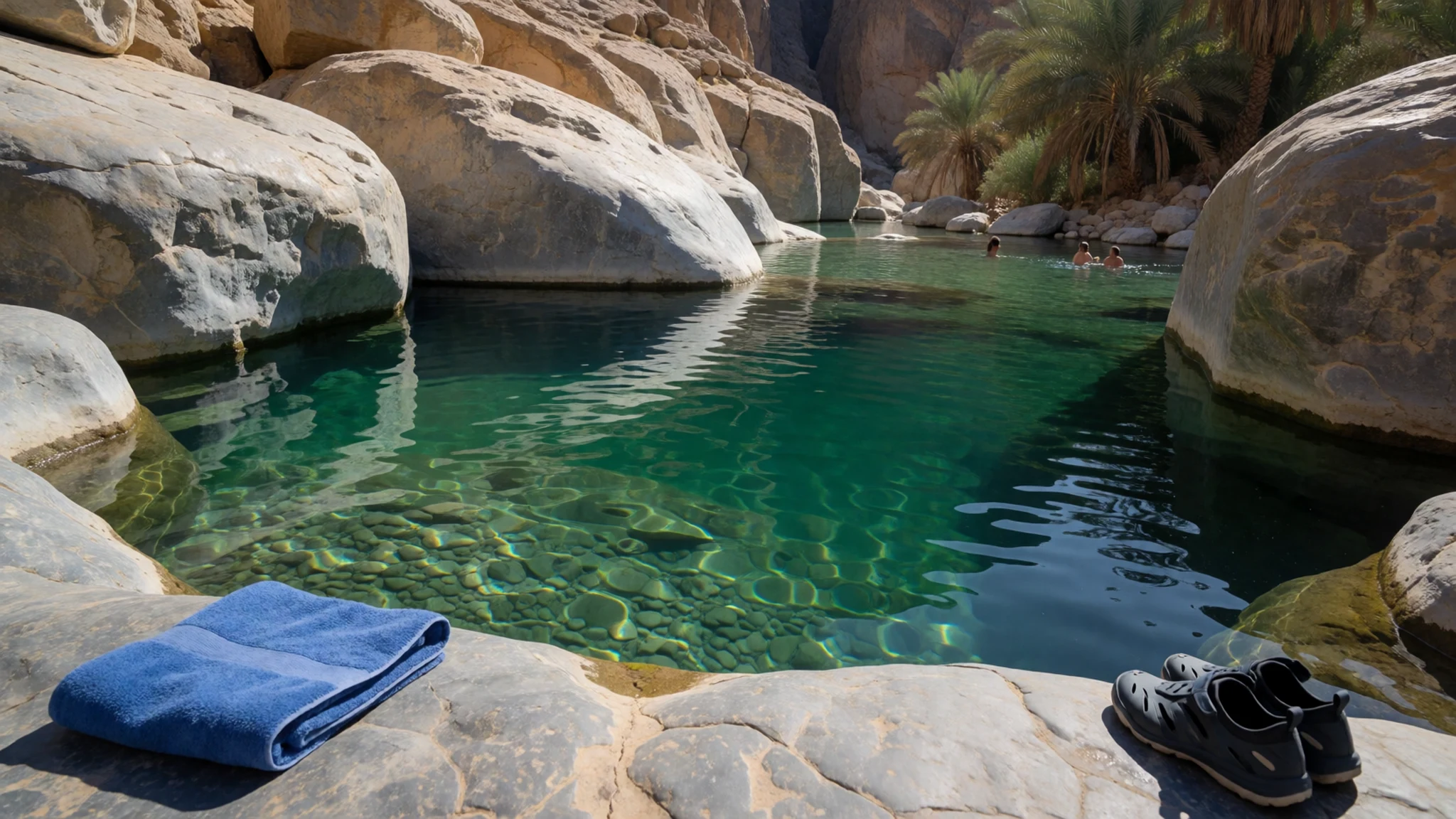
- Muqal Cave — Within the wadi
Muqal Cave is one of the caves in the valley, and it is often mentioned alongside the pools. Expect a short scramble and dim light inside, so bring a torch and move slowly over wet stone. Ask locally about conditions after rain, because the route can change quickly when water is running.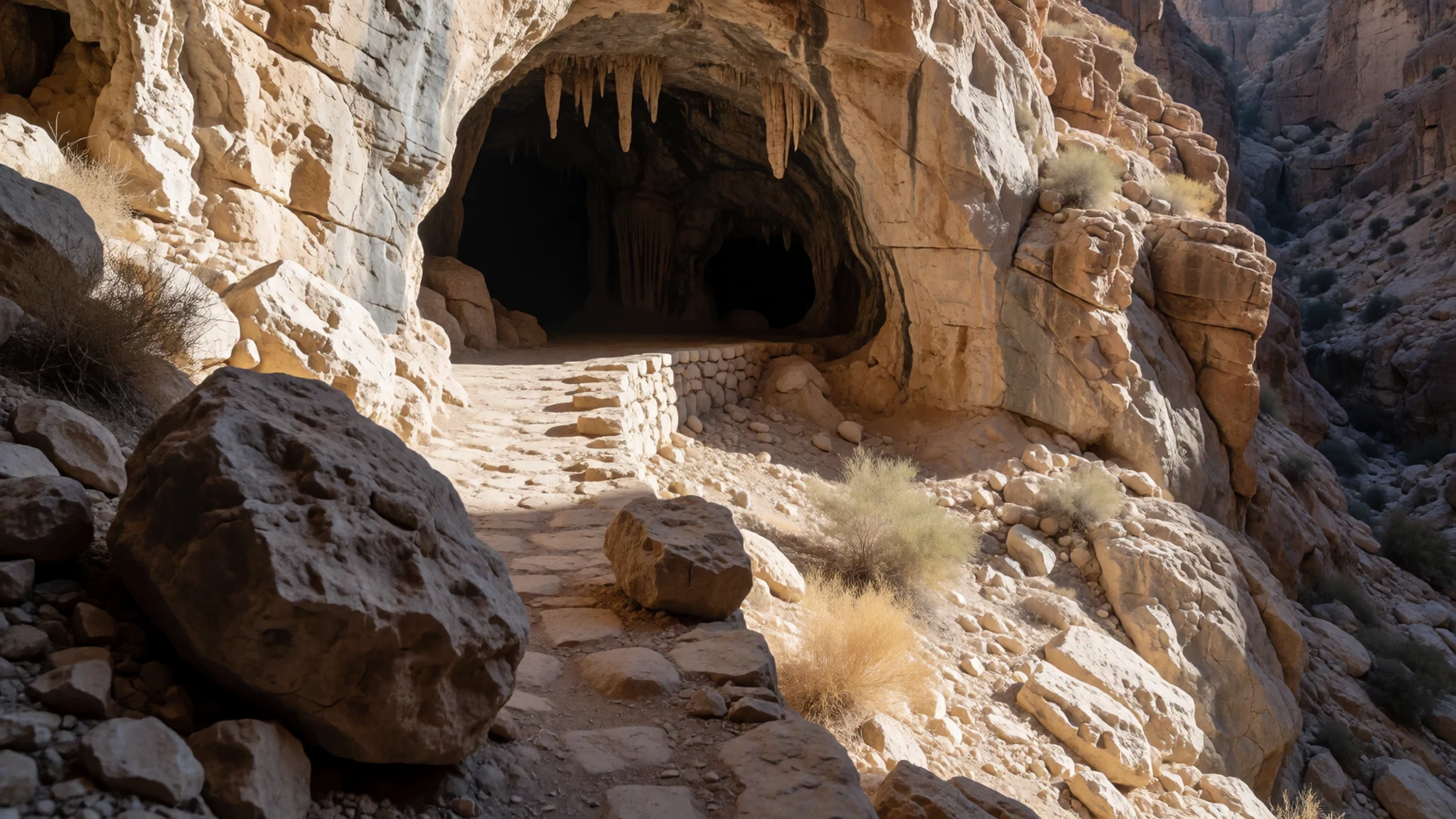
- The springs and falaj channels — The upper and middle valley
Ain Hamudah and Ain Dawwah are among the springs that feed the valley, and falaj channels carry their water through the gardens below. You do not need to be an expert to see the logic: water is shared out carefully, one channel at a time. Stay on the paths beside the channels, because the banks are soft and the gardens belong to local families.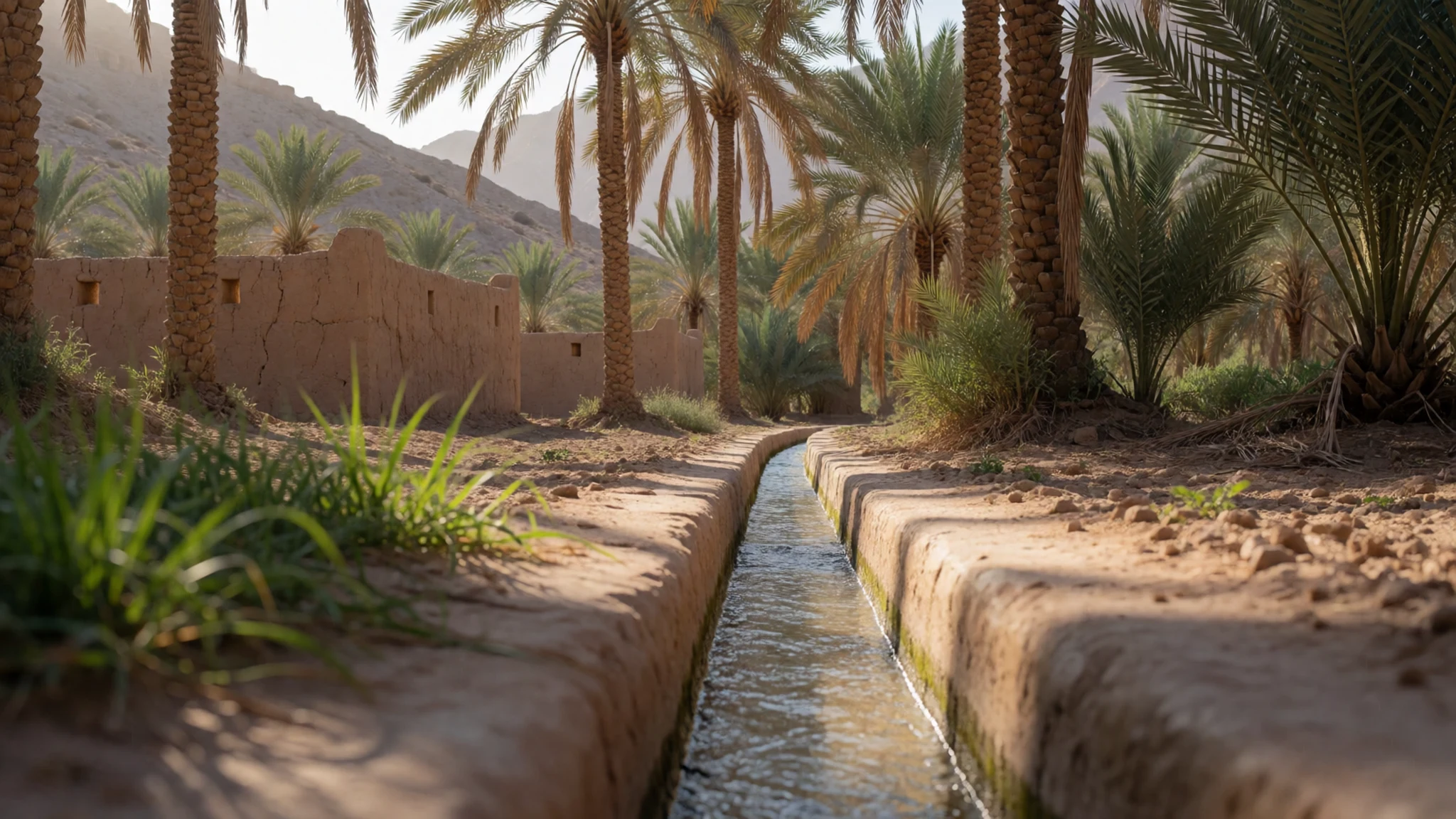
- The walk along the valley — Between the lowland and the mountains
From the wadi floor the view opens onto the Hajar Mountains, with bare rock above the green strip of palms. The valley can be walked in sections, so you can choose a short loop or a longer route upstream. Start early, because by midday the rock holds the heat and the path offers little shade.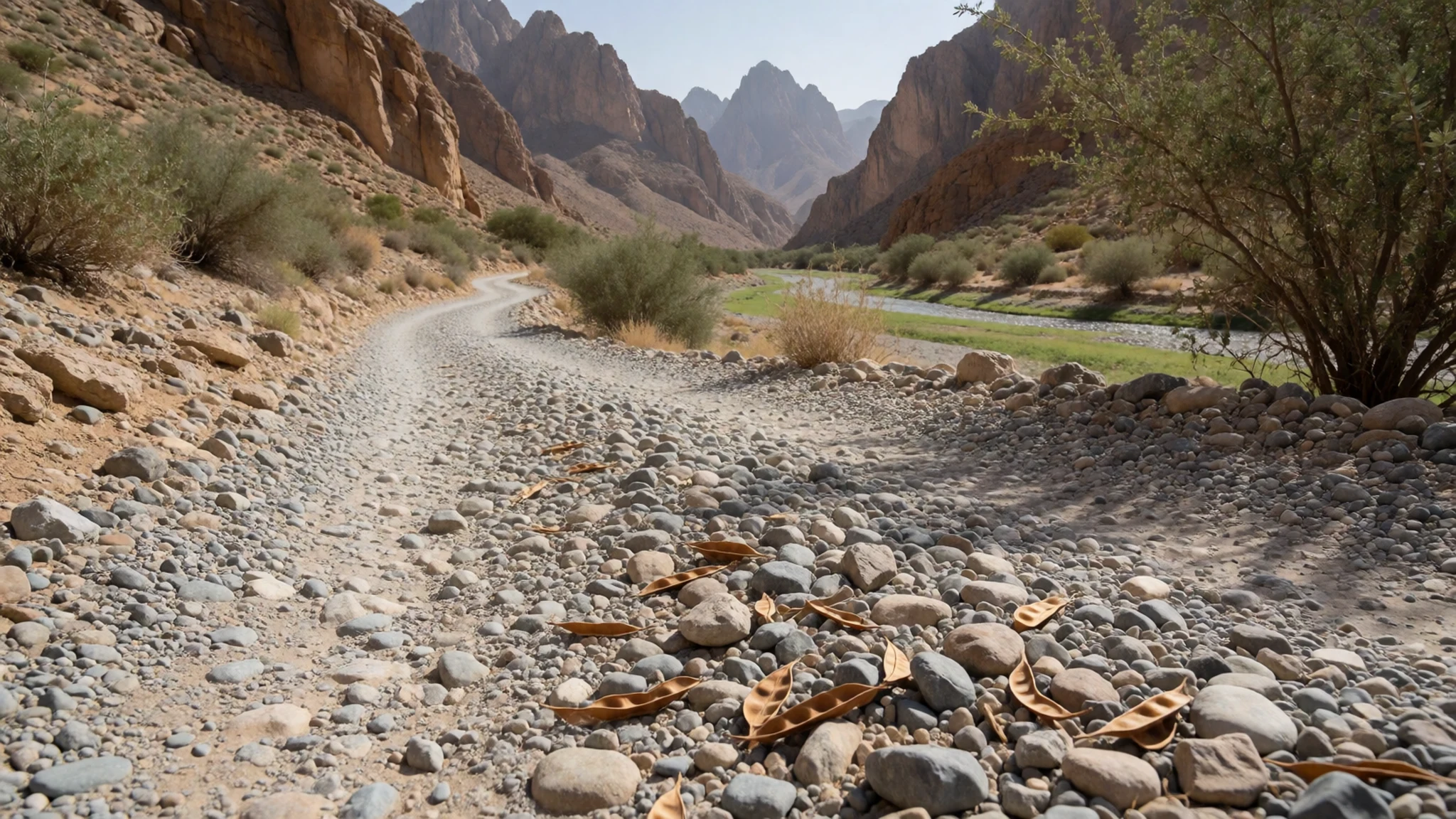
Culture
Wadi Bani Khalid lies in a country where Islam shapes everyday life, so the manners you would use in any Muslim-majority place apply here too. Omanis are known for being hospitable and unhurried, and visitors often find them ready to help with directions or offer a cup of tea. Public life in Oman still centres on the late Sultan Qaboos, who guided the country's development for decades and is held in deep respect by most Omanis. Remarks that could be read as disrespectful towards him or the state are best avoided entirely. Modesty matters in dress too. Men and women both tend to cover up in towns and villages, and swimwear belongs at the pools rather than on the road back. Ask before photographing anyone at the springs or in the gardens, and change out of swimwear before you walk back along the road.
What to wear
Wadi Bani Khalid sits in Ash Sharqiyah, where traditional dress has long been part of daily life. Men traditionally wear the dishdasha, a long, ankle-length robe usually in white cotton, often with a rounded embroidered cap called a kumma. Women's clothing has regional variations: the Sharqiyah region is known for brightly coloured dresses with embroidery and beadwork, and many women wear the abaya, a loose black outer garment, over their clothes when going out. Headscarves, often called shayla, are common. Today most Omanis wear the dishdasha and abaya in everyday life, while younger people in Muscat and the towns mix them with Western clothing. For a visit, choose loose, lightweight clothes that cover shoulders and knees, and bring a long-sleeved layer for the evening. Swimwear is for the pools only. Sturdy closed shoes with good grip help on wet rock, and a hat keeps the sun off during the midday walk.
What to eat
- Qabuli — Lunchtime restaurants in Muscat and nearby towns
Qabuli is Oman's national dish: spiced rice cooked with lamb or chicken, split peas and caramelised onions. It is a lunch dish, and the portions are generous, often served on a large shared platter. Order it at a restaurant in Muscat or in the larger towns near the wadi.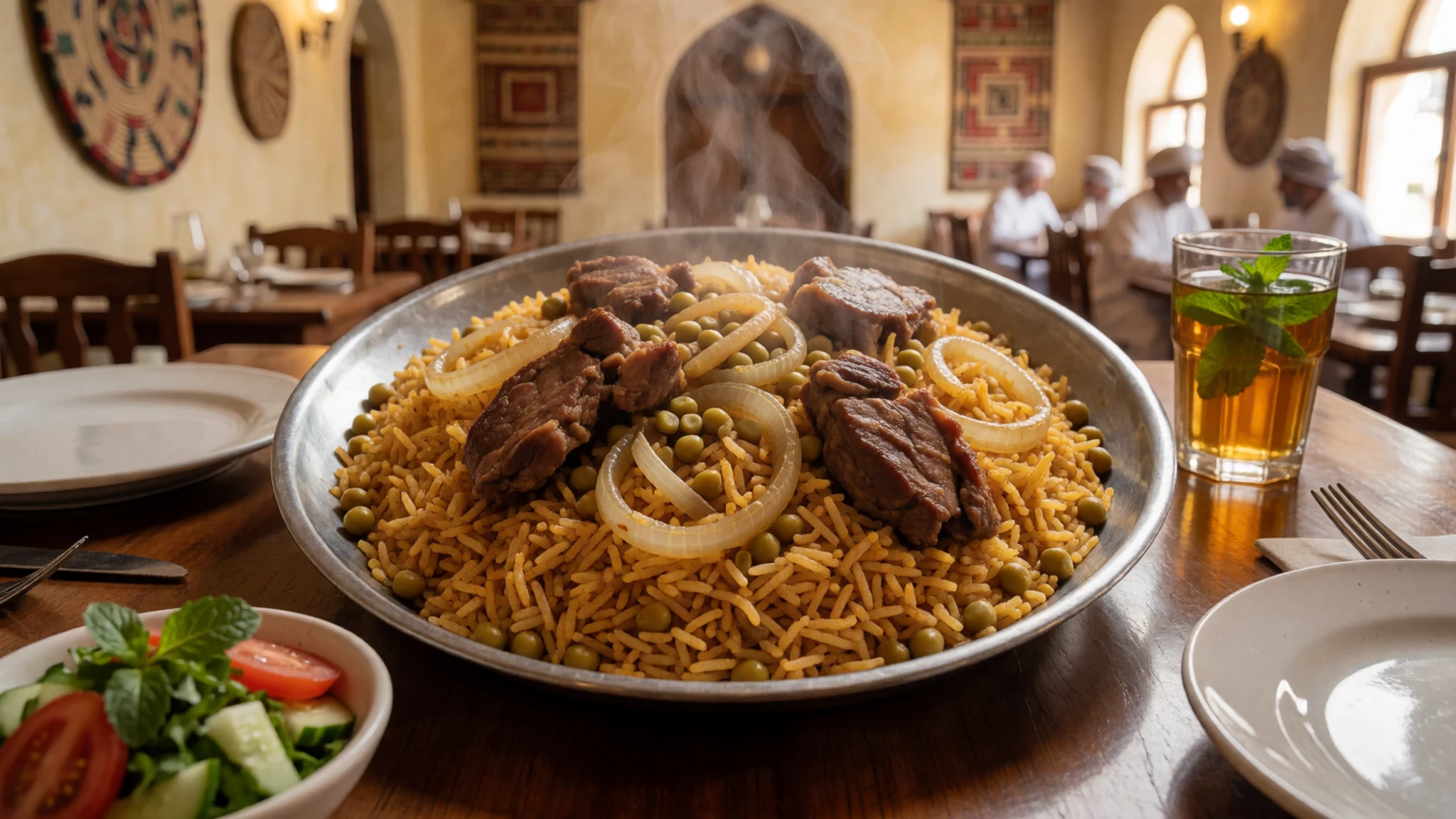
- Shuwa — Family-run restaurants and festive gatherings
Shuwa is lamb marinated in spices, wrapped in leaves and cooked slowly underground over a night. It is a feast dish, so ask at a family-run restaurant or look for it at a celebration. It usually comes with plain rice.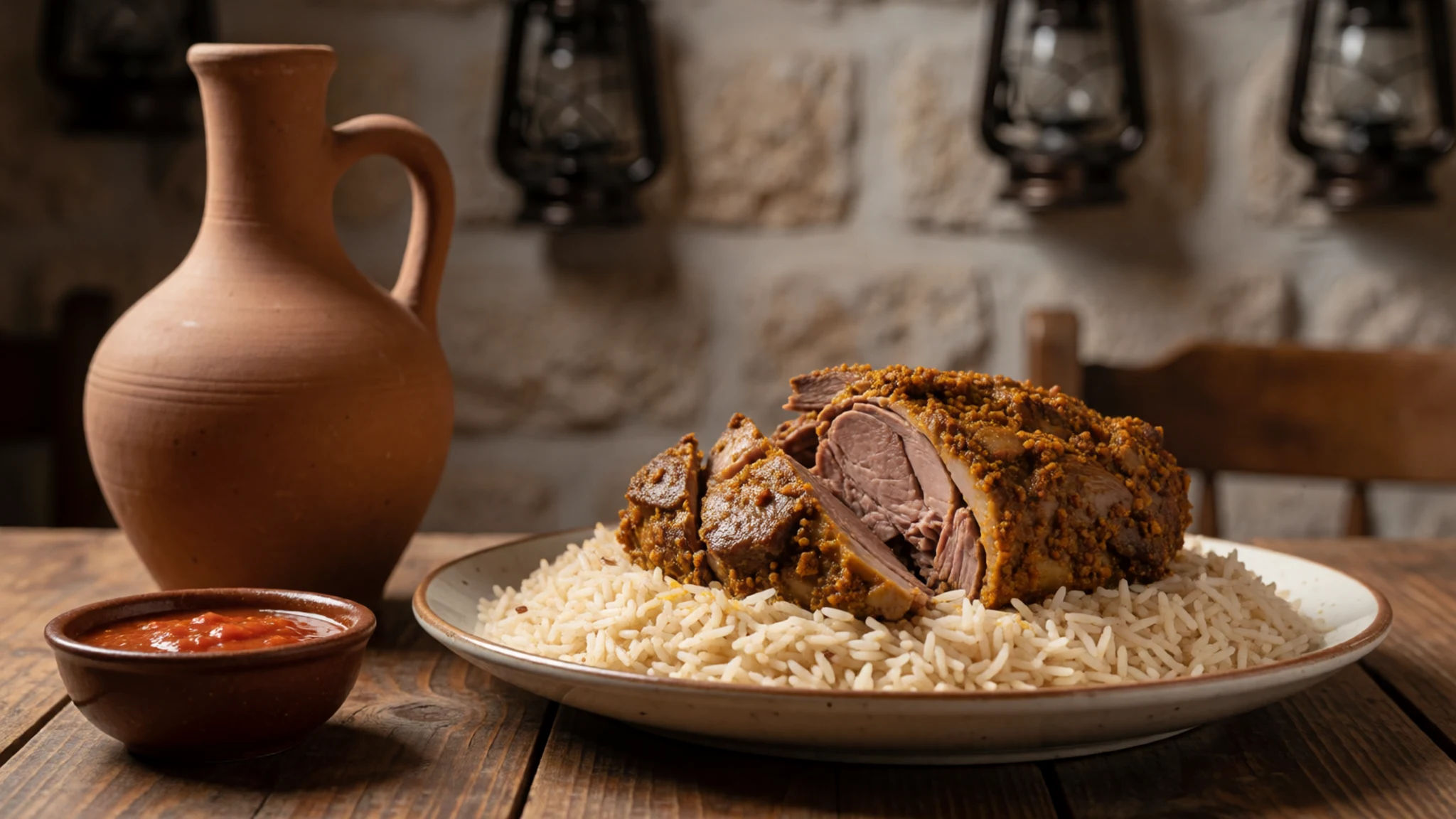
- Harees — A neighbourhood eatery in a town near the wadi
Harees is a slow-cooked porridge of cracked wheat, ghee and meat, usually chicken or beef, seasoned gently. It is a traditional dish for mornings and special occasions. Eat it warm. - Grilled fish with rice — The fish market and simple eateries in a coastal town such as Muscat
Oman's long coastline means fresh fish, grilled or fried and served with rice and a crisp salad, is a common lunch. Go to the fish market in a coastal town early in the morning, when the catch is freshest. Choose a simple eatery that grills to order.
Plan it
Best time. The cooler months, roughly November to March, are the most comfortable for walking and swimming, since summer heat in the lowlands is intense. Check conditions after rain, because flooding can close the route for a while.
How long. 1–2
Getting there. Fly into Muscat International Airport, then hire a car or take a taxi for the drive out to the valley. The route runs through the mountains and is a long drive from the capital.
Budget. low
Tips
- Start early, before the day heats up, and plan to leave the gorge by midday
- Go on a weekday if you can, since weekends and holidays bring families and the first pools fill up
- Bring more water than you think you need, and shade for breaks
- Confirm any local fees on arrival rather than relying on older guides
- Check conditions after rain, when flash flooding can close the route
Etiquette
- Dress modestly for the walk and change into swimwear only at the pools
- Ask before photographing people, especially women and children
- Take your rubbish back with you and keep the valley clean
Nearby
Sources
- Wikidata Q5903599 (CC0)
- Wikipedia, Wadi Bani Khalid (rev 1375800796) (CC BY-SA 4.0)
- Wikivoyage, Oman (rev 5380031) (CC BY-SA 4.0)
- Poco a poco, Wadi Bani Khalid panorama 36-42 (CC BY-SA 4.0)
- Poco a poco, Wadi Bani Khalid panorama 26-31 (CC BY-SA 4.0)
- Poco a poco, Wadi Bani Khalid DD 51 (CC BY-SA 4.0)
- dronepicr, aerial view of the river, Wadi Bani Khalid (CC BY 2.5)
- dronepicr, aerial view of Wadi Bani Khalid (CC BY 2.5)
- Poco a poco, spider (Pardosa sp.), Wadi Bani Khalid (CC BY-SA 4.0)
- Poco a poco, spider (Perenethis symmetrica), Wadi Bani Khalid (CC BY-SA 4.0)
- Poco a poco, wasp (Polistes wattii), Wadi Bani Khalid (CC BY-SA 4.0)


