Vũng Tàu
Vũng Tàu, Vietnam
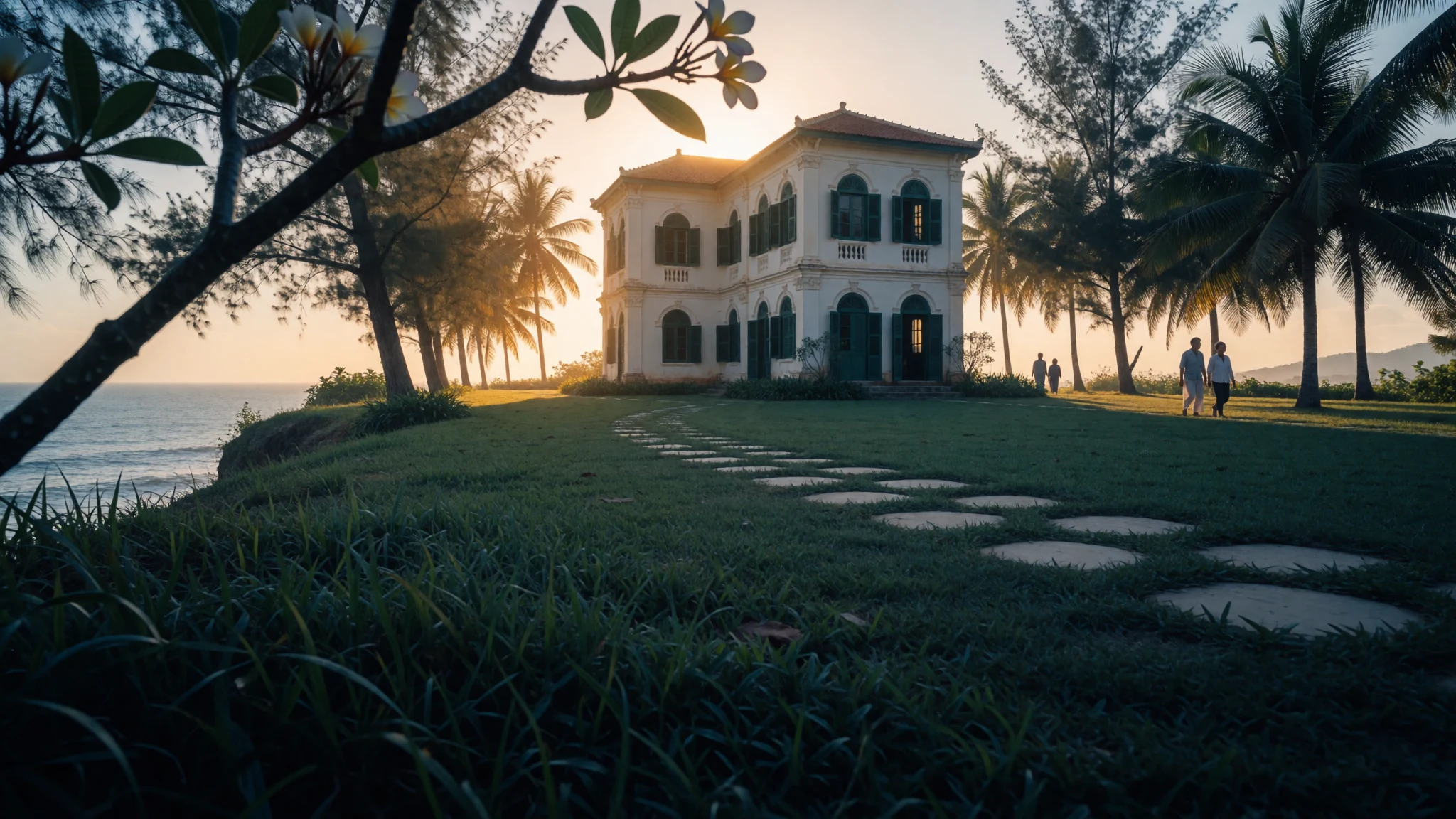
Vũng Tàu is a breezy peninsula beach town where Saigon weekenders swim, climb to a statue of Christ, and eat crisp little pancakes.
The place
Vũng Tàu sits on a peninsula in the south-east of Vietnam, separated from the mainland by a river and open to the sea on almost every side. It has long been the seaside escape for people from Ho Chi Minh City, who arrive by bus and motorbike on Friday evenings and fill the beachfront cafés until Sunday. Weekdays are noticeably calmer. The old centre lies on the southern cape, and the ground is flat enough that bicycles, scooters and walking all work well, with a small mountain at one end for views.
Two main beaches serve visitors: Front Beach, close to the centre and its promenade, and Back Beach (Bãi Sau), a longer stretch of sand further round the peninsula. The local economy leans on crude oil extraction as well as tourism, so the town is a working place and not only a resort.
The administrative picture has shifted recently. The former city was dissolved and folded into Ho Chi Minh City, and the name Vũng Tàu now formally belongs to a single ward on the southern cape. In everyday speech, people still use it for the whole former city, which was home to about 357,000 people, and this reading does the same.
The climate has two seasons. From November to April it is dry and hot, a little cooler towards the end of the year. From May to October, heavy rain usually arrives in the afternoon and the daytime air turns sticky, though that is also the season when the sea is at its most inviting for swimming.
Its story
The story of Vũng Tàu begins well before any town stood here. Excavations at Giồng Lớn, a coastal sandbank on Long Sơn island, turned up burials, tools, clay pots, jewellery and weapons. Together they show that people lived along this coast in prehistory and traded with neighbours, with clear links to the Óc Eo culture of the Mekong lowlands. In the early centuries of the Common Era the area fell under Funan and later Chenla, though little survives to describe daily life under either.
Late in the thirteenth century, the Chinese envoy Zhou Daguan sailed past a place he called Zhenpu on his way to Angkor. It may have been somewhere near Vũng Tàu or on the wider southern coast, and his book The Customs of Cambodia treats it as Cambodian frontier land.
For a long period afterwards the cape was marshy ground that European trading ships visited regularly. Their comings and goings gave the town its Vietnamese name, which means anchorage. Portuguese chart-makers labelled it Cinco Chagas, and a later French chart publisher recorded it as Saint Jacques. The French colonial government turned that into Cap Saint-Jacques, written Cáp Xanh-Giắc in Vietnamese, and left behind villas such as Bạch Dinh.
That layering of Khmer-era frontier, European anchorage, French resort and Vietnamese city explains why one small peninsula holds pagodas, a Catholic statue and colonial buildings side by side.
What to see
- Bạch Dinh — Western slope of the peninsula
Bạch Dinh, the White Villa, stands above the sea on the western side of the peninsula. The French built it in the colonial period as a summer house for Governor-General Paul Doumer, and it was also known as the Governor's Villa. Visitors come for the architecture, the grounds and the coastal view. Check opening arrangements on the official site.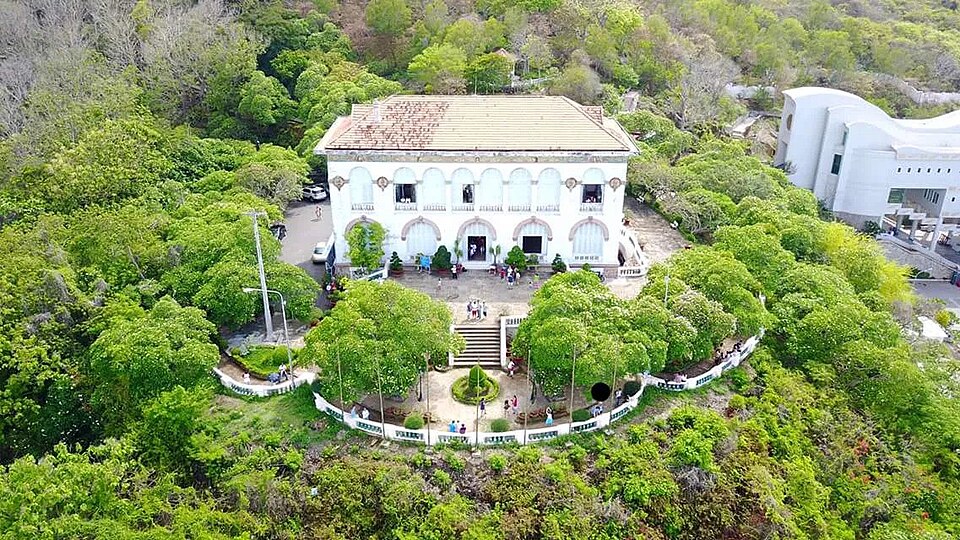
- Statue of Christ the King — Southern end of Small Mountain
The statue of Christ the King stands at the southern end of Small Mountain, arms outstretched towards the sea. The climb is best done early, before the heat builds, and the platform rewards it with a wide panorama over the town, the beaches and the ships waiting offshore.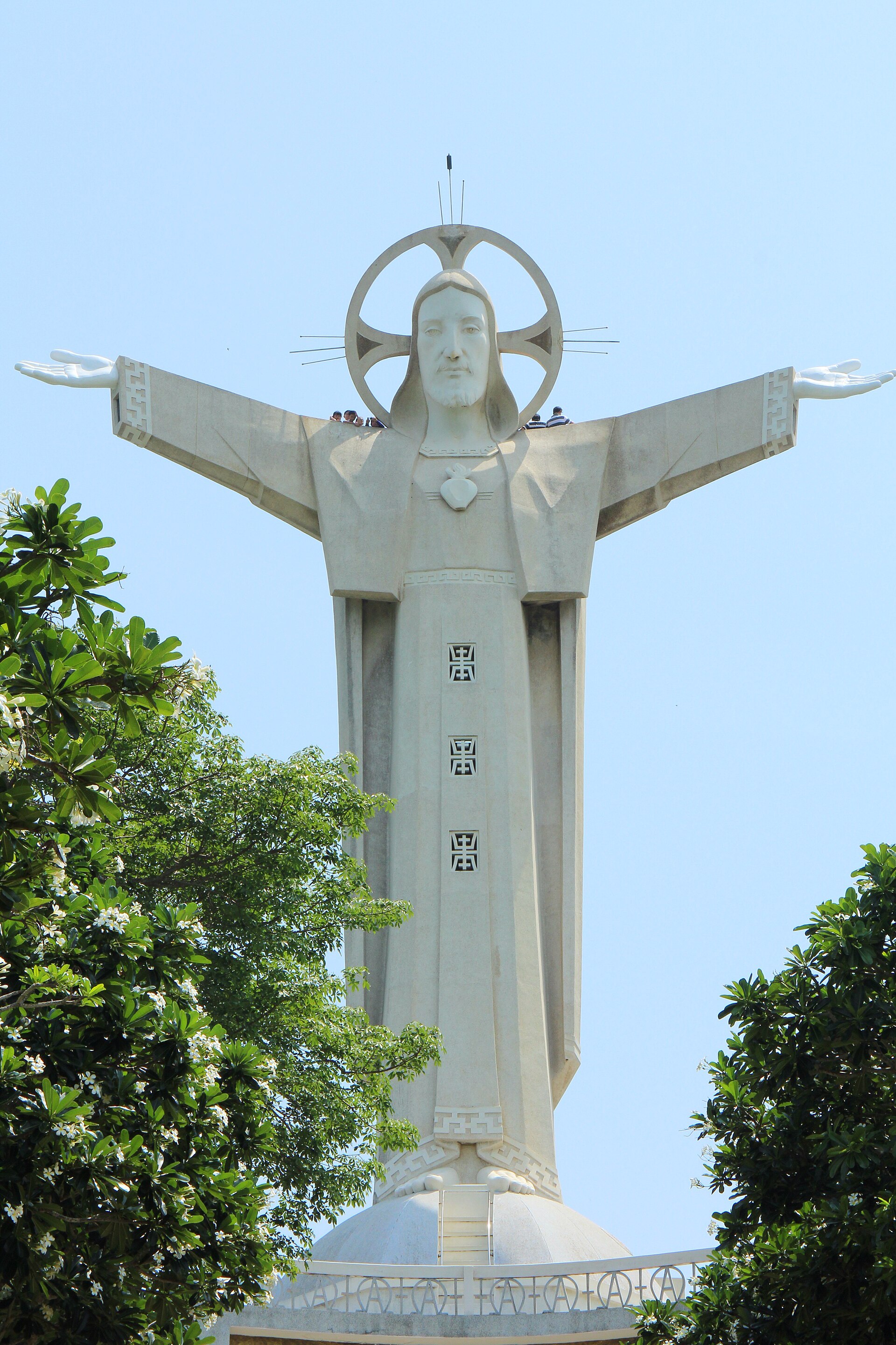
- Thích Ca Phật Đài — Hillside pagoda area
Thích Ca Phật Đài is one of the two pagodas most often recommended in Vũng Tàu, alongside Niết Bàn Tịnh Xá. It is a Buddhist complex centred on a Buddha figure, and it remains a working place of worship, so quiet, respectful visits suit it better than a rushed photo stop.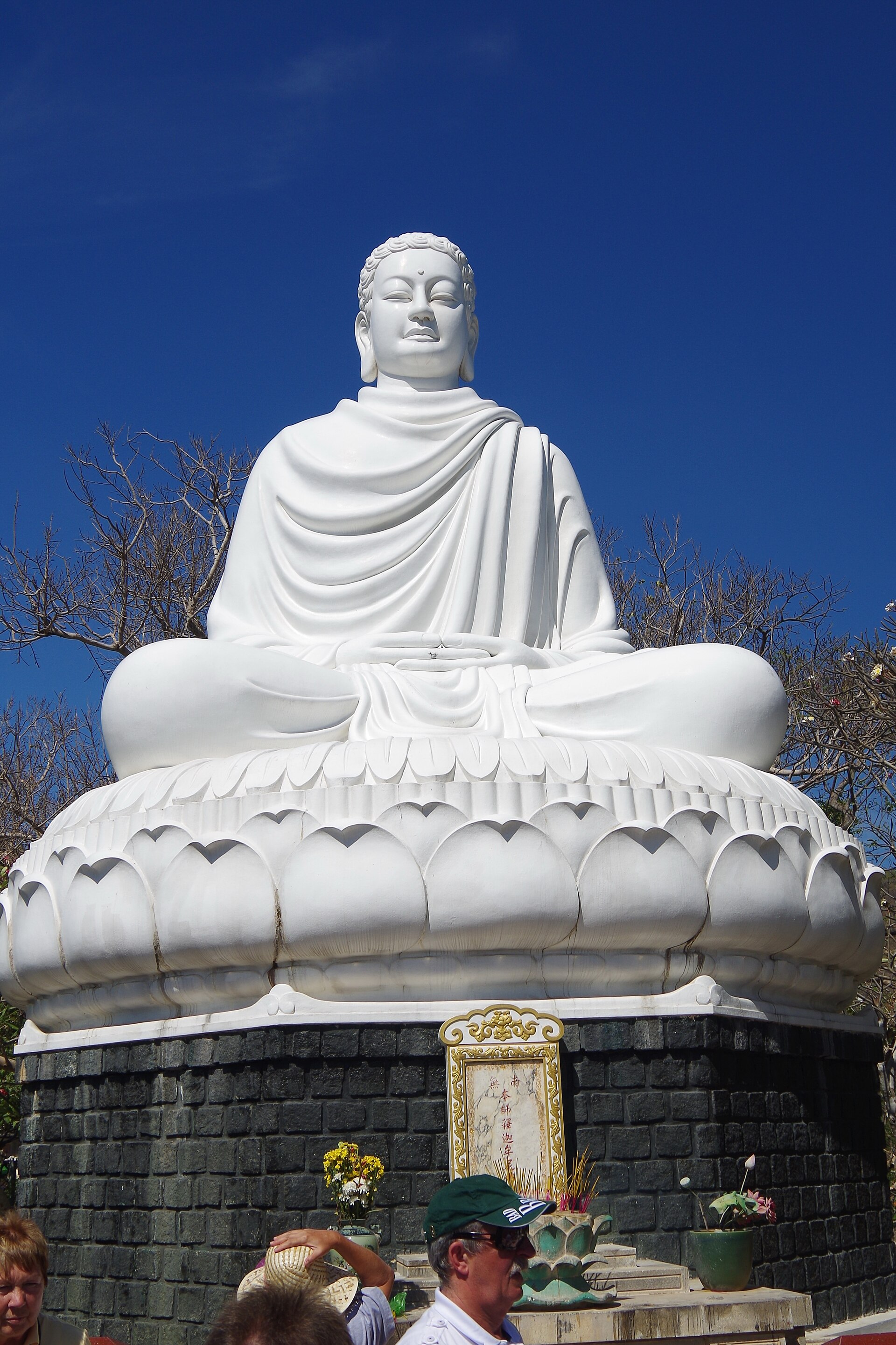
- Vũng Tàu Lighthouse — Small Mountain summit
The lighthouse crowns the higher peak of Small Mountain. The first version stood on the lower peak and burned kerosene in its lamp; it was later rebuilt and moved to the higher summit, where it stands today. Most visitors come for the view back over the town and sea. - Đình Thần Thắng Tam — Old town, south of the centre
Đình Thần Thắng Tam is a communal house honouring three men credited with founding the three villages of Thắng, the early settlements of Vũng Tàu. Legend dates it to the reign of Emperor Minh Mạng. It offers a quiet, local counterpoint to the beachfront and a look at traditional village worship.
Culture
Culture in Vũng Tàu is a coastal southern Vietnamese blend of Buddhism, ancestor worship, Catholicism and sea lore. Pagodas such as Niết Bàn Tịnh Xá and Thích Ca Phật Đài draw local worshippers as well as sightseers, and many families visit on the first and fifteenth days of the lunar month to pray and leave offerings. The communal house Đình Thần Thắng Tam reflects an older village tradition, in which the founders of a settlement are honoured as guardian spirits. Fishing communities along the southern coast have also traditionally revered whales as protectors at sea, and shrines to them are part of the coastal landscape. The statue of Christ above the town shows the Catholic strand of local life.
Tết, the lunar new year, falls in the cooler end of the dry season and is the main family holiday. Many businesses close for a few days, while families from Ho Chi Minh City head for the beach. Weekends and public holidays are the busiest times on the sand, with picnics, ball games, and the chatter of vendors and seafood grills after dark. Weekday mornings are the time to see the town at its own pace, with fishing boats, exercise groups on the promenade and coffee drinkers settling in early.
Cover your shoulders and knees at pagodas, take your shoes off before stepping into a prayer hall, and keep your voice low.
What to wear
Traditional dress in Vũng Tàu is the southern Vietnamese wardrobe seen across the Mekong region. The áo dài, a long fitted tunic split at the sides and worn over loose trousers, is cut from silk or lighter fabrics and appears at Tết, at weddings and in school uniforms. The áo bà ba, a looser two-piece in cotton, is the older everyday outfit of the south, and the palm-leaf conical hat, the nón lá, still shades fruit sellers and market traders.
Day to day, locals dress for heat and motorbikes: T-shirts, shorts or light trousers, long sun-protective sleeves and gloves, light jackets, and helmets. At the beach, plenty of Vietnamese visitors swim in T-shirts and shorts and prefer to stay shaded and covered, while swimwear is common among foreign visitors and younger crowds.
Visitors should pack light cotton or linen, a wide hat, sunscreen and sandals for the beachfront, plus closed shoes with good grip for climbing Small Mountain. A thin rain jacket helps in the wet season. For pagodas and the communal house, carry something to cover shoulders and knees, and wear shoes that slip off easily. Swimwear is for the sand; put a shirt on before walking into town or into a restaurant.
What to eat
- Bánh khọt — Family-run eateries in the streets behind Front Beach
Bánh khọt are small, crisp-edged savoury pancakes cooked in a moulded pan and usually topped with shrimp. They are eaten wrapped in lettuce and herbs and dipped in fish sauce. They are the dish most associated with eating out in Vũng Tàu. - Bò kho — Local eateries in the old town
Bò kho is the Vietnamese answer to goulash: beef stewed slowly with lemongrass, star anise and carrot until the sauce turns rich and orange. It is served with bánh mì for dipping, plus a little salad on the side, and suits breakfast or lunch. - Hủ tiếu mực — Noodle shops near the centre
Hủ tiếu mực is a squid noodle soup with a clear, sweet-savoury broth and tender slices of squid over rice noodles. It is a good reminder that this is a fishing coast, and it is easy to find at simple, friendly noodle shops. - Bò lá lốt — Grill eateries around the town centre
Bò lá lốt is minced beef wrapped in lá lốt leaves and grilled. Diners roll it in rice paper with fresh vegetables and herbs, then dip the parcel into a sweet and salty sauce. It is a sociable dish, best shared at a table. - Cháo lòng — Breakfast stalls and small local eateries
Cháo lòng is a rice porridge served with offal and herbs. It suits travellers keen to try the wider range of Vietnamese cooking, and it is eaten mostly in the morning. Locals rely on it as a warm, filling start to the day.
Plan it
Best time. December to March is the most comfortable stretch: it falls in the dry season, which runs from November to April, with the cooler year-end months. The rainy season from May to October brings afternoon downpours and humid heat, but the sea is warm and swimming is at its best.
How long. 2
Getting there. Fly into Ho Chi Minh City, then take a bus from one of the city's coach stations; services run through the day and take about two hours. By car, take the expressway towards Long Thành and then follow the main highway to Vũng Tàu. Weekend and holiday traffic slows the road, so check the current timetable at the bus station.
Budget. low
Tips
- Book accommodation ahead for weekends, public holidays and Tết, when Ho Chi Minh City families fill the town
- Climb Small Mountain early in the morning, before the heat and the crowds
- Carry some cash for small eateries and street vendors, with a card as backup in larger places
- Bring sun protection and a refillable water bottle, as the coast is exposed and hot
- Visit midweek if you want quieter beaches and easier parking
Etiquette
- Cover shoulders and knees and remove shoes before entering pagoda prayer halls
- Ask before photographing worshippers or monks
- Wear a shirt away from the sand, in town and in restaurants
Nearby
Sources
- Wikidata Q21194 (CC0)
- Wikipedia: Vũng Tàu (city) (CC BY-SA 4.0)
- Wikivoyage: Vung Tau (CC BY-SA 4.0)
- Photo: Sau Beach in Vungtau (Genghiskhanviet) (Public domain)
- Photo: Vung Tau coastline viewed from Bạch Dinh (Hoangvantoanajc) (CC BY 3.0)
- Photo: Nhà Lớn Long Sơn (Bùi Thụy Đào Nguyên) (CC BY 3.0)
- Photo: Buddha, Thich Ca Phat Dai (Balou46) (CC BY 3.0)
- Photo: Statue of Jesus Christ, Ward 2 (trungydang) (CC BY 3.0)
- Photo: Bach Dinh seen from above (Khanhngujen) (Public domain)
- Photo: Front Beach Vung Tau (Genghiskhanviet) (Public domain)
- Photo: Portuguese Map of IndoChina in the 17th century (Public domain)


