Volubilis
Volubilis, Morocco
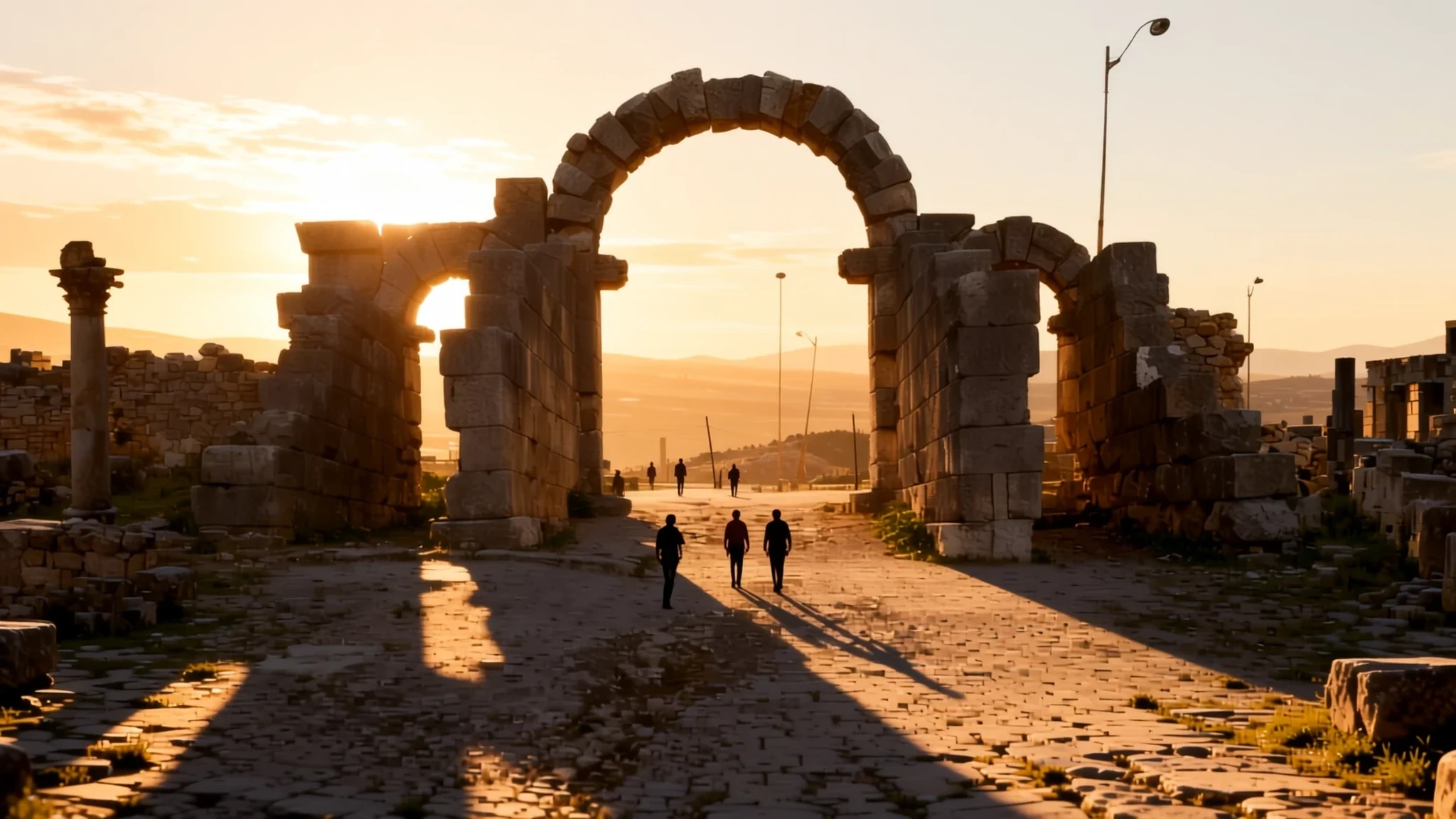
A partly excavated Roman city on the Moroccan plain, where Amazigh, Carthaginian, Roman and early Islamic layers still show in the stone.
The place
Volubilis is a partly excavated city in northern Morocco, set on fertile farmland near Meknes. Volubilis started out as a settlement of the Amazigh people, later acquired a proto-Carthaginian character, and might have served as the capital of the Mauretanian kingdom, especially during the reign of King Juba II. Under Roman rule it grew quickly from the 1st century AD, eventually covering about 42 hectares inside a wall circuit of roughly 2.6 km. Olive growing made the town prosperous, and that wealth paid for a basilica, a temple and a triumphal arch in the 2nd century, along with town houses floored in mosaic. The ruins now hold UNESCO World Heritage status, prized for how remarkably well preserved they are as a sizeable Roman colonial settlement at the far fringe of the empire. The site is open, flat and largely unshaded, so the heat of a Moroccan afternoon is considerable. Early morning and late afternoon bring softer light and cooler stone. Most visitors come as a day trip from Meknes or Fez, and a small number of hotels in the area suit those who want to stay longer. The nearby town of Moulay Idriss Zerhoun, with its religious buildings, is an easy addition to the same day.
Its story
The city's Roman-era prosperity rested largely on olive oil, and wealthy households filled their floors with mosaics showing gods, animals and everyday pleasures. Around 285 local tribes took the town, and Rome never retook it. Its remoteness and difficulty to defend on the south-western border of the empire made it a poor prize to hold. Life carried on for centuries afterwards. The community became Latinised and Christian, then an early Islamic settlement. Toward the close of the eighth century, Volubilis was made the base of Idris ibn Abdallah, who established the Idrisid dynasty. In 789, Idriss I reached this site, bringing the Muslim faith and establishing a new ruling line. By the 11th century power had moved to Fes, and many residents relocated to the nearby town of Moulay Idriss Zerhoun, roughly 5 km distant. The ruins stood largely intact until an earthquake in 1755 badly damaged them, and Moroccan rulers later took stone from the site to build Meknes. The ancient city was only firmly identified in the later 19th century. During the French period around half the site was excavated, revealing a remarkable set of mosaics, and some public buildings and grand houses were restored. Those excavations are why the site reads so clearly today.
What to see
- Arch of Caracalla — Main Roman site
The triumphal arch built in honour of the emperor Caracalla stands among the main Roman remains and gives a clear sense of the town's civic ambition. Its stonework has weathered over the centuries, but the basic shape still reads well from the paths. Go in the early morning for the best light on the stone, and allow time to walk around it rather than only photographing from the front.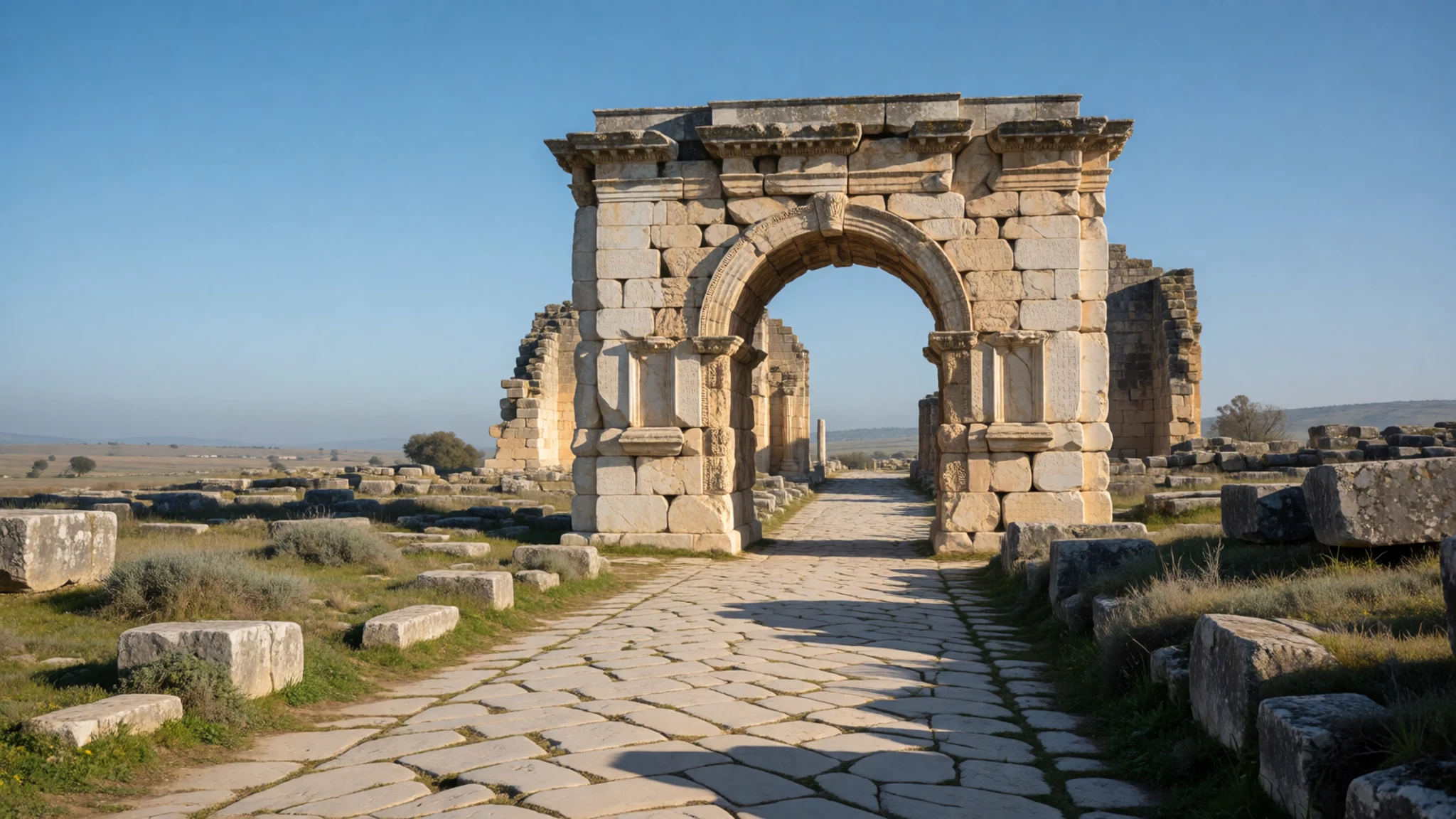
- House of Orpheus — Southern part of the ruins
Located in the southern part of the city, this house takes its name from a large mosaic of Orpheus playing his harp to an audience of trees, animals and birds. It is one of the best places on the site to see how the wealthier households were decorated. The mosaic floors are fragile, so keep to the paths and stay off them, even where the surface looks solid.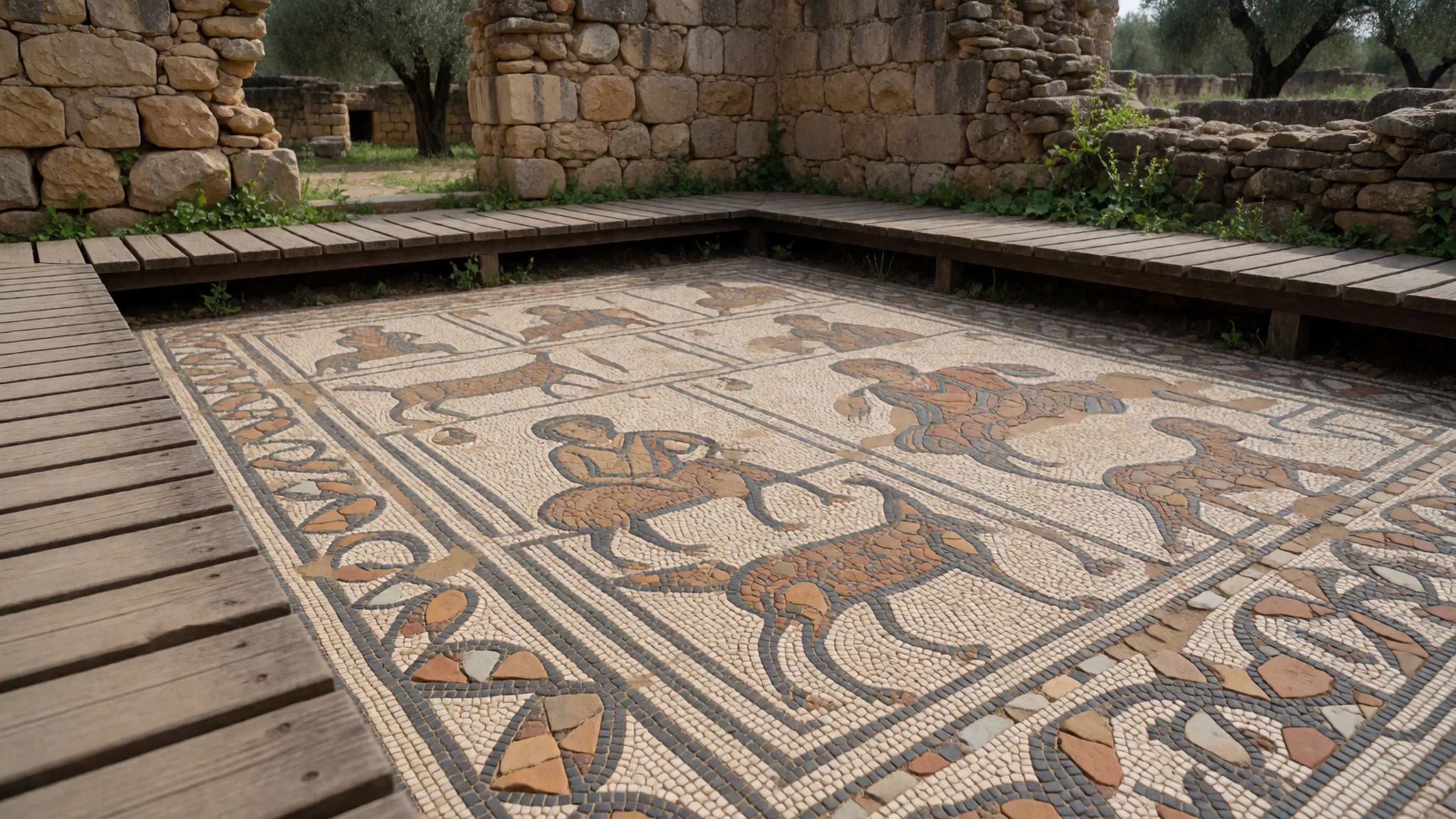
- House of the Ephebe — Residential quarter, next to the House of the Knight
Named after a bronze statue found here, this house has a prominent interior courtyard leading to several public rooms decorated with mosaics. One shows Bacchus in a chariot drawn by leopards. The rooms are small, so the visit is quiet and close, and the detail on the floors rewards a slow walk. Next door, the House of the Knight has its own Bacchus scene, showing him finding the sleeping Ariadne.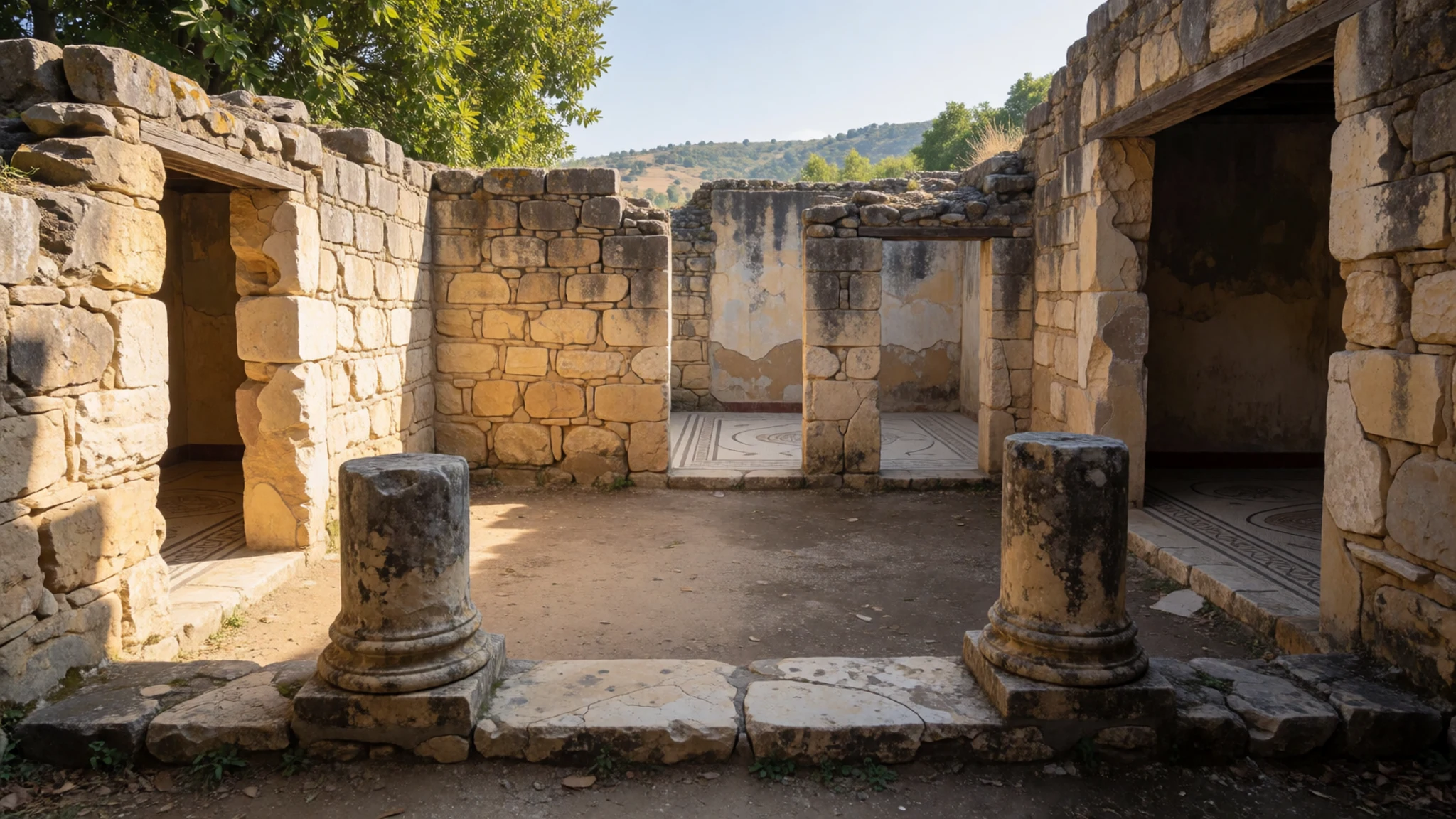
- Gordian palace — Upper part of the main street
A building known as the Gordian Palace lies further up the main east-west street. It is described as the largest building in the city and was probably the residence of the governor, rather than of the emperor Gordian III, as its name suggests. Standing among its walls gives a good idea of the scale of public life that Volubilis once supported.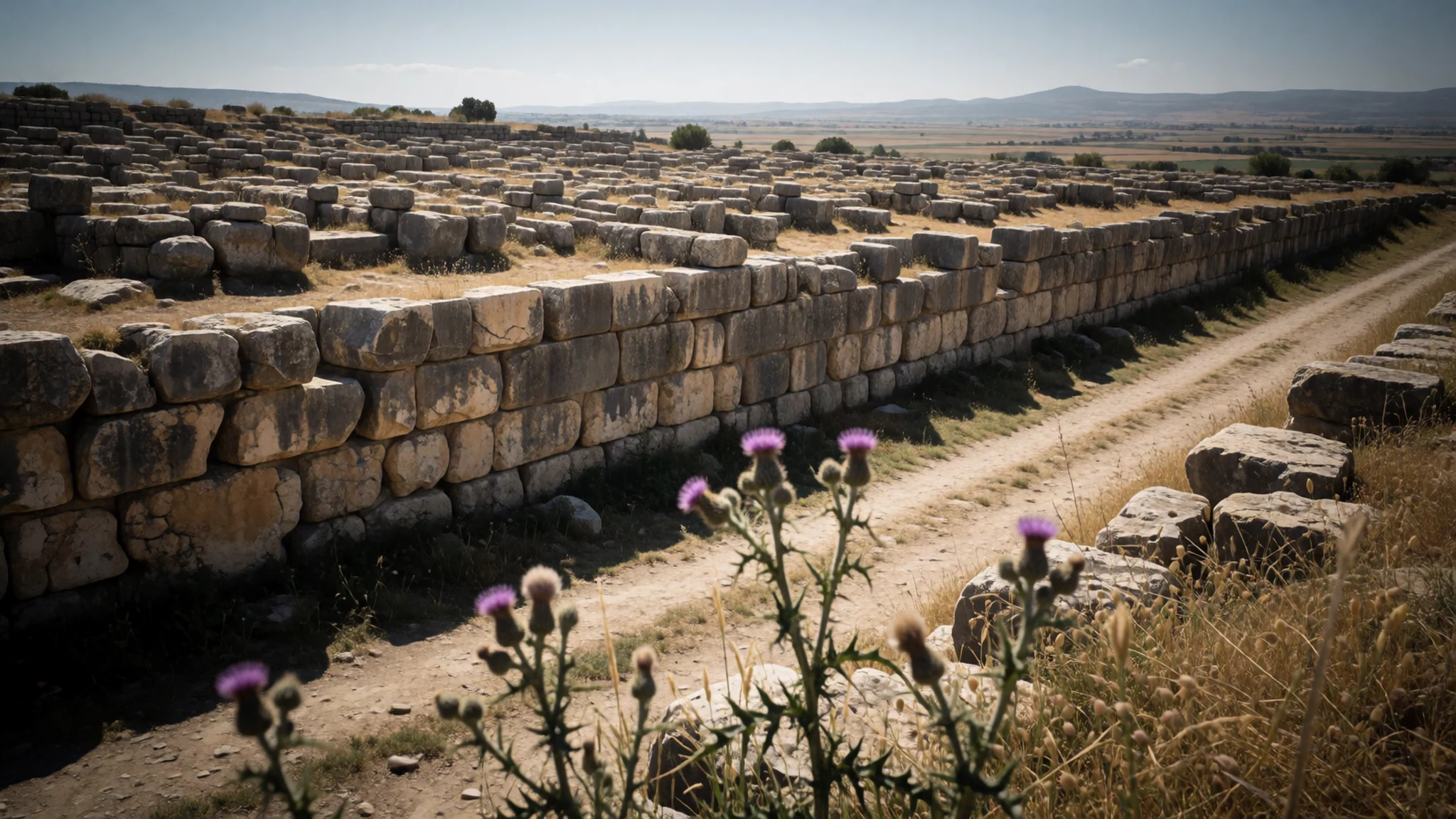
- Zawiya of Moulay Idris I — Moulay Idriss Zerhoun, a short drive from the ruins
This religious complex in Moulay Idriss Zerhoun includes a mosque area and a mausoleum chamber under a large, green-tiled pyramidal roof. It is a working place of worship and is closed to non-Muslims, so visitors can admire it from outside and from the town's viewpoints. Plan the trip so you can see the town itself in the late afternoon.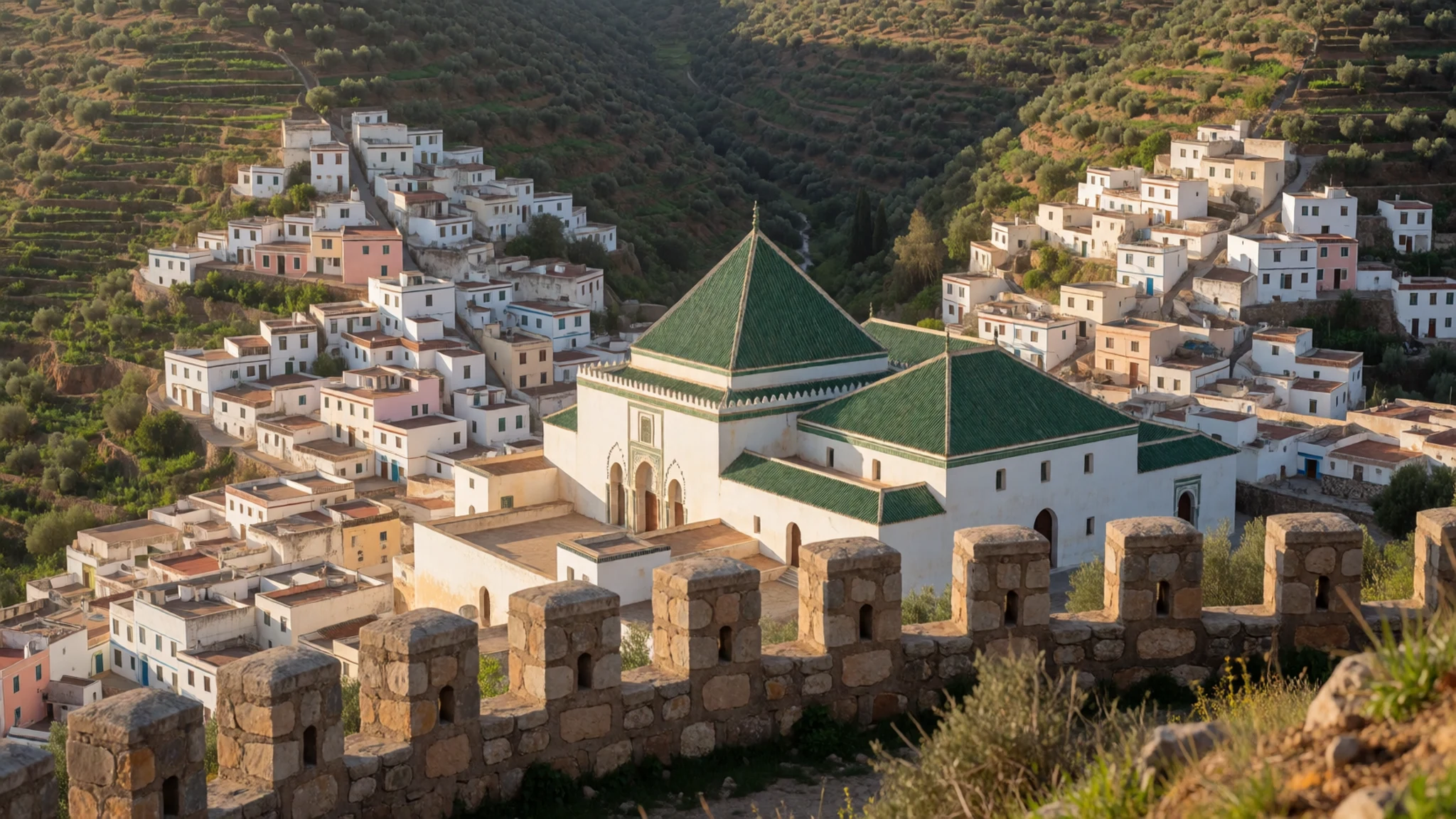
Culture
Volubilis is a Roman site, but the people who live around it are Moroccan and mostly Muslim, and the everyday customs of the area come with them. Mint tea is the default offer of hospitality, and accepting a glass is a friendly gesture even if you only sip it. Greetings tend to be warm and unhurried, and a short conversation before any transaction is normal. Guides and touts gather near the entrance and in the town, offering tours and rides; a polite no is understood, and a licensed guide can be useful if you want the history explained. Moulay Idriss Zerhoun is a religious town, so keep voices low and dress modestly near its religious buildings. The Zawiya of Moulay Idris I is closed to non-Muslims, so admire it from outside. Ask before photographing local people, especially women and shopkeepers, and do not take pictures of them without a nod or a word of permission.
What to wear
Traditional dress around Volubilis follows the wider Moroccan pattern: the djellaba, a long, loose robe with a hood, is the classic garment for men and many women. Wool is used for winter versions and cotton for summer, and the robes are often worn over a plain tunic. Leather babouche slippers, backless and flat, complete the look and are still made by hand in many towns. Embroidered and woven textiles, from blankets to belts, use bold colour and geometric patterns. Today the mix is practical. Many people in Meknes and Moulay Idriss wear jeans and shirts for work and djellabas for prayer, weddings and cooler days, and headscarves are common among women, though not universal. For a visitor, lightweight cotton or linen in loose, long-sleeved layers keeps the sun off, and a wide-brimmed hat matters because there is very little shade on the ruins. Trousers or a long skirt are the right choice for the town's religious areas. Wear closed, sturdy shoes, since the paths are uneven, with loose stone and rough ground, and bring a light shawl for the evening.
What to eat
- Mint tea — Cafés on the square in Moulay Idriss Zerhoun
Sweet green tea brewed with fresh mint and poured from a height to cool it and froth the top. It is served throughout the day and is the first thing most people offer a visitor. Cafés on the main square of Moulay Idriss Zerhoun are an easy place to order a pot and sit for a while in the shade.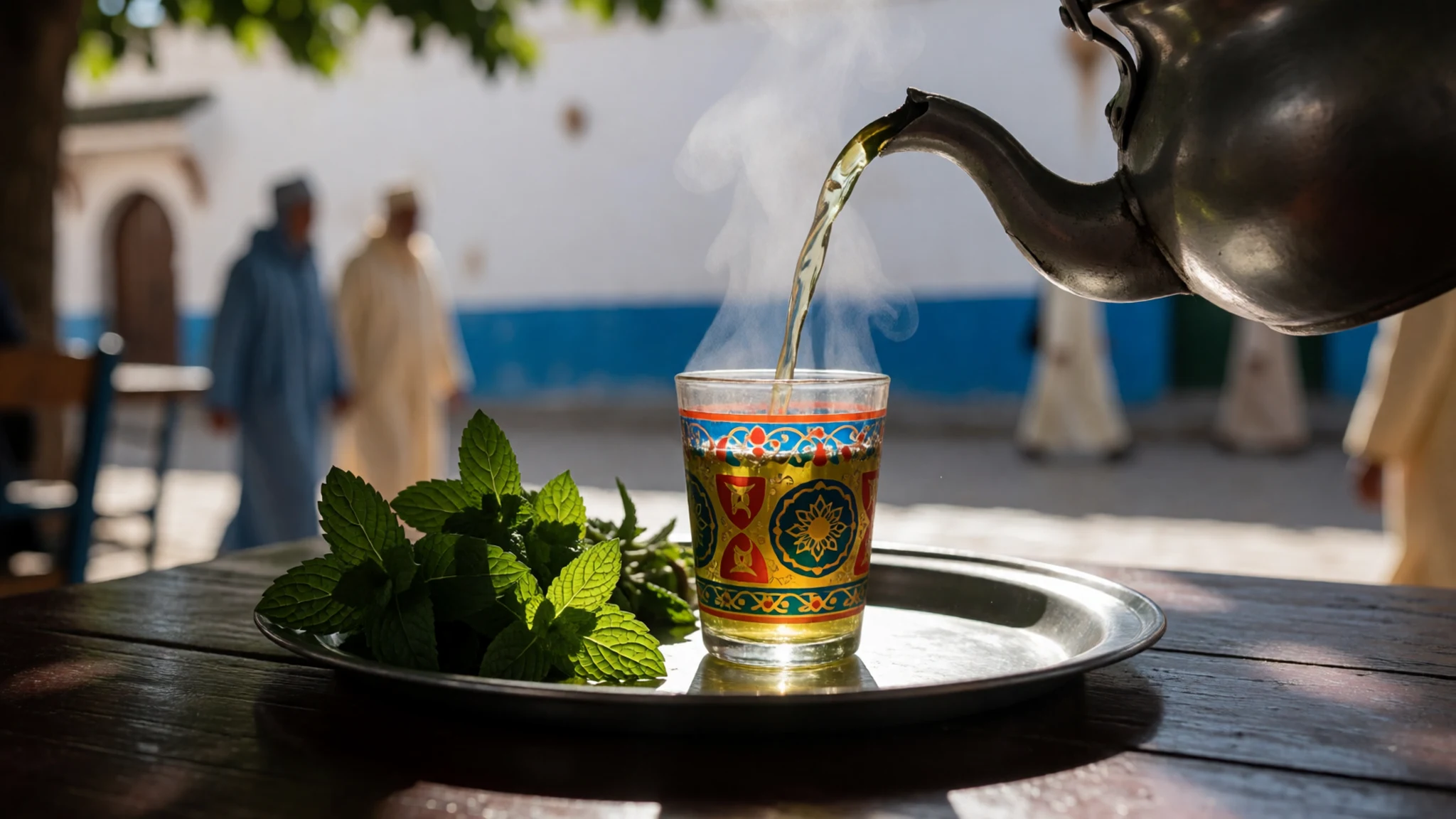
- Olives and olive oil — Covered markets in Meknes
Olive growing was the source of the Roman town's wealth, and it remains central to the region's food. Green and black olives, often dressed with garlic, lemon or cumin, and fresh bottled oil are sold at stalls in the covered markets of Meknes. Buy a small pot to take back, and taste before you buy.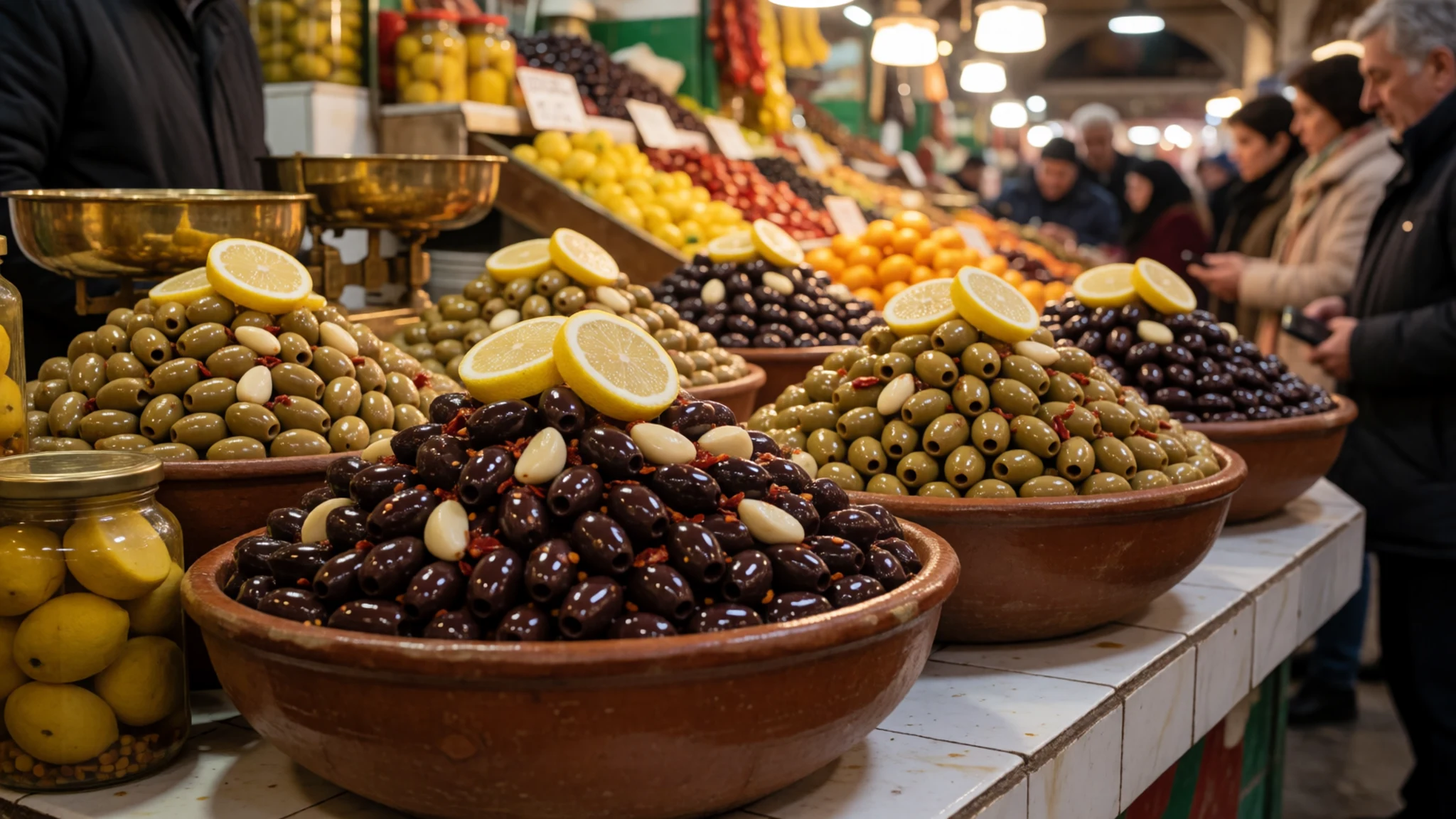
- Harira — Simple eateries in the medina of Meknes
A thick soup of tomato, lentils and chickpeas, often finished with herbs and a squeeze of lemon, and traditionally eaten to break the fast during Ramadan. It is a good, filling lunch and is served in simple eateries in the medina of Meknes. Ask for bread on the side, as it is customary to dip into the soup.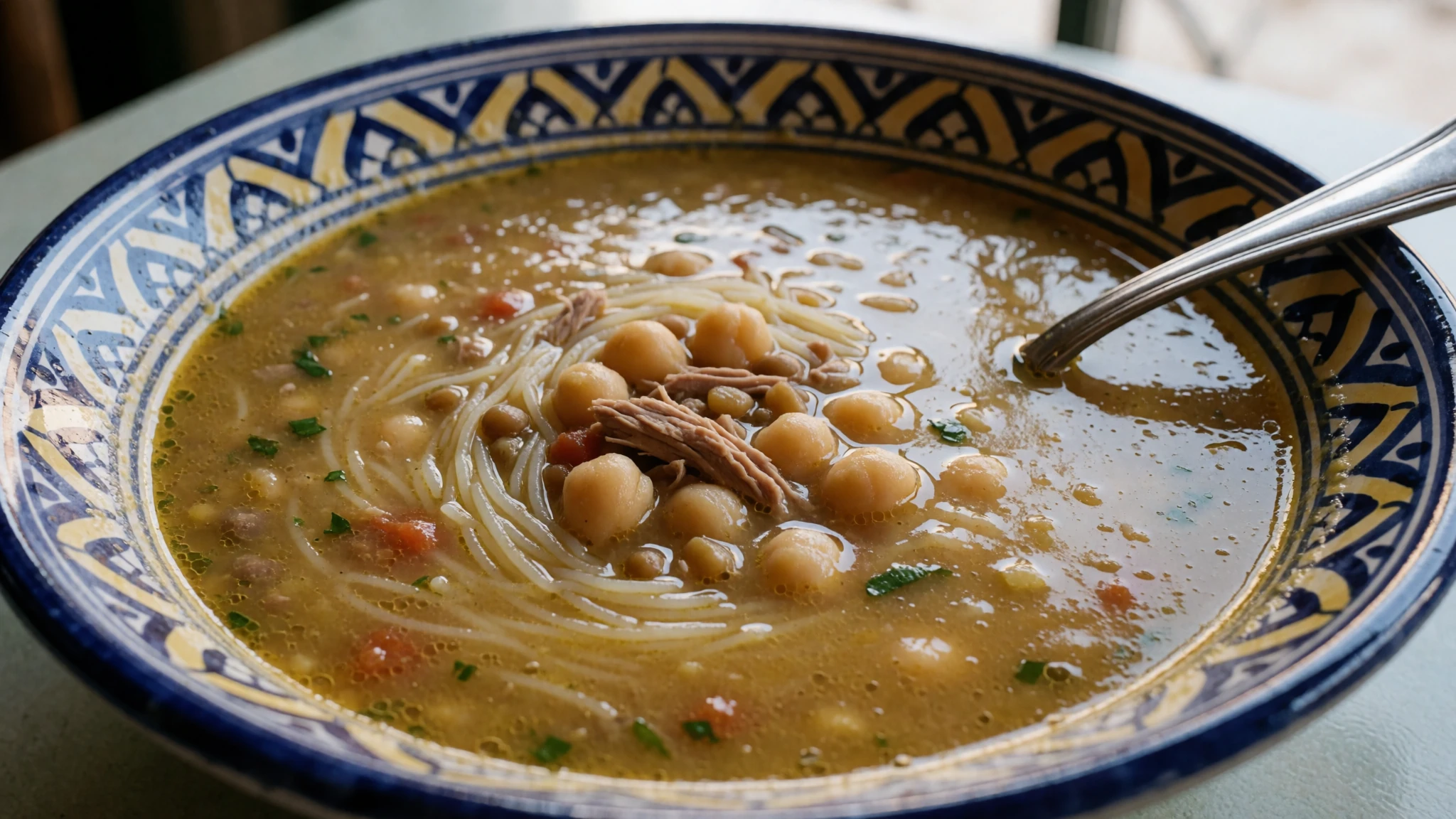
- Grilled meat from street stalls — Street grills in Meknes and the nearby towns
Skewers of spiced minced lamb or chicken, and chunks of grilled meat, are cooked over charcoal at small street stalls in the towns. The meat is fresh and hot, and it is best eaten standing up with bread and a little cumin on top. Choose a stall where the grill is busy and the turnover looks steady. - Msemen — Neighbourhood bakeries in Moulay Idriss Zerhoun
A square, flaky flatbread made by folding layers of dough with oil and semolina, then cooking it on a hot griddle. It is eaten warm for breakfast or with tea in the afternoon. Neighbourhood bakeries in Moulay Idriss Zerhoun make it in the morning, and it sells out quickly.
Plan it
Best time. April and October are the most comfortable months, when the ruins are warm but not punishing, and rain is lighter than in November. Summer is very hot and there is hardly any shade, so if you must visit then, go at opening time and leave before midday. Winter is the coolest season, with frosty mornings and rain on many days.
How long. 1–2
Getting there. Meknes is the usual base. From Meknes take local bus 15 from the roundabout near the grand taxi stand, or take a grand taxi from the rank opposite the French Institute, which takes about half an hour. A private taxi that waits while you visit is the simplest option for a day trip. Fez is also a day trip by coach tour.
Budget. low
Tips
- Arrive early, before the midday heat, and plan for the sun on open ground
- Bring a wide-brimmed hat, sunscreen and more water than you think you need
- Check the official site for current hours and ticket prices, as the north end may have no ticket stand
- Hire a licensed guide at the gate if you want the history explained
- Carry some cash for small purchases and tips, since card payment is limited around the site
Etiquette
- Do not enter the Zawiya of Moulay Idris I, which is closed to non-Muslims
- Ask before photographing people, particularly women and shopkeepers
- Stay off the mosaic floors and keep to the paths
Nearby
Sources
- Wikidata Q391215 (CC0)
- Wikipedia: Volubilis (rev 1383151212) (CC BY-SA 4.0)
- Wikivoyage: Volubilis (rev 5367699) (CC BY-SA 4.0)
- Volubilis (Capitol), Morocco, Marcin Sochacki (CC BY-SA 4.0)
- Volubilis Longshot II, Subhros (CC BY 3.0)
- Secteur du tumulus de Volubilis, Punic inscription, Dorieo (CC BY 3.0)
- Arch of Caracalla (Triumphal Arch), CarlOttersen (CC BY-SA 4.0)
- Mosaics in Volubilis, CarlOttersen (CC BY-SA 4.0)
- Volubilis panorama cropped, Prioryman derivative (CC BY-SA 2.0)
- Martinière Volubilis arc de triomphe 1887, Henri Poisson de La Martinière (Public domain)
- Volubilis Decauville track, Prioryman (CC BY 3.0)


