Volgograd
Volgograd, Russia
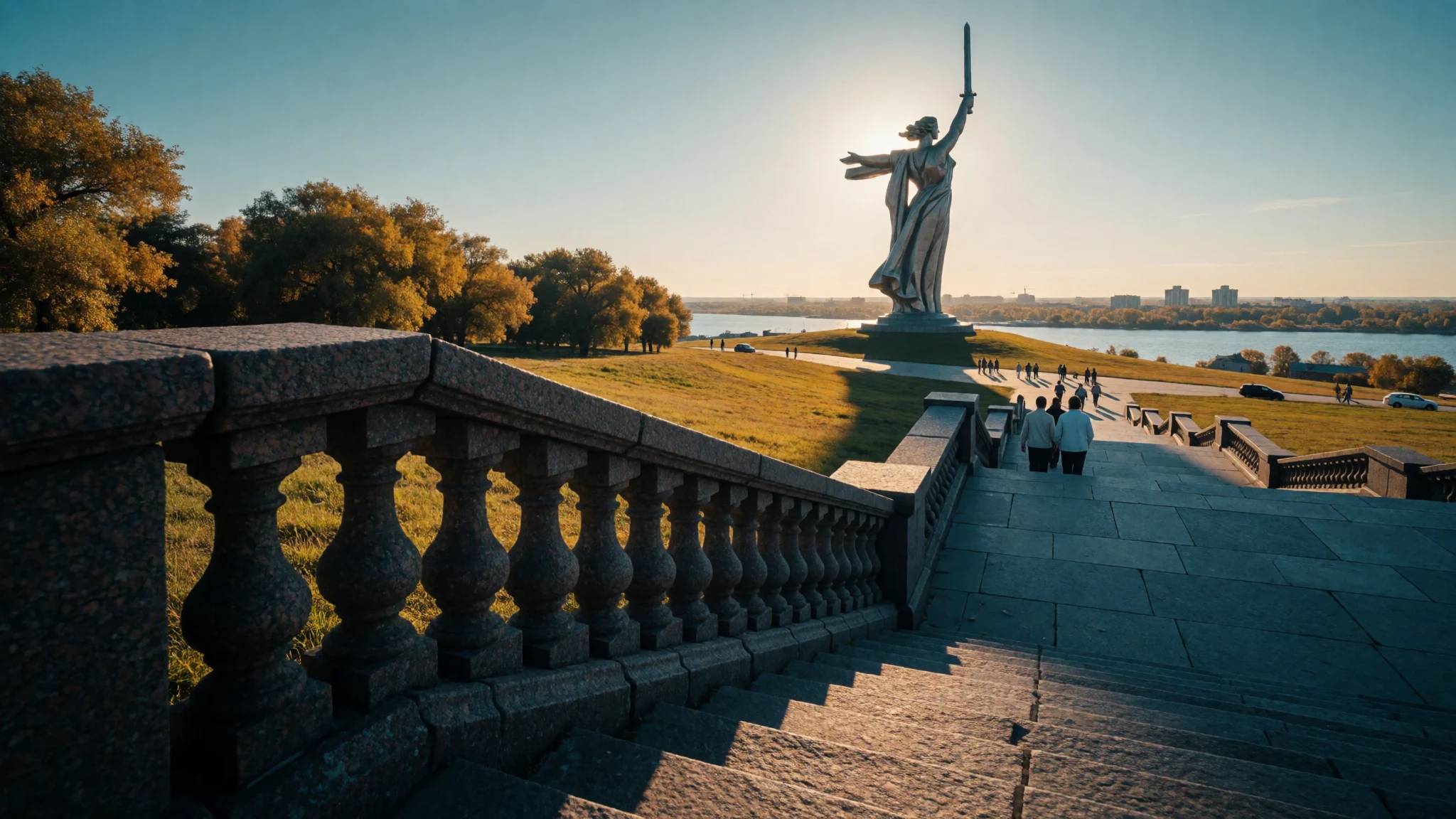
Volgograd is a long riverside city rebuilt from wartime ruins, where Second World War memorials, the Volga and the open steppe meet.
The place
Volgograd stretches along the western bank of the Volga, a long, narrow city of about one million people at an elevation of 80 metres. Most of what stands today was rebuilt after the war, so broad avenues, Soviet-era apartment blocks and monumental squares outnumber old timber streets. The centre faces the river, with a wide embankment where families stroll on summer evenings, and the open steppe begins almost at the city's edge. The place has carried three names, Tsaritsyn, Stalingrad and now Volgograd, and those layers show in street names, museums and memorials. Most visitors come for the Second World War sites, and the city treats them with real seriousness. For many Russians these are places of mourning and family memory, not entertainment. Beyond the memorials there is a working river port, a lively summer promenade, a metro-tram line that runs partly underground, and a football stadium built for the World Cup. The climate is dry and continental: summers are hot, winters are cold, and rain is light and spread through the year. Distances between sights are large, so plan on trams, buses or taxis rather than walking everything. English is not widely spoken, so a translation app and a little Cyrillic reading help a great deal.
Its story
Volgograd began as a fortress. Records place Tsaritsyn where the Tsaritsa meets the Volga in 1589, although some historians suspect a settlement stood there a little earlier. The fort guarded the river trade route, and a trading town soon grew around its walls. The garrison troops, called streltsy, were meant to keep Cossacks off the river, yet some of them ended up joining the Cossacks instead. The fortress was a restless place. Its garrison once rebelled for months against the tsar's forces, and in 1670 the rebel leader Stepan Razin captured it, though his men left after about a month. Later the Cossack rebel Kondraty Bulavin held it too. Through the following centuries Tsaritsyn grew into a busy river port and commercial centre, moving timber, grain, salt, fish and other goods, and its population rose quickly. During the Russian Civil War the city passed to the Bolsheviks, fell briefly to the White Army, and was then retaken. In 1925 it was renamed Stalingrad in honour of Stalin, who had taken part in its defence. In the Second World War the Battle of Stalingrad was fought among its streets and factories, and the Soviet victory is widely seen as the turning point of the war. The city received the title Hero City, and in 1961 it was renamed Volgograd.
What to see
- Mamayev Kurgan — North of the centre, on a hill above the city
Mamayev Kurgan is the hill where some of the fiercest fighting of the battle took place. It now carries a vast memorial complex topped by The Motherland Calls, a giant statue of a woman with a raised sword. Allow a half day, wear sturdy shoes for the long stairways, and go early in summer.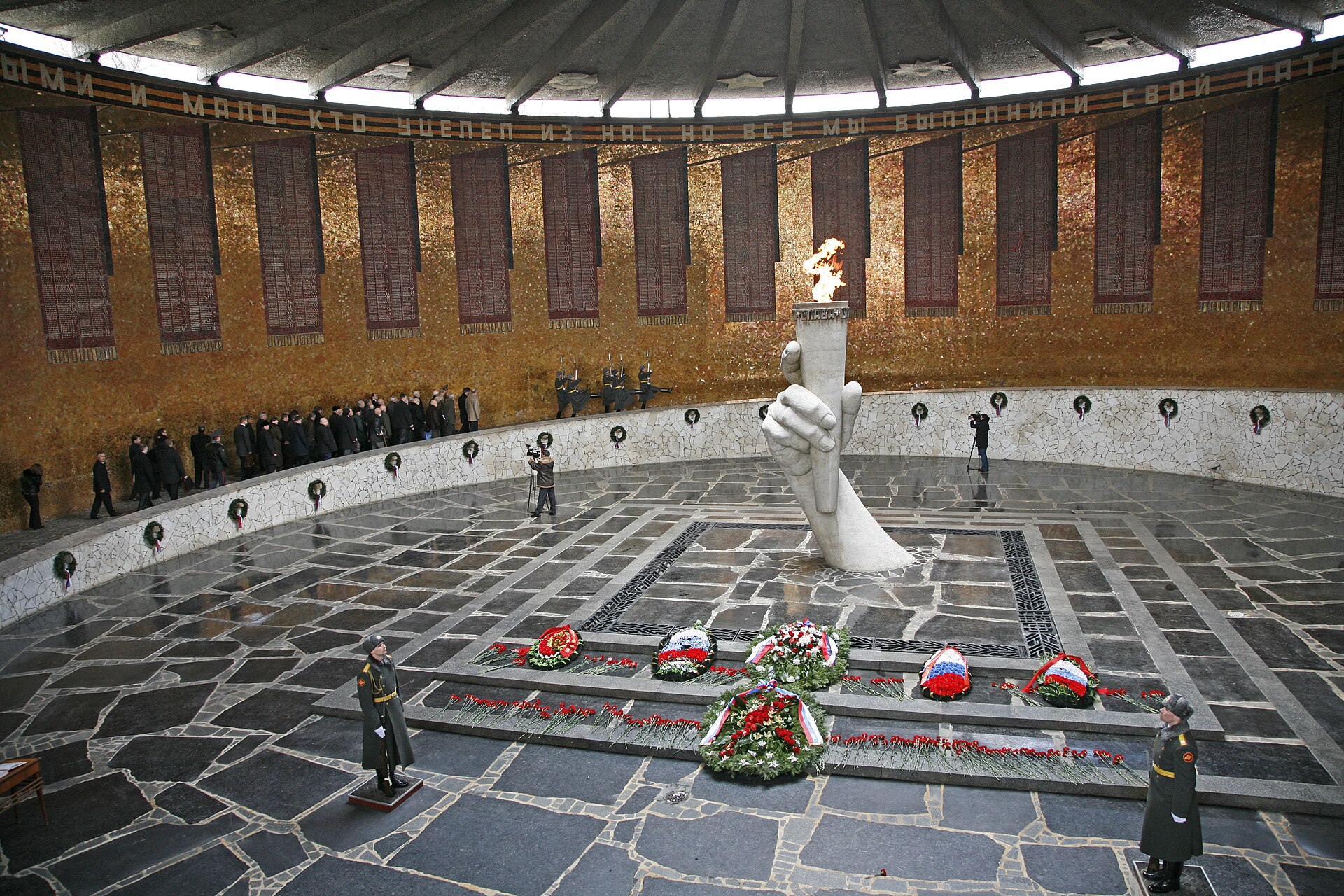
- Panorama Museum — Riverside, central Volgograd
The Panorama Museum stands beside the Volga and holds weapons, uniforms and personal objects from the battle, including a rifle that belonged to the sniper Vasily Zaytsev. A large painted panorama puts the fighting in context. Check the official site for opening days, and expect school groups at busy times.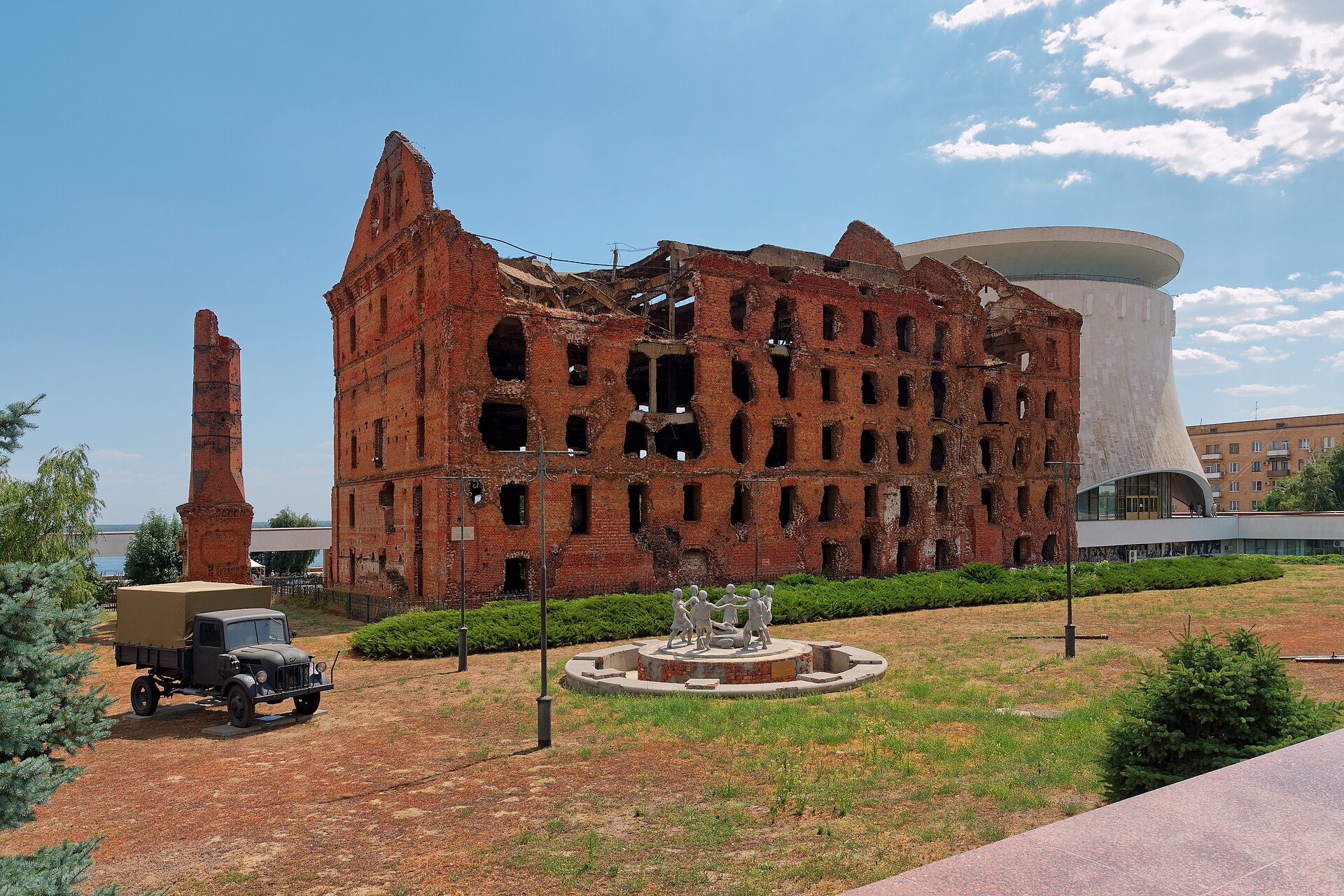
- Pavlov's House — Central Volgograd
Pavlov's House is an apartment building that a small group of Soviet soldiers fortified and defended against heavy German attack during the battle. It was a strategic point on the front line. The building is small and quickly seen, so pair it with the Panorama Museum, which lies nearby and explains its story. - Central Embankment — Along the Volga, city centre
The Central Embankment is the city's riverside promenade, with steps down to the Volga, fountains, cafés and wide views across the water. It is the easiest place to feel everyday Volgograd, especially on warm evenings when locals come out to walk, cycle and meet friends after the day's heat.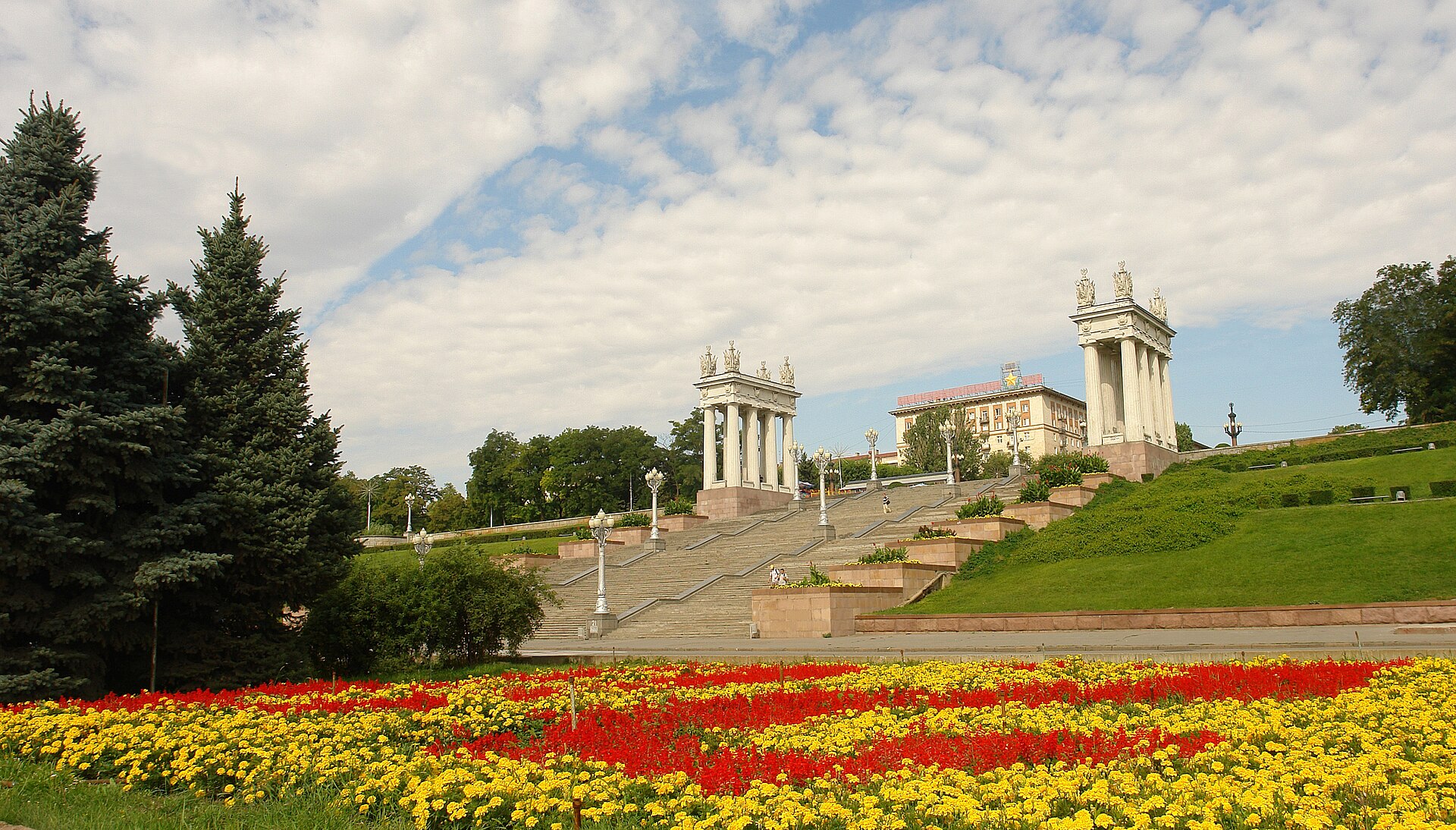
- Volgograd Arena — West bank of the Volga, north of the main railway station
Volgograd Arena opened in 2018 to host World Cup matches and replaced the old Central Stadium on the same site. The local club is FC Rotor. It lies on the western bank, north of the main railway station, and the metro-tram goes towards it. Check the official fixtures before travelling, as matches follow the domestic season.
Culture
Volgograd's culture is shaped by memory of the war, and the Mamayev Kurgan memorial complex is its clearest expression. The Hall of Military Glory is a circular building with an eternal flame and plaques bearing the names of the fallen. Across from it stands the Mother's Sorrow statue, a grieving woman holding a dead soldier, and in summer a shallow pool called the Lake of Tears surrounds it. Lower down the hill, the Square of Heroes carries sculptures of acts of courage. In warmer months the changing of the guard at the Hall draws crowds, and Russian families, veterans and school groups come to lay flowers. Beyond the memorials, the city has a modest local life of theatres, museums, football and river leisure. The Volga is central to that life, with riverside walks, summer cruises and fishing. People are generally courteous but reserved with strangers, and warmer once a conversation begins. The city's Soviet-era architecture is part of its character and is worth looking at with some curiosity rather than dismissal, since much of it was built quickly to house people after near total destruction. At the memorial complex, keep your voice low, do not pose jokingly for photographs, and leave the area around the eternal flame clear while the guard changes.
What to wear
Volgograd's traditional dress follows the wider Russian and southern Cossack patterns. Women's festive outfits included the sarafan, a long sleeveless dress worn over a linen blouse, with embroidered trim and a headdress such as the kokoshnik. Cossack men wore wool coats with a papakha, a tall sheepskin hat, and high boots. Linen, wool, cotton and sheepskin were the main materials, chosen for hot summers and hard winters. These costumes now appear mostly at folk festivals, school performances and commemorations. Everyday dress in Volgograd is practical and fairly smart: jeans, jackets and trainers for men and women alike, with more dressing up for evenings out, theatre and holidays. Winters bring heavy coats, fur hats and boots, while summers are light and casual. Visitors should dress for the weather first. In summer, bring a sun hat, sunscreen, light cotton clothes and sturdy flat shoes, since the memorial hill has long stairways and little shade. In winter, thermal layers, a windproof coat, a hat and boots with good grip are essential. At memorial sites and churches, modest, tidy clothing is appropriate: avoid beachwear, and women may want a scarf for church visits. Men should take off hats indoors and at the eternal flame.
What to eat
- Borscht — Canteens and family restaurants across the city
Borscht is a beetroot soup, usually with cabbage, potato and meat, served hot with sour cream and dark bread. It is a staple of Russian home cooking and easy to find at lunchtime in the city's simple canteens. - Pelmeni — Everyday cafés and family restaurants
Pelmeni are small meat-filled dumplings, boiled and served with butter, vinegar or sour cream. They suit cold weather and are a reliable, filling choice at cafés and canteens when the menu is only in Russian. - Ukha and Volga river fish — Riverside restaurants and local markets
Ukha is a clear fish soup with herbs, and the river supplies fish for grilling, smoking and frying. Riverside restaurants and covered markets are the best places to try it, particularly in summer when the Volga is busy. - Pirozhki — Bakeries and station kiosks
Pirozhki are small baked or fried buns filled with potato, cabbage, meat or sweet jam. They are cheap, portable snacks, sold in bakeries and kiosks, and useful for a quick bite between the memorials and the river. - Watermelon and summer produce — Seasonal market stalls and roadside stands
The steppe summer brings watermelons, tomatoes and melons to market stalls and roadside stands across the region. Buying fruit from a stall is a pleasant way to cool down and see how locals shop in the hot months. - Kvass — Summer street kiosks and cafés
Kvass is a lightly sour, low-alcohol drink made from fermented rye bread. Street kiosks sell it cold in summer, and it is a popular refresher on hot days, particularly alongside grilled fish or a plate of dumplings.
Plan it
Best time. May–June and September are best, with warm weather and fewer extremes. July and August are hot and dry, and winters are cold, so the memorial hill is harder going. River cruises run in the warmer months.
How long. 2–3
Getting there. Fly to Volgograd's airport and take a taxi or bus into the centre, or arrive by train at Volgograd I, a major junction with long-distance sleeper services from Moscow, Saint Petersburg and many western Russian cities. The journey from Moscow takes the better part of a day by rail or road. In summer, river cruises along the Volga also call here. Within the city, trams, the metro-tram and taxis cover the last leg.
Budget. low
Tips
- Visit Mamayev Kurgan early in the morning in summer, before the heat and the tour groups arrive
- Check the official city site (http://www.volgadmin.ru/) and museum pages for opening days before you travel
- Carry some cash as well as a card, and download an offline translation app
- Wear comfortable shoes, as the memorial complex has long stairways and little shade
- Bring water in summer, as the steppe sun is strong and shade is limited
Etiquette
- Keep voices low and avoid jokes or poses at the eternal flame and the memorial halls
- Do not photograph soldiers or guards at the memorial without permission
- Remove your hat and dress tidily at churches and war memorials
Nearby
Sources
- Wikidata Q914 (CC0)
- Wikipedia: Volgograd (rev 1382637880) (CC BY-SA 4.0)
- Wikivoyage: Volgograd (rev 5422093) (CC BY-SA 4.0)
- Volgograd Montage 2016, AlexTref871 (CC BY-SA 4.0)
- Volgograd I central station, A.Savin (CC BY-SA 2.0)
- Dmitry Medvedev at the Mamaev Kurgan war memorial, Governor of Volgograd Oblast (CC BY 3.0)
- Profsoyuznaya metrotram station, Redboston (CC BY 3.0)
- Memorial museum-panorama The Battle of Stalingrad, Alexxx1979 (CC BY-SA 4.0)
- The central embankment of Volgograd, Правительство Волгоградской области (CC BY 3.0)
- View of Tsaritsyn (Public domain)
- Gogolya Street in Tsaritsyn (Public domain)


