Vis
Vis, Croatia
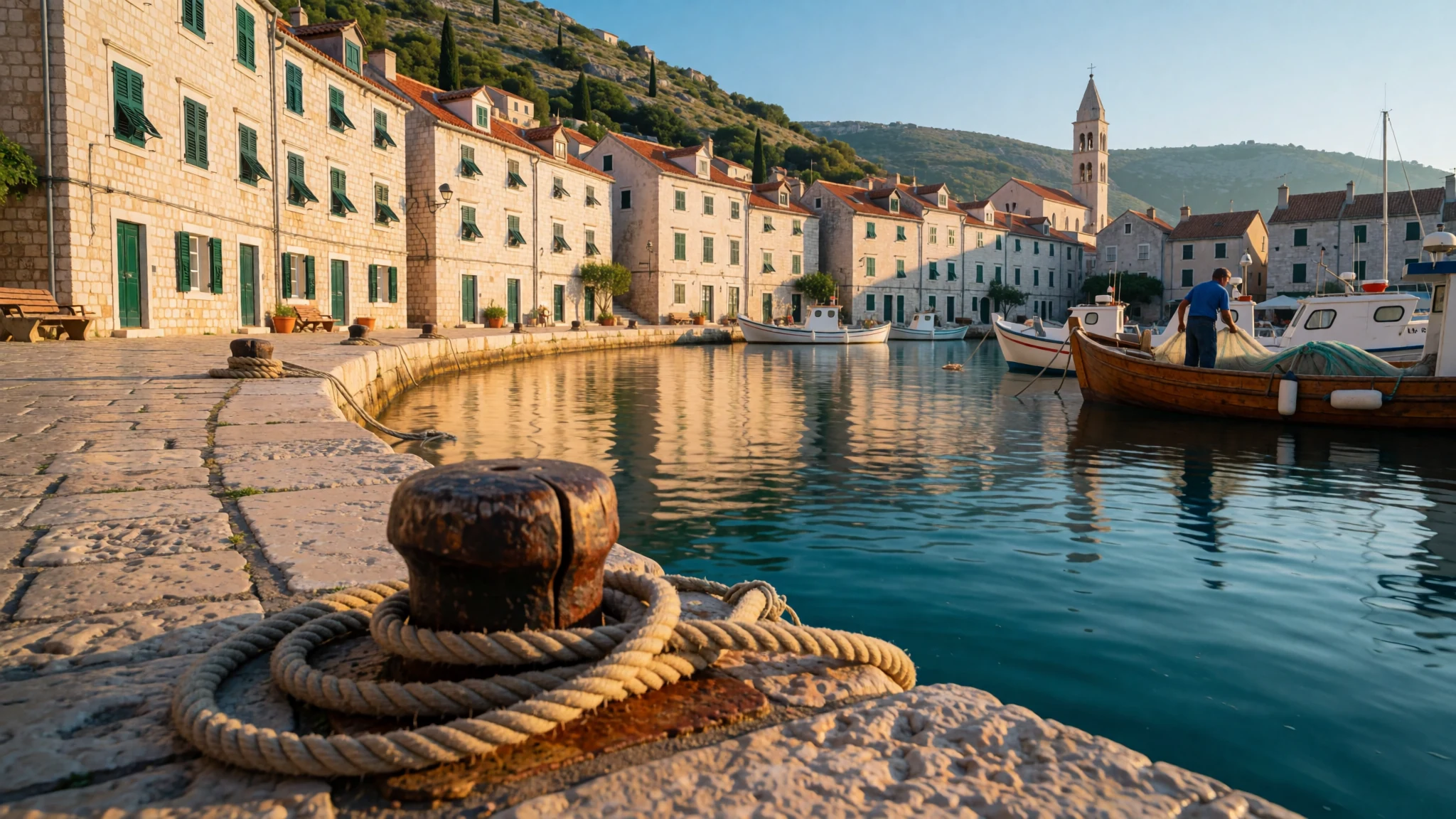
Vis is a quiet Adriatic island of pebble coves, fishing harbours and a Greek past, still a boat ride from Split.
The place
Vis is a limestone island in the Adriatic, south of Split, and the ferry docks at the harbour of the town that shares its name. Rain sinks straight into the karst, so no stream runs all year. Underground, water collects where the limestone meets older evaporite rock called the Komiža salt diapir. That hidden store is why Vis can draw on fresh water of its own, unlike most islands in this sea. The wells depend on rainfall alone, so a long drought, a busy summer of extra taps, or dirt reaching the aquifer can shrink the supply. The highest ground reaches 587 metres. Measured across, Vis comes to 90.26 square kilometres, or 34.85 square miles. The town of Vis occupies a broad bay: a working harbour, stone houses above the quay, swimming from pebble and rock. Komiža, on the western shore, faces open sea and grew as the fishing port. Between them lie vines, olives and low scrub. About a fifth of the farmable ground is vineyard, growing Plavac Mali, Kurteloška and Vugava, the last of these native to Vis. People on Vis still make a living from vines, the catch, processing fish and visitors. A naval base held the coast for decades after the Second World War, and civilian travel returned only in 1989, so the shore never gained a line of big resorts. In high summer the known coves fill, yet much of the shore stays quiet and still looks like bare stone and open water.
Its story
Vis has been inhabited since the Neolithic. Illyrians lived here, and from the eighth to the sixth century BC they were under Liburnian domination. In the fourth century BC Syracuse's ruler, Dionysius the Elder, settled Greeks at Issa (Ἴσσα) in a bid to hold the Adriatic. From Issa, settlers set up Tragurion, now Trogir, and Epetion, now Stobreč, as trading posts on the mainland, and the city's own coins travelled well beyond the island. Its room to manoeuvre shrank during the first war between Illyrians and Rome, when stronger states started treating the island as a bargaining piece. In the civil war Issa backed Pompey, and in 47 BC it lost its privileges, becoming an oppidum of Roman citizens dependent on Salona. The old town stood on the western slope above a wide bay. Digging under the slope has revealed where streets ran and where houses stood, inside a Greek wall-circuit that still reads as a crooked quadrilateral. Tombs on the site contained ceramics, among them pieces brought from the south of Italy. Masonry from the Roman theatre's seating is built into the Franciscan monastery. Venice, Napoleonic Italy and the Austrian Empire all ruled Vis before the end of the First World War. Fleets fought twice in the nineteenth century in the sea just north of the island; the 1866 action is the Battle of Lissa. Rapallo's 1920 settlement moved Vis into the Kingdom of Yugoslavia. During the Second World War, Partisan headquarters sat on Vis, and afterwards the Yugoslav navy held the island as a base until 1989.
What to see
- Vis town harbour — Vis town
The harbour in Vis town is where Split's ferries and catamarans dock, on a wide bay with fishing boats along the same quay. Stone houses rise behind the water. Swimming in town is from a pebble-and-rock beach, not sand. A trio of clothing-optional coves sits further out and means a scramble over rocky hillsides.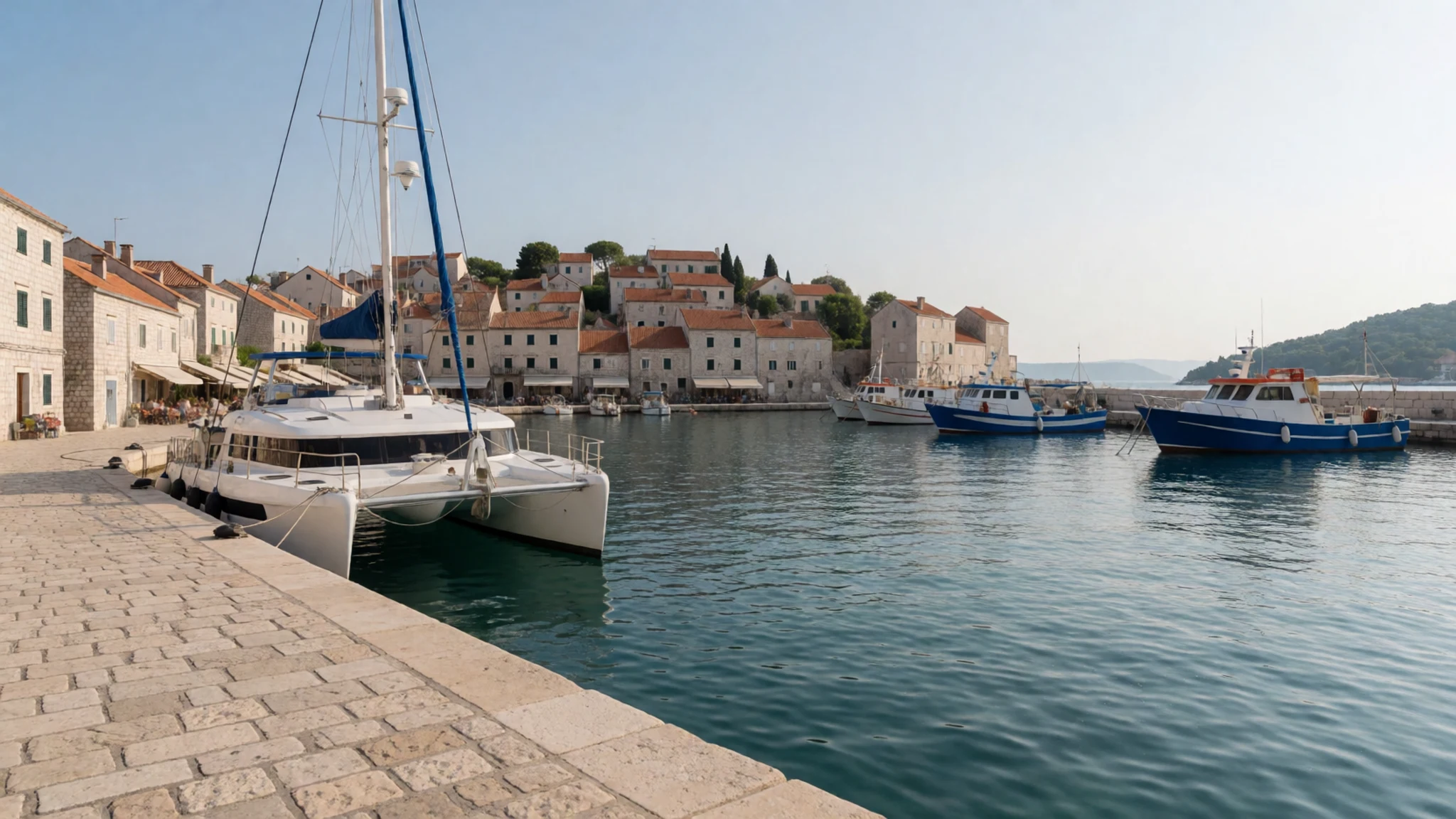
- Komiža — western coast
Komiža is the harbour on the western side of Vis, facing open Adriatic water rather than the run back to Split. The town grew on fishing, and its crews developed the falkuša, a local boat they went on sailing long after many wooden types had gone. Houses press in on a small quay that still reads as a working port.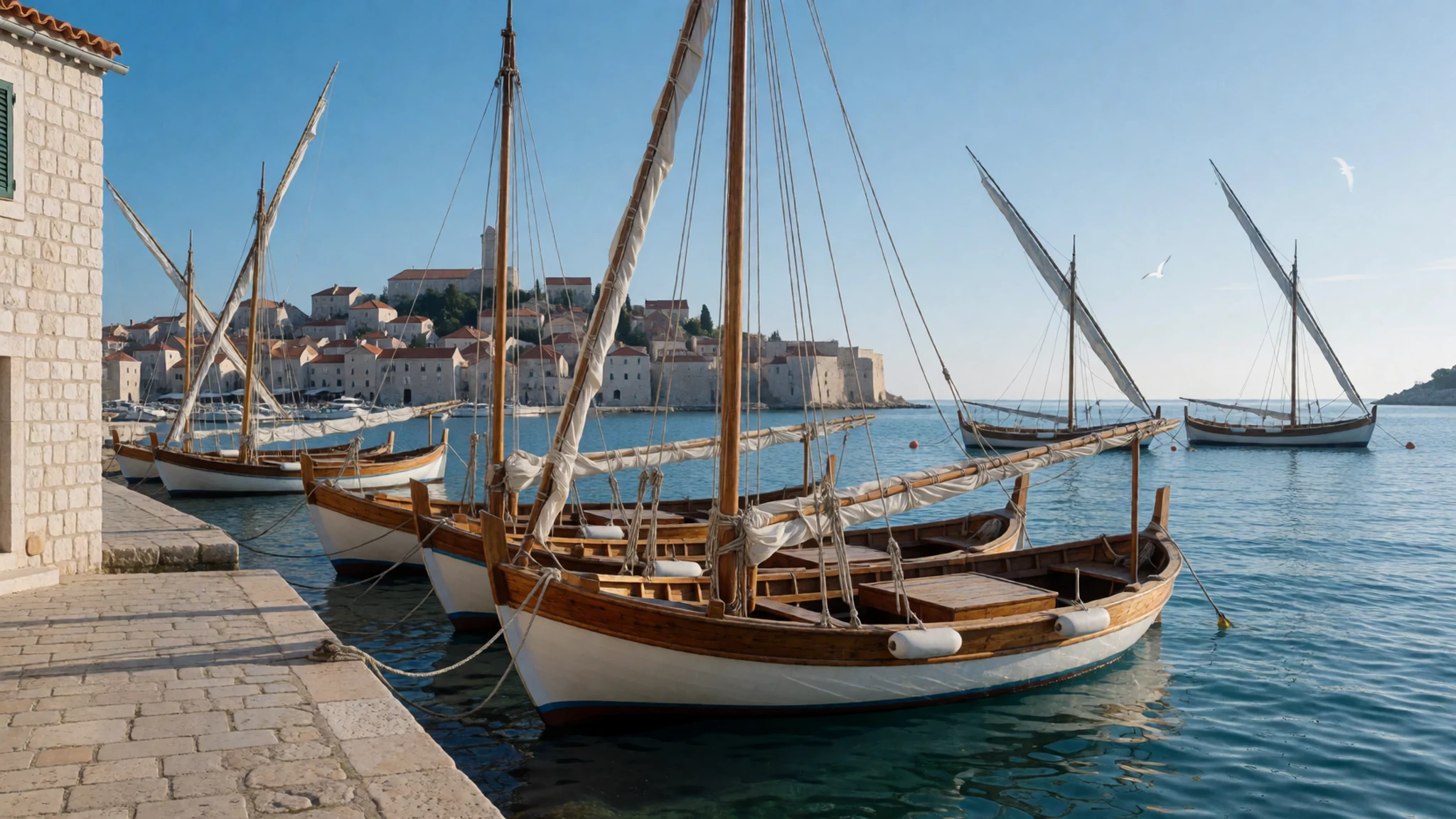
- Stoncica Bay — north-eastern shore
Stoncica Bay lies on the north-eastern shore of Vis, east of the main town. In summer it pulls a young crowd and can be crowded while quieter coves nearby are not. The beach is pebble and rock, and the shore has a volleyball court, a restaurant and a kiosk for drinks and ice cream.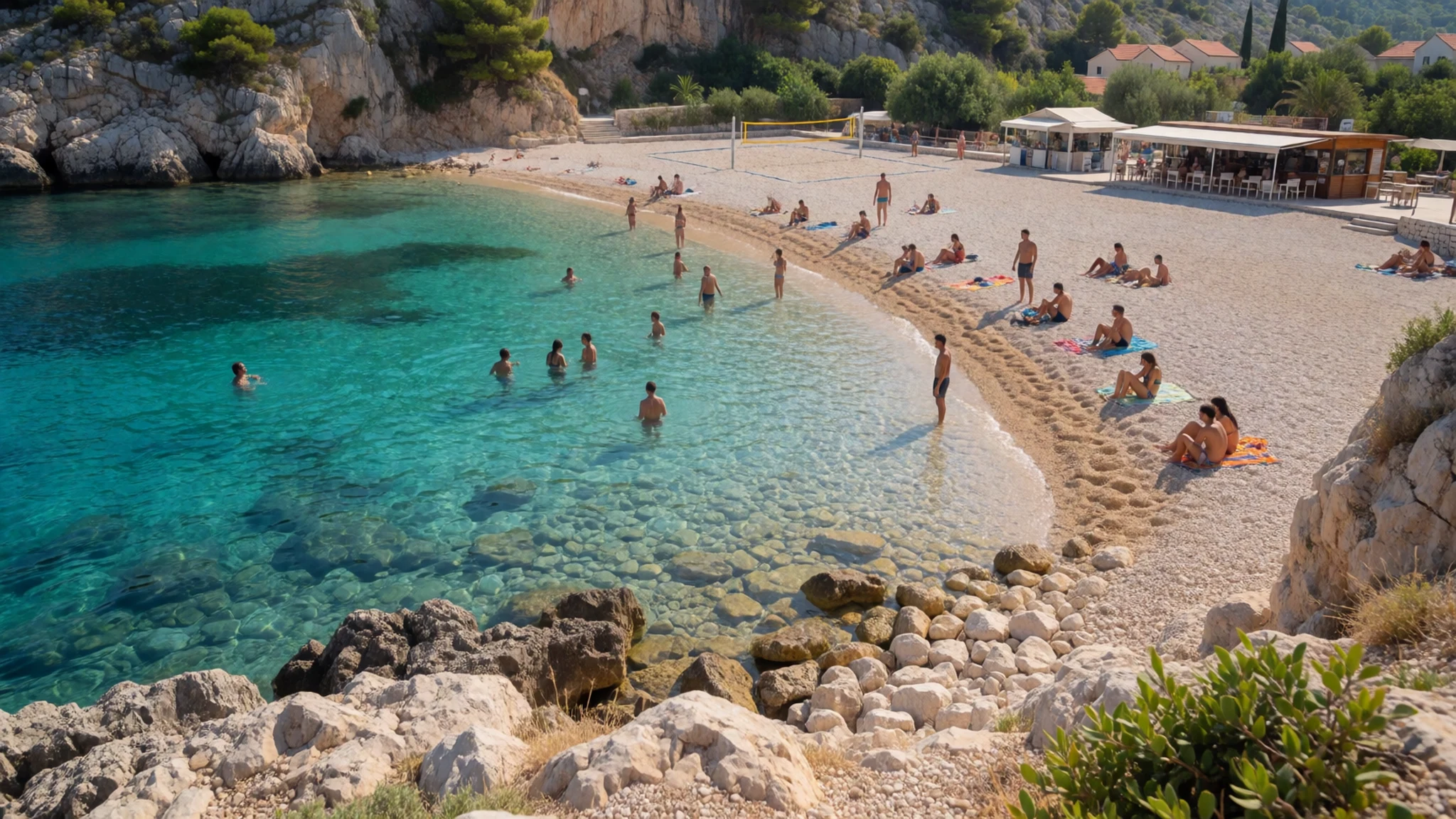
- Srebrena — south-eastern coast, near Rukavac
Srebrena, or the Silver Beach, is on the south-eastern coast of Vis, past Milna and near Rukavac. Pale pebbles line the inner bay, which is the crowded stretch. Beyond the bay the coast is rock, usually much calmer, and part of that shore is textile-free. The pale stone in clear water is what the name points to; the beach is not sand.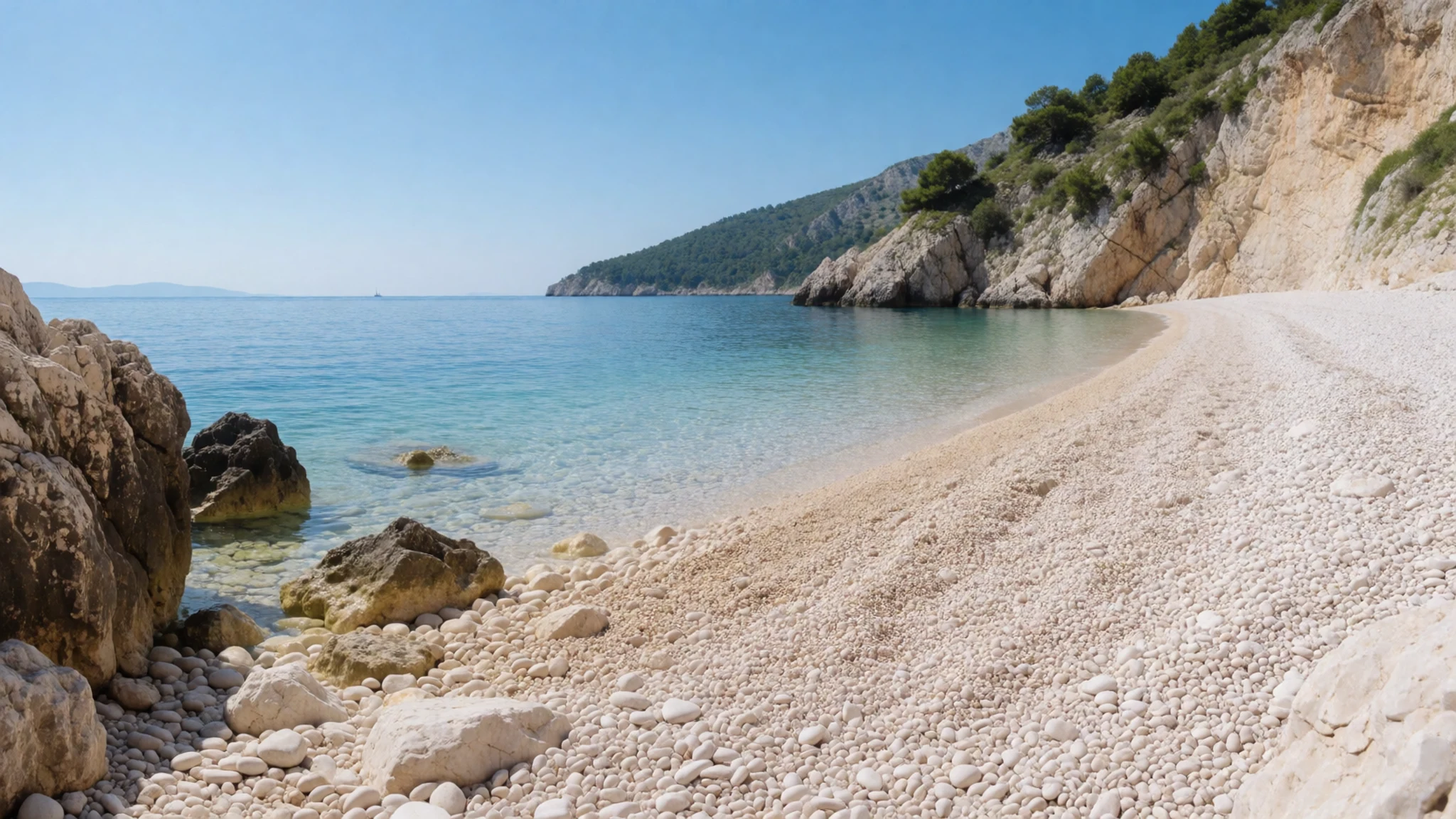
- Stiniva Bay — southern coast
Stiniva Bay is a tight inlet on the southern coast of Vis, with steep pale rock around a short inner beach. Seen from the air, it is a bright slot of Adriatic water opening to the sea. The shore, as on the rest of Vis, is pebble and stone, and the slopes above it look largely unbuilt.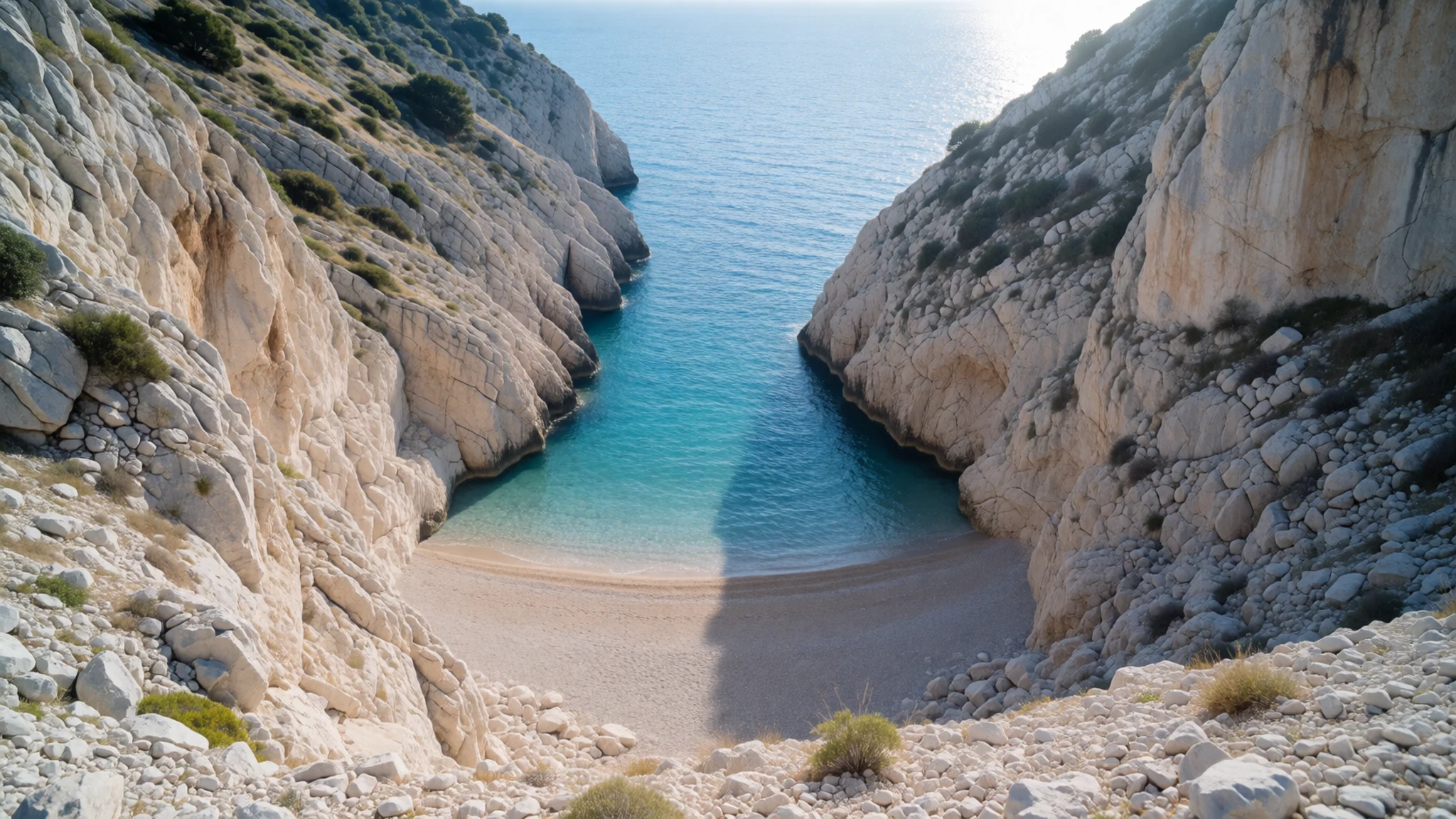
Culture
Vis still behaves as a fishing and wine island that only recently had to make room for tourists. In Komiža the falkuša, the local fishing boat, is part of how people tell the town's story, and on the terraces Plavac Mali, Kurteloška and Vugava are spoken of as island grapes, Vugava especially as native here. The coast was a naval base until 1989, which kept big resorts away and left a plain, slightly reserved welcome. The Partisan headquarters of the Second World War is remembered as something that happened here, not as a show. People in both towns talk about that period without dressing it up for the ferry crowd. The Franciscan monastery, with Roman theatre stone in its walls, is a working religious house. Summer days mean swimming from rock and pebble, a long lunch, and an evening on the quay. A few beaches are textile-optional and lie off the town front, reached by a climb over rock. On Vis, keep textile-optional swimming to those out-of-the-way coves, dress before walking back through town, and use fresh water sparingly, because the supply under the limestone is finite.
What to wear
Clothing on Vis divides into feast-day dress and what the quay actually wears. For processions and folk groups, Dalmatian island costume means linen or cotton shirts, wool waistcoats, dark trousers or full skirts, and embroidery kept for ceremony. Everyday cloth used to be simpler: light shirts and caps on the boats, wool when the bora rose, and practical clothes for vines and church. That older dress now appears mainly at festivals. Summer on Vis is shorts, a simple dress, sandals and a hat, with a collared linen shirt for dinner at an eatery and little interest in city formality. The long naval presence did not leave a military look on the street. Visitors need clothes for limestone, pebbles and hard sun. Wet-friendly shoes help on the beaches and rough paths. Shoulders and knees should be covered in the Franciscan monastery and other churches. A shirt covers the walk from a textile-optional cove back into town, and a light layer is enough for the ferry and a windy ridge. Heavy suiting and formal heels suit the ground badly; the island is informal.
What to eat
- Gregada — harbour konobas in Vis town and Komiža
Gregada is the fish stew cooked on Vis: white fish, potato, onion and olive oil in a light pot, not a thick spiced soup. The fish changes with the morning's catch. Harbour konobas in Vis town and Komiža are the places that still make it as a house dish.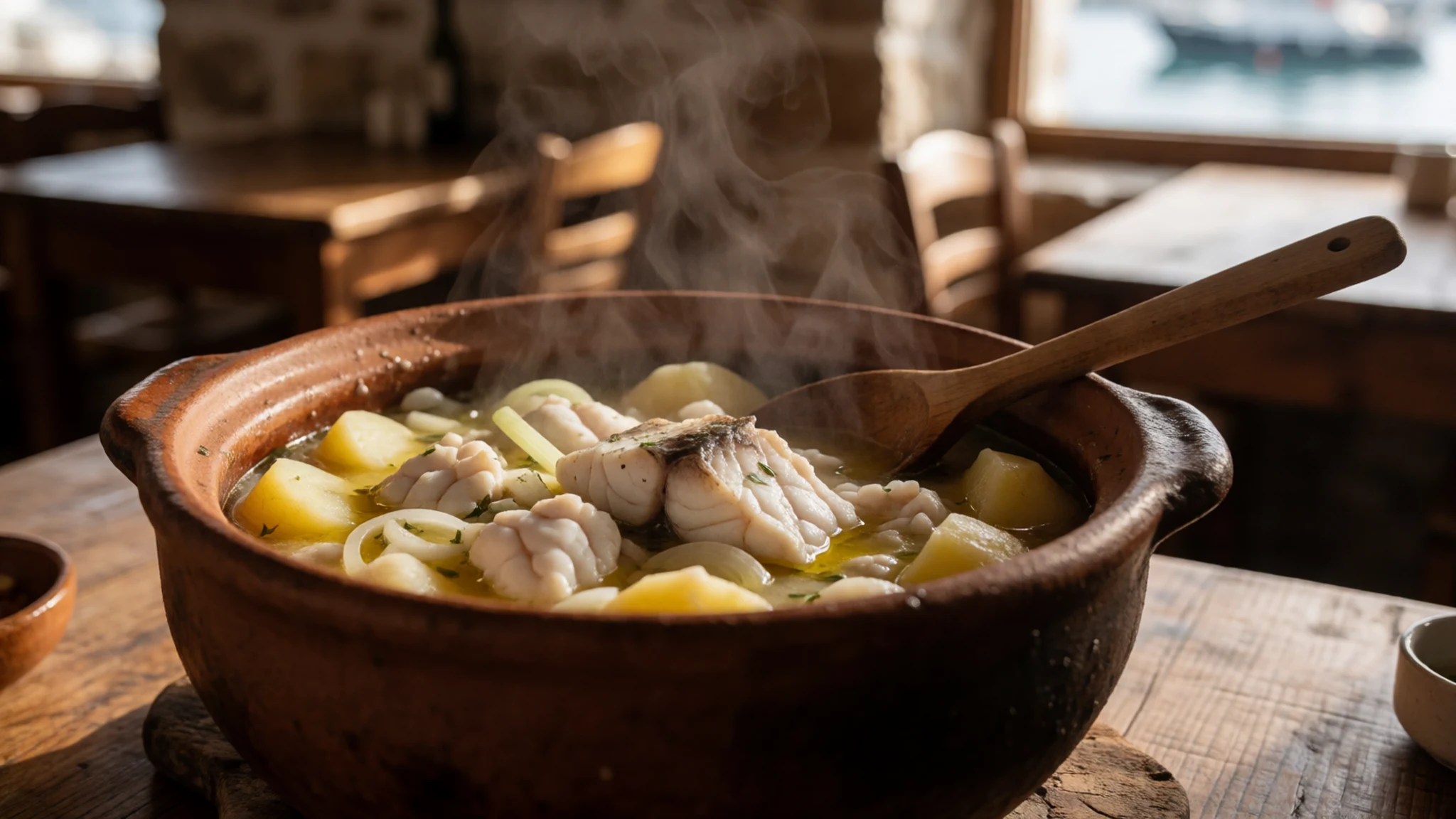
- Black risotto — harbourside eateries in Vis town and Komiža
Black risotto on Vis is rice cooked with cuttlefish ink and pieces of cuttlefish, a dark savoury plate rather than a tomato dish. Dalmatian kitchens treat it as a main, not only a starter. Harbourside eateries in Vis town and Komiža serve it when the cooking follows the local catch.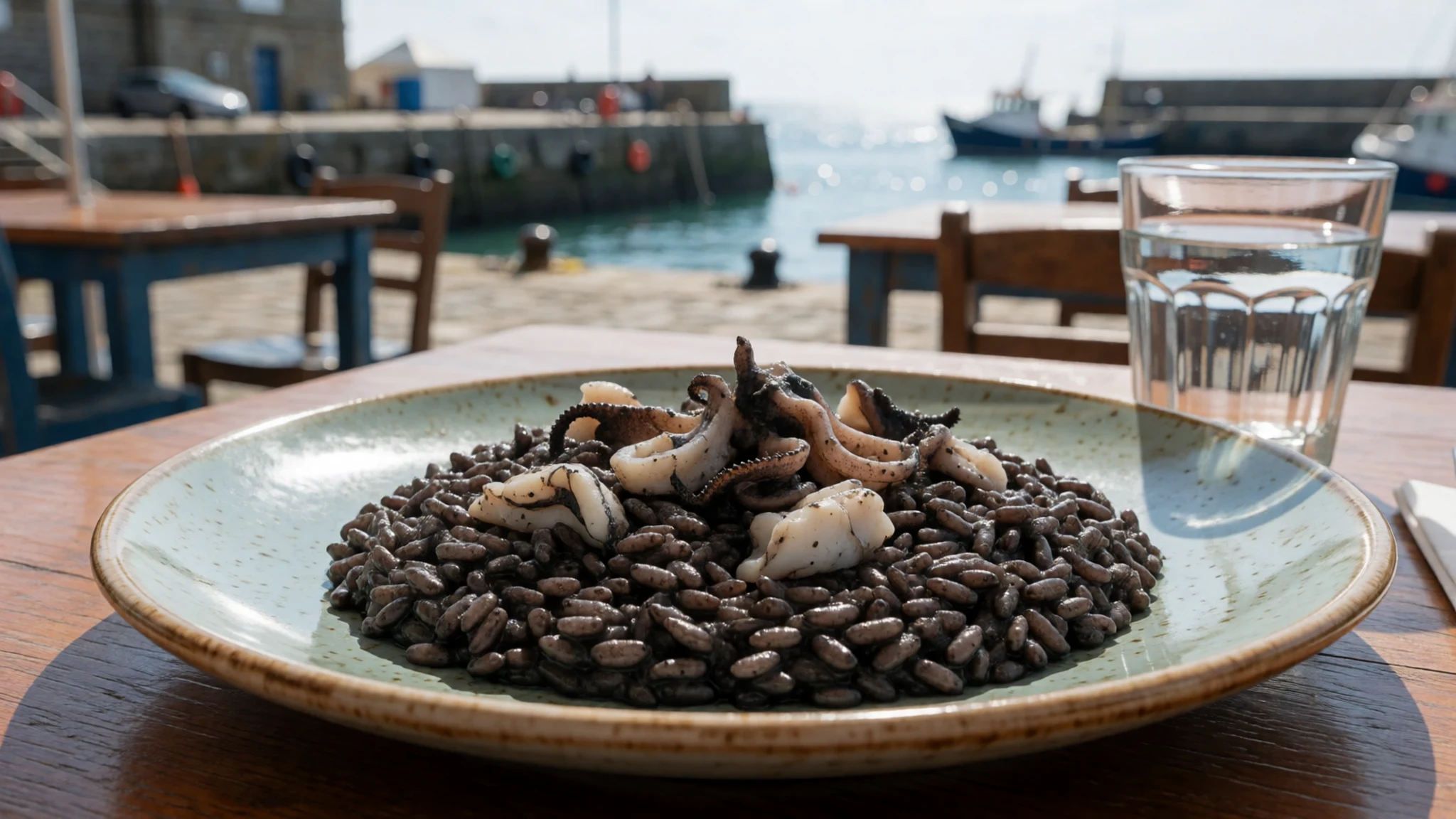
- Grilled octopus — harbour konobas in Vis town and the Komiža waterfront
Grilled octopus on Vis comes as a tentacle from the grill or a salad with potato and olive oil, kept simple so the seafood stays the point. Konobas on the harbour in Vis town and along the waterfront in Komiža are the places that serve it through the summer. - Calamari risotto — eateries around the port in Vis town
Calamari risotto on Vis is squid folded through rice, lighter in colour than cuttlefish-ink risotto and just as much a harbour lunch. Kitchens that cook both Dalmatian fish and Italian rice dishes, especially around the port in Vis town, are where it turns up. - Lobster — traditional konobas in Vis town or Komiža
Lobster, called jastog, is the celebration plate on Vis rather than the everyday stew. Cooks usually grill it or serve it in a light sauce so the shellfish stays recognisable. The setting is a traditional konoba in Vis town or Komiža that specialises in lobster.
Plan it
Best time. Summer is high season on Vis: more boats from Split, swimming weather, and the popular bays at their busiest. The shoulder of the season, either side of that peak, is the calmer time for the same coves. In the cold months many kitchens close and the island goes quiet.
How long. three to four
Getting there. Vis has no airport. Ferries and catamarans sail from Split and arrive at the port in the centre of Vis town, on the eastern side of the island. The ferry takes a little over two hours and the catamaran closer to an hour and a half; frequency and fares change with the season, so check the operator. Another catamaran calls on some weekdays. Buses and hired cars link the port with Komiža and the coves over the ridge.
Budget. mid
Tips
- Book the Split boat ahead for summer weekends.
- Start early for Stoncica and the small southern coves; they fill through the morning.
- Wear shoes you can soak. Every beach on Vis is pebble or rock, and some paths are a scramble.
- Stay in rooms or apartments in Vis town, Komiža or seafront houses, and do not plan on camping, which is not lawful here.
- Go easy on taps in a dry spell; the island's fresh water is an underground store fed only by rain.
Etiquette
- Dress before leaving a textile-optional cove for the town.
- Cover shoulders and knees at churches and the Franciscan monastery.
- Be careful with fresh water; it is a limited underground supply.
- Ask before taking close photographs of people in the harbours.
Nearby
Sources
- Wikidata Q203767 (CC0)
- Wikipedia (rev 1380766636) (CC BY-SA 4.0)
- Wikivoyage (rev 5214982) (CC BY-SA 4.0)
- Photo: Aerial image of Vis (view from the southwest) (CC BY-SA 4.0)
- Photo: Vis harbor, Island of Vis, Croatia (CC BY-SA 1.0)
- Photo: Seeschlacht bei Lissa, Albert Rieger, 1866 (Public domain)
- Photo: Marshal Tito with Allied officers, Vis, 1944 (Public domain)
- Photo: Harbour at Komiža (CC BY 2.5)
- Photo: Aerial view of Stiniva Bay (CC BY 2.5)
- Photo: Vis Bay, Croatia (CC BY-SA 1.0)
- Photo: Komiža, Island of Vis (CC BY-SA 4.0)


