Villarrica Volcano
Villarrica Volcano, Chile
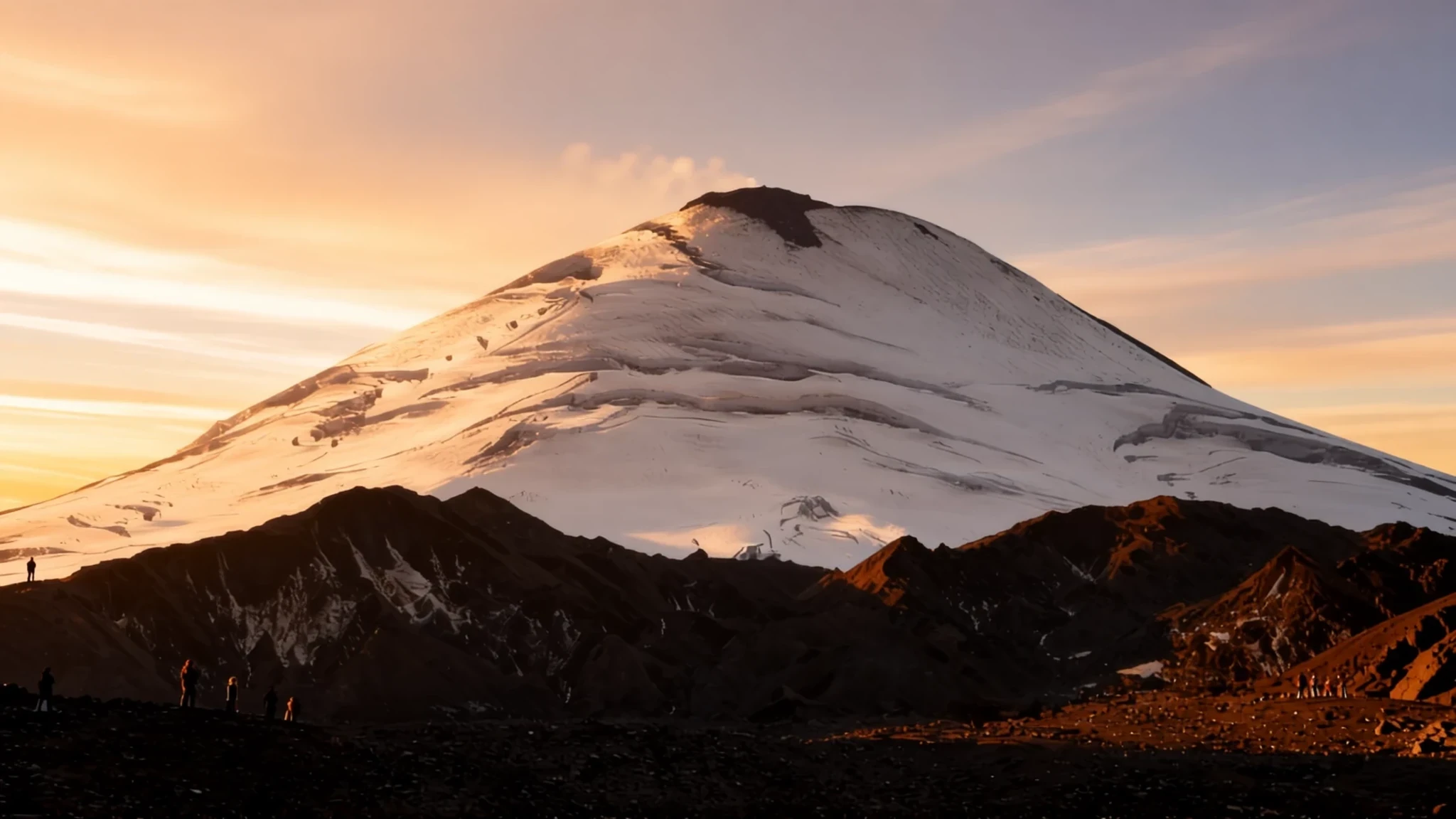
A snow-capped Andean stratovolcano cradling an active lava crater above deep blue glacial lakes and southern beech forests.
The place
Villarrica Volcano rises as a perfectly proportioned snow-covered peak in southern Chile, dominating the skyline above the surrounding lake district. Standing at an elevation of 2850 metres within Villarrica National Park, this stratovolcano is distinguished by an open, churning lava lake nestled inside its summit crater. Continuous plumes of gas drift from the peak, glowing faintly against the night sky and reflecting off the icy slopes that coat its upper flanks.
The volcano sits at the edge of the Chilean Central Valley, part of an Andean chain shaped by complex tectonic fractures. Glaciers blanket the summit cone, creating a stark visual contrast between thick blue ice and dark volcanic ash. During warmer months, heat from beneath the surface causes gradual melting, sending fresh streams down towards the timberline. Lower down, ancient Valdivian temperate rainforests of monkey puzzle trees and coihue oaks wrap around the mountain's base, giving way to volcanic caves and scoria fields.
Settlements such as Pucón and Villarrica nestle along the shores of nearby lakes, using the mountain as a dramatic backdrop for outdoor exploration. Outdoor enthusiasts gather here to ascend the snowfields, ski down the northern slopes in winter, or trek through the surrounding national park. The atmosphere in the region balances raw geological power with the tranquility of pristine waters and dense woodland.
Its story
Villarrica Volcano holds deep spiritual importance for the indigenous Mapuche people, who know the mountain as Rucapillán, meaning house of the spirit. In Mapuche cosmology, the volcano represents a sacred dwelling place where powerful natural forces reside. Smoke and eruptions were traditionally interpreted as manifestations of spiritual energy, shaping local stories and deep reverence for the mountain long before European settlers arrived in the region.
Geological history reveals that Villarrica has undergone dramatic transformations across millennia. The modern cone built itself upon the remnants of older structures that collapsed after massive prehistoric eruptions, forming expansive calderas. Over thousands of years, alternating cycles of explosive activity and quiet lava flows built up the layered stratovolcano seen today. Ice ages sculpted its flanks, carving deep troughs that were later filled by subglacial lavas and ash deposits.
In recent centuries, the mountain has remained one of the most active peaks in the Andes. Fountains of lava and dramatic ash columns have periodically altered the surrounding landscape, melting ice caps and creating swift mudflows that reshaped river valleys. Monitoring teams today keep constant watch over carbon and sulphur emissions escaping from the crater lake, tracking the subtle shifts of an active subterranean system. Despite its volatility, the mountain remains a symbol of resilience and natural wonder for the communities living in its shadow.
What to see
- Summit Crater Climb — Villarrica National Park
Ascending to the rim of Villarrica Volcano brings hikers to the edge of an active crater, where gas plumes rise above molten rock. Guided groups navigate frozen snowfields and ice slopes using crampons and ice axes. Reaching the highest point at an elevation of 2850 metres offers sweeping views across Andean lakes and neighbouring peaks.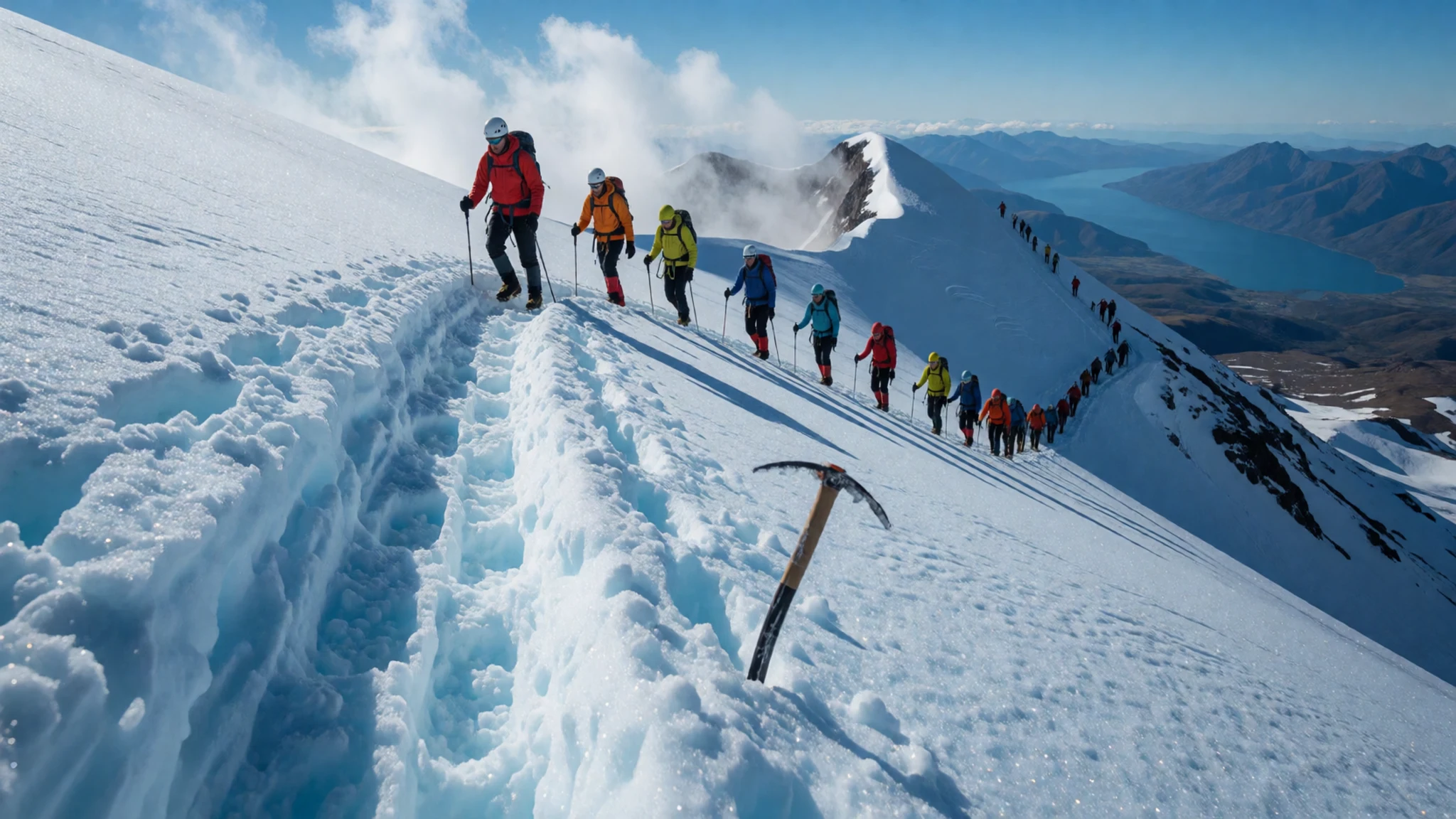
- Lake Villarrica Shoreline — Pucón and Villarrica waterfronts
The clear waters of Lake Villarrica provide a calm counterpoint to the towering volcano. Black sand beaches along the shore offer spots for swimming, kayaking, and boat trips during summer. The lake shore near Pucón presents framed views of the snow-capped peak reflecting across the water.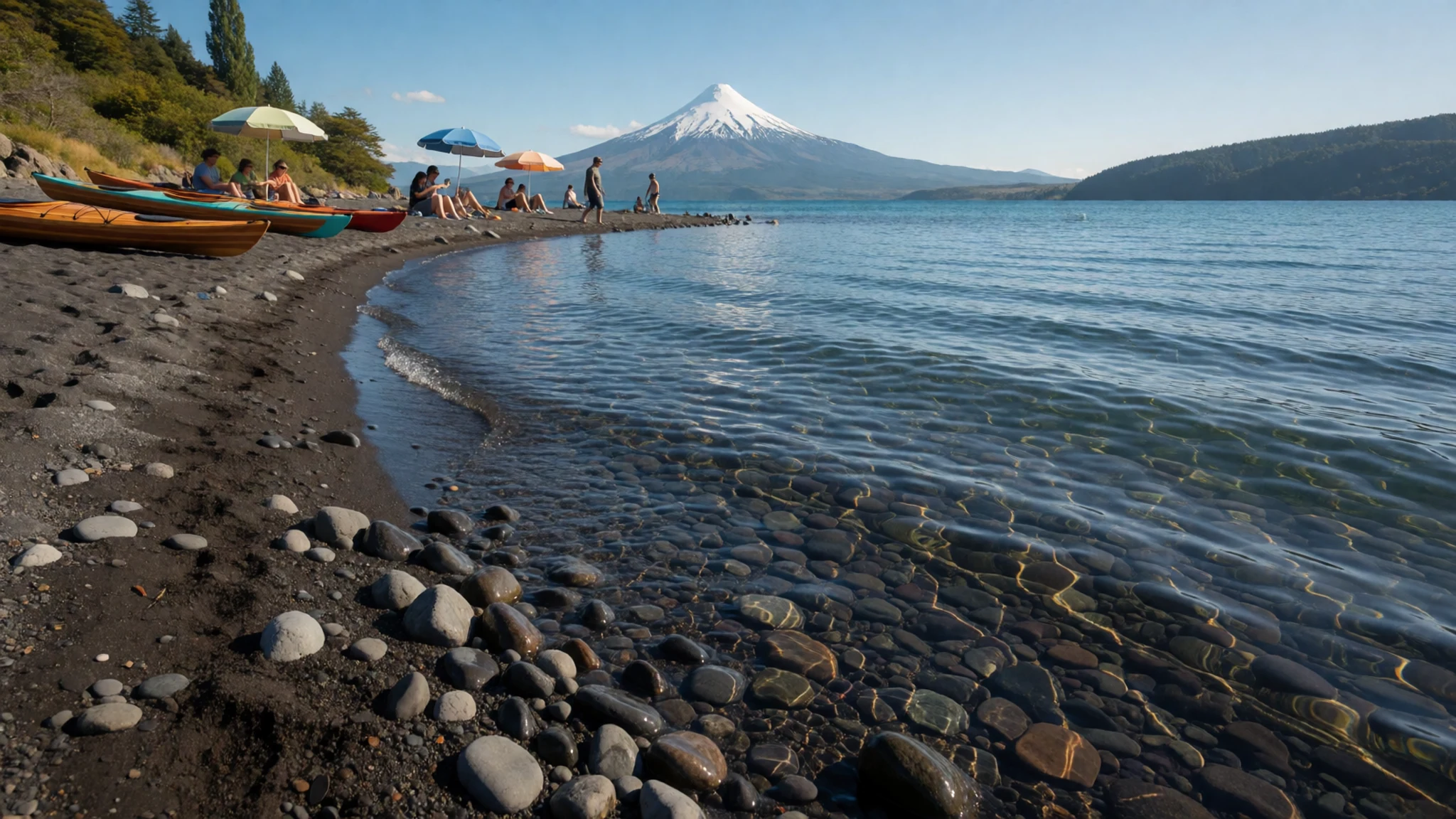
- Geothermal Hot Springs — Valleys of Curarrehue and Coñaripe
Natural thermal baths heated by the volcanic engine under Villarrica Volcano dot the surrounding Andean valleys. Geometric wooden pools fed by thermal rivers sit amid dense temperate rainforest. Soaking in warm mineral waters after a mountain trek is a long-standing tradition in the Araucanía region.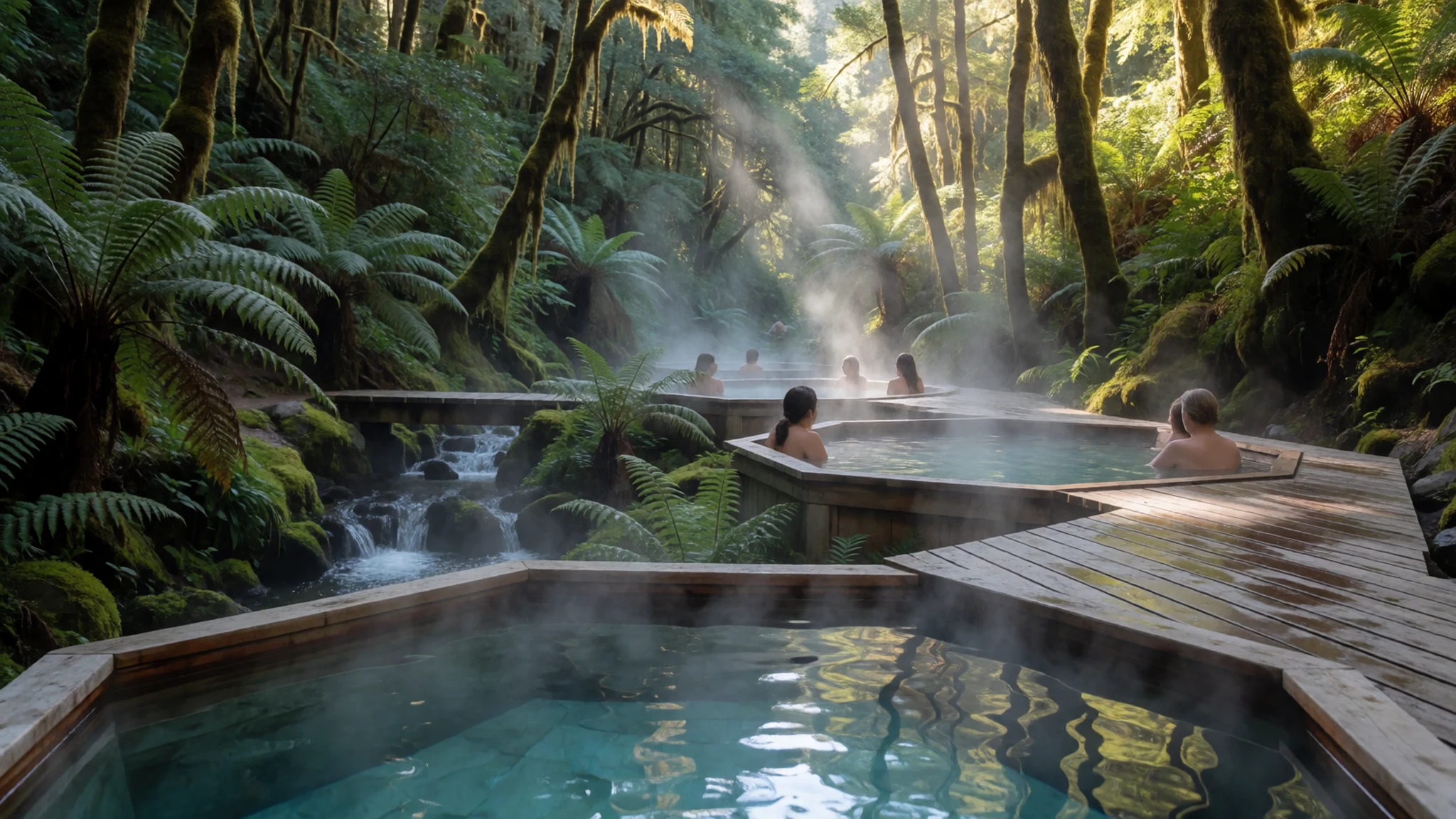
- Villarrica National Park Trails — Villarrica National Park
Networked hiking paths cross the lower slopes of Villarrica Volcano, winding through ancient monkey puzzle tree forests and across dark basaltic lava fields. Trails lead past volcanic caves formed by tube flows and open onto panoramic lookouts over glacier valleys and surrounding peaks.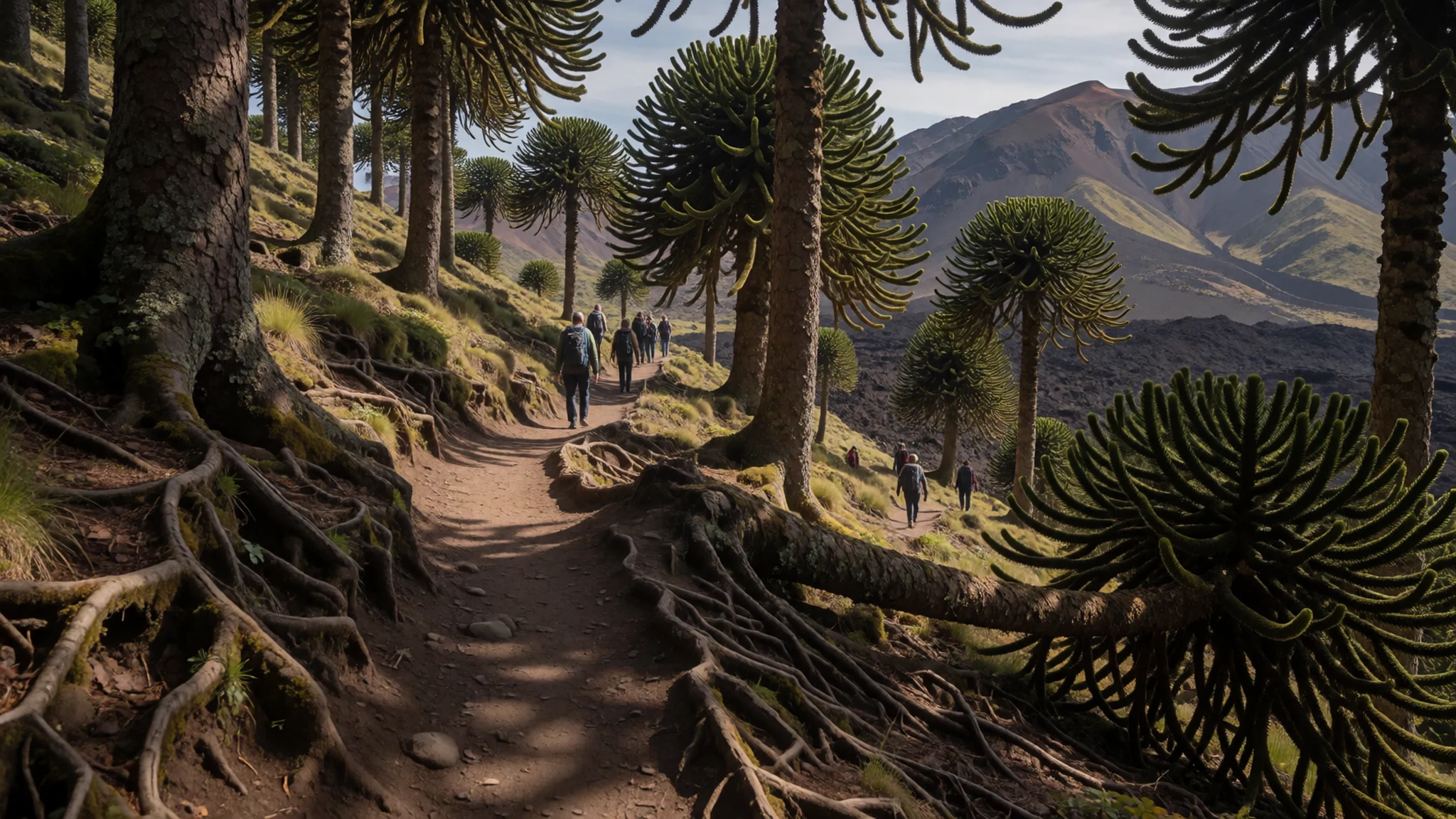
- Carahue Steam Locomotive Museum — Carahue town centre
Located west of the volcano towards the coast, the open-air steam locomotive museum in Carahue celebrates the railway heritage of southern Chile. Restored engines and vintage rolling stock recall the era when trains connected remote forest settlements and lake ports with the central valley.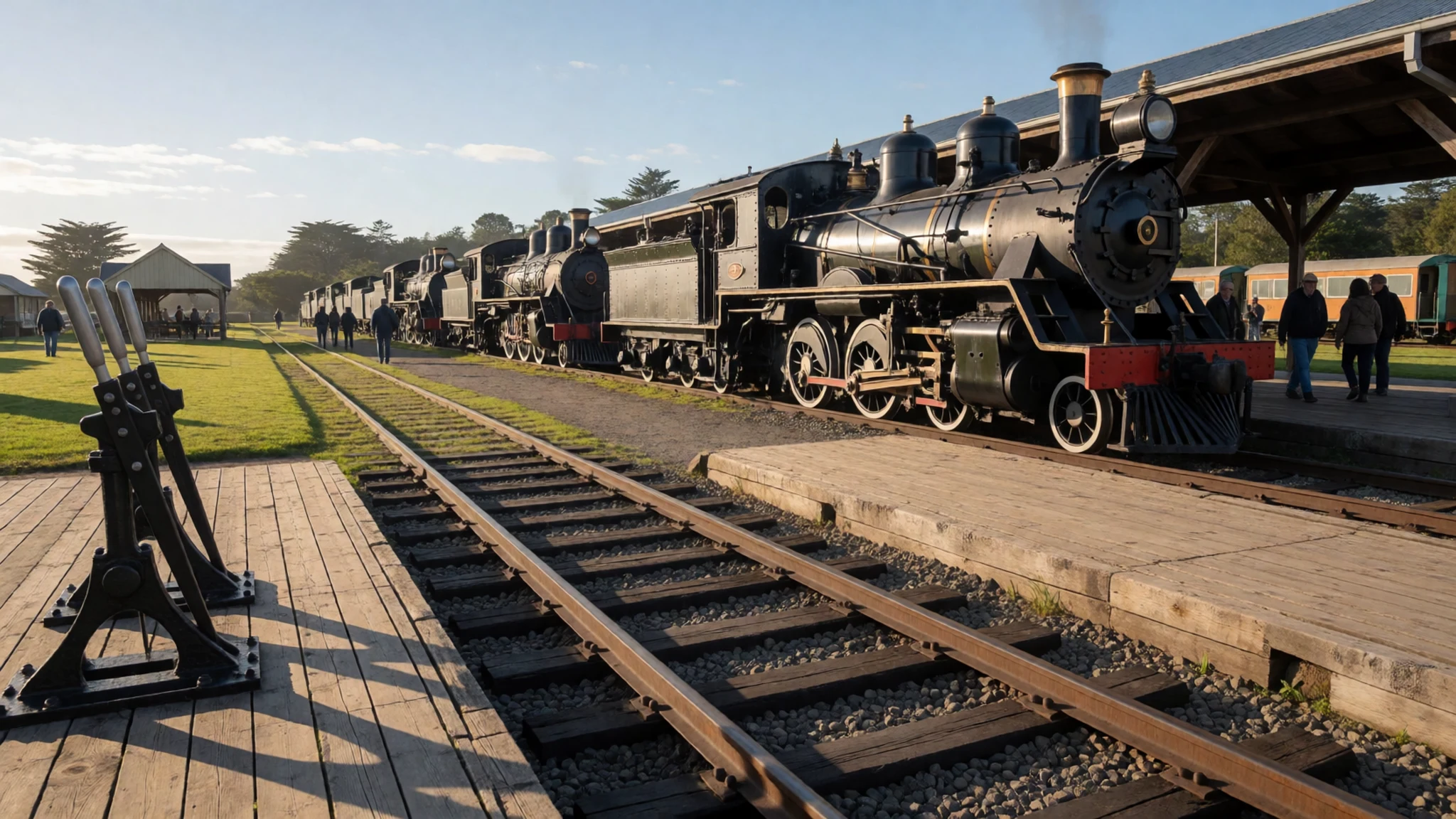
Culture
Villarrica Volcano stands at the heart of the Araucanía region, a territory rich with Mapuche heritage and southern Chilean frontier traditions. Mapuche culture remains vibrant throughout the surrounding valleys, reflected in silver craftwork, textile weaving, and deep spiritual connections to the land and mountain peaks. Traditional ceremonies and community life emphasize harmony with nature, honouring the spirits believed to inhabit the volcanic landscape.
Modern life around the volcano combines this indigenous ancestry with early European settler influences, particularly German timber and farming heritage visible in local architecture and pastry making. Mountain guide culture is also central to daily life in nearby towns, where local experts pass down knowledge of weather patterns, snow craft, and volcanic safety to visitors from around the globe. Respecting the unpredictable power of the mountain is a shared value among both residents and mountain guides.
When visiting Mapuche communities or sacred sites around Villarrica Volcano, ask permission before taking photographs of people or traditional ceremonies.
What to wear
Traditional attire in the region surrounding Villarrica Volcano reflects the rich heritage of the Mapuche people. Woven woollen garments dominate traditional dress, designed to withstand the cool, damp Andean climate. Women traditionally wear the chali (a black woollen shawl) fastened with intricate silver jewelry such as the tupapu pin and trarilonco headband. Men wear heavy hand-woven woollen ponchos decorated with geometric motifs alongside trarihue belts. These textiles are coloured with natural dyes extracted from local bark, roots, and berries.
In daily life today, residents of nearby lake towns wear practical, outdoors-focused clothing suited to an active lifestyle. Down jackets, waterproof coats, fleece sweaters, and sturdy trousers are standard wardrobe items for navigating changeable mountain weather.
Visitors planning to explore Villarrica Volcano should dress in adaptable layers. Moisture-wicking base layers, insulating fleece or wool, and a windproof, waterproof outer shell are essential even in summer. High-altitude climbs require rigid mountaineering boots capable of holding crampons, warm gloves, UV-blocking sunglasses, and protective headwear to guard against sun and mountain wind.
What to eat
- Charquicán — Traditional eateries in Pucón and Villarrica
A comforting Chilean winter stew made with mashed potatoes, pumpkin, corn, and dried or minced beef, topped with a fried egg. It is widely served in cosy traditional eateries throughout the lake district.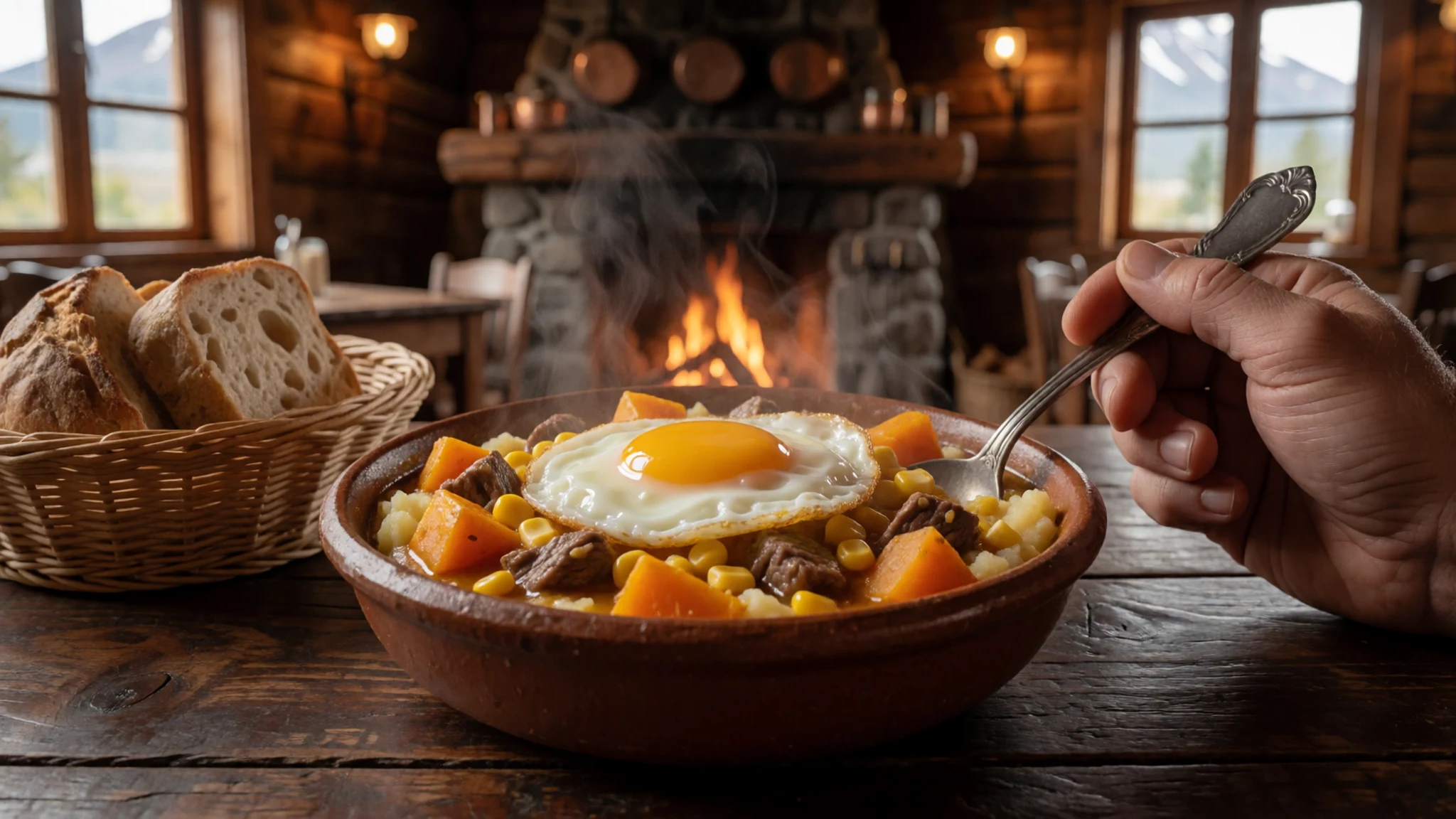
- Sopaipillas con Pebre — Street stalls and lakeside cafes
Crispy deep-fried pumpkin flatbreads served hot alongside pebre, a fresh condiment of chopped tomatoes, onions, garlic, coriander, and mild peppers. They are a staple street food snack during chilly Andean afternoons.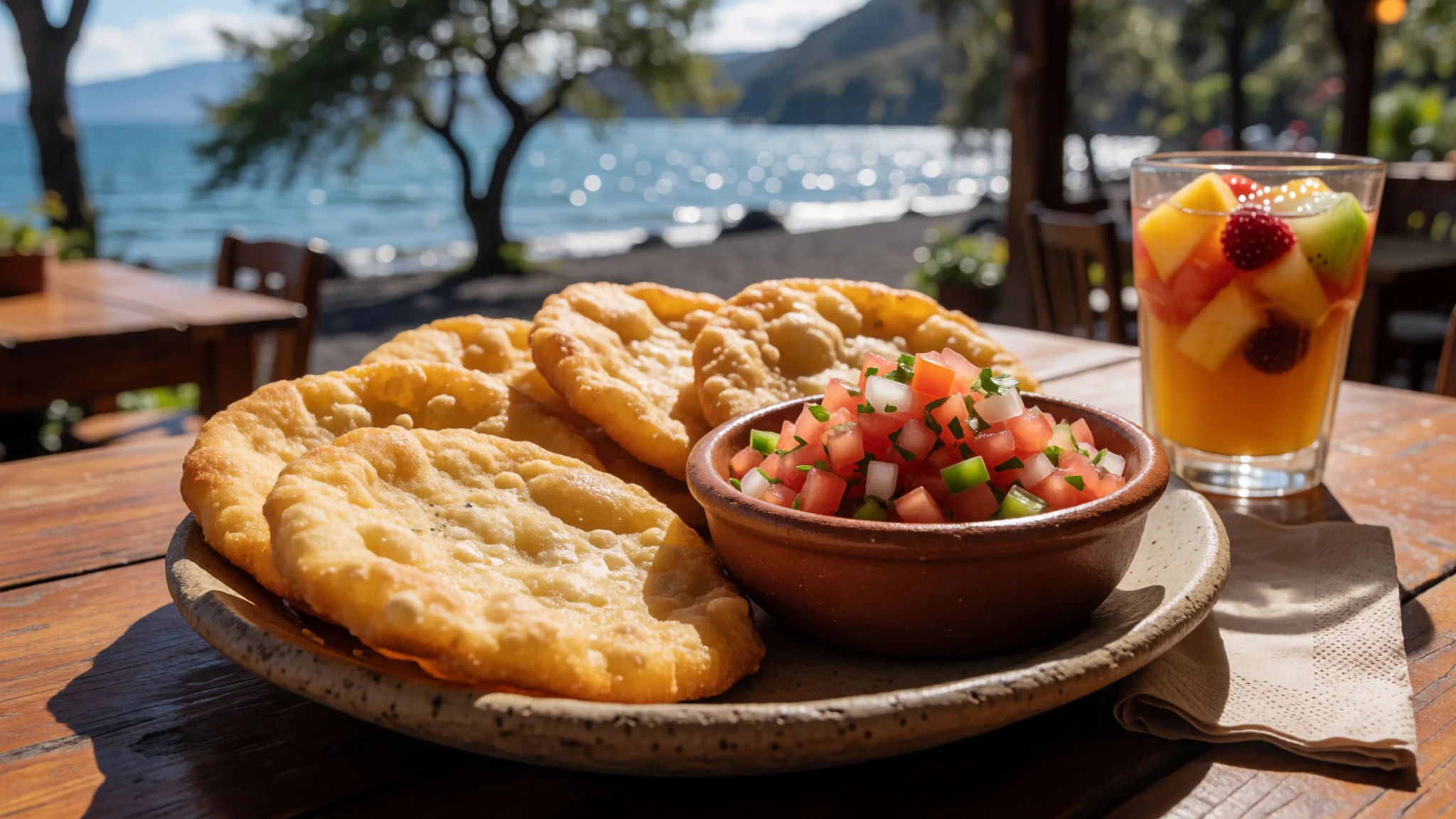
- Curanto en Olla — Regional restaurants in the lake district
A hearty regional dish of shellfish, smoked meats, pork sausages, potatoes, and potato dumplings simmered together in a single pot. It highlights the coastal and island culinary traditions of southern Chile. - Kuchen — Bakeries and tea houses across Araucanía
Fruit tarts filled with local berries such as murta, raspberries, or apples baked in a rich custard or crumb crust. Introduced by German immigrants, kuchen is available at every bakery and afternoon tea house. - Catutos — Mapuche cultural centres and artisanal markets
Traditional Mapuche wheat cakes made from cooked crushed wheat grains, shaped into elongated patties and lightly toasted. Served warm with honey or savoury chili paste, they are sold at indigenous craft markets.
Plan it
Best time. December to March for warm summer weather, clear hiking trails, and crater ascents; July to September for skiing on the northern snow slopes.
How long. 2–3
Getting there. Fly to La Araucanía International Airport near Temuco, then take a bus or drive south to Pucón or Villarrica town (about 90 minutes).
Budget. mid
Tips
- Book registered volcano guides in advance during peak summer months
- Check local volcanic alert levels before planning crater ascents
- Start early in the morning for summit climbs before snow softens
- Carry high-factor sunscreen and UV sunglasses for reflection off snowfields
Etiquette
- Follow guide instructions strictly regarding safety zone boundaries
- Ask permission before photographing Mapuche residents or ceremonies
- Pack out all litter from national park trails and wilderness areas
Nearby
Sources
- Wikidata Q1048225 (CC0)
- Wikipedia (rev 1373722153) (CC BY-SA 4.0)
- Wikivoyage (rev 5296784) (CC BY-SA 4.0)
- Photo photos/01-pucon-y-su-volcan.jpg (CC BY 3.0)
- Photo photos/02-puc-n-2019-01-volc-n-villarrica.jpg (CC BY-SA 4.0)
- Photo photos/03-villarrica-lava-fountain.jpg (CC BY-SA 2.0)
- Photo photos/04-villarica-volcano-aerial-view-1.jpg (CC BY 2.5)
- Photo photos/05-rugido-volc-n-villarrica.png (CC BY-SA 4.0)
- Photo photos/06-villarrica-lago-villarrica-2019-05.jpg (CC BY-SA 4.0)
- Photo photos/07-volcan-villarrica-southern-chile.jpg (Public domain)
- Photo photos/08-wonderful-day-at-the-villarrica.jpg (CC BY 3.0)


