Villach
Villach, Austria
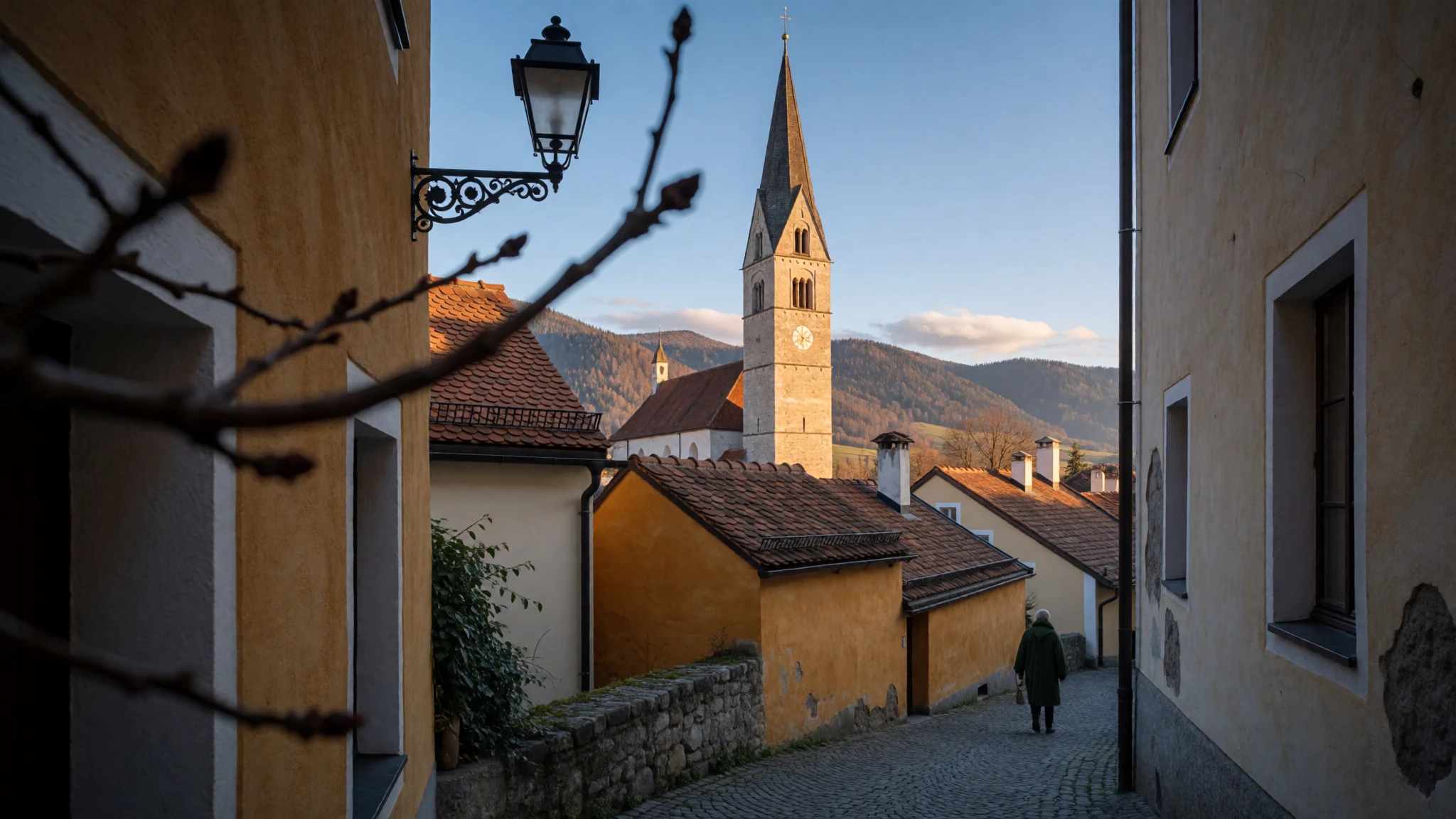
Villach is a friendly Carinthian crossroads town with Roman roots, a hot spring, a hilltop castle and Alpine lakes on its doorstep.
The place
Villach lies about 501 m above sea level on the Drau river, close to where the Gail joins it, in the south of Carinthia, Austria. Roughly sixty-five thousand people live in the municipality, so it feels like a working town with its own routines rather than a resort built for visitors. The municipal land runs from the slopes of Mount Dobratsch in the Gailtal Alps down to Lake Ossiach in the north-east, which means a single day can mix a café stop, a castle hill and a swim. The old centre is compact and mostly flat, and the main squares are a short walk apart. The town is also a junction. Roads and railways from Italy, Slovenia and the rest of Austria meet here, so many travellers only change trains and move on, though it works well as a base for the wider Alpe-Adria region. Local names shift with the neighbours: Beljak in Slovene, Villaco in Italian. The climate is cool and humid continental. Summers are mild and sometimes thundery, winters are cold, and mountain weather can change within an hour. Villach was the first holder of the Alpine Town of the Year title, an award tied to sustainable living in the Alps. Its winter carnival is famous enough to be shown on national television. Expect a quiet, tidy, practical place, with the interest in the details.
Its story
Villach owes its existence to geography. A Roman road from Italy into the province of Noricum passed this way, and a staging post, probably called Sanctium, stood at the hot spring in what is now the Warmbad quarter south of the centre. Roman finds turn up around the town, and one stretch of old road is still a local landmark. After the Roman world faded, Slavic settlers arrived in the Eastern Alps around the year 600, and the area became part of the principality of Carantania. Later, when Prince Boruth needed help against the Avars, he accepted Bavarian overlordship in return. Written history gets firmer in the late ninth century, when a charter issued by a Carolingian ruler mentioned a bridge over the river at the royal court of Treffen, within today's Villach. Control then passed through church hands. An emperor gave the manor to the Bishop of Brixen in the late tenth century, and in the early eleventh century it went to the newly founded Bishopric of Bamberg, a Bavarian see that held it for centuries. The town grew as a river crossing and trading point under that distant bishop. More recent boundary changes added nearby villages, including Landskron, Maria Gail and Fellach, which is why the municipal area now reaches so far from the old core.
What to see
- Hauptplatz — Old town
Villach's main square is the natural starting point, a broad pedestrian space ringed by shops, cafés and tall façades. A stone pillory stands in it as a reminder of the town's old legal powers. Come in the morning for quiet, or on a market or festival day to see locals at their most relaxed.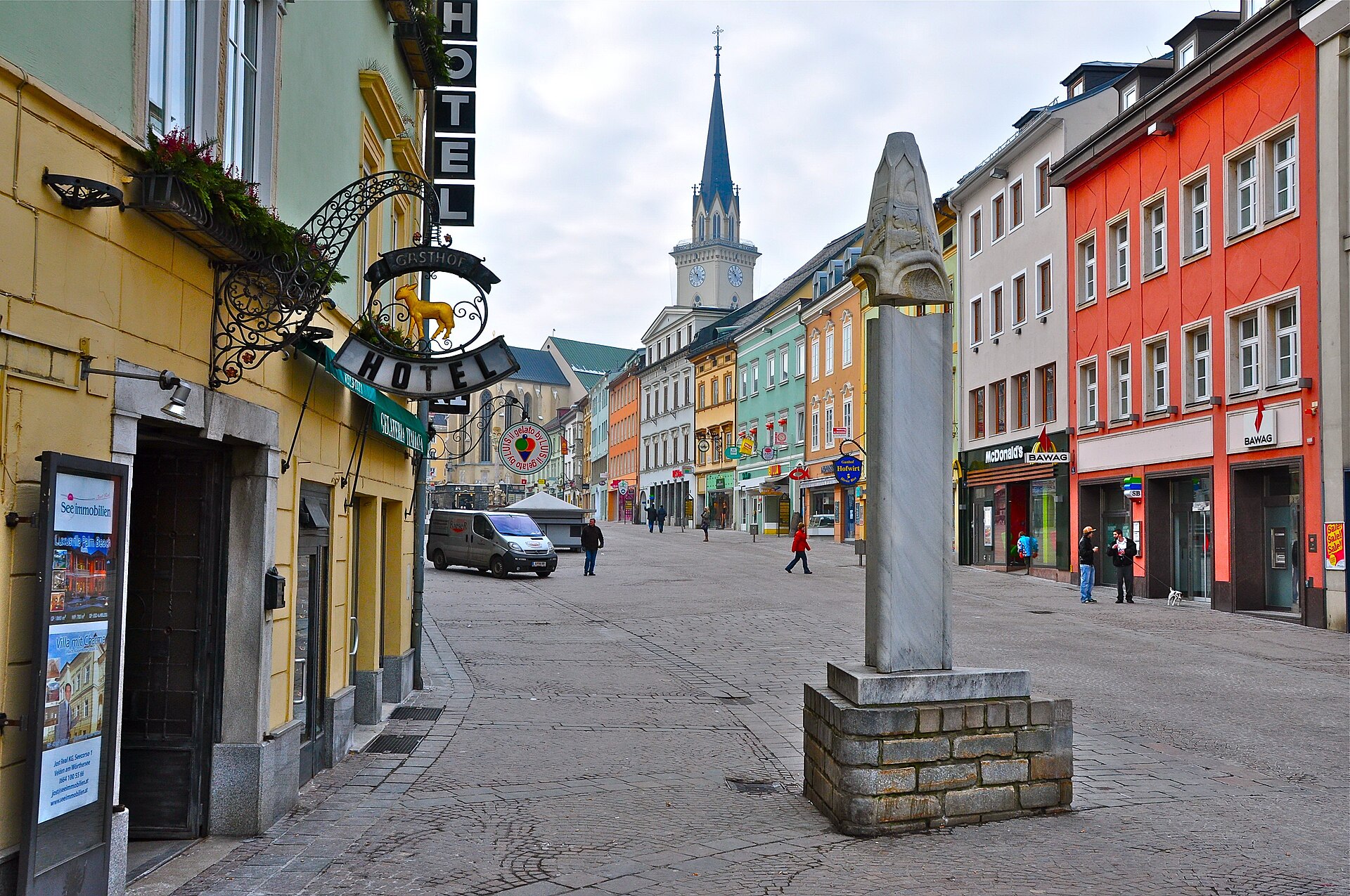
- Parish Church of St Jakob — Old town
The parish church of Villach is recognisable from across town by its bell tower, about 94 m high, in its present form since the nineteenth century. Step inside for a calm, cool pause. Views from the neighbouring square toward the town hall area are a good photograph.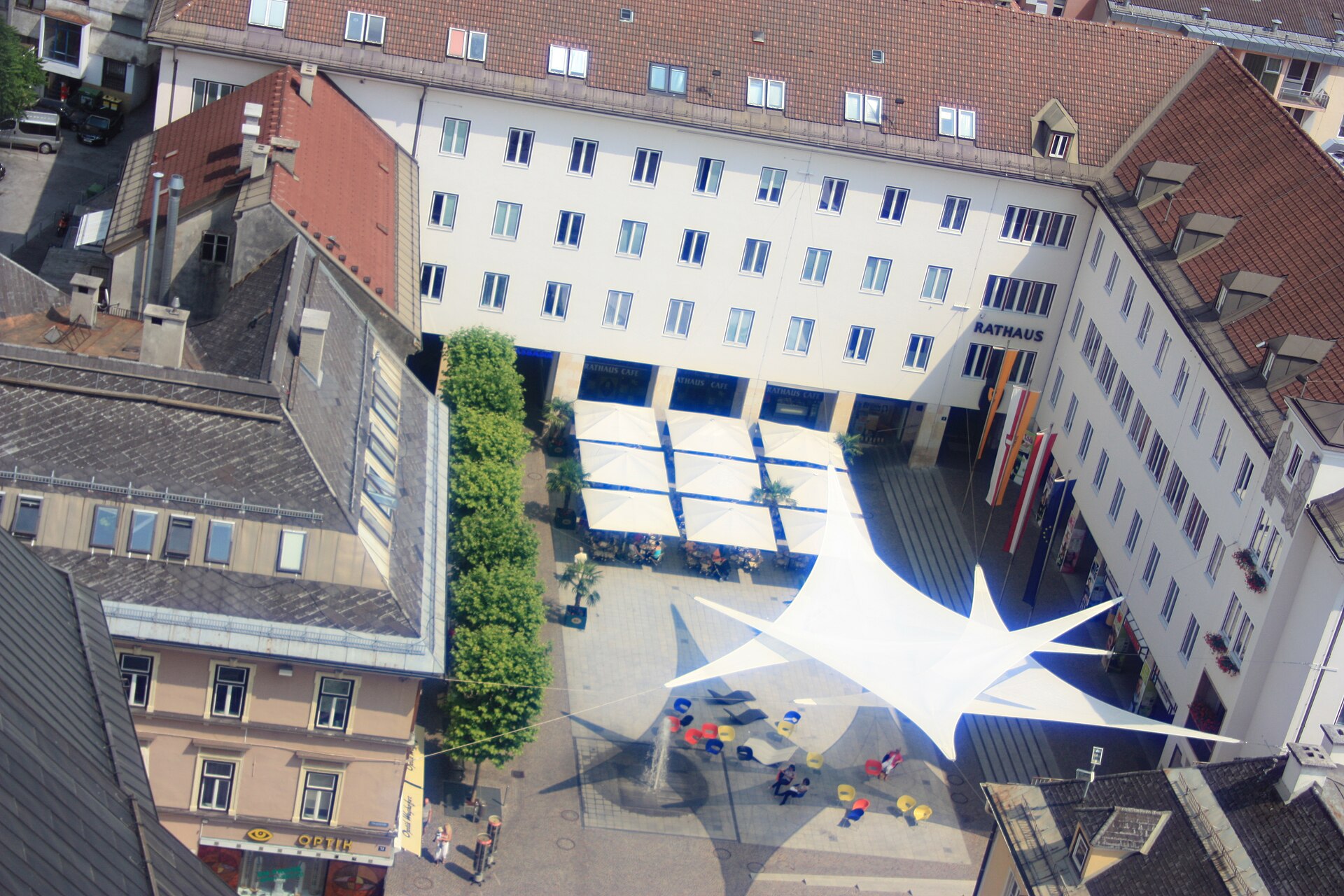
- Museum der Stadt Villach — Old town
The city museum is the easiest way to get the local story in one go. Displays cover the town's history, its past mining and a mineral collection, which suits a rainy afternoon. Opening days change through the year, so check the official site, villach.at, before you set out. - Landskron Castle — Landskron, north-east of the centre
The ruins of Landskron crown a hill about 676 m high north-east of the centre. A fire in the nineteenth century destroyed much of the fortress, but walls and a few halls survive, and the outlook over the Villach basin and Lake Ossiach rewards the climb. Wear proper shoes and allow time. - Falconry at Landskron — Landskron
Part of the castle grounds houses birds of prey. They can be seen in their enclosures at any time, but the flying demonstrations are the draw. Times depend on the season and the weather, so check the official site before planning the day around a show. It suits families especially well. - Warmbad and the Roman road — Warmbad-Villach
Warmbad, south of the centre, is where the thermal spring rises and where Romans once stopped on their way north. A preserved stretch of old Roman street can be seen in the quarter. Pair a short historical walk with a spa visit, if you have swimwear with you.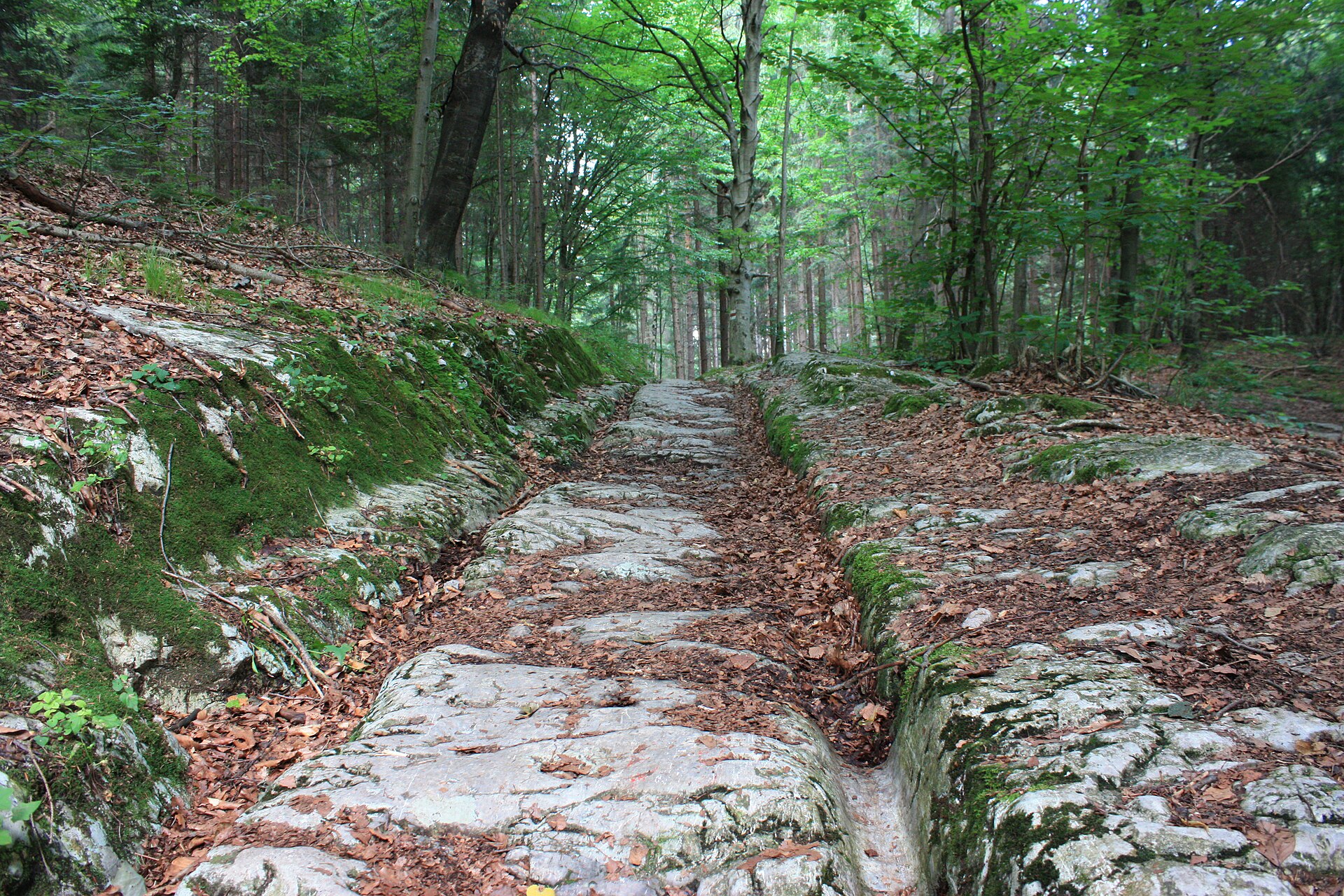
Culture
Villach sits where Germanic, Slavic and Italian worlds meet, and its calendar shows it. The big local event is the carnival, called Villacher Fasching, which opens in the autumn and runs through the winter into early March. It fills the town with costumes, balls and processions, and Austrian television carries it nationwide. Summer belongs to the Kirchtag, a church-fair week that finishes on the first Saturday of August, with stalls, music and a lot of eating outdoors. In December a film festival showcases cinema from Carinthia, the Friuli-Venezia Giulia region of Italy and Slovenia, a neat reminder of how close the borders are. Through the year there are also an arts and crafts market, a street-art festival with performers and singers, and DRAUPULS, a series of light shows over the Drau river. Daily life is orderly and polite. People greet shopkeepers on entering and leaving, tables are often shared in traditional taverns, and Sunday is quiet, with many shops closed. Beer from the local brewery is part of the social routine, enjoyed unhurriedly rather than as a night out. Conversation in German is the norm, though Slovene and Italian are also heard, and younger people often speak good English. In churches such as St Jakob, keep your voice low, remove any hat, and ask before photographing worshippers.
What to wear
Villach and the wider Carinthian region have their own Tracht, the traditional dress. Women wear the dirndl, a fitted bodice and full skirt with an apron, usually in cotton, linen or wool. Men wear a loden jacket in felted wool, often grey-green, with a plain shirt and sturdy shoes. Regional variations in cut and trim are part of the pride. This clothing comes out for church feasts, weddings, brass-band occasions and the Kirchtag, rather than daily life. Carnival brings a different dressing-up tradition, with elaborate costumes and masks. On ordinary days people wear what people wear in most of Central Europe: jeans, practical jackets, and trainers or walking shoes, with hiking and cycling kit common at weekends. Dress is smart-casual for dinner but rarely formal. For a visit, pack layers. Summer days can be warm while evenings cool quickly, and showers are common, so a light waterproof is worth carrying. Winters are properly cold, so bring a warm coat, hat and gloves. Shoes matter more than anything: cobbles in the centre are fine in trainers, but the climb to Landskron and any Dobratsch walk call for grippy soles. Churches have no strict dress code, though covered shoulders and knees are polite. Bring swimwear for the thermal baths.
What to eat
- Kärntner Kasnudeln — Traditional taverns in the old town
Carinthia's signature dumplings, crimped like small pasties and filled with a soft curd cheese, often with mint. They are served with browned butter. Look for them on the menu of a traditional tavern or inn in the old town, especially at lunch. - Local brewery beer and a hearty plate — The brewery taproom near the centre
Villach has its own brewery, and its taproom serves regional dishes alongside house beers. Expect roast meats, dumplings and seasonal vegetables from nearby producers. It is a relaxed place to try the local lager over a long lunch or early dinner. - Reindling — Bakeries and cafés
A yeast cake rolled with raisins, cinnamon and sugar, baked in a round tin, and especially linked to Easter in Carinthia. It is also eaten as a sweet snack with coffee. Bakeries and café counters sell slices, most reliably in the morning. - Bratwurst from a street stand — Sausage stands around the pedestrian centre
A grilled sausage in a crusty roll with mustard is the quick local lunch. It is simple, filling and cheap by Austrian standards. Look for sausage stands around the pedestrian streets, particularly near busy shopping times and on market days. - Weekly lunch specials — Taverns and café-bars in the centre
Many tavern-style restaurants and cafés run a fixed lunch of the week, often with a soup and a vegetarian option. It is a sensible way to eat regional food with ingredients from nearby farms. Look for slates outside doors and ask what is on.
Plan it
Best time. May to September for walking, lake swimming and long evenings; July and August are warmest but still mild by southern European standards. December suits film and Christmas-market visits, while the carnival season runs through winter. Winters are cold, and snow is common.
How long. 2
Getting there. Villach is a major Austrian rail hub, with direct trains from Vienna, Graz, Salzburg, Munich, Venice and Ljubljana. The nearest airport is Klagenfurt, with onward trains or buses. Several sleeper services call here in the small hours. By car, the motorways from the north, east and Slovenia all meet at Villach, and the old centre is easily walked once parked.
Budget. mid
Tips
- Check the official site, villach.at, for museum hours and the castle falconry flight times, which change with the season
- Book accommodation early for the Kirchtag week in summer and for carnival weekends
- Carry a waterproof layer, as mountain weather shifts quickly even in summer
- Bring some cash for market stalls and small stands, though cards work in most shops and restaurants
- Sleeper trains pass through after midnight, so plan late arrivals and onward connections carefully
Etiquette
- Greet staff with a Guten Tag or Grüss Gott on entering a shop or café
- Keep quiet in churches and ask before photographing people
- Sort rubbish carefully and follow marked paths on hillside walks
Nearby
Sources
- Wikidata Q483522 (CC0)
- Wikipedia: Villach (rev 1381501927) (CC BY-SA 4.0)
- Wikivoyage: Villach (rev 5370200) (CC BY-SA 4.0)
- Photo: Villach panorama (Roland Ster) (CC BY 3.0)
- Photo: Hauptplatz with pillory (Johann Jaritz) (CC BY-SA 4.0)
- Photo: Warmbad Roman street (JJ55) (Public domain)
- Photo: Rathausplatz from the parish church (JJ55) (Public domain)
- Photo: Oskar Potiorek (Carl Pietzner) (Public domain)
- Photo: Eva Glawischnig (Die Grünen) (CC BY 3.0)
- Photo: Marc Sand (Steindy) (CC BY 3.0)
- Photo: Guido Burgstaller (Ralf Roletschek) (CC BY 3.0)


