Vientiane
Vientiane, Laos
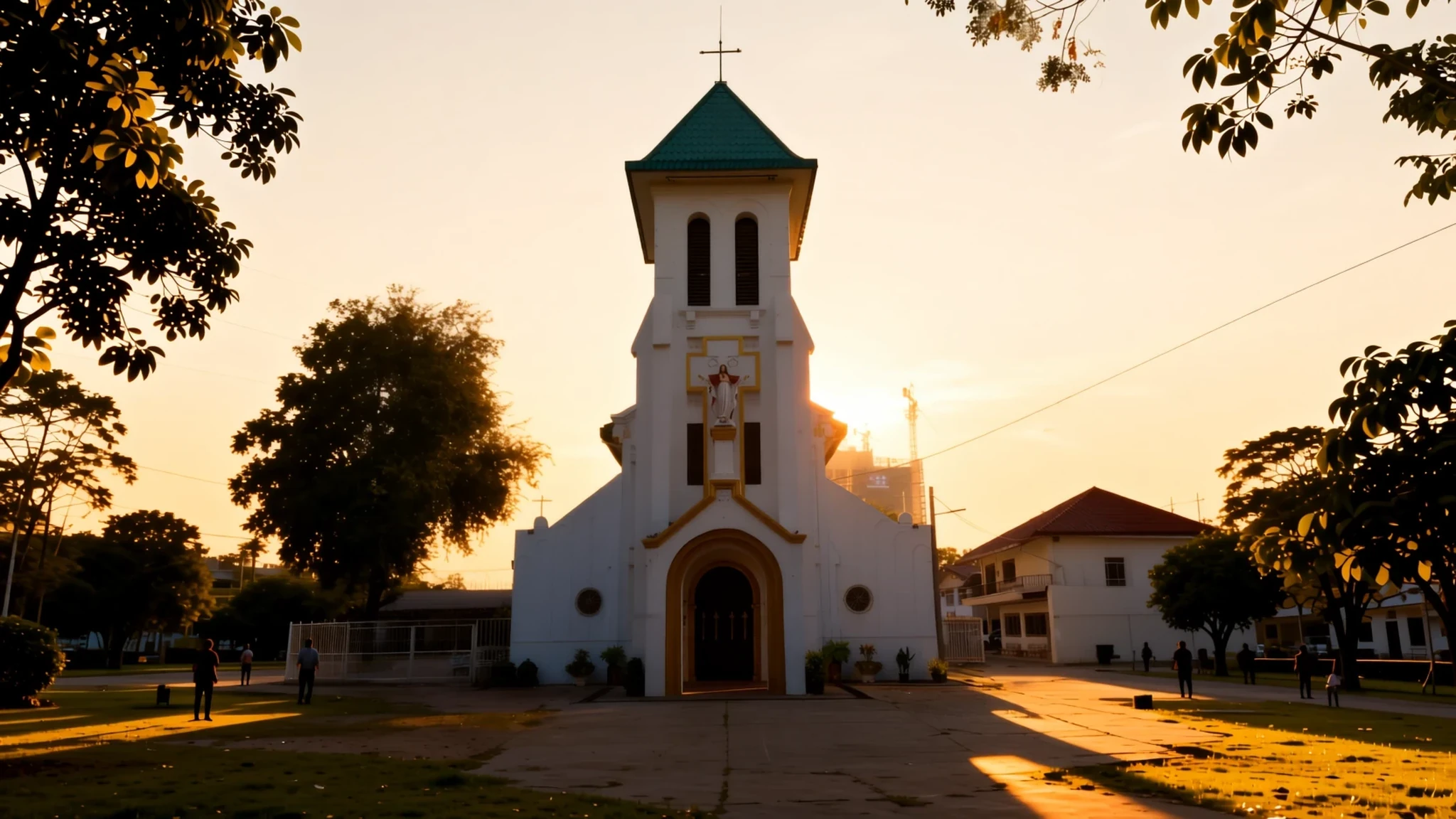
Go for gilded temples, a lively riverside and a surprisingly varied food scene in a capital that is changing quickly.
The place
Vientiane is the capital of Laos and its largest city, with about one million people in the urban area. It sits on the left bank of the Mekong, a short distance from the Thai border, and it has been the country's administrative centre since the sixteenth century. The riverfront is the city's gentler side. In the late afternoon the promenade fills with joggers and families, while the bamboo-and-thatch beer gardens that once lined the shore upstream have largely given way to a flood-levee and riverside park.
Elsewhere the growth is harder to miss. The city has expanded fast over the past two decades, and a wave of investment has left strip malls, jammed roads and half-finished concrete blocks beside the old French villas of the centre. Power cables loop between buildings, and some streets feel like building sites. Traffic, more than crowds, is the daily frustration, so the sensible approach is to plan around rush hour and keep appointments close together.
The religious landmarks remain the main reason many people come. Pha That Luang, a gilded stupa, is the country's best-known monument. Haw Phra Kaew, which once housed the Emerald Buddha, is now a museum. Smaller temples, including Wat Sisaket, are quieter and easy to reach on foot from the centre. The city is best treated slowly, with long lunches, good Lao and Chinese cooking, and an afternoon by the river.
Its story
The area around Vientiane was part of a web of early Mon city states that spread up the Mekong and Chao Phraya valleys from the 6th century onwards. By the 8th century, Mon settlements had pushed north and one of them, a centre known as Chantaburi, was counted among the early states that shared a common culture and a Theravada Buddhist faith. These states were loosely connected rather than unified, and their influence on religion and writing lasted well beyond their political reach.
The name Vientiane appears in a Vietnamese inscription from 1159, written during a period of conflict between the Khmer and the Viet. That early reference shows the place was already known to its neighbours long before it became a royal seat. Vientiane became an administrative city of Lan Xang when Fa Ngum founded the kingdom in 1354, and King Setthathirath officially made it the capital in 1563.
The French period changed the city again. Under colonial rule Vientiane became the administrative capital, and it gained the boulevards, government buildings and villas that still line parts of the centre. The French influence can be seen in the layout of streets around the old town. After independence and the long political upheaval that followed, the city was reshaped by its role as the national capital, and its present skyline reflects a rapid, uneven recent expansion.
What to see
- Pha That Luang — Northern edge of the city centre
The gold-covered stupa is the most important religious monument in Laos and a national emblem, shown on coins and official buildings. It stands in its own compound on the northern side of the city, where festivals and processions gather around it. The main structure rises well above the surrounding walls, and the compound is an easy first stop for understanding Lao Buddhism.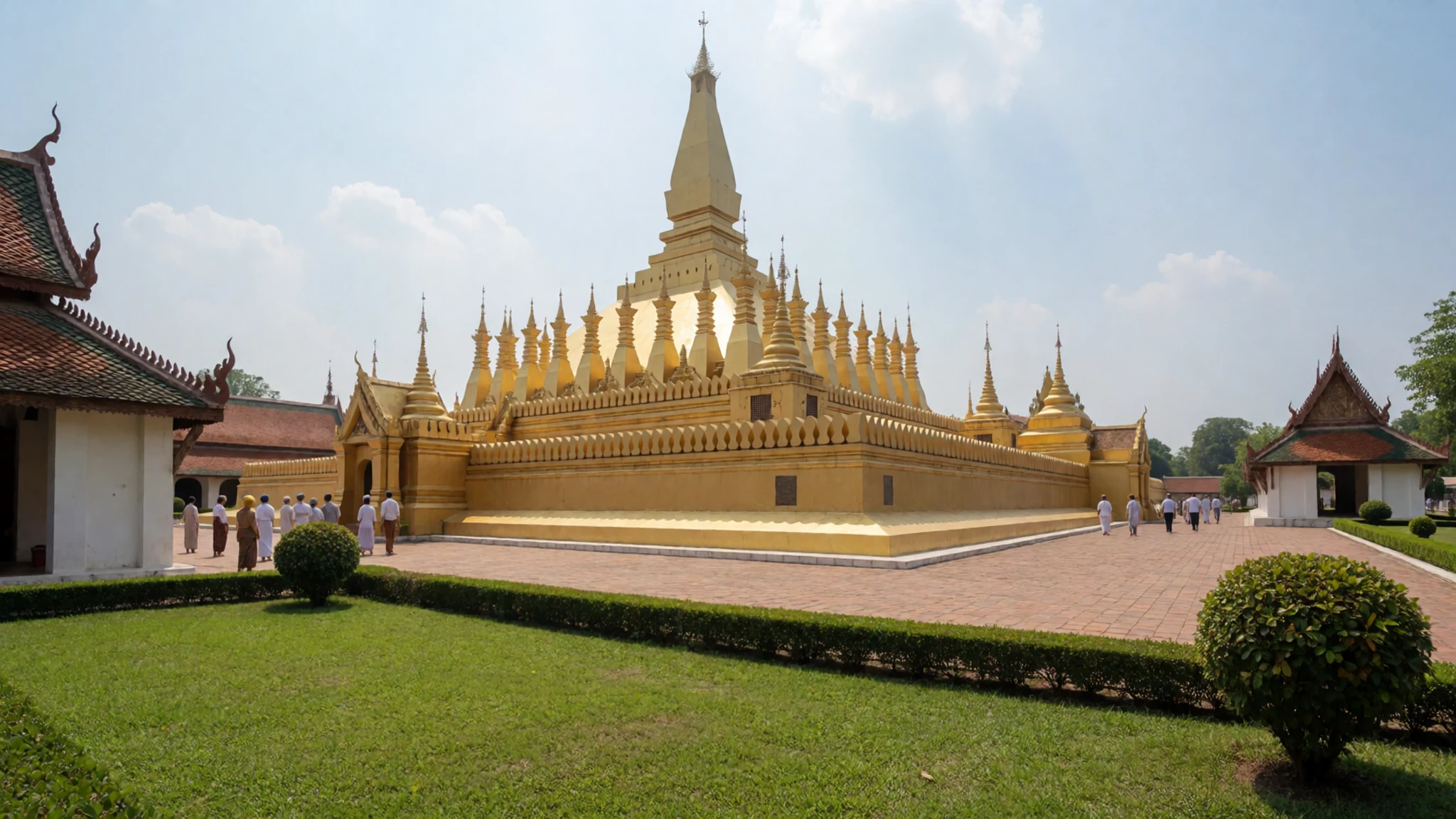
- Patuxai — Central boulevard, near the old town
Patuxai is a local version of the Arc de Triomphe, built as a monument to those who fought for independence. Its concrete form is decorated with Lao motifs, and the top gives a clear view across the rooftops and the wide streets of the centre. It is best visited early in the morning, before the heat builds.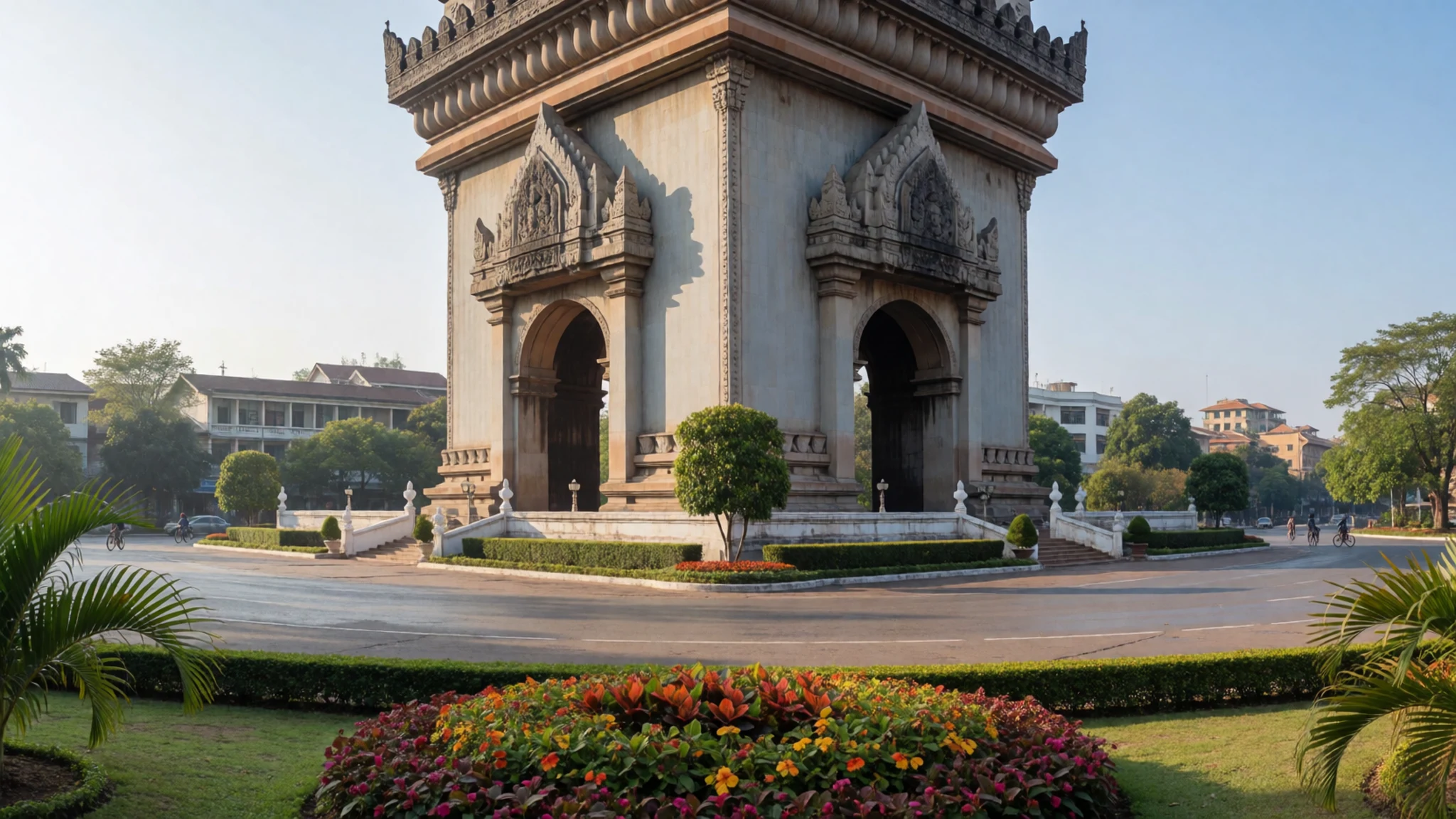
- Lao National Museum — Eastern side of the city, near the Kaysone Phomvihane Museum
Formerly the Lao Revolutionary Museum, this institution now holds five exhibition rooms covering the country's prehistory, wartime history, political development and ethnic diversity. The new building is impressive from the outside, and the displays give useful context for the temples and monuments elsewhere in the city.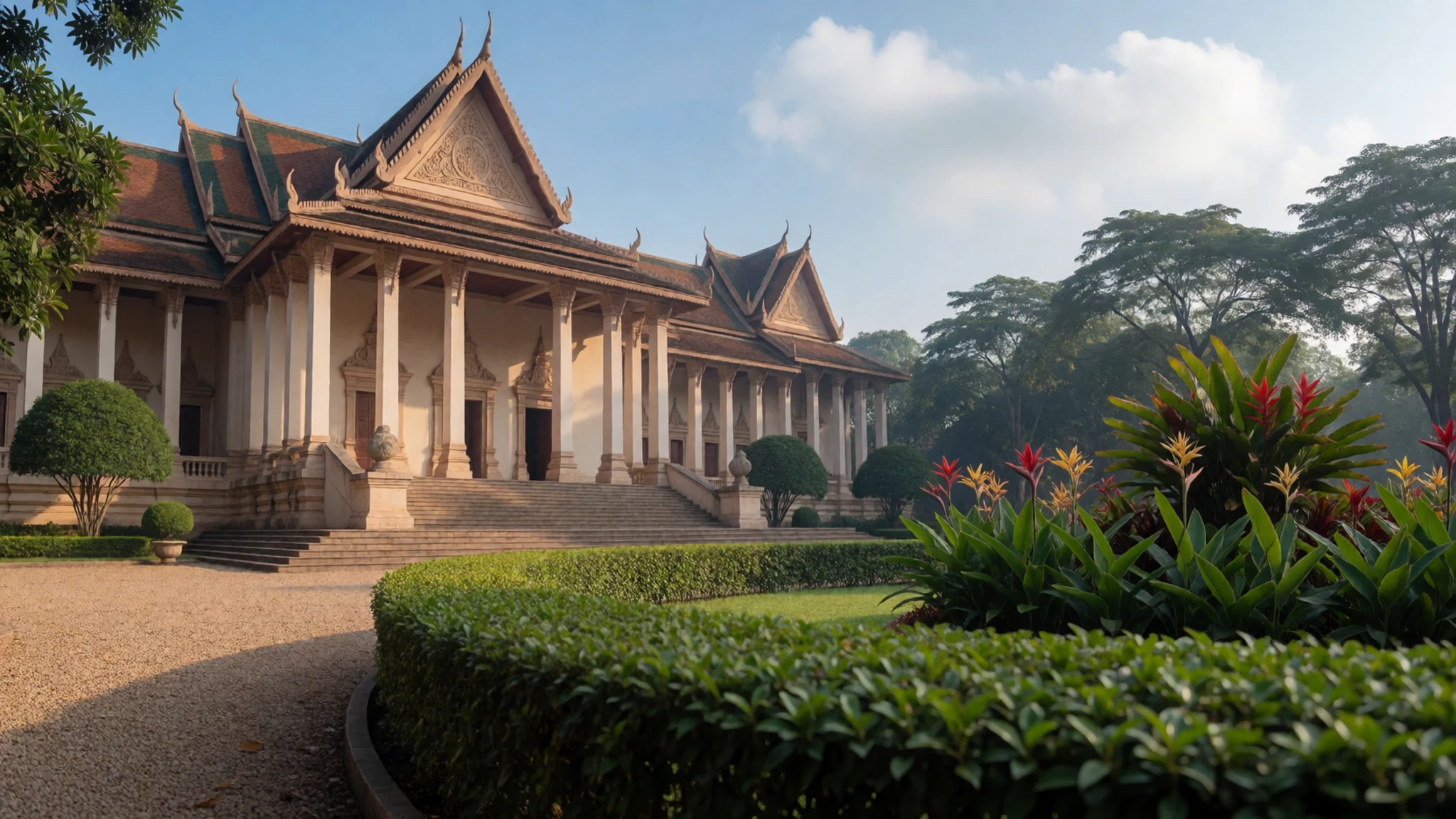
- COPE Visitor Centre — Southern side of the city
This centre explains the lasting legacy of unexploded ordnance left over from the wars of the twentieth century and the work of the National Rehabilitation Centre in providing prosthetic, orthotic and rehabilitation services. It is a sobering and well-presented visit that adds a different dimension to the city's history.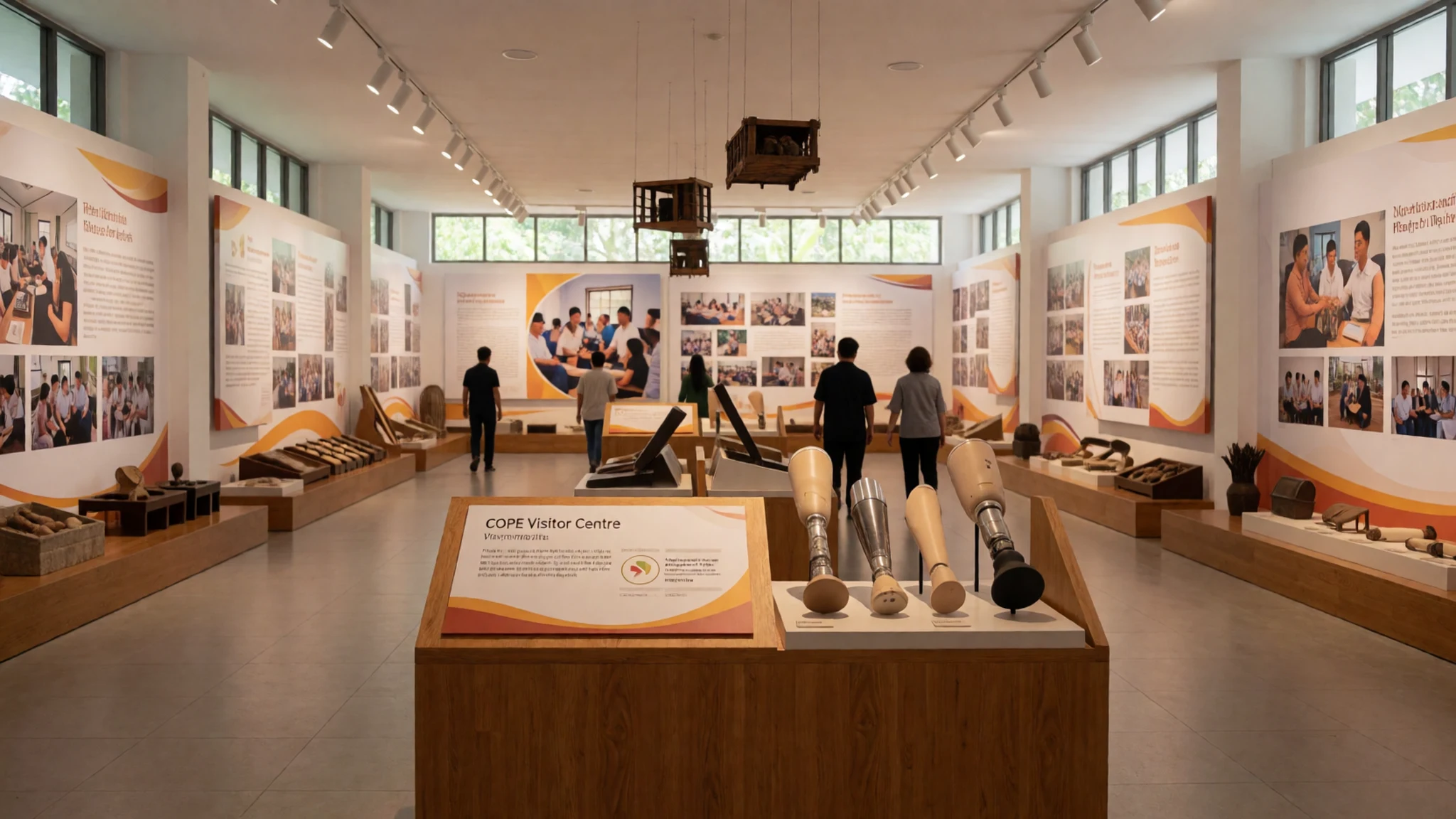
Culture
Vientiane is a Buddhist city, and temples remain at the centre of daily life. Monks walk the streets in the early morning to collect alms, and many families make merit at temples at weekends and on religious days. The city is also the seat of national media, with the headquarters of Lao National Television and Lao National Radio, so the public voice of the country is shaped here. Hospitality is warm and unhurried. People rarely raise their voices in public, and a calm manner works better than frustration when something goes wrong. Lao people greet with a small palms-together gesture, and returning it is a kind response even if the details are unfamiliar. Ask permission before photographing monks, novices or people at ceremonies, and avoid touching a monk or passing him objects directly. Remove your shoes before stepping onto a temple's raised floor, and cover your shoulders and knees before you go in.
What to wear
Vientiane's traditional dress is closely tied to the wider Lao world, where the sinh, a wrap skirt woven in bands of colour and pattern, is the classic women's garment. Silk and cotton are the main textiles, and villages in the region still weave with floor looms, producing pieces with woven patterns that mark family and place. A pha biang, or shawl, is often worn with the sinh on formal occasions and at festivals.
In daily life, people in the city wear Western-style clothes: jeans, t-shirts, office trousers and shirts. Younger residents dress casually, while many older women and civil servants keep to modest styles. The sinh survives at weddings, temple ceremonies and official events, and it is worn with pride rather than as costume.
A visitor should dress for heat and for temples. Light cotton or linen shirts and loose trousers or knee-length skirts work well for the climate, and shoulders and knees should be covered when entering any temple. Choose sandals or shoes that slip off easily, because you will remove them often, and sturdy closed shoes for uneven pavements and the riverside paths. A hat and sunglasses are useful in the dry months.
What to eat
- Riverside grills and beer gardens — The riverfront, especially the stretch upstream from the main promenade
Along the Mekong, dozens of unpretentious restaurants and beer gardens serve grilled meats, larb and sticky rice with cold beer. Many of the older bamboo-and-thatch places upstream have been lost to the flood levee, but the survivors tend to be cheaper, so ask for a seat by the rail for the sunset.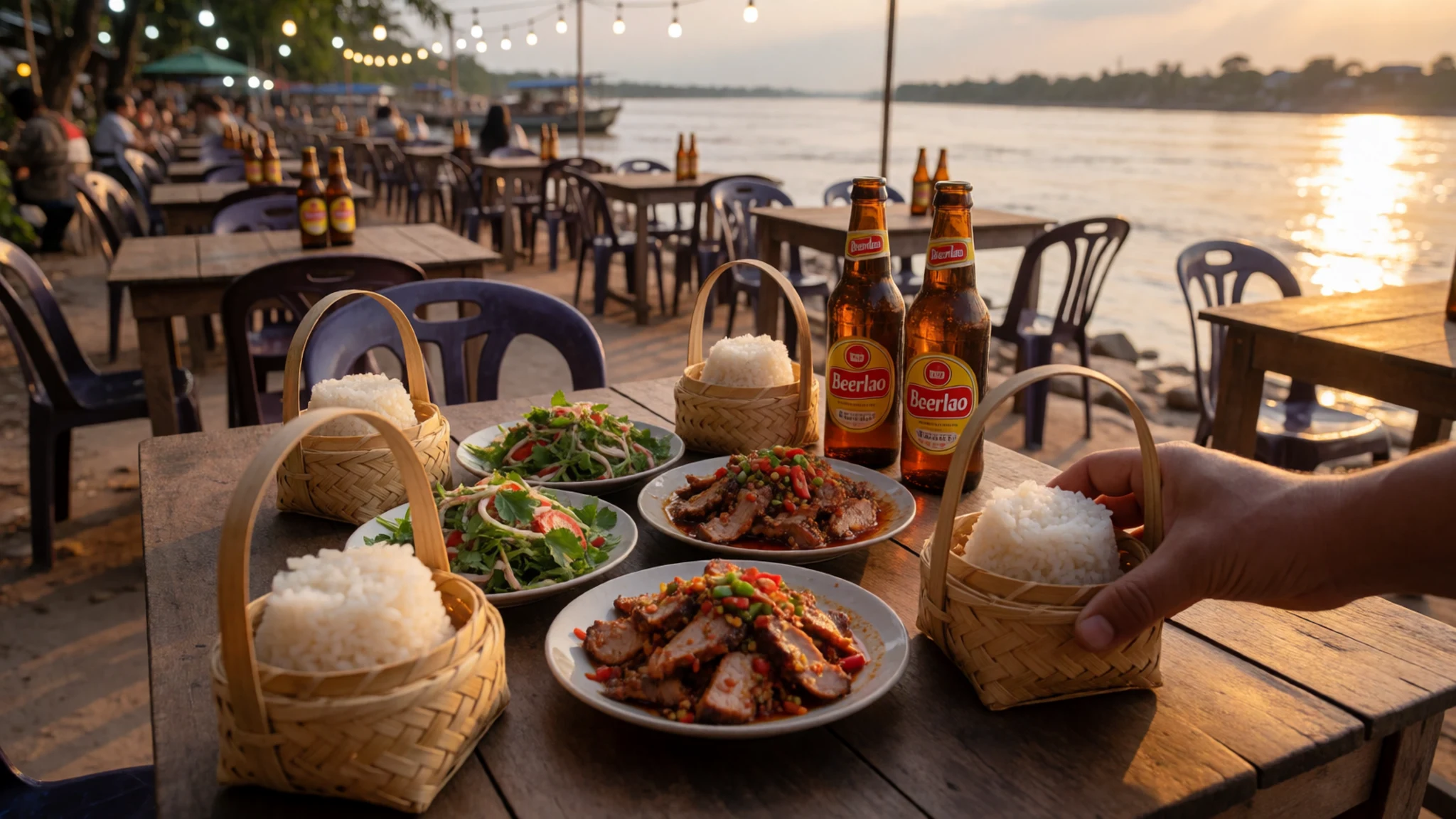
- Ban Anou night market — Ban Anou night market, central Vientiane
This short market, only about a block long, packs in some of the best cheap meals in the city. It begins setting up at sundown, so the evening is the right time to visit. Point at what is cooking on the grills and noodle stalls, eat standing or on low stools, and expect the crowd to thicken later in the evening.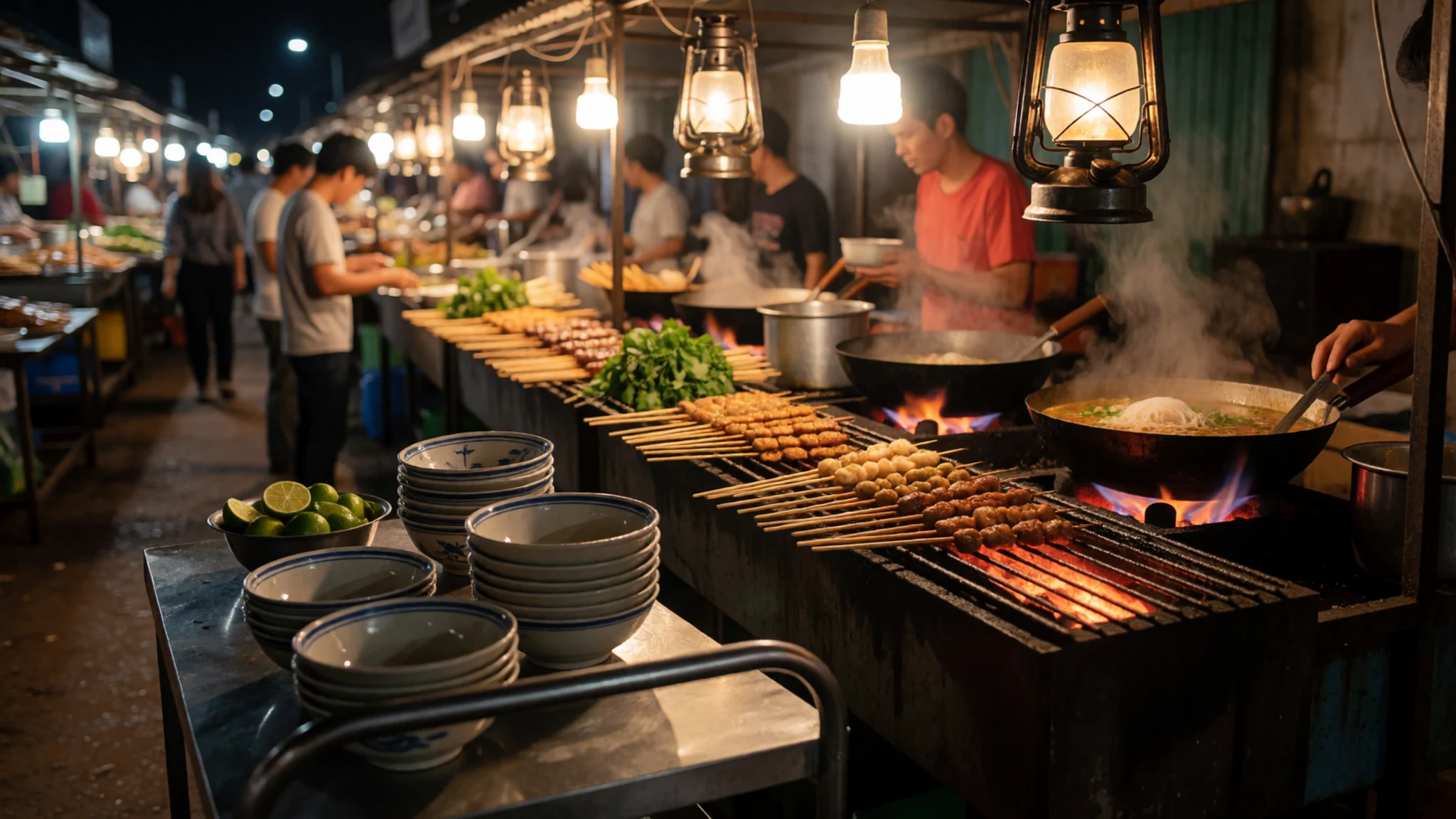
- Feu, the Lao rice noodle soup — Neighbourhood noodle shops, especially in the morning
Feu is the Lao rice noodle soup, a close relative of Vietnamese phở, and noodle shops across the city serve it for breakfast and lunch. The broth comes with rice noodles, herbs and a choice of pork or chicken. Look for a shop with a steady queue of local customers, and add chilli and fish sauce from the table to taste.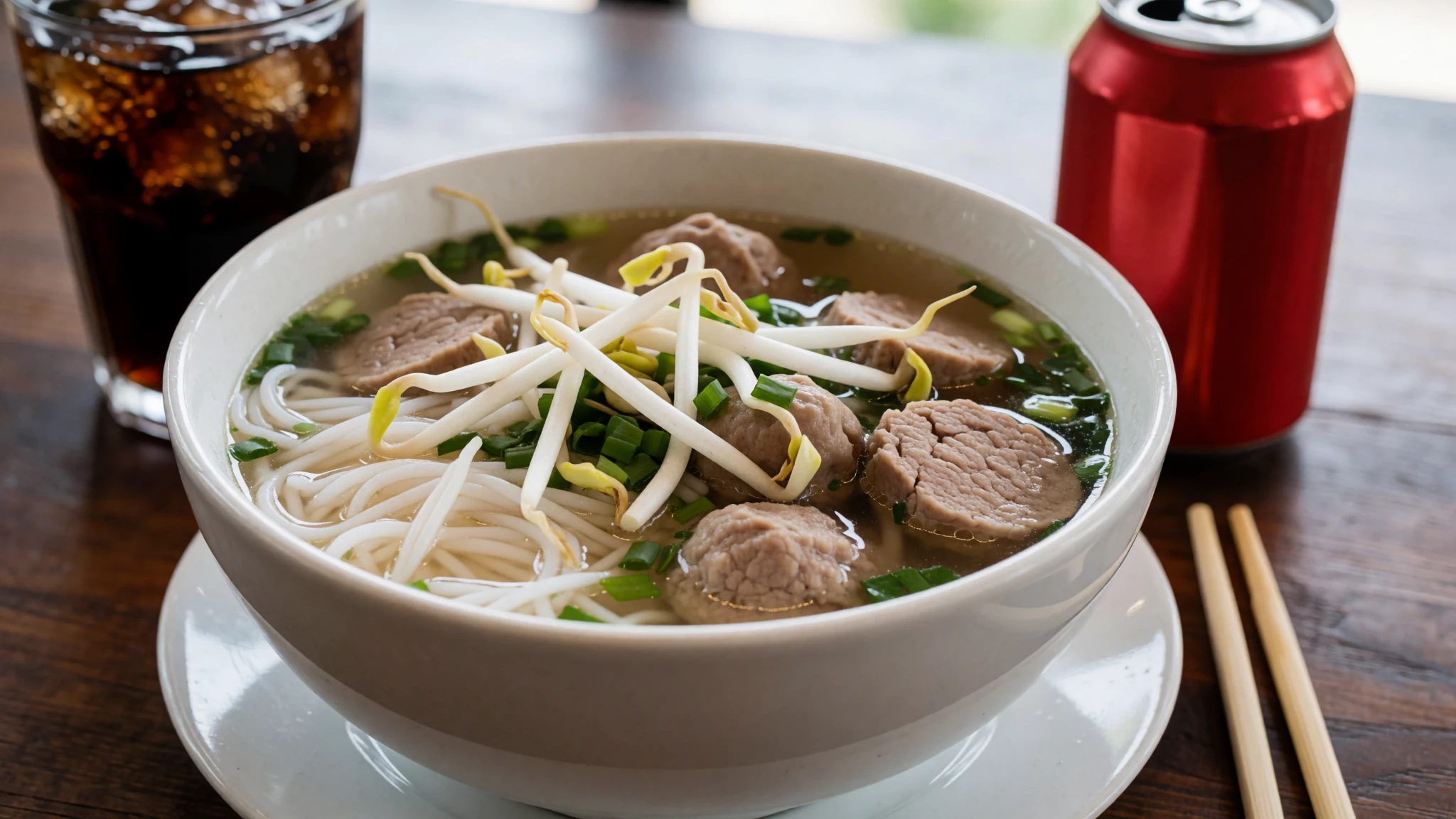
- Street stalls for office workers — Street stalls in the office districts at lunchtime
A small cluster of street stalls is favoured by office workers for quick local meals. The feel is close to the street markets of Luang Prabang, with plastic stools, charcoal smoke and dishes cooked to order. Go around lunchtime, choose from the dishes already on the grill, and carry small notes for payment. - Chinese restaurants — Newer districts and main roads, rather than the old town
Chinese investment has raised the standard of Chinese restaurants in Vientiane, and many now serve regional dishes well beyond takeaway fare. The best ones are often in the newer districts and along the main roads. Order a few shared plates, and expect menus in Chinese, Lao and English.
Plan it
Best time. November to February, when the air is cooler and the skies are mostly dry; March and April are hot, and May to October is the rainy season, when storms often arrive in the afternoon and the riverside can be damp.
How long. 2–3
Getting there. Wattay International Airport has direct flights from many cities in Asia, and some visitors fly to Udon Thani in Thailand and cross the border at Nong Khai by bus or shuttle, which can be cheaper than a direct flight.
Budget. mid
Tips
- Check in at the airport counter even if you checked in online, because online boarding passes are not accepted
- Fill in the departure card at the desk after security, before the long queue for exit immigration
- Carry kip and small notes, as cards are less useful at small eateries and tuk-tuks
- Plan around traffic and avoid tight connections across town
- Carry water in the hot months and walk the riverside early or late in the day
Etiquette
- Dress modestly at temples, with covered shoulders and knees
- Ask before photographing monks or people at religious ceremonies
- Remove shoes before entering temple halls and any raised floor
Nearby
Sources
- Wikidata Q9326 (CC0)
- Wikipedia, Vientiane (rev 1382799163) (CC BY-SA 4.0)
- Wikivoyage, Vientiane (rev 5360965) (CC BY-SA 4.0)
- Photo: Vientiane, viewed from Patuxai Gate (CC BY-SA 4.0)
- Photo: Wat Sisaket in Vientiane in Laos (CC BY-SA 4.0)
- Photo: The Pha That Luang in Vientiane, Laos (CC BY-SA 2.0)
- Photo: Ban Talat Mon inscription from Laos (CC BY-SA 4.0)
- Photo: Vientiane Bus Rapid Transit Main Bus (CC BY 4.0)
- Photo: Taxi in Vientiane, Laos (CC BY 3.0)
- Photo: Naga-themed balustrade ends (CC BY 2.5)
- Photo: panoramio (3117) (CC BY 3.0)


