Victoria Memorial, Kolkata
Victoria Memorial, Kolkata, India
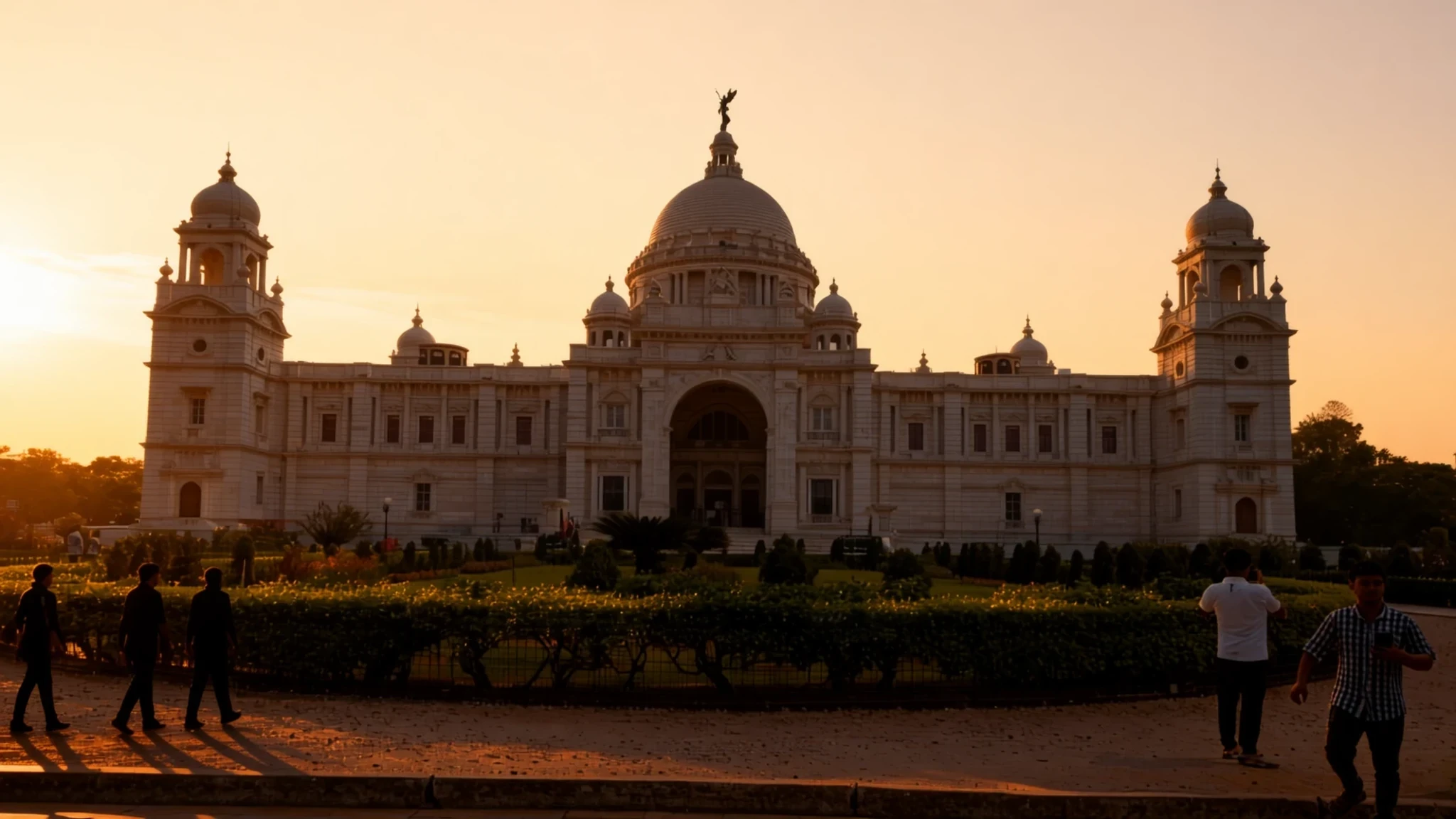
Go for the marble, the gardens and the museum on a cool morning, and treat the building as a clear window onto Kolkata's colonial past.
The place
The Victoria Memorial stands on the Maidan, the open green space in central Kolkata, with its main entrance on Queen's Way. Its pale marble walls and domed centre make it easy to spot from almost any direction. It sits at the southern edge of the Maidan, where the broad lawns give way to busier streets. The building is now a museum run by the Ministry of Culture of the Government of India, and its galleries explore the city's history.
The grounds cover around 26 hectares of gardens, with long walks, flowerbeds and open views, so much of the visit can happen outdoors. The architecture blends European classical lines with Indo-Saracenic ornament: arches, cupolas and decorative carving that borrow from Mughal styles. Inside, the main hall holds a large statue of the queen, and the mood is formal, with high ceilings and polished floors.
Practically, expect crowds at weekends and holidays, and ticket queues that can run long. Give yourself a good part of the morning for the galleries and the grounds. The gardens are pleasant in the late afternoon once the heat has eased, and the building looks striking when it is lit after dark.
Its story
The idea for the memorial came from Lord Curzon, the Viceroy of India. Historian Durba Ghosh notes that Curzon had been planning a historical museum before the queen died, and her death gave him a moment to make the empire monumental. Once Victoria had gone, he argued for a grand building with a museum and gardens that would honour her memory and teach visitors about the past.
In a speech to the Asiatic Society, he called for a hall that every newcomer to the city would seek out, and where people of every community could learn history. That vision shaped the project from the start. The construction work was entrusted to Martin & Co. of Calcutta, a firm founded by Rajendranath Mukherjee and Thomas Acquin Martin, and the superstructure rose in the years that followed.
The memorial was also a statement about power. Calcutta had been the administrative centre of the British Raj, and a monument of this scale placed the monarchy at the heart of the city's public life. Its gardens and the Maidan around them became places for ceremony, leisure and gathering.
Today the building is a state museum about the city, and it is also a place where Kolkata's residents walk, picnic and watch the sunset. Its story is layered: a colonial tribute to a queen, a museum of the city's past, and a public space that has outlived the empire it was built to celebrate.
What to see
- The galleries — Inside the memorial, central Maidan
The memorial houses a museum that documents the history of Kolkata, from its early settlement years through the British period and into the modern city. Give the galleries a slow hour, because the displays reward close reading. Arrive early, since ticket queues can be long at busy times and the building fills up by midday.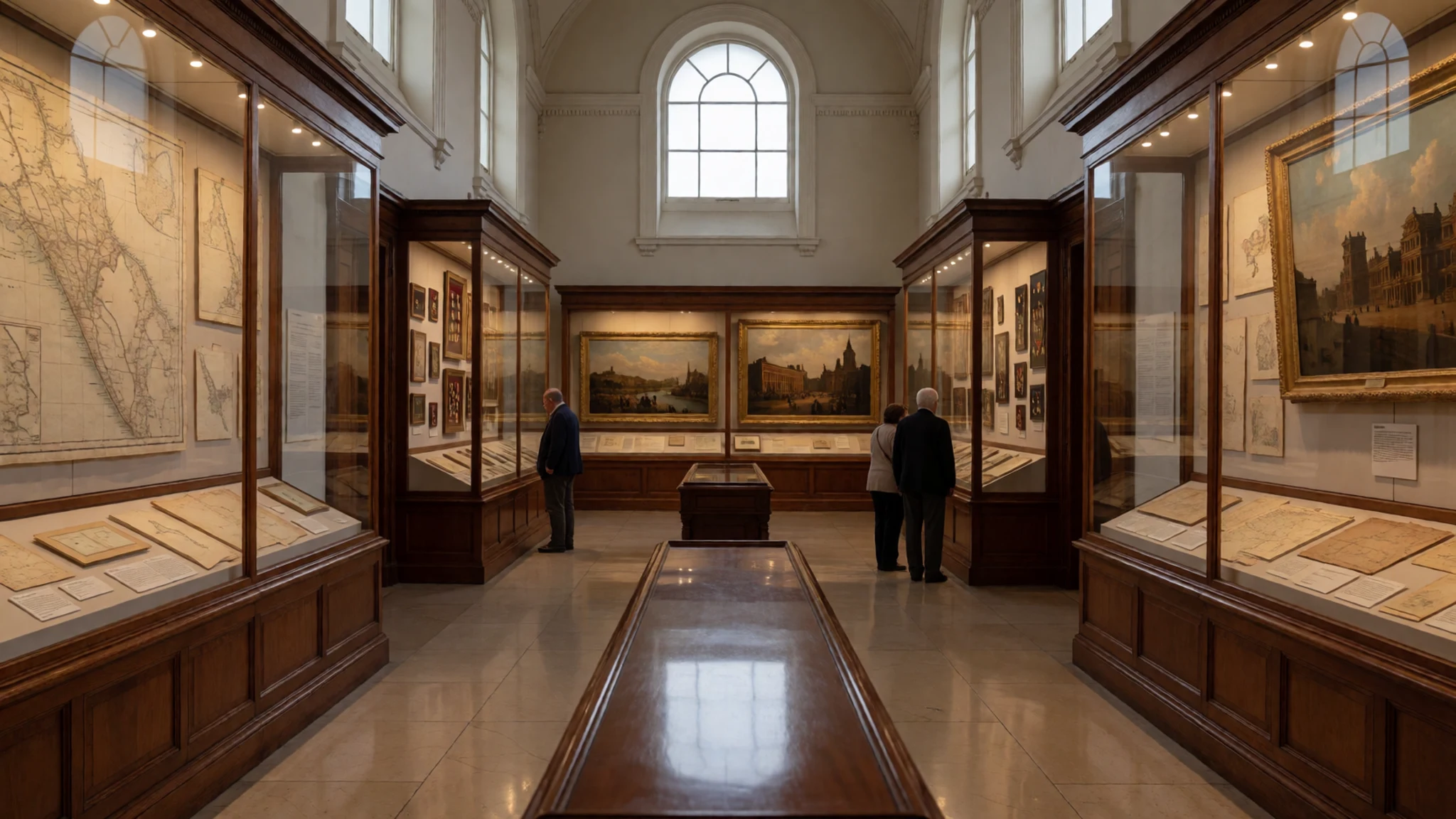
- Statue of Queen Victoria — Main hall, inside the memorial
A large statue of the queen stands in the main hall, the figure the whole building was raised to honour. Look up as well as ahead, because the high ceiling and decorative detail above are part of the design. The hall is calmer before the midday crowds arrive, and rules on photography can vary, so check at the entrance.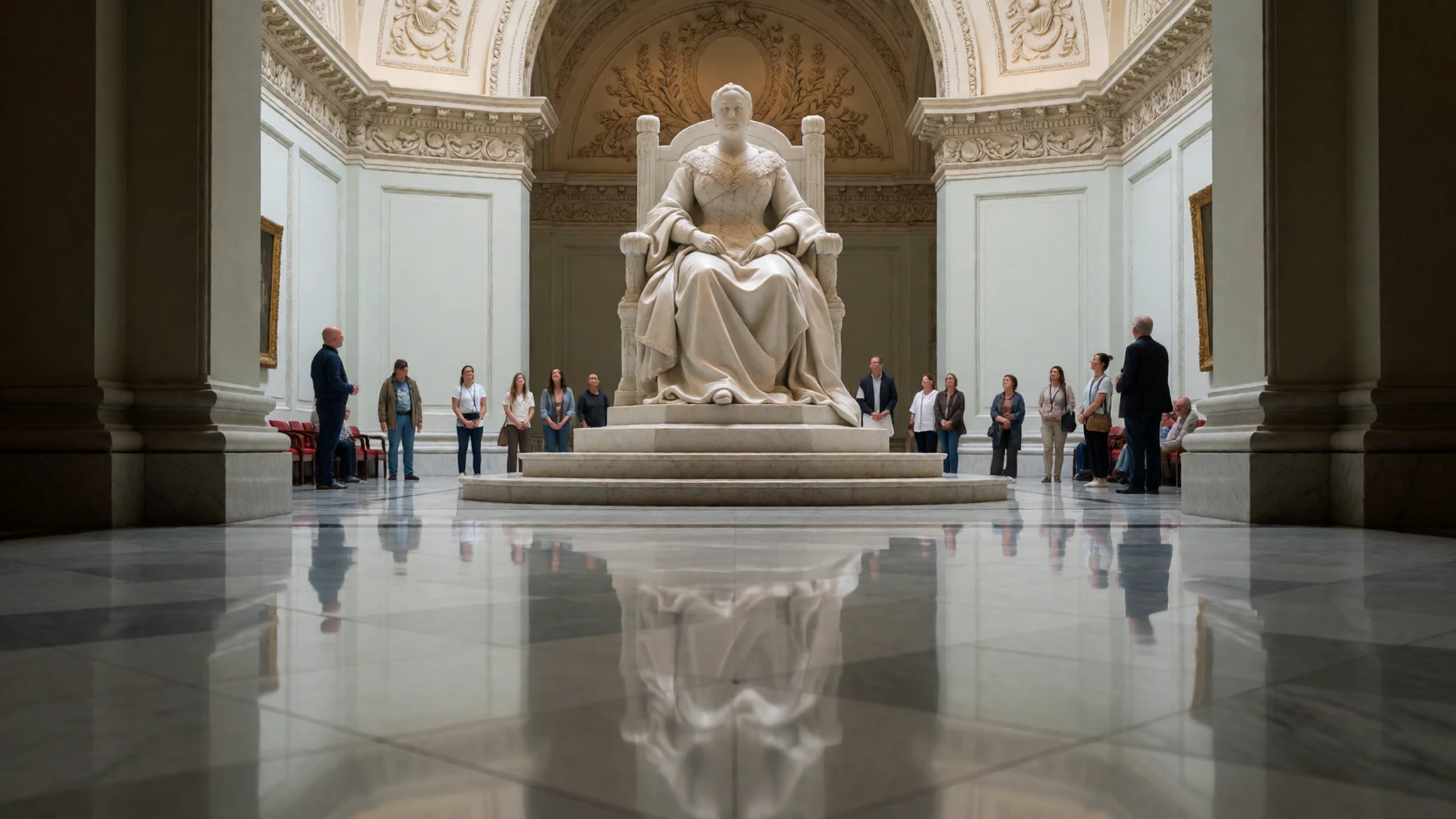
- The winged figure above the dome — Crowning the central dome
The winged figure on top of the dome, often called the Angel of Kolkata, is the feature many visitors look for from the gardens. From the lawns it stands out against the sky, which is the best viewpoint for a photograph. Look up in the morning, when the light falls cleanly on the figure, and bring water for the walk around the building.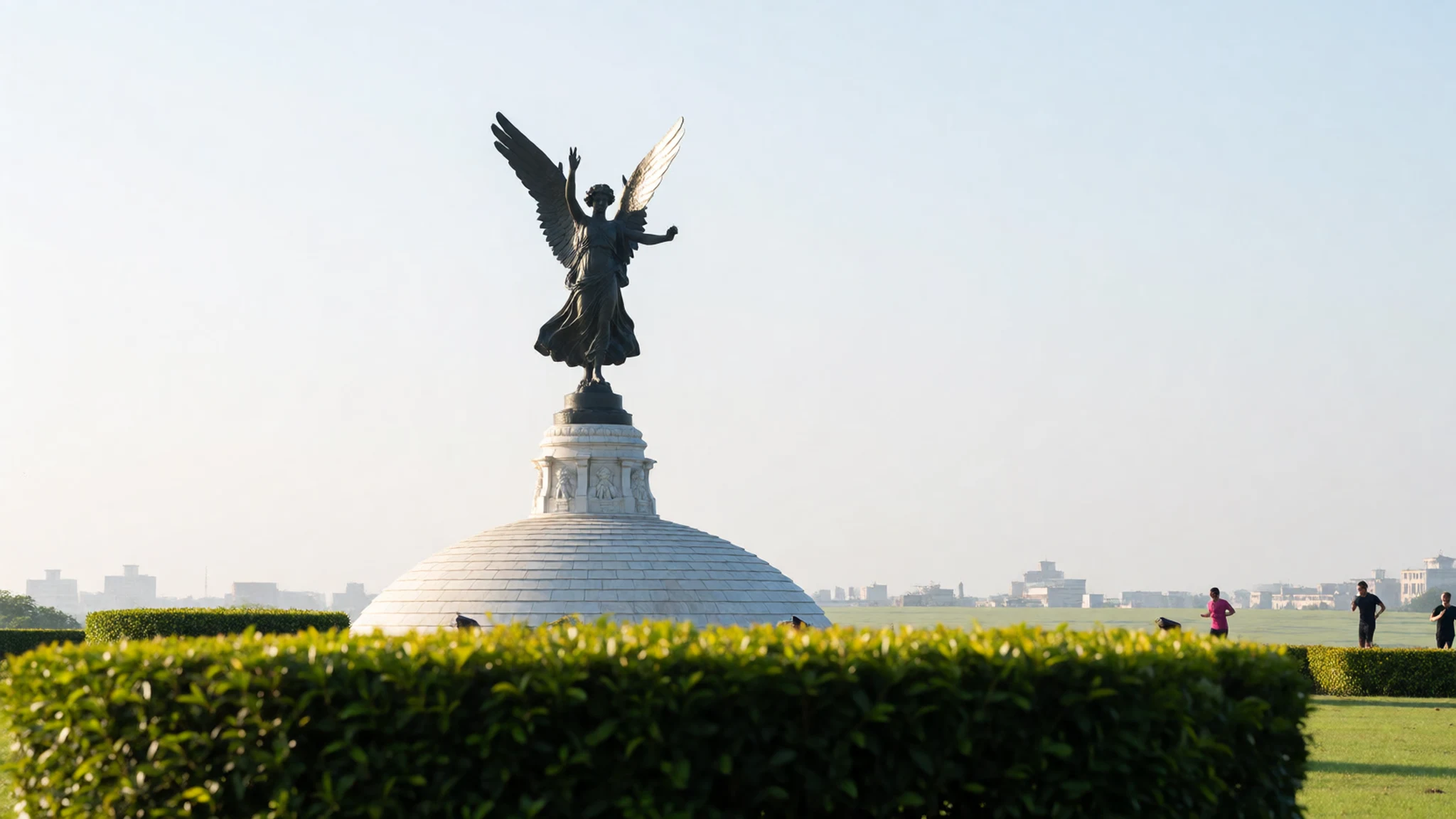
- Statue of Lord Curzon and the gardens — Grounds of the memorial
A statue of Lord Curzon, the viceroy who championed the memorial, stands among the grounds. Walk the gardens slowly, taking in the long lawns, the flowerbeds and the open views across the Maidan. The garden is most pleasant in the cooler hours of the day, and it is a good place to pause between galleries.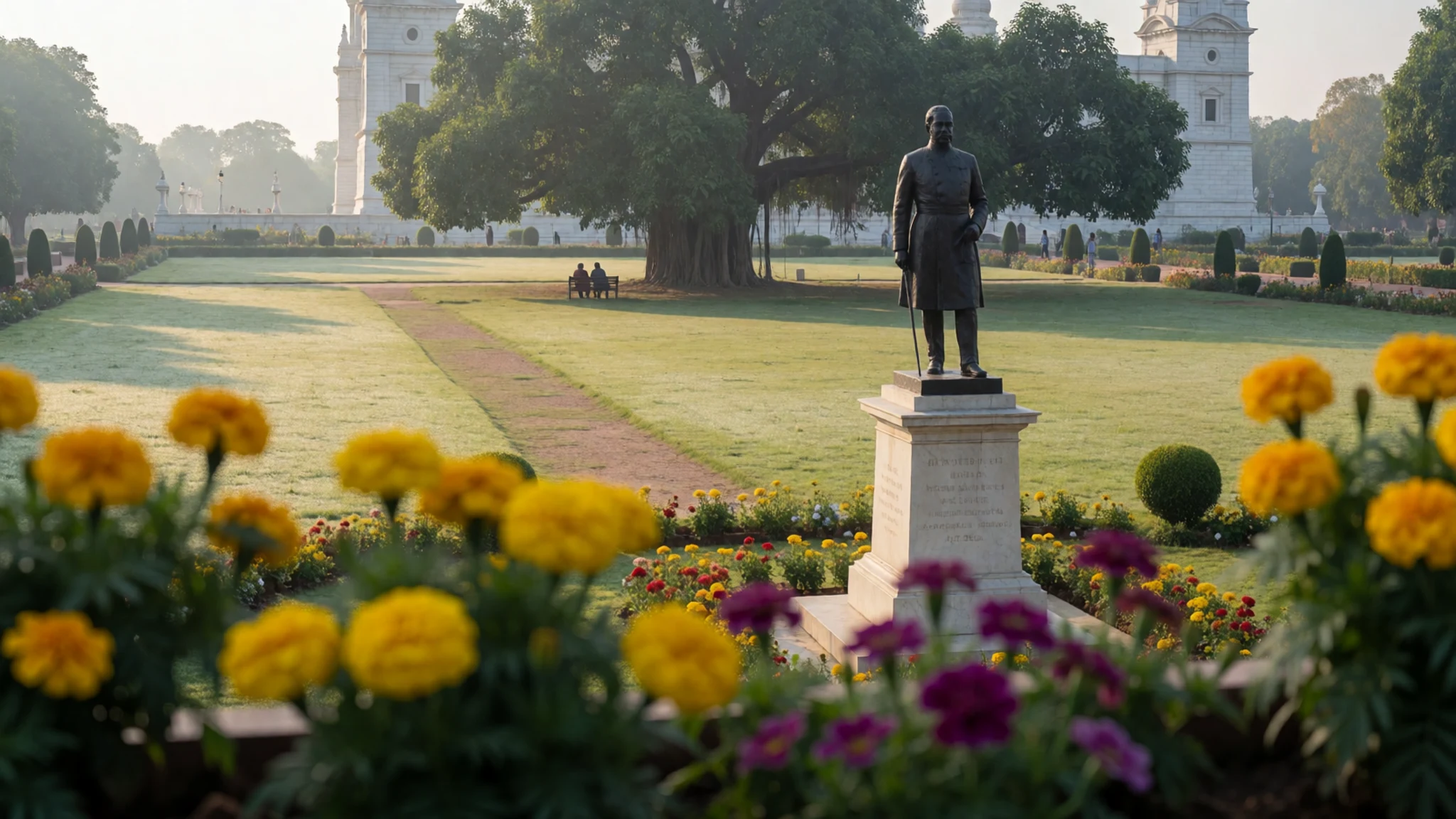
- St Paul's Cathedral — Beside the memorial, at the edge of the Maidan
As the largest church in the city, St Paul's Cathedral is noted for its Indo-Gothic architecture, which blends pointed Gothic forms with Indian touches. Its spire and tall windows make a striking contrast with the marble of the memorial. Visit on the way across the Maidan, dress respectfully and keep your voice down, because it is an active place of worship.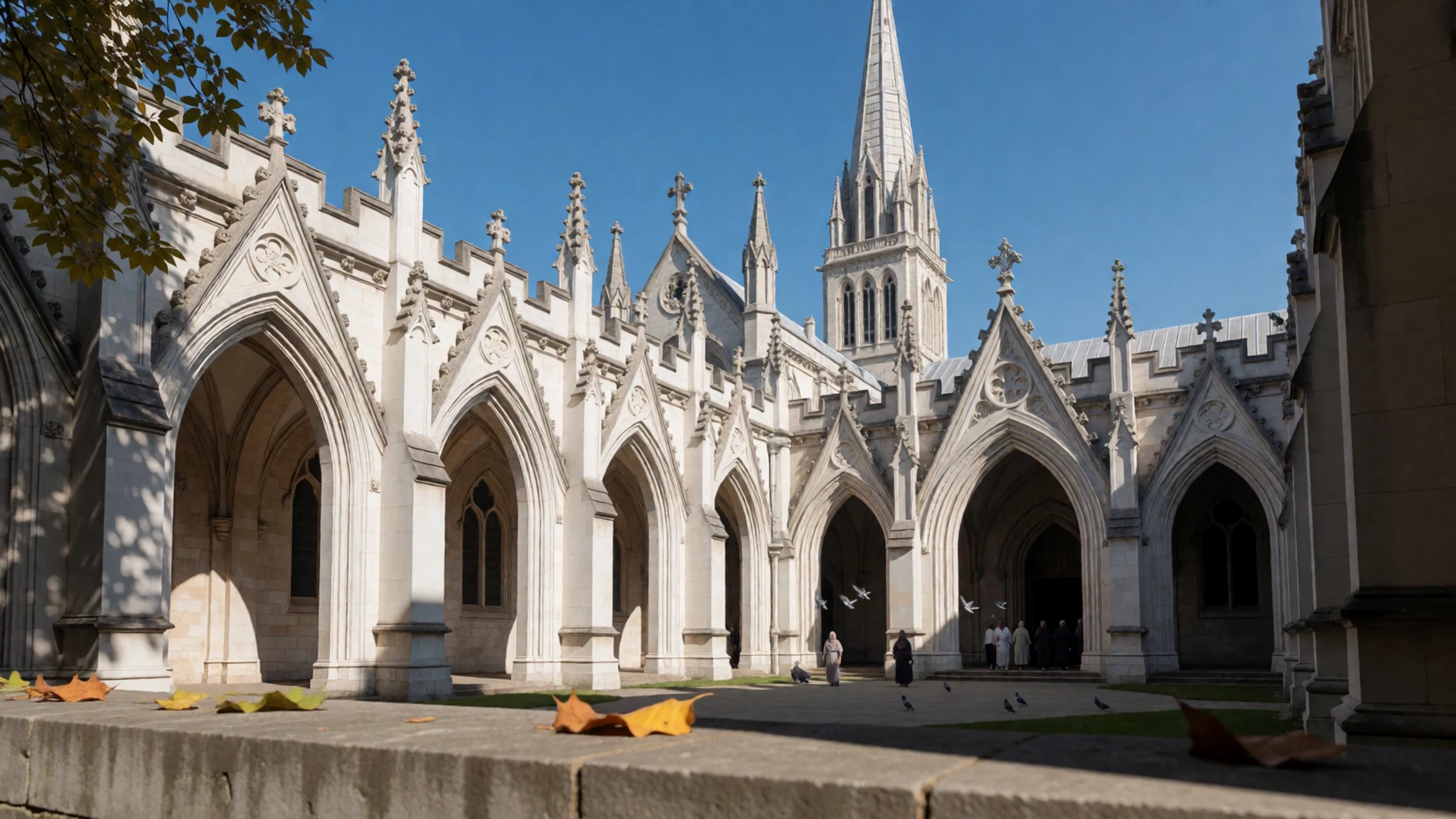
- BBD Bagh and the colonial core — North of the Maidan, BBD Bagh
BBD Bagh, known as Dalhousie Square, was the heart of British India. Its General Post Office has an imposing dome, and the Writers' Building was once a centre of the independence movement. The Calcutta High Court and Lok Bhavan, the governor's residence, are also here. Walk the area on a weekday morning, when the streets are quieter.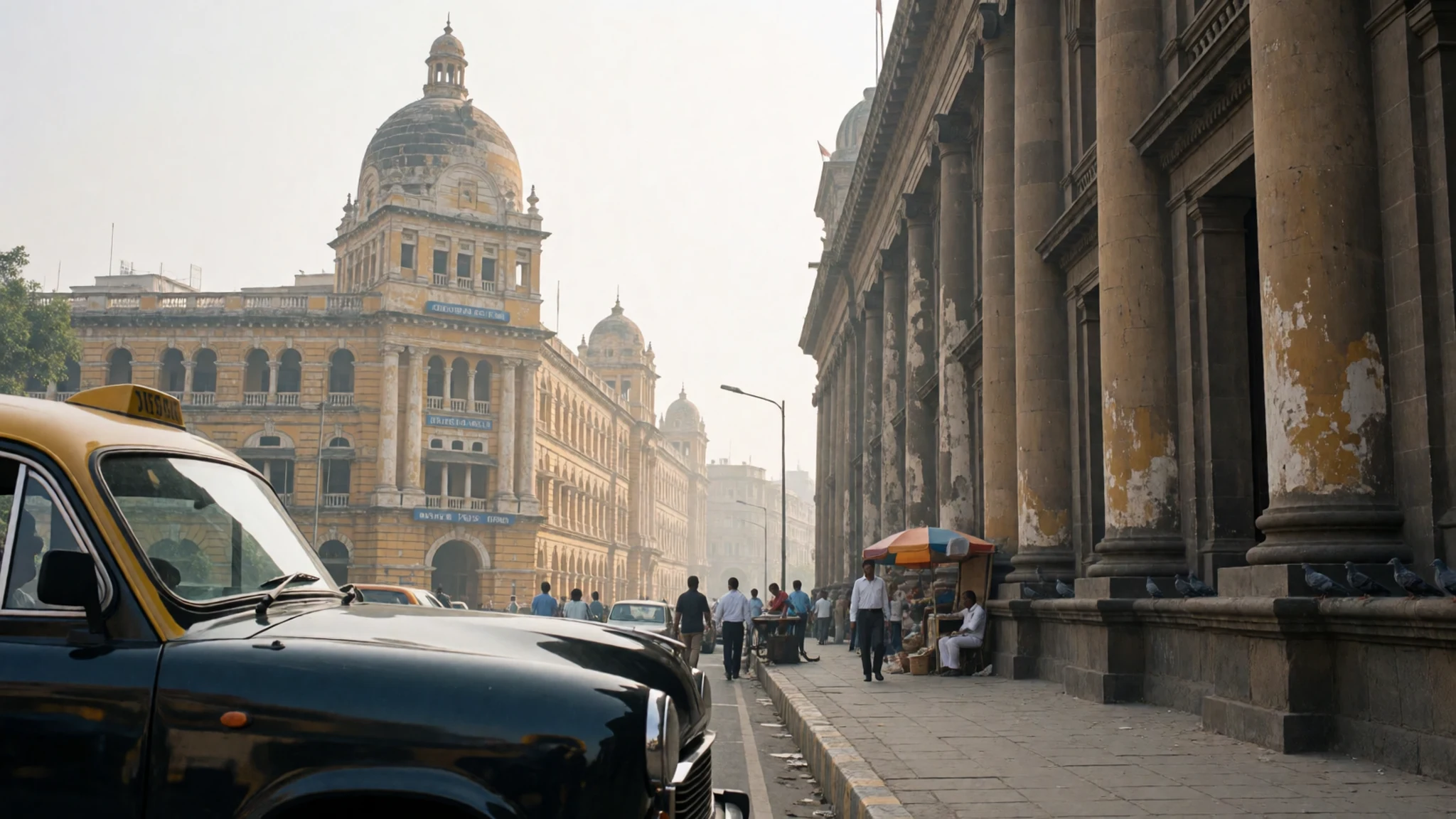
Culture
The Victoria Memorial sits in a city where dress is relaxed, yet dressing conservatively tends to earn more respect, especially in the older northern neighbourhoods. Bengali traditional dress is the dhoti-kurta for men and the sari for women, and younger people often choose trousers or salwar kameez because they are easier to wear. The memorial draws families, students and office workers, so the mood is informal, although the galleries are formal spaces.
Conversation is warm, and locals are often curious about visitors. Some subjects run deep. The Partition of India is especially painful for families whose roots lie in East Bengal, and unless you are ready for a long and emotional discussion, let local people raise it first and listen closely. Political parties also divide opinion, so keep your views for private conversations.
Queues can be slow at busy times, so patience helps, and staff directions are usually followed without argument. Photographing the gardens is fine, but do not pose strangers in front of the statues. Ask before photographing anyone, and keep your voice low inside the galleries.
What to wear
Visitors to the Victoria Memorial will see a city where dress ranges from formal saris to jeans, and the grounds are used by everyone from office workers to families on a weekend. Traditional Bengali dress is the dhoti-kurta for men and the sari for women. Saris are often cotton or silk, and Bengal is known for its handloom weaving, with textiles such as Tant cotton and Baluchari silk linked to the state's weavers. Festivals and weddings bring out richer silks and gold borders.
What people wear now is mostly relaxed: cotton trousers, kurtas, shirts, and for younger women, salwar kameez or western clothes. Many men still wear the dhoti at religious occasions or family events, and older women often prefer cotton saris for everyday life.
For your visit, dress for heat and sun for most of the year. Loose cotton or linen, a light shirt or kurta with trousers, and a hat or scarf work well. Cover your shoulders and knees if you plan to visit any religious site nearby. Wear comfortable walking shoes for the gardens and marble floors, and carry a light layer for the cooler galleries.
What to eat
- Kathi kebab roll — Nizam's on Hogg Street, near New Market
Credited with inventing the kathi kebab roll, a paratha-style flatbread wrapped around spiced grilled meat. Nizam's on Hogg Street, near New Market, is the classic address and still draws the crowds. Eat it hot and eat it quickly, standing or at a simple table.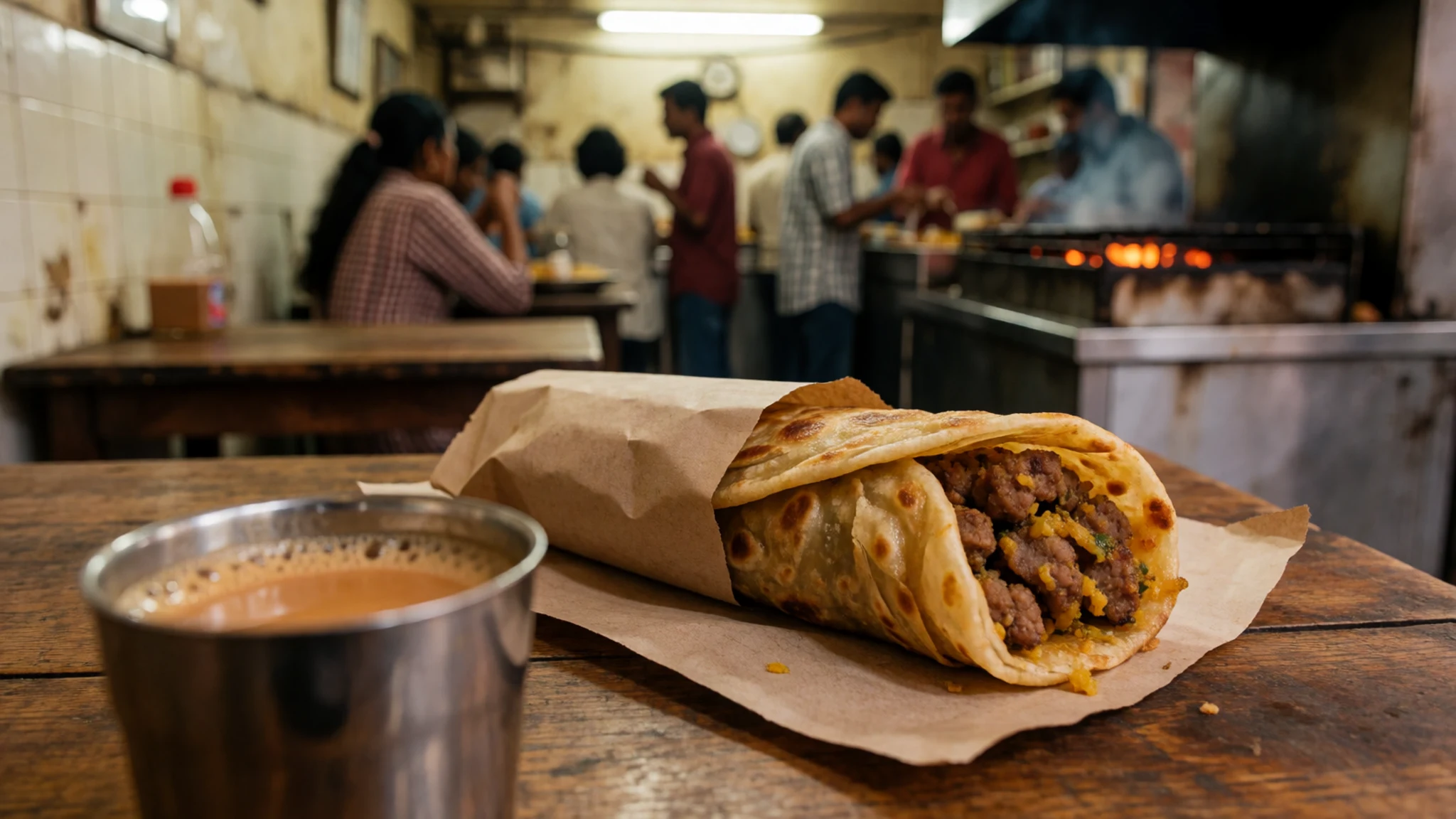
- Old eateries of Esplanade — Streets around Esplanade, east of BBD Bagh
The streets around Esplanade hold many long-established eateries that have served the same Bengali and Anglo-Indian style dishes for generations. Choose a place with a crowd of locals, order simple items such as cutlets, chops or a Bengali thali, and enjoy the atmosphere of a long-established room.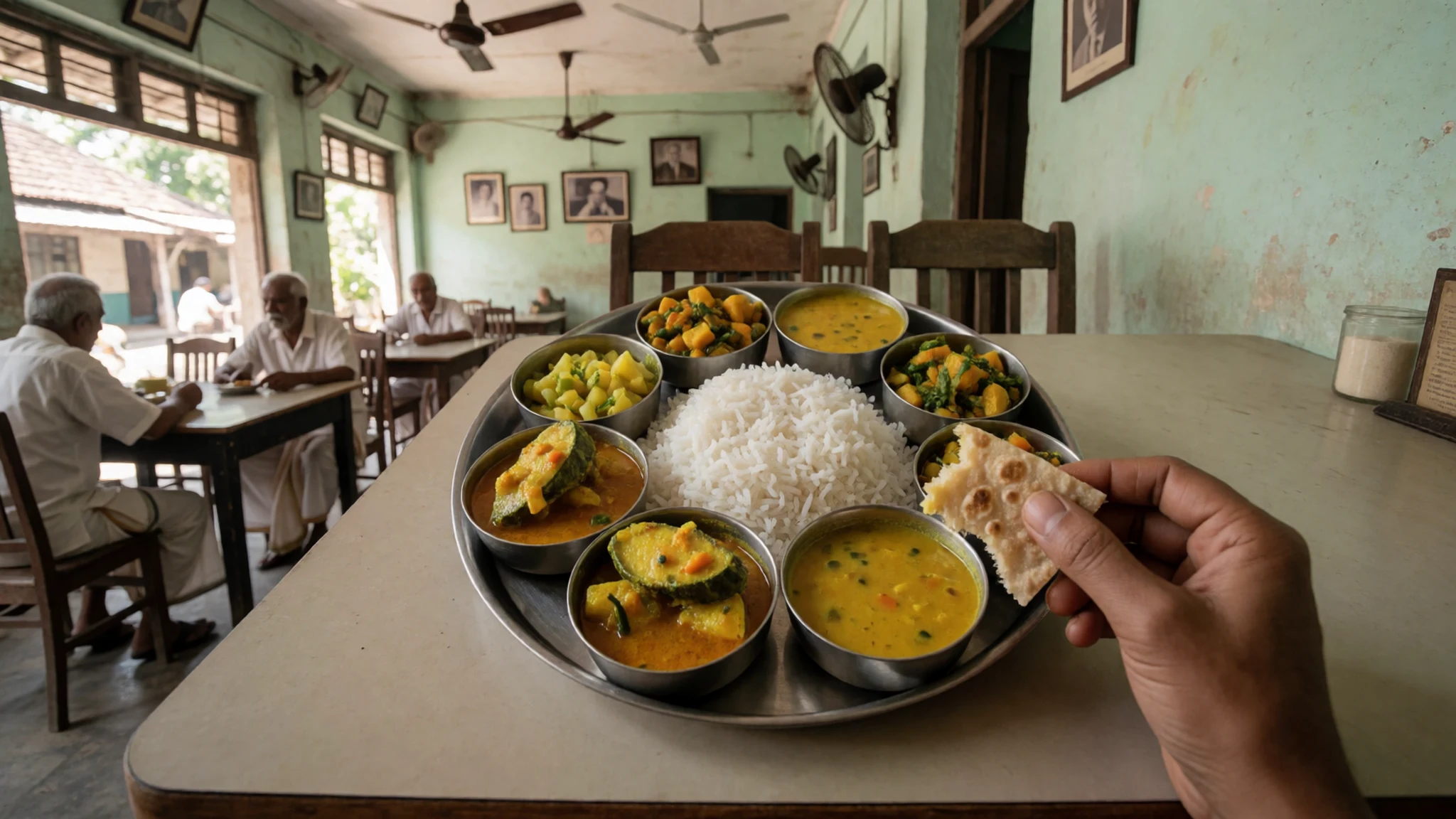
- Hilsa — Morning fish markets; Bengali home-style eateries
Hilsa is the river fish Bengalis treat as a delicacy, often cooked with mustard. Look for it at the morning fish market, where stallholders sell fresh catches from the Hooghly. At a Bengali home-style eatery, ask what is freshest, since it is most prized during the monsoon.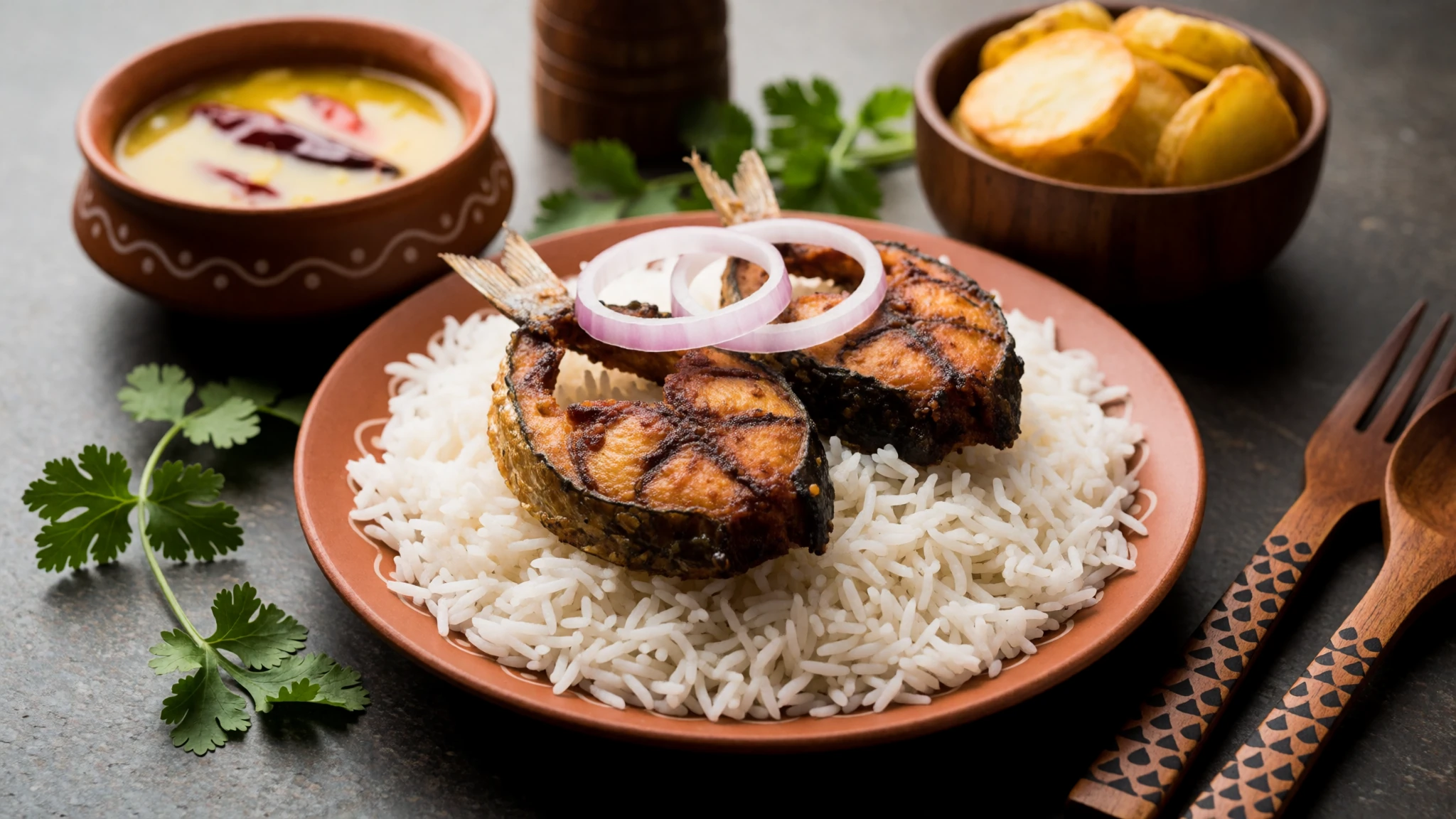
- Puchka — Pavement carts around the Esplanade and the Maidan edges
Crisp hollow shells filled with spiced potato, tamarind water and chutney are sold from pavement carts. Puchka, as Kolkata calls it, makes a lively snack for an afternoon walk. Look for a busy cart near the Maidan, and eat it straight away before the shells soften. - Rosogolla and sandesh — Traditional sweet shops across north Kolkata
Rosogolla, soft cheese balls in light syrup, and sandesh, a milk-based sweet, are the treats Kolkata takes seriously. Sweet shops across north Kolkata sell them by the piece or by the box. Buy a few to take back to your room, and eat them within a day or two.
Plan it
Best time. November to January, when the air is cooler and drier and the gardens are at their most comfortable. The hot, humid months arrive before the monsoon, and the monsoon itself brings heavy rain through the summer.
How long. 1–2
Getting there. Fly into Kolkata's international airport, where prepaid taxis and state-run air-conditioned buses serve the city centre. From the centre, the memorial is easy to reach by taxi, which you can hail almost anywhere in the city.
Budget. low
Tips
- Go early in the morning, before the midday heat and the crowds
- Check the official site for current opening times and tickets: http://www.victoriamemorial-cal.org/
- Carry some cash for small purchases and food stalls
- Bring water and sun protection, especially at midday
- Combine the visit with a walk to St Paul's Cathedral and BBD Bagh, which are close by
Etiquette
- Ask before photographing people, especially families
- Keep your voice low inside the galleries
- Dress modestly when you visit religious buildings nearby
Nearby
Sources
- Wikidata Q1356352 (CC0)
- Wikipedia, Victoria Memorial, Kolkata (rev 1376798468) (CC BY-SA 4.0)
- Wikivoyage, Kolkata (rev 5409880) (CC BY-SA 4.0)
- Photo: Subhrajyoti07, Victoria Memorial situated in Kolkata (CC BY-SA 4.0)
- Photo: Queen Victoria's statue inside the memorial in Kolkata (CC BY 3.0)
- Photo: Nomadistic, Angel of Kolkata Victoria Memorial (CC BY-SA 4.0)
- Photo: Joydeep, Statue of Lord Curzon at Victoria Memorial, Kolkata (CC BY 3.0)
- Photo: Vyacheslav Argenberg, Victoria Memorial Gardens, Calcutta, India (CC BY 4.0)
- Photo: DeepanjanGhosh, Victoria Memorial Kolkata at night (CC BY-SA 4.0)
- Photo: Rangan Datta Wiki, Victoria Memorial Night 5 (CC BY-SA 4.0)
- Photo: DeepanjanGhosh, Victoria Memorial Illuminated at Night (CC BY-SA 4.0)


