Vézelay Abbey
Vézelay Abbey, France
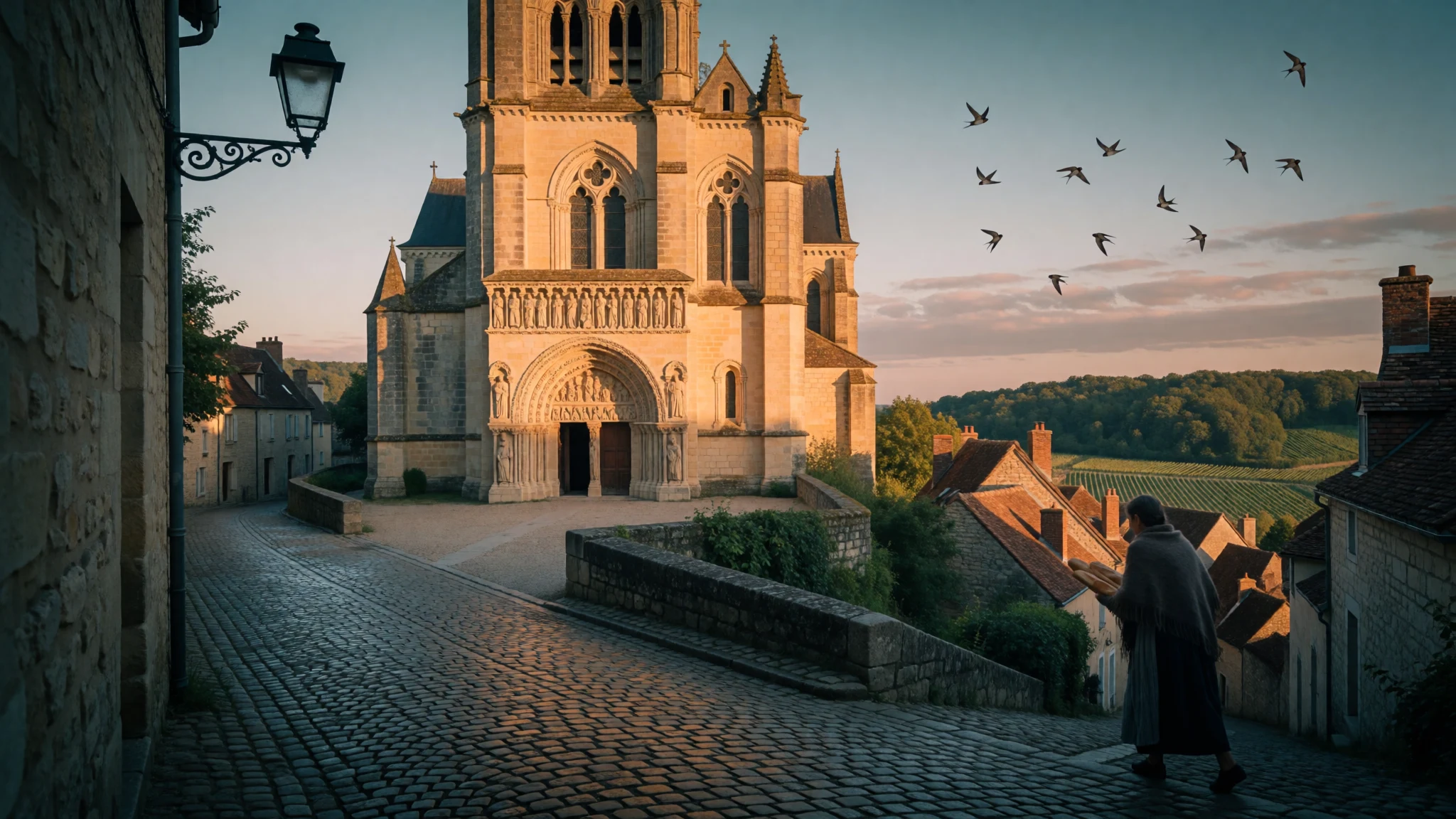
Vézelay Abbey is a Romanesque pilgrim church on a Burgundy hilltop, with carved stone doorways and capitals that reward slow looking.
The place
Vézelay Abbey stands on the crest of a hill in the Yonne department, in east-central France, and the church that survives from it, the Basilica of Sainte-Marie-Madeleine, is the landmark of the whole district. The village below has only a few hundred residents, and almost everything in it is arranged along one steep street that climbs from the walls to the basilica doors. The abbey was Benedictine and linked to the reforming house of Cluny. The present church was built between 1120 and 1150, and it mixes Romanesque and Gothic styles. Its fame rests on sculpture: carved capitals inside and richly worked portals around the entrance, planned as a connected scheme rather than as decoration. The building has not had an easy life. Huguenots sacked it in 1569, it was neglected through the following two centuries, and the French Revolution did further harm. Much of the weathered sculpture was replaced in a 19th-century restoration, so some of what is seen is later work. The church and the hill were listed as a UNESCO World Heritage Site in 1979. Pilgrims still pass through on the way to Santiago de Compostela, but they are a small share of the visitors. Summer weekends bring coach parties and a crowded main street, while spring and autumn mornings can feel almost private. Relics of Mary Magdalene are kept inside the basilica.
Its story
Vézelay Abbey grew on land that had once been a late Roman villa, later passed to the Carolingians and to a count named Girart. Two convents he founded there were looted by raiders in the 8th century, and a later hilltop convent was burnt by Norman attackers. In the 9th century the community was refounded under Badilo and joined the reformed Benedictine network centred on Cluny. Its position mattered. Vézelay lay at the start of one of the four main French routes to Santiago de Compostela, so pilgrims already had reason to arrive. Around 1050 the monks began to claim they held the relics of Mary Magdalene, said to have been brought from the Holy Land by Badilo or by messengers he sent. A little later a Vézelay monk reported finding, in a crypt at St-Maximin in Provence, a carving on an empty sarcophagus showing Jesus being anointed at Bethany. Medieval tradition identified the woman anointing him with Mary Magdalene, so the monks declared it her tomb and said her bones had been moved to their church. Whatever the truth, the claim turned a regional abbey into a major destination, and the money and visitors it brought paid for the great Romanesque church. Later centuries were harder: sacking in 1569, decay, Revolutionary damage, and then the restoration that gave the building much of its present look.
What to see
- The nave of the basilica — Top of the village, Vézelay
The long Romanesque nave is the reason to come. Its carved capitals show biblical scenes, animals and figures at close range, and the light through the stone is pale and even. Bring binoculars or use a phone zoom for the high capitals, and allow an unhurried hour.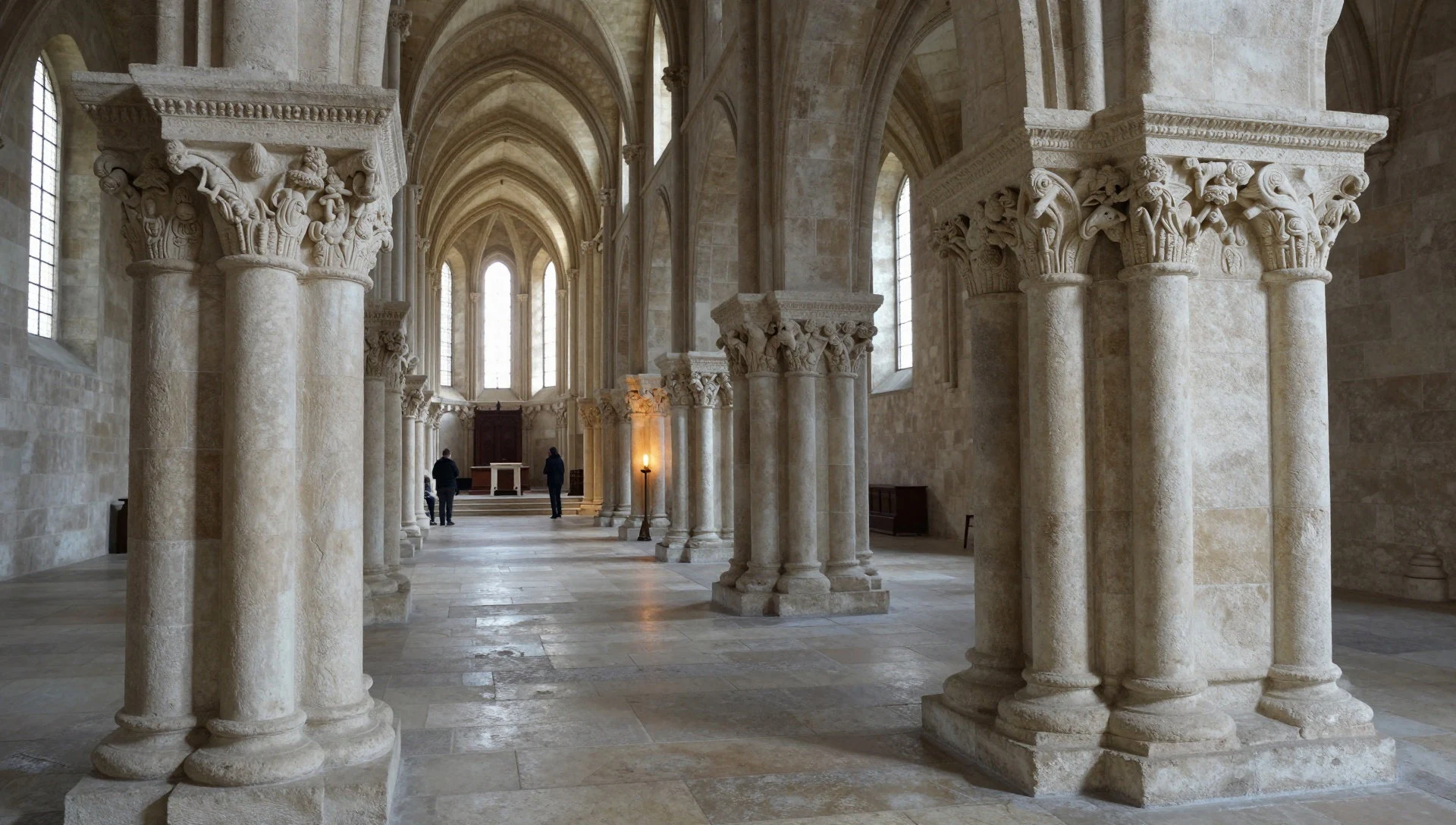
- The narthex and its central portal — Entrance vestibule, west end of the basilica
Before the nave itself comes the narthex, an entrance hall with a sculpted central doorway. The tympanum, carved in the 1120s, shows Christ in glory sending the Spirit to the apostles. Photographs flatten the detail, so stand close and look at the small figures around the edge.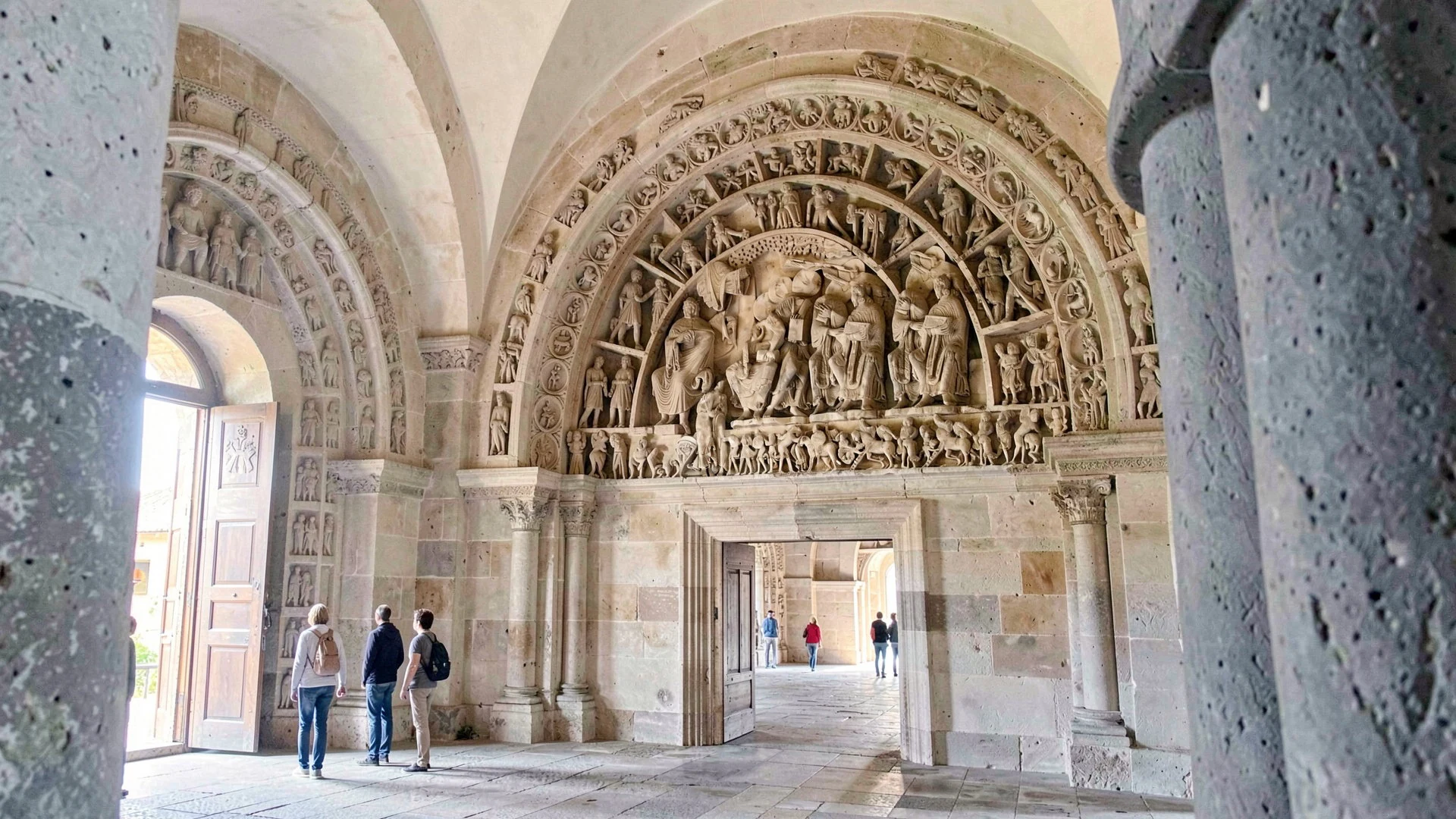
- Rue Saint-Étienne and the climb — Main street from the walls to the basilica
The approach is part of the experience. From the free car park outside the walls, a staircase leads to Place du Champ de Foire and then up Rue Saint-Étienne, lined with galleries, wine cellars and small shops. It is steep and cobbled, so take it slowly and stop to look back.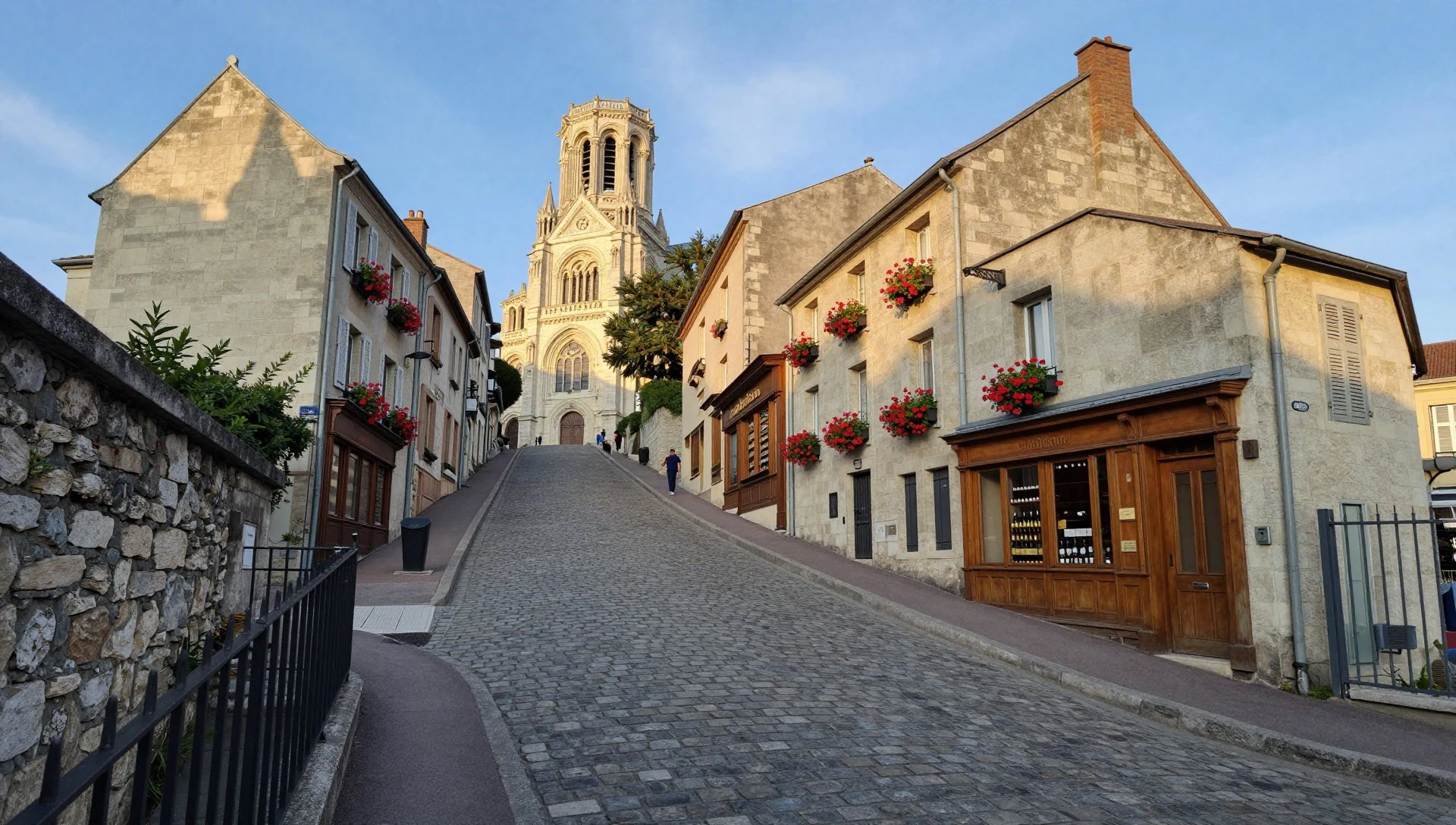
- Musée de l'Oeuvre Viollet-le-Duc — Village centre, Vézelay
This former lapidary museum holds original sculptures from the basilica. It helps in separating medieval stonework from later restoration, and in seeing carvings that are otherwise too high or too weathered to read. Opening times change, so check at the tourist office or the basilica's official site.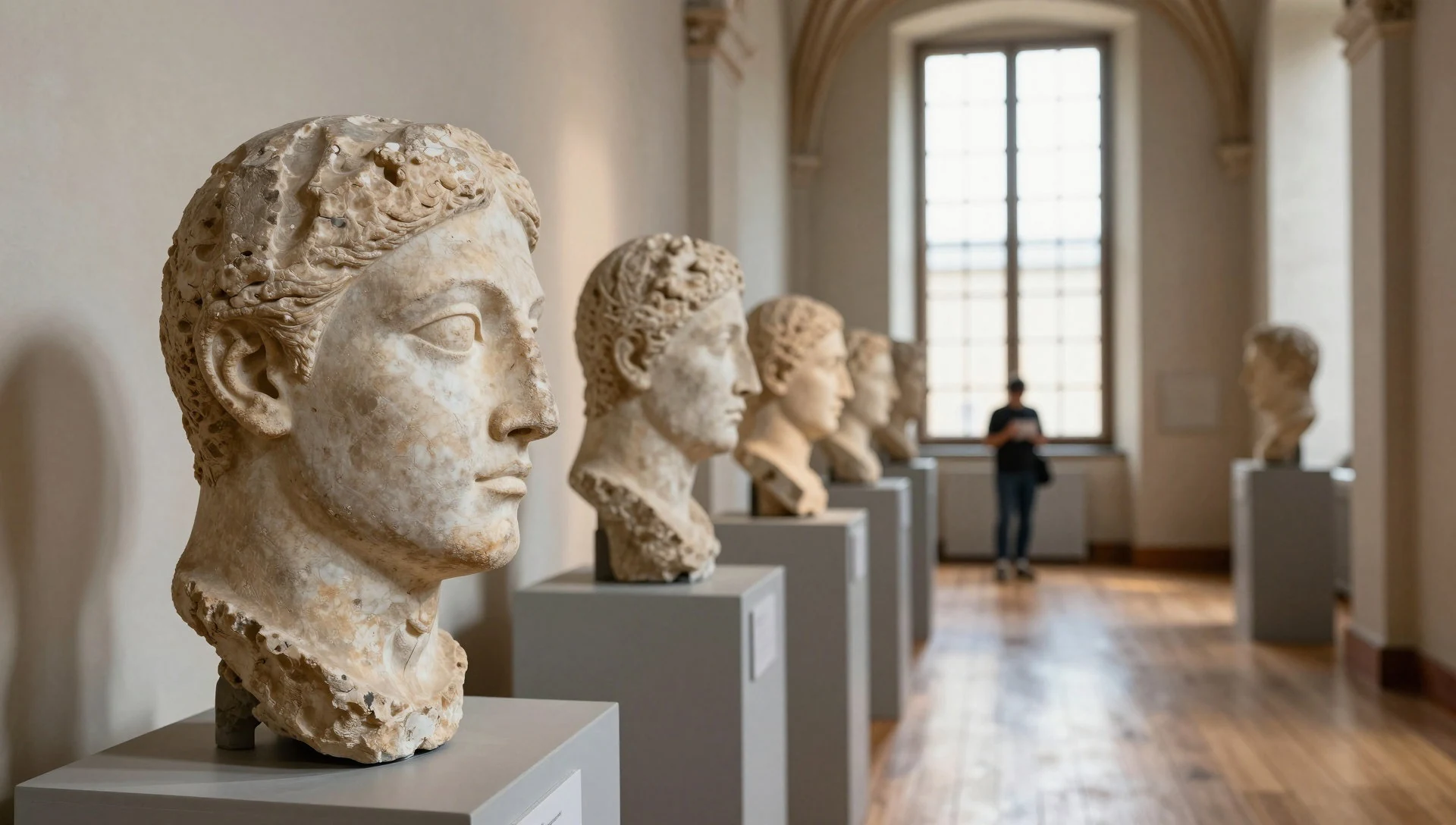
- Musée Zervos — Village centre, Vézelay
A small museum of modern art in a hill village, with paintings and sculpture by Picasso, Ernst, Calder, Miró, Giacometti, Laurens, Léger and Vieira da Silva. It makes a quiet contrast after the medieval church, and a sensible choice on a wet afternoon.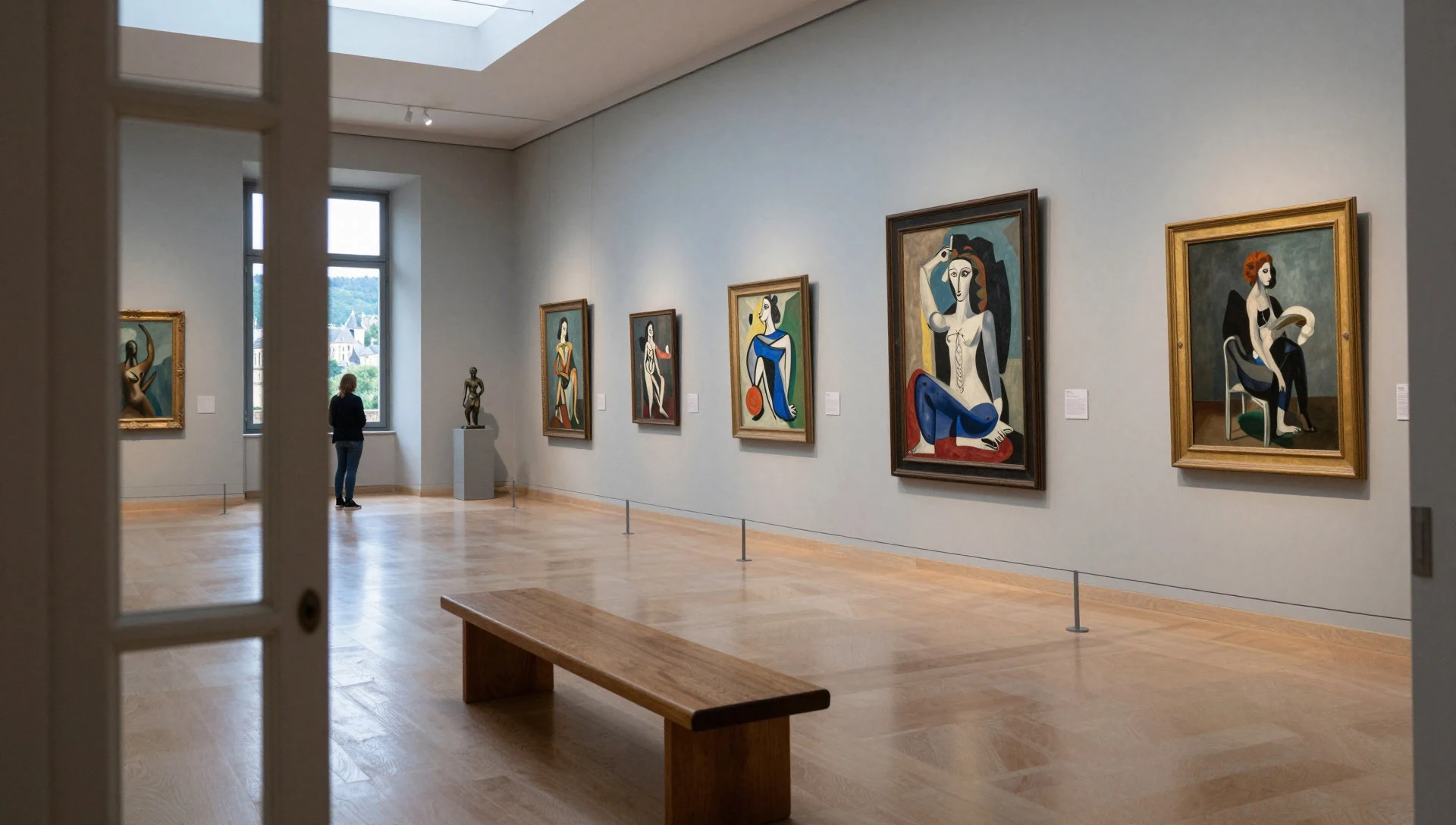
- Château de Bazoches — Bazoches, about 10 km south of Vézelay
A castle on a wooded hillside near the village of Bazoches, built in 1180 and later given by Louis XIV to a new owner. It suits a half-day excursion by car or a long cycle ride, and is quieter than the abbey. Check the official listing before setting out.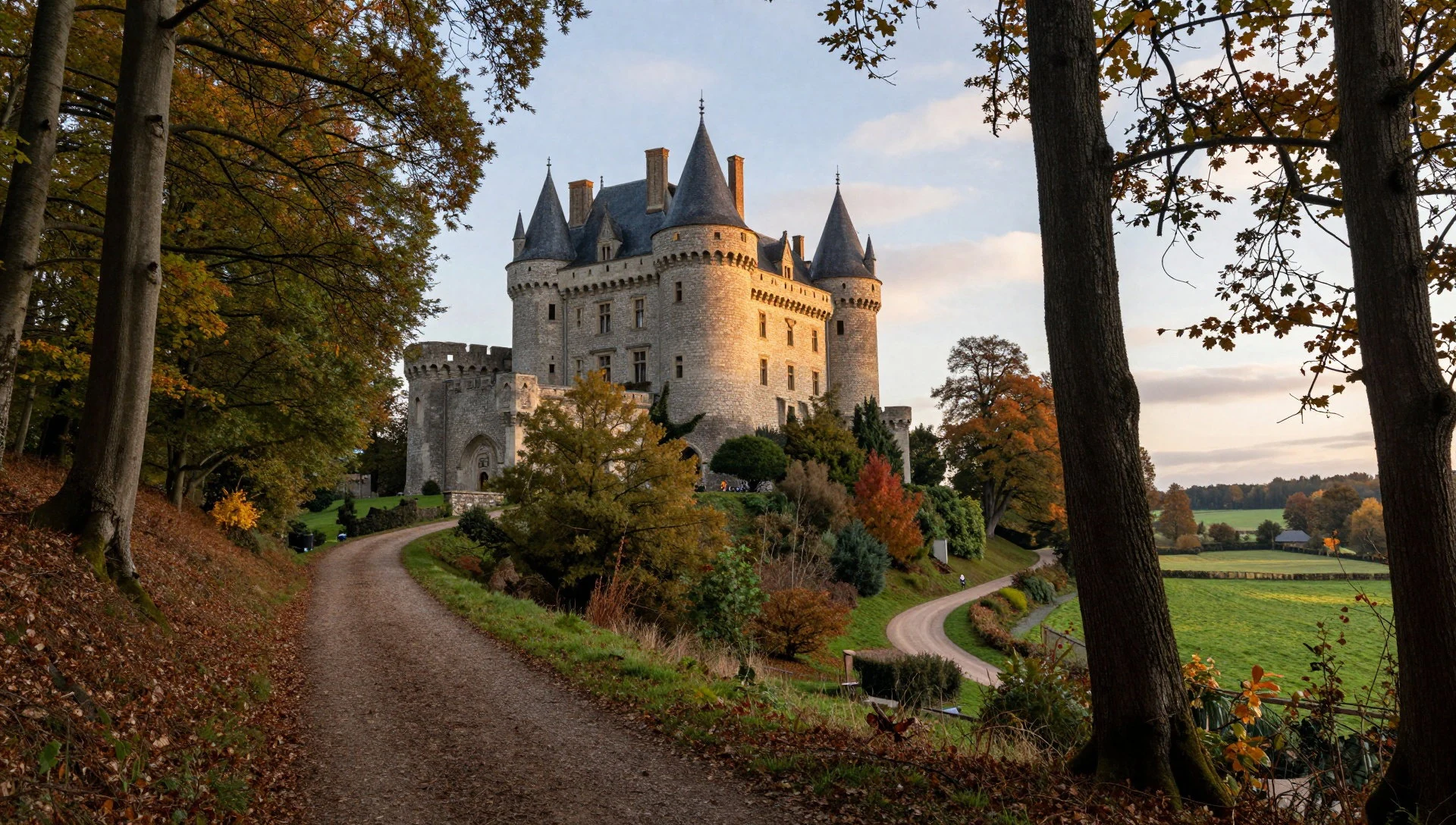
Culture
Vézelay Abbey is first of all a working place of Catholic worship, and its culture is that of pilgrimage. For centuries walkers set out from this hill, or reached it from the north, on the way to Santiago de Compostela, and the custom continues in a modest form. Hundreds of pilgrims still pass through every year, many carrying a scallop shell, the traditional emblem of the route. The cult of Mary Magdalene gave the abbey its fame, and her relics remain inside the basilica, so many visitors come to pray rather than to sightsee. The sculpture also reflects a medieval habit of teaching through images. Capitals and doorways carry biblical stories and moral scenes for people who might not read, and the carvers clearly enjoyed variety, with a surprising range of faces, creatures and gestures. Burgundy's monastic past still shapes the area, and the Cluniac connection explains the scale and ambition of the church. The village around it is small, quiet in the evenings and observant of Sunday habits, and many local businesses close on a regular weekly rhythm. Walking the last stretch uphill, as pilgrims have done, gives a better sense of the place than arriving by car and walking straight in. Keep your voice low inside the basilica, avoid flash photography, and step back from the nave if a service or prayer is under way.
What to wear
Vézelay Abbey has no folk costume in the usual sense, but its clothing history is the clothing of monks and pilgrims. Benedictine monks wore plain wool habits, traditionally dark, and pilgrims on the Santiago route wore a sturdy cloak or hat, carried a staff and fixed a scallop shell to their gear. Wool and linen were the everyday cloth of medieval Burgundy, and both are still sensible choices for the walk up the hill. Today people in Vézelay dress as in much of rural France: neat, practical and layered, with linen and cotton in summer and a good coat in winter. Winegrowers and shopkeepers wear working clothes, and the galleries along the main street add a slightly artistic, relaxed look. Walkers on the pilgrim route wear proper boots and rain jackets, and the scallop shell still turns up on rucksacks. Visitors should wear comfortable shoes with grip, since Rue Saint-Étienne is steep and the cobbles are slippery when wet. The stone interior of the basilica stays cool even on a warm day, so carry a light layer. Because it is an active church, covering shoulders and knees is polite, and hats should come off indoors. In winter, bring a waterproof and gloves, as the hilltop is exposed to wind.
What to eat
- Gougères — Bakeries and wine cellars along the main street
Light cheese puffs made with choux pastry, a Burgundian classic. They are usually eaten warm and often served as a nibble with a glass of local white wine, which makes them a natural first stop after the walk uphill.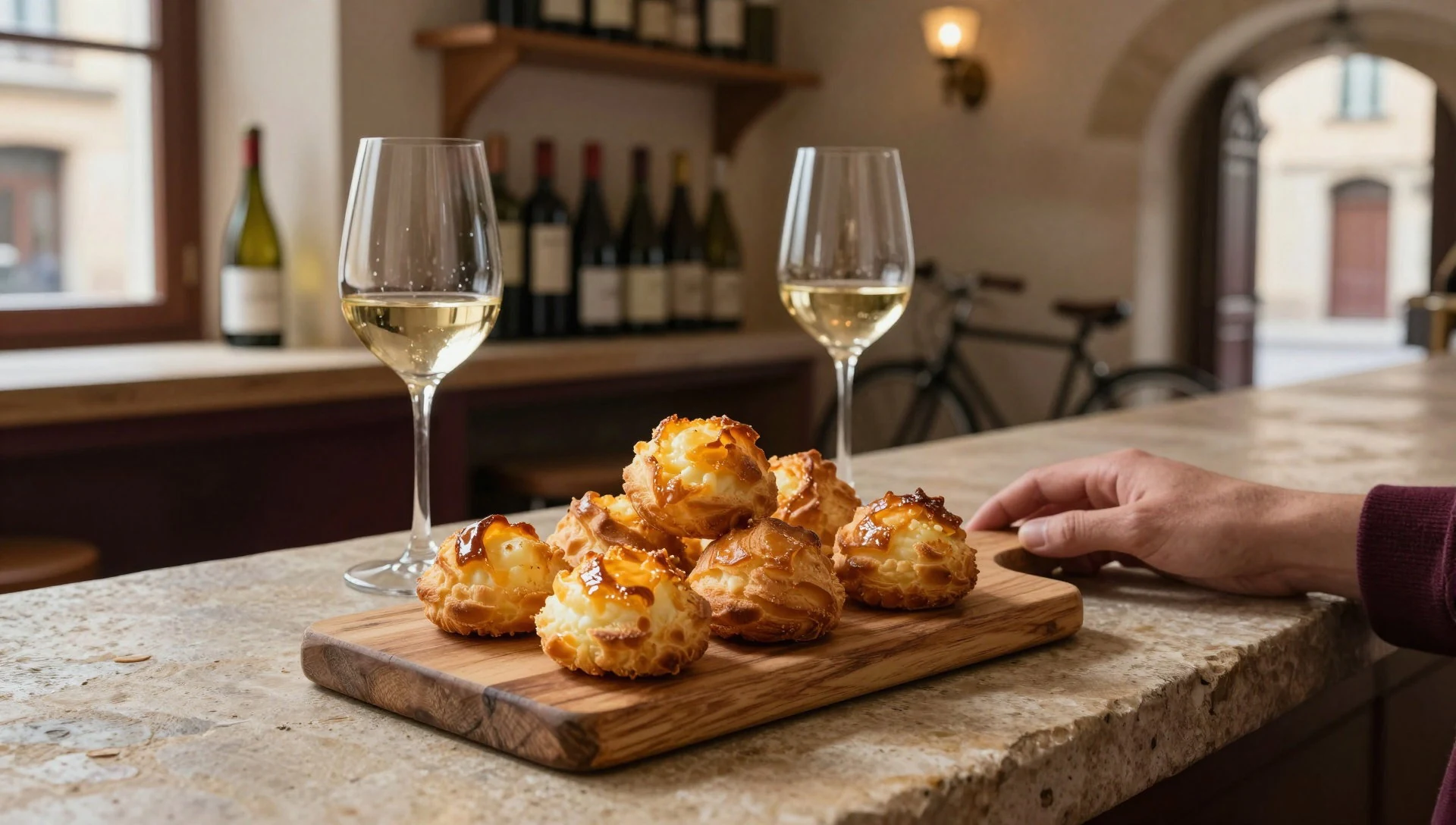
- Œufs en meurette — Traditional village restaurants and auberges
Poached eggs in a red wine sauce with bacon and onions, a rustic Burgundian starter. It is rich and savoury, and tastes best on a cold day. Ask for it as a starter and share the bread.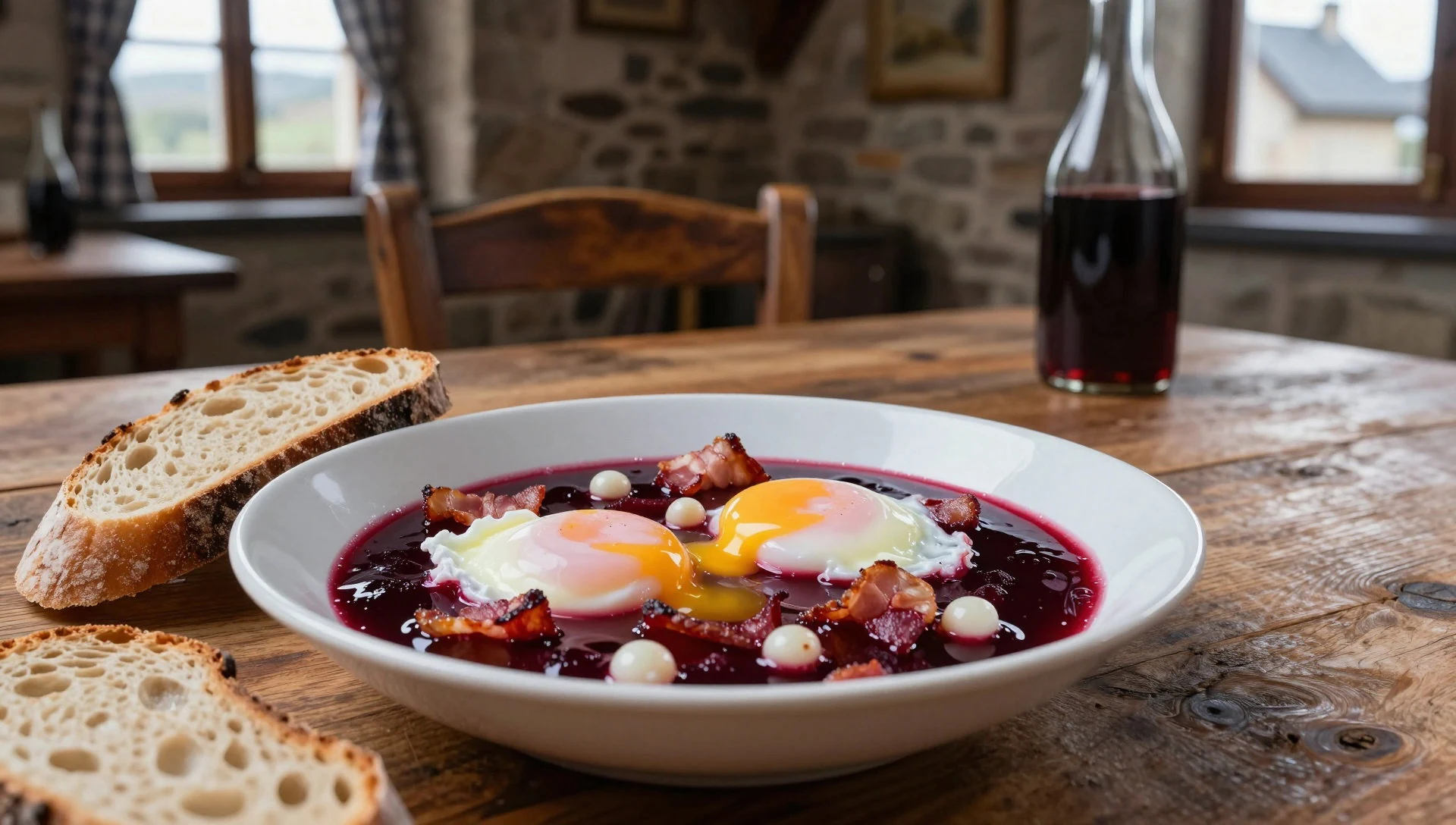
- Bœuf bourguignon — Traditional French restaurants in the village
Beef slowly braised in red wine with onions, mushrooms and bacon, the region's best-known stew. Menus here lean towards classic Burgundian cooking, so it is easy to find. Portions are generous, and it suits cooler months best. - Jambon persillé — Charcuterie counters and market stalls in nearby towns
Ham set in a parsley-flecked jelly and served cold in slices, an Easter favourite that appears year-round. It is good with mustard and bread, and works well as a picnic item for a walk. - Époisses and other Burgundy cheeses — Cheese shops and Saturday-morning markets in the area
Époisses is a strong, orange-rinded cheese washed in local spirit, and its smell is notable. It is best bought from a cheesemonger who can judge ripeness. Ask for it wrapped well if it is going back in a bag. - Local white wine — Wine cellars and tasting rooms in and around the village
The hillsides around Vézelay produce white wine, and several cellars along the main street offer tastings. It pairs well with gougères and with the region's cheeses. Drivers can ask for a small pour or buy bottles to take home.
Plan it
Best time. Late April to May and October for the most comfortable walking weather and softer light, with highs of about 26–29°C, though May and October are also among the wettest months; June and September run hot, July and August are the hottest, with highs near 40°C, and they are busiest, especially at weekends; winter is cold and quiet, with some places keeping shorter hours.
How long. 1–2
Getting there. Paris is the usual gateway. Vézelay has no train station: the nearest SNCF station is Sermizelles, with SNCF (TER) buses on to Vézelay, and buses also run from Clamecy and Corbigny. Another option is to travel to Avallon, about 17 km east, and take a taxi. By car, take the A6 from Paris towards Beaune and leave for Avallon; there is a free car park outside the village walls, with steps up to Rue Saint-Étienne.
Budget. mid
Tips
- Arrive early or stay for the evening, when the day visitors have left and the basilica is calmer
- Wear shoes with grip, as the cobbled main street is steep and slippery in the rain
- Check opening times and any guided-tour details on the official site, basiliquedevezelay.org, or at the tourist office
- Carry a little cash and a card, since small shops and cellars vary
- A car makes it easier to add Avallon, the Morvan park or Bazoches, as public transport is thin
Etiquette
- Keep quiet and avoid flash photography inside the basilica, especially during services
- Cover shoulders and knees and remove hats when entering the church
- Do not block the nave or doorways for photographs while pilgrims are praying
Nearby
Sources
- Wikidata Q217452 (CC0)
- Wikipedia: Vézelay Abbey (rev 1382822607) (CC BY-SA 4.0)
- Wikivoyage: Vézelay (rev 5421675) (CC BY-SA 4.0)
- Photo: Basilica Sainte-Marie-Madeleine, DKrieger (CC BY 3.0)
- Photo: West facade, Benjamin Smith (CC BY-SA 1.0)
- Photo: Aerial image of Vézelay Abbey, Carsten Steger (CC BY-SA 4.0)
- Photo: Vézelay floorplan, Wetman (Public domain)
- Photo: Narthex main portal tympanum, Benjamin Smith (CC BY-SA 1.0)
- Photo: Central tympanum detail, Vassil (Public domain)
- Photo: Narthex portal details, Benjamin Smith (CC BY-SA 1.0)
- Photo: Christ in glory tympanum detail, Vassil (Public domain)


