Veliky Novgorod
Veliky Novgorod, Russia
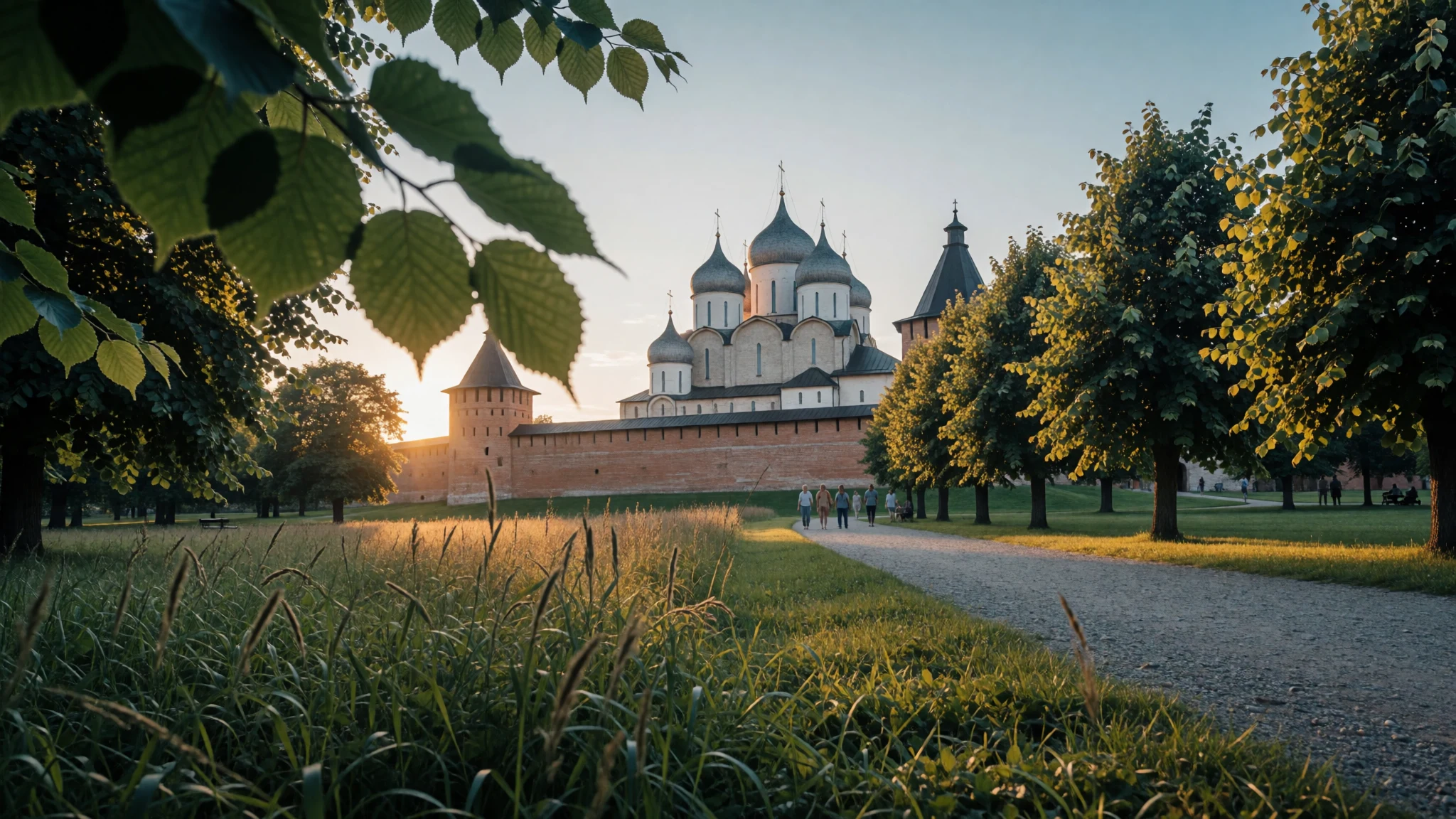
Veliky Novgorod gives a quiet, walkable look at medieval Russia: a red-brick Kremlin, ancient churches and a riverside trading past.
The place
Veliky Novgorod is a city of about 220,000 people in north-western Russia, set on low, flat ground roughly 25 metres above sea level. The Volkhov River crosses it a short way downstream from Lake Ilmen, and for centuries the water divided the town into two sides with their own character. On the western bank stands the Kremlin, called the Detinets locally: a ring of red-brick walls enclosing a cathedral, a bell tower and a broad park. Across the river lay the merchants' quarter, where trade, warehouses and parish churches clustered together. Today the two banks are joined by bridges and a pleasant riverside walk, and the whole centre can be crossed on foot in an afternoon. The modern city is a working regional capital, the administrative centre of Novgorod Oblast, with a university, shopping streets and Soviet-era housing blocks around the old core. That mix is part of its appeal: medieval stone churches sit beside ordinary courtyards, bus stops and bakeries. The name literally means 'new town', and 'Veliky' means 'great'; the longer form became official in 1999, mainly to separate it from other Russian towns called Novgorod. The city lies on the main road linking Moscow and Saint Petersburg, which makes it a natural stop between the two, though it rewards a night rather than a rushed hour. Summers are green and warm, winters long and white, and the pace is calmer than in either big city.
Its story
Veliky Novgorod enters the written record in the ninth century, and its official founding date is 859, the year the Nikon Chronicle links to the death of an elder named Gostomysl. Another chronicle prefers 862, so the date is a matter of choice as much as proof; the city adopted 859 after the historian Mikhail Tikhomirov proposed it, and celebrated an anniversary in 1959. Archaeology tells a slightly different tale. The earliest settlement is thought to have stood at Ryurikovo Gorodishche, a fort near the point where the Volkhov leaves Lake Ilmen, and the present city grew from elite homesteads that merged around the 930s. Its name, 'new town', hints at an older place that came before. Between 1136 and 1478 Novgorod ran as a republic of its own, controlling much of the Russian north. Its merchants carried goods between Russian lands and north-western Europe, and the Hanseatic League kept a trading post here called the Peterhof. Wealth paid for stone churches and a lively tradition of icon painting. The republic ended in 1478, when Moscow absorbed it. Later centuries brought fires, wars and rebuilding, and the city's monuments were badly damaged in the twentieth century before being restored. UNESCO recognised the historic monuments of Novgorod as a World Heritage Site in 1992.
What to see
- Novgorod Kremlin (Detinets) — West bank of the Volkhov
The Kremlin is the natural starting point, a walled compound beside the Volkhov that holds most of the city's major sights. Entry to the grounds is free, and the brick walls, towers and shaded park make an easy loop of an hour or two. Go early on summer weekends, when tour groups arrive.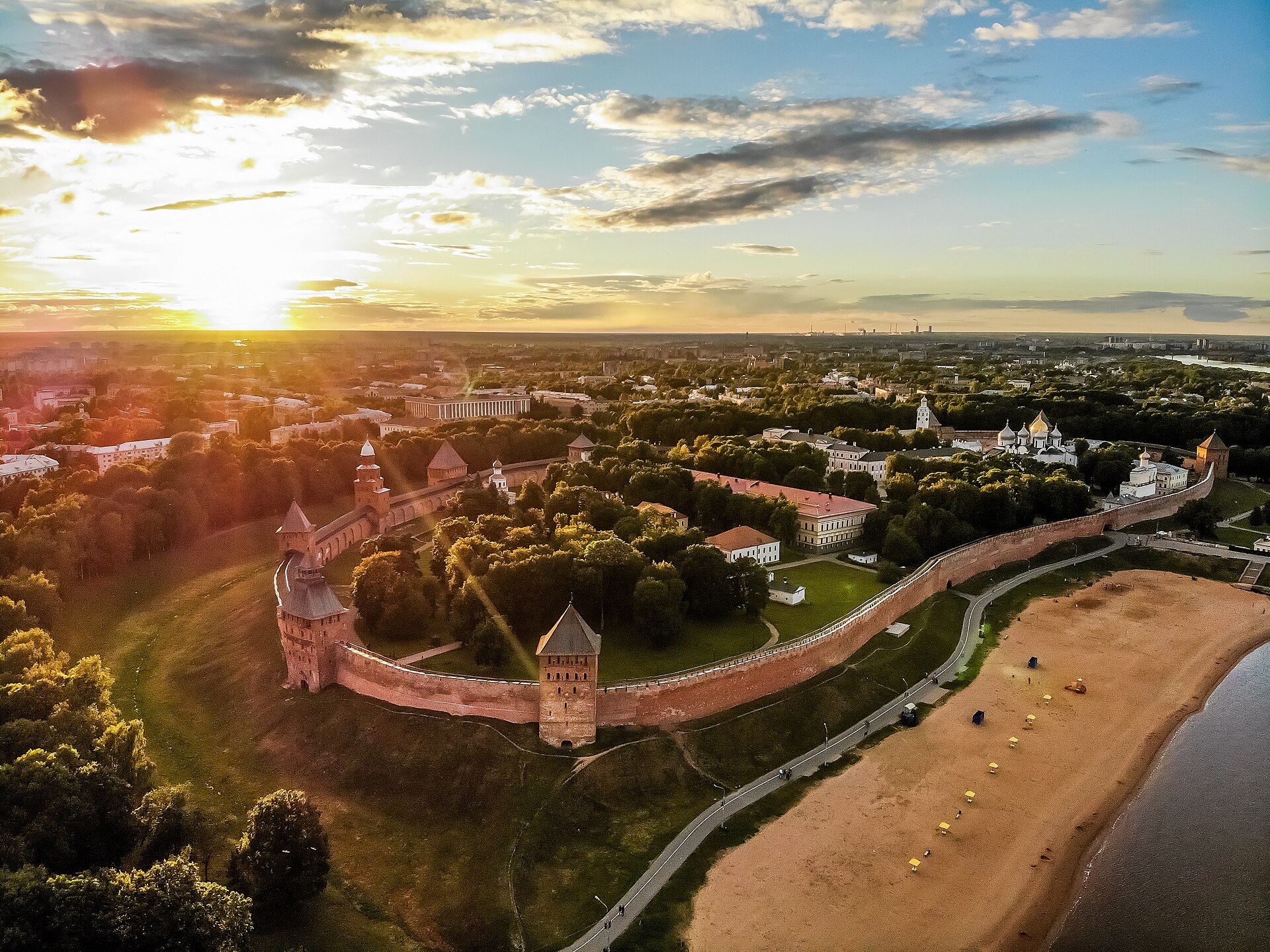
- Saint Sophia Cathedral — Inside the Kremlin
Saint Sophia Cathedral rises inside the Kremlin with plain pale walls and a cluster of helmet-shaped domes. It was the spiritual heart of the medieval republic. Inside, the light is dim and the atmosphere is that of a working church rather than a museum, so check opening times locally before planning around it.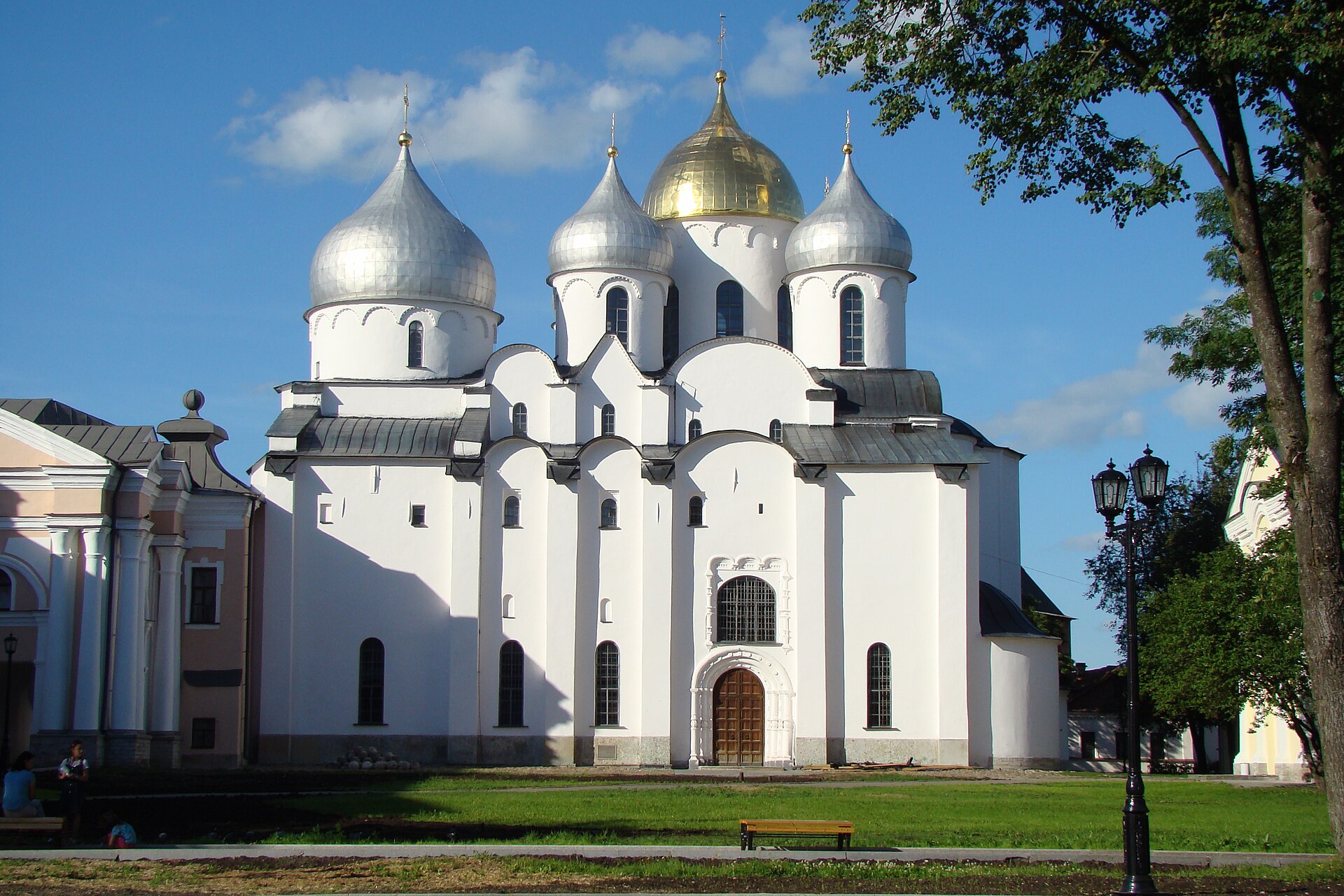
- Monument of the Millennium of Russia — Kremlin park
The Monument of the Millennium of Russia stands in the Kremlin park, a large cast-iron bell-shaped form made in 1862. Figures of rulers, saints, soldiers and writers ring its sides, so it works as a compact history lesson in metal. Walk around it slowly and see who made the cut.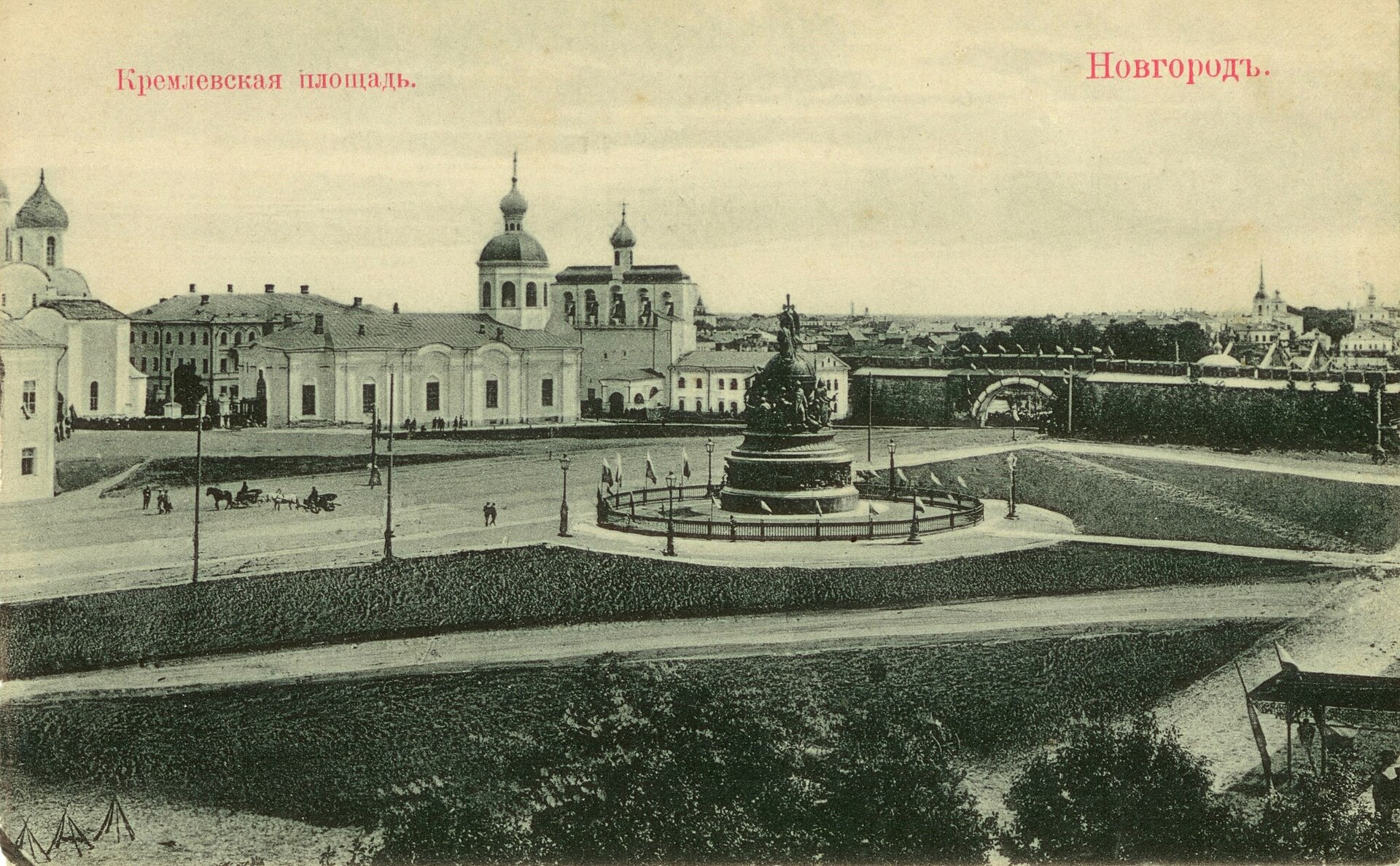
- Desyatinny Monastery — Short walk from the Kremlin
Desyatinny Monastery lies a short walk from the Kremlin, on a street that carries its name. It is a quieter stop than the main sights, with a courtyard, a church and a working community, and few day-trippers reach it. Good for an unhurried half hour once the crowds thicken elsewhere.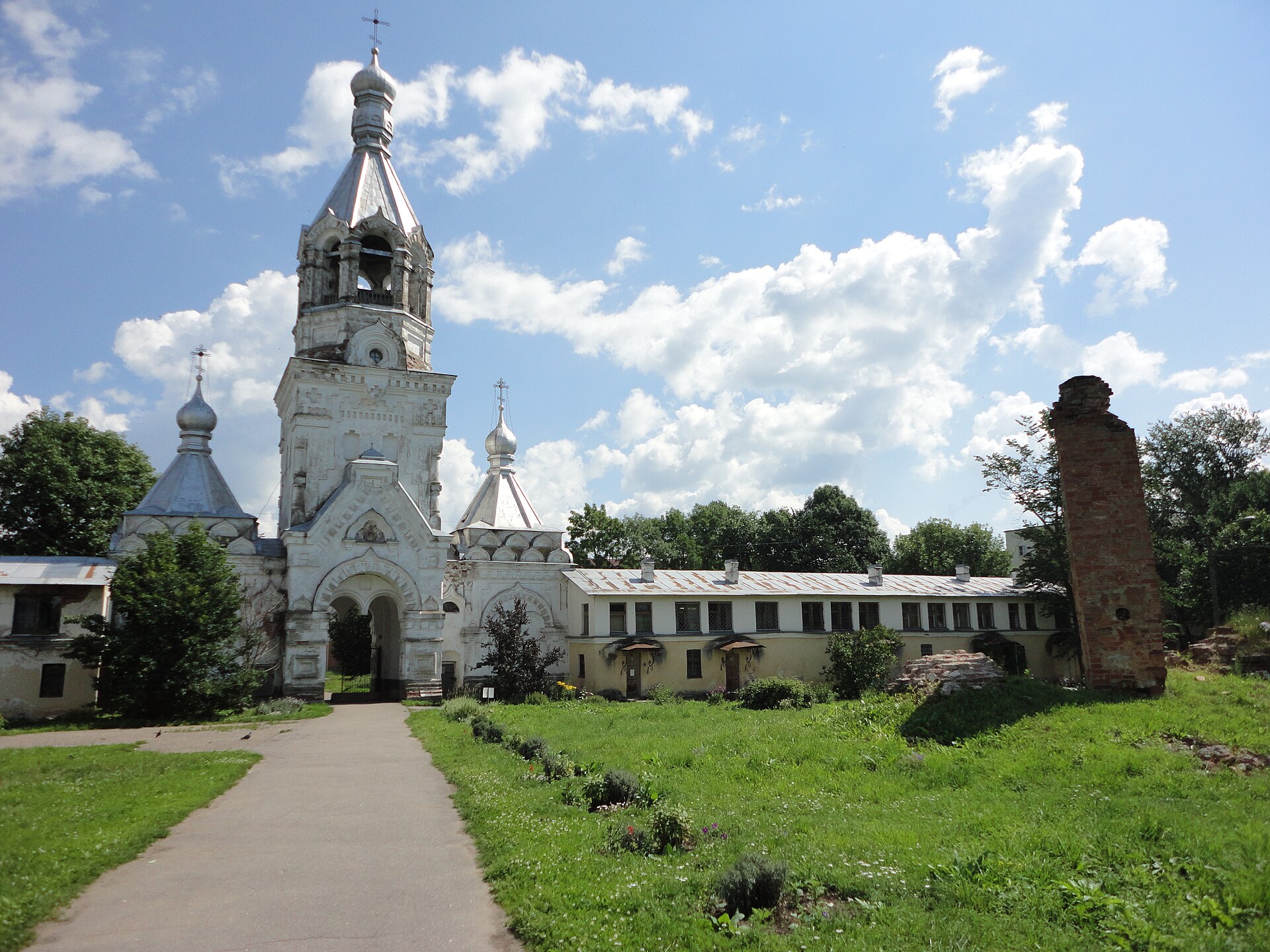
- Alexander Nevsky Monument — Central Novgorod
This monument honours Prince Alexander Nevsky, the medieval ruler remembered for the Battle on the Ice against Livonian knights. A famous line about those who come with a sword is associated with him, and many Russian visitors stop here for a photograph. It is a short detour, easily combined with a Kremlin visit. - Ryurikovo Gorodishche — Just outside the city centre, upstream on the Volkhov
Ryurikovo Gorodishche marks the site of an early fort near where the Volkhov leaves Lake Ilmen, a short ride out of the centre. Little remains beyond earthworks and a church, so it suits history lovers who want to see where the settlement began. Allow an hour, and take a taxi or local bus.
Culture
Veliky Novgorod's culture took shape when the city governed itself as a republic, with merchants, church leaders and a citizens' assembly sharing power in a way that set it apart from most of medieval Russia. Orthodox Christianity ran through daily life, and local painters developed a distinct icon style of bright colour, clear outlines and calm, direct faces. Fine examples, such as the Angel with Golden Hair and the sixteenth-century Vision of Tarasius, now hang in collections elsewhere, but the town's own museums and churches still hold the tradition's local roots. Bells matter here too. The assembly was once summoned by a bell, and church bells remain part of the soundscape, especially on Sundays and feast days. The Hanseatic connection survives mainly as local pride in the city's trading past rather than in visible buildings, and people tend to speak about the republic years with real affection. Modern Novgorod also has a student crowd, small theatres and summer events on the riverbank, so the culture is not only museum-bound. Manners with strangers are courteous and a little reserved; conversation warms up once a visitor shows interest in local history. When entering a working Orthodox church, women should cover their hair with a scarf, everyone should keep shoulders and knees covered, and photography inside should wait until permission has been asked.
What to wear
Veliky Novgorod's traditional dress belongs to the wider northern Russian folk wardrobe. Women wore the sarafan, a sleeveless dress, over a long linen shirt, often embroidered at cuffs and hems in red thread, with a kokoshnik headdress on festive days. Men wore a belted linen or cotton shirt called a rubakha, with wool coats in the cold months, and felt boots called valenki carried people through the snow. Wool, linen and, later, printed cotton were the main fabrics. These outfits now appear mainly at folk ensembles, festivals, weddings and heritage events. Day to day, people in Novgorod dress as in most Russian towns: jeans, jackets and sensible shoes, with dark coats, knitted or fur hats and sturdy boots through the long winter. For a visitor, layers are the rule. Summers are warm and can pass 30 °C, so bring light cotton and a rain jacket, since showers come through. Winter is cold and snowy; pack a proper coat, hat, gloves and boots with good grip, as pavements ice over. Comfortable shoes matter all year, because the Kremlin paths and riverside tracks include cobbles and uneven ground. For churches, carry a light scarf for covering the head if you are a woman, and wear tops that cover shoulders and trousers or skirts below the knee.
What to eat
- Honey mead — Cafés and restaurants near the Kremlin walls; souvenir shops sell bottles
Honey mead is a local favourite, a sweet golden drink brewed from fermented honey and sometimes spiced. It is served cold in summer and warm in winter. Order a small glass first, since it can be stronger than its gentle taste suggests. - Pirogi — Bakeries and small cafés around the centre
Pirogi are baked or fried pies filled with cabbage, potato, mushrooms, fish or sweet fruit. They make an easy, cheap lunch between sights. Fillings vary by bakery, so point and ask, and eat them warm if possible. - Ukha — Traditional restaurants in the centre and along the river
Ukha is a clear, lightly seasoned fish soup, often made with freshwater fish from the surrounding river and lake country, with potato, onion and dill. It is warming in cold weather and sits well beside dark rye bread. - Mushrooms in sour cream — Home-style restaurants and self-service dining rooms
Forest mushrooms fried with onion and finished in sour cream are a northern Russian staple, best in late summer and autumn when the picking season runs. Served with potatoes or on toast, the dish is rich and earthy. - Blini — Cafés and canteen-style dining rooms near the Kremlin
Blini are thin pancakes eaten with sour cream, jam, honey or salted fish. They suit breakfast or a late-afternoon snack, and they appear everywhere around the pre-Lent festival. Choose sweet or savoury, and add a pot of tea.
Plan it
Best time. Late May to September for comfortable walking, with July the warmest month and long evenings; June is the wettest month, though showers are usually short. Winter is long, cold and snowy, with February the coldest month, so go then only for snowy scenery and with serious clothing.
How long. 1–2
Getting there. The local airport is not operating, so fly into Pulkovo (LED) at Saint Petersburg, then take the train from Moskovsky Station (about three hours) or a bus (about four hours) to Novgorod. Overnight trains run from Moscow's Leningradsky Station (about eight hours). The bus and train stations face each other; check Russian Railways for current timetables and fares.
Budget. mid
Tips
- Check your government's current travel advice and visa rules for Russia before booking anything
- Start at the Kremlin early in the morning, especially on summer weekends when tour groups arrive
- Carry layers and a rain jacket even in summer, and proper winter boots from late autumn
- Self-service dining rooms are the cheapest way to eat; carry some cash in case foreign-issued cards do not work
- Book train seats ahead for weekends and holidays, since the Saint Petersburg services are few and seated
Etiquette
- Women should cover their hair with a scarf and everyone should cover shoulders and knees in working Orthodox churches
- Ask before photographing people, and before taking photographs inside churches
- Keep voices low during services and step aside for worshippers
Nearby
Sources
- Wikidata Q2235 (CC0)
- Wikipedia: Veliky Novgorod (rev 1378809903) (CC BY-SA 4.0)
- Wikivoyage: Novgorod (rev 5412884) (CC BY-SA 4.0)
- Photo: Veliky Novgorod montage (2015), Insider (CC BY-SA 4.0)
- Photo: Novgorod Kremlin, LenskiyS (CC BY-SA 4.0)
- Photo: Saint Sophia Cathedral in Veliky Novgorod, User№101 (CC BY 3.0)
- Photo: Desyatinny Monastery, Ulaisaeva (CC BY-SA 4.0)
- Photo: The Angel with Golden Hair (icon) (Public domain)
- Photo: Vision of Tarasius icon, Novgorod school (Public domain)
- Photo: Plan of Novgorod, 1862 (Public domain)
- Photo: Kremlin square, early twentieth-century postcard (Public domain)


