Varkala
Varkala, India
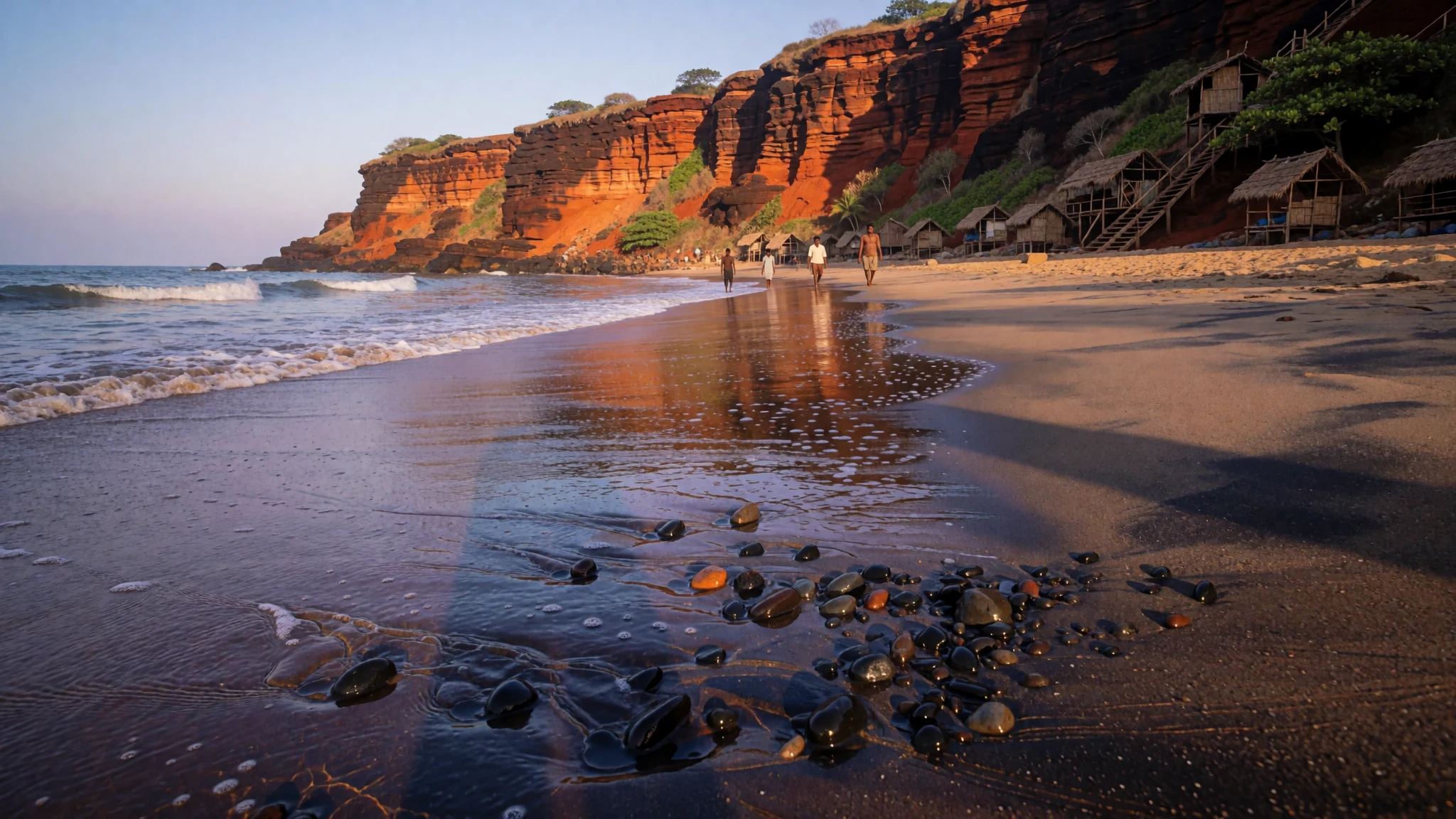
Go for a beach that sits under red-brown cliffs, combined with a temple town, cheap cafés and a quieter coast in the off-season.
The place
Varkala is a town of 42,273 people in Thiruvananthapuram district, on the coast of Kerala in south-west India, about 50 km from the state capital. It is best known for a line of laterite cliffs that runs for roughly 7.5 km along the Arabian Sea, where the land drops almost straight into the water and a thin band of sand waits at the bottom. The town sits about 190 metres above sea level, and the coast stays warm and humid for much of the year.
The cliffs are as much geology as scenery. Sandstone beds laid down in the Miocene and Pliocene were worn away and then lifted, exposing layers of laterite and streaks of lignite and marcasite that rest on much older rock. The Geological Survey of India has declared the formation a National Geological Monument, so the walk along the cliff top rewards slow walking and a look down at the layers.
Beyond the sea, Varkala has a long religious life. The Janardhana Swami temple, dedicated to Vishnu, stands on the hill above the town and has drawn pilgrims for centuries, which is why the place carries the nickname Southern Kasi. The cliff tops also hold cafés, Ayurvedic centres and guesthouses, and the town has only recently grown into a beach destination, which shows in its small, improvised feel.
Its story
Varkala's story runs between the temple on the hill and the ground beneath the cliffs. Hindu pilgrims have come to the Janardhana Swami temple since the 12th century, and the temple is traditionally said to be about 2000 years old. Its presence explains why the sands below have long been a meeting place for people from very different traditions, a mix of devotion, trade and curiosity that still shapes the town's easygoing atmosphere.
The town's modern identity owes much to Sree Narayana Guru, a saint, social reformer and philosopher who made Varkala his headquarters and who led the Ezhava community. The Sivagiri mutt he founded became a second major pilgrim centre, and the pilgrimage held there around the turn of the year still draws large crowds. His reforms in caste and education are still discussed across Kerala, and the mutt remains a place of study as well as prayer.
For most of its history the cliffs were home to fishing families and temple life rather than holidaymakers. Foreign visitors arrived only in recent decades, drawn by the long beach and by rooms that cost less than the resorts further south. Cafés and seasonal restaurants gradually appeared along the cliff tops, opening as the main season begins and closing when the monsoon arrives. The result is a town that still feels half working fishing village and half pilgrim town, with the tourist trade layered over the top.
What to see
- The cliff path — Cliff, along the edge of the town
The laterite cliffs run for roughly 7.5 km along the Arabian Sea, with their red faces dropping sharply to the water. The cliff-top path is the best way to see them, and it is pleasant in the cooler hours of the morning or late afternoon. Many cafés and restaurants line the edge, so the walk doubles as a way to choose where to eat.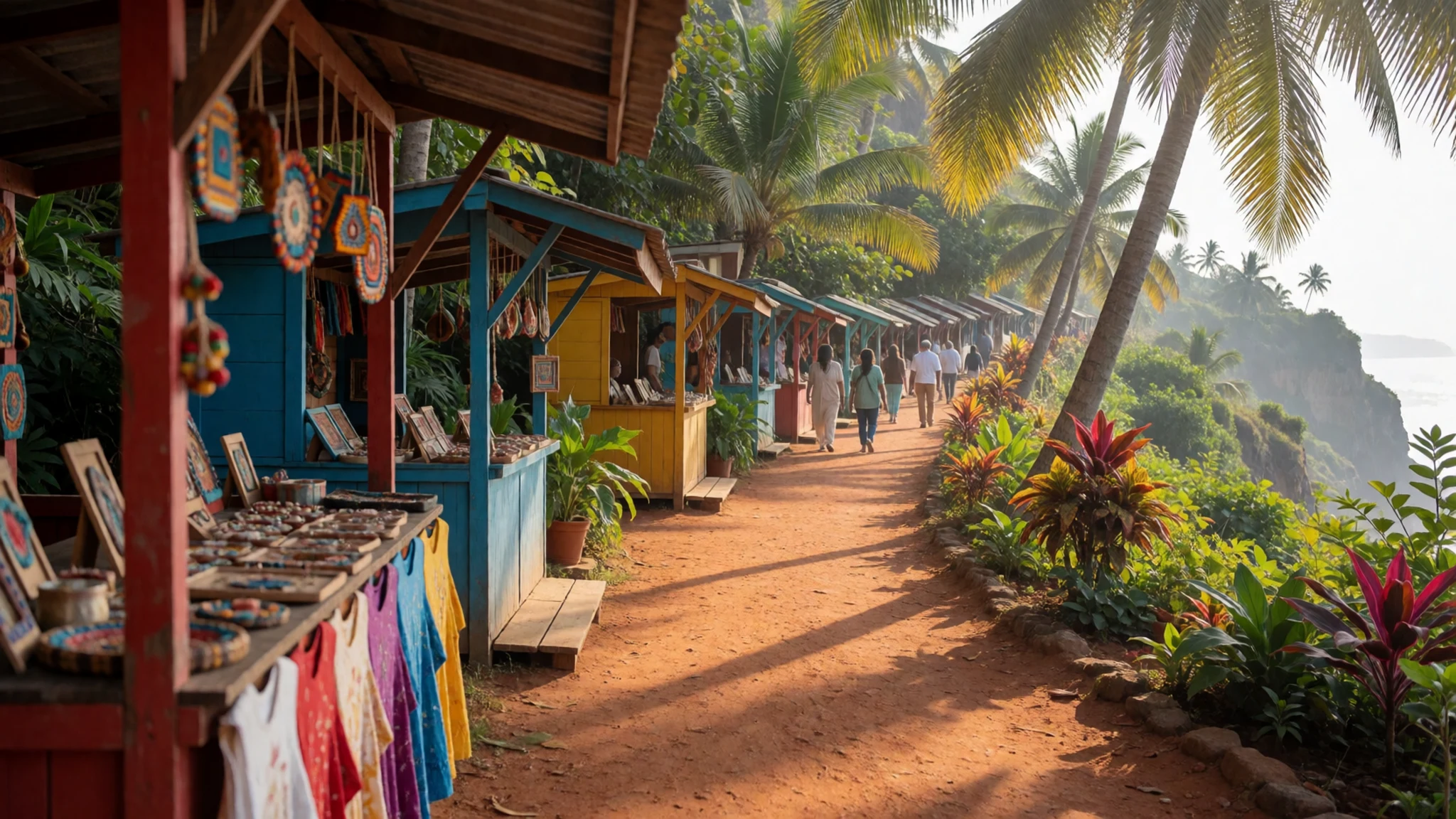
- Varkala Beach — Foot of the cliffs
The beach sits at the foot of the cliffs, a narrow band of sand that many visitors find as lovely as the better-known beaches further south. Swimming is the main draw, but the surf can be strong, so ask locals about conditions before going in. The beach is busiest in December and quietest in the monsoon, when the sea is rough and most visitors have left.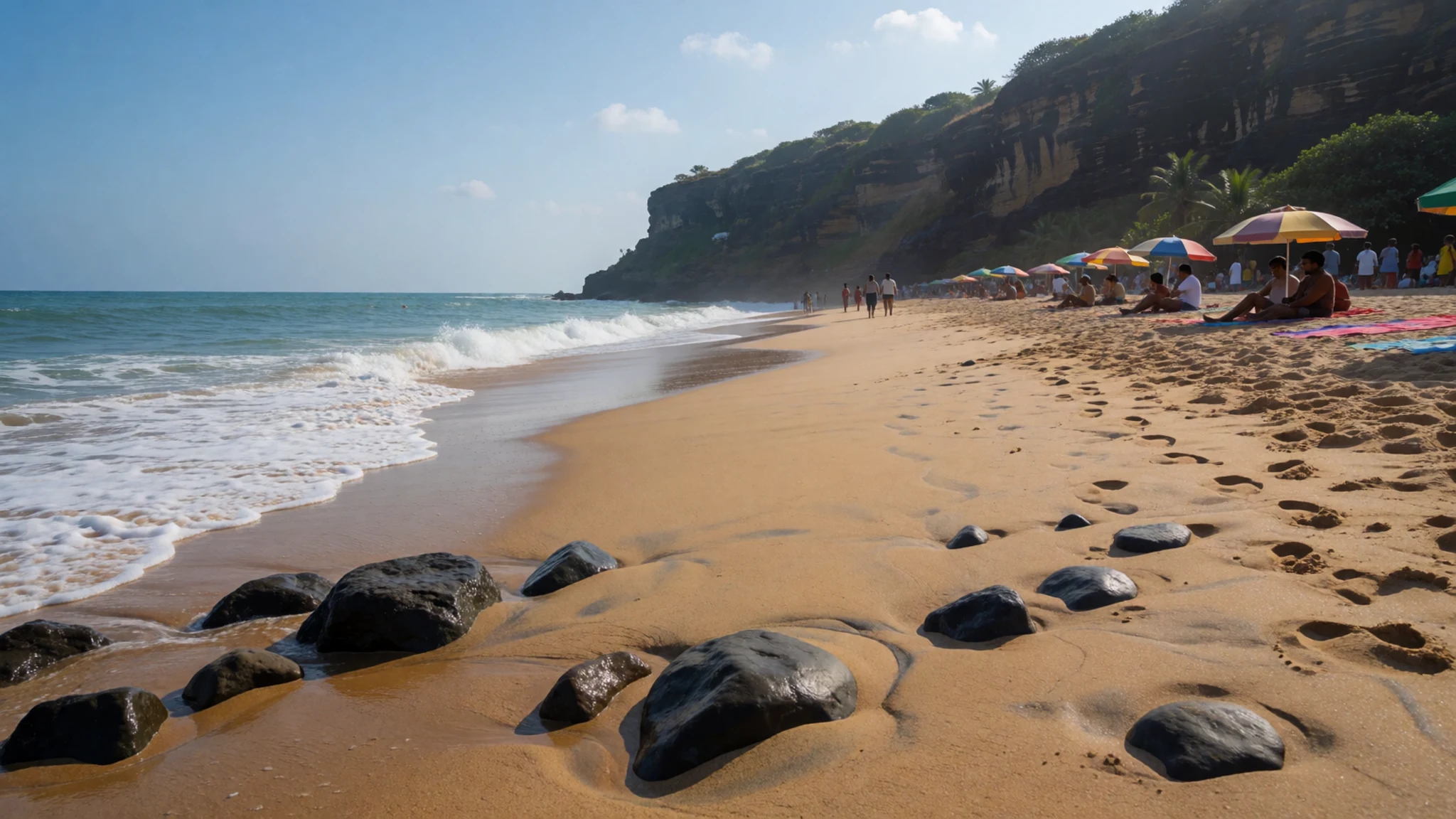
- Janardhana Swami Temple — Temple hill, above the town
Dedicated to Vishnu, with Hanuman also honoured, the temple sits on the hill above the town. It has been a pilgrim site since the 12th century, and it is traditionally said to be about 2000 years old. Non-Hindus may not enter the inner sanctum, but they can visit the outer grounds. Festival processions, such as the one in this photograph, show the temple's place in local life.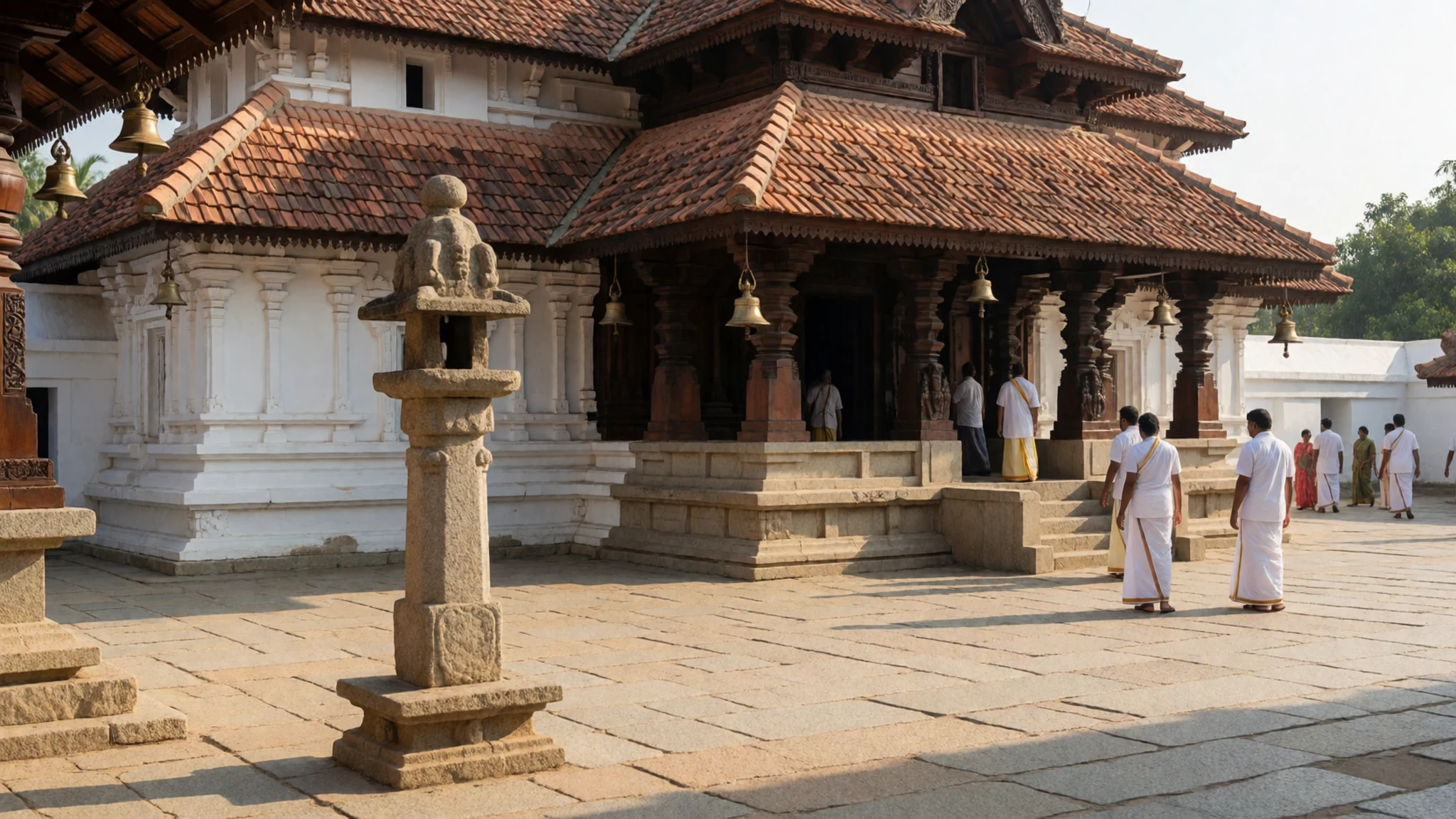
- Sivagiri — Sivagiri, in the town
The Sivagiri mutt was founded by Sree Narayana Guru, the saint and social reformer who made Varkala his headquarters. It is a major pilgrim centre, busiest around the turn of the year when the Sivagiri pilgrimage takes place. The grounds are calm and well kept, and the mutt is a good place to understand the reform movements that shaped modern Kerala.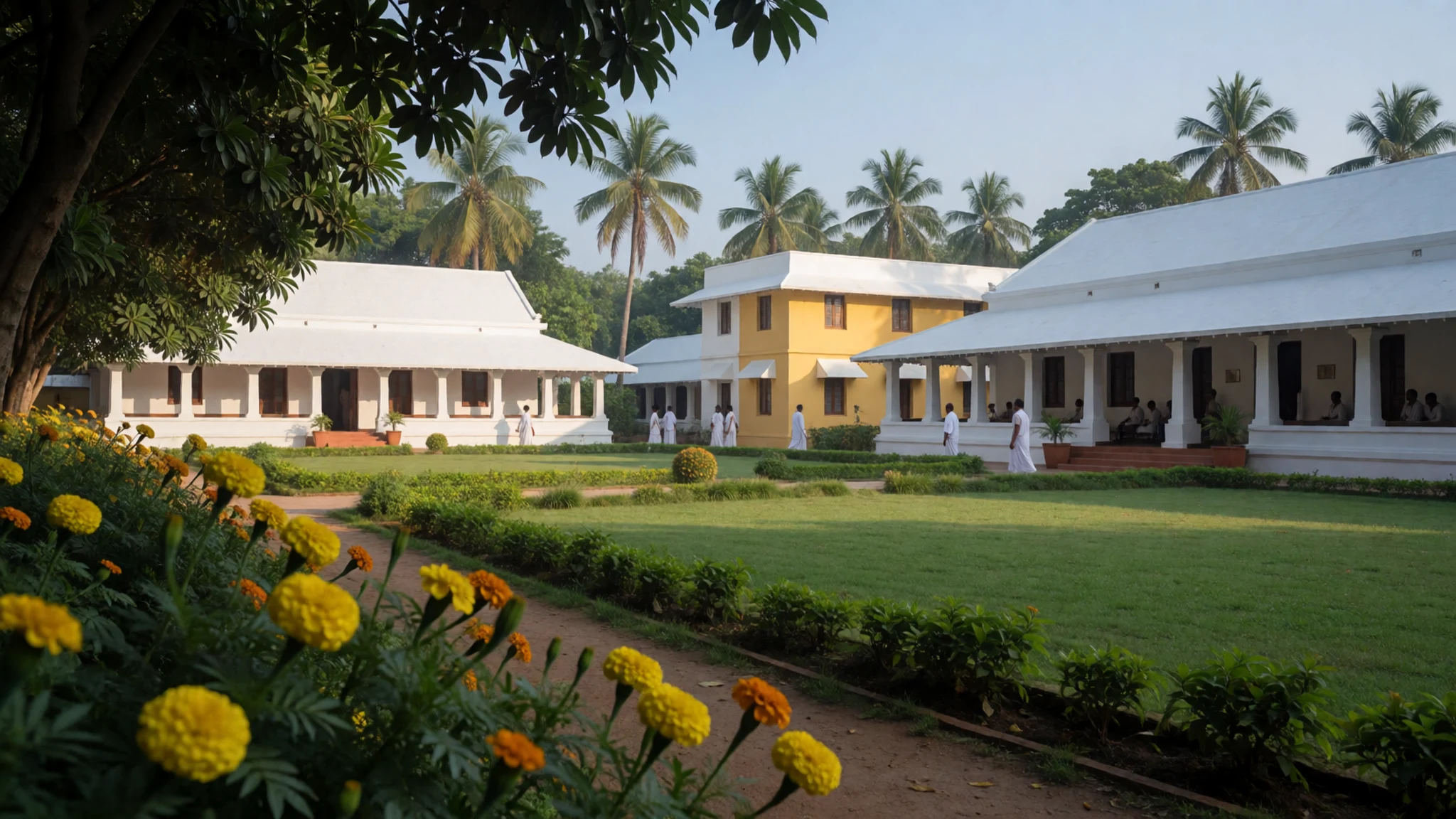
- Papanasam Beach — Papanasam, south of the town centre
Papanasam Beach is the site of the Vavu bali rite, when families come to the sea to make offerings. Bathing here is said to wash away sins, so the beach is both a place of worship and a popular spot for a swim. It lies around 5 km from the railway station and is reached by auto-rickshaw.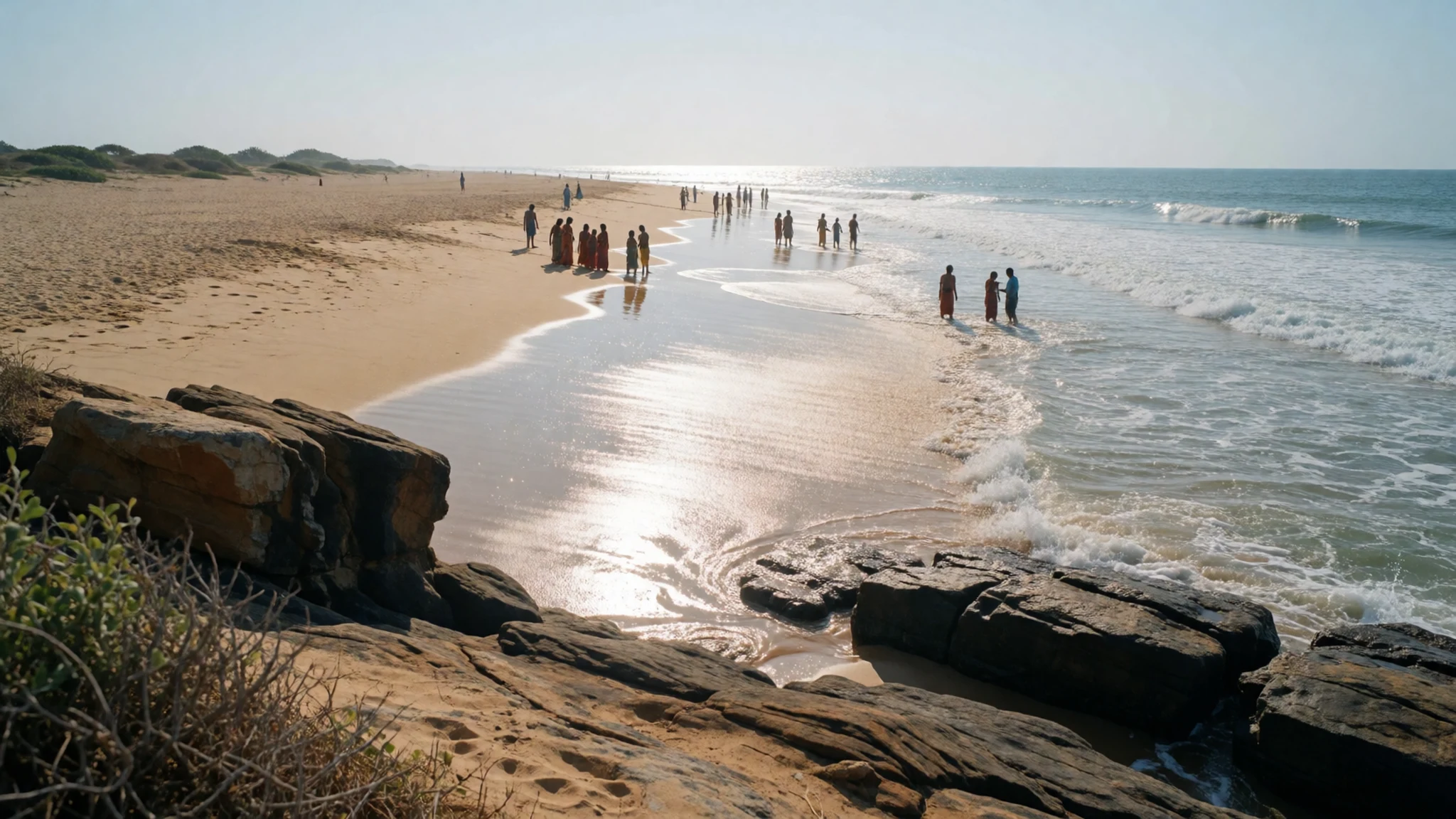
Culture
Varkala is a pilgrim town as well as a beach town, and its religious sites set the tone for everyday life. The Janardhana Swami temple on the hill is a Hindu place of worship, and devotees come through the year. Non-Hindus may not enter the inner sanctum but can spend time in the outer grounds, where the atmosphere is calm and the views are good. At the Sivagiri mutt, the pilgrimage around the turn of the year brings large crowds and processions, and the mutt expects visitors to keep the same restraint. Papanasam Beach is used for the Vavu bali rite, when families gather at the sea, so photographs of people at ritual moments should be avoided unless permission is given. Fishermen work the shore in the early morning, and their boats and nets are part of working life rather than props. Keep shoulders and knees covered at the temple and at Sivagiri, and ask before photographing anyone at a ritual.
What to wear
Varkala's traditional dress is the same as much of Kerala's: the white cotton mundu for men, a long wrap often worn with a plain shirt, and the cream saree with a gold border called kasavu for women, usually woven in cotton or silk and worn at festivals and weddings. Kasavu borders are woven with gold or zari thread, and the cloth is still a point of pride for many families.
What people wear now is a mix. On the beach and along the cliffs, Western casual clothes and swimwear are common, and many local women wear kurtas, leggings or sarees in the town. Men often wear a lungi, a checked sarong, at home or when relaxing. Modest dress is the norm away from the sand, and most people dress more formally for temple visits.
A visitor should wear loose, light cotton that keeps the sun off and breathes in the humidity. Carry a sarong or light shawl so that shoulders and knees can be covered at the temple and Sivagiri, and pull on a sarong over swimwear when leaving the beach. Sturdy sandals with grip suit the cliff steps and the sand, and a hat helps during the midday heat.
What to eat
- Grilled seafood on the cliff — The cliff-top restaurants, mostly open in season
Fresh fish, prawns and squid are displayed in front of the cliff-top restaurants, and you choose a piece that is then grilled or cooked in a tandoor. The catch comes from local fishermen, and the sunset view makes it a favourite evening meal during the season.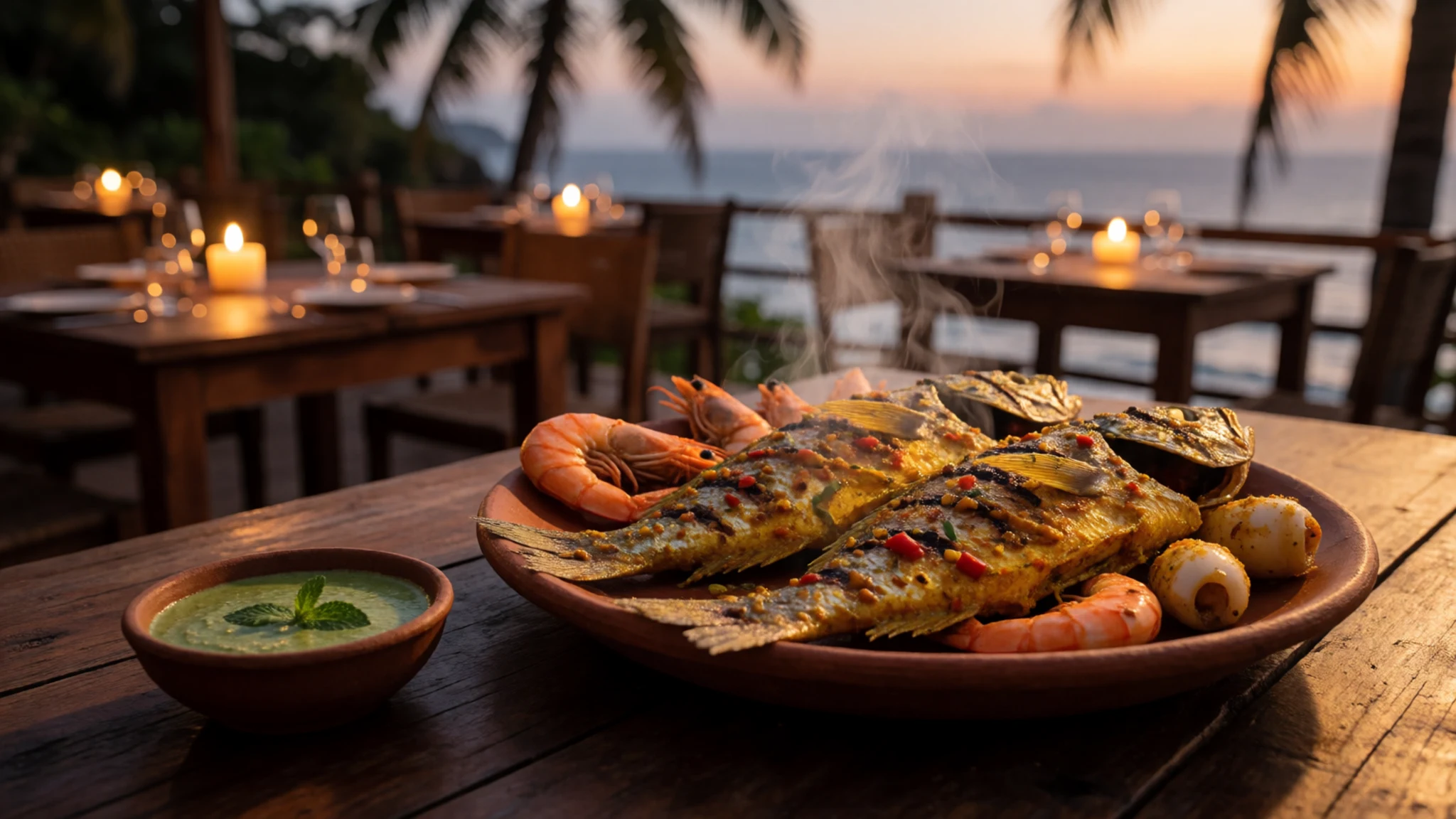
- Tibetan momos and noodle soup — A small Tibetan eatery in town, such as Little Tibet
Momos, filled dumplings served steamed or fried with a sharp chilli dip, and warming Tibetan noodle soups. Little Tibet is a well-known name for this kind of cooking, and the town has several small Tibetan kitchens worth trying.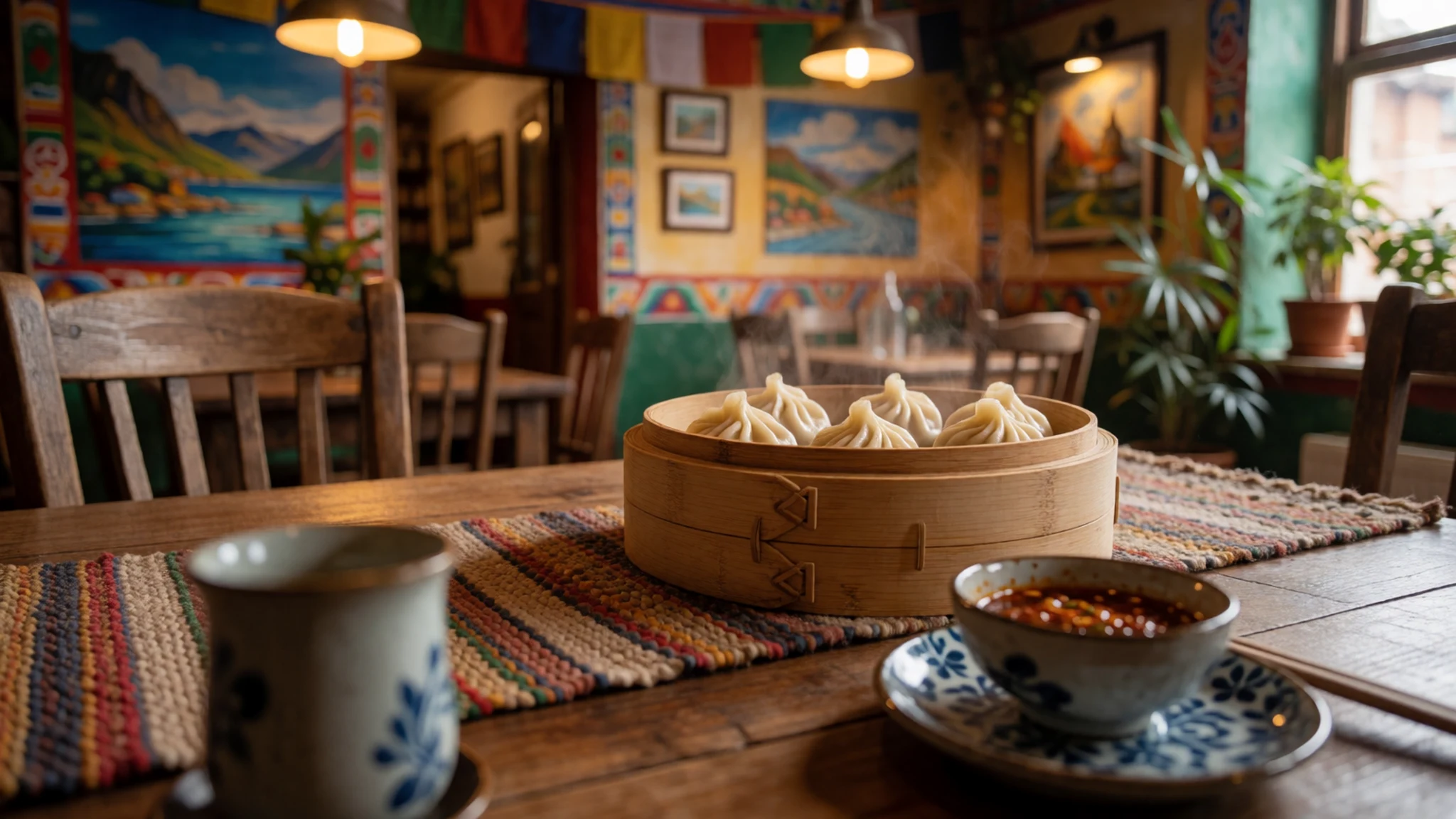
- Breakfast and masala chai — Small cafés on the cliff paths, many run by families who settled here
Hearty breakfasts, smoothies and masala chai are served in the café-style eateries on the cliff tops. Portions tend to be generous, and mornings are the quietest time to sit and eat before the heat builds.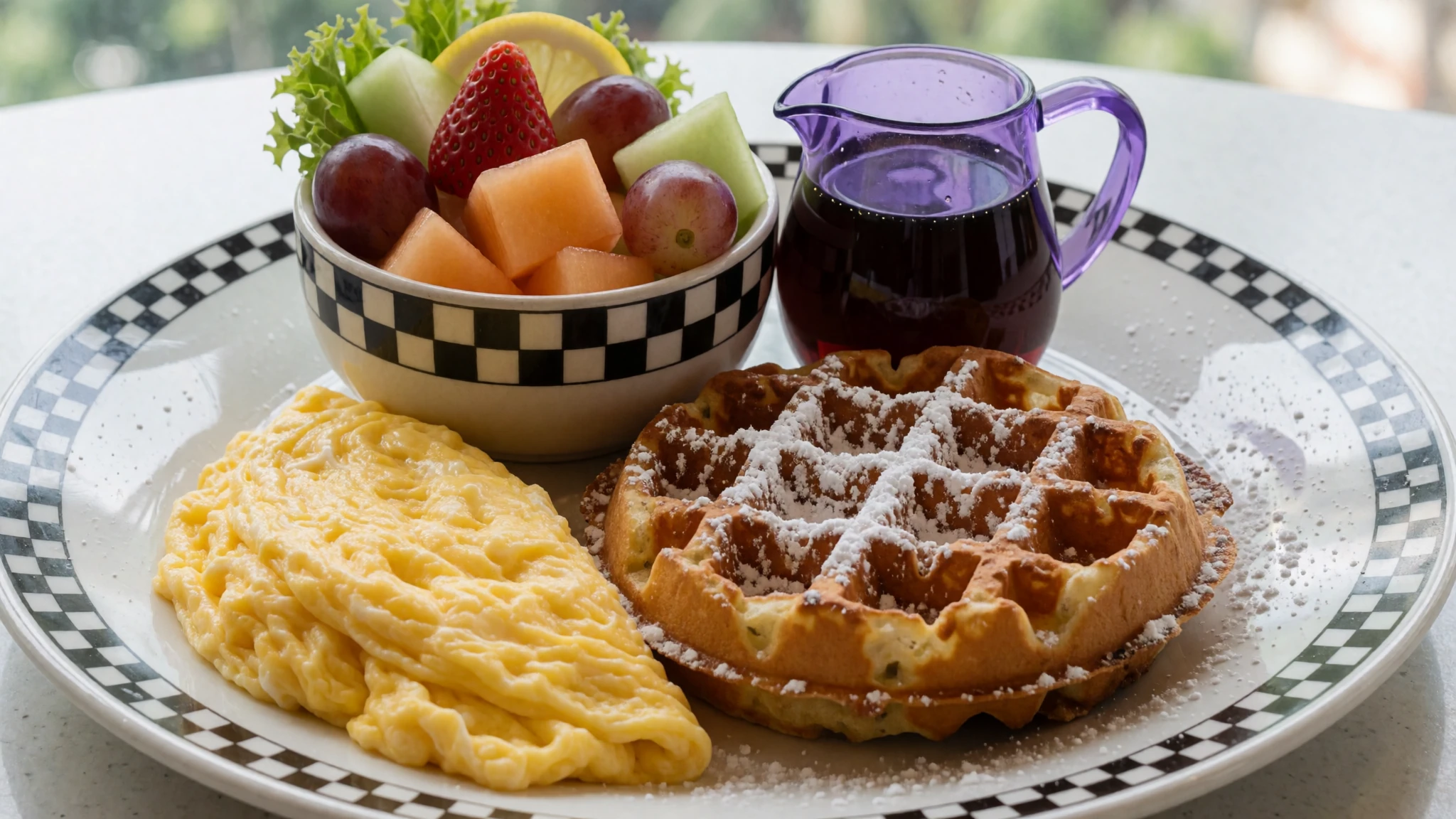
- Fresh juices and salads — Juice bars on the cliff tops
Fresh juices with mixed fruit combinations and healthy salad buffets suit people who want something light. A few juice bars on the cliff also offer water refills, which matters in the afternoon heat, so it is worth carrying a bottle. - International menus — International restaurants on the cliff tops and in the lanes behind them
Pasta, pizzas and Indian curries are served by international kitchens that have settled in the town, and many of these eateries have a relaxed, colourful feel. They are a good option after a day on the beach when a change from Keralan food is wanted.
Plan it
Best time. December to March is the main season, with dry weather and the busiest beaches. December and early January are the peak and the most expensive, while February and March are calmer. The monsoon from June to September brings heavy rain, with October the wettest month, so the sea is rough and cliff paths get slippery.
How long. 2–3
Getting there. Trivandrum International Airport is about 50 km away, roughly 1 hr 15 min by road. Trains from Thiruvananthapuram and Kochi are the easier option, since most passing trains stop at Varkala. From the station, a taxi or auto-rickshaw takes you to the cliffs, and state buses also run from Thiruvananthapuram.
Budget. mid
Tips
- Book ahead for December and early January, when rooms fill and prices rise.
- Go to the beach and the temple early in the day, when it is cooler and quieter.
- Carry cash for small eateries and auto-rickshaws, and check before ordering at smaller places.
- Buy bottled or filtered water and top up at the juice bars that offer refills.
- Rooms facing the sea usually cost more than those set back from the cliff edge.
Etiquette
- Dress modestly in town and at the temple, covering shoulders and knees.
- Ask locals about currents before swimming, as the surf below the cliffs can be strong.
Nearby
Sources
- Wikidata Q1012951 (CC0)
- Wikipedia: Varkala (rev 1381308848) (CC BY-SA 4.0)
- Wikivoyage: Varkala (rev 5323461) (CC BY-SA 4.0)
- Photo: traffic circle in Varkala, Nikolas Becker (CC BY 3.0)
- Photo: Varkala Beach, Devender Goyal (CC BY-SA 4.0)
- Photo: Varkala South Cliff, Alexey Komarov (CC BY 3.0)
- Photo: Ganga the elephant at Varkala, Naveenkumar515675 (CC0 1.0)
- Photo: A goatling in Varkala, Alexey Komarov (CC BY-SA 4.0)
- Photo: thrift shop on the Varkala North Cliff, Krishna Prasad T (CC0 1.0)
- Photo: A house in Varkala, Nirav Umaretiya (CC BY-SA 4.0)
- Photo: Procession of gods in Varkala, Philippe Raffard (CC BY-SA 1.0)


