Vaishali
Vaishali, India
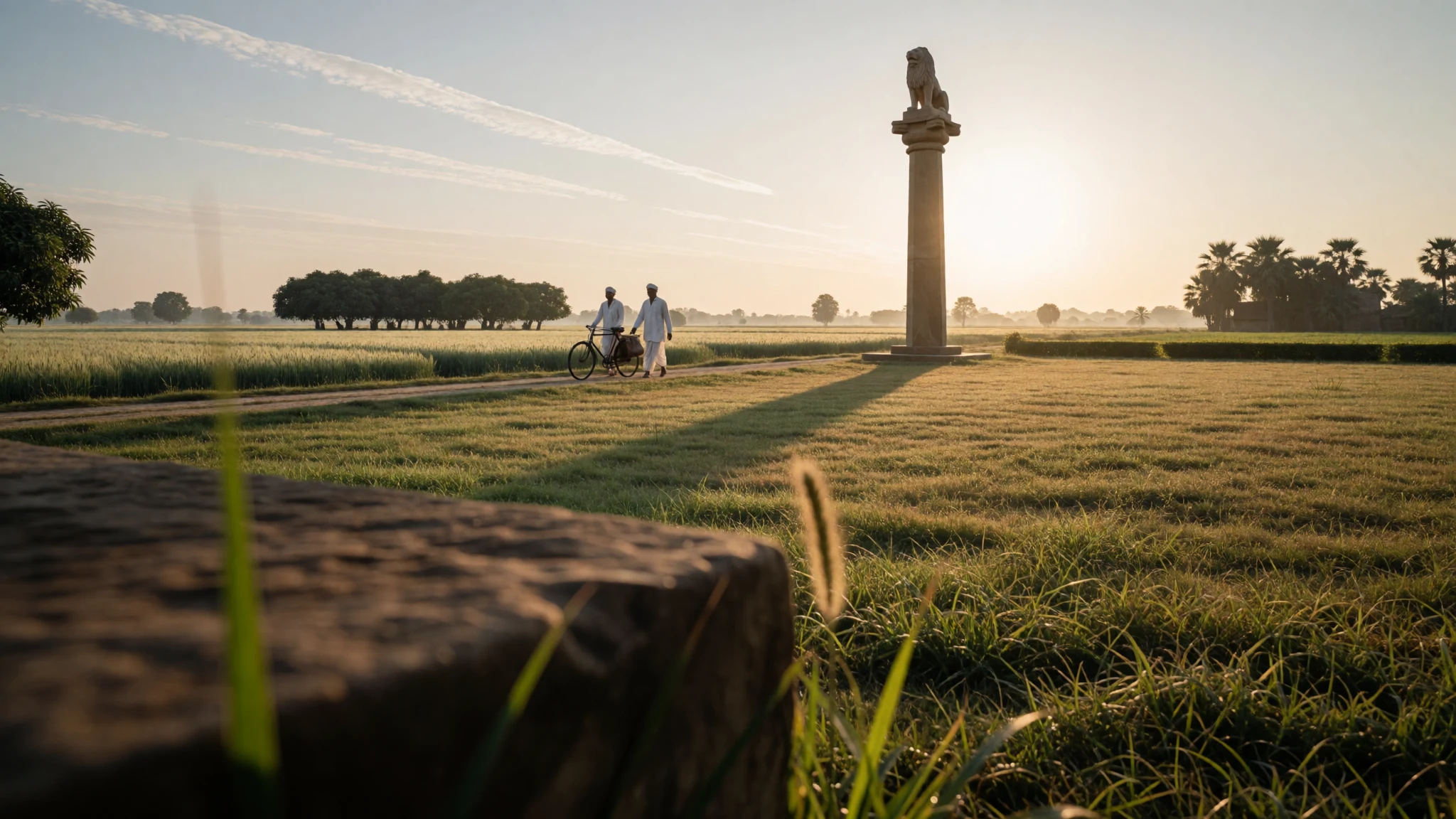
Vaishali is a quiet stretch of Bihar farmland where the Buddha gave his last sermon and an ancient republic once had its capital.
The place
Vaishali is an archaeological site north of Patna in Bihar, spread across a cluster of farming villages in the district that shares its name. There is no walled enclosure to enter and no town centre to walk through. A brick stupa sits in one field, a sandstone pillar in another, and a rectangular water tank lies beside a lane where buffaloes are washed. Scholars link the ancient city with the modern village of Basarh, and a visit works as a loop by road between mounds, shrines and one modern temple, with wheat, rice and mango groves filling the gaps.
For Buddhists the place matters because of the Buddha's final teachings and two stupas tied to him. For Jains it matters as the area around Mahavira's birthplace, Kundagrama, which is identified with a suburb of the old city. Pilgrim groups from East and Southeast Asia come in the cooler months, yet the sites are rarely crowded, and a quiet hour at the pillar is normal.
Facilities are basic: a few guesthouses, simple eateries and very little shade. Most travellers base themselves in Patna or Hajipur and treat Vaishali as a long day trip, though a night nearby suits anyone who wants the pillar in early light. Since 2010 India has put forward parts of the site, including the relic stupa and the pillar, for possible World Heritage listing.
Its story
Vaishali has two origin stories. In the Puranic tradition it was founded by a king named Nabhanedishta, a descendant of Manu, and its early rulers belonged to the Sun dynasty of Ikshvaku, the line that later produced Rama. Historians treat this as legend, though it shows how old and how revered the name is.
The documented city belongs to the Licchavis, a tribe that moved into the region around the 6th century BCE. They replaced the weakened monarchy of the neighbouring Videha kingdom with a republican system, then shifted their centre to Vesali, as the Pali texts spell it, and made it their capital. They did so while the kingdom of Magadha was growing stronger south of the Ganges. The resulting Vajjika League is often cited as an early example of rule by assembly rather than by one king.
The Buddha visited several times, and tradition places his last sermon here before his final passing. A council of monks met in the city to settle disputes over monastic discipline. Centuries later the Mauryan emperor Ashoka raised a lion-topped pillar on the site.
Then the city faded from memory. Chinese pilgrims Faxian and Xuanzang described it in their journals, and in the nineteenth century the British archaeologist Alexander Cunningham used those accounts to match the ruins at Basarh with the lost Vaishali.
What to see
- Ashoka Pillar — Kolhua, near Basarh
A polished sandstone shaft rises from a grassy compound beside the old ruins, crowned by one seated lion, unlike the four-lion capital at Sarnath. Start here at opening time, when the light is soft and the lawn is empty. The carving is sparse, so the pleasure lies in its proportions and its stillness among the fields.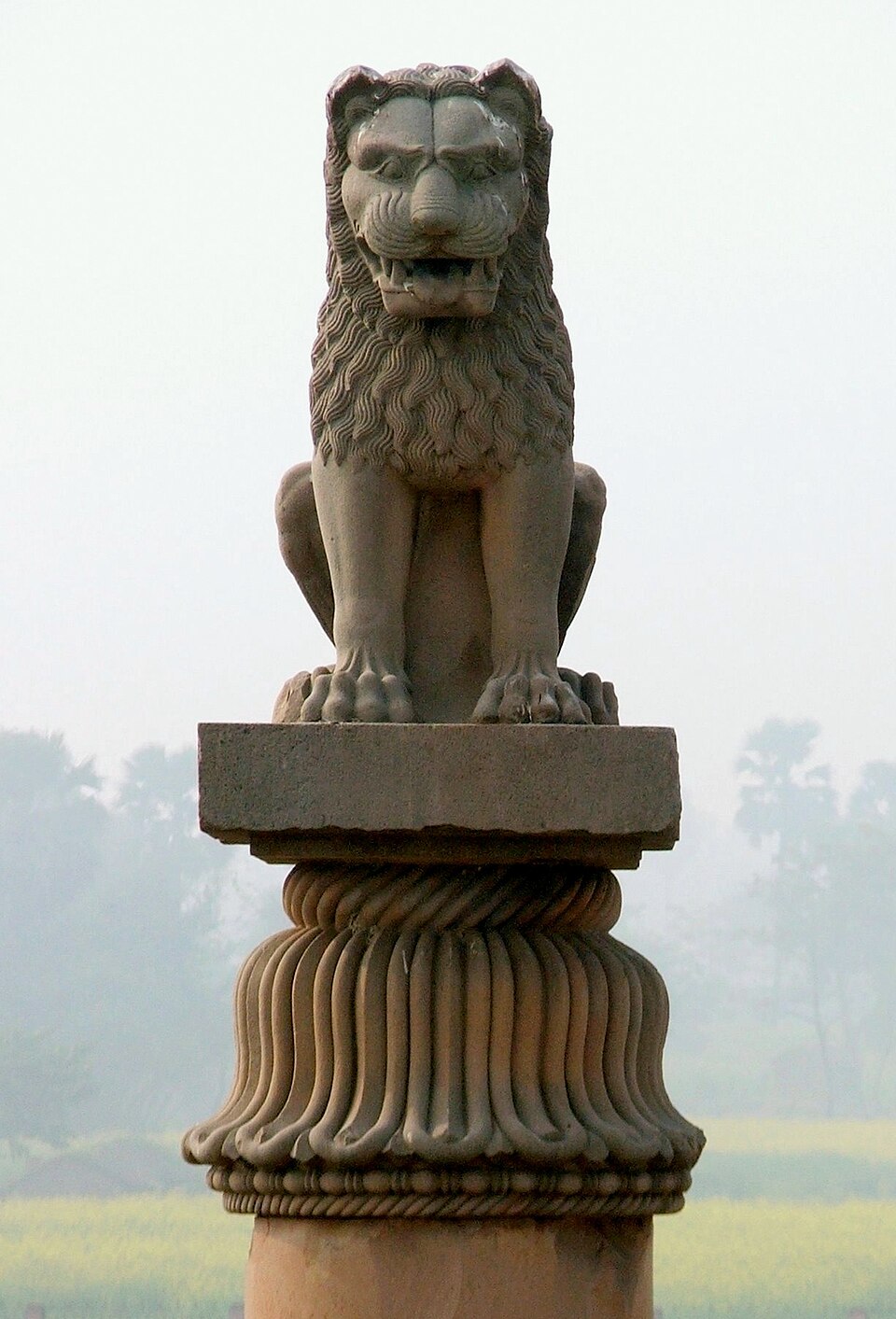
- Relic Stupa — Near Abhishek Pushkarini, Vaishali
A low, excavated brick mound that is said to hold a share of the Buddha's ashes. It is protected by the Archaeological Survey of India, with railings, lawns and a few shade trees. Signage is thin, so read about the site beforehand. The setting is calm, and pilgrims often sit nearby in silence.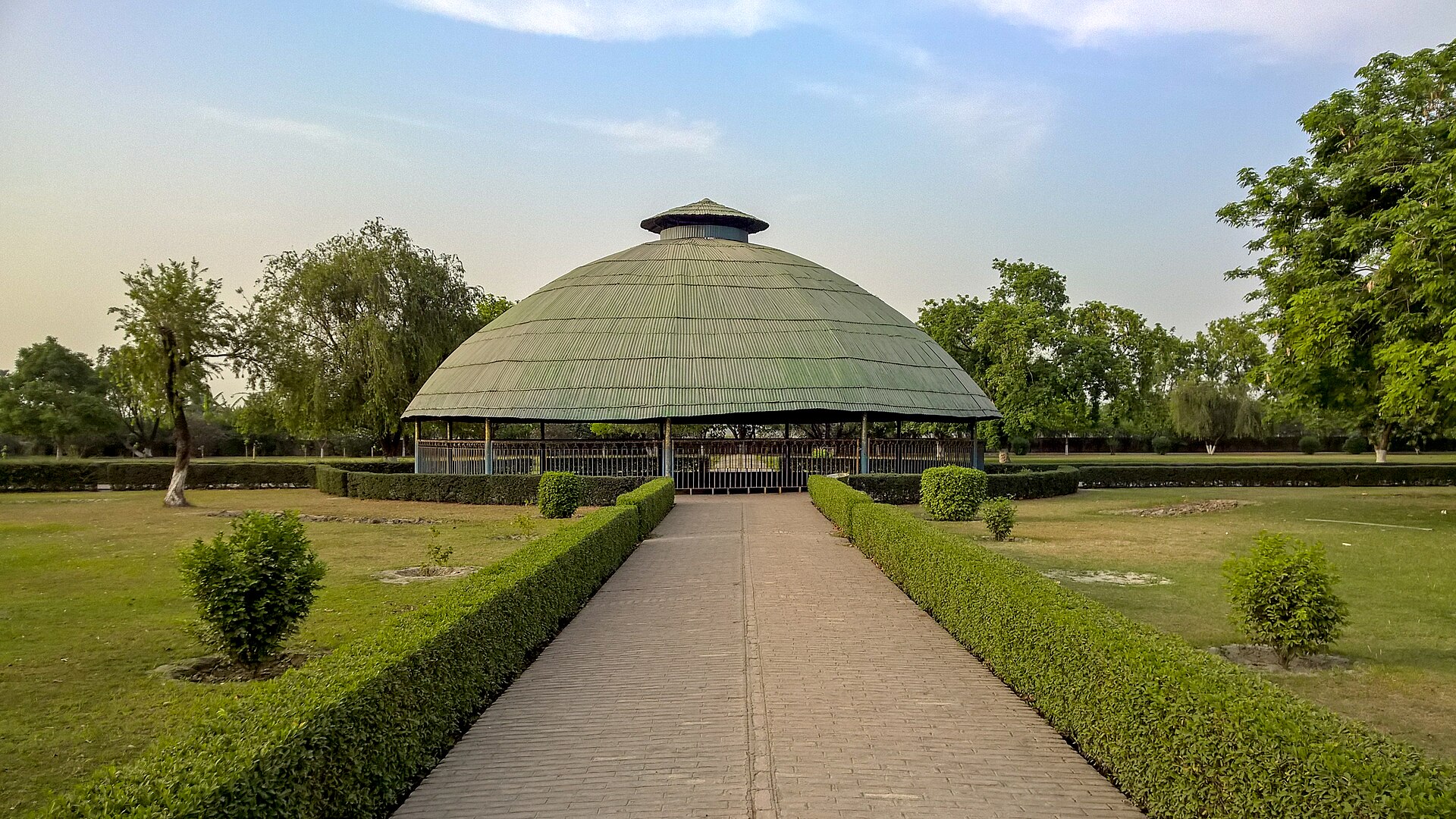
- Ananda Stupa — North of the main ruins
The main stupa of the area, built to honour Ananda, the Buddha's closest attendant. A weathered brick dome stands over fields, and a small altar has been set up beside it where visitors leave flowers and incense. Expect offerings, saffron-robed monks and a short walk across uneven ground.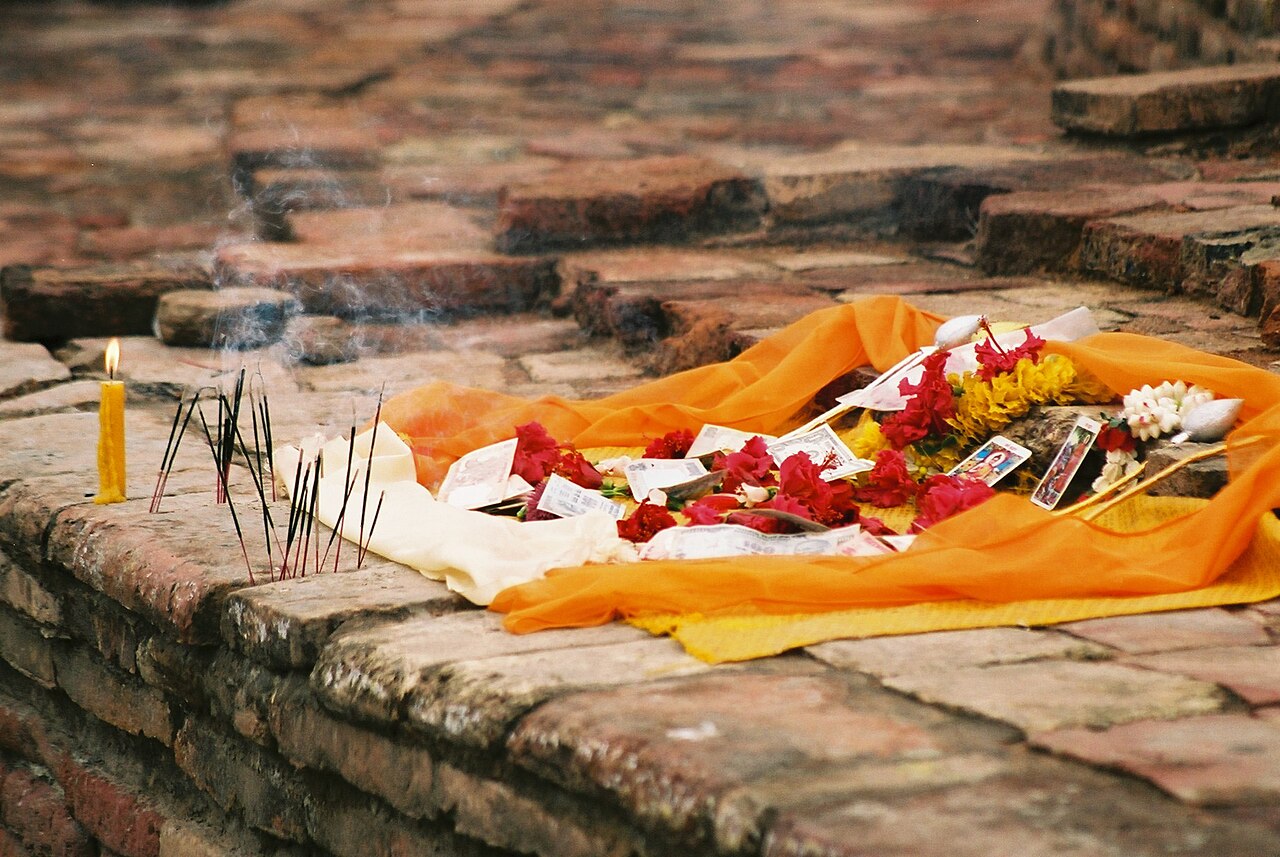
- Vishwa Shanti Stupa — Near Vaishali village
A white peace pagoda built by Nipponzan-Myohoji, a Japanese Buddhist order, set in tidy gardens. It looks much like the order's stupa at Rajgir. Monks and nuns drum and chant here, and visitors are welcome to sit through the prayers. It is a good place to rest in the shade between the older sites. - Abhishek Pushkarini — Near the Relic Stupa
The coronation tank lies a few hundred metres from the Relic Stupa. Tradition links its water with the consecration of the city's elected rulers. Today it is a rectangular pool with grassy banks, still used for ritual. Walk round it slowly, and notice how the water mirrors the stupa mound on a still morning.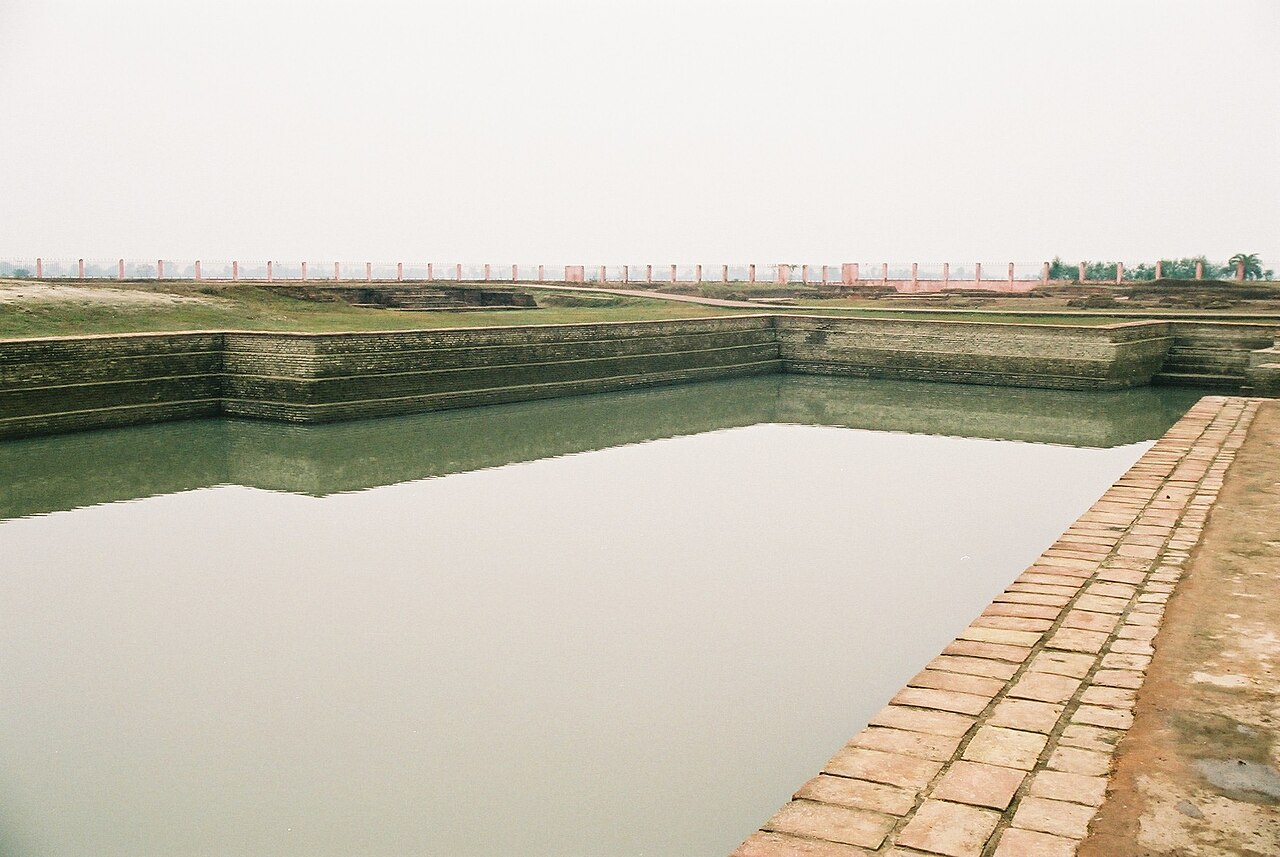
Culture
Vaishali is a living pilgrimage landscape, and the culture here is mostly one of quiet devotion. Buddhist visitors, many from Japan, Sri Lanka, Thailand and Tibetan communities, come to chant, circle the stupas and leave flowers. Jain pilgrims arrive for Mahavira's association with the area, and the Jain festival of Mahavir Jayanti brings a quieter wave of visitors in spring.
The surrounding villages are Bihari and largely Hindu, with Maithili and Bhojpuri heard in the lanes. Chhath Puja, the sun festival that marks the Bihari calendar in late autumn, fills every pond and riverbank with families offering fruit and lamps at dawn and dusk, and it can briefly slow road travel. Buddha Purnima, in spring, is the main Buddhist date.
The Nipponzan-Myohoji temple adds a distinctive note: drums, a repeated chant and monks walking the grounds. Local people are used to foreign pilgrims and are generally curious and friendly, often asking where you are from. Guides and schoolchildren may approach near the pillar, and a polite decline is understood.
The sites are small, so crowds are never the issue. Noise, litter and climbing on ruins are, and caretakers do step in. Dress plainly, move slowly and let worshippers have the space. Walk clockwise around stupas, take off your shoes before any shrine steps, and ask before photographing monks or people at prayer.
What to wear
Vaishali sits in the Mithila and Magadha cultural belt, and traditional dress follows the wider Bihari pattern. Women wear the sari, often in cotton for daily use and in silk for weddings and festivals. Tussar silk from nearby Bhagalpur and Madhubani-painted fabrics are well known across Bihar. Men wear the dhoti with a kurta, and a woven cap or a shoulder cloth called a gamchha marks village and ceremonial dress, particularly at Chhath and marriages.
In daily life today, most people in the villages and small towns wear a mix. Women choose saris or salwar kameez, and men wear shirts and trousers, with a lungi at home in hot weather. Younger people in Hajipur and Patna lean towards jeans and T-shirts. Monks and nuns at the stupas wear saffron, maroon or grey robes, depending on tradition, and white is common among Jain pilgrims.
For a visitor, the rules are climate and respect. Winter mornings can be cool, even foggy, so a light jacket or shawl helps, while the midday sun and summer heat call for loose cotton, a hat and sunscreen. Cover shoulders and knees at the stupas and the temple, for both men and women. Wear sandals or shoes that slip off easily, since shoes come off at shrines, and the paths between mounds are dusty, uneven and sometimes muddy after rain.
What to eat
- Litti chokha — Roadside stalls and small eateries between Hajipur and Vaishali
Roasted wheat balls stuffed with spiced roasted gram flour, eaten with mashed aubergine, tomato and potato, and often dunked in ghee. It is the defining Bihari meal, filling and cheap. Look for it at roadside stalls and small eateries along the highway. - Sattu sharbat — Street carts near bus stops and village markets
A cooling drink of roasted gram flour mixed with water, salt, lemon and roasted cumin, or sweetened with jaggery. It is plain and fortifying, and a sensible choice in dry heat. Vendors mix it fresh from large steel bowls. - Dahi chura — Sweet shops and breakfast counters in Hajipur and Patna
Beaten rice served with thick curd and jaggery or sugar, and eaten as a breakfast or snack. It is especially associated with the winter festival of Makar Sankranti. The texture is soft, tangy and mild, a gentle start before a day of walking. - Thekua — Sweet shops and festival stalls across Bihar
A crisp, hard biscuit of wheat flour, jaggery and ghee, pressed with a wooden mould. It is the traditional offering at Chhath Puja and keeps for days, which makes it good road food. Buy a bag from a sweet shop to carry between sites. - Malpua — Sweet shops and festival stalls near the bazaar
A fried pancake soaked in sugar syrup, sometimes served with rabri, a thickened sweet milk. Rich and best shared. It appears at festivals and in market sweet shops, and tastes best fresh from the pan while it is still warm and crisp at the edges.
Plan it
Best time. November to February, when days are mild and dry and the fields are green; March is still comfortable. April to June is very hot, and the monsoon from July to September brings mud and humidity, though the countryside is at its greenest.
How long. 1–2
Getting there. Fly or take a train to Patna, then go by road to Vaishali, about 48 km north of the city. Hajipur, near Patna, has the rail link to Vaishali railway station, though services are very few, so check the Indian Railways timetable. Muzaffarpur is the other road approach. A hired car with a driver is the easiest way to link the scattered sites.
Budget. low
Tips
- Start early, before the heat and haze, when the pillar and stupas are at their calmest
- Carry cash, water, snacks and sun protection, as shade and shops are scarce between sites
- Hire a car and driver for the day, since sites are spread across several villages
- Check the Archaeological Survey of India site for current opening hours and entry rules before you go
- Winter fog can delay roads and trains, so leave a margin if you have a flight to catch
Etiquette
- Remove shoes before shrine steps and walk clockwise around stupas
- Ask before photographing monks, nuns or people praying
Nearby
Sources
- Wikidata Q1509463 (CC0)
- Wikipedia: Vaishali (ancient city), rev 1364723016 (CC BY-SA 4.0)
- Wikivoyage: Vaishali, rev 5314735 (CC BY-SA 4.0)
- Photo: Ashoka pillar at Vaishali (mself) (CC BY-SA 2.5)
- Photo: Raja Vishal Garh (Amaan Imam) (CC BY-SA 4.0)
- Photo: Relic Stupa Vaishali (Amaan Imam) (CC BY-SA 4.0)
- Photo: Ashoka pillar at Vaishali (Bpilgrim) (CC BY-SA 2.5)
- Photo: Stupa icon (chikiyo) (CC0 1.0)
- Photo: Mahajanapadas map (Avantiputra7) (CC BY 3.0)
- Photo: Ablution bath, Vaishali (Hideyuki KAMON) (CC BY-SA 2.0)
- Photo: Buddhist altar, Vaishali (Hideyuki KAMON) (CC BY-SA 2.0)


