Uxmal
Uxmal, Mexico
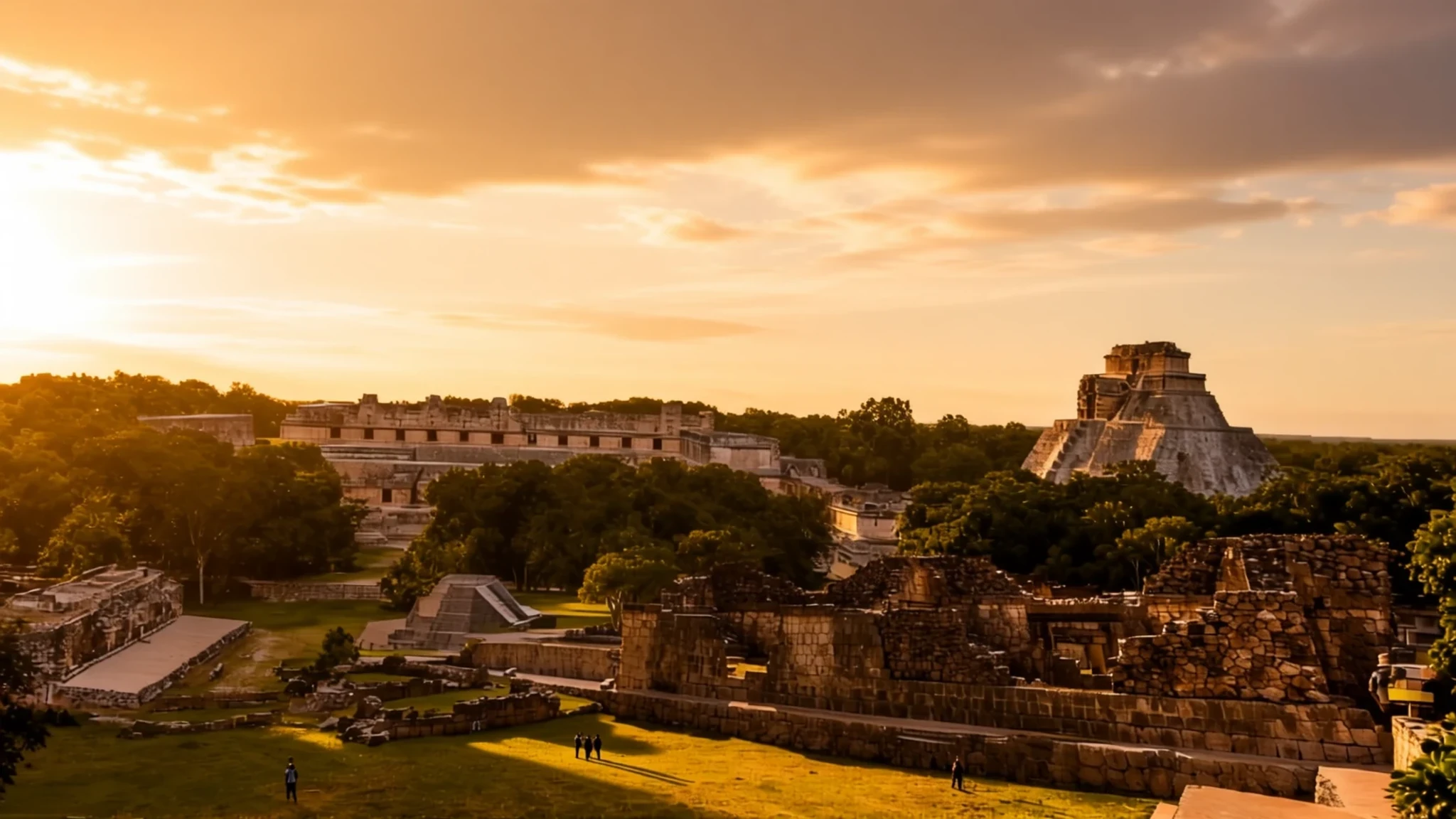
Uxmal is a classical Maya city in Yucatán whose stone palaces and pyramid are best seen in the cooler early hours.
The place
Uxmal is a Classic-era centre of the Maya, standing among the Puuc hills on the western side of the Yucatán Peninsula. Mérida, the state capital, lies about 62 km north, so most visitors base themselves there and make the trip in a morning. Scholars count Uxmal among the most important Maya sites in Mexico, alongside Palenque, Chichén Itzá and Calakmul, and it is one of the cities that best represents the Puuc building style. The site was inscribed as a UNESCO World Heritage Site together with the nearby ruins of Kabah, Sayil and Labná.
What makes the place distinctive is how the buildings sit on the land. Architects used the rise of the ground to gain height, then covered the stone with decoration. Low, smooth walls lead up to carved friezes packed with motifs: columns that stand for the reed walls of ordinary huts, trapezoids for thatched roofs, and above all masks of Chaac, the rain god, with his big curling nose. Raised roads called sacbes once linked Uxmal to other cities across the region, and walking between the building groups still shows how the place was meant to be approached.
The site is spread out rather than dense. Expect a good deal of walking between groups in open sun, with little natural shade. Go early, when the carvings are easier to see and the heat has not yet built up, and take time over the palace walls, where the detail is finest.
Its story
Uxmal's story begins with an ancient legend that the Pyramid of the Magician was raised in a single night by a dwarf king, a magical builder who competed with the local governor. The tale is not a record, but it hints at how the builders wanted the pyramid to seem: sudden, almost supernatural, and far beyond ordinary labour.
Archaeology tells a slower story. The city grew during the classical period, and its builders developed the style now called Puuc, named after the hill country it shares with its neighbours. Buildings were tuned to the land, and the Governor's Palace was raised on a huge platform. Its axis points towards the main pyramid of Cehtzuc, a smaller site almost 5 km to the southeast, which suggests that the city's planners thought in terms of wider landscapes.
Later carvings show outside influence. Some friezes include feathered serpents and forms linked to the cults of Quetzalcoatl and Tlaloc, associated with the Nahua peoples. Local masons folded these motifs into the older Puuc vocabulary rather than replacing it, which is why the decoration feels layered rather than foreign.
When the Spanish arrived, they gave their own names to what they found. The long building now called the Nunnery reminded them of a European convent, a label that stuck even though it was probably a royal palace where the ruling group met to collect tribute and make decisions. The sacbes that once joined Uxmal to Chichén Itzá, Tikal and Caracol show how connected the region was long before those encounters.
What to see
- Pyramid of the Magician — Main group, just past the entrance
The Pyramid of the Magician is the first large structure you meet beyond the entrance, and at 35 m it is the tallest building on the site. Its five stacked levels show how the builders used the terrain to gain height. Local legend says a dwarf king raised it in a single night by magic. Give yourself time to walk around its base and look up at the levels from several angles.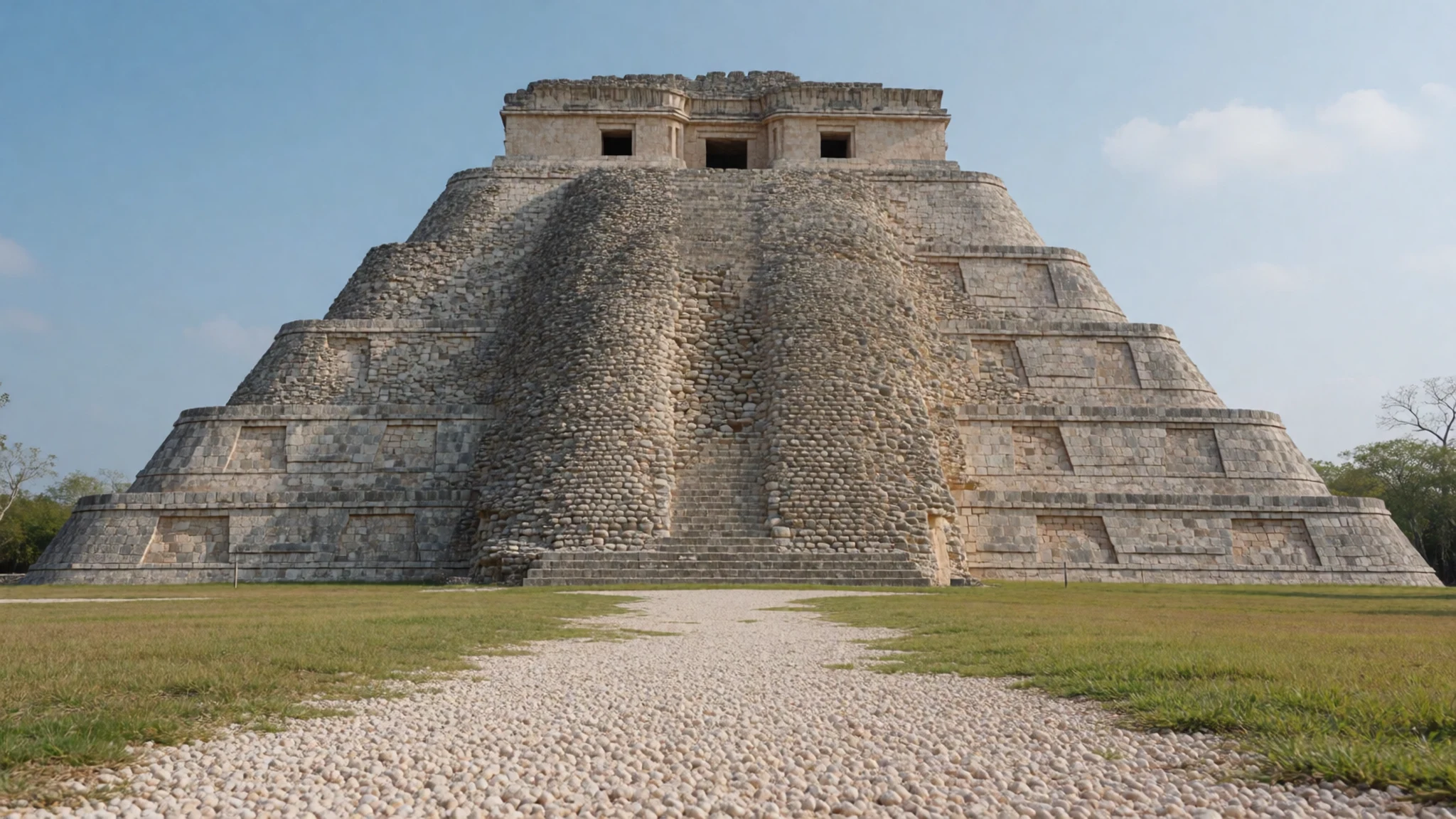
- Nunnery — Main group, close to the Pyramid of the Magician
The Nunnery is another large building on the site. Spanish visitors named it after a European convent, which it resembled to them. Its many chambers suggest a royal palace, where the ruling group handled administration, collected tribute and made decisions. Take a slow circuit and look closely at the carved masks on its façades.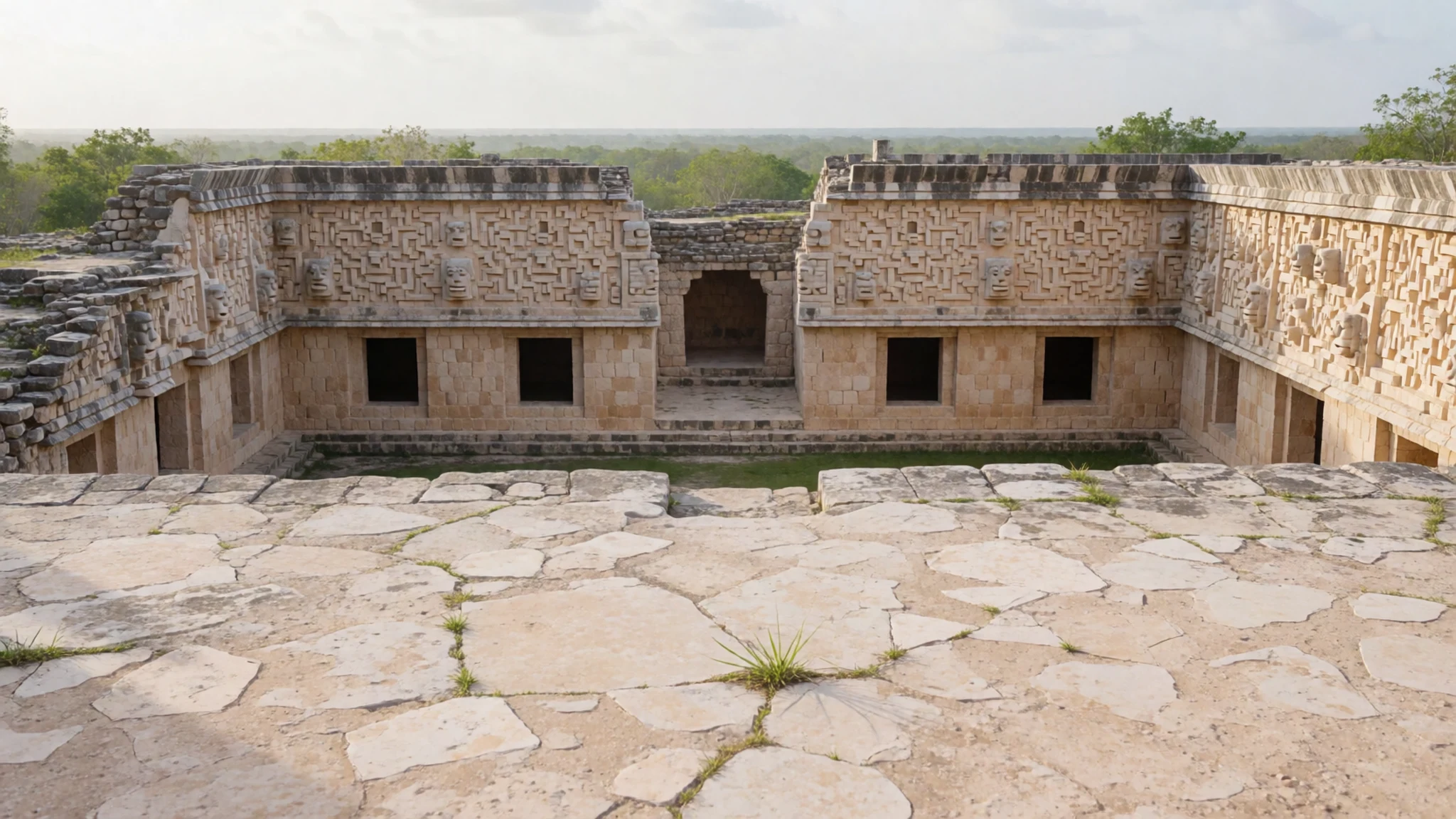
- Governor's Palace — South side of the site, on a raised platform
The Governor's Palace is a long, low building on a massive platform, with some of the longest façades in Pre-Columbian Mesoamerica. Its stone mosaic work is thought to have taken hundreds of masons and sculptors. Look for masks of the rain god, serpents and astronomical symbols across the walls. Allow plenty of time here, since the palace holds the site's finest detailed carving.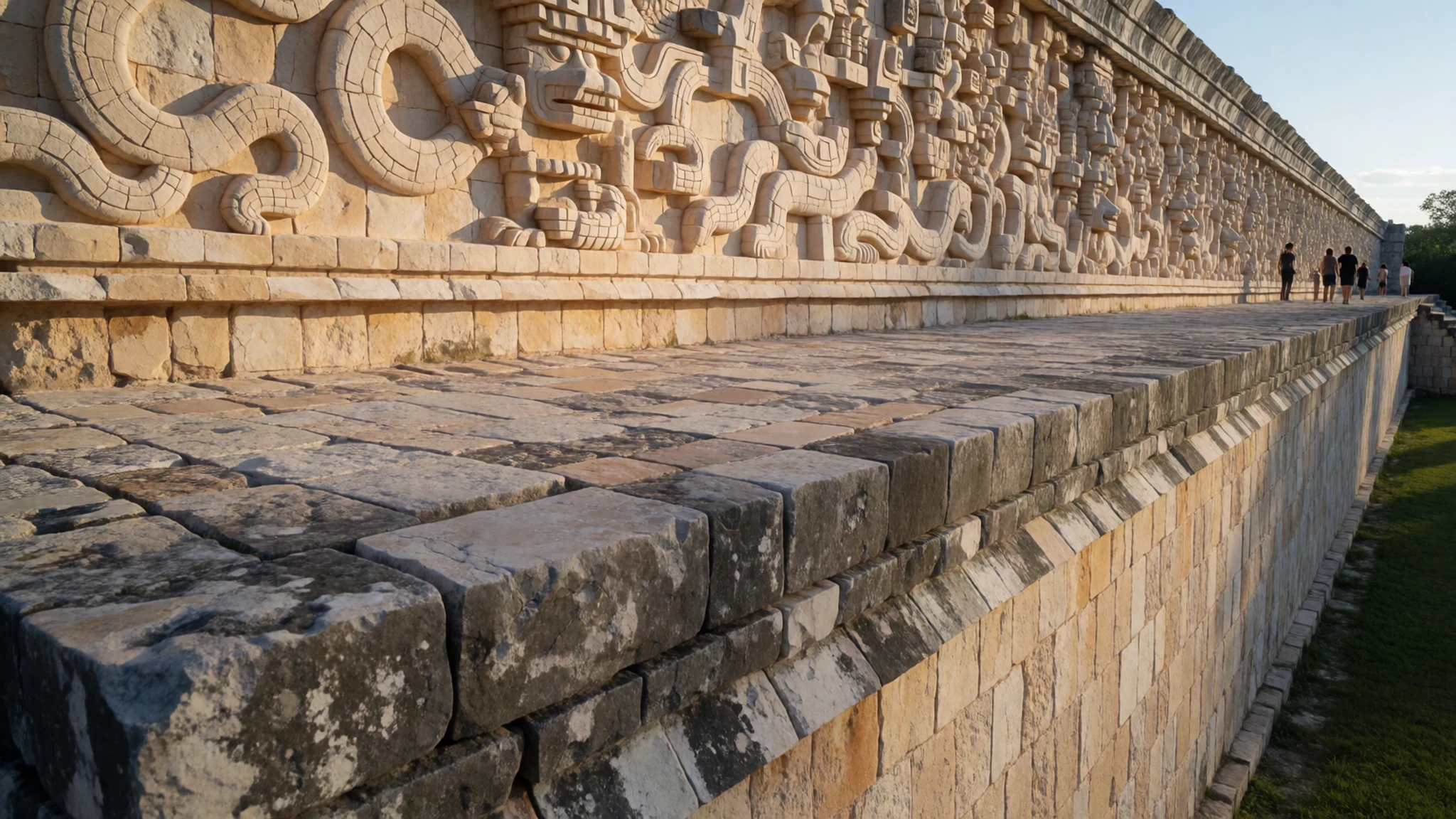
- Juego de Pelota — Within the main archaeological zone
The ballcourt, known as the Juego de Pelota, encloses a playing field about 34 m long and 10 m wide. Ball games were part of Maya ritual life across the region, and the long walled court gives a clear sense of scale. Walk the length of it to see how the walls frame the field. Shade is limited here, so visit early in the day.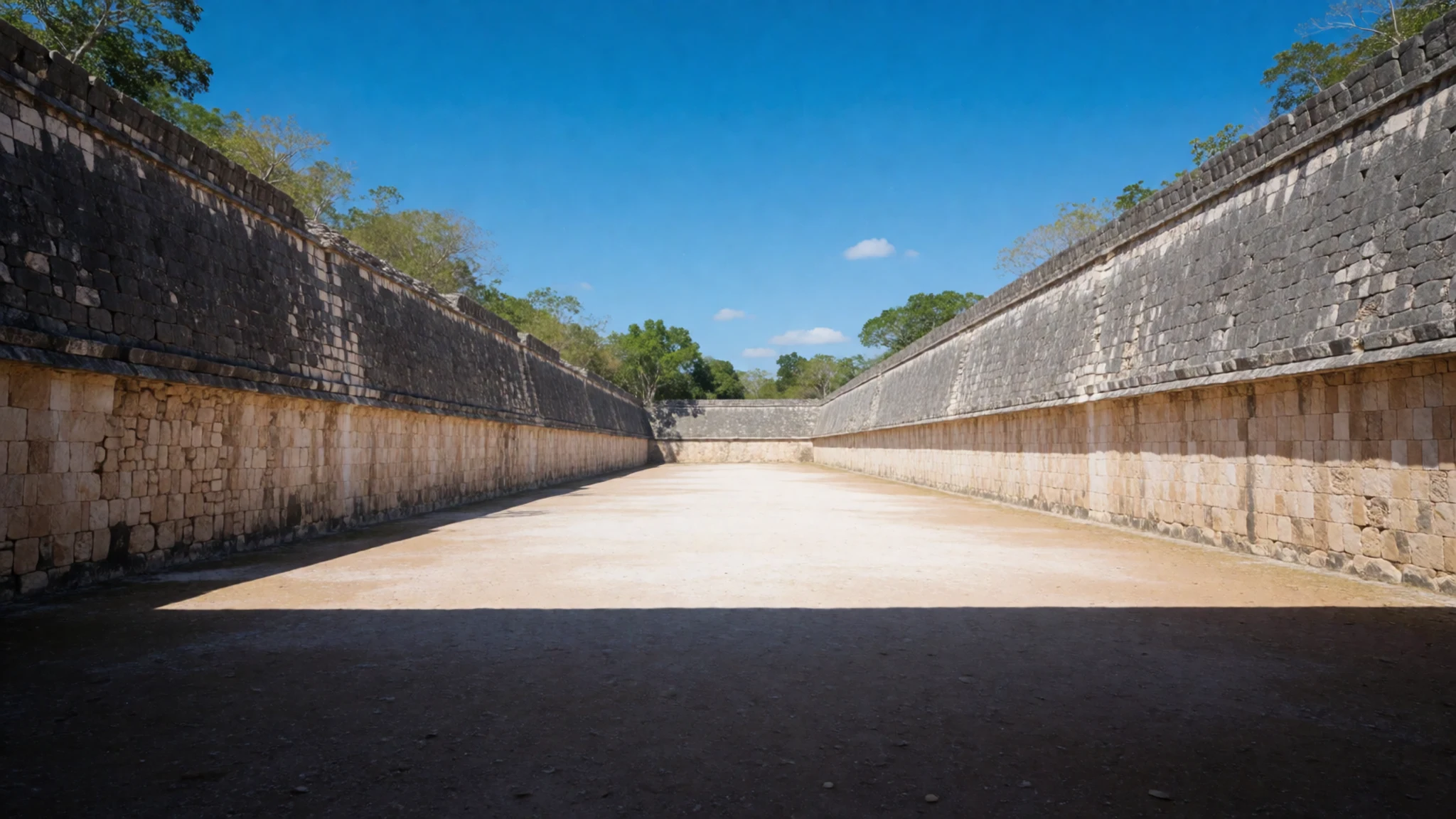
- House of the Turtles — Within the main archaeological zone
The House of the Turtles, or Casa de las Tortugas, is decorated with turtle sculptures that were associated with rain at the time. Its carvings belong to the same rain-focused beliefs as the Chaac masks found elsewhere on the site. Go slowly around the building so the reliefs catch the light and you can pick out the turtle figures.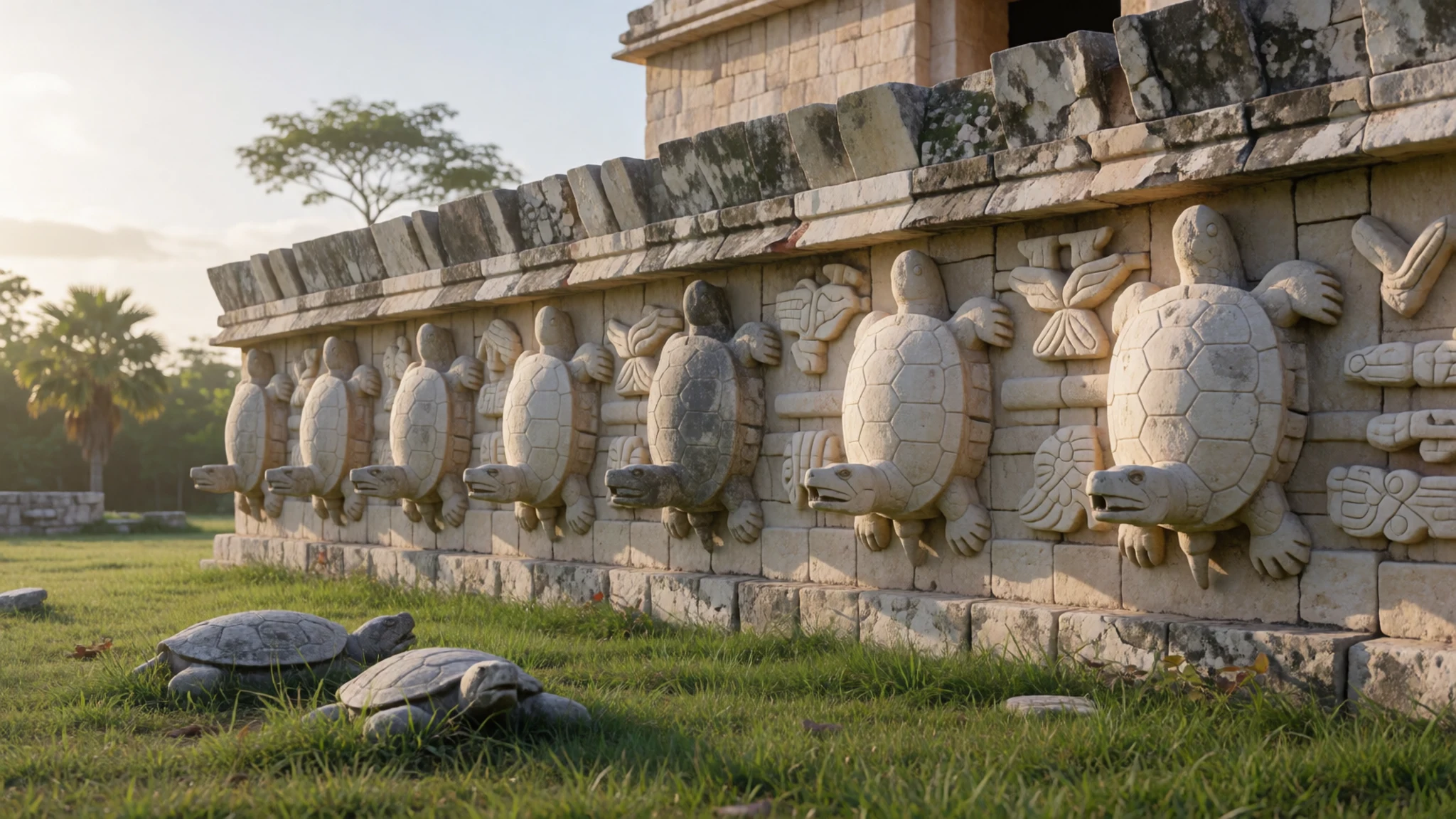
Culture
Uxmal's name in Yucatec Maya is Óoxmáal, and the language is still heard in the villages and towns around the site. Visiting is a chance to step into a long history that continues in the region today, not a museum walk to be rushed. The site is an archaeological zone, so the walking routes are laid out to protect fragile stone and the surrounding jungle. Stay on the marked trails, keep away from excavation areas, and do not touch the carved stone, which is old and easily damaged.
What to wear
Traditional dress in Yucatán centres on the huipil, a loose tunic of cotton, often white and heavily embroidered at the neckline and hem. A fuller version, the terno, is worn for festivities and has elaborate needlework. Men traditionally wore the guayabera, a pleated, shirt-like jacket in cotton or linen that is still common across the peninsula.
Day to day, people in Mérida and the villages wear ordinary clothes such as jeans, shorts and t-shirts, with the huipil and terno kept for church, dances and family occasions. The guayabera has become a smart option for men at weddings and official events.
For a visit to Uxmal, choose light, breathable cotton or linen that covers your shoulders, since the sun is strong and there is little shade between the groups. A wide-brimmed hat and sunglasses help, and you will want long sleeves or trousers in the evening to deal with mosquitoes. Wear closed walking shoes with good grip, because the paths are uneven and some steps are steep and worn.
What to eat
- Cochinita pibil — Family eateries in Santa Elena and the central markets of Mérida
Cochinita pibil is pork marinated in sour orange and achiote, wrapped in banana leaves and slow-cooked until it falls apart. It is usually served with pickled red onion and soft tortillas. Look for it at family-run eateries in the village of Santa Elena and at the lunchtime stalls of Mérida's central markets.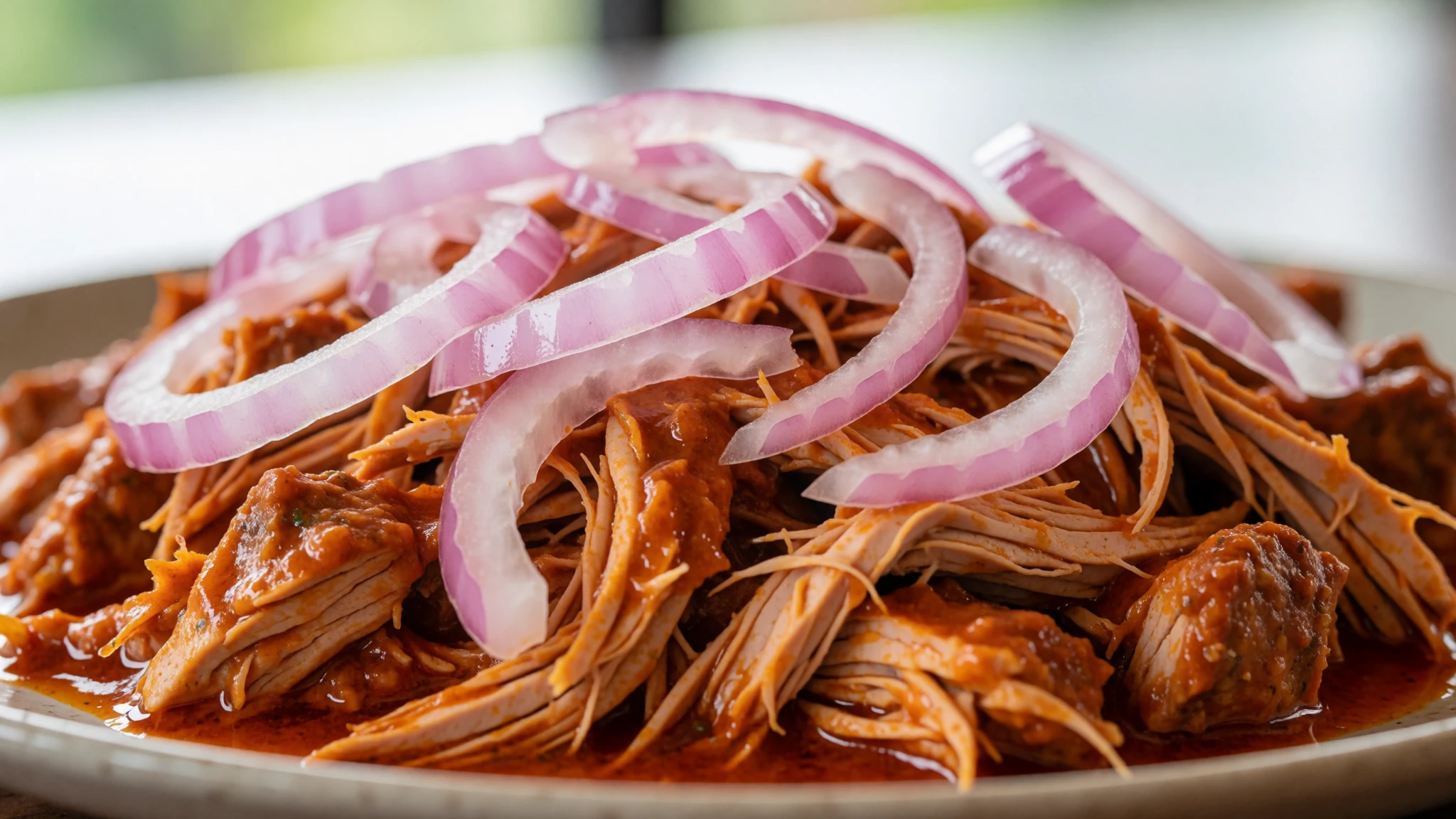
- Panuchos — Street stalls and neighbourhood kitchens in Mérida
Panuchos are small tortillas split and fried so a layer of black bean is trapped inside, then topped with shredded turkey or chicken, avocado, pickled onion and a little hot sauce. They are a classic snack of the peninsula. Look for them on the street stalls and in the neighbourhood kitchens of Mérida in the evening.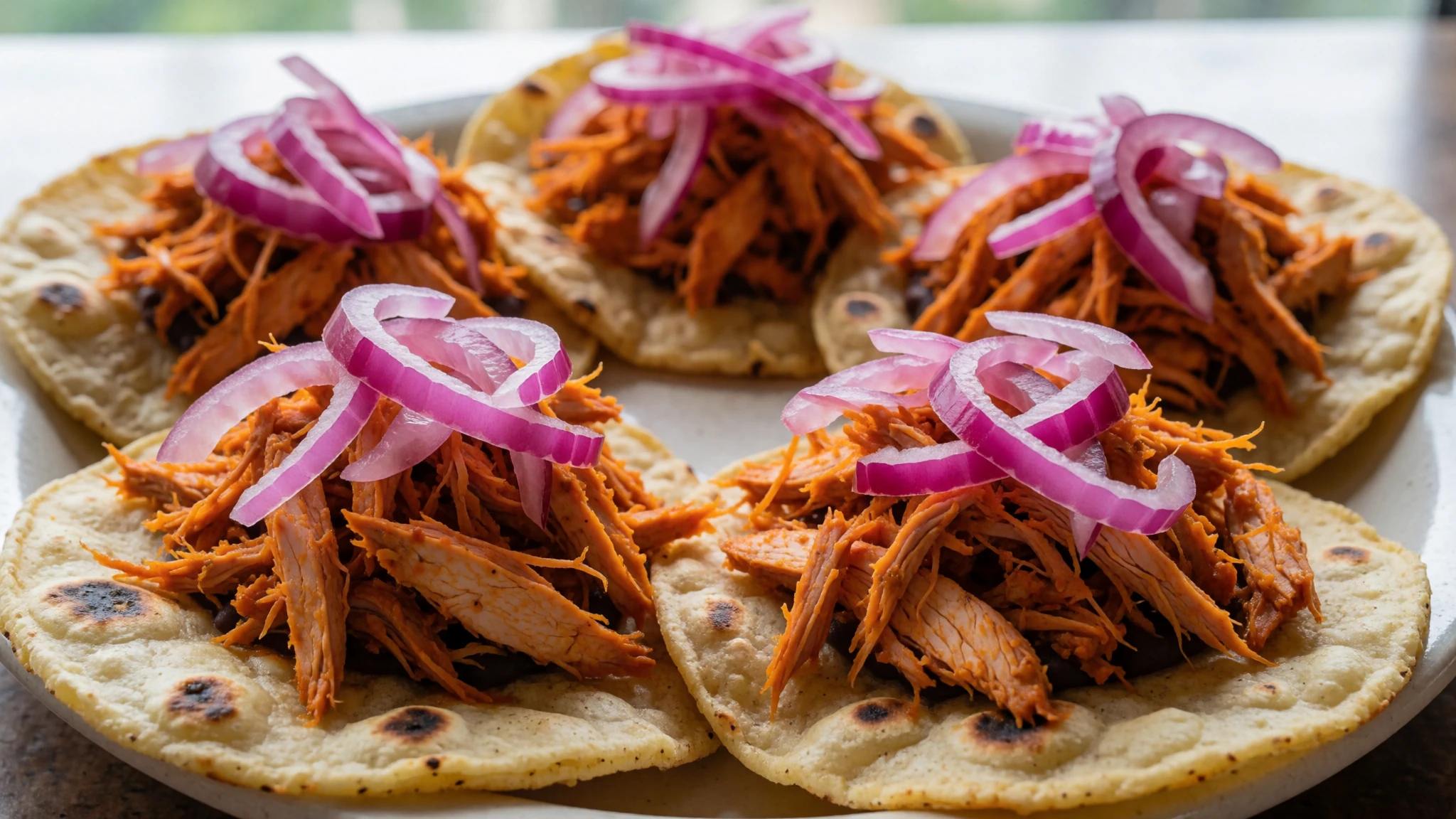
- Sopa de lima — Simple village restaurants near the ruins
Sopa de lima is a light broth flavoured with sour lime, chicken and strips of fried tortilla. It is refreshing after a hot morning among the ruins. Look for it in the simple village restaurants close to the site, where it is often served at lunch.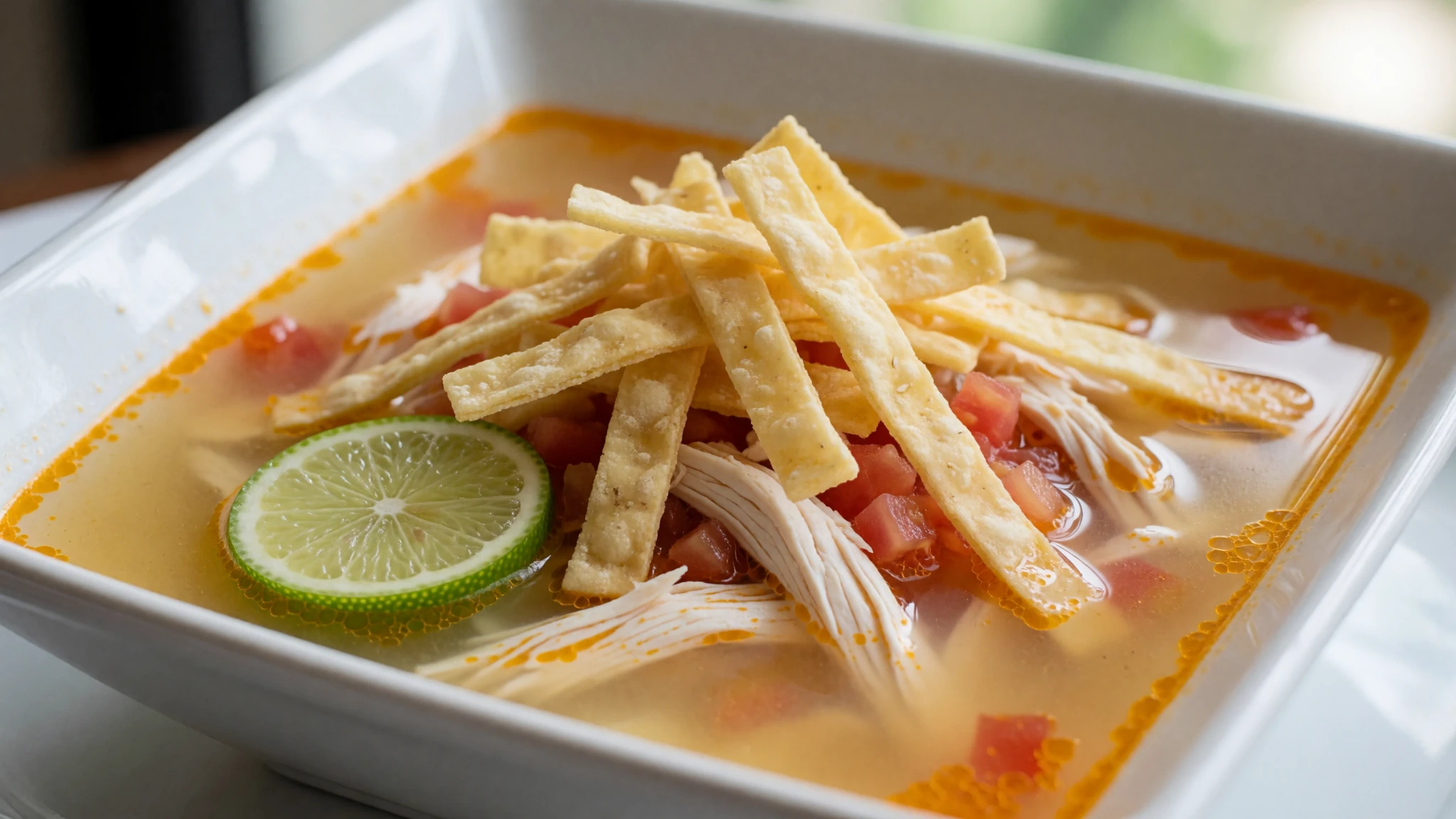
- Salbutes — Snack booths outside the main entrance and stands by the car park
Salbutes are fried corn tortillas topped with shredded turkey or pork, cabbage, tomato and pickled onion. They are cheap, filling and easy to eat standing up. The snack booths outside the main entrance and the stands near the car park are the easiest places to find them. - Maya-style hot chocolate — The chocolate workshop at Choco-Story, near the site
Maya-style hot chocolate is made with cacao, water and sometimes chilli or spices, and is frothy rather than milky. It is a good way to end a visit. The chocolate workshop at Choco-Story, in central Mérida about an hour from the ruins, shows how cacao is grown and processed, and offers samples to try.
Plan it
Best time. Late autumn through early spring, from November to March, is the drier and cooler season, with little rain. April and May are the hottest months, and the rains build from June to September. The southern Mexican sun is fierce all year, so the early morning and late afternoon are the most comfortable times to walk the site.
How long. 1–2
Getting there. Fly into Mérida, the state capital, and continue by car, taxi or organised tour for the last leg of about an hour's drive. Trains on the Tren Maya stop at Mérida-Teya or Maxcanu, from where you can take a taxi. Bus services from Mérida are limited, so check times before you travel.
Budget. mid
Tips
- Check the official INAH site for current opening hours and fees before you travel
- Arrive early in the morning, when the carvings are easier to see and the heat is lower
- Bring a hat, sunscreen and water, since there is little shade between the building groups
- Pack mosquito repellent, as the site sits in jungle and mosquitoes can carry tropical diseases
- Combine Uxmal with Kabah, Sayil and Labná on the Ruta Puuc, a short drive south
Etiquette
- Stay on marked trails and keep away from excavation areas
- Do not touch the carved stone, which is old and easily damaged
- Keep noise down around the buildings so others can take in the carvings
Nearby
Sources
- Wikidata Q213232 (CC0)
- Wikipedia: Uxmal (CC BY-SA 4.0)
- Wikivoyage: Uxmal (CC BY-SA 4.0)
- Photo: Vista panorámica de Uxmal (Adrian Hernandez) (CC BY-SA 4.0)
- Photo: Pyramid of the Magician (Sybz) (CC BY-SA 2.5)
- Photo: Uxmal plan (HJPD) (CC BY 3.0)
- Photo: Governor's Palace (Dennis Jarvis) (CC BY-SA 2.0)
- Photo: Governor's Palace details, Uxmal (CC BY 3.0)
- Photo: Governor's Palace rear view and details, Uxmal (CC BY 3.0)
- Photo: Governor's Palace rear view, Uxmal (CC BY 3.0)
- Photo: Governor's Palace side view, Uxmal (CC BY 3.0)


