Ürümqi
Ürümqi, People's Republic of China
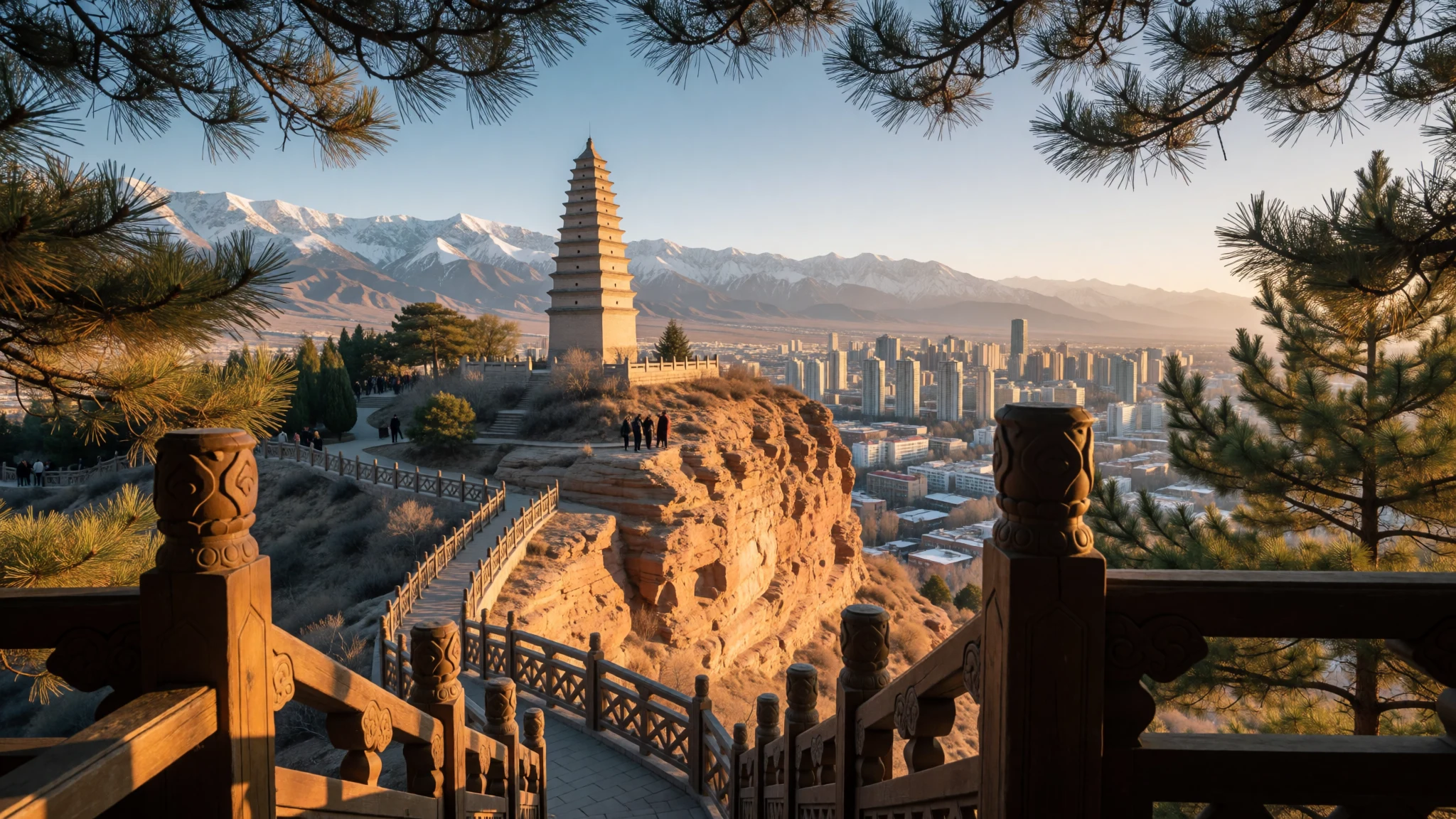
Set against the snow-capped Tian Shan mountains, Ürümqi brings Silk Road heritage together with Central Asian markets and a modern urban grid.
The place
Ürümqi sits in China's northwestern interior, encircled by the northern ridges of the Tian Shan range. Rising to an elevation of 800 metres, this high-altitude provincial capital serves as the political and commercial heart of the Xinjiang Uyghur Autonomous Region. Across its broad avenues and dense neighbourhoods, a population of around four million residents reflects a rich mix of Han Chinese and Uyghur communities, creating a distinct blend of Central Asian and East Asian urban life.
The city spreads across a vast inland basin, holding a unique geographical title as the major urban settlement located furthest from any ocean on Earth. Rather than coastal dampness, the local climate brings clear mountain skies, sharp temperature shifts between seasons, and crisp desert air. High-rise office towers, modern transport networks, and university campuses dominate the financial districts, while traditional bazaars and spice stalls anchor older residential quarters.
Navigating Ürümqi means moving between modern glass high-rises and lively street markets filled with the scent of roasted cumin, fresh flatbreads, and grilled mutton. Mountain streams feed green public parks throughout the valley, offering shaded places to unwind beneath the surrounding peaks. It functions as both a crossroads for trade across Eurasia and a gateway for travellers venturing into the deserts and mountain passes of northwestern China.
Its story
Long before concrete avenues took root, nomadic pastoralists known in ancient records as the Jushi grazed livestock along the mountain slopes rimming the basin. Positioned along the northern branch of the Silk Road, the region gradually became an essential stop for trade caravans transporting silk, tea, jade, and spices across Central Asia. A fortified settlement called Urabo was established nearby to control mountain passes, establishing early administrative control over trade routes traversing the northern foothills of the Tian Shan.
Imperial garrisons monitored the movement of merchants, maintaining outposts along the river valley to collect taxes and secure the northern overland routes. Over the following centuries, control over the region shifted among nomadic confederations and regional kingdoms, including the Uyghur Khaganate and the Dzungar Khanate. The Oirat-speaking Dzungar tribes held sway over the surrounding grasslands until Manchu imperial forces integrated Xinjiang into the Qing realm during the eighteenth century.
In the mid-twentieth century, the settlement transitioned into the capital of the Xinjiang Uyghur Autonomous Region under the People's Republic of China. Since the late twentieth century, rapid economic investments have reshaped the urban landscape, turning a former Silk Road oasis into an industrial and financial centre. Today, the city reflects centuries of layered history, where ancient trade routes meet high-speed rail lines and modern infrastructure in the heart of Eurasia.
What to see
- Grand Bazaar — Tianshan District
This sprawling marketplace complex presents a grand architectural display of domed roofs, arches, and carved stone facades. Rows of stalls sell silk scarves, dried fruits, rugs, copperware, and spices. While heavily visited by tourists, the surrounding alleys retain an energetic atmosphere filled with local traders, musicians, and street food stalls serving hot flatbreads.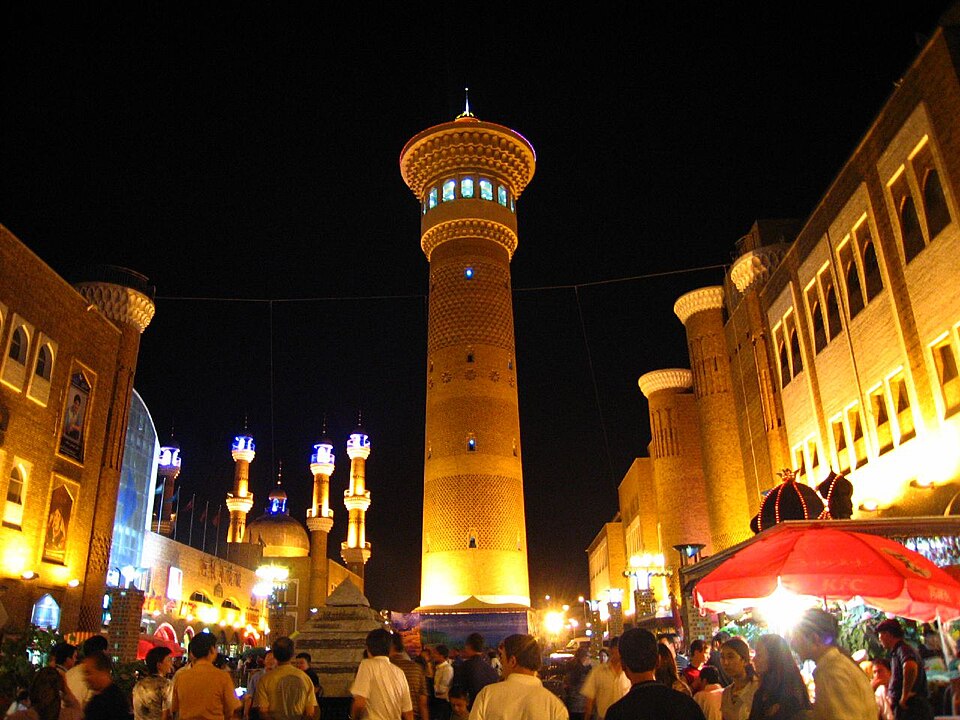
- Red Mountain Park — Saybagh District
Red Mountain Park tops a rugged red sandstone outcrop in the middle of the city, offering panoramic views across the downtown skyline and distant snowy peaks. Winding staircases climb past wooded terraces to reach a summit pagoda. Visitors come to stroll through shaded gardens, ride the hilltop Ferris wheel, or explore quiet temple courtyards above the urban traffic.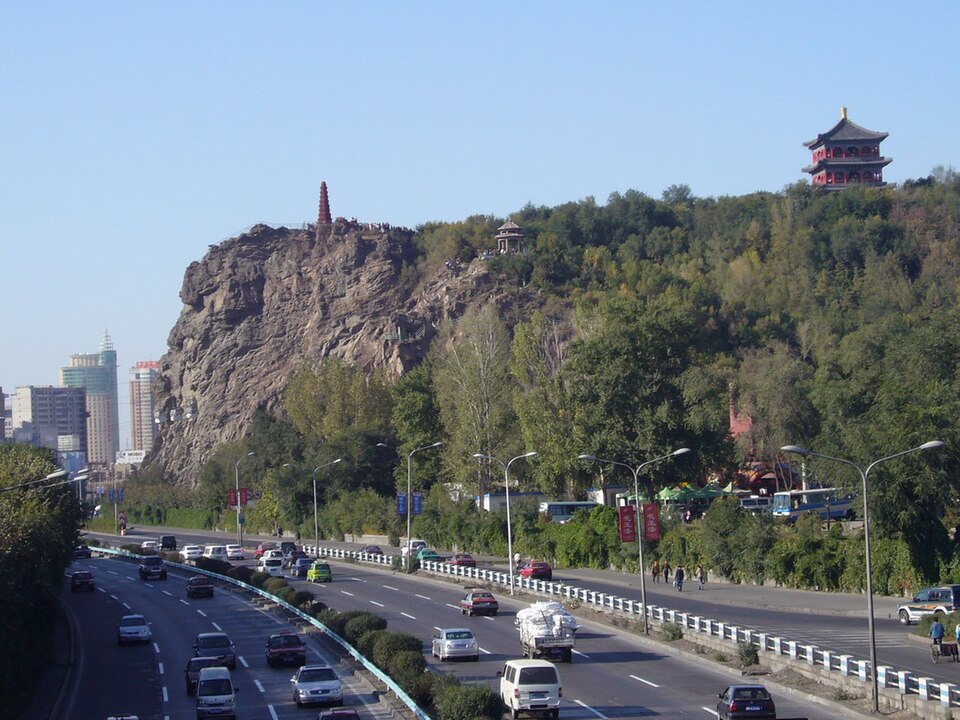
- People's Park — Saybagh District
Bordering a peaceful central lake, People's Park forms the main green space in central Ürümqi. Shaded avenues under mature trees draw locals throughout the day. Early mornings see groups practising tai chi, singing traditional folk songs, playing chess, and exercising along lakeside paths. Pavilion bridges and quiet benches offer a calm retreat from the surrounding commercial avenues.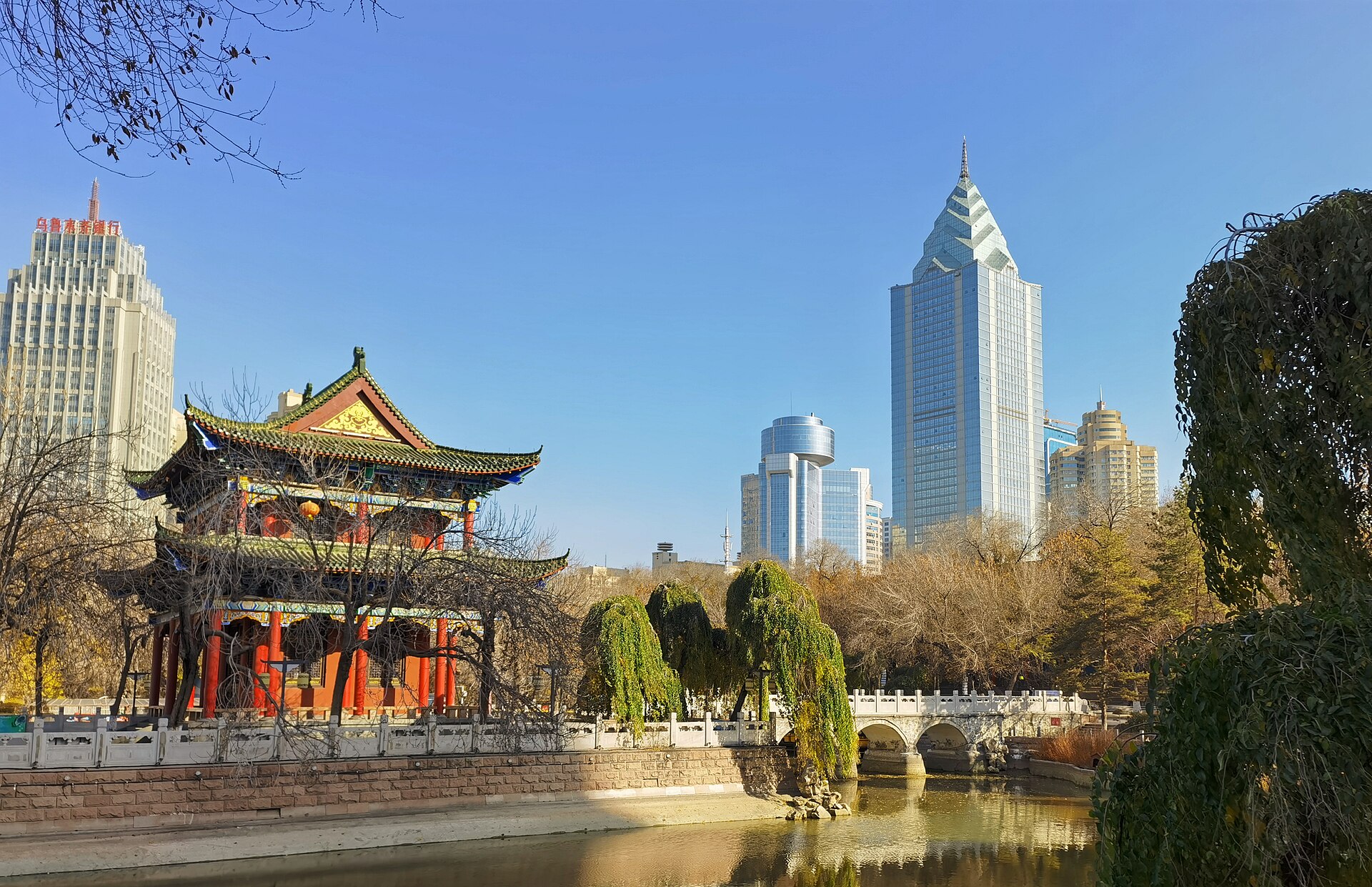
- Xinjiang Autonomous Region Museum — Saybagh District
This spacious regional museum displays historical artefacts, ancient textiles, and Silk Road relics excavated across northwestern China. Exhibition halls showcase early Silk Road trade goods, preserved ancient mummies from desert basins, and detailed cultural displays on the region's diverse ethnic groups. It provides essential context for understanding the deep multicultural heritage of Central Asia. - Confucian Temple — Tianshan District
Tucked away behind traditional red walls in the central district, this quiet temple complex features classic courtyard architecture, sweeping tiled roofs, and carved timber halls. It offers a tranquil sanctuary away from commercial streets, filled with ancient trees and stone plaques. Visitors come here to admire historic Chinese temple building styles and enjoy a serene atmosphere.
Culture
Ürümqi stands as a cultural meeting point where Central Asian customs blend with East Asian traditions. The city's identity is defined by its multiethnic population, most prominently Han Chinese and Uyghur residents. Daily life reflects this duality, from bilingual signage in Chinese characters and Uyghur Arabic script to the musical traditions heard in public squares and markets. Traditional music often features stringed instruments like the dutar alongside lively hand drums, accompanying folk dances during community gatherings and festive occasions.
Hospitality plays a central role in local social gatherings, with meals shared family-style around large communal tables. Tea drinking is woven into the rhythm of every day, usually served hot in small porcelain bowls alongside freshly baked bread. Islamic traditions influence religious observances and dietary habits across many neighbourhoods, alongside Buddhist and Confucian heritage visible in city temples and historical monuments.
When visiting markets, residential neighbourhoods, or religious sites in Ürümqi, always ask for permission before photographing local residents or vendor stalls.
What to wear
Fashion in Ürümqi reflects both traditional regional heritage and modern urban practicality. Traditional Uyghur clothing features vibrant, patterned textiles, most notably atlas silk—a brightly dyed fabric woven into bold geometric and floral motifs. Women historically wore flowing atlas silk dresses paired with embroidered caps known as doppa, while men wore long quilted coats with woven sashes. On special occasions and festival days, these traditional garments are still worn with pride, showcasing fine needlework and intricate embroidery.
In daily life, contemporary western dress and modern Chinese urban styles dominate the city streets. Office workers and students favour jeans, tailored jackets, and comfortable trainers suited for navigating long city blocks and public transport networks. During the cold winter months, heavy down coats, thick wool scarves, and fur-lined boots are standard wear across all communities to handle sub-zero temperatures.
Visitors should pack layerable clothing to handle sharp temperature swings between sunny daytime hours and cool mountain evenings. Modest attire covering shoulders and knees is appropriate when visiting traditional markets or religious quarters, and comfortable walking shoes are essential for steep park trails and stone-paved bazaar alleys.
What to eat
- Dapanji (Big Plate Chicken) — Neighbourhood eateries throughout Tianshan District
A celebrated Xinjiang specialty featuring tender chicken slow-cooked with potatoes, bell peppers, onions, and red chillies in an aromatic spicy gravy. Served on a massive communal platter over hand-pulled flat noodles, it is best enjoyed with groups at informal neighbourhood eateries. - Xinjiang Lamb Skewers (Chuan'r) — Night markets and street stalls
Mutton pieces seasoned heavily with crushed cumin, chilli powder, and salt, skewered on metal rods and charcoal-grilled over long open fire troughs. You will spot cooks fanning smoky grills outside night market stalls, serving them sizzling hot alongside warm flatbread. - Uyghur Hand-Pulled Noodles (Laghman) — Family-run noodle shops across the city centre
Fresh wheat dough stretched by hand into long, chewy noodles, topped with a savoury stir-fry of sliced beef or mutton, tomatoes, garlic, peppers, and cabbage. Available across the city at small family-run noodle shops, served piping hot with chilli oil. - Baked Mutton Samsa — Bakeries near bazaar entrances
Flaky pastry parcels stuffed with minced mutton, onions, and black pepper, baked against the clay walls of a traditional tandoor oven. Crispy on the outside and juicy within, these popular savoury snacks are bought fresh from morning bakeries near bazaar entrances. - Traditional Uyghur Ice Cream (Marozhni) — Dessert stalls around old town squares
A smooth, handmade frozen dessert crafted from milk, cream, and sugar, churned by hand in large metal tubs. Chilled naturally and lightly flavoured with vanilla, it is served in small glass bowls at dessert stalls around old town squares.
Plan it
Best time. May to June and September to October bring pleasant temperatures and clear skies; July and August can be hot, while winter months bring severe freezing weather.
How long. 2–3
Getting there. Ürümqi Tianshan International Airport connects to major Chinese cities; high-speed trains arrive at Ürümqi Main Railway Station from Lanzhou and Xi'an.
Budget. mid
Tips
- Carry cash in RMB or set up mobile payment apps as foreign credit cards are rarely accepted in local markets
- Keep your passport accessible at all times as security checks and ID verifications are common across public transit and venues
- Adjust your daily schedule to local light hours; while official China Standard Time is used, local solar time runs two hours behind Beijing
- Drink bottled water and carry lip balm and moisturizer for the dry inland climate
Etiquette
- Always request permission before taking photos of market vendors, residents, or security checkpoints
- Remove shoes and dress modestly when stepping into religious places or traditional home dining areas
Nearby
Sources
- Wikidata Q16959 (CC0)
- Wikipedia (rev 1383203591) (CC BY-SA 4.0)
- Wikivoyage (rev 5420903) (CC BY-SA 4.0)
- Photo 01-urumqi-skyline-july-2019.jpg (CC BY-SA 4.0)
- Photo 02-urumqi-s-bazzar.jpg (CC BY-SA 2.0)
- Photo 03-hong-shan.jpg (CC BY 3.0)
- Photo 04-.jpg (CC BY-SA 4.0)
- Photo 05-people-s-square-of-urumqi-1.jpg (Public domain)
- Photo 06-a-glance-at-urumqi-from-hongshan-park.jpg (CC BY-SA 4.0)
- Photo 07-nk-45-02-ti-hua-china.jpg (Public domain)
- Photo 08-txu-oclc-6654394-nk-45-3rd-ed.jpg (Public domain)


