Urho Kekkonen National Park
Urho Kekkonen National Park, Finland
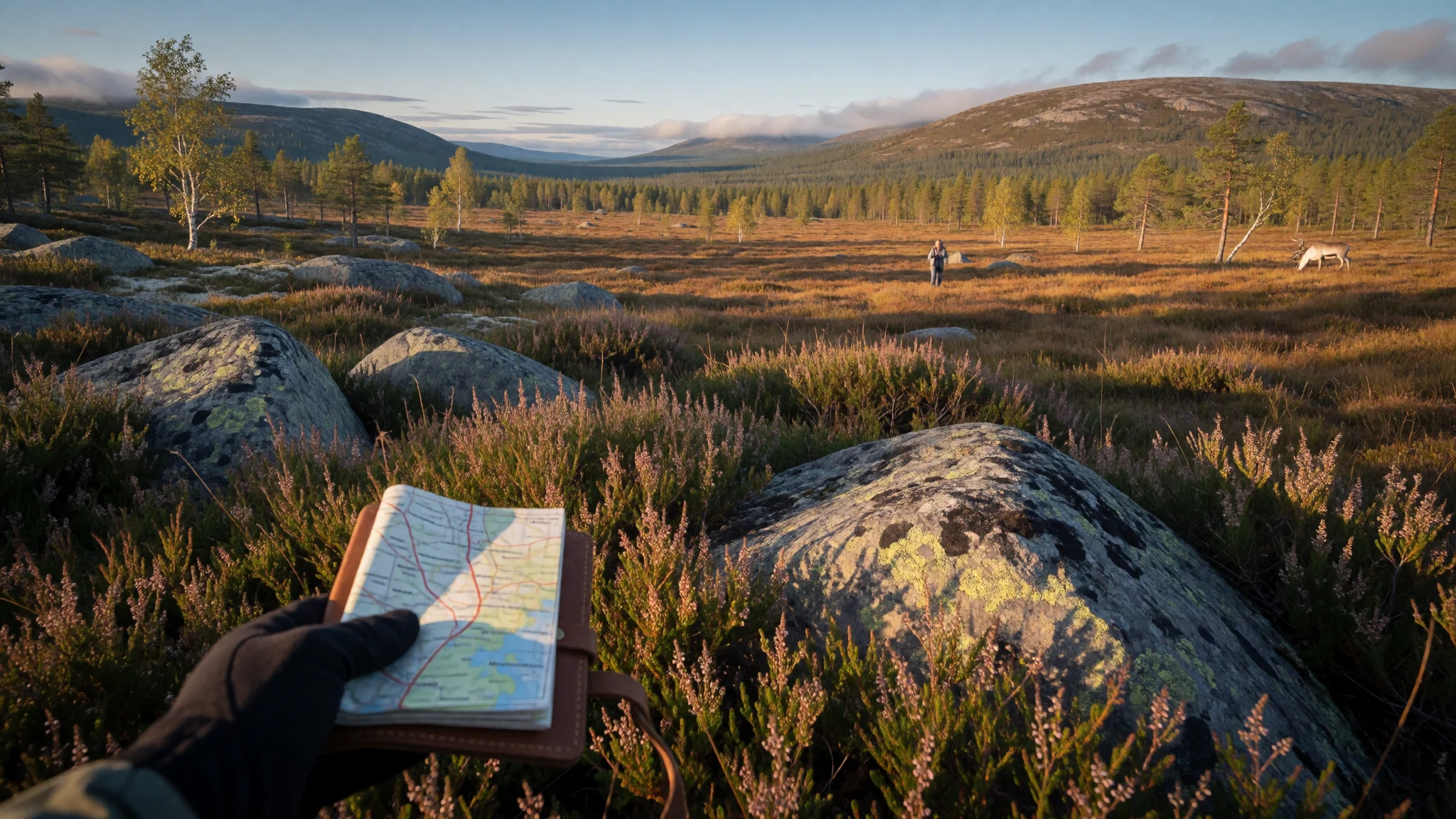
Urho Kekkonen National Park holds open fell, mire and wild forest on Finland's Russian border, quiet beyond the Saariselkä day trip belt.
The place
Urho Kekkonen National Park occupies a wide stretch of Finnish Lapland, running through Inari, Sodankylä and Savukoski until the land meets Russia. Finnish speakers call it Urho Kekkosen kansallispuisto; in Northern Sami the name is Urho Kekkonen álbmotmeahcci, and on trail talk it shrinks to UK. Rounded fells sit beside broad bogs and deep forest, and the Suomujoki drains the northern quarter.
The western waymarks are a manageable first trip with a pack. Beyond them the country is for people who can navigate for days and sleep in huts. Walks commonly set off from the fell centre at Kiilopää, from Lake Aittajärvi beside the Suomujoki, or from Raja-Jooseppi, and a great many of them drift towards the Saariselkä chain of summits.
Traffic clumps on the highway that skirts the western edge, above all around Saariselkä. Past that resort fringe, or by a lesser gate, the park turns sparse; company, when it appears, is mostly at the huts and on the routes everyone already knows. Sami homeland covers part of the reserve, reindeer are still herded here, and the regulations leave room for Sami residents and for other people who live nearby. The old main visitor centre no longer operates. Staff at Metsähallitus will still talk through a route, though they may not know every cabin the way earlier teams did. Inside the boundary, Korvatunturi is the fell Finnish tradition treats as Father Christmas's own hill, distinct from the public greeting-place in Rovaniemi.
Its story
Urho Kekkonen National Park received its name and its legal boundary in 1983, after Urho Kekkonen, the Finnish statesman who had led the government and later the presidency. The fells were not empty beforehand. Sami households, reindeer herds and, in pockets, gold seekers had crossed this ground for generations before anyone drew a park line on the map.
Rumakuru shows that older layer plainly. The ravine is steep, rocky and ice-cut. A day hut stands towards its southern end, and a little further along there is a rougher shelter that gold seekers are thought to have put up. Raja-Jooseppi — the border, and Joseph, folded into a single place-name — remembers the settler Jooseppi and the woman who lived there with him; officials now treat the grounds as cultural heritage of national importance, and a border-zone notice still greets arrivals.
What the designation did not do was freeze local life. Rules written for the park still make allowances for Sami people and for other residents, and reindeer work goes on. Korvatunturi keeps a second, quieter fame: Finnish custom locates Father Christmas's home on that fell, while the reception the coaches aim for is down in Rovaniemi. Between Kiilopää, the lake basin of Luirojärvi and the Nuorttijoki valley, the lived story is huts, herds and routes that are only lightly marked. Visitors who stay near Saariselkä meet a resort fringe; those who continue towards Sokosti or the Nuortti river meet the older pattern of spare huts and long gaps between people.
What to see
- Sokosti — Central fells, above Luirojärvi
Sokosti is the highest fell in the heart of Urho Kekkonen National Park, a usual goal after walking in from Kiilopää. The summit looks over lakes and open ridges. An unmarked circuit ties Kiilopää to Suomuruoktu, Tuiskukuru, Luirojärvi and Lankojärvi before it returns; nothing is painted on the ground. Cloud and wind arrive suddenly, so the top is a brief stop.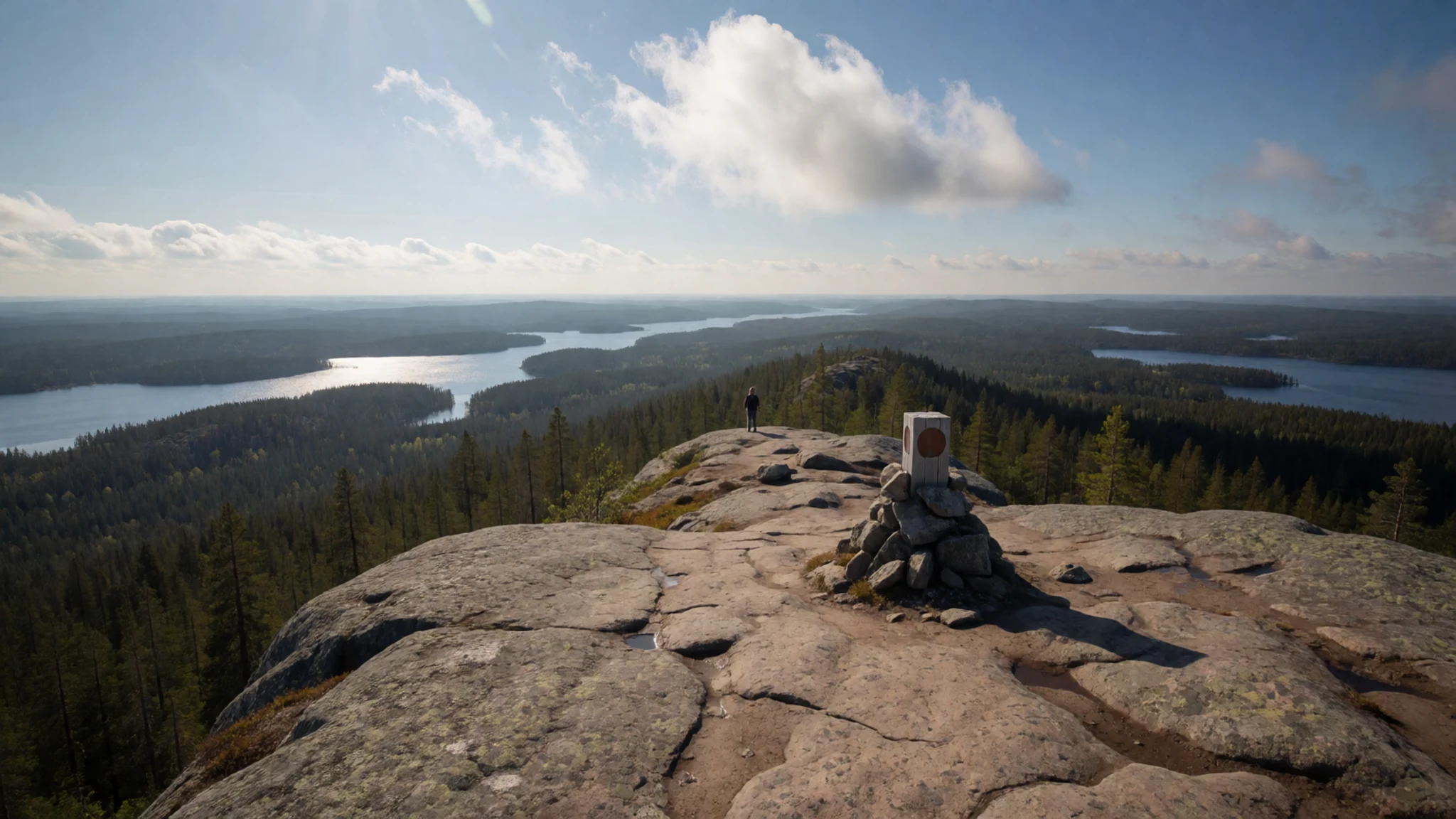
- Luirojärvi — Middle of the park, at the foot of Sokosti
Luirojärvi sits near the middle of Urho Kekkonen National Park, under Sokosti. Walkers treat the shore as a natural pause. Someone has built a free wilderness shelter here, plus a hut that can be booked and a sauna by the shore. The lake is a hinge on the unmarked Kiilopää loop, so in summer the bunks fill with people on the same long circuit.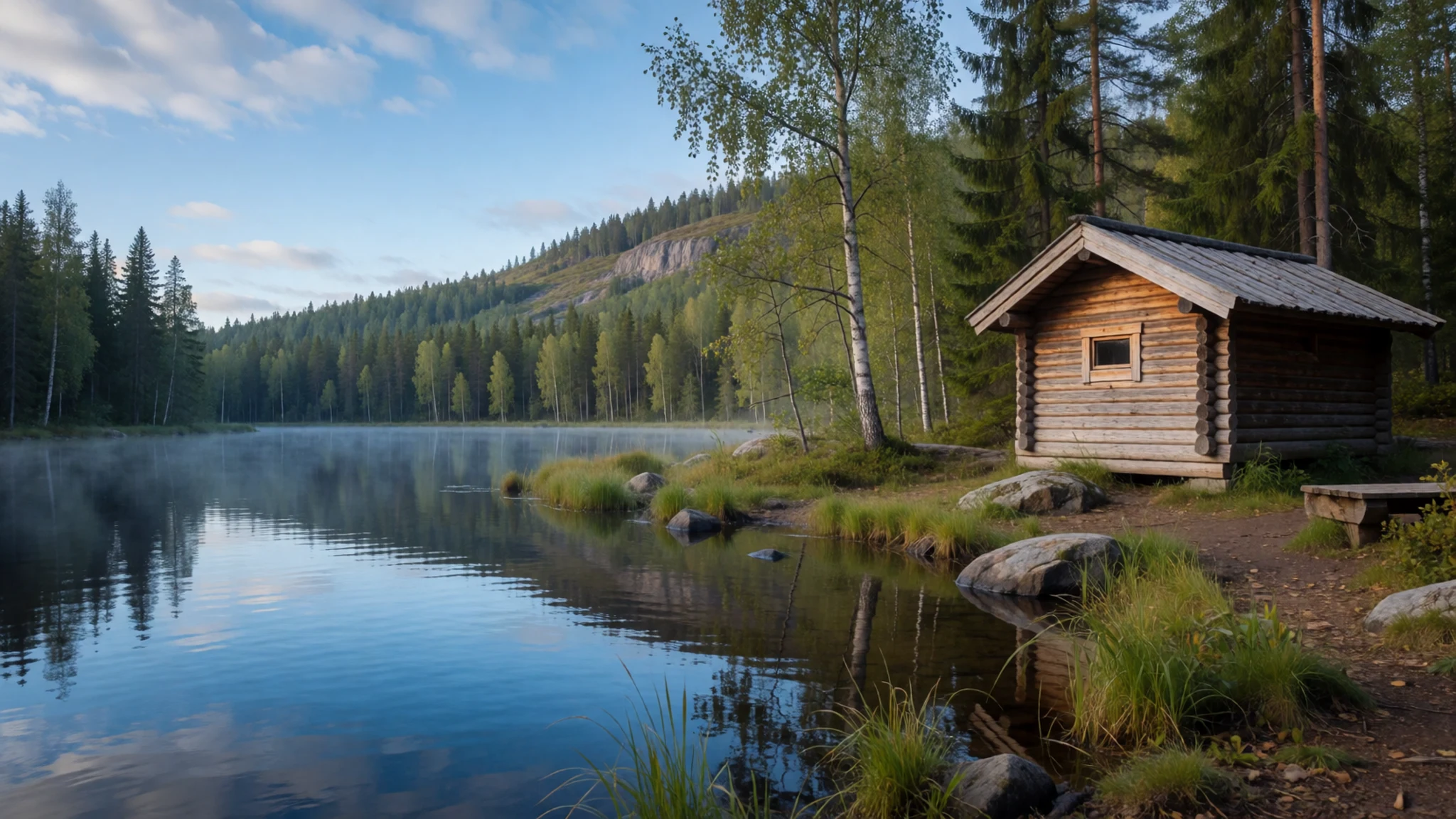
- Rumakuru — Saariselkä fells
Rumakuru is a narrow rock cleft in the Saariselkä part of Urho Kekkonen National Park, steep-sided and left by ice. The day hut Rumakurun tupa stands near the gorge's southern end, and a short walk further on sits an older shelter linked to gold seekers. The walls close the view and trap the wind, so it is a good halt and a bad place in a white-out.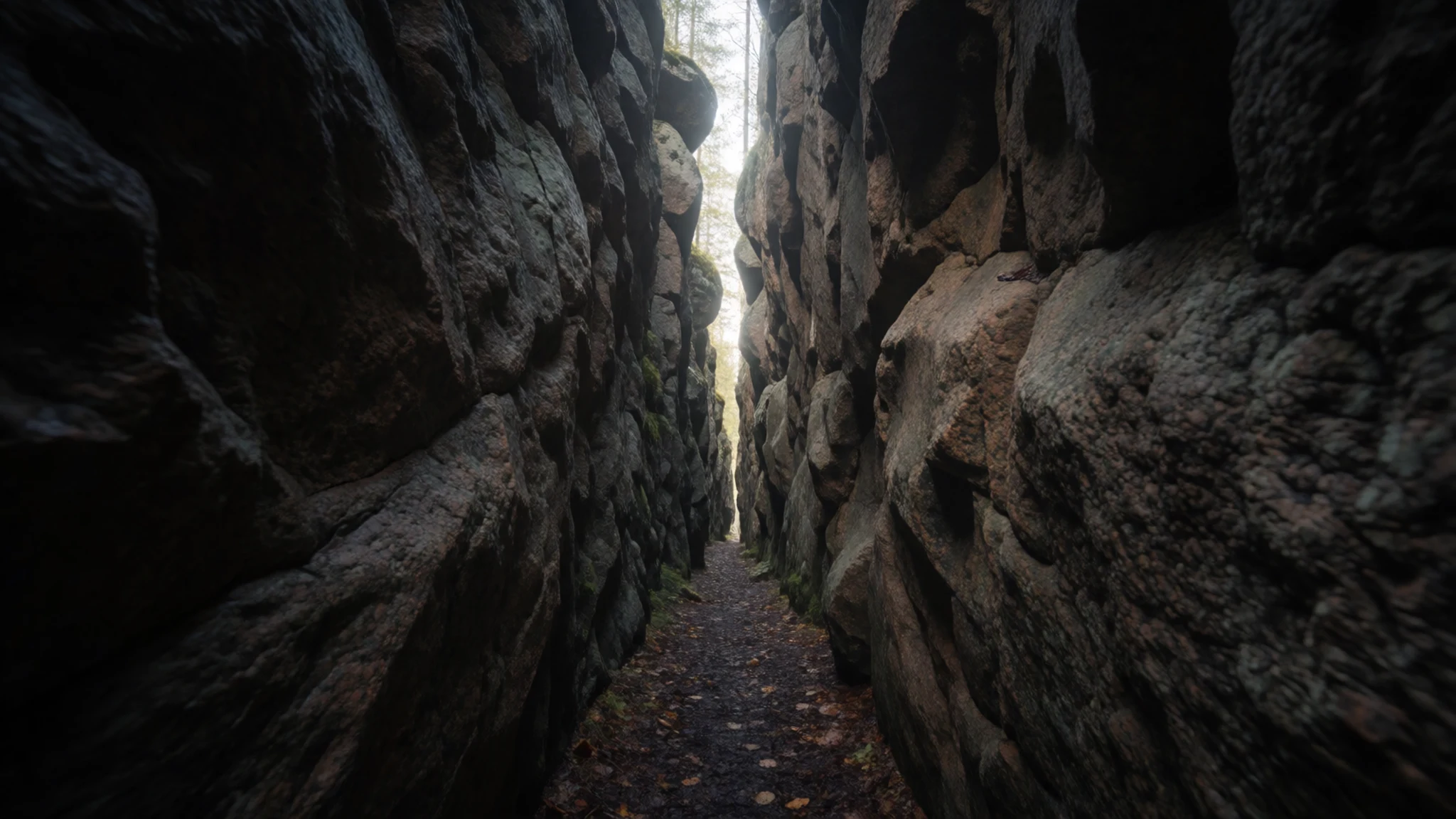
- Korvatunturi — Eastern park, towards the Russian border
Korvatunturi, in the east of Urho Kekkonen National Park, is the fell Finnish tradition calls Father Christmas's home. The public reception sits in Rovaniemi; this hill is the quiet address in the story. Local firms run trips towards the nearby gap, Korvatunturinmurusta, rather than to any fenced grotto. Current outings are a question for those firms, and no painted path should be assumed.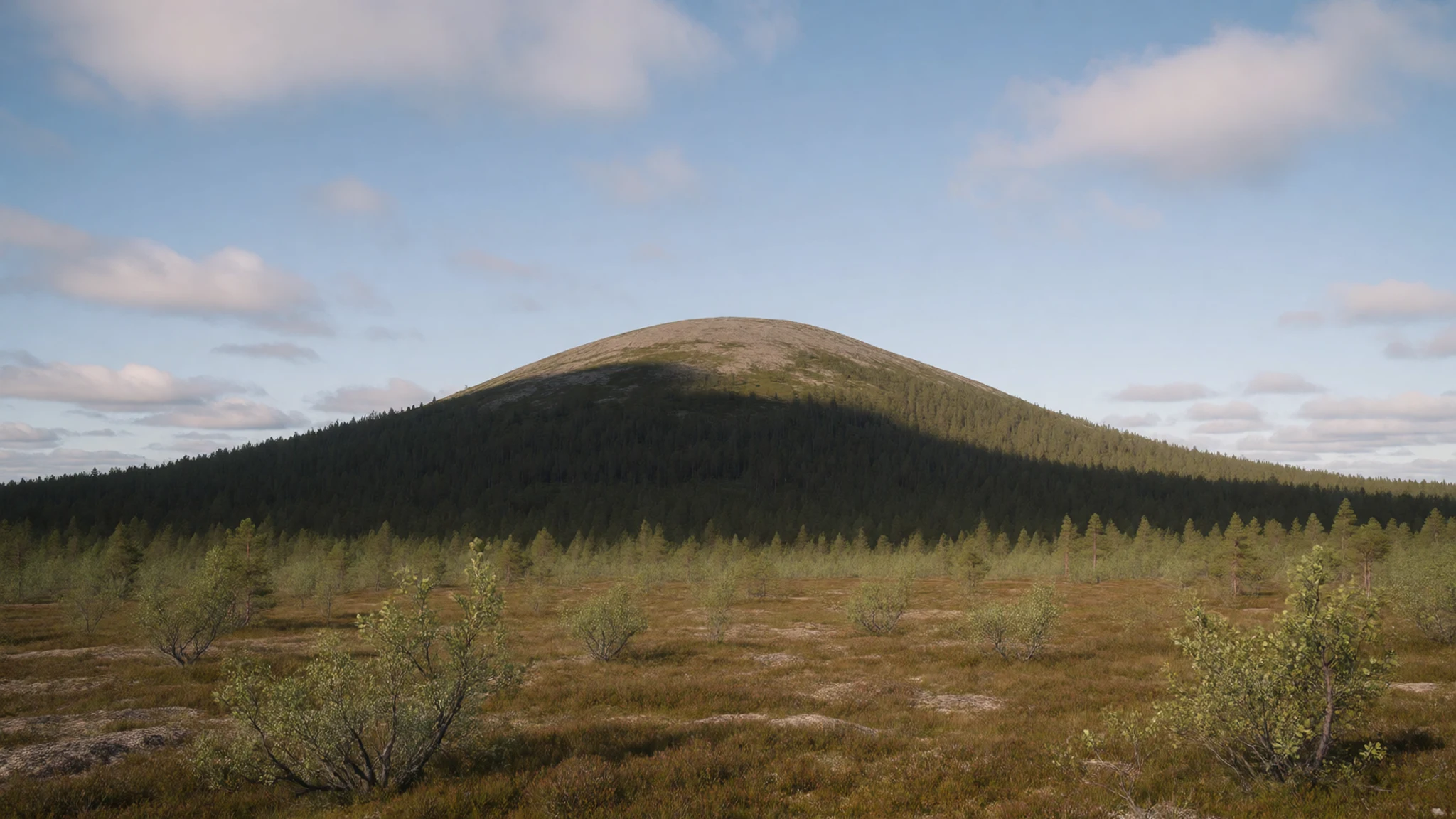
- Raja-Jooseppi — Northern edge, Sodankylä
Raja-Jooseppi marks the northern approach to Urho Kekkonen National Park in Sodankylä, hard against the Russian border. The grounds count as cultural heritage of national importance. Jooseppi, the settler behind the name, made a home here with his companion. A border-zone sign stands at the entrance; the border-guard post serves travellers heading for the Luttojoki and the Skolt Sami lands, with customs further along near these same grounds.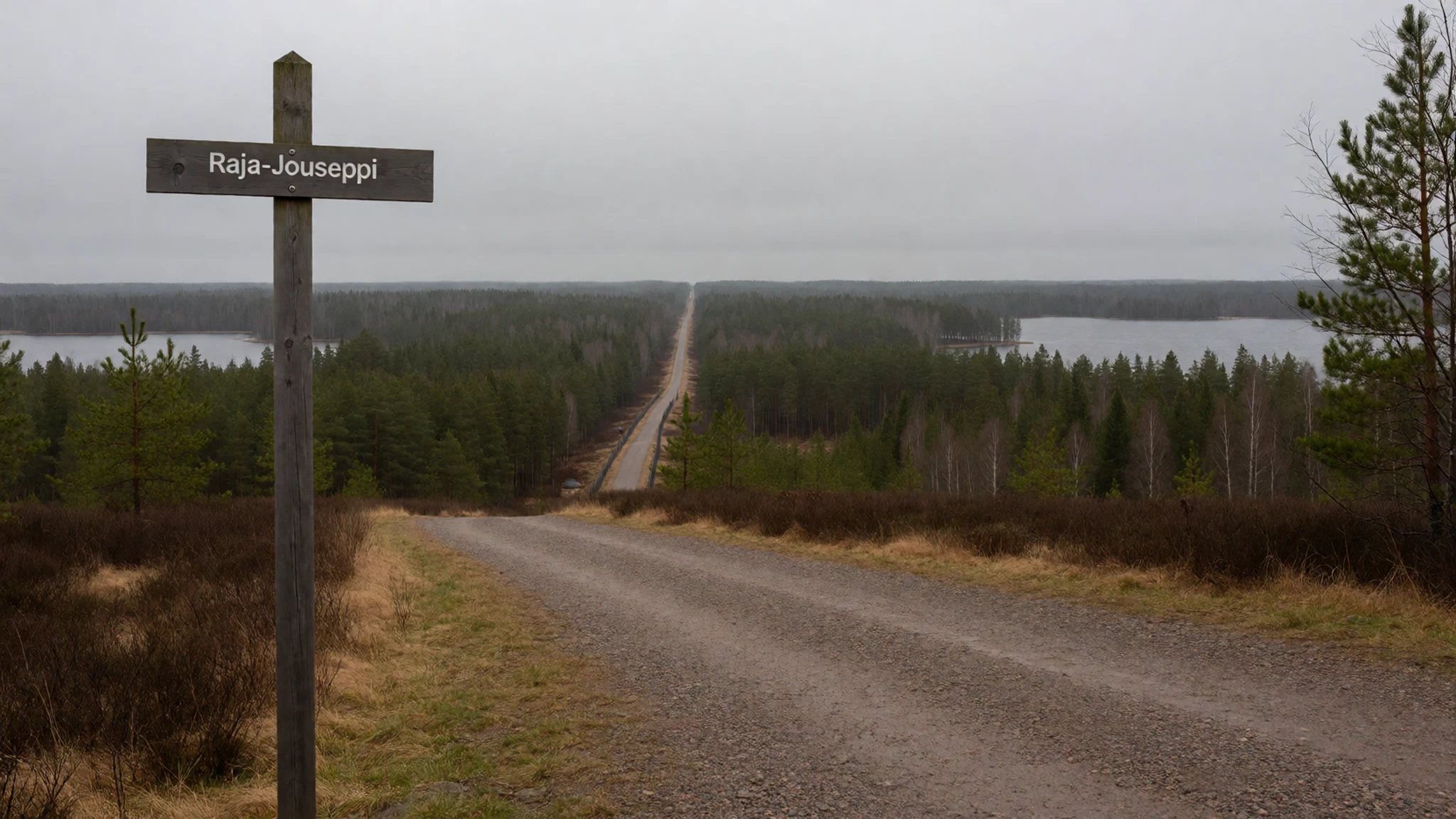
Culture
Urho Kekkonen National Park is not only a landscape designation. Part of the park is Sami homeland, and Inari, Sodankylä and Savukoski still keep reindeer herding as ordinary work, not as a show laid on for coaches. Park regulations recognise that: Sami residents and other local people have exceptions that visitors do not share. Those exceptions are about livelihood and custom, so a walking party should not treat every track or herd as open to the same use. The Christmas story sits alongside that working life. Finns locate Father Christmas on Korvatunturi, inside the park, while the reception room everyone can book is in Rovaniemi. Gold-seeking left a thinner trace — an old shelter at Rumakuru, the memory of Jooseppi at the border — and the huts along the fells are still how people pass the night. Near Saariselkä the mood is a resort; a day's walk further and the culture on the ground is herding, spare shelters and long quiet. On a visit to Urho Kekkonen National Park, give reindeer herds a wide berth, leave huts tidy for the next party, and do not cross a border-zone sign at Raja-Jooseppi.
What to wear
Urho Kekkonen National Park lies partly in Sami country, and the traditional garment is the gákti: a woollen tunic whose cut, colour bands and hem belong to a particular community. Northern Sami dress is the reference across much of this park; Inari and Skolt families towards the east have their own patterns. A belt and often a brooch or pewter ornament complete it. It is worn for family gatherings, church days and public occasions, not for hiking, and it is not a costume for visitors.
Day to day, herders and other residents dress for work in the weather: layered wool or fleece, durable trousers, rubber boots or worn-in leather, a knife on the belt. In Saariselkä and the villages the ordinary look is the same as any small Finnish resort — knitwear, jeans, trainers, a down jacket once the evening cools — until the trailhead, where technical shells replace town clothes. Hikers on the fells now wear synthetic base layers, a fleece, and waterproof jacket and trousers that dry overnight in a hut.
A visitor should copy that trail kit, not the gákti. September mornings at Harrijärvi already freeze, and a clear hour can turn to fog or storm. Sensible kit is a wicking base layer, a warm mid-layer, waterproof jacket and trousers, hat, gloves and broken-in boots with grip for wet rock, boardwalk and bog, plus gaiters. The spare layer stays in the pack.
What to eat
- Poronkäristys — Restaurants and cafés in Saariselkä and the villages around the park
Poronkäristys is sautéed reindeer, usually served with mashed potato and lingonberry. It belongs to the herding country around Urho Kekkonen National Park, and it turns up on menus in Saariselkä and in the villages that ring the reserve.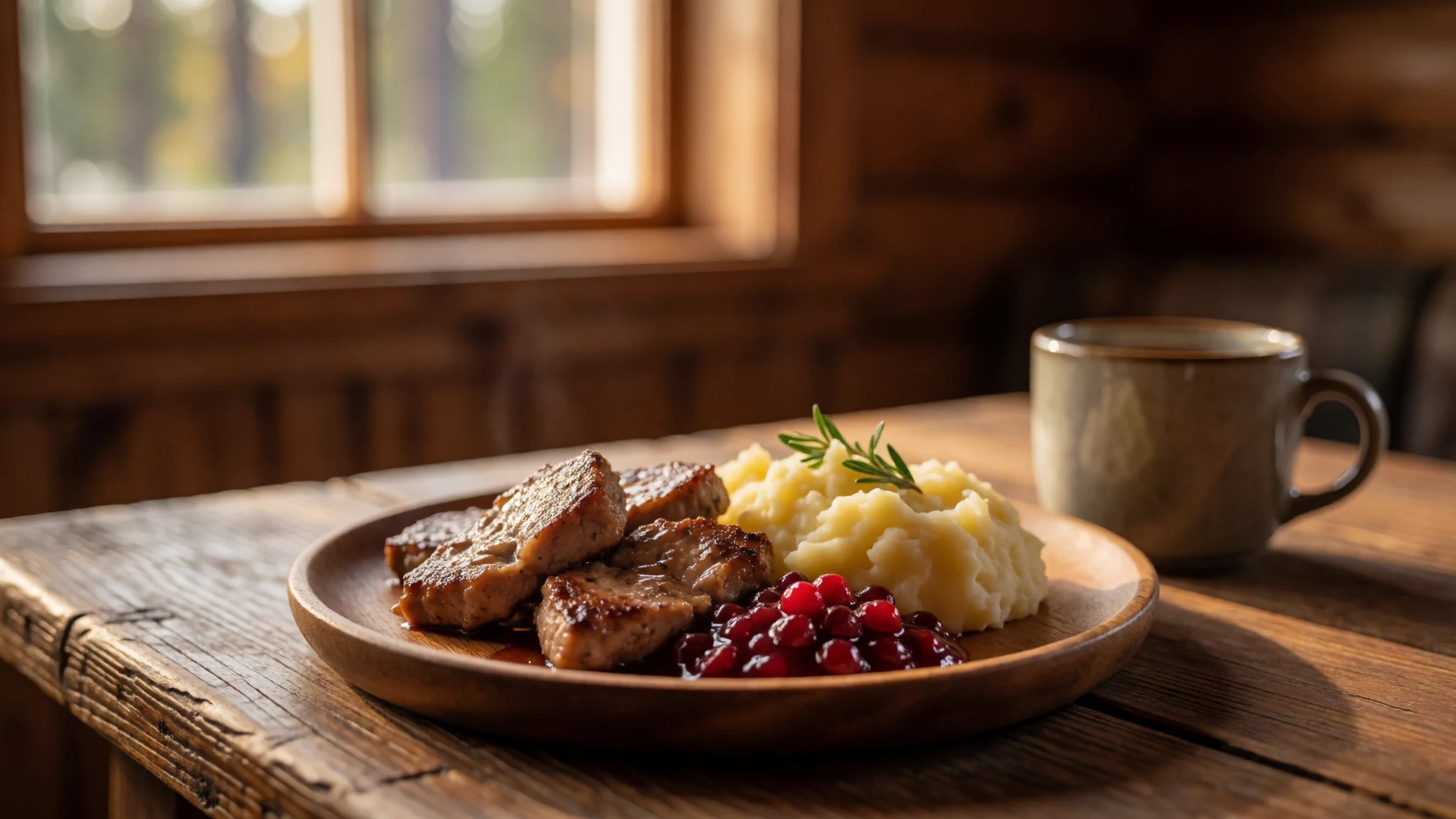
- Lohikeitto — Cafés and restaurants in Saariselkä and nearby villages
Lohikeitto is salmon soup with potato, onion and dill, a reliable bowl in Saariselkä cafés after a cold morning in Urho Kekkonen National Park. It is restaurant cooking; wilderness huts do not serve it ready-made.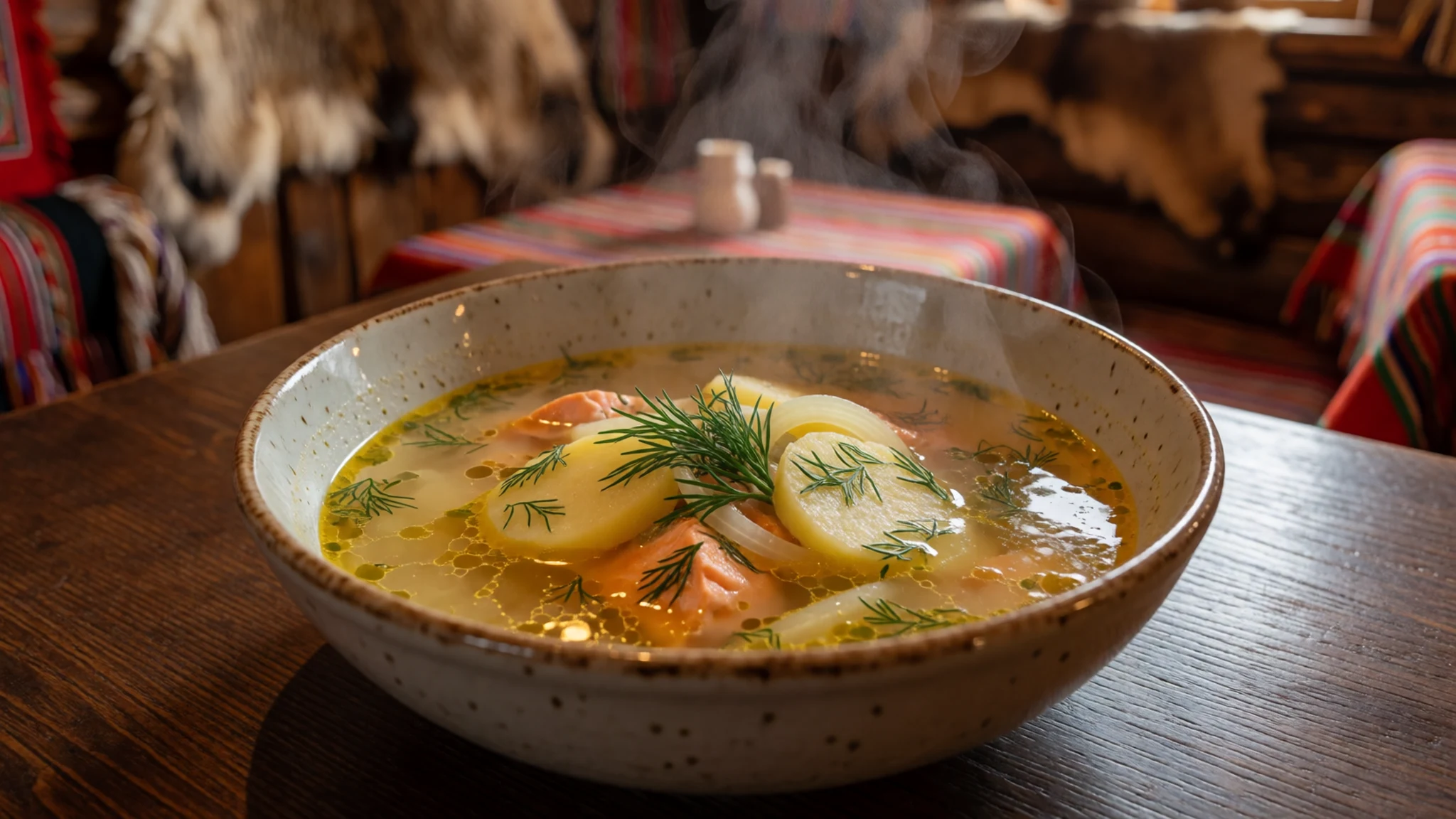
- Hut-stove supper — Wilderness huts inside the park
Supper in a wilderness hut of Urho Kekkonen National Park is food carried in — soup, porridge, pasta or a plain stew — warmed on the hut stove. A few shelters hold basic cookware. Crowds make a personal pot simpler, and remoter huts are barer still. - Lakka — Village cafés and Saariselkä eateries
Lakka, the cloudberry, is served as jam or dessert in Saariselkä cafés and in village eateries around Urho Kekkonen National Park. Buy it on the way in. Picking on protected land is a local question, not a guess to make on the mire. - Filter coffee — Saariselkä cafés and wilderness cafés such as Luulampi
Filter coffee marks the pauses around Urho Kekkonen National Park, at Saariselkä cafés or a wilderness café such as Luulampi. Some businesses will also arrange a trail meal if asked ahead. Take cash: long stretches have no mobile signal.
Plan it
Best time. High summer through September suits long walks in Urho Kekkonen National Park. Summer leaves Paratiisikuru green and open; a September morning at Harrijärvi is already freezing. Fog or storm can replace sun within an hour, and dry spells bring warnings that stop open flames. Check conditions with Metsähallitus first.
How long. several
Getting there. Urho Kekkonen National Park can be entered anywhere, at any hour. The western approach is national road 4, also marked E75, from Rovaniemi through Saariselkä to Ivalo. Fly to Ivalo or Rovaniemi, or take a train to Rovaniemi and change to a coach; some coaches detour to Kiilopää. Kiehinen in Saariselkä, the Kiilopää gate and Tankavaara are the straightforward entries. For Sompio, turn off at Vuotso onto Sompiojärventie for the circle-trail parking or Sompiojärvi and the Ruijanpolku. The Ivalo coach to the Raja-Jooseppi border station and Murmansk has been cut back by border rules, so confirm it on the official site. The park page is https://www.luontoon.fi/fi/kohteet/urho-kekkosen-kansallispuisto.
Budget. mid
Tips
- Ask Metsähallitus for route advice before you travel; the old visitor centre is closed and local knowledge varies.
- Even a waymarked stroll can lose its landmarks in fog, so a printed map and compass stay in the pack, with a knife and a way to make a flame.
- Pack a camping stove for anything longer than a picnic. Open flames in the Basic Zone and in the Saariselkä and Nuortti wilderness zones stay at built fire rings; Kemi-Sompio also allows dead twigs from the ground. A fire-danger warning ends open flames in every zone — cook on the stove, or on a hut's gas ring.
- Water taken from a pond, a stream or a river is untested, so boil it before drinking. Carry cash wherever the phone has no signal, and leave harder routes to a party that can navigate.
Etiquette
- Give reindeer a wide berth and do not hinder herding.
- If a ford looks too strong, turn back.
- In a crowded hut, use your own stove and leave the shelter stocked and clean for the next party.
Nearby
Sources
- Wikidata Q1537700 (CC0)
- Wikipedia (rev 1362945251) (CC BY-SA 4.0)
- Wikivoyage (rev 5420899) (CC BY-SA 4.0)
- Photo: Harrijärvi morning (MattiPaavola) (CC BY 3.0)
- Photo: Paratiisikuru waterfall (MattiPaavola) (CC BY 3.0)
- Photo: Paratiisikuru panorama (J. Albert Vallunen) (CC BY-SA 2.5)
- Photo: Rumakurun tupa (Argus fin) (Public domain)
- Photo: Harrijärvi (MattiPaavola) (CC BY 3.0)
- Photo: Aitaoja (LPfi) (CC BY 3.0)
- Photo: Raja-Jooseppi border-zone sign (Markus Säynevirta) (CC BY-SA 4.0)
- Photo: Finnish national-parks stamp (Posti) (Public domain)


