Uluwatu Temple
Uluwatu Temple, Indonesia
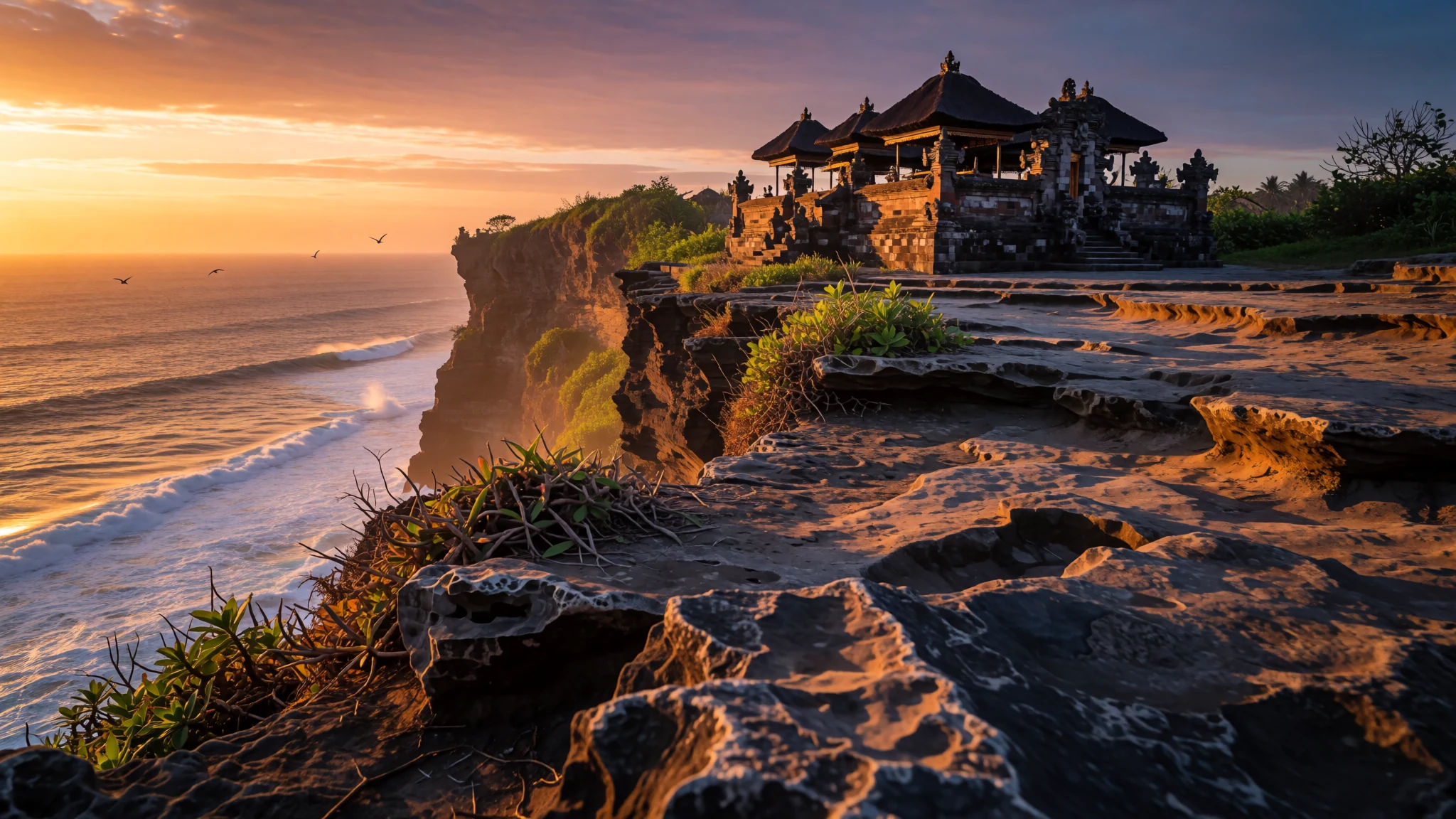
A cliff-top temple at Bali's southwest tip, good for sunset, with sea views and a watchful monkey population.
The place
Uluwatu Temple sits on the southwestern corner of the Bukit Peninsula, in the village of Pecatu on the southern edge of Badung Regency. Locals call it Pura Luhur Uluwatu, and it is one of the few Balinese temples built right out over the water, with its back to the land and its front to the Indian Ocean. Most of Bali's sacred sites sit among rice terraces or on the slopes of volcanoes. This one faces the surf from a headland that drops steeply to the sea.
The temple belongs to a group of nine directional temples, the kayangan jagat, which are meant to guard the island from harmful forces. Uluwatu is among the most visited of them, partly because it is simple to reach from the resort strip around Kuta and Jimbaran. Its main shrine honours the divine in the aspect of Rudra, a fierce and purifying form that suits a headland battered by wind and weather.
Walking in, you notice how much of the complex is open courtyard, stone gates and carved walls, with frangipani trees and salty air. Stay near the cliff edge and you can hear the waves below. The site is not vast, so an hour or two is enough unless you plan to stay for sunset, which many people do. Dress modestly, expect to wrap a sarong at the entrance, and keep your valuables close, because the monkeys here are bold.
Its story
Uluwatu Temple is built on the ulu, or headland, of a cliff around 70 metres high that juts out into the Indian Ocean. Local tradition holds that the rock under the shrines is a sacred boat belonging to the goddess Dewi Danu, turned to stone, and that explains why a sea temple stands on it. A small shrine is said to have existed here before the complex grew, but its larger form is usually credited to Empu Kuturan, a sage from Java, who expanded it in the 11th century.
Around the turn of the 16th century another Javanese priest, Dang Hyang Nirartha, arrived and is credited with introducing the padmasana, the tall, empty shrine dedicated to the supreme god that is now common across Bali. Local belief says he reached a final spiritual release here, a departure the Balinese call ngeluhur, meaning to go up. That word gave the temple its name, Luhur, which carries the sense of height.
The position of the temple shapes how it is used today. The cliff edge, the wind and the open sea all matter to the rituals, and ceremonies continue through the year. The site has remained a place of pilgrimage even as the coast below has filled with hotels, cafes and surf breaks.
What to see
- The temple complex itself — Pecatu, south of Kuta
Most people come for the temple. It sits at the end of a headland, with walls and split gates facing the sea and courtyards stepping back toward the trees. Sightseeing is quick, but give yourself time to walk the outer edges. Ask at the gate which inner areas are open to visitors before you go further in.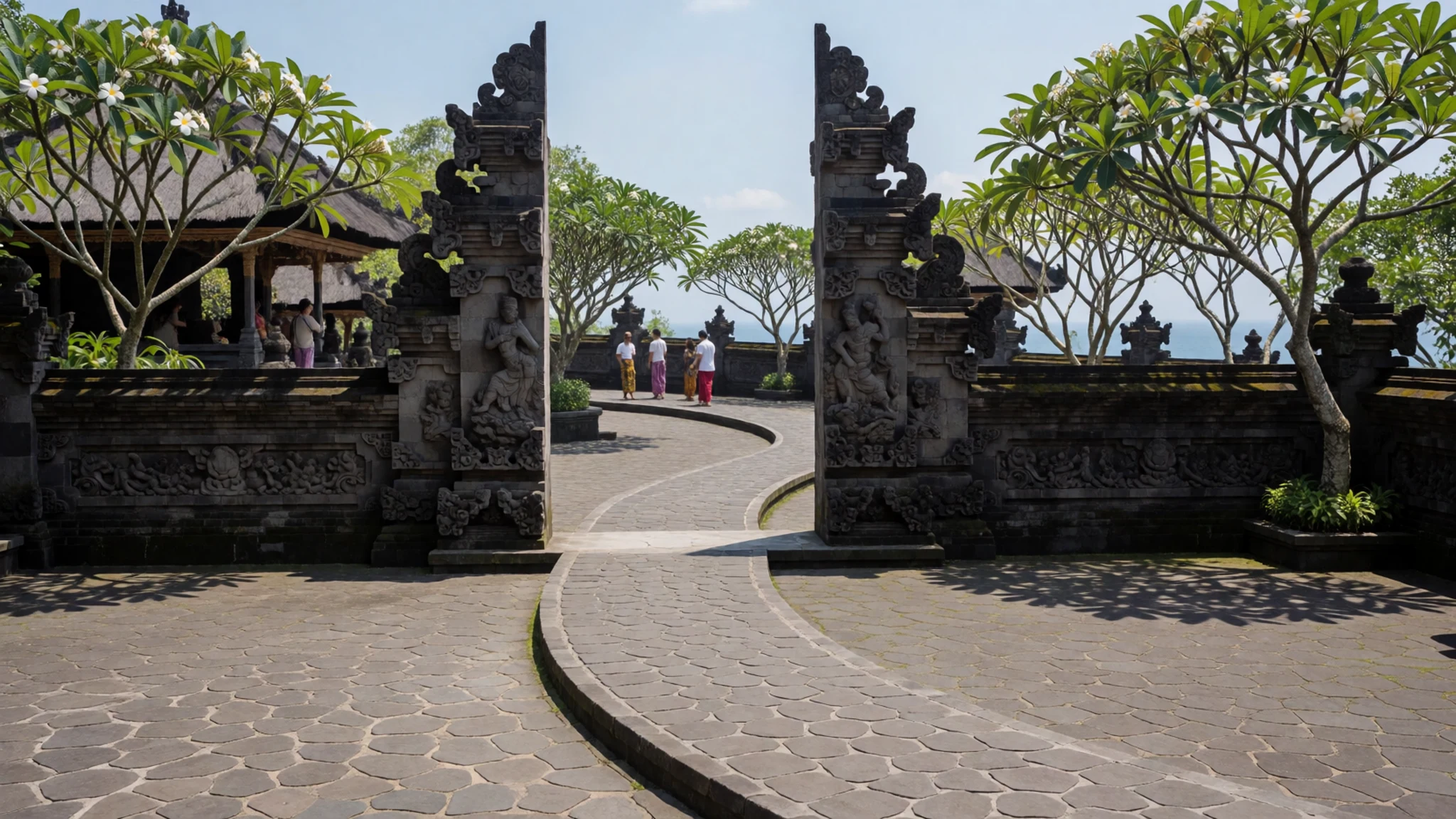
- The cliff edge and ocean view — Cliff paths around the headland
Walk the cliff paths for the view down to the water, where waves break against the rock below. Keep back from the edge, which is steep and can be slippery after rain. Late afternoon is when most people linger, watching the light change over the sea.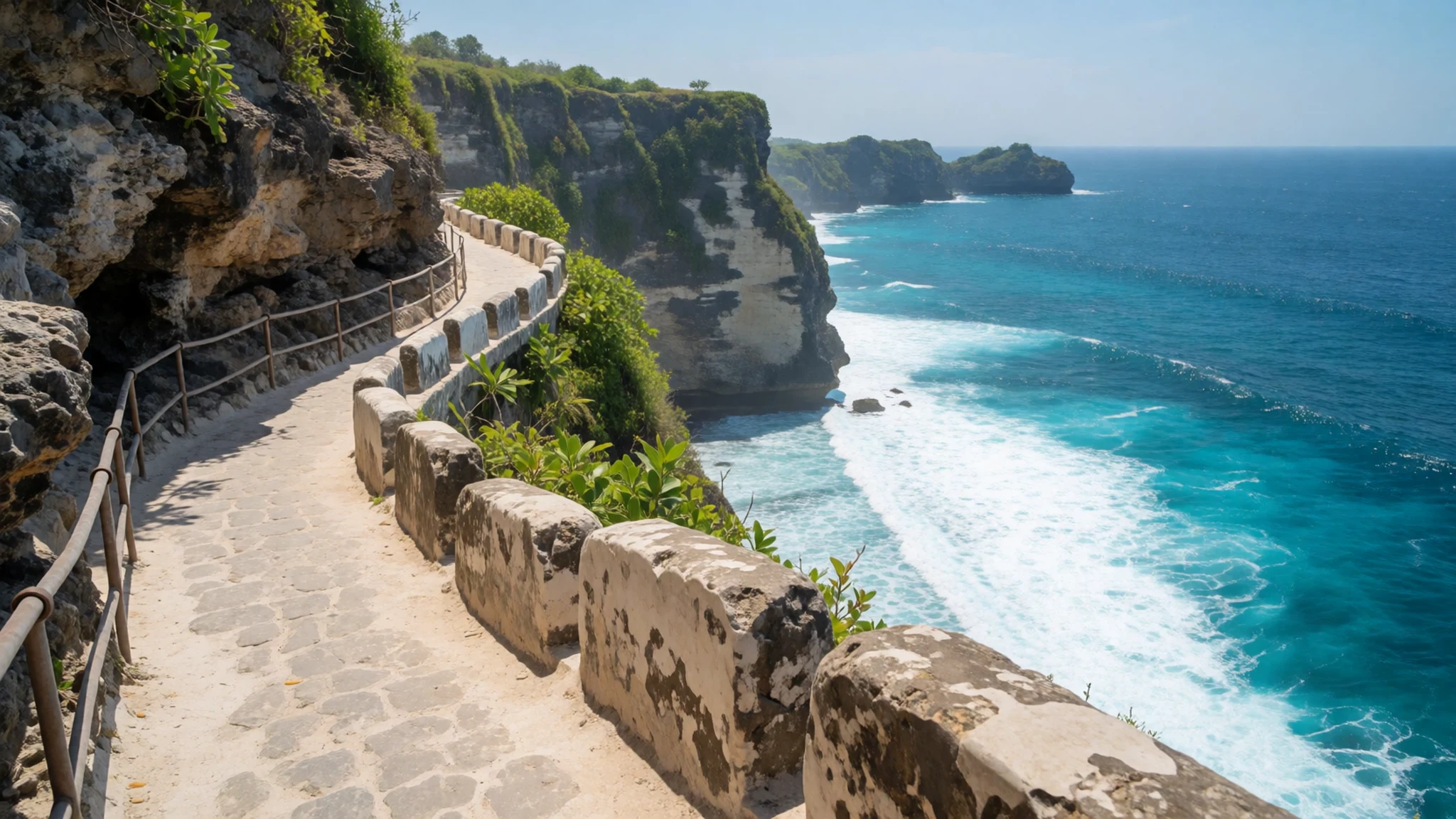
- The inner courtyards — Inner courtyards of the complex
Behind the outer gates the courtyards open out, with stone pavilions, shaded paths and prayer areas used by local families. On ceremony days you may see processions of people in traditional dress, so keep to the edges and stand back. Quieter moments are easier to find early in the day.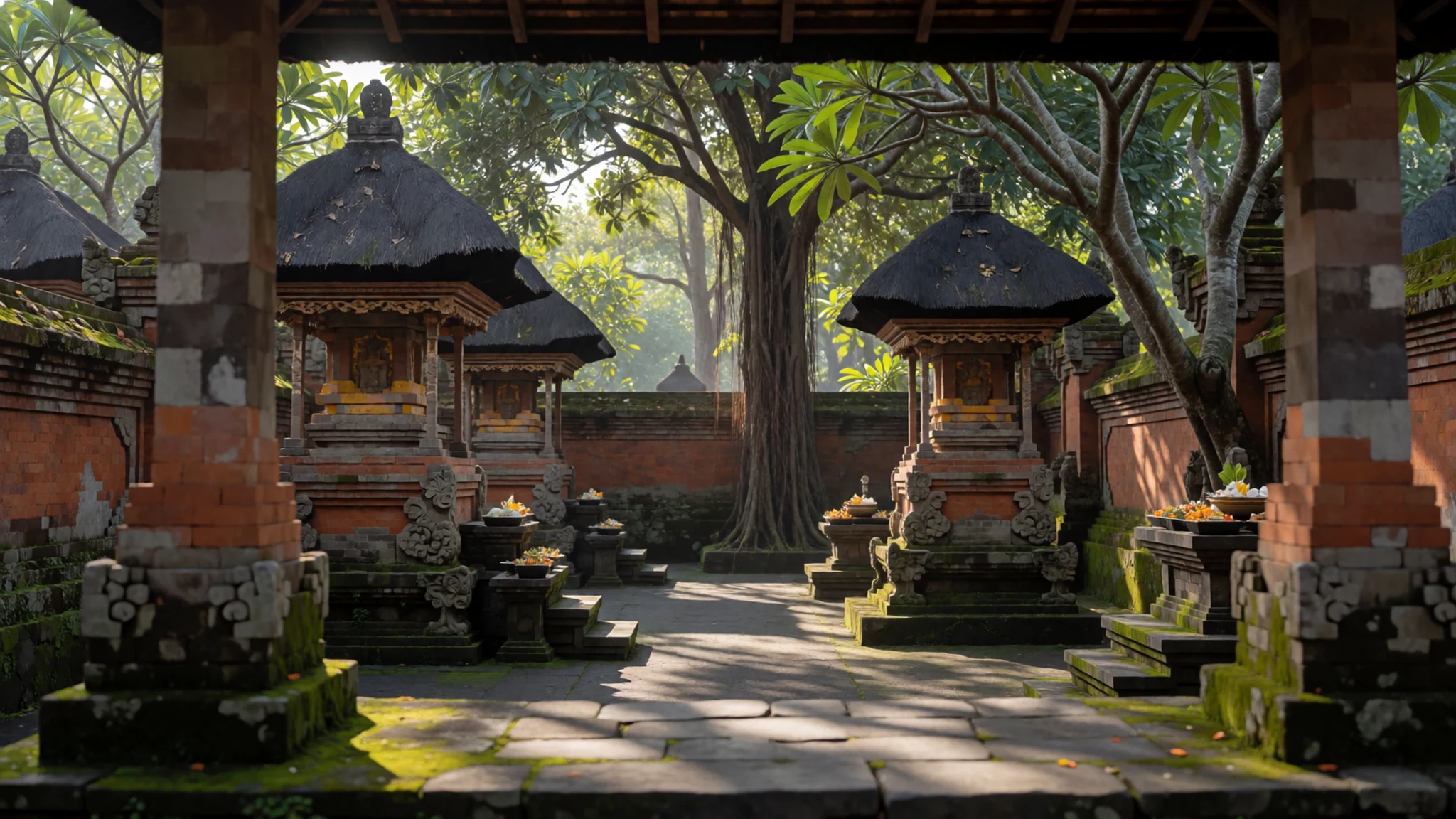
- The carved stone walls — Walls around the main courtyards
The walls and gates carry carved stone reliefs and figures, and each element has a job, whether protective or ceremonial. Balinese temple design follows local geography and spiritual function rather than symmetry for its own sake. Take a slow walk along the walls and you will notice how no two sections are quite alike.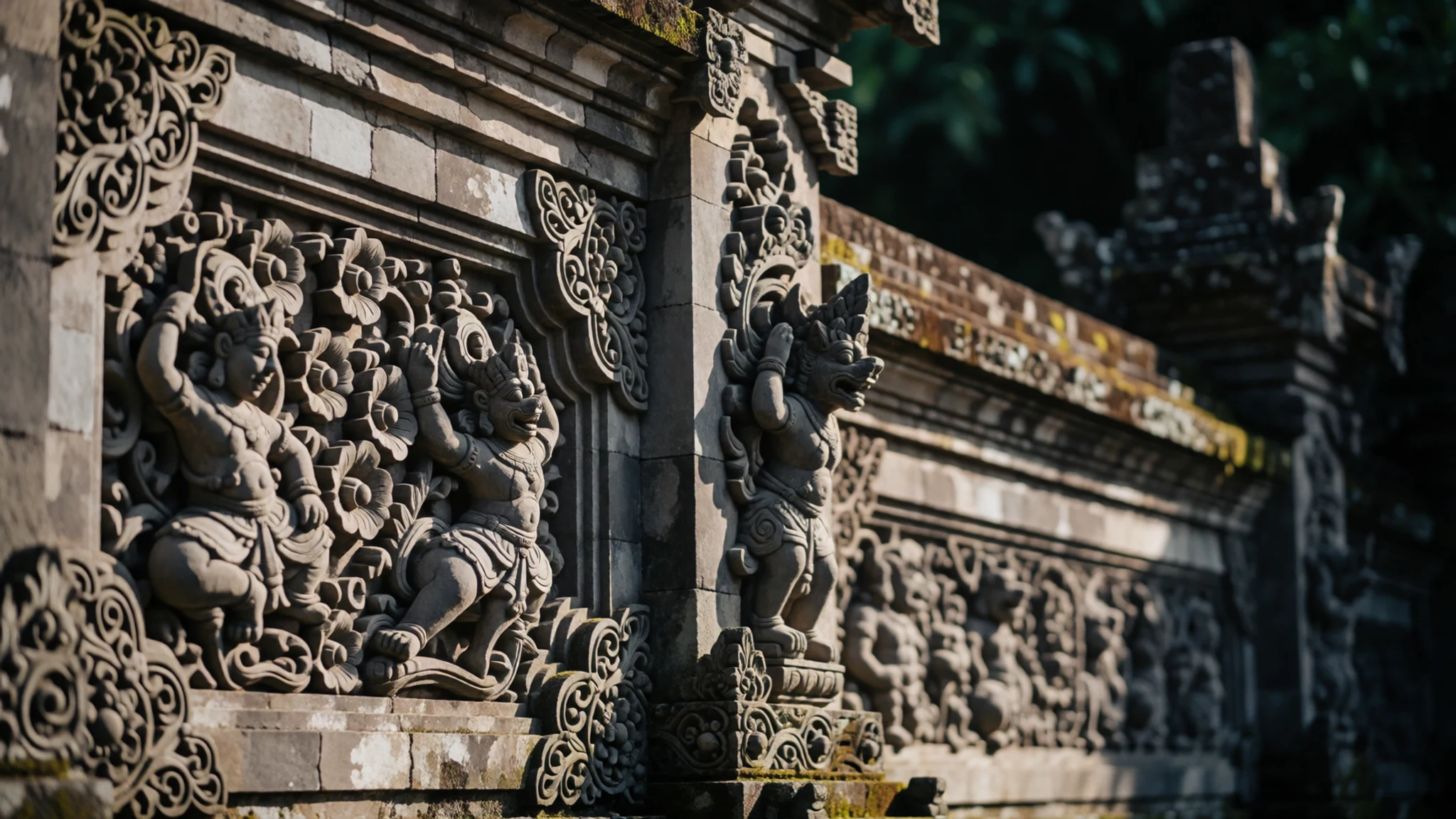
- The temple monkeys — Trees and walls throughout the complex
Long-tailed monkeys live in the trees and on the walls, and they treat visitors as a food source. They have been known to snatch sunglasses, phones, hats and bags. Keep loose items zipped away, do not offer food, and walk around the animals rather than past them.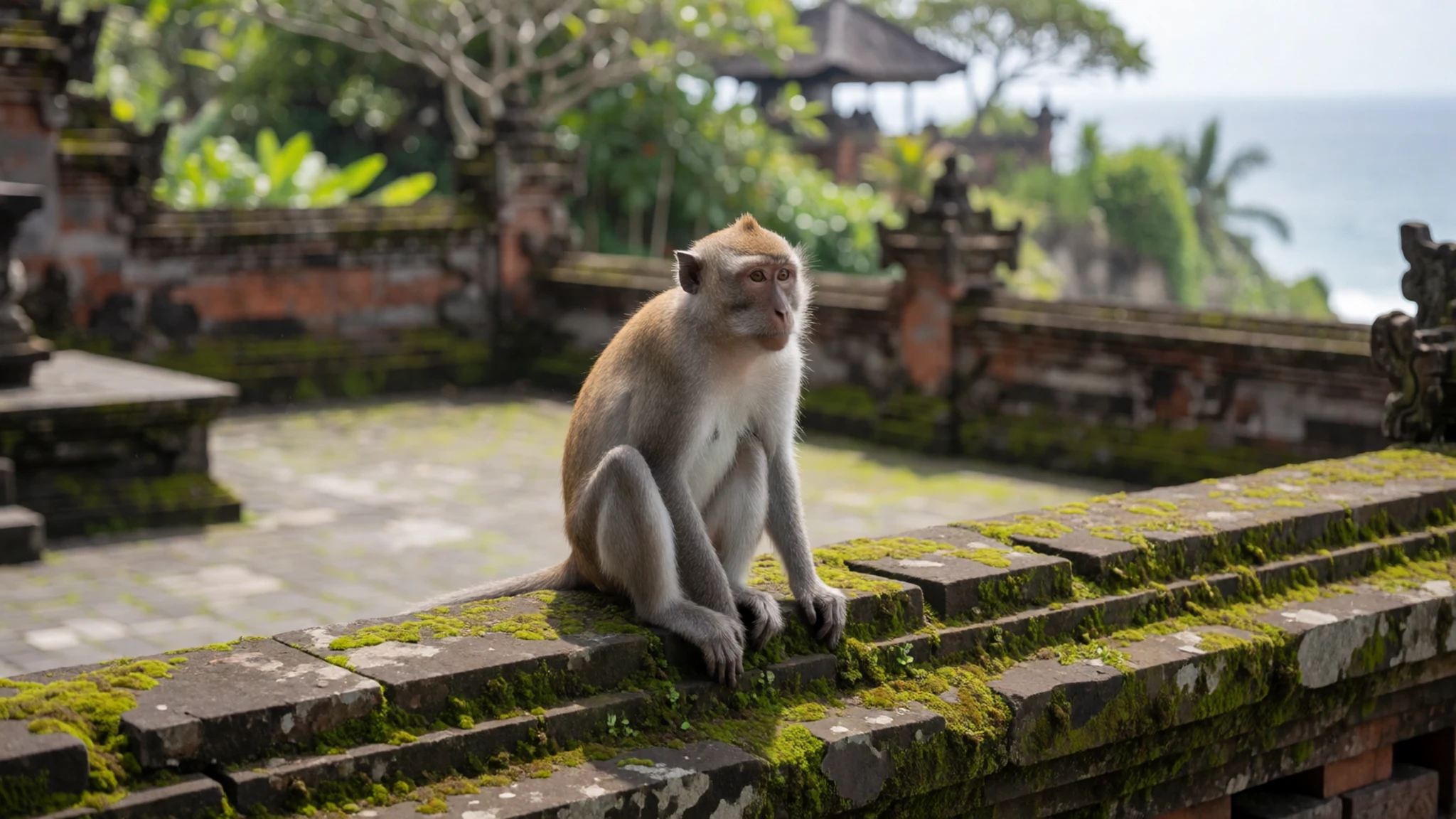
Culture
Uluwatu Temple is a working place of worship, and the expectations here are about respect more than rituals visitors cannot follow. Balinese Hindus come to make offerings and join ceremonies, and the complex can be busy with people carrying baskets of flowers and food. Bali has been tightening enforcement against careless visitors, and in 2024 the authorities set up a dedicated tourist police unit to deal with foreigners who misbehave, including at sacred sites. Stay on the paths open to visitors, keep your voice down near shrines, and follow staff instructions without argument. Ask before photographing anyone taking part in a ceremony, and never pose with offerings or sit on shrine steps. Cover your shoulders and legs, keep your voice low, and never climb on the walls or statues for a photograph.
What to wear
Traditional Balinese dress for temple visits is built from a few pieces. Women wear a kebaya, a fitted blouse, with a kain, a wrapped cloth skirt, and a sash called a selendang at the waist. Men wear a sarong with a sash, and for ceremonies a headcloth known as udeng. Textiles include songket, with metallic threads woven into the cloth, and endek, a silk or cotton weave dyed in patterns. These are worn for ceremonies, weddings and temple festivals.
Day to day, most people in Bali wear ordinary shorts, shirts and dresses, and many people in Pecatu dress casually for work. At the temple, though, local people put on a sarong and cover their shoulders, and you should do the same.
For your visit, choose light cotton or linen that covers your shoulders, and bring a sarong to wrap over shorts or a short skirt, even if the entrance offers one. The cliffs are windy in the evening, so take a light layer. Wear closed shoes with grip for the limestone steps and uneven cliff paths, and bring a hat and sunscreen, because the sun is strong at midday.
What to eat
- Nasi campur — Any busy warung along the road to the temple
Steamed rice piled on a plate with small helpings of vegetables, egg, tempeh and fish or meat, chosen from the trays on the counter. Point at what you want and the cook adds sambal. Any busy warung along the temple road will do, and lunch is cheap there.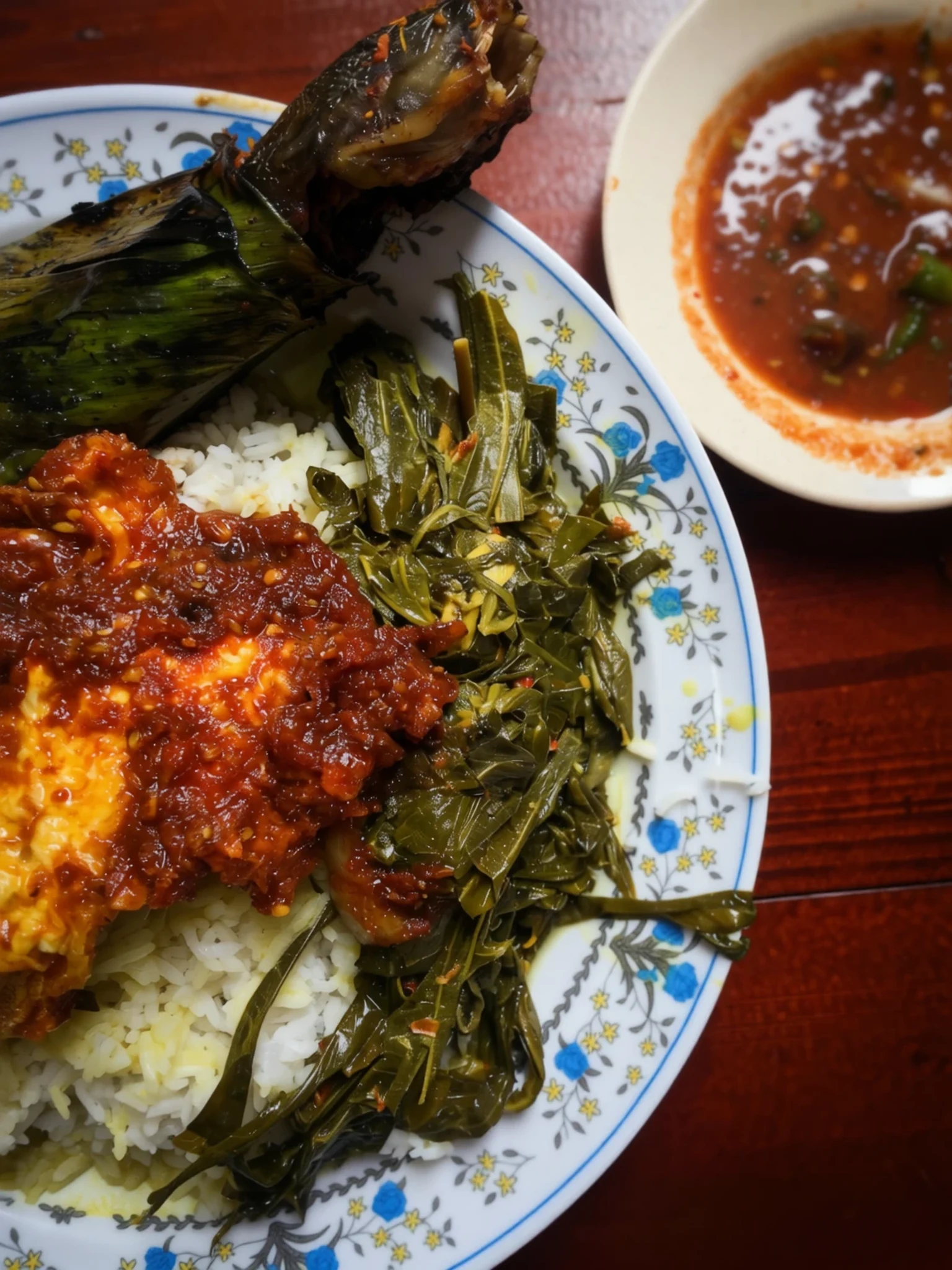
- Nasi goreng — Family warungs in Pecatu and Jimbaran
Fried rice with garlic, shallot, sweet soy and a fried egg on top, usually served with prawn crackers and sliced cucumber. It is the safe first order at almost any warung. Pick a stall busy with locals.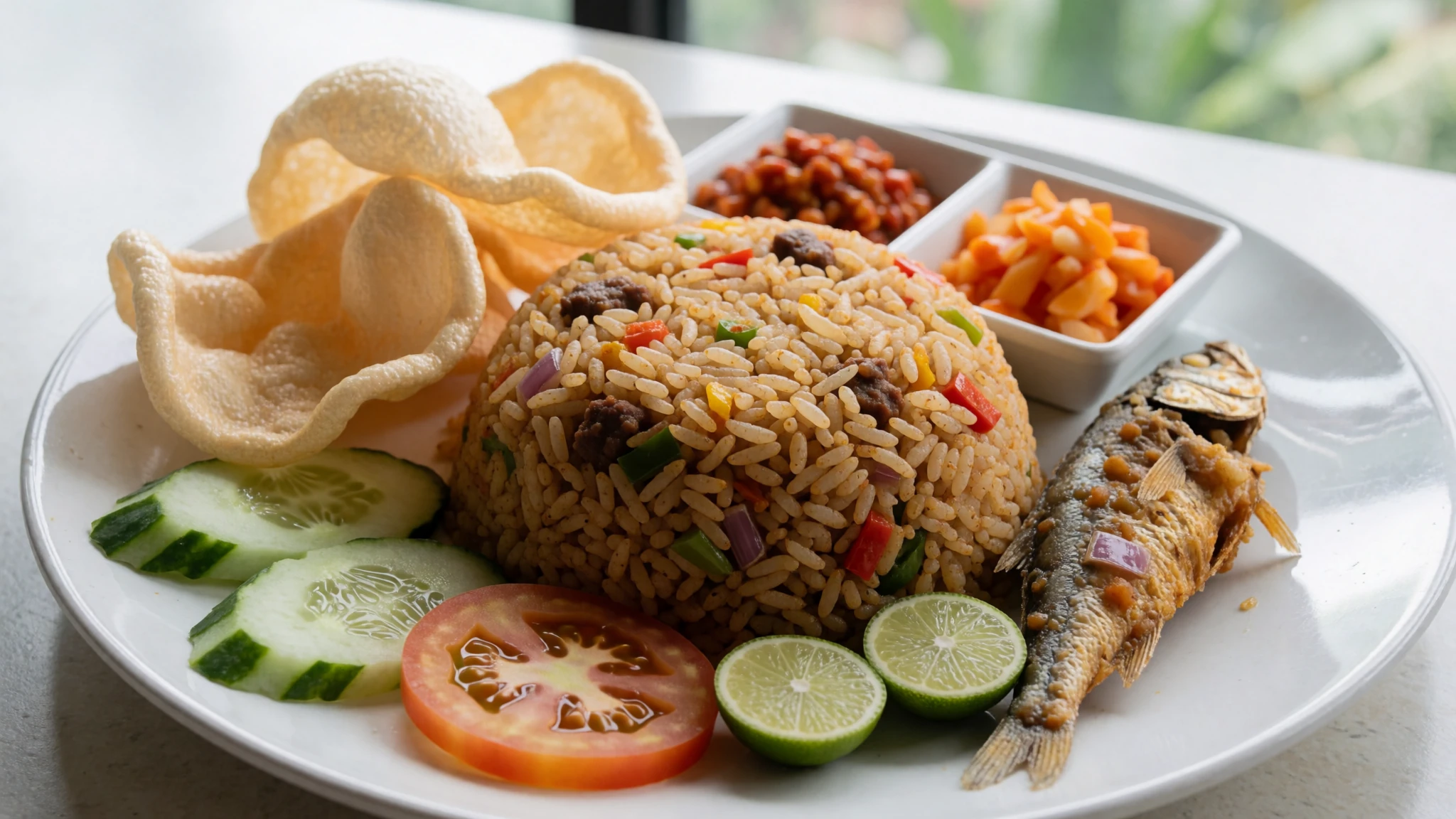
- Mie goreng — Beach stalls in Jimbaran and roadside warungs
Fried egg noodles tossed with cabbage, shallot, chilli and often chicken or vegetables, a close cousin of nasi goreng. Warungs along the Pecatu road and Jimbaran's beach stalls usually keep a wok ready for it. Ask for it less spicy if you prefer, as the heat builds quickly.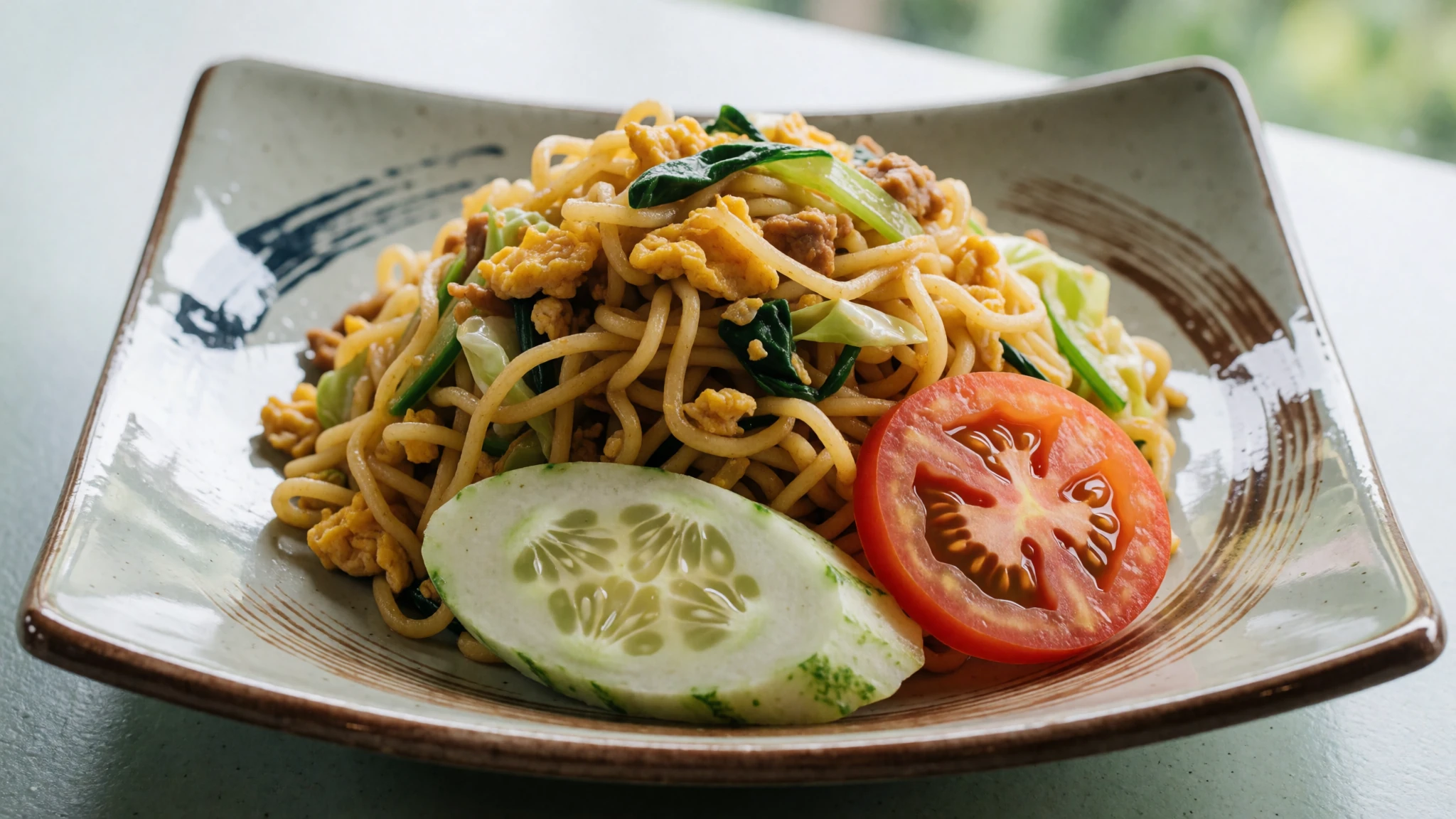
- Sate lilit — Family-run warungs and evening grill stalls in Jimbaran
Minced fish or chicken mixed with coconut, lemongrass and spices, then wrapped round lemongrass sticks and grilled. It is a Balinese speciality rather than a general Indonesian dish. Look for it at family-run warungs and at the grill stalls near the beach at Jimbaran in the evenings. - Fresh fruit from roadside stalls — Roadside fruit stalls on the way to the temple
Roadside stalls sell mango, pineapple, papaya, snake fruit and sweet young coconut, cut to order or sold whole. Buy from stalls where the fruit is kept shaded and the cutting board looks clean, and peel what you can yourself.
Plan it
Best time. The drier months, roughly May to October, make the cliff paths and open courtyards most comfortable. November and April are shoulder months, while December to March is the wet season, with heavier rain and humidity, though the landscape is greener.
How long. 1–2
Getting there. Ngurah Rai International Airport near Denpasar, then a taxi or app-booked car for the drive south to the Bukit Peninsula, which takes longer in traffic. Check the official site for current entry details before you travel.
Budget. low
Tips
- Go in the late afternoon if you want the view, and plan to leave before dark
- Carry cash for small purchases, entry donations and roadside snacks
- Bring water and a hat, because there is little shade on the open cliff paths
- Keep sunglasses, phones and bags zipped away from the monkeys
- Check the official site for current opening hours and fees, which can change
Etiquette
- Wrap a sarong and cover your shoulders before you enter
- Do not climb on walls, statues or offerings for a photograph
- Ask before photographing people during ceremonies
Nearby
Sources
- Wikidata Q1381933 (CC0)
- Wikipedia: Uluwatu Temple (rev 1379011678) (CC BY-SA 4.0)
- Wikivoyage: Bali (rev 5399466) (CC BY-SA 4.0)
- Uluwatu Temple, Bali — GeoffClarke (CC BY 3.0)
- Pura Luhur Uluwatu — Paskuu (CC BY-SA 4.0)
- A monkey with a pair of stolen sunglasses at Uluwatu Temple — Mx. Granger (CC0 1.0)
- 009 Local Hero rising out of the Jungle, Pura Uluwatu — Anandajoti (CC BY-SA 4.0)
- 010 Uluwatu Temple Courtyard — Anandajoti (CC BY-SA 4.0)
- 011 Uluwatu Temple Wall — Anandajoti (CC BY-SA 4.0)
- 012 Uluwatu Temple Wall — Anandajoti (CC BY-SA 4.0)
- 013 Uluwatu Temple Tree — Anandajoti (CC BY-SA 4.0)


