Uffington White Horse
Uffington White Horse, United Kingdom
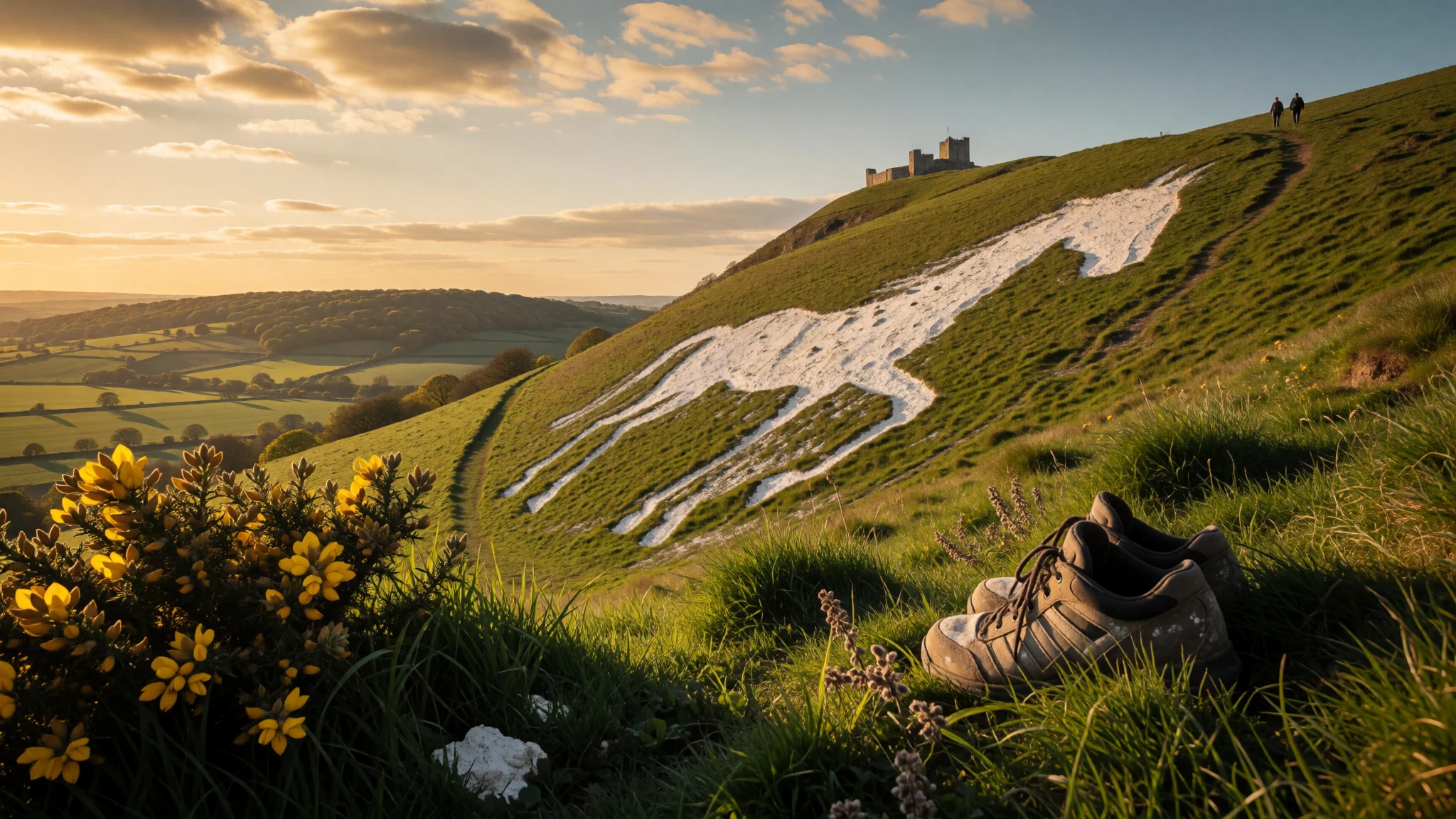
Climb the Berkshire Downs to witness a minimalist prehistoric masterpiece carved into the chalk hillsides over three thousand years ago.
The place
Perched on the upper slopes of Whitehorse Hill, the Uffington White Horse commands sweeping views across the Vale of White Horse in the English county of Oxfordshire. This extraordinary prehistoric landmark consists of deep trenches cut into the turf and packed with crushed white chalk, creating a striking contrast against the dark green hillside. The design is notably abstract, featuring a long, slender body, a stylized head, and disjointed limbs that appear to leap across the terrain. While the true majesty of the composition is best appreciated from the air or from vantage points across the valley floor, walking the ridge offers a profound sense of connection to the ancient landscape. The hill itself forms part of the prominent scarp of the Berkshire Downs, exposing walkers to brisk winds and vast, open skies that change dramatically with the weather. Surrounding the monument are rolling pasturelands, dry valleys, and ancient trackways that have drawn travellers for millennia. Visitors arriving at the site step into a timeless environment where sheep graze quietly among earthworks and deep coombes. The terrain is undulating and exposed, demanding sturdy footwear and an appreciation for quiet, rural isolation. Despite centuries of weathering and the inevitable march of modern life in the surrounding valleys, the hill retains an austere, untouched atmosphere that rewards those who make the journey up the chalk tracks.
Its story
The creation of the Uffington White Horse dates back to the late Bronze Age or early Iron Age, making it an exceptionally rare survivor of ancient British monumental art. For generations, local communities maintained the intricate chalk trenches through a tradition known as scouring. Every seven years, villagers gathered for a grand local fair and festival sponsored by the lord of the manor, labouring to clear away encroaching weeds and re-pack the deep chalk channels so the figure remained visible from afar. This rhythmic upkeep sustained the monument through centuries of social and agricultural change. During the Second World War, the strategic threat posed by the horse's visibility to enemy aircraft led authorities to order it covered with turf and hedge trimmings to prevent its use as a navigational landmark by Luftwaffe pilots. Following the cessation of hostilities, the turf was stripped away, and restoration efforts resumed. In more recent decades, the custodianship of the site passed to the National Trust, which has continued to manage the delicate balance between public access and heritage preservation. Archaeological assessments and ongoing conservation projects have sought to combat natural erosion and protect the precise geometry of the prehistoric design from gradual shrinking. Through all these eras, from prehistoric ritual gatherings to modern volunteer-led conservation days, the horse has remained a resilient symbol of communal endeavour and deep-rooted heritage in the English countryside.
What to see
- Uffington White Horse
The iconic prehistoric chalk figure itself, stretching across the high slopes of Whitehorse Hill. Visitors can walk right up to the trenches to inspect the bright white crushed chalk, or admire the full, abstract proportions from the opposing valley ridges around the nearby villages. - Uffington Castle
An ancient Iron Age hillfort situated on the summit of the ridge just above the horse geoglyph. The site features extensive earthen ramparts and deep ditches that enclose a vast central plateau, offering panoramic vistas across several counties on clear days. - Dragon Hill
A small, mysterious chalk-capped mound situated directly beneath the white horse in the valley floor. According to local folklore, this is the historic spot where Saint George slew the dragon, and a distinct patch of bare chalk near the summit is said to remain permanently barren where the monster's poisonous blood spilled onto the grass. - The Manger
A striking, steep-sided dry valley carved by glacial meltwater beneath the chalk ridge. Walking along the floor of this dramatic coombe provides an intimate perspective of the sheer scale of the downs and the geological forces that shaped the Berkshire landscape over millennia.
Culture
The cultural identity of the Uffington White Horse is deeply intertwined with rural folklore, communal traditions, and the preservation of ancient English landscapes. For centuries, the local people viewed the chalk figure not merely as an ancient relic, but as a living part of their community heritage, celebrated through periodic festivals, feasts, and collective labour. This sense of shared stewardship persists today, with volunteers and conservationists regularly gathering to tend the fragile chalk trenches against the relentless encroachment of grass and soil. The surrounding region of Oxfordshire carries a strong literary and historical resonance, celebrated in regional folklore, traditional arts, and classic British storytelling traditions. Visitors exploring these ancient downs are encouraged to respect the fragile archaeology of the hill figures and earthworks by keeping strictly to designated walking paths and refraining from walking directly on the exposed chalk lines of the monument.
What to wear
At the Uffington White Horse and across the rural Berkshire Downs, practical outdoor attire is the absolute standard for all visitors and locals alike. Traditional regional costumes are preserved only in historical archives and local folklore events, replaced entirely by modern, weather-resistant clothing designed for the unpredictable English climate. Because the hilltop is high, exposed, and frequently windswept, a sturdy windbreaker or waterproof jacket is essential, even during the milder months of late spring and early autumn. Layering is strongly recommended to adapt quickly to sudden changes in temperature or passing showers rolling across the valley. Most importantly, sturdy walking boots or trail shoes with reliable grip are required to navigate the steep, chalky slopes, which can become exceptionally slick, muddy, and treacherous after rain. Leave delicate footwear and city fashion behind when heading up onto the ridgeline.
What to eat
- Traditional Ploughman's Lunch — Any traditional village pub around Uffington or the Vale of White Horse
A classic rustic meal featuring thick slabs of farmhouse cheddar cheese, crusty local bread, pickled onions or chutney, and crisp salad greens, traditionally enjoyed in a country pub near the downs. - Pork Pie with Piccalilli — Local village farm shops and country bakeries across Oxfordshire
A traditional British baked pie with seasoned minced pork encased in rich, golden hot-water crust pastry, served cold alongside a spoonful of sharp mustard pickle. - Local Farmhouse Cheddar — Regional farmers' markets and specialty food shops in nearby towns
Artisanal, hard pressed cow's milk cheese crafted in the surrounding countryside, offering a rich, earthy flavor profile that reflects the lush pastures of the Thames Valley. - Classic Afternoon Tea — Traditional tearooms in historic market towns like Wantage and Faringdon
An enduring British ritual featuring freshly baked fruit scones served with thick clotted cream and strawberry jam, accompanied by a steaming pot of black tea.
Plan it
Best time. May to September offers the most reliable weather, longer daylight hours, and dry paths for walking the chalk downs, though spring and autumn bring dramatic skies and fewer visitors.
How long. 1–2
Getting there. The nearest major international transport hubs are London Heathrow and Birmingham airports. From London or Oxford, take a train to Didcot Parkway or Swindon, then continue by local bus or taxi to the village of Uffington.
Budget. low
Tips
- Wear sturdy, waterproof walking boots with good grip for the steep chalk tracks
- Check weather forecasts before climbing, as the hilltop is heavily exposed to wind and rain
- Bring your own drinking water, as there are no shops or facilities directly on the hilltop
- Arrive early in the morning to experience the ridge in peaceful solitude before crowds arrive
- Respect grazing livestock and close all farm gates behind you
Etiquette
- Stay strictly on marked footpaths to protect the fragile archaeological turf and chalk trenches
- Do not walk, sit, or stand directly upon the white horse figure itself
- Take all of your litter home with you to preserve the pristine natural environment
Nearby
Sources
- Wikidata Q1056493 (CC0)
- Wikipedia (rev 1383374762) (CC BY-SA 4.0)
- Wikivoyage (rev 5089119) (CC BY-SA 4.0)