Tyras
Tyras, Ukraine
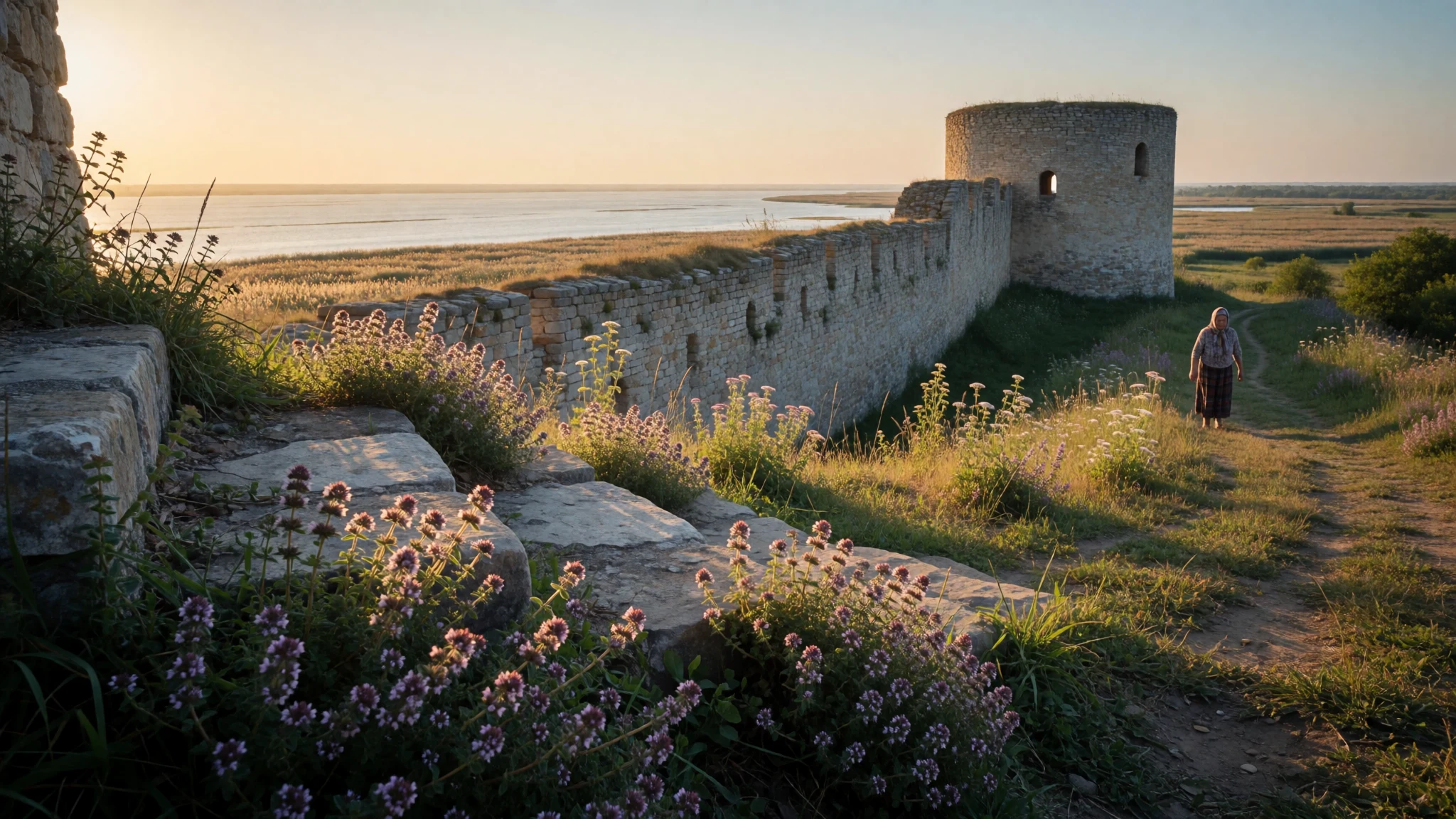
Tyras is a Greek colony on the Black Sea, now buried beneath a medieval fortress in a quiet estuary town.
The place
Tyras was a Greek trading city on the north-western shore of the Black Sea, and its remains lie today inside Bilhorod-Dnistrovskyi, a quiet town in Odesa Oblast, Ukraine. Settlers from Miletus founded it around 600 BCE, on the Dniester estuary roughly 10 km from the point where the river reaches the sea. The Greeks called that river the Tyras, and the city took its name from it. Local people, the Tyragetae, lived around the colony, and the town worked as a harbour where grain, wine and fish passed between the steppe and the wider Greek world. Anyone expecting a Delos or an Ephesus should adjust their picture. Very little of Tyras stands above ground, because a large medieval fortress was built over the site, and it is the fortress that dominates the skyline now. What remains is a layered place: Greek and Roman foundations beneath, later walls above, and a working town of ordinary streets around it. Bilhorod-Dnistrovskyi has also been known as Akkerman and Cetatea Albă, names that record who held the estuary at different times. The setting does much of the work. The water is wide and flat, the evening light is soft, and the walls run along the shore. This is somewhere for people who enjoy reading a landscape with a guidebook in hand, rather than for those wanting reconstructed streets and signboards. Crowds are thin, and the town feels lived in rather than staged.
Its story
Tyras began as a colony of Miletus, planted around 600 BCE, and for most of its life it lived by trade. Its coins carry images that point to wheat, wine and fish, and the few inscriptions that survive are mostly about commerce. Perched on the fringe of the steppe, this neatly organized Greek political system was run by five chief magistrates, a council, a public assembly, and an official recorder. In the 2nd century BC native kings took control, and their names appear on the coinage. The Getae destroyed the city around 50 BC. Rome revived it in 56 AD under Nero, and it became part of the province of Lower Moesia. A small detachment of the Roman fleet was stationed there, and the mint struck copper coins bearing imperial portraits, from the reign of Domitian to that of Alexander Severus. In 201 CE Septimius Severus and Caracalla freed the townspeople from customs duties, a real advantage for a port. The Goths damaged the city not long after Alexander Severus, yet excavated finds show Romans still living there until the end of the 4th century. The Byzantines later gave the ruined settlement the name Maurokastron, meaning black fort. Eventually a large medieval fortress covered the site, which the Genoese called Maurocastro and which later became known as Akkerman and Cetatea Albă. That later building explains why so little of Greek Tyras can be seen today.
What to see
- Bilhorod-Dnistrovskyi fortress — Town centre, on the estuary shore
The medieval fortress is the main reason to come, and it sits directly over the Greek and Roman city. Walk the outer walls and towers first to grasp the scale, then go into the courtyard and inner stronghold. Stone steps and uneven ground are common, so allow a slow couple of hours and ask locally about opening arrangements.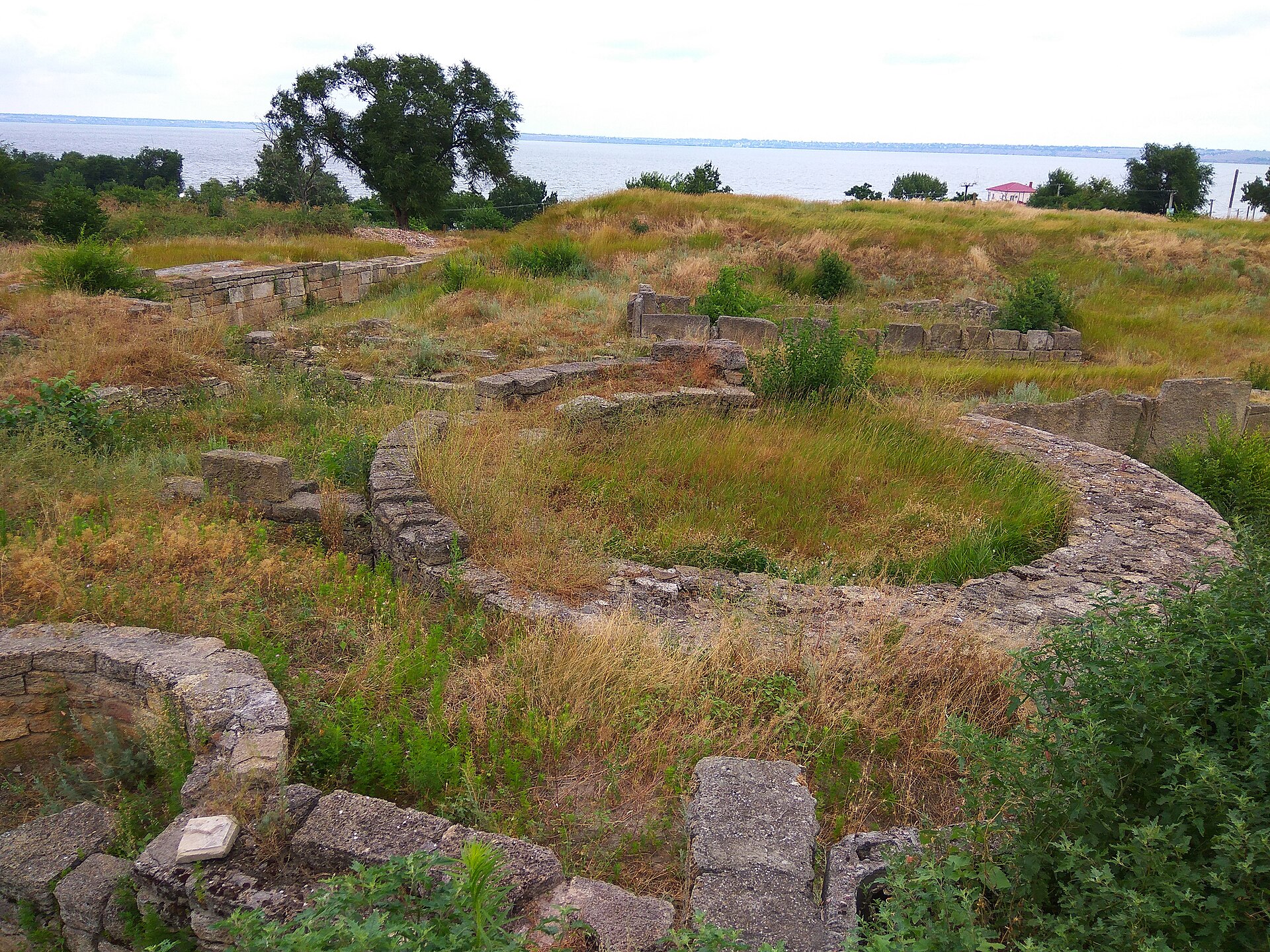
- The excavated remains of Tyras — Fortress grounds and the adjoining protected area
Traces of the ancient city lie in the fortress grounds and the neighbouring protected area. These are low foundations and trenches rather than standing columns, so they reward patience. Reading the layout against the walls above helps, since Greek and Roman Tyras lies underneath the later fortress. Museum notes or a local guide add a great deal.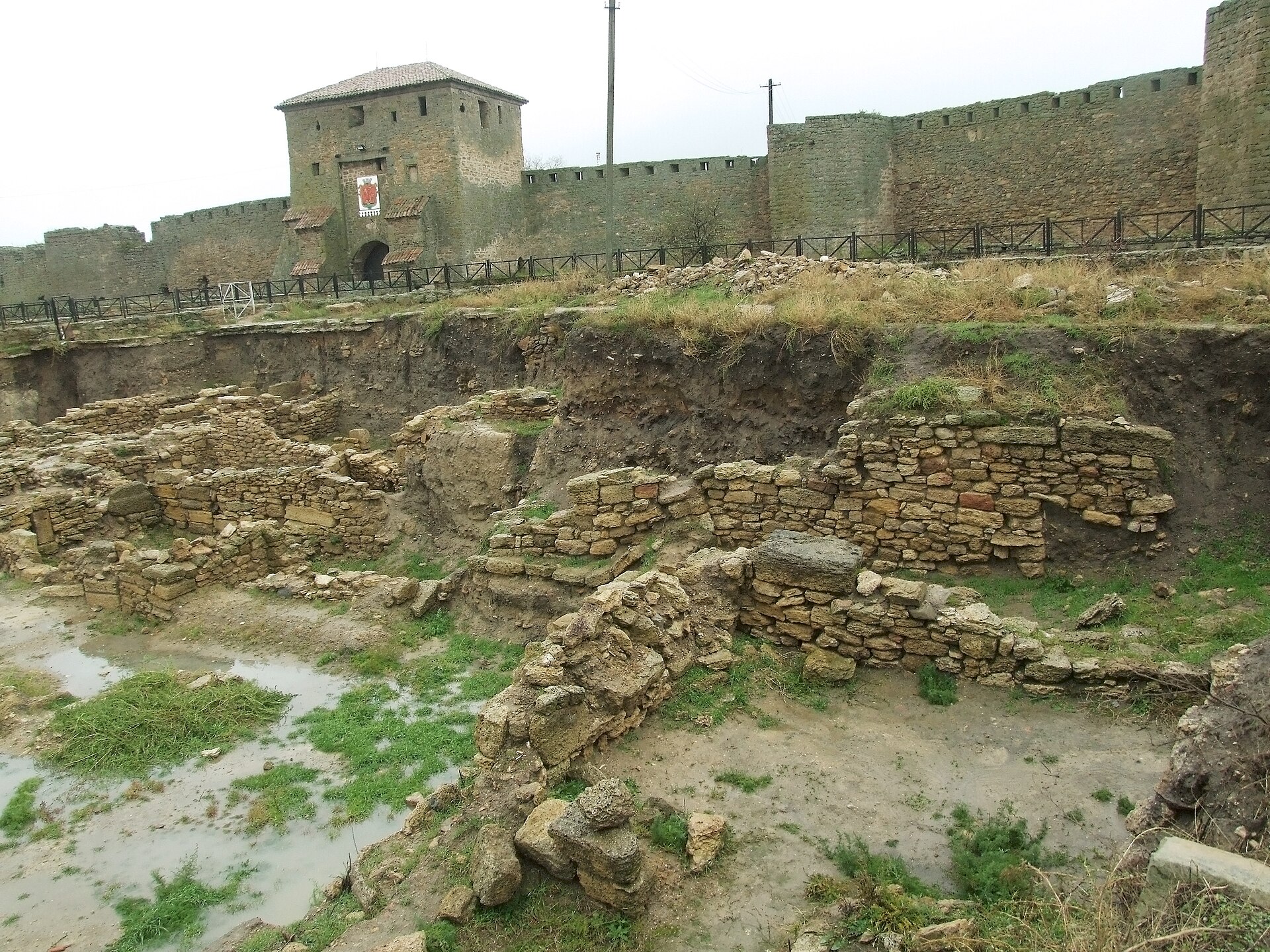
- The Citadel — Inside the fortress complex
The Citadel is the inner stronghold of the fortress complex, and a good place to look back across the estuary and along the curtain walls. Its courtyard gives a sense of how a garrison was housed and defended. Go in the morning, when stone is cooler in summer and the light on the water is clearer.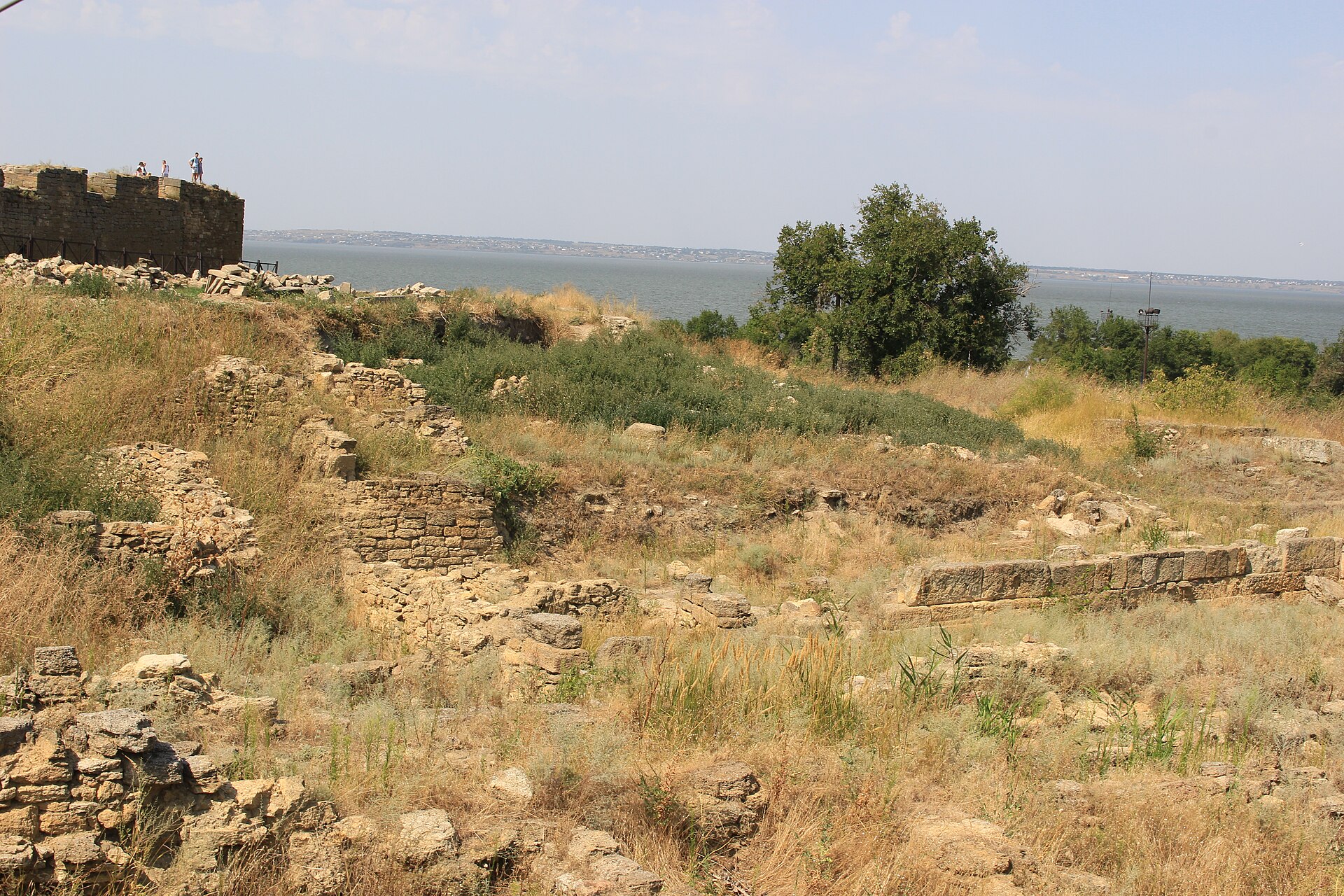
- Dmitriev's Mansion and House Yarashevich — Town centre
These two historic houses are listed among the town's sights, and they are a reminder that Bilhorod-Dnistrovskyi was an ordinary provincial town long after its fortress days. Treat them as exterior stops on a slow walk, and ask locally whether interiors can be visited, since access can change without notice. - Dytyachyy Park and the estuary shore — Town and waterfront
Dytyachyy Park is a shaded green space in town, useful for a rest after hours on exposed stone. The Dniester estuary is the natural counterpart to the ruins: Tyras existed because of this water, and a walk along the shore at the end of the day shows why the Greeks chose it.
Culture
Tyras sits in a town whose culture is layered in the same way as its ruins. The name Bilhorod-Dnistrovskyi means roughly the white city on the Dniester, and the older names, Akkerman and Cetatea Albă, remind locals and visitors that Greek, Roman, Byzantine, Genoese and later rulers all left something here. The surrounding region, Bessarabia, has long been home to Ukrainians alongside Moldovan, Bulgarian and other communities, and that mix shows up in food, church architecture and the occasional second language heard in the market. Ukrainian is the language to greet people in, and a few words of effort are warmly received. Local pride in the fortress is strong. It is a place for school trips, weddings photographed against the walls, and Sunday strolls, not only for archaeologists. Ukraine has been through a hard few years, and the war shapes daily life even far from the front line, so war memorials and flags are part of the everyday streetscape. Conversations may turn to it, and the kindest approach is to listen first and let people set the tone. Life moves at a small-town pace, with long lunches, tea or coffee taken seriously, and shopkeepers who like to chat. Churches are active places of worship, not museums. Etiquette: at memorials and churches keep your voice low, cover your shoulders and knees, and do not photograph soldiers, checkpoints or military sites.
What to wear
Dress in Tyras began with Greek wool and linen: a chiton, the simple tunic, and a himation, the wrapped cloak, worn by citizens of this colony, with Roman clothing replacing it in later centuries. In Ukraine today the best-known traditional garment is the vyshyvanka, an embroidered shirt of linen or cotton, stitched in red and black or in colour, with patterns that differ by region. Women's costume has also included wool wrap skirts and floral wreaths, while men wore sashes and sheepskin in winter. These are mainly seen at festivals, weddings and on Vyshyvanka Day in May, when many people wear embroidery to work or school. Everyday clothing in Bilhorod-Dnistrovskyi is practical and casual: jeans, trainers, light jackets, and neat but unfussy outfits for church or an evening out. Visitors should plan for weather and terrain. Summers are hot, and the fortress offers little shade, so bring a hat, sunscreen and a water bottle. The stone is uneven and often steep, so wear sturdy closed shoes with a good grip rather than sandals. Winters are cold and windy off the estuary, so layers and a windproof coat matter. For churches, cover shoulders and knees, and women may like to carry a light scarf. Quiet, modest clothing also suits memorials and everyday small-town life.
What to eat
- Ukha — Eateries in the town centre and near the estuary
A clear, peppery fish soup made with river or sea fish, usually served with dark bread. In an estuary town it is the dish that tastes most of its setting. Ask what the catch is rather than expecting a fixed recipe. - Fried Black Sea fish — Market stalls and casual cafés close to the water
Small fish such as sprats or gobies, fried whole and eaten with bread and a squeeze of lemon. Simple and salty, it suits a warm evening and a cold drink. Eat it fresh, and choose busy stalls where the fish turns over quickly. - Borscht — Home-style cafés and canteens throughout town
Ukraine's beetroot soup appears everywhere, usually with a spoonful of sour cream and a side of garlic bread. Each cook has a version, some with meat and some vegetarian. It is a reliable, filling lunch after a morning on the walls. - Varenyky — Family-run cafés and the town's daily market
Boiled dumplings filled with potato, cheese, cabbage or, in summer, cherries, then served with butter, onions or sour cream. They are easy to order and easy to share, and a good option for vegetarians. Check the filling before ordering. - Local Bessarabian wine — Wine bars and cafés with a regional list
The wider Odesa region and neighbouring Moldova have a long winemaking tradition. A glass of local white or red goes well with cheese and cured meats. Ask for regional producers by name, and expect both dry and sweeter styles.
Plan it
Best time. May–June and September, when days are warm and walking the exposed fortress is comfortable. July and August are hot with little shade, and winter is cold and windy off the estuary.
How long. 1
Getting there. Odesa is the usual starting point, with daily buses to Bilhorod-Dnistrovskyi; tickets are sold through BlaBlaCar. Drivers can come from Odesa or from the Moldovan side. The fortress is in the town centre, within walking distance of the bus arrival point.
Budget. low
Tips
- Check your government's current travel advice for Ukraine before booking anything, and again just before you leave
- Allow a day from Odesa; it is easy to see the fortress and the ruins in a morning and have lunch by the estuary
- Go early in summer, since the walls offer little shade
- Carry some cash for small cafés and market stalls, and keep a card as backup
- Wear shoes with good grip, as stone steps and paths are uneven
Etiquette
- Greet people in Ukrainian first, even if you then switch to English
- Keep your voice low and your shoulders and knees covered in churches
- Do not photograph soldiers, checkpoints or military installations
Nearby
Sources
- Wikidata Q2019115 (CC0)
- Wikipedia: Tyras (rev 1364722704) (CC BY-SA 4.0)
- Wikivoyage: Bilhorod-Dnistrovskyi (rev 5300861) (CC BY-SA 4.0)
- Photo: Tyras4.jpg (Minami Himemiya) (CC BY-SA 2.5)
- Photo: 1_IMG_20210102_080740_HDR.jpg (Качуровська) (CC BY-SA 4.0)
- Photo: Городище Тіра-Білгород 01 (Adzhygyr) (CC BY-SA 4.0)
- Photo: Городище Тіра-Білгород 02 (Adzhygyr) (CC BY-SA 4.0)
- Photo: Городище Тіра-Білгород 03 (Adzhygyr) (CC BY-SA 4.0)
- Photo: 18 Білгород-Дністровський Городище (Neovitaha777) (CC BY-SA 4.0)
- Photo: 51-103-0037 Городище Тіра Білгород (Myroslava Marych) (CC BY-SA 4.0)
- Photo: Akkerman fort 10 (Visem) (CC BY-SA 4.0)


