Twyfelfontein
Twyfelfontein, Namibia
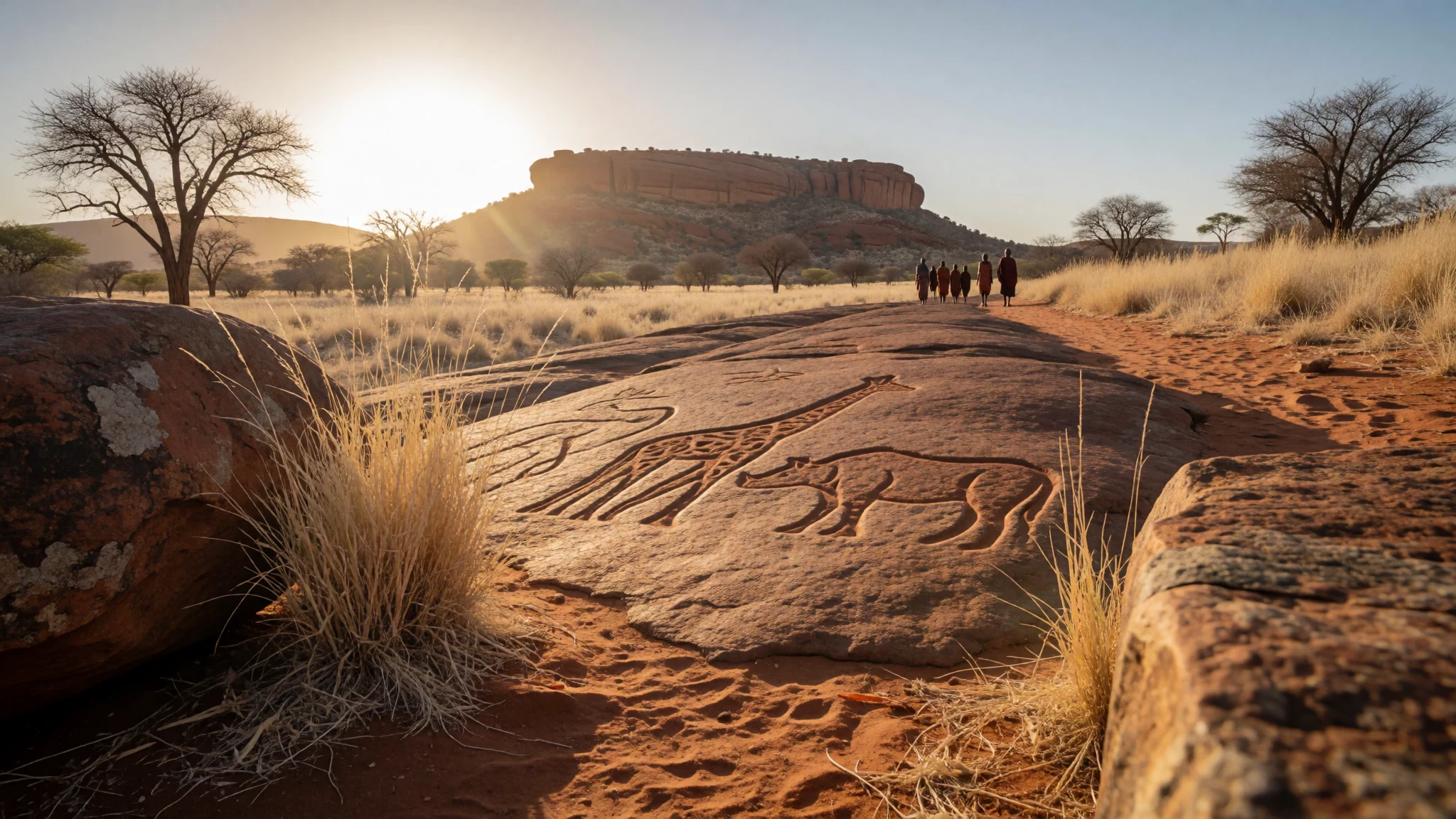
Twyfelfontein is a dry Namibian valley where thousands of engravings, made over millennia beside a single uncertain spring, cover the sandstone.
The place
Twyfelfontein sits in the Kunene Region of north-western Namibia, in country once called Damaraland, at about 550 m above sea level. The name is Afrikaans for an uncertain spring, while the Damara/Nama name, ǀUi-ǁAis, means jumping waterhole. A small spring rises here, fed by groundwater held above a layer of shale, and it explains why anyone ever lingered in such dry land. The valley runs beside the Aba Huab River, hemmed in by the slopes of a sandstone table mountain. Rain is scarce, under 150 mm a year, and the landscape is a blend of semi-desert, savanna and scrub. Temperatures swing widely between day and night, so a cold dawn can be followed by a fierce afternoon. The rock faces around the spring carry thousands of engravings and a few paintings, and in 2007 the site became Namibia's first World Heritage Site. Strictly, the protected area covers only the engraved rock, but travellers use the name for a wider district that also takes in the Organ Pipes, Burnt Mountain, Doros crater and the Petrified Forest. The turning is about 20 km south of the C39, the main road between Sesfontein and Khorixas, and the last stretch is district gravel road. A lodge, campsites and a visitor centre are run jointly with the local conservancy, so the community shares in what visitors spend here.
Its story
Twyfelfontein has drawn people for roughly 6,000 years. Hunter-gatherers of the Wilton stone-age tradition made most of the engravings and probably every painting. Later, Khoikhoi herders, relatives of the San, settled the valley and left art of their own, which differs in style from the older work. Archaeologists cannot tie any particular period of occupation neatly to the art: radiocarbon dates spread widely, and the engraving styles are thought to stretch from several thousand years old to much more recent. European settlement came late. After the Second World War a drought pushed Afrikaans-speaking farmers into the area, and the apartheid government later folded the farm into the Damaraland homeland under the Odendaal Plan. The last white settlers left in 1965. The topographer Reinhard Maack noted engravings here in 1921, but proper study waited until David Levin arrived in 1947 to judge whether the land could carry livestock. The spring disappointed him, barely supplying his family and animals. A neighbour teased him about his doubts, the joke stuck, and when he registered the farm in 1948 he used it as the name. 'Uncertain' renders the Afrikaans better than 'doubtful'. In 1950 Ernst Scherz began systematic recording, and the counts have climbed since; the site is now thought to hold more than 5000 individual depictions.
What to see
- The engraved galleries — Main rock art area
Twyfelfontein's main engraving area is a walk among sandstone slabs and boulders, each pecked with animals, tracks and abstract marks. Giraffe, rhino and antelope are easy to recognise. The surfaces are fragile and sun-bleached, so a guide from the visitor centre helps pick out figures that look like plain rock at first.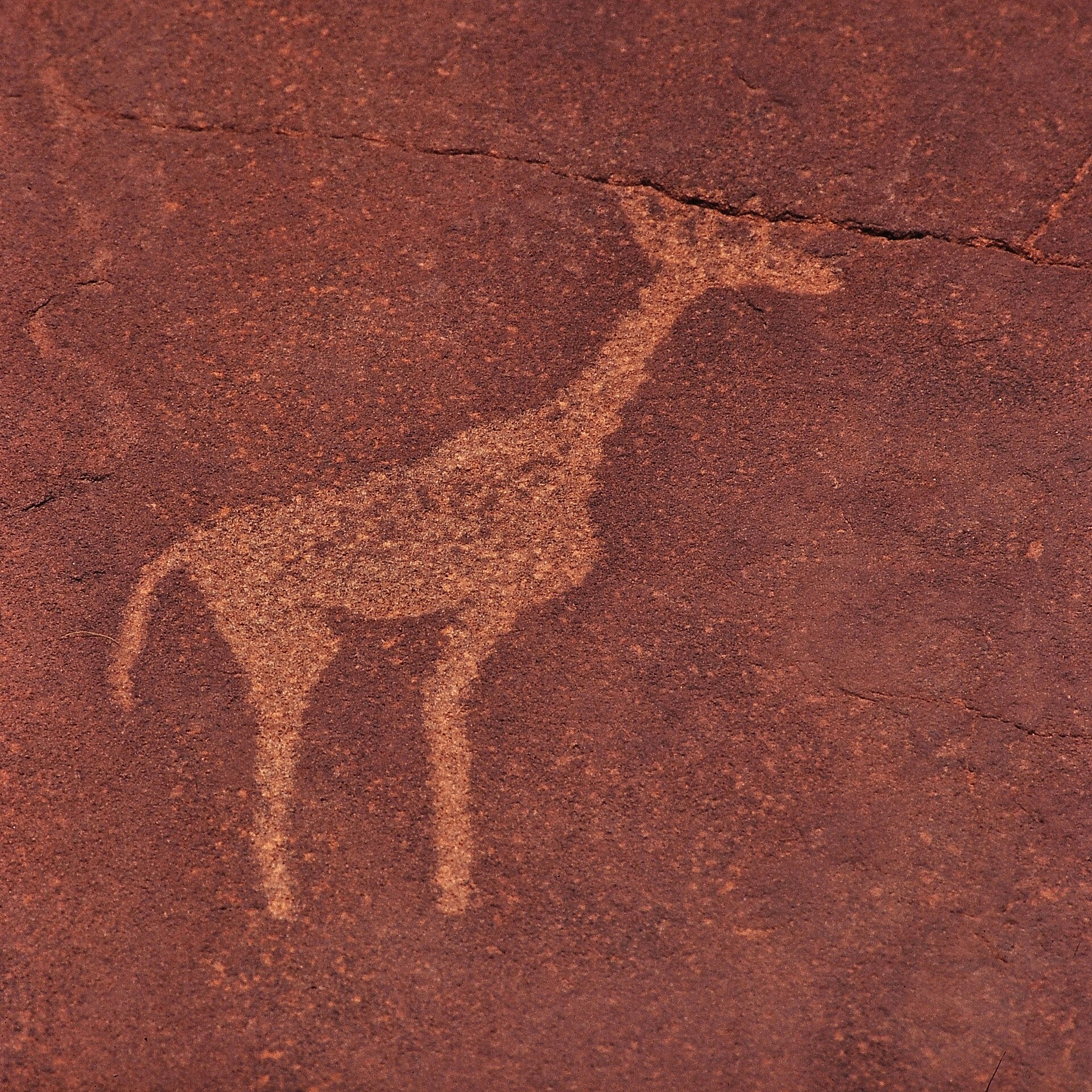
- The lion engraving — Main rock art area
A lion carved on a slab is among the best-known figures here, and its tail ends in a curious shape that guides like to discuss. It shows how the engravers handled outline and pattern. Early morning or late afternoon light, when shadows fall across the pecked lines, makes it far easier to read.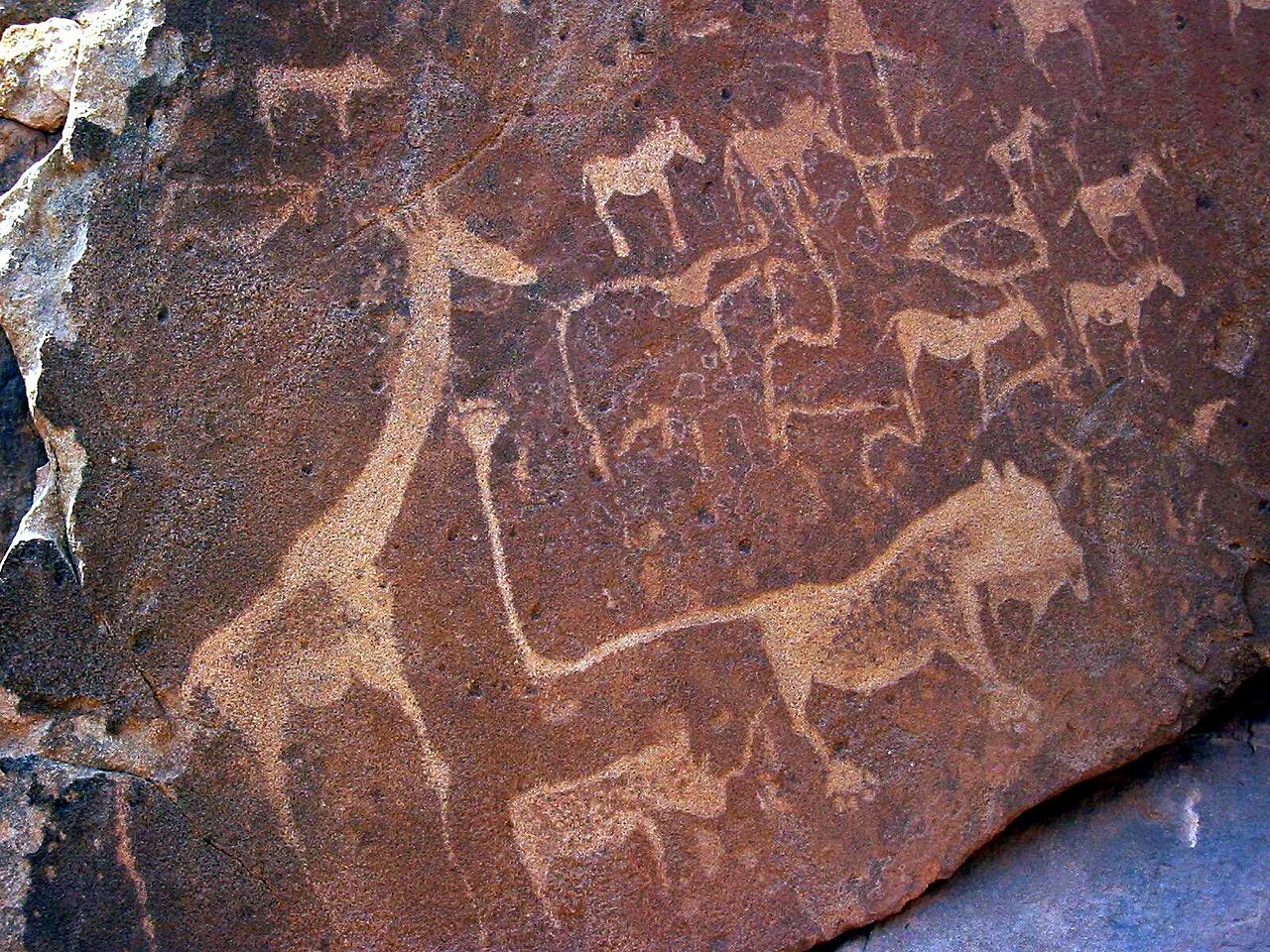
- The rock paintings — Sheltered faces within the rock art area
Paintings are rarer than engravings at Twyfelfontein, and probably all of them were made by the early hunter-gatherers. Faint red figures sit under overhangs, sheltered from the weather. They are small and easy to miss, so slow down, ask the guide, and keep a respectful distance from the rock.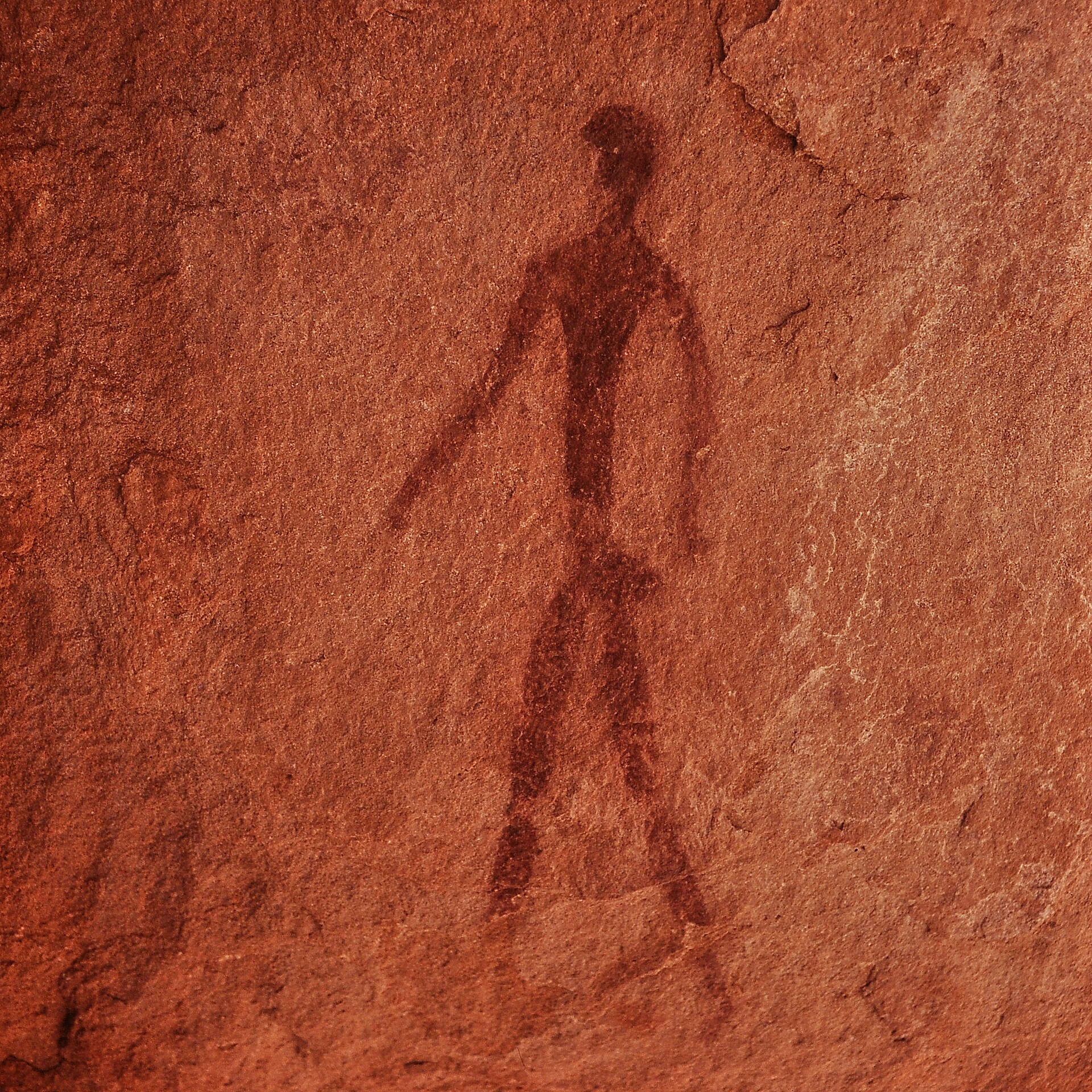
- The Organ Pipes and Burnt Mountain — Nearby district, short drive from the engravings
Close to the engravings, a cluster of dark rock columns known as the Organ Pipes stands in a small gorge, while Burnt Mountain glows in shades of red, brown and black at the right hour. Both are short stops, best in low sun, and they show the geology behind the valley.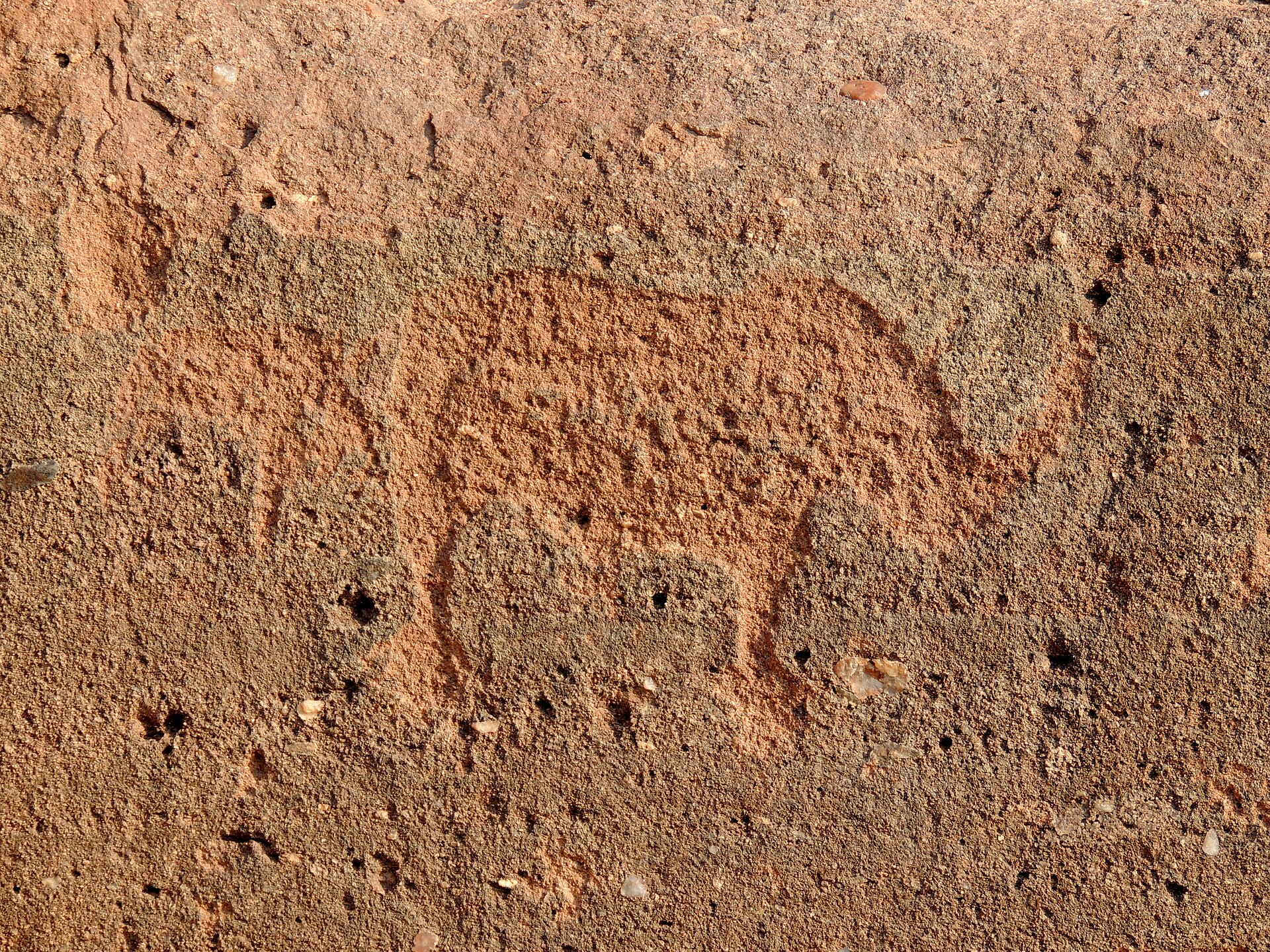
- The Petrified Forest and Doros crater — Wider Twyfelfontein district
The wider Twyfelfontein district also includes a patch of ancient fossilised tree trunks lying in the open, and the Doros crater, a rugged volcanic landscape. These are reached by gravel roads and are usually combined with the engravings in one long day, leaving time for the heat to ease.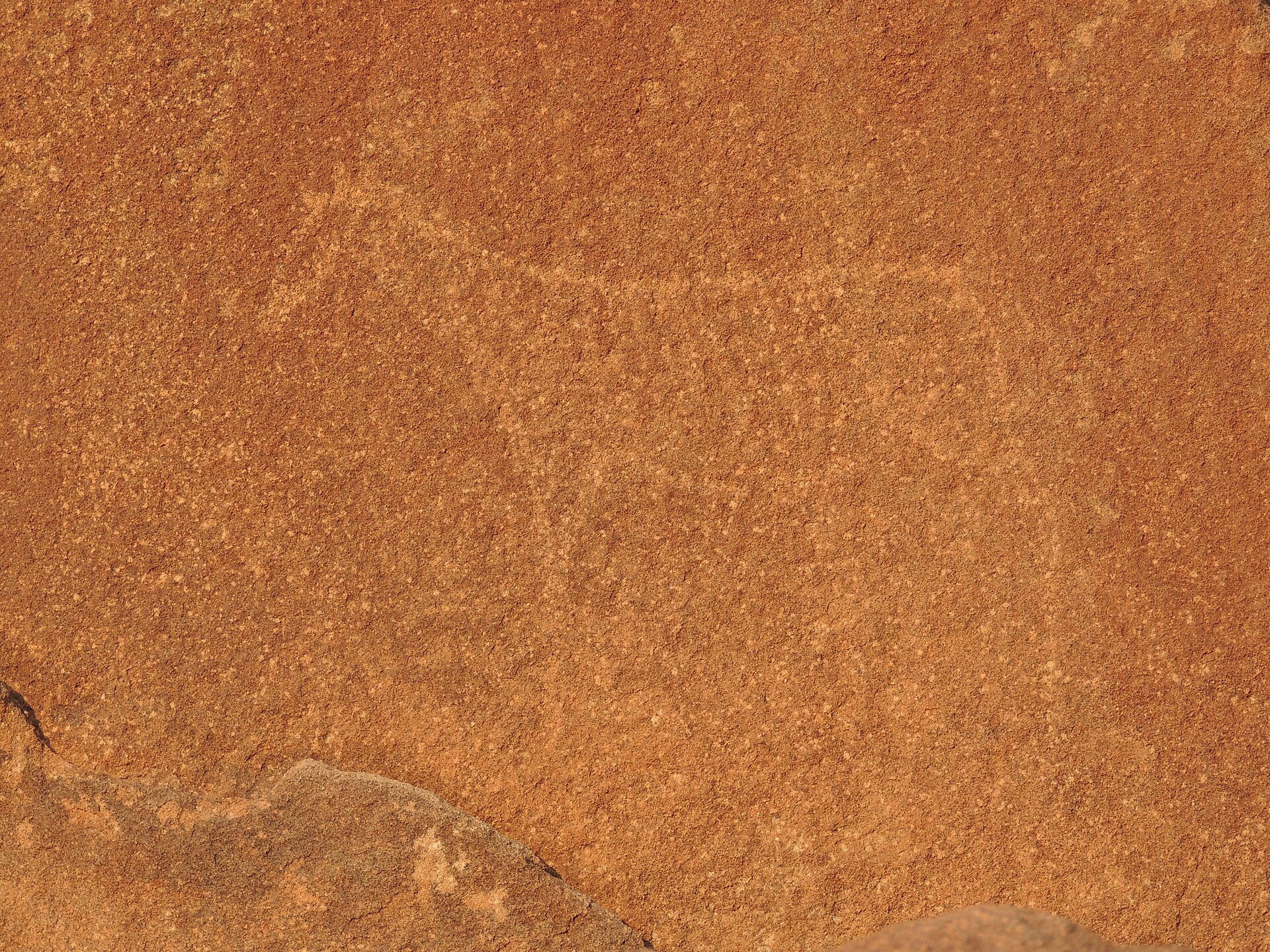
Culture
Twyfelfontein is, first, a sacred landscape. The hunter-gatherers and later herders who used the valley treated it as a place of worship and carried out shamanist rituals here, and much of the carved imagery is linked to those rites. Animals, human figures and geometric marks may relate to trance experiences and to ideas about rain and the spirit world, though researchers still debate the exact meaning of individual images. The people of the region today include Damara and Nama communities, and the Damara/Nama name for the spring, ǀUi-ǁAis, is still the official one. The history is complicated: the valley was farmed by outsiders after the Second World War, then absorbed into an apartheid-era homeland, and its recent story of local ownership is part of why the conservancy matters. Much of the site is now managed jointly with the local conservancy, and guides from nearby communities lead visitors through it. Their commentary mixes archaeology with local memory, and it is worth listening to rather than rushing ahead. Visitors tend to find the place quiet and unhurried. Crafts and small souvenirs may be offered near the visitor centre, and buying directly from sellers is a direct way to support local households. Do not touch, chalk, wet or rub any engraving, and stay on the marked paths with your guide, because even a gentle hand leaves a mark on rock this old.
What to wear
Twyfelfontein lies among Damara, Nama and Herero communities, and the best-known traditional dress of the region is the Herero woman's long, full-skirted Victorian-style gown, worn with a horned headscarf shaped like cattle horns. It is made from layers of cotton and printed fabric and is seen at church, weddings, funerals and cultural gatherings rather than daily life. Nama and Damara women also have long dresses and head wraps. Beadwork and leather, once central to hunter-gatherer dress, survive in jewellery and craft items sold to visitors. Day to day, local people mostly wear ordinary modern clothes: jeans, T-shirts, work jackets, caps, and practical shoes suited to a dusty, rocky setting. Guides often wear a lodge or conservancy shirt. What a visitor should wear is shaped by sun and ground. Choose light, long-sleeved cotton or linen in pale colours, long trousers or a long skirt for scrapes against rock and thorn, and a wide-brimmed hat. Sturdy closed shoes with a good grip are far better than sandals on loose sandstone slabs. Winter mornings are cold, so carry a fleece or jacket that can come off by midday. Sunglasses, sunscreen and a scarf for dust help. No special dress code applies to the engravings, but modest, practical clothing suits the community setting.
What to eat
- Braai (barbecued meat) — Campsites and lodge restaurants in the Twyfelfontein area
A braai is the social meal of Namibia: beef, lamb, sausage or game grilled over wood coals and eaten with salads and bread. At Twyfelfontein it is a standard evening meal at campsites, with guests gathering around the fire. - Oryx or kudu steak — Lodge restaurants and the larger towns such as Khorixas
Game meat is common on Namibian menus, and oryx and kudu are lean, dark and best served medium. Local cooks often grill them simply, with a sauce on the side, and they suit a hot, dry region. - Pap with relish — Local eateries and household-style kitchens in Khorixas
Pap is a thick maize porridge, eaten in much of southern Africa as the base of a meal. Locals serve it with meat stew, spinach or a tomato-and-onion relish, and it fills a body after a morning of walking. - Biltong — Butchers and general stores in towns on the way
Biltong is cured, air-dried meat sliced thin and eaten as a snack, with game and beef both common. It suits a road trip across the long gravel stretches here and keeps well in the heat. - Kapana — Roadside grills and small town markets
Kapana is quick-grilled beef, cut into pieces, seasoned with salt and spice and sold hot from open grills. It is a street snack of northern Namibia, usually eaten with a small bread roll or with the fingers.
Plan it
Best time. May to September is the dry, cooler season, with comfortable days and cold nights, and it is the easiest time to walk the rock art. The summer months are very hot and exposed, and the area receives little rain even then, so shade is scarce at midday.
How long. 1–2
Getting there. Fly into Windhoek, hire a car, and drive north-west towards Khorixas. From the C39 main road, follow the signs onto the district gravel roads for Twyfelfontein. The lodge has its own gravel airstrip for charter flights.
Budget. mid
Tips
- Start the engravings early in the morning, when it is cooler and the low light shows the carved lines
- Carry more drinking water than seems necessary, plus sunscreen and a hat
- Fuel up in a larger town before the gravel roads and carry a good spare tyre
- Book lodge or campsite places ahead in the cooler months, as the choice is small
- Bring some cash for crafts and small purchases, since cards may not work everywhere
Etiquette
- Keep to the marked paths and follow your guide, and never touch or mark the engravings
- Ask before photographing people, including guides and craft sellers
- Take all rubbish with you and leave stones, plants and fossils where they lie
Nearby
Sources
- Wikidata Q754791 (CC0)
- Wikipedia: Twyfelfontein (rev 1377957578) (CC BY-SA 4.0)
- Wikivoyage: Twyfelfontein (rev 5380311) (CC BY-SA 4.0)
- Rock art, Twyfelfontein, Namibia — Thomas Schoch (CC BY 3.0)
- Twyfelfontein 16 — Mike (CC BY 2.5)
- Rock painting in Twyfelfontein, Namibia — Schnobby (CC BY 3.0)
- Giraffe, rock engraving in Twyfelfontein — Schnobby (CC BY 3.0)
- San rock art at Twyfelfontein — Hans Hillewaert (CC BY 3.0)
- Twyfelfontein 1 — Robur.q (CC BY-SA 4.0)
- Twyfelfontein 3 — Robur.q (CC BY-SA 4.0)
- Lion Petroglyph, Twyfelfontein — Thomas Schoch (CC BY 3.0)


