Tulasas
Tulasas, Mexico
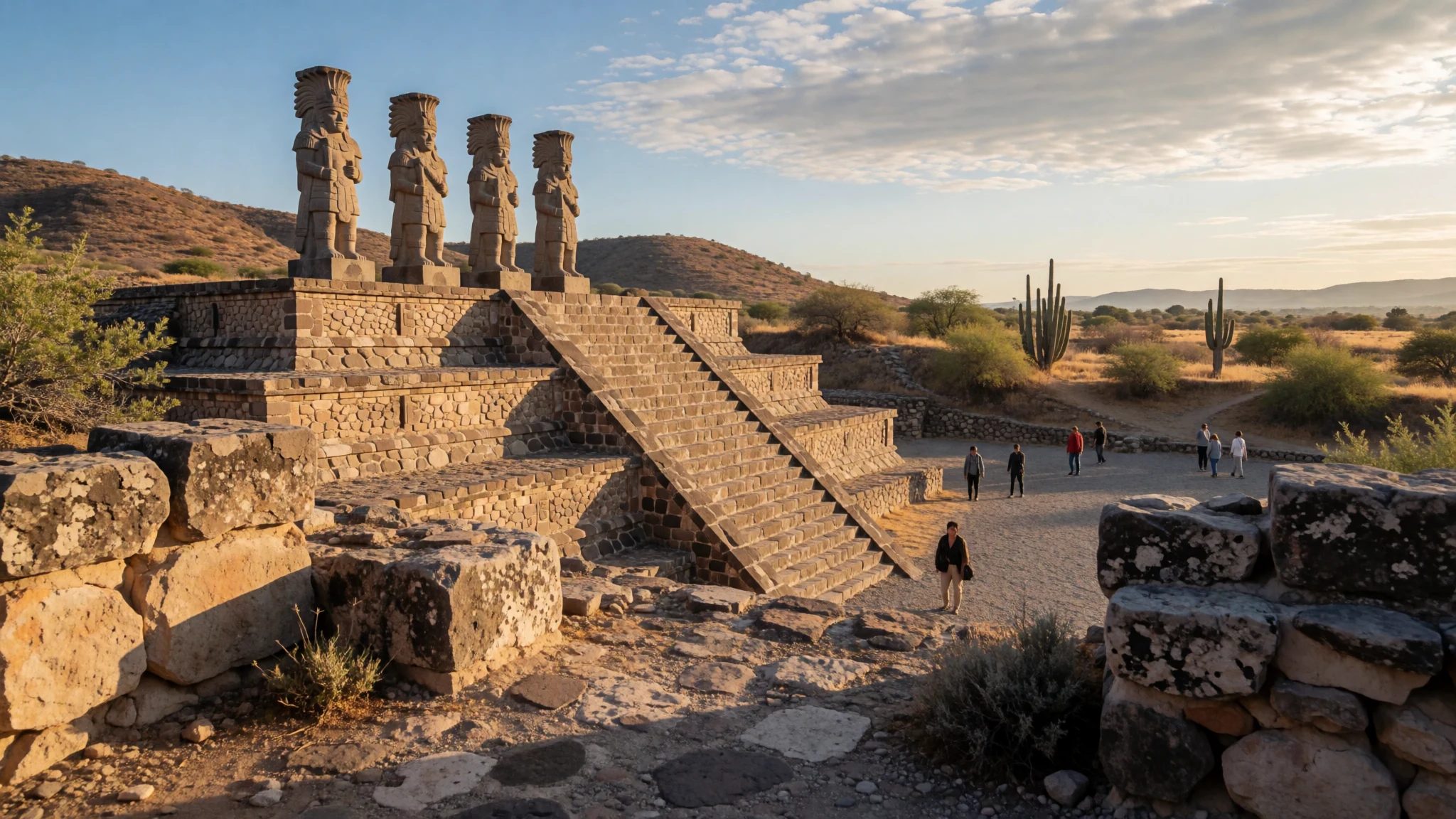
Tulasas invites you to walk among ancient basalt warriors and discover the dramatic landscapes of the Mexican state of Hidalgo.
The place
Tulasas is a Mesoamerican archaeological zone situated within the state of Hidalgo in Mexico. Positioned northwest of Mexico City, the ceremonial ruins occupy the city of Tula de Allende in the regional valley. The complex preserves remnants of a powerful pre-Columbian civilization that flourished following the decline of earlier regional powers and prior to the rise of later empires. Visitors exploring the grounds encounter two primary zones: the earlier settlement sector known as Tula Chico and the main ceremonial precinct designated as Tula Grande. The most prominent architectural feature is the principal pyramid structure, crowned by massive basalt pillars carved in the likeness of ancient warriors wearing feathered attire and carrying traditional weaponry. These stone sculptures once supported the roof of a sacred temple. The wider region surrounding Tulasas features a striking natural contrast between arid northern landscapes dotted with cacti and the lush southern tropical environments, offering travellers a diverse terrain of mountains, mineral springs, and winding river valleys to discover.
Its story
Tulasas has a deep and complex history shaped by successive waves of migration and shifting regional powers in central Mexico. Early human occupation in the immediate vicinity began long before the rise of the classical ceremonial centre. Over the centuries, communities of various cultural and linguistic backgrounds gravitated towards the valley, drawn by local resources such as lime deposits that provided essential materials for plaster and construction. During an earlier phase of local development, modest urban architecture and public spaces were established at the sector now identified by researchers as the older settlement area. As these initial neighbourhoods were gradually abandoned, the focus of civic power shifted to the main ceremonial precinct, which expanded into a major regional capital. The city exerted widespread political and cultural influence across Mesoamerica, maintaining complex connections with distant contemporaries before experiencing a major collapse. Despite its eventual destruction, the legacy and mythology of the civilization associated with Tulasas endured, deeply influencing the worldview, religious practices, and architectural traditions of later central Mexican societies.
What to see
- Tula Grande — Main archaeological zone
Tulasas features this main ceremonial zone where visitors can examine the iconic Pyramid of Quetzalcoatl. Four basalt warrior columns stand proudly at the summit, representing the martial prowess and artistic skill of the ancient builders who once dominated the surrounding valley. - Tula Chico — Northern archaeological sector
Tulasas includes this earlier settlement sector situated near the site museum. Exploring these older ruins offers insight into the early formative phases of local urban development before the expansion of the grander ceremonial plazas. - Grutas de Tolantongo — Hidalgo mountain region
Tulasas travellers often journey deeper into the state to visit this communal resort complex. It features warm thermal springs, deep canyon caves, natural swimming pools, and rushing rivers set amidst dramatic cliffs. - Los Prismas Basálticos — Comarca Minera Geopark
Tulasas visitors can explore this remarkable geological wonder consisting of geometric basalt columns framing cascading waterfalls. These natural stone prisms were carved by cooling lava flows and rushing waters over countless millennia. - Comarca Minera Geopark — Central-south Hidalgo
Tulasas adventures can extend to this protected territory designated to preserve significant geological formations. The park encompasses numerous points of interest highlighting the volcanic and mineral history of the region.
Culture
Tulasas and the wider Hidalgo region preserve a vibrant cultural heritage deeply rooted in indigenous traditions, particularly among communities such as the Otomi. Traditional village life maintains ancient customs, traditional textile weaving, and regional culinary practices that have been passed down through generations. Festivals and community gatherings often feature traditional music, dance, and markets where local crafts are proudly displayed. Visitors exploring the area will encounter a welcoming atmosphere rooted in rural hospitality and a strong sense of community identity. When visiting local indigenous communities or rural settlements in the region, always ask permission before taking photographs of residents or traditional ceremonies.
What to wear
Tulasas and the surrounding Hidalgo state showcase a practical blend of traditional textiles and everyday modern attire. Traditional garments worn during celebrations often feature hand-embroidered cotton blouses, wool shawls known as rebozos, and patterned belts woven with intricate geometric motifs that reflect indigenous heritage. In daily life across towns and cities, residents dress in standard contemporary clothing suited to a warm climate, including lightweight trousers, denim, and cotton shirts. For travellers exploring the archaeological ruins and natural parks of Tulasas, sensible clothing is essential. Wear breathable natural fabrics, a wide-brimmed sun hat, and sturdy walking shoes or hiking boots to navigate uneven stone paths, rocky trails, and dusty open-air plazas safely under the strong central Mexican sun.
What to eat
- Hidalgo Barbacoa — Traditional weekend markets
Tulasas visitors must try this famous regional specialty consisting of meat wrapped in maguey leaves and slow-cooked in an underground pit until exceptionally tender and flavourful. - Escamoles — Regional specialty eateries
Tulasas food culture embraces edible insects, offering these delicate ant larvae often sautéed with butter, onions, and epazote herbs as a prized local delicacy. - Mixiote — Local markets and fondas
Tulasas kitchens prepare this traditional central Mexican dish of spiced meat wrapped in the translucent skin of the maguey leaf and steamed to perfection. - Nopal and Xoconostle Dishes — Everyday family restaurants
Tulasas menus frequently incorporate native cactus pads and sour cactus fruit into savory stews, fresh salads, and refreshing regional beverages.
Plan it
Best time. March to April and October to November offer pleasant mild weather for exploring the archaeological ruins and natural thermal springs without extreme heat.
How long. 2–3
Getting there. Fly into Felipe Angeles International Airport (AIFA) or Benito Juárez International Airport in Mexico City, then take a direct long-distance bus north to Pachuca or Tula de Allende.
Budget. mid
Tips
- Arrive at the archaeological zone early in the morning to avoid the midday sun
- Carry sufficient cash for local buses, entry fees, and rural market stalls
- Wear comfortable footwear suitable for walking on uneven stone and dirt paths
- Drink bottled water and stay hydrated while exploring the arid valley
Etiquette
- Ask permission before photographing local residents or traditional artisans
- Respect all barriers and signage protecting ancient stone carvings and structures
Nearby
Sources
- Wikidata Q568672 (CC0)
- Wikipedia (rev 1381348670) (CC-BY-SA 4.0)
- Wikivoyage (rev 5333547) (CC-BY-SA 4.0)