Tübän Kama National Park
Tübän Kama National Park, Russia
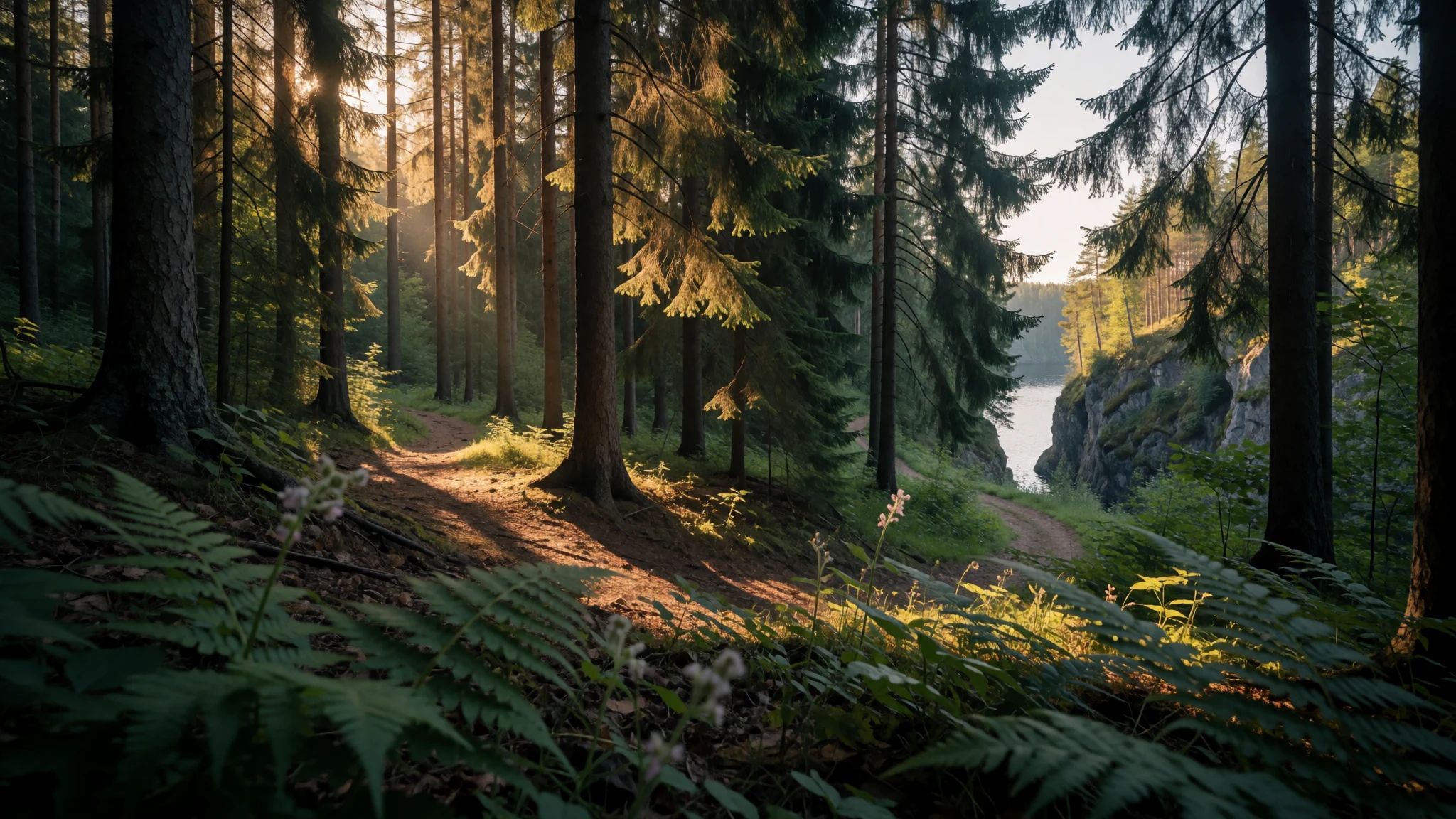
Tübän Kama National Park holds pine woods, ravines and flood meadows along the Kama, between Yelabuga and Naberezhnye Chelny.
The place
Tübän Kama National Park sits in Tukayevsky and Yelabuzhsky districts of Tatarstan, in central Russia. In Russian it is Nizhnyaya Kama (Нижняя Кама) and in Tatar Түбән Кама, both of which mean the lower Kama. The boundary drawn in 1991 exists so that the pine woods along the water would remain. The park office publishes practical details at https://nkama-park.ru.
The protected land comes in three separate pieces rather than one continuous forest. Maly Bor and Tanayavskaya Dacha stand near the city of Yelabuga, on the Kama's right bank. Bolshoy Bor lies on a peninsula of the left bank, outside Naberezhnye Chelny. Within these limits the Kama has been widened into the Nizhnekamsk Reservoir, so much of the shoreline is a reservoir edge, not a free river.
The banks are unlike each other. The right bank is high and cut by ravines; the left bank is flat. The Toyma is the main side stream that meets the Kama inside the park. Below the dam the river bends across its floodplain, and the meadows on that right-bank stretch belong to the park too. Photographs of the area show pine stands at Maly Bor, open grass at the Tanayevsky meadows, a wide view of the Kama, and, close to the village of Pospelovo, a pumpjack working among the trees.
Tübän Kama National Park is therefore both a forest reserve and a river landscape pressed against the towns on its banks. The pleasure of it is the change of ground underfoot: needle litter and ravine paths on one side, open meadow and still water on the other.
Its story
Tübän Kama National Park is young as a protected area — it dates from 1991 — but the river it guards runs through a much older story. The people of Tatarstan, a republic inside Russia, call themselves Tatars. The name recalls a Mongol tribe, yet the community traces its line to the Volga Bulgars, who were living on this river system long before the modern border existed. The Golden Horde later conquered those Bulgar lands and, out of that world, the Kazan Khanate grew into a Turkic power on the middle Volga.
The turning point remembered in the region is the Russian taking of Kazan under Ivan the Terrible. After that siege, Russian rule spread across the northern steppe and forest, and Kazan became the political heart of what is now Tatarstan. Tatars remain Russia's largest minority. Most are Sunni Muslims; a substantial share are Orthodox Christians. That double heritage — mosque and church, Turkic language and Russian state — is the cultural weather around Tübän Kama National Park, even when the trees themselves are silent about it.
The Kama has been dammed into the Nizhnekamsk Reservoir, and the industrial cities of Naberezhnye Chelny and the oil towns nearby have grown hard against the pines. Setting the three clusters aside in 1991 was a decision to keep conifer forest, ravine and flood meadow from being swallowed by that growth. Yelabuga, on the right bank, is the town a walker meets first; the left-bank peninsula of Bolshoy Bor looks the other way, towards the industrial city.
Tübän Kama National Park is the green pause in that history: Bulgar, Horde and khanate, then Russian rule, a twentieth-century reservoir, and a boundary around the woods that remained.
What to see
- Maly Bor — Right bank, near Yelabuga, Yelabuzhsky District
Maly Bor is the pine cluster of Tübän Kama National Park on the Kama's right bank, near Yelabuga. This is the conifer forest set aside in 1991: tall pines, a shaded floor and paths that fall toward the water. Photographs of the tract show a closed canopy rather than meadow. It is the clearest place to see why the woods were worth a boundary of their own.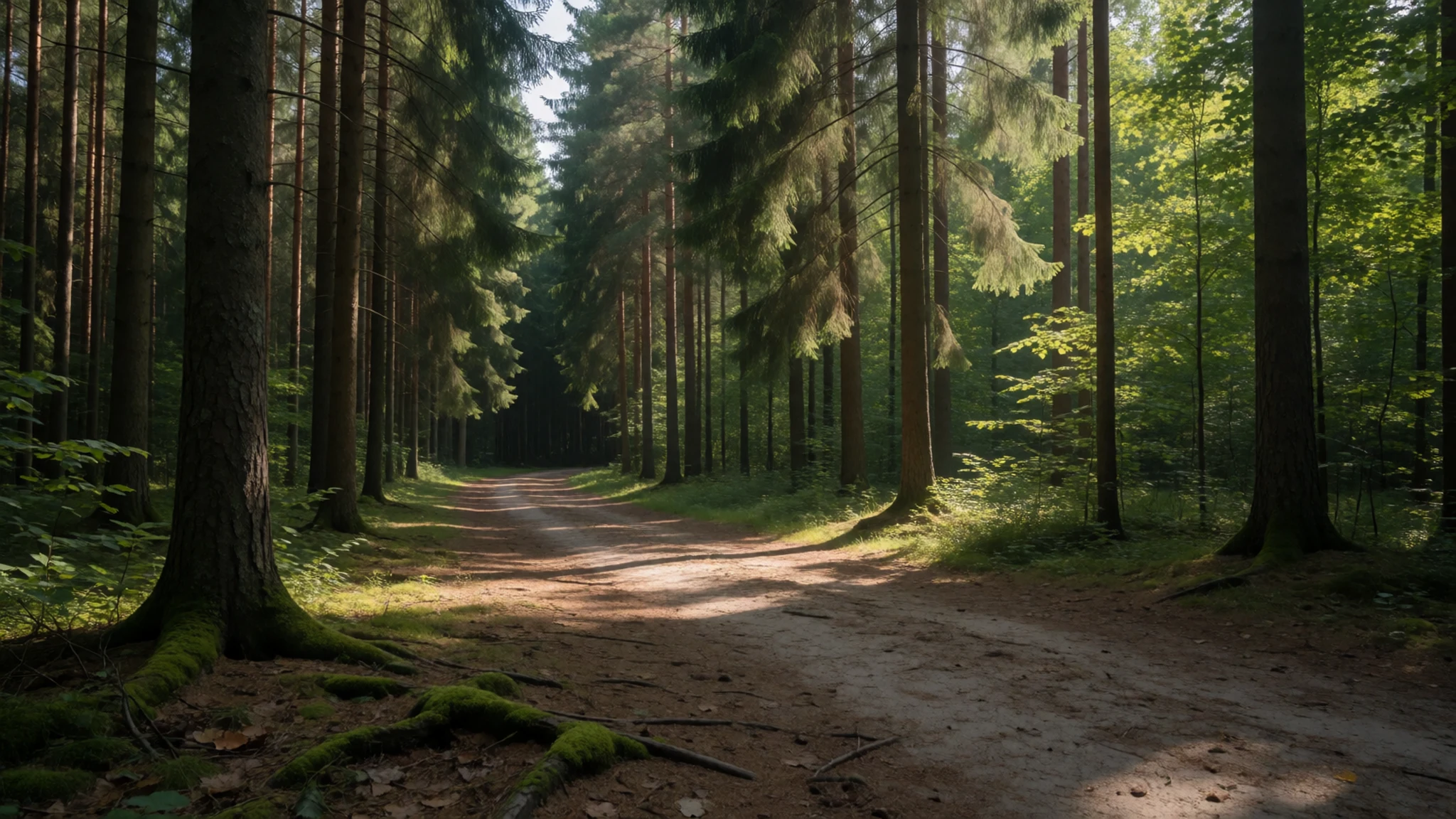
- Tanayavskaya Dacha — Right bank, Tanayevsky meadows near Yelabuga
Tanayavskaya Dacha is the other right-bank piece of Tübän Kama National Park near Yelabuga, and it opens into grass rather than closed pine. The Tanayevsky meadows sit on the Kama floodplain, wet in season and wide when the water drops. This is the park's meadow cluster: sky, sedge and a low horizon, with the river as a neighbour instead of a view from a ravine.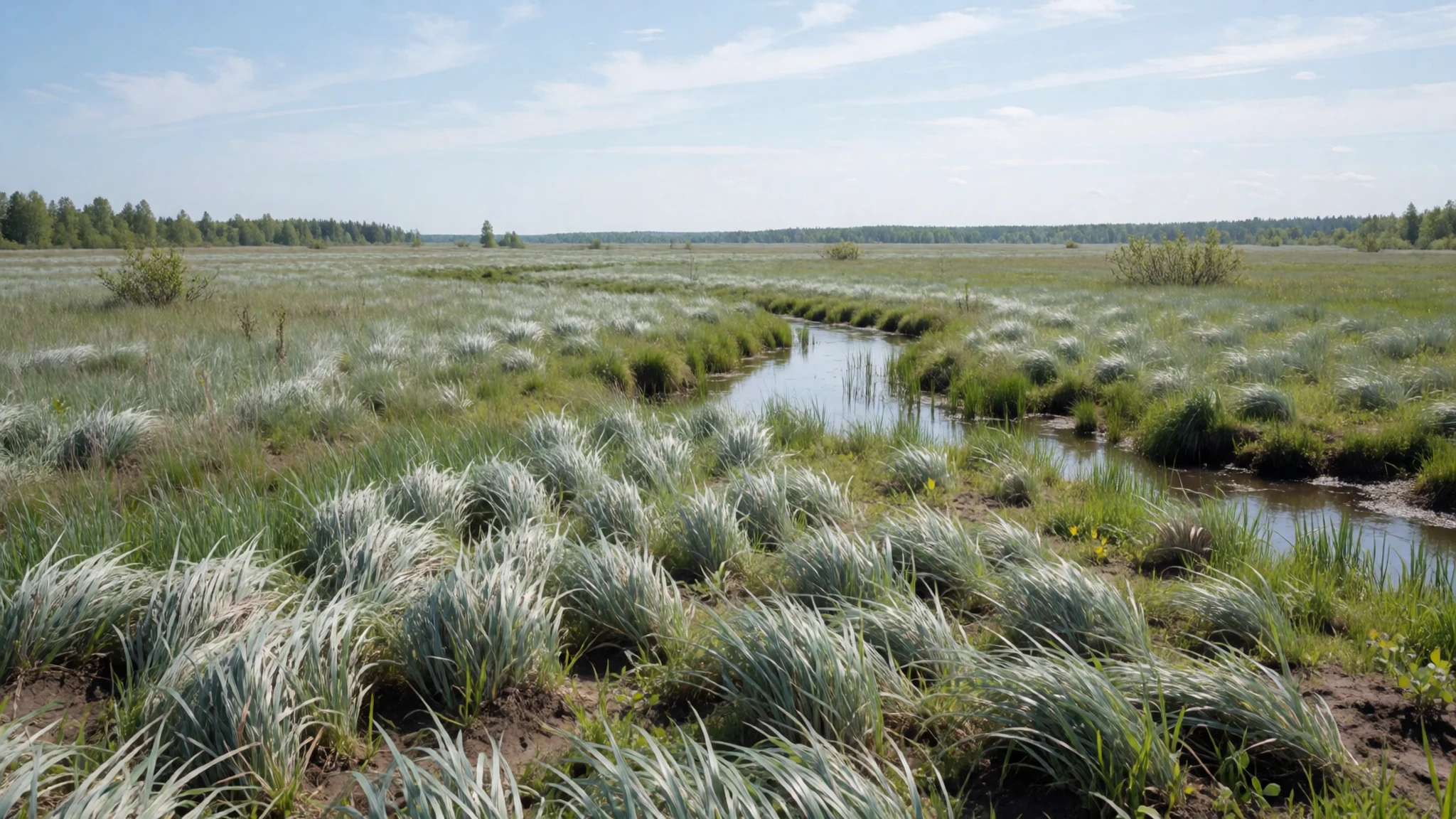
- Bolshoy Bor — Left bank, peninsula outside Naberezhnye Chelny
Bolshoy Bor is the left-bank cluster of Tübän Kama National Park, on a peninsula outside Naberezhnye Chelny. Here the bank is flat, so the pines meet the Nizhnekamsk Reservoir on a level shore rather than a ravine edge. Separated by water from the Yelabuga clusters, it is the forest that sits against the industrial city, and it deserves its own half-day on foot.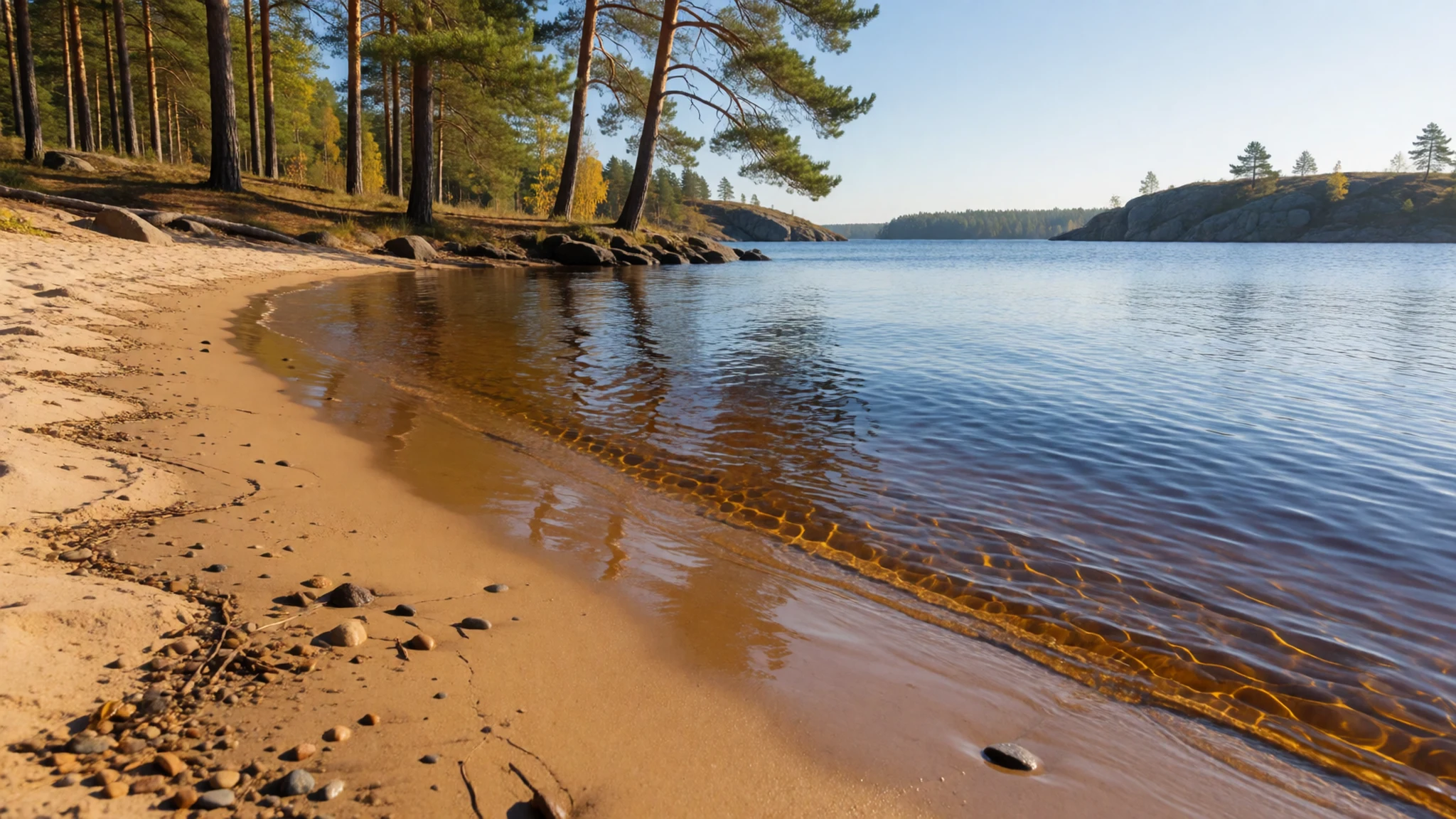
- Right-bank ravines and dam meadows — Right bank of the Kama, above and below the dam
The right bank inside Tübän Kama National Park stands high above the Kama and is cut by ravines, a sharp contrast with the flat left shore. Paths here drop and climb rather than run level, and the views open over the Nizhnekamsk Reservoir. Below the dam the same bank eases into meadow, where the river meanders and the grass is part of the park.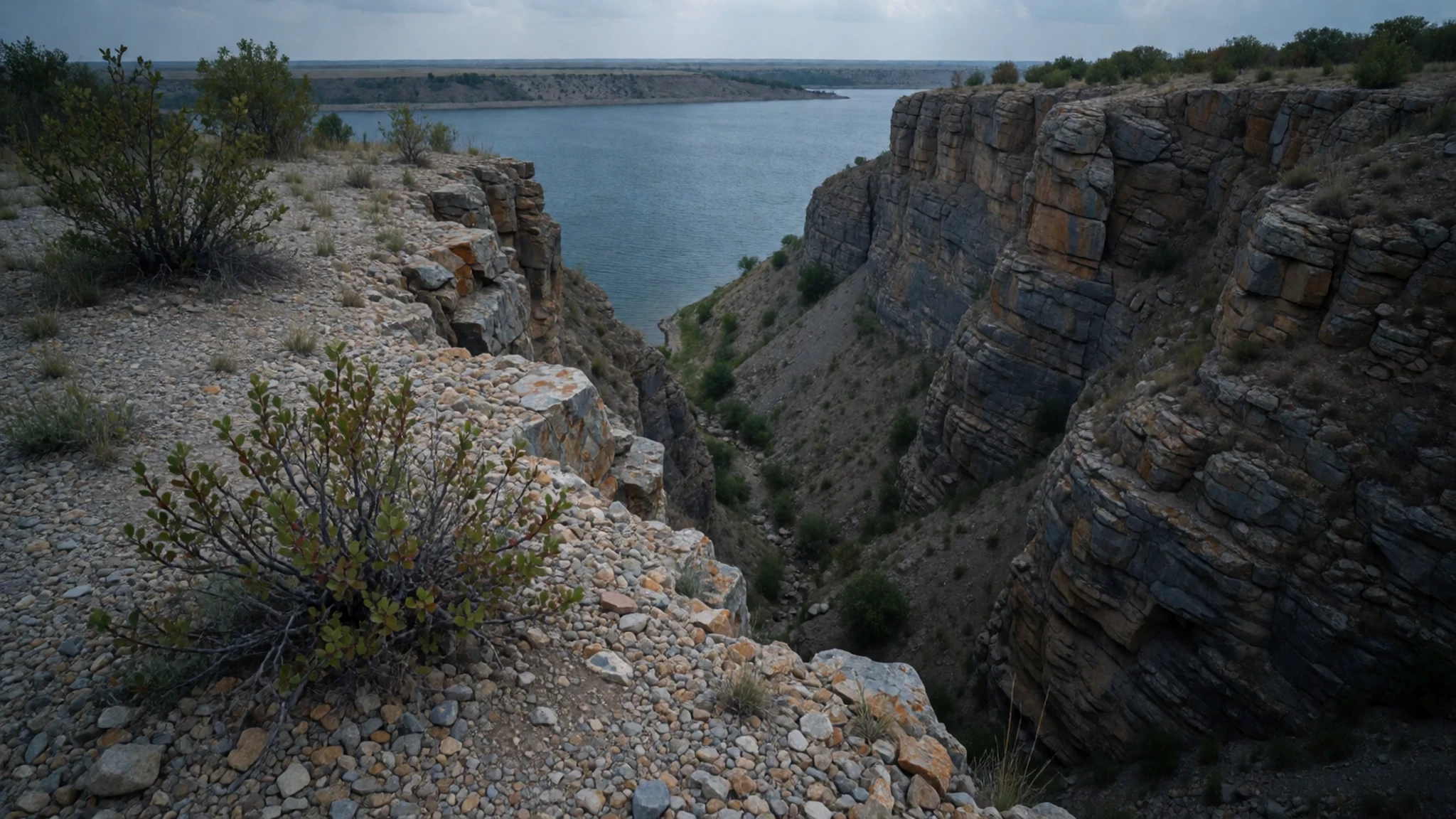
- Toyma River — Tributary of the Kama inside the park
Inside Tübän Kama National Park the Toyma meets the Kama as a side river, not as one more block of pines. Walkers follow it for a narrower channel, bankside trees and a break from the reservoir's wide shore. Because the main river is held back as the Nizhnekamsk Reservoir, this tributary is where the water still runs at a smaller, river-like scale.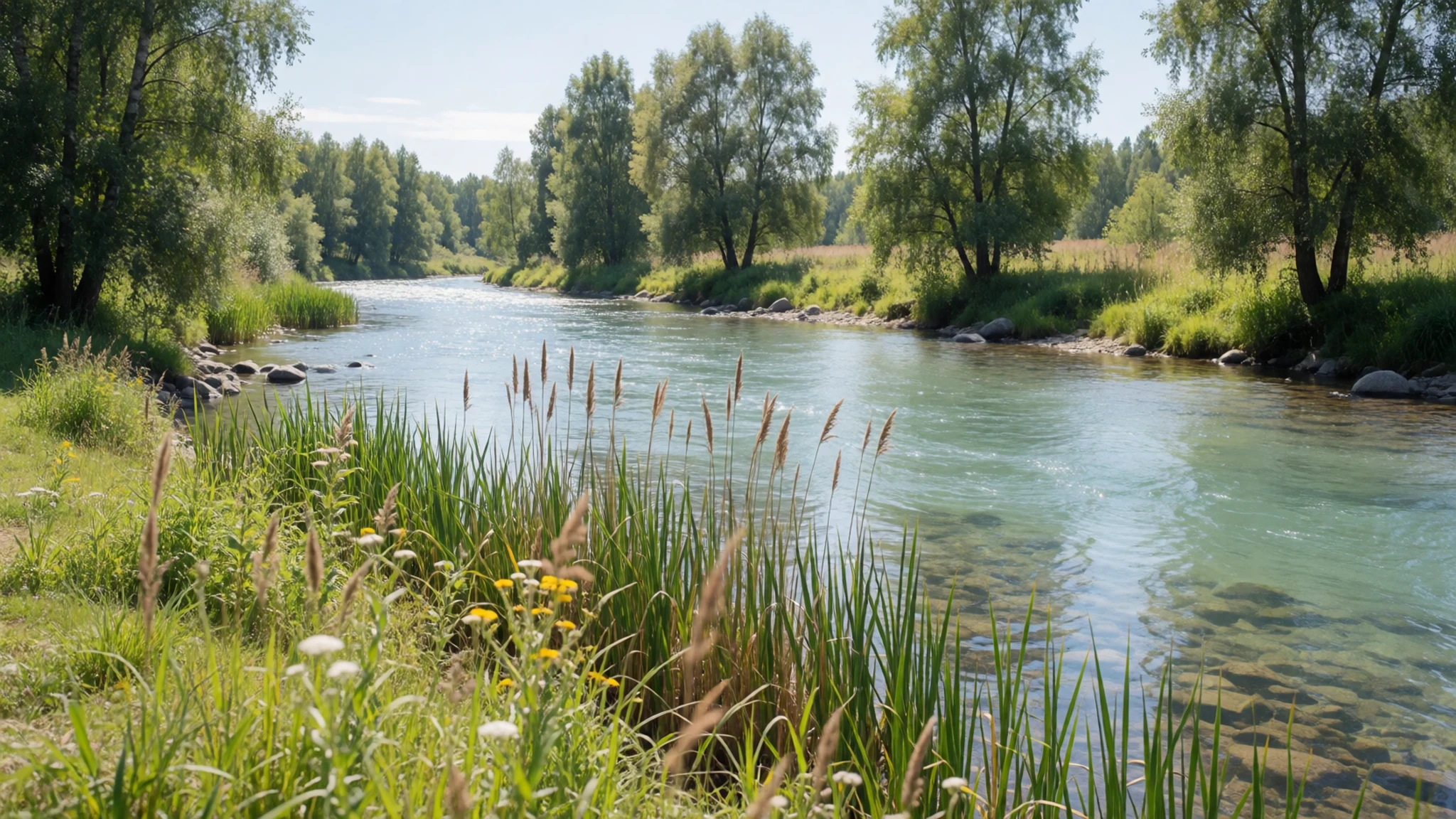
Culture
Tübän Kama National Park lies in Tatarstan, a republic with its own language, memory and political life inside the Russian state. Tatars are Russia's largest minority. Their name points to a Mongol past, but the history they tell starts with the Volga Bulgars on this river system, later folded into the Golden Horde and the Kazan Khanate. The Russian capture of Kazan under Ivan the Terrible is still treated as the break between that Turkic world and the centuries of Russian rule that followed. Kazan remains the capital anyone in the republic looks towards, a city that presents itself as Russia's third capital after Moscow and St Petersburg.
Around the park the same mix shows up in daily life. Sunni Islam is the faith most people follow, with a large Orthodox Christian presence beside it, so a weekend in Yelabuga or Naberezhnye Chelny can include both a mosque and a church without either feeling out of place. People are welcoming in the towns, and street crime is no longer the story locals tell about the 1970s through the 1990s, but a bag still deserves ordinary care.
In Tübän Kama National Park, and in any mosque you enter in the towns beside it, dress modestly, speak quietly, and ask before you photograph people at prayer.
What to wear
Tübän Kama National Park is a forest, but the dress people recognise as local belongs to Tatar towns around it, especially Kazan and Yelabuga. Traditional women's clothes centre on a long dress, a fitted velvet or silk jacket and a kalfak, the small embroidered cap, often with gold thread and a decorative tassel. Men's older formal wear includes a shirt under a sleeveless kamzul and soft leather boots. The textiles that matter are silk, velvet and wool, worked with gold embroidery for weddings, Sabantuy and stage or family occasions — not for a Tuesday in the pines.
On an ordinary day in Naberezhnye Chelny or Yelabuga people wear the same modern clothes as any Russian city: coats in the cold months, light layers when the weather turns, jeans, trainers and work jackets. National dress appears at festivals and in performances, then goes back into the wardrobe.
For Tübän Kama National Park itself, wear closed shoes with a grip, because the right bank is ravine country and meadow paths can be wet. Long sleeves and trousers help with mosquitoes near the water and with sun in the open grass. If a visit continues to a mosque in Yelabuga or Kazan, cover shoulders and knees and carry a light scarf.
What to eat
- Qatiq — Kazan markets and Tatar eateries in Yelabuga and Naberezhnye Chelny
Around Tübän Kama National Park, qatiq is the fermented-milk drink Tatars treat as a staple, nearer to Central Asian sour milk than to a Russian dairy. It is tangy, cold and slightly thick. Find it in Kazan markets and in Tatar eateries in Yelabuga and Naberezhnye Chelny.
- Echpochmak — Bakeries and Tatar eateries in Kazan and Yelabuga
Echpochmak is a triangular Tatar pastry of meat, potato and onion, with broth added through a small opening in the crust. It is filling, peppery and meant to be eaten by hand. Bakeries and Tatar eateries in Kazan and Yelabuga sell it warm.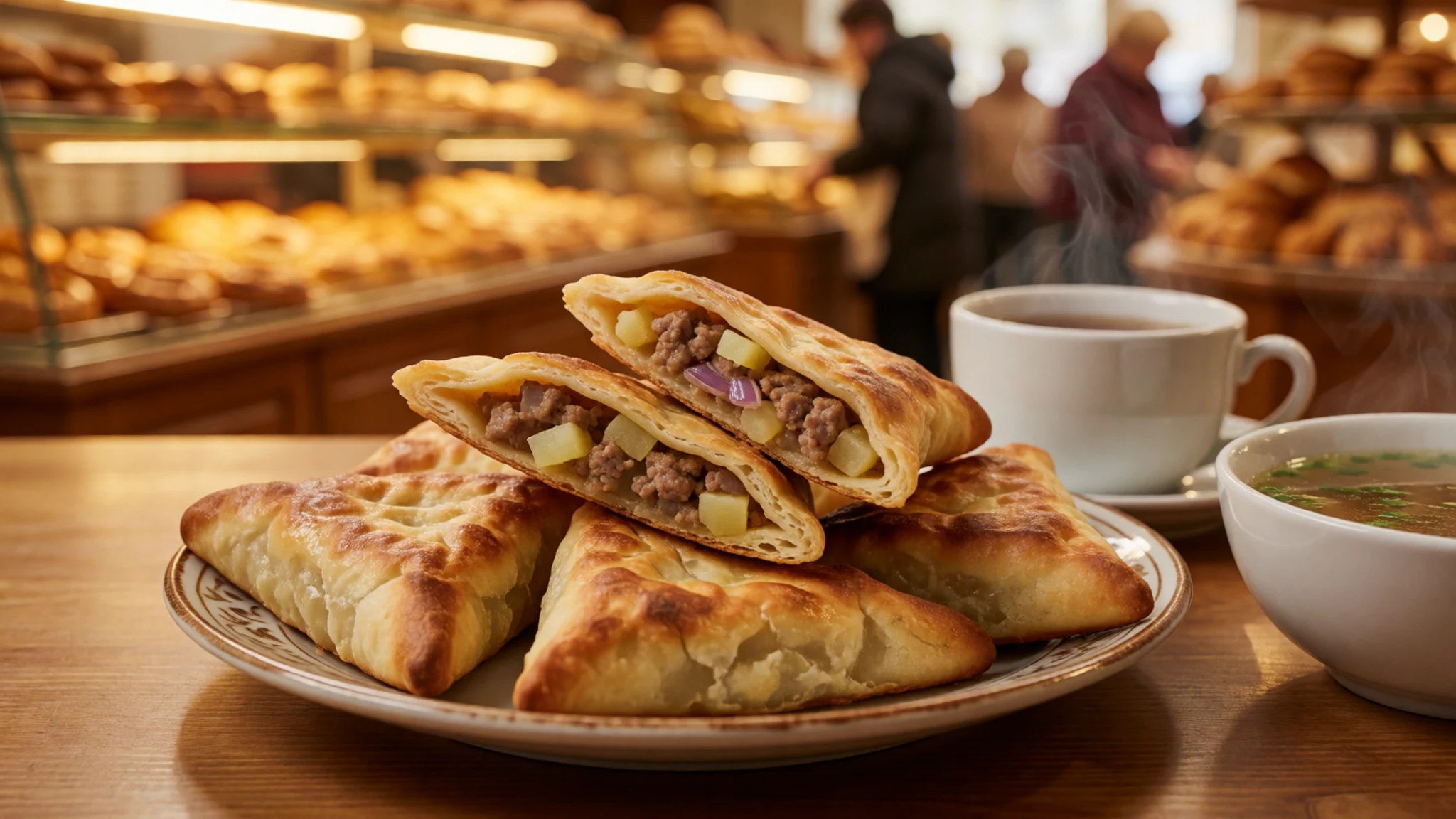
- Chak-chak — Confectionery counters in Kazan and shops in Yelabuga
Chak-chak is fried dough bound with honey, piled in a mound or pressed in a block and broken into sticky pieces. Weddings and holidays feature it, and sweet shops sell it on ordinary days too. Buy it from confectionery counters in Kazan or from shops in Yelabuga. - Gubadiya — Tatar eateries in Kazan and Yelabuga
Gubadiya is a layered Tatar pie of rice, egg and dried fruit in a sweet crust, sometimes with qort, a dried sour-milk curd. It is a celebration dish, rich enough to share. Order a slice in Tatar eateries in Kazan or Yelabuga. - Kystyby — Market stalls in Kazan and cafeterias in Naberezhnye Chelny
Kystyby is a soft flatbread folded over mashed potato or millet porridge and fried in butter until the edges colour. It is everyday food, hot and meant to be eaten straight away. Market stalls and simple Tatar eateries in Kazan, and cafeterias in Naberezhnye Chelny, are the right setting.
Plan it
Best time. May and June, then September and October, are the sensible months to walk Tübän Kama National Park, with enough daylight at this latitude for a cluster and a fair chance of passable paths. The brief has no climate table and no temperatures, so check conditions at https://nkama-park.ru rather than trusting a fixed forecast.
How long. 2–3
Getting there. Tübän Kama National Park is reached through Tatarstan's cities, not by a single park gate. Kazan airport takes domestic and international flights; Begishevo takes Moscow, other Russian cities and some flights from abroad. The Moscow–Kazan–Yekaterinburg railway crosses the republic, and Kazan's Volga port links river cities. The last leg is by road: Yelabuga for the right-bank clusters, Naberezhnye Chelny for Bolshoy Bor.
Budget. mid
Tips
- Treat the clusters as separate days: Yelabuga serves the right bank, Naberezhnye Chelny the left-bank peninsula.
- Read access rules on https://nkama-park.ru before leaving; do not trust remembered opening times.
- Begin on the ravine bank in the morning, when the paths are quieter.
- Carry drinking water; the meadows and reservoir shore are exposed, and shops sit in the towns, not in the pines.
- A pumpjack near Pospelovo is part of the landscape you may meet; it is not a sign you have left the park.
Etiquette
- Cover shoulders and knees and take off your shoes where a mosque requires it.
- Ask before you photograph worshippers or people in village lanes.
- Keep to marked ground on the ravines and leave closed forest alone.
- Leave prayer rooms and graveyards in silence; do not picnic there.
Nearby
Sources
- Wikidata Q2040708 (CC0)
- Wikipedia (rev 1377489307) (CC BY-SA 4.0)
- Wikivoyage (rev 5292148) (CC BY-SA 4.0)
- Photo photos/01-nkama-pumpjack.jpg (CC BY 3.0)
- Photo photos/02-.jpg (CC BY-SA 4.0)
- Photo photos/03-nkama-malybor2.jpg (CC BY 3.0)
- Photo photos/04-.jpg (CC BY-SA 4.0)
- Photo photos/05-.jpg (CC BY-SA 4.0)
- Photo photos/06-nkama-malybor1.jpg (CC BY 3.0)
- Photo photos/07-.jpg (CC BY-SA 4.0)
- Photo photos/08-.jpg (CC BY-SA 4.0)


