Tsushima
Tsushima, Japan
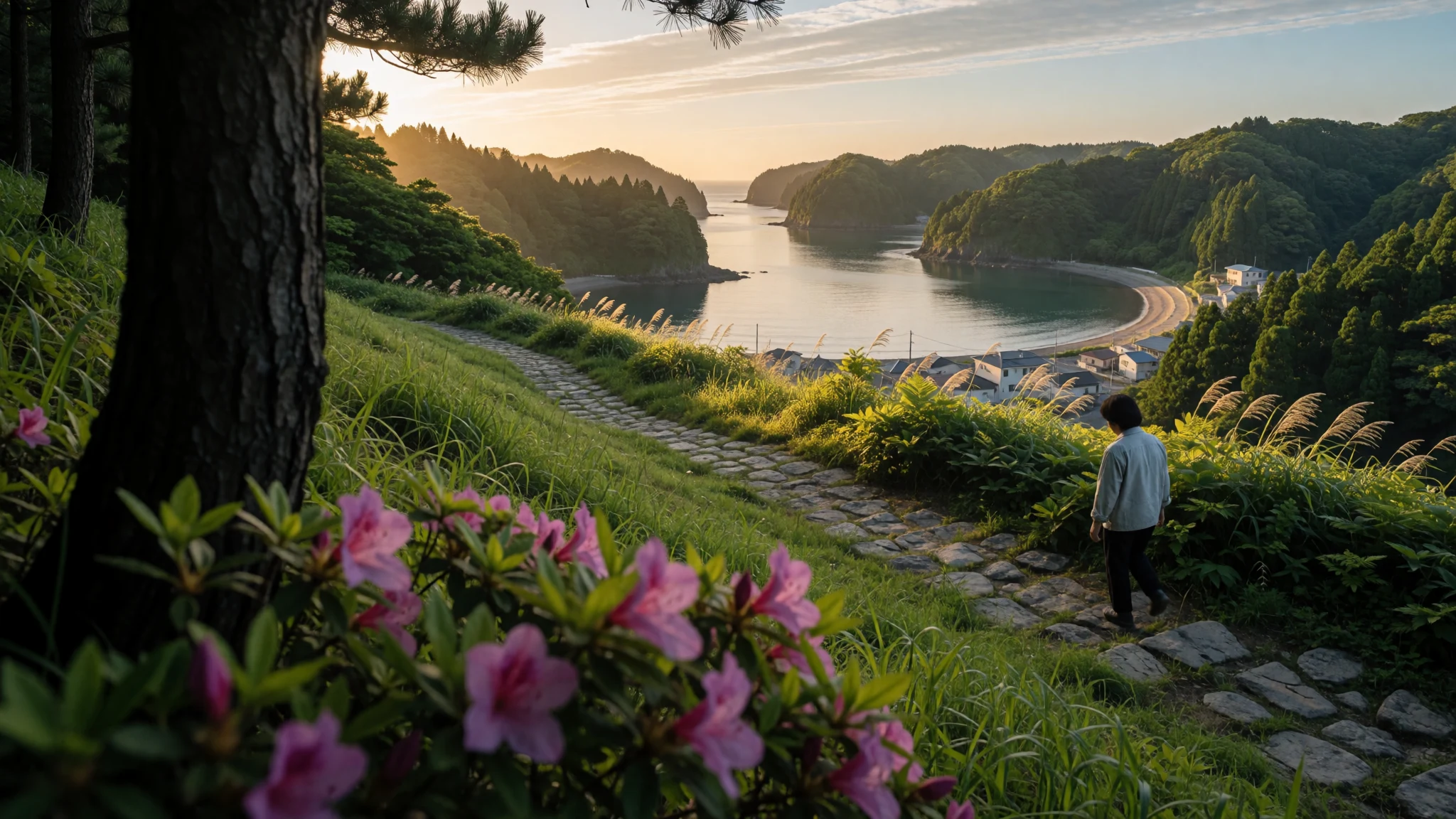
Tsushima is a quiet, forested border island between Japan and Korea, with deep bays, old shrines, fortress ruins and a shy wild cat.
The place
Tsushima is an island group in the strait between Kyushu and the Korean Peninsula, politically part of Nagasaki Prefecture yet geographically much nearer Korea than most of Japan. Busan lies about 50 km away, and from the higher northern ridges the Korean hills can be seen on a clear day. Around 31,000 people live here, mostly in small coastal towns, with Izuhara in the south and Hitakatsu in the north acting as the two ferry ports. The main island is long, narrow, steep and heavily forested, and its highest point reaches 649 metres. Two canals were cut through thin necks of land long ago, so the main island is in practice a northern half, a southern half and a slender piece joining them. More than a hundred smaller islands lie around it, many of them tiny. The defining feature of the map is Asō Bay, a ragged, many-armed inlet where drowned valleys leave calm water, tangled shorelines and good viewpoints from the ridges. With so little flat farmland, islanders have long lived from the sea, catching squid in particular, and from trade across the water. In recent years visitors from South Korea have added a new strand to that economy. The atmosphere is quiet, green and a little remote, with hikes, shrines, bays and wildlife rather than big attractions. It feels crowded only when a ferry has just docked.
Its story
Tsushima appears in Japan's origin myth as one of the islands brought forth by the deities Izanagi and Izanami. Archaeology gives a more earthly picture: settlers from both the Japanese archipelago and the Korean Peninsula lived here from the Jōmon period through the Kofun period. A Chinese text, the Records of the Three Kingdoms, describes a small seafaring country that scholars usually identify with the island, and it was linked into a wider league of states and into trade with Yayoi Japan. Farmland was scarce even then, so fishing and carrying goods across the water were the main ways to make a living. From the early sixth century Tsushima was an official province of Japan, tied administratively to Dazaifu, the regional centre in Kyushu, and to the capital. Its position made it a front line. After Japan's ally Baekje was beaten by Silla and Tang forces at the Battle of Baekgang in 663, border guards were posted to the island and Kaneda Castle was built to guard against attack from the continent. Local power later passed through several hands: hereditary officials in the early centuries, then the Abiru clan until the middle of the thirteenth century, and after that the Shōni clan, who held the governor's title for generation after generation. The island's story is largely one of gatekeeping, defending one coast while trading with the other.
What to see
- Tsushima Wildlife Conservation Centre — North Tsushima
The Tsushima Wildlife Conservation Centre, in the north of the island, supports work to protect the Tsushima leopard cat. The animal is nocturnal, shy and a strong tree climber, so wild sightings are very unlikely. A visit explains its habitat and its struggles, and gives context to the cat image printed on souvenirs everywhere. Check opening details locally before going.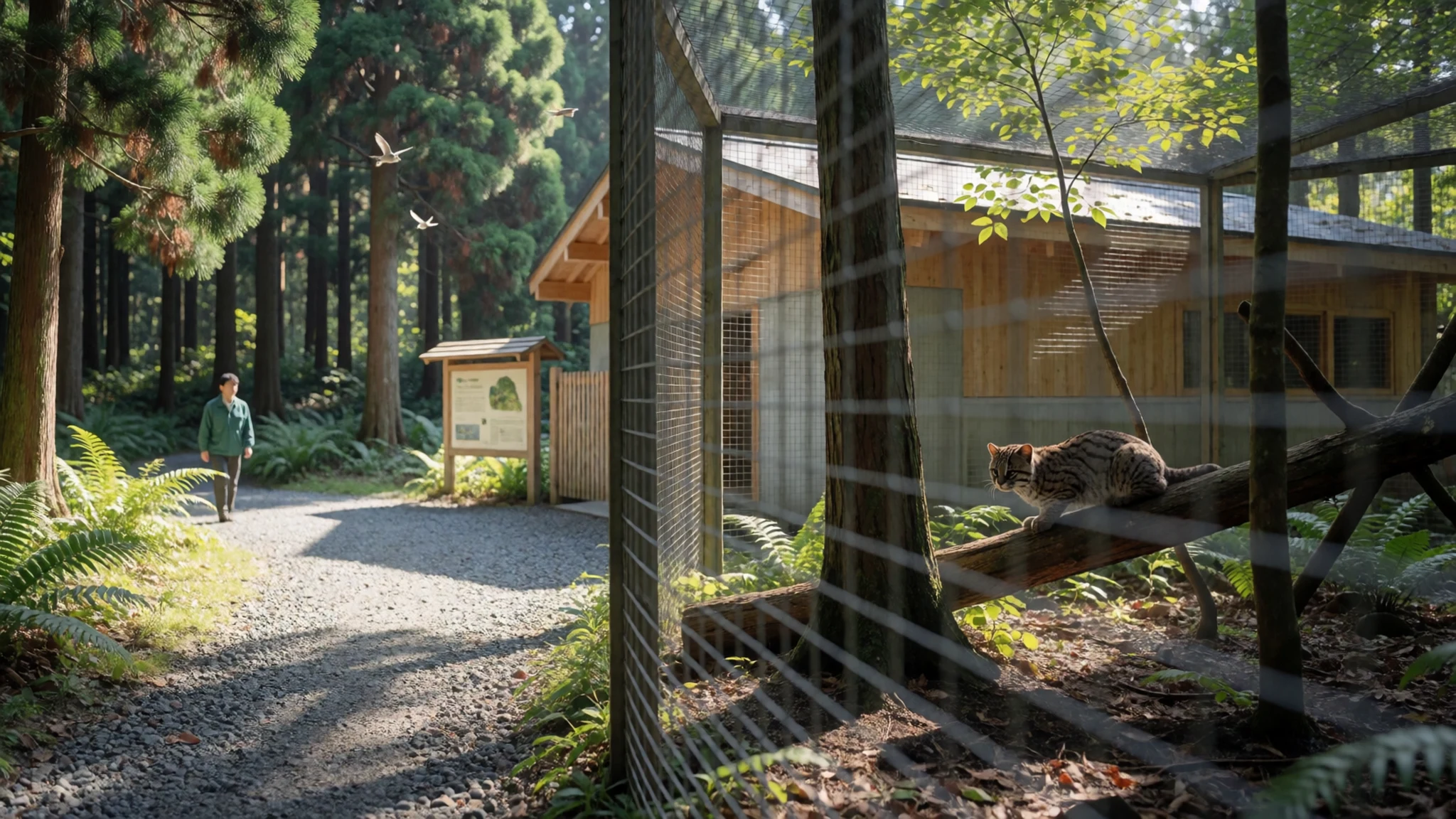
- Watatsumi Shrine — Central coast
Watatsumi Shrine is a Shinto site on the island's coast, and the name points to the sea deity honoured there. It is a good place to understand how closely island life has been tied to the water. Allow time for a slow walk through the grounds, and check access and any seasonal changes locally.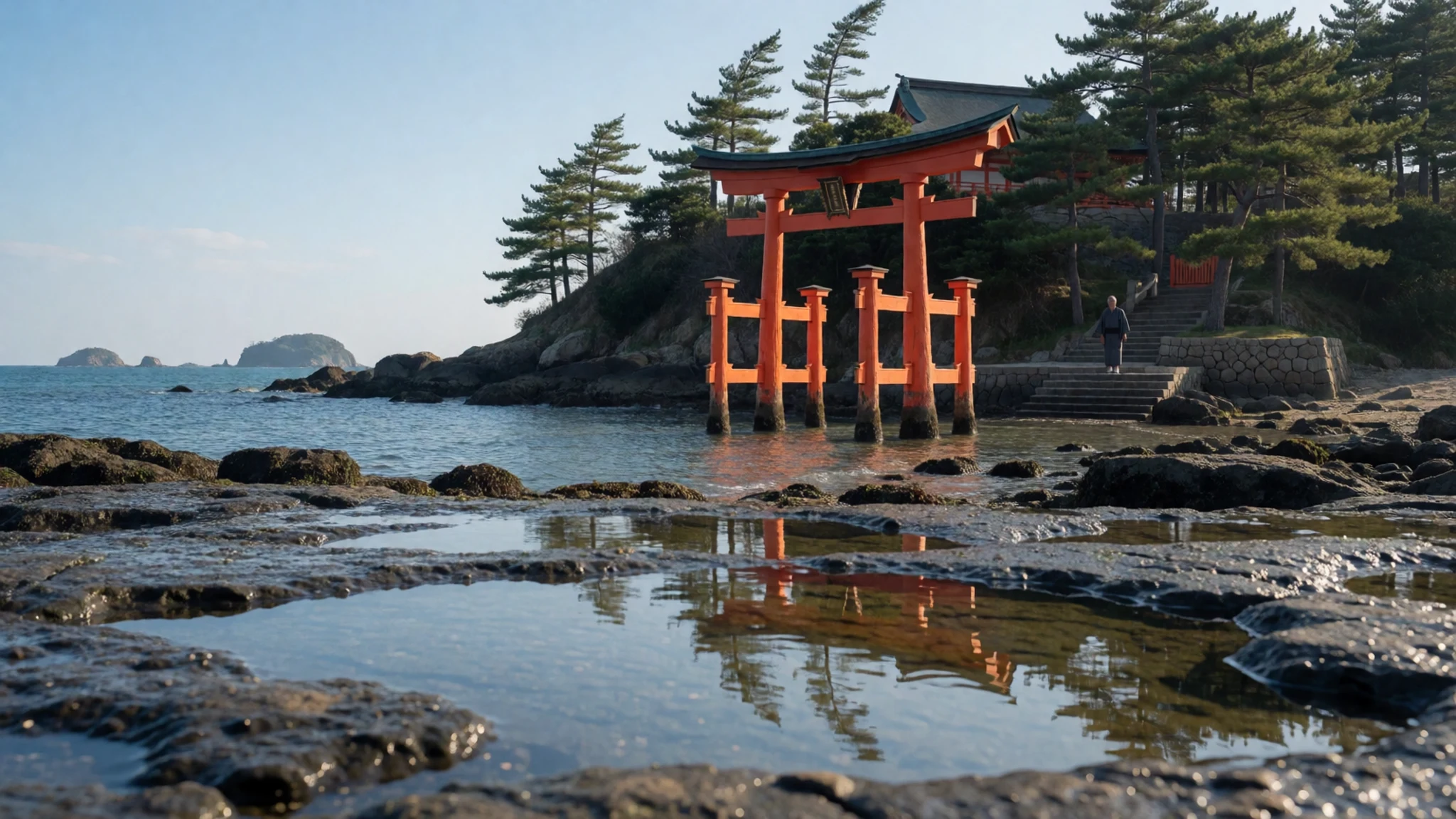
- Kaneda Fortress Ruins — South Tsushima
The Kaneda Fortress Ruins mark the site of the castle raised after the defeat at Baekgang, when the island became a lookout against the mainland. What remains is ruin rather than a restored building, so the reward is the walk and the outlook over Asō Bay from the hilltop. Wear proper footwear, as paths can be rough and damp.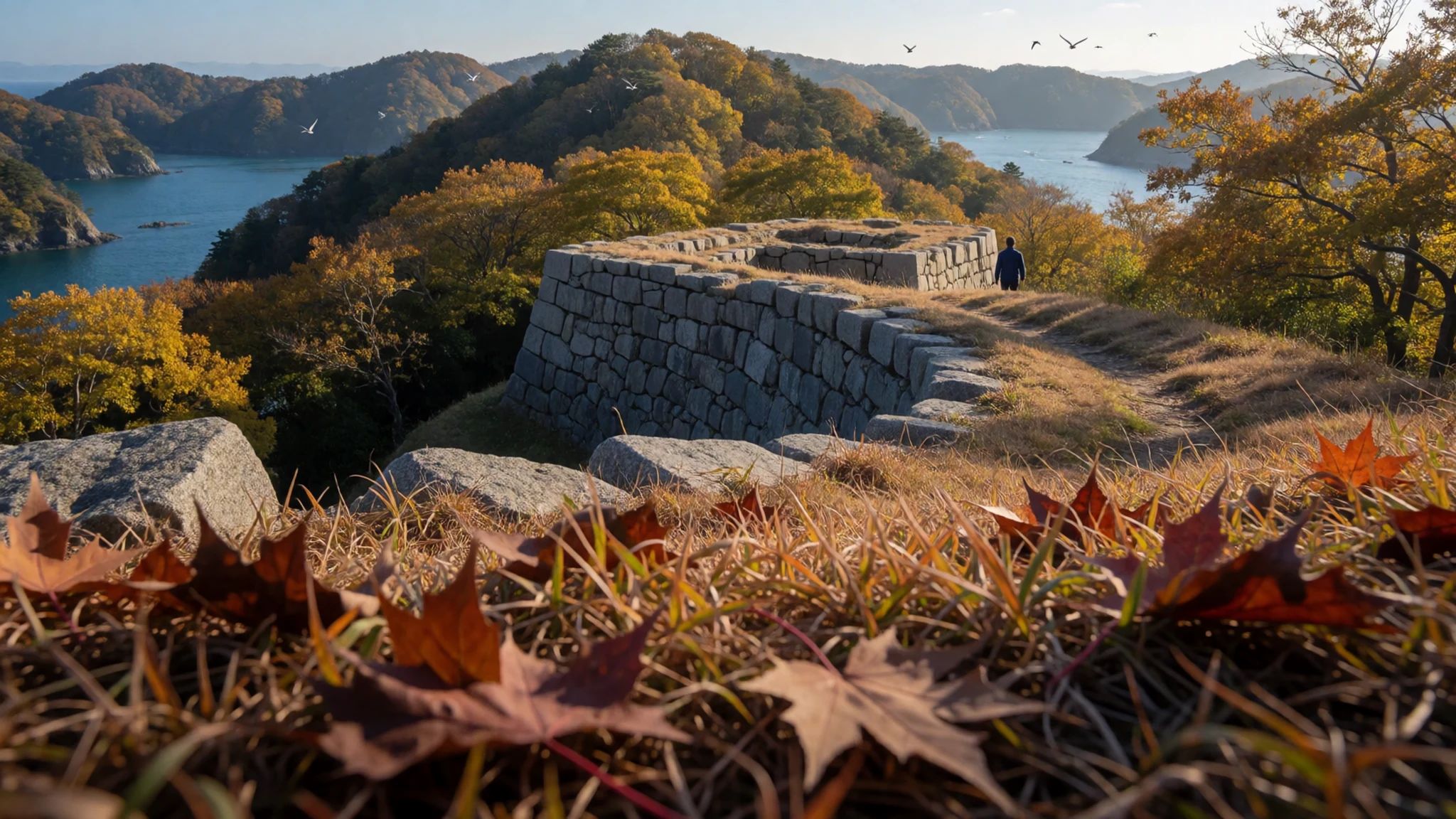
- Ohjinushi Shrine — North Tsushima
Ohjinushi Shrine lies in the northern part of Tsushima, away from the main town of Izuhara. It suits a day spent driving or cycling the quieter north, combining a small shrine visit with coastal views. Because the island is long and the roads wind, count travel time carefully when planning stops.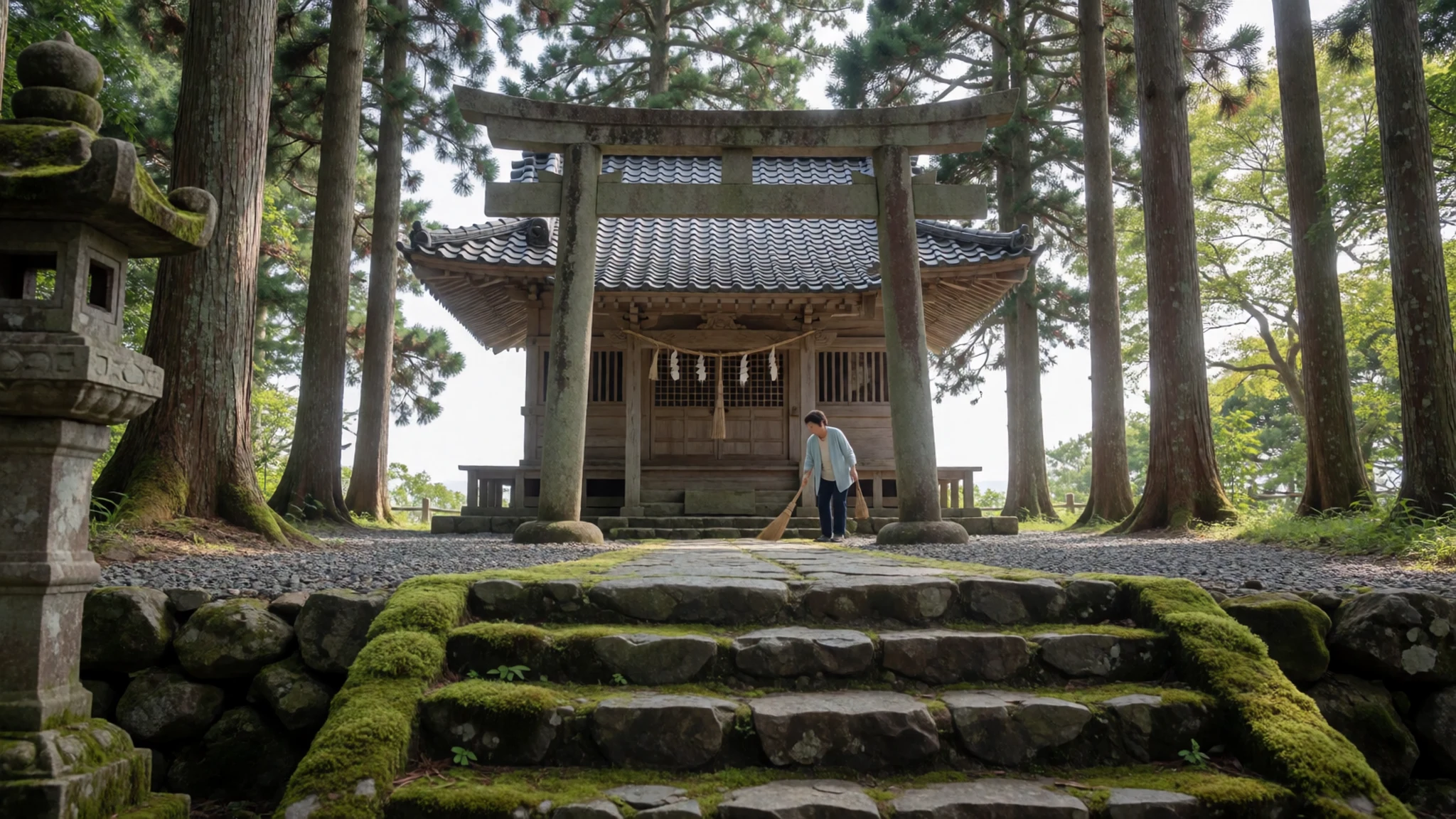
- Komotahama Shinto Shrine — South-west coast
Komotahama Shinto Shrine sits close to the shore on the south-western side of the island. The setting combines a small shrine with open sea and a quiet beach nearby, a calm contrast to the steep, forested interior. Few other visitors are likely, so it works as an unhurried stop.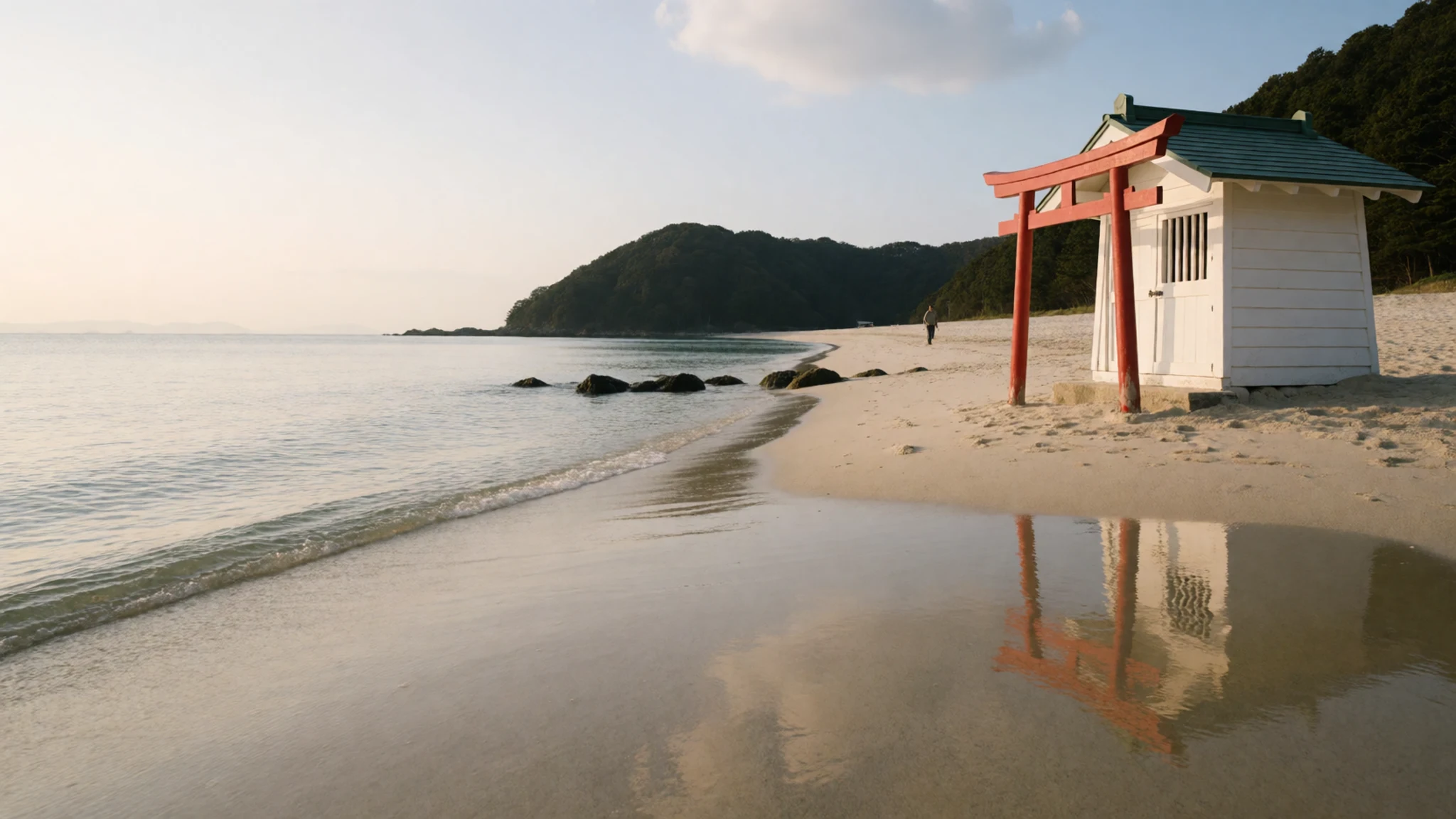
- Miuda Beach — South-west coast
Miuda Beach lies near the far south-western end of Tsushima. It is a place for sand, clear water and a long look across the sea rather than for facilities or crowds. Swimming suits the warmer months only, and it is wise to bring food and water because services nearby may be limited.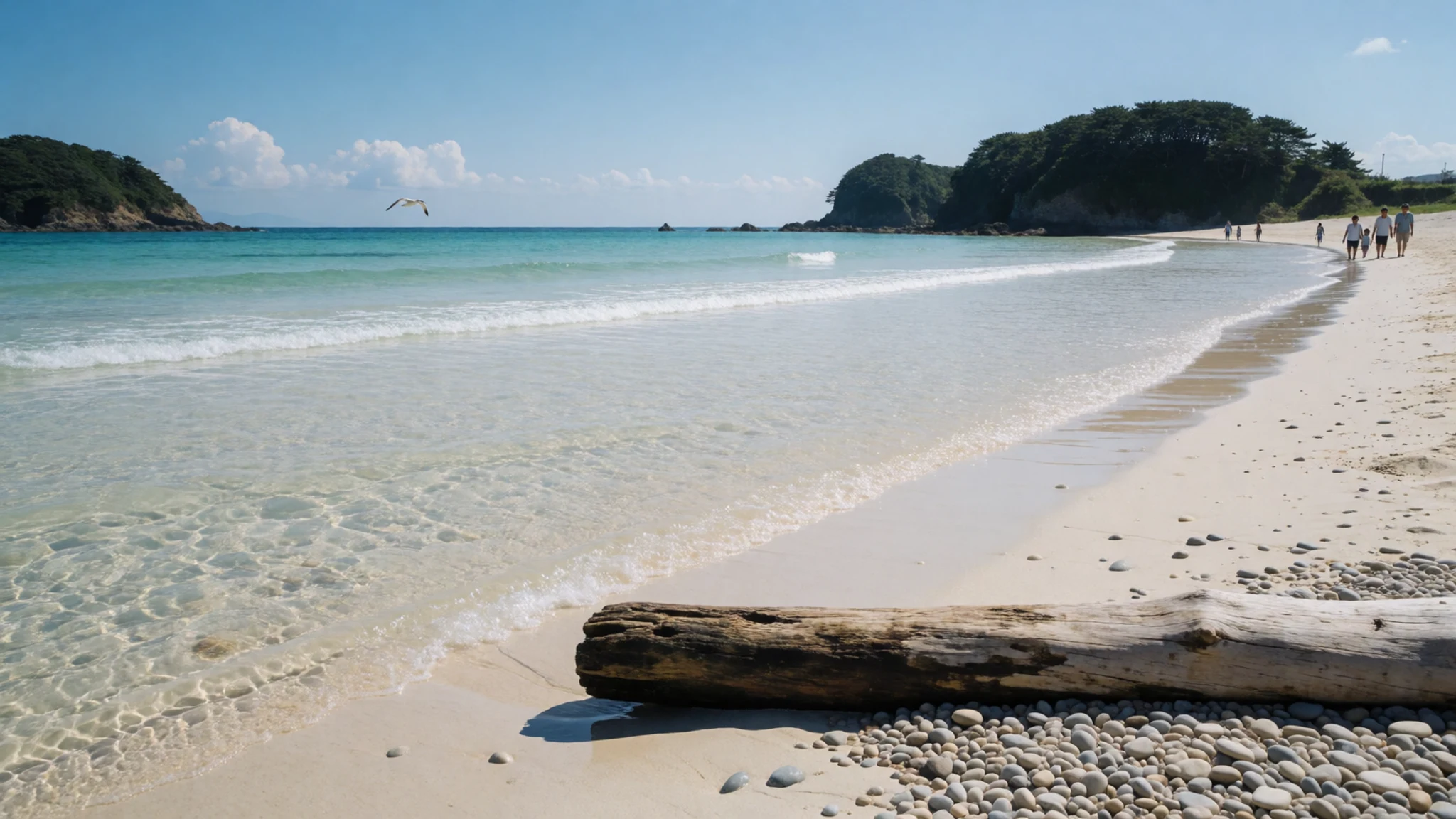
Culture
Tsushima's culture comes from being a gateway, with Shinto shrines, fishing communities and long contact with Korea all sitting side by side. Shrines are scattered along the coast and inland, from substantial precincts to tiny ones by the harbour, and many are linked to the sea and to safe passage across it, which suits an island whose history is about crossing water. Fishing shapes the calendar and the diet, and the boats going out and coming back set the pace in small ports. The Korean connection is visible too: signs, menus and ferry notices often appear in Korean as well as Japanese, because many visitors cross from Busan, and the economy now leans on them. Islanders tend to be reserved but helpful, and a few words of Japanese go a long way. The Tsushima leopard cat has become a local emblem, appearing on souvenirs and posters, and conservation is a source of local pride. Outside the main towns life is quiet, and eateries and shops can keep short hours, so it pays to plan meals ahead. Festivals and shrine events follow the seasons, and local notice boards or the tourist office are the best guide to what is on. At any shrine, bow briefly at the gate, keep to the side of the path, and speak softly.
What to wear
Tsushima has no widely known costume of its own, so traditional dress here means the same garments found across Japan. The kimono, usually made of silk, is worn for weddings, formal ceremonies and some festivals, while the lighter cotton yukata appears in summer. Festival crews may wear short happi coats, and fishing families have long relied on practical, hard-wearing work clothes. Day to day, islanders dress simply: jeans, fleeces, waterproof jackets and sturdy shoes, with fishermen in oilskins and boots. Smart clothes are kept for ceremonies. Visitors should dress for weather and terrain rather than for show. The island is hilly and forested, so walking shoes or light boots with good grip are the sensible choice, especially for fortress ruins and shrine steps that can be wet. Summer is warm and humid, calling for breathable layers, a hat and sun protection, while spring and autumn evenings can turn cool and the wind off the sea cuts through thin clothing. Bring a light waterproof year-round. At shrines no special dress is required, but covered shoulders and tidy, modest clothing show respect. Beachwear belongs on the sand, so carry a cover-up for the walk back to town. Slip-on shoes help where footwear has to come off at doorways.
What to eat
- Ika sashimi — Harbour-side eateries in Izuhara and Hitakatsu
Squid is the island's main catch, and fresh squid sashimi is the dish to try. It is served sliced thin and translucent, with soy sauce and ginger, and tastes best in the season when boats land it daily.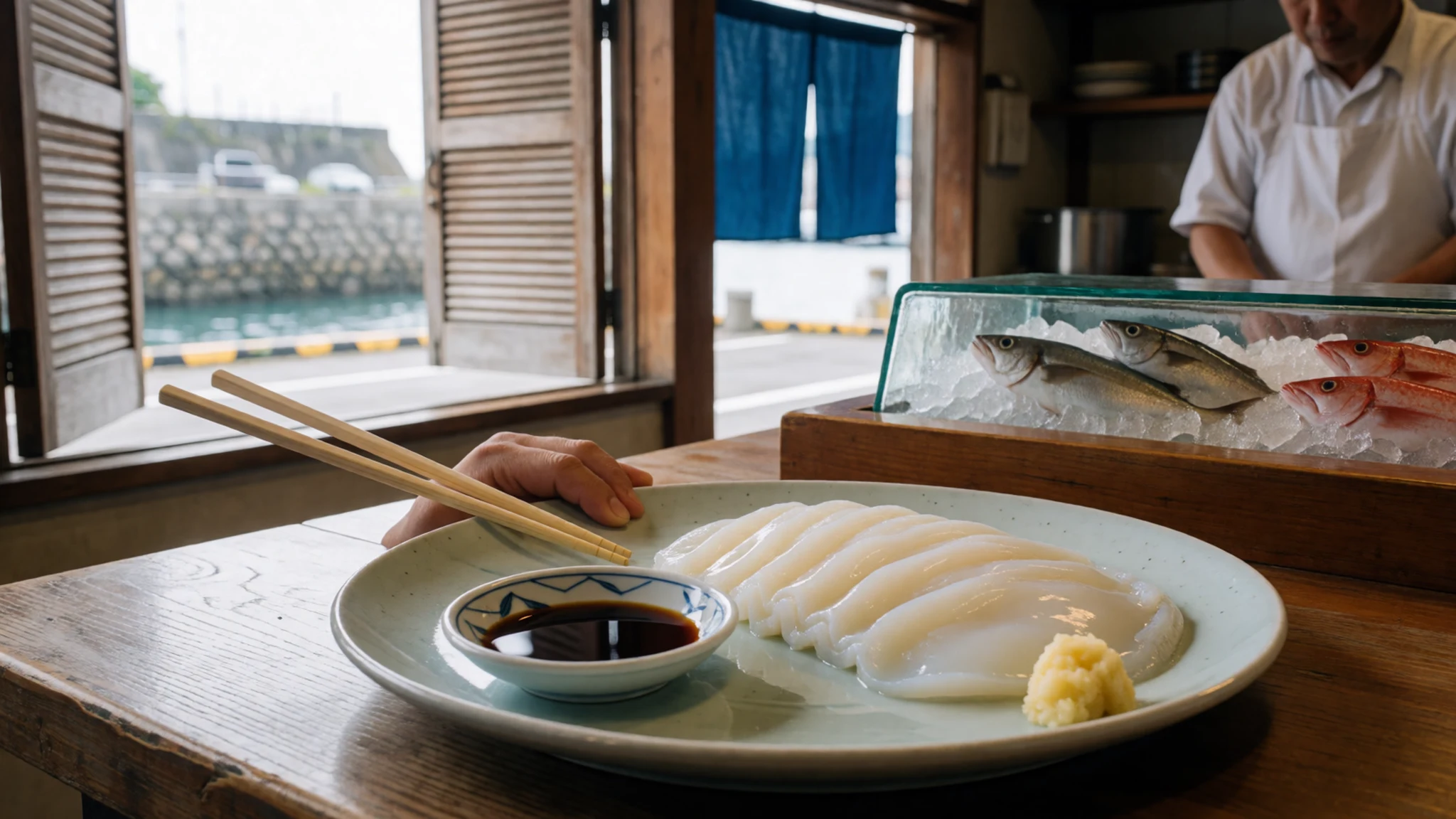
- Rokubei — Noodle shops and family-run restaurants in the main towns
Rokubei is a local noodle made from sweet potato, giving a chewy, slightly springy texture unlike wheat noodles. It is usually served in a simple broth or stir-fried, and reflects the island's habit of making do with what grows well.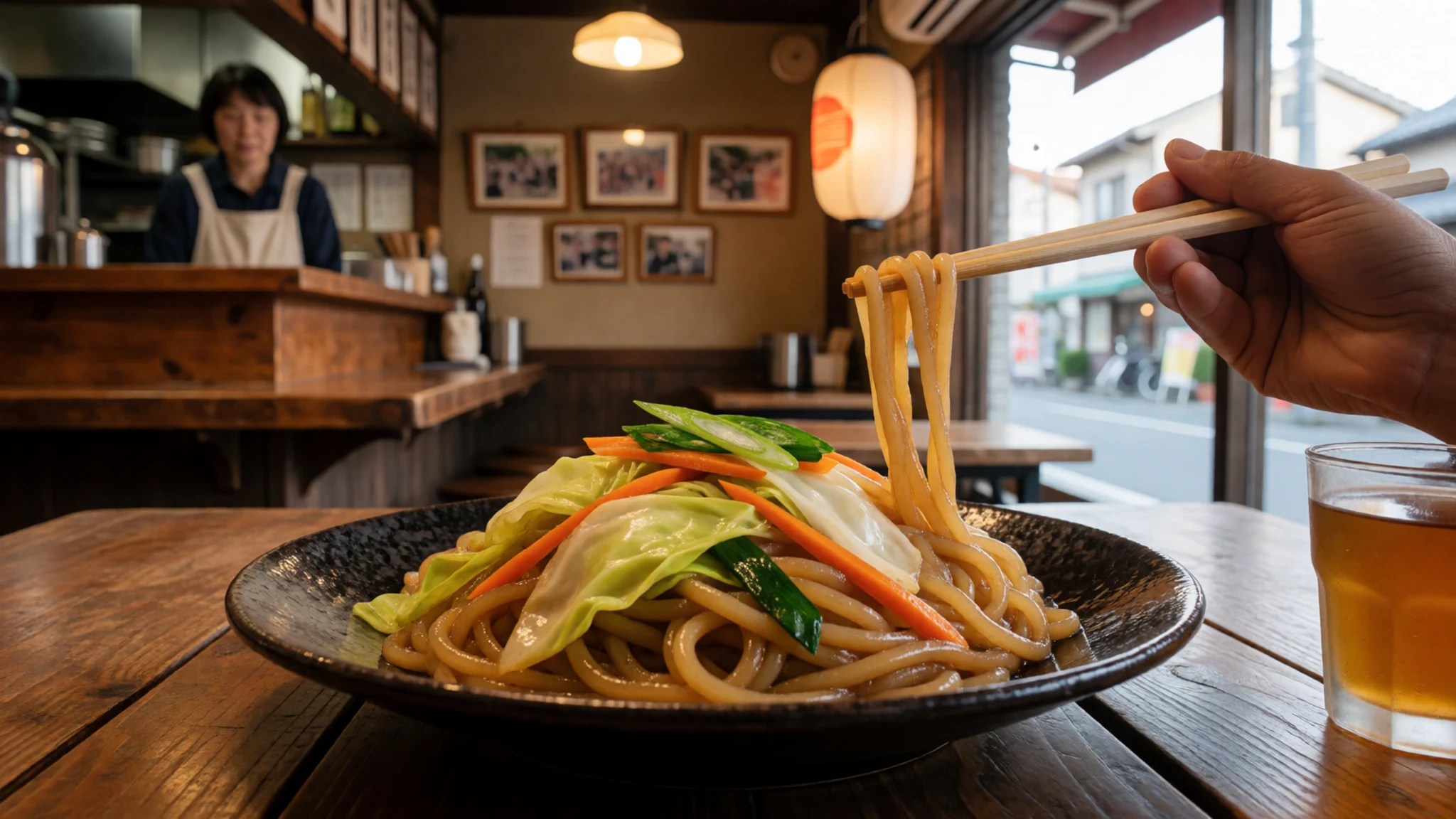
- Tonchan — Local home-style restaurants and izakaya in Izuhara
Tonchan is pork marinated in a sweet and salty soy-based sauce and fried or grilled until caramelised. It is hearty, everyday food that goes well with rice, and many island households have their own version. - Anago — Seafood restaurants near the ports
Anago, or conger eel, is caught in the surrounding seas and served grilled, simmered or as tempura. The flesh is soft and mild, and it works well over rice with a sweet glaze. - Ishiyaki — Traditional restaurants and guesthouse dinners
Ishiyaki means cooking on a hot stone, and on Tsushima it is used for fish and shellfish that sizzle at the table. The method is simple and keeps the seafood juicy, with a smoky edge from the stone.
Plan it
Best time. April–May and October–November are the most comfortable months, with mild walking weather and clear views; cherry blossom comes in spring. Summer is warm and humid, late summer brings typhoon risk, and winter can be cold with rough crossings.
How long. 2–3
Getting there. Tsushima has two ports: Izuhara in the south and Hitakatsu in the north. Ferries and jetfoils run from Fukuoka, stopping at Iki, and ferries run from Busan, mostly to Hitakatsu. Check the operators' official sites for current timetables and fares. On the island, a hire car makes the long, hilly coast much easier.
Budget. mid
Tips
- Check sailing times before booking, as rough weather can disrupt crossings
- Hire a car or arrange local transport early, because public buses are limited
- Carry cash for small shrines, shops and rural eateries
- Start hikes and fortress visits early and take water
- Bring insect repellent in warm months for wooded paths
Etiquette
- Bow briefly at shrine gates and keep to the side of the path
- Remove shoes where there is a step up or slippers are provided
- Keep noise down in fishing villages and near shrines
Nearby
Sources
- Wikidata Q52051 (CC0)
- Wikipedia: Tsushima Island (CC BY-SA 4.0)
- Wikivoyage: Tsushima (CC BY-SA 4.0)
- Photo: Tsushima Island ISS034 (NASA) (Public domain)
- Photo: Aso Bay viewed from Mount Jo (Saigen Jiro) (CC0 1.0)
- Photo: Top of Mount Shiroyama and Aso Bay (irisgazer) (CC0 1.0)
- Photo: Tsushima Cat 001 (Pontafon) (CC BY 3.0)
- Photo: Someiyoshino (CC BY 3.0)
- Photo: Chionanthus retusus flower (CC BY 3.0)
- Photo: Tsushima harbour 1990 (Fg2) (Public domain)
- Photo: View from Shimizuyama 2017 (Ackeyyama) (CC BY-SA 4.0)


