Trondheim
Trondheim, Norway
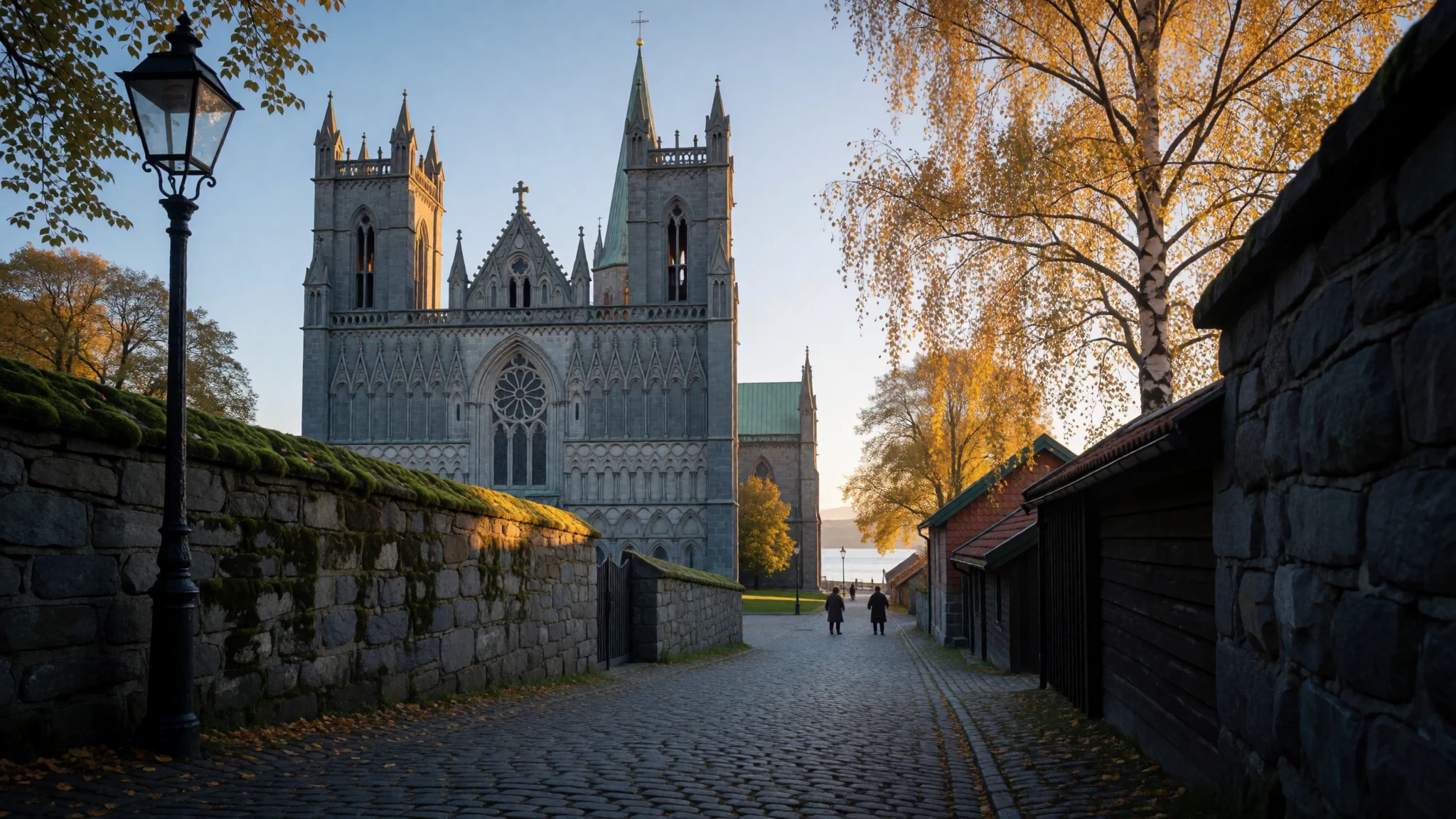
Trondheim pairs a Gothic cathedral and Viking-founded streets with student energy, wooden warehouses on a river, and a fjord within easy reach.
The place
Trondheim sits on the south shore of its fjord, where the Nidelva river loops round the old centre before reaching the sea. About 216,500 people live in the municipality, which makes it Norway's third most populous, and a large share of them are tied to the university, the research institute SINTEF or the big teaching hospital. That gives the city a younger, busier feel than its size suggests. The centre is compact and flat enough to cross on foot. Torvet, the main square, anchors it, with the cathedral a few minutes to the south and the river bridges to the east. Across the Nidelva, Bakklandet is a district of painted timber houses, cafés and cobbled lanes, linked to the centre by the old town bridge. The climate is gentler than the latitude suggests: summers are moderate, and in coastal parts winter often stays above freezing, though it is still dark, wet and windy at times. Summer evenings stay light for a long while, and the city turns outdoorsy then, with people swimming off the island fortress, cycling the riverbanks and eating outside. Winter is quieter, cosier and usually easier on room rates, but the days are short. Norway is expensive and Trondheim is no exception, so student canteens, bakery lunches and picnics help. The centre is easy to handle: modest crowds, a walkable core, and fjord and forest close by.
Its story
Trondheim's story starts with a Viking king's trading post. Olav Tryggvason set it up beside the Nidelva in 997 and named it Kaupangen, 'the market place'. The name soon shifted to Nidaros, the mouth of the river. People had lived round the fjord for thousands of years before that, leaving rock carvings across central Norway, and the river mouth was where free men gathered at the Øretinget assembly to acclaim their rulers. Harald Fairhair and his son Haakon the Good were both hailed there. Nidaros served as a royal seat and remained Norway's capital until 1217. Church power then shaped the town: from 1152 it was the seat of the archbishop of Nidaros, whose palace stood close to the site of the cathedral. The Reformation ended the Catholic archdiocese, but a Lutheran diocese of Nidaros carried on and the cathedral remained at its heart. The Battle of Kalvskinnet, fought here in 1179, saw King Sverre and his Birkebeiner fighters defeat the rival claimant Erling Skakke. Some scholars also suggest that the Lewis chessmen, twelfth-century walrus-ivory pieces now in London, were carved in the city. The town was incorporated in 1838, and the modern municipality took shape in 1964 by merging with neighbouring districts. It grew again in 2020, when Klæbu joined. Trondheim and Trondhjem are the same place under newer and older spellings, and Tråante is the Southern Sami name.
What to see
- Nidaros Cathedral — South of the centre
Nidaros Cathedral is the city's anchor and the main reason many visitors come. It is a Gothic building and the seat of the Lutheran diocese, standing where the medieval archbishops once held sway. Allow time for the carved west front and the interior. Opening times and tower access vary, so check the official site before planning around them. - Bakklandet and Gamle Bybro — East bank of the Nidelva
Bakklandet lies across the Nidelva from the centre, a district of timber houses in warm colours, small cafés and cobbled lanes. The old town bridge, Gamle bybro, connects it to the centre, and its gateway, Lykkens Portal, is a favourite spot for photographs. Come in the morning for quiet or late afternoon for the river light.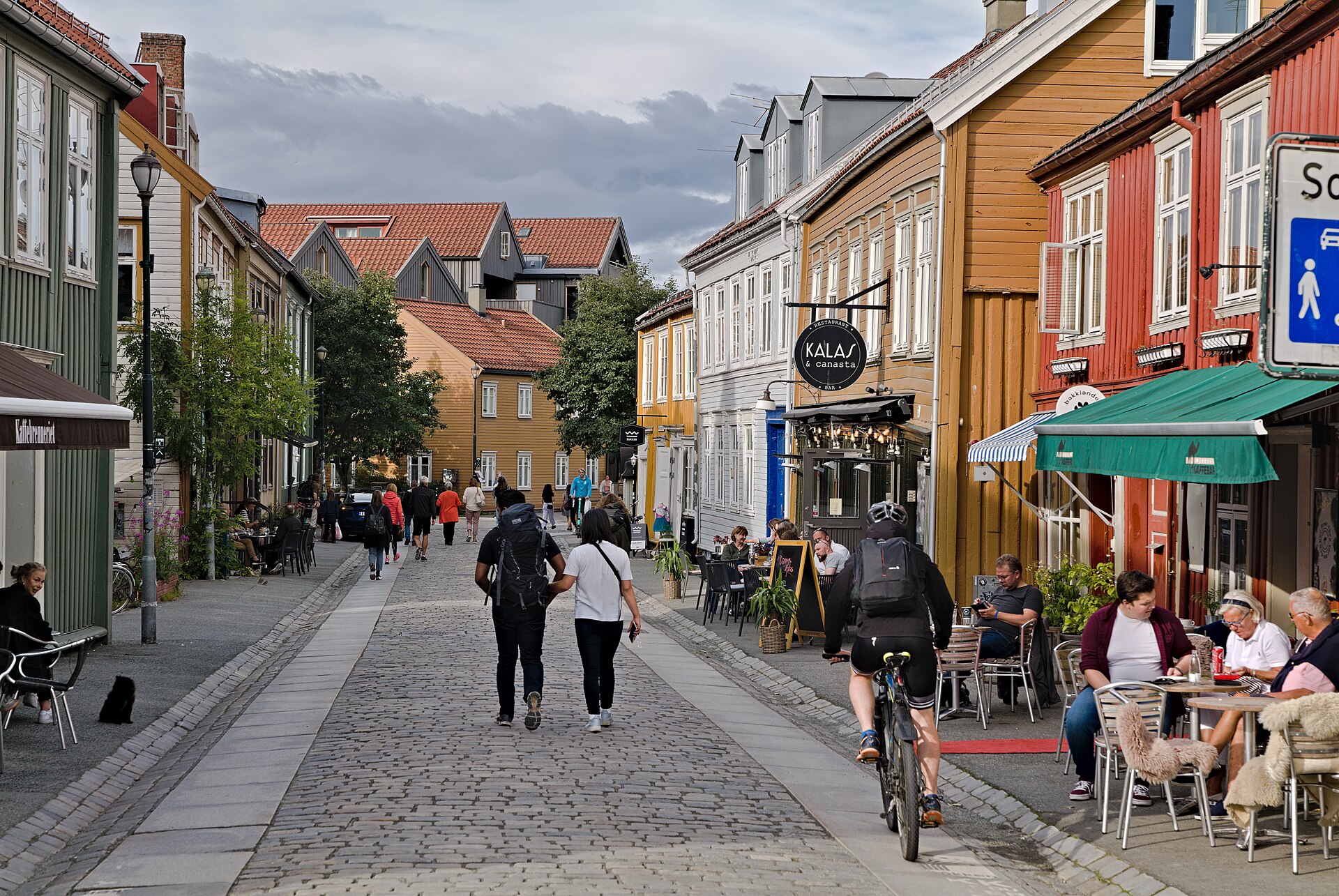
- Munkholmen — Island in the fjord
Munkholmen is a small island fortress in the fjord, once a monastery site and later a defensive post. In summer a ferry runs from mid May to early September, and locals swim and sunbathe on the rocks. Check the ferry schedule locally, since sailings depend on the season and the weather.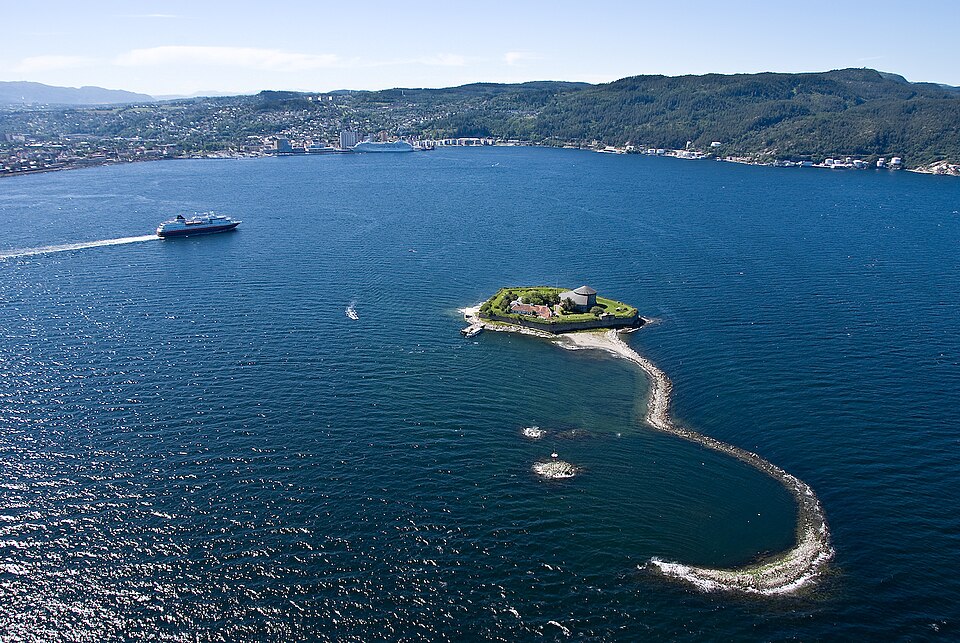
- Kristiansten Fortress — Hill above the centre
Kristiansten Fortress stands on a hill above the centre and gives a clear view over rooftops, river and fjord. It can be reached on foot from Bakklandet or by city bus, and cyclists can use the bike lift at Trampe. Go on a clear evening, when the light across the water rewards the climb. - Torvet — Central square
Torvet is the central square and the hub of daily life, ringed by shops and cafés. Market stalls sell food, clothes and souvenirs, though much of it is aimed at tourists, and the square hosts concerts and events. It works best as a meeting point and a place to get bearings before heading to the river or cathedral.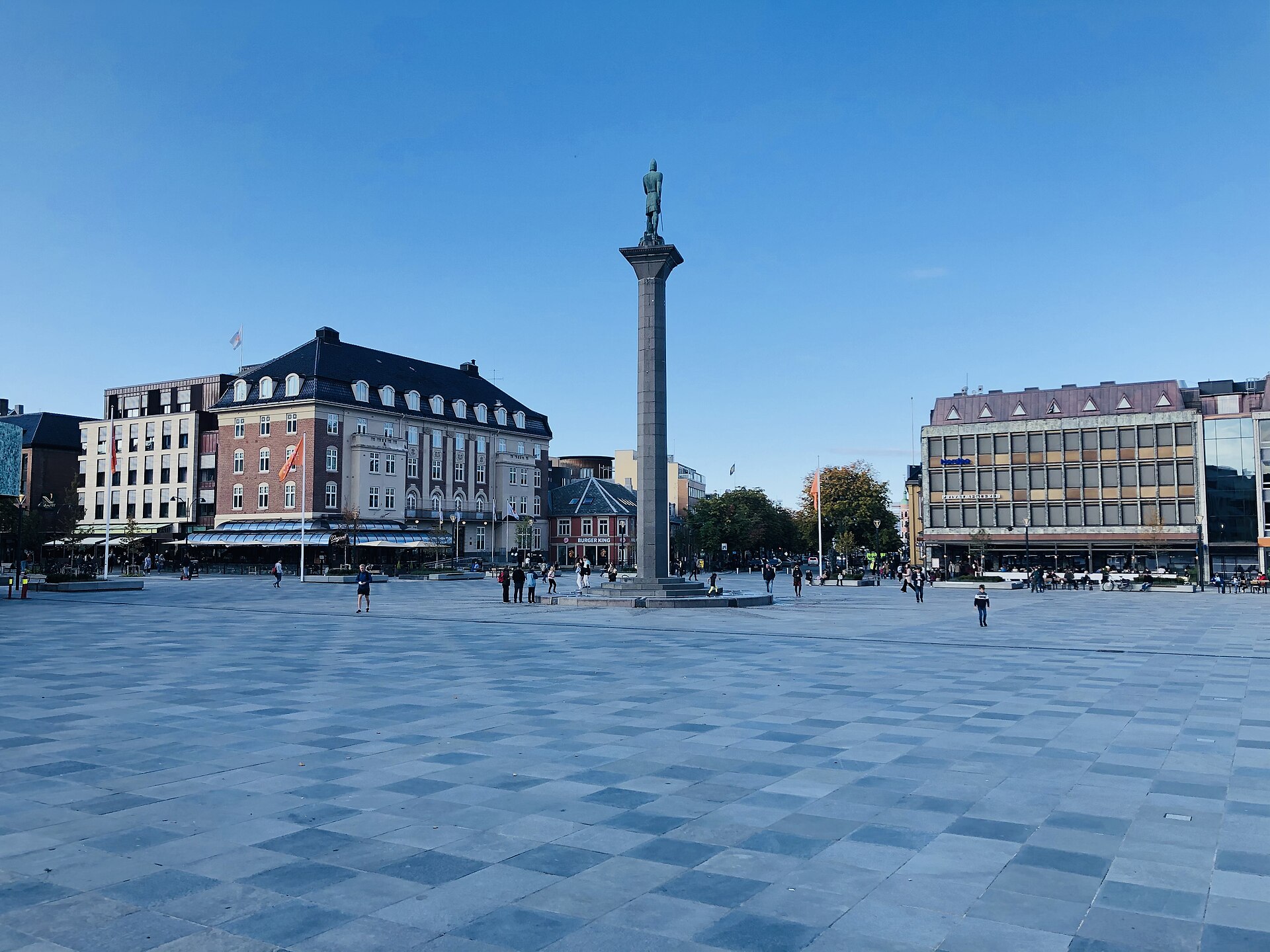
- Dora 1 — Harbour area, north-east of the centre
Dora 1 is a concrete submarine base built during the German occupation of Norway, which lasted from 1940 to 1945. Its bulk looks stark beside the pleasant waterfront, and it now works as a reminder of the war years. Tours and exhibitions change, so check current information before going.
Culture
Trondheim's culture mixes old church tradition with a lively university scene. The art museum holds mainly Norwegian work from the last century and a half, while the decorative arts and design museum shows tapestries by Hannah Ryggen and a permanent display of Japanese crafts, unusual for Norway. Contemporary art has several homes: a regional centre for the field, artist-run spaces such as Galleri Blunk and Babel, Kunsthall Trondheim on Kongens gate, and a newer museum of recent art on Dronningens gate. Trøndelag Teater is the main regional stage. The student society's red round building near the centre hosts concerts and events, and the huge student population keeps cafés, bars and music venues busy during term time. Social life is informal and unshowy. Norwegians queue patiently, keep their voices down on buses and trams, and spend as much free time outdoors as the weather allows, walking, skiing, swimming and cycling. The city's Sami heritage appears in the Southern Sami name Tråante, which is used alongside the Norwegian one. Prices are high, tipping is modest, and cards are accepted almost everywhere. Inside Nidaros Cathedral, keep your voice low, stay out of areas roped off for services, and ask staff before using a flash or tripod.
What to wear
Trondheim's traditional dress is the bunad, a regional costume that Norwegians wear with pride. Bunads are made mainly of wool, often with embroidery, and finished with silver jewellery such as brooches, and each district has its own cut and colours, including ones for Trøndelag. They appear on Constitution Day in May, at weddings, confirmations and christenings, and at some church festivals. Textile art has its own local standing too, thanks to the woven wall hangings of Hannah Ryggen. Day to day, people dress for weather and practicality: wool or fleece layers, waterproof jackets, trainers or sturdy boots, and plain dark or muted colours, with a bicycle often close by. Students add a casual, secondhand look. Smarter clothes appear for the theatre or a good restaurant, but jackets and ties are rare. A visitor should pack layers whatever the month, since a sunny morning can turn to rain by noon. Bring a proper waterproof, a warm hat and gloves outside summer, and comfortable shoes with grip for cobbles, hills and wet bridges. Swimwear is useful from June, and sunglasses help with the low northern light. Churches have no strict dress code, though covered shoulders and removed hats are polite in the cathedral.
What to eat
- Pølse with lomper — Hot dog stands and kiosks across the centre
A sausage served in a bun, or wrapped in lomper, a soft flatbread made from flour or potato. It is Norway's classic cheap snack, and kiosks and carts around the centre sell it with a choice of toppings. - Student canteen lunch — University campus canteens, including the SiT cafés
The big student population supports several campus canteens that serve hot lunches, with plates usually paid for by weight. It is among the most affordable ways to eat a proper meal in an expensive country, and visitors are generally welcome. - Kebab — Kebab shops in the centre and around the student areas
Kebab shops are everywhere in town and broadly similar in quality and price. They are filling, open late and popular after a night out, which makes them a practical option when restaurant bills start to bite. - Sodd — Restaurants serving Trøndelag home cooking
Sodd is a traditional Trøndelag soup of meat, meatballs and vegetables in a light broth. It is warming rather than fancy, best in cooler months, and ordering it is a good way to taste regional cooking rather than a generic menu. - Fjord seafood — Harbour-side restaurants and fish counters
Fish and shellfish from the fjord and nearby coast appear on menus around the harbour, from simple fish soups to grilled catches. Prices are high, so lunch menus and shared plates are the more reasonable way to try it. - Kanelboller — Neighbourhood bakeries and cafés
Cinnamon buns are a daily Norwegian habit, found in nearly every bakery and café. Pair one with coffee as a mid-morning stop, ideally in a café in Bakklandet, and it costs far less than a restaurant meal.
Plan it
Best time. June to August brings the longest light and the mildest weather, and the Munkholmen ferry runs from mid May to early September. September is quieter and cooler. Coastal winters often stay above freezing, but days are short, wet and windy.
How long. 2–3
Getting there. Fly to Trondheim Airport, Værnes, then take the train to Trondheim Central Station, a short ride; trains also serve towns along the fjord. AtB runs the local trains, buses and trams, and one ticket covers them. Check the timetable, since weekend trains are less frequent.
Budget. high
Tips
- Pack layers and a waterproof in every season, as the weather changes quickly
- Visit in summer for long evenings, but expect higher prices and book rooms early
- Use student canteens, bakeries and picnic food to keep costs down
- Check the official site (https://www.trondheim.kommune.no/) for opening times, ferry schedules and events
- Cards are accepted almost everywhere, so little cash is needed
Etiquette
- Keep voices low in churches and during services
- Queue patiently for buses and in shops
- Ask before photographing people in private moments
Nearby
Sources
- Wikidata Q25804 (CC0)
- Wikipedia: Trondheim (rev 1384452001) (CC BY-SA 4.0)
- Wikivoyage: Trondheim (rev 5426561) (CC BY-SA 4.0)
- Nidelva og Trondheim, Trondheim Havn (CC BY-SA 2.0)
- Flyfoto av Trondheim i retning nord, Trondheim Havn (CC BY-SA 2.0)
- Nidelva in Trondheim seen from Øya, Leonhard Lenz (CC0 1.0)
- Bakklandet in Trondheim, Leonhard Lenz (CC0 1.0)
- Torvet i Trondheim, 2020, Ssu (CC BY-SA 4.0)
- Gamle bybro, 2019, Ssu (CC BY-SA 4.0)
- Munkholmen, Trondheim, Trondheim Havn (CC BY-SA 2.0)
- The Lykkens Portal, Gamle Bybro, Trondheim, DXR (CC BY-SA 4.0)


