Toulouse
Toulouse, France
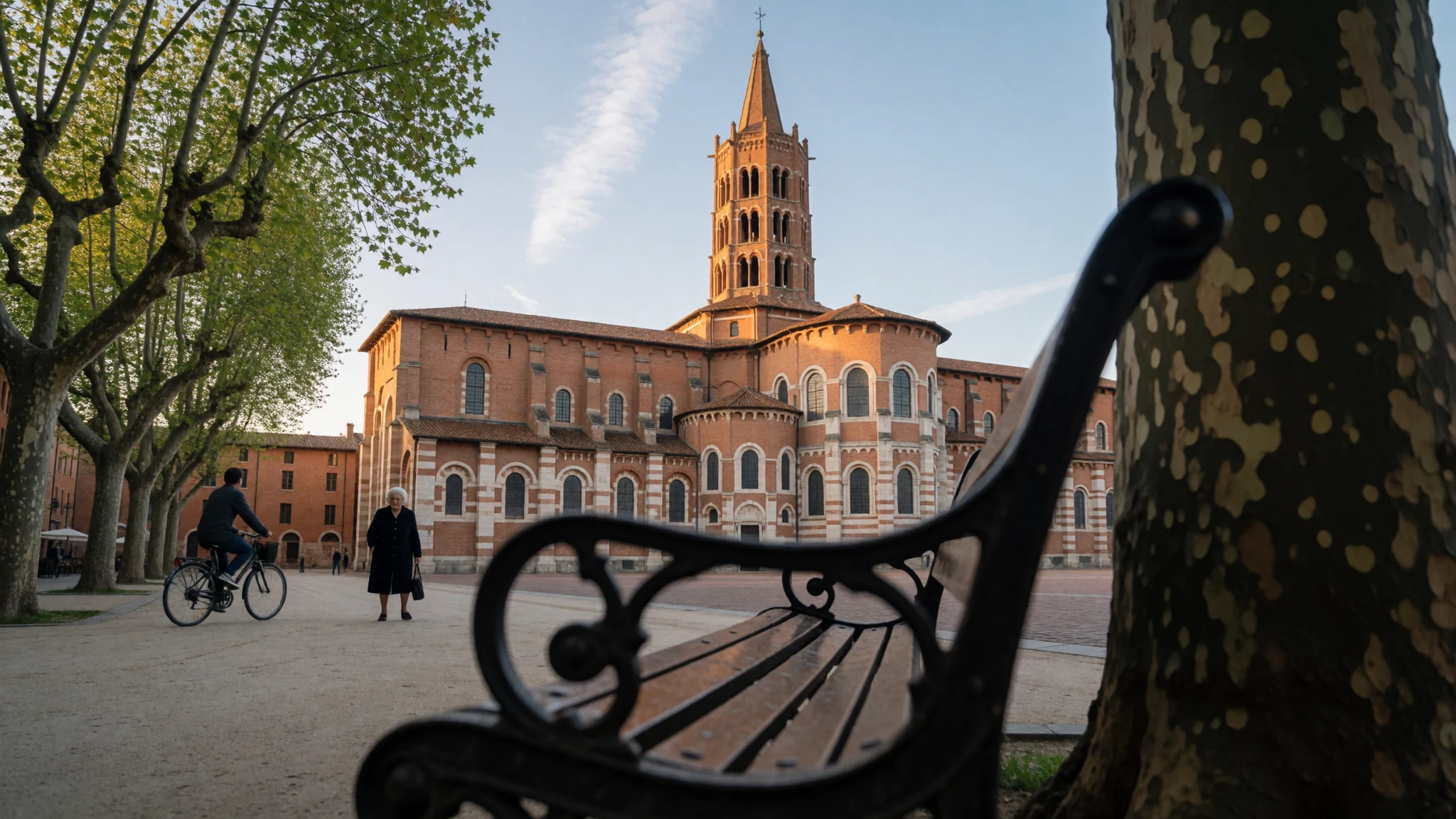
Toulouse is a warm, brick-pink southern city where Roman and medieval churches, Renaissance mansions, opera, aerospace and long café evenings sit within an easy walk.
The place
Toulouse stands on the River Garonne in south-western France. It is the prefecture of the Haute-Garonne and the regional capital of Occitania. The population is 514,819, which makes it France's fourth city by size, and the wider metropolitan area is considerably larger, swelled by students, engineers and people who have moved south for work. The ground is low, about 156 metres above sea level, and the river divides the old centre on the right bank from leafier, quieter districts across the water.
Brick is the defining material. Local fired clay gives the streets a colour that runs from salmon to rust, and the city's nickname, la ville rose, makes sense in low evening light when whole façades seem to glow. The Canal du Midi passes close to the main railway station and serves as a flat towpath for walkers and cyclists.
Toulouse is a working city rather than a preserved one. Aircraft are assembled here, a space museum on the outskirts shows rockets and satellite models, and the large student population keeps cafés and bars busy late into the night. Squares fill with tables from spring to autumn. Distances in the centre are short, so most sights are reached on foot, with the metro or tram useful for the edges. Summers are hot, winters mild and often grey, and on clear days the Pyrenees show on the southern horizon. French is the everyday language, though Occitan appears on street signs, and an Occitan cross is set into the paving of the main square.
Its story
Toulouse owes its existence to geography. For a very long time the Garonne valley has been a corridor for goods moving between the Pyrenees, the Mediterranean and the Atlantic, and a settlement grew where that traffic crossed the river. The Latin name Tolosa is much older than any record explaining it, and nobody can say with confidence what it originally meant.
Rome turned a military outpost here into a proper city, and in the fifth century the Visigoths made it the capital of their kingdom. Later the counts of Toulouse ruled a court that was generous to troubadours, the poets who carried songs in the Occitan language across medieval Europe. That independence ended in bloodshed. The Albigensian Crusade, fought against a movement the Church condemned, brought the Dominican Order into being in the city in the early thirteenth century, and the University of Toulouse followed within a few years. The county then passed to the French crown.
The city's richest era came in the sixteenth century, when woad, a plant that yields blue dye, made local merchants wealthy. They spent the money on grand brick-and-stone town houses, many of which still line the old streets. Toulouse was also the capital of Languedoc and held the second parlement of the kingdom, so lawyers and officials added to its importance. Today it is still regarded as the cultural capital of the Occitan world, and the region now bears that name.
What to see
- Basilique Saint-Sernin — North of the old centre
Saint-Sernin is a Romanesque church in red brick, built in the eleventh and twelfth centuries on a route used by pilgrims heading to Santiago. The tall octagonal bell tower is visible from far away. Go inside for the ambulatory and crypt, and look at the apse from outside as well.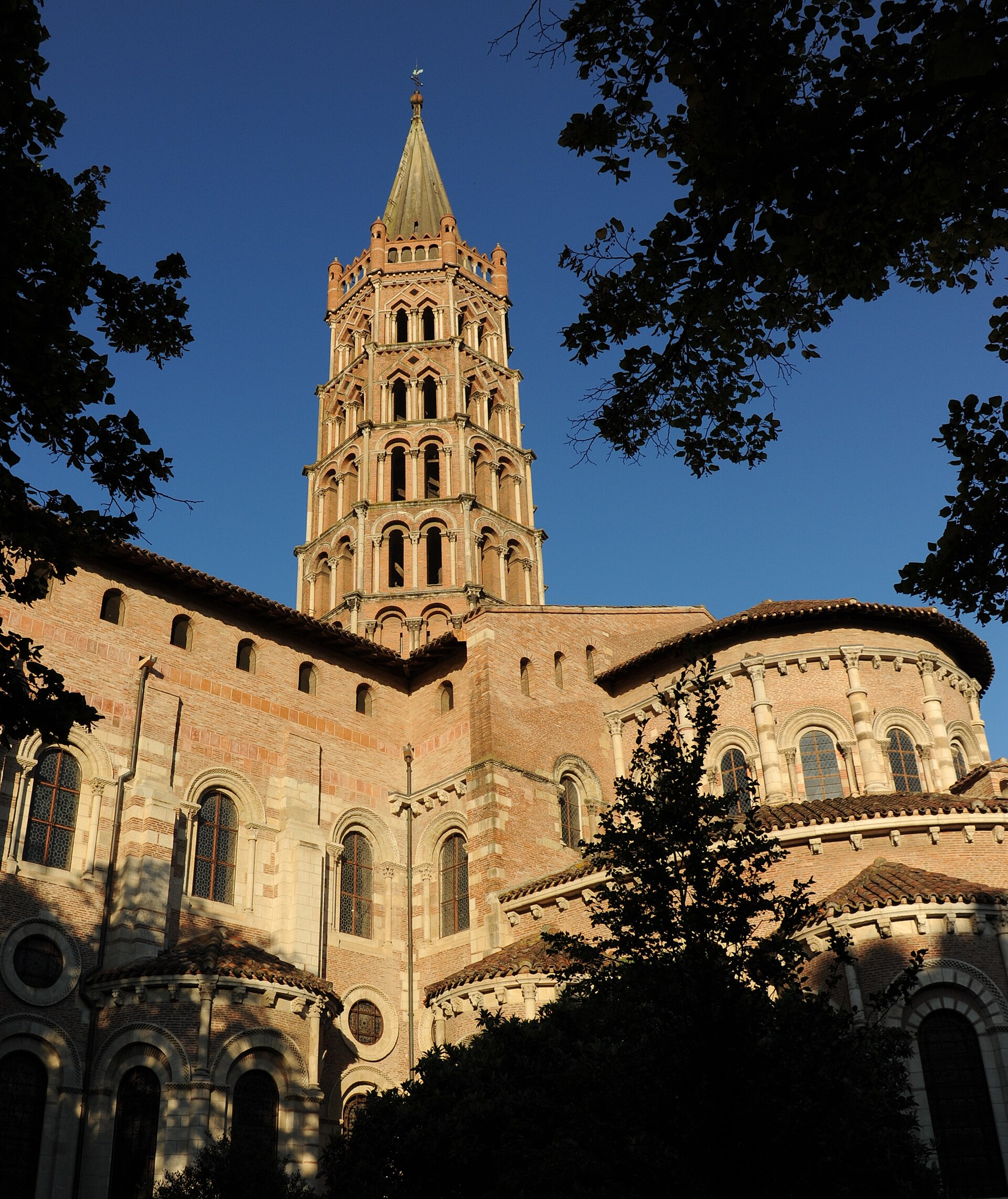
- Capitole — Place du Capitole, city centre
The Capitole is a long neoclassical building in brick and stone that houses the city hall and the opera theatre. It faces a wide pedestrian square paved with the Occitan cross. Come at dusk, when the façade turns warm and the cafés around the edge fill up with locals and visitors.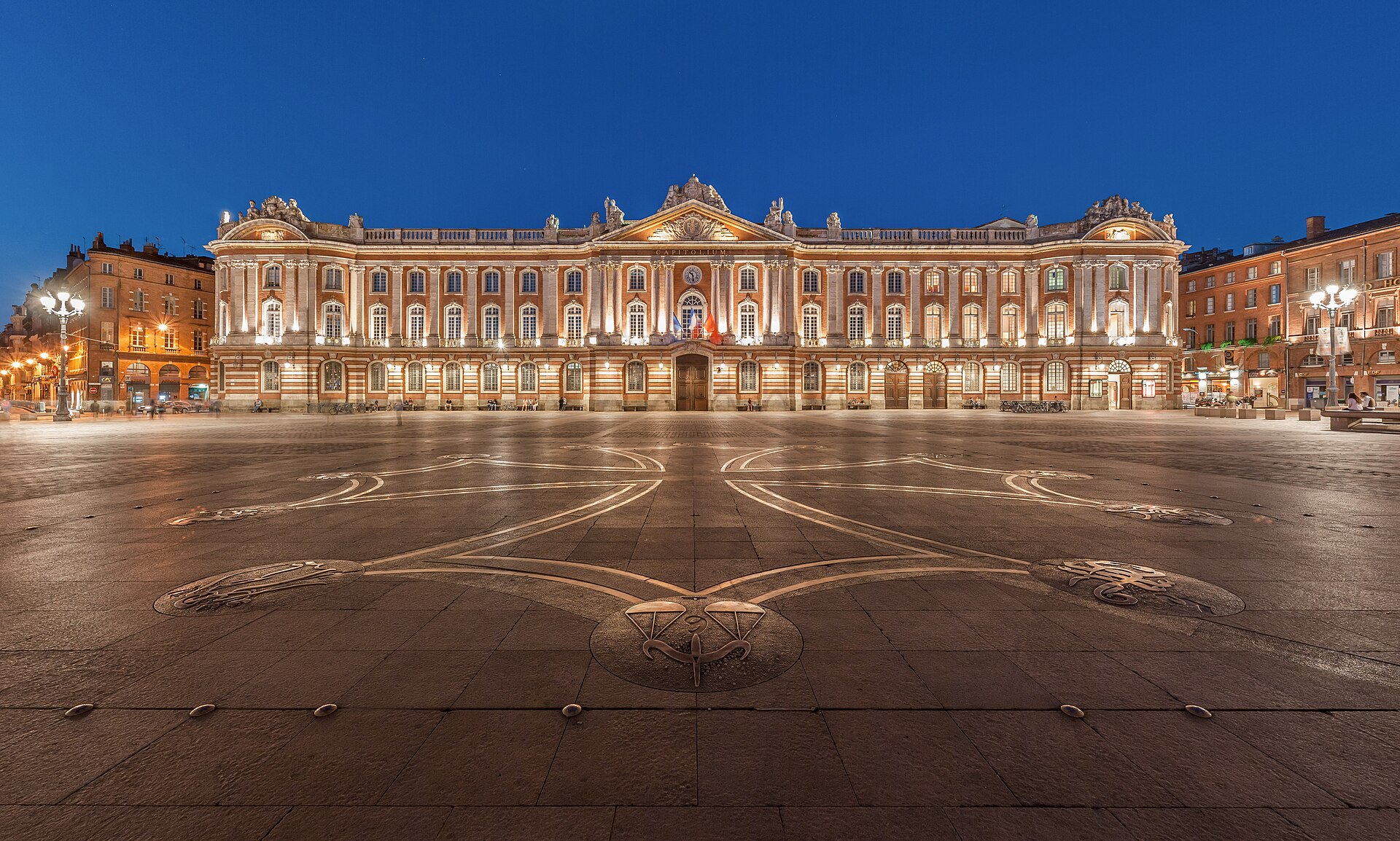
- Hôtel d'Assézat — Old town, near the Garonne
This Renaissance mansion was built for a rich woad merchant between 1555 and 1562, and its courtyard is a fine example of how the dye trade shaped the city. It now holds the Bemberg Foundation's art collection. Check the official site for opening times before visiting.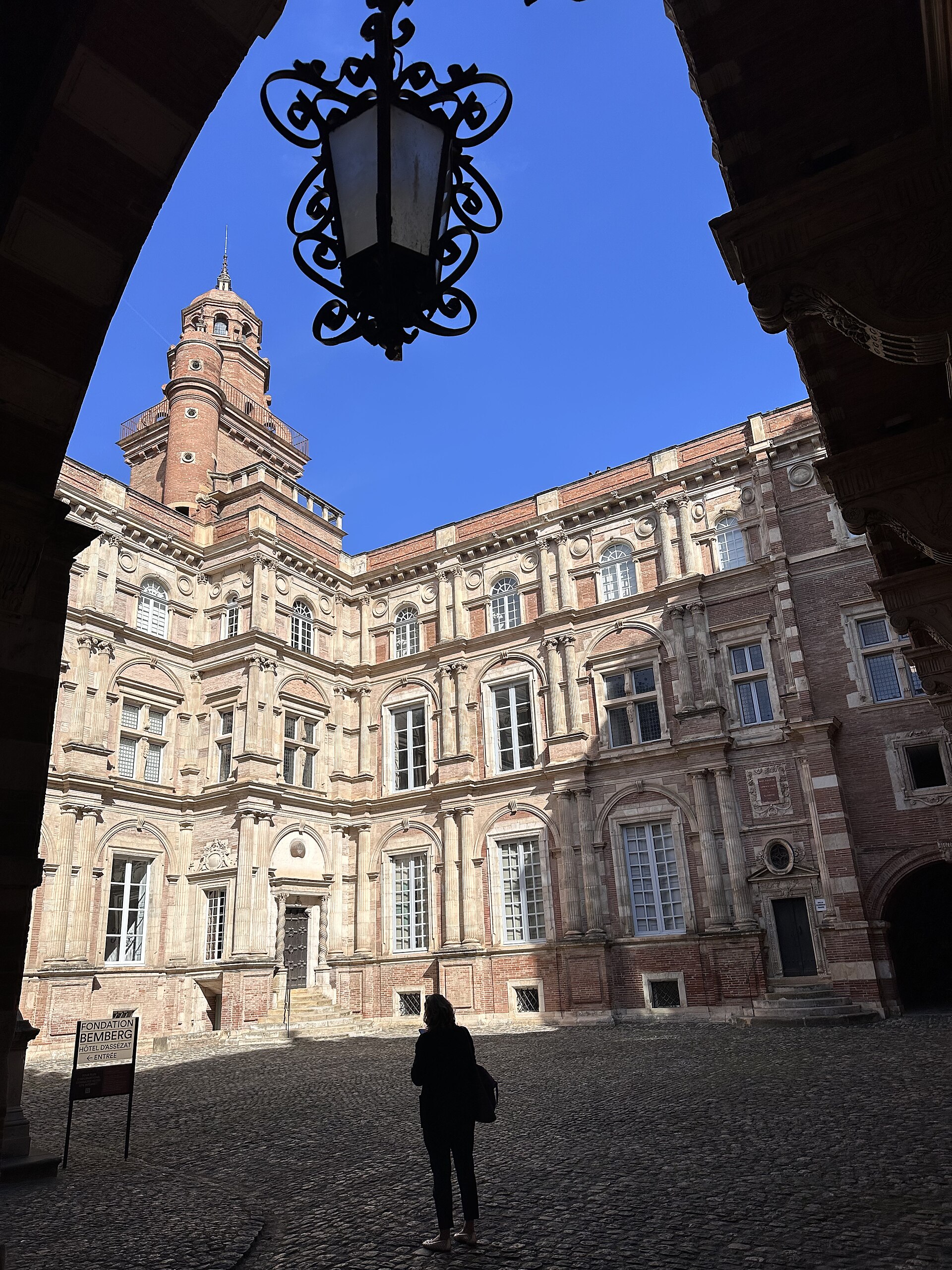
- Saint Raymond Museum — Beside Saint-Sernin
Next to Saint-Sernin, this archaeological museum is built around finds from Roman Toulouse and the surrounding countryside. Its collection of Roman portrait busts is the draw, and it makes a good short stop before or after the basilica. Opening hours change, so check the official site. - Notre-Dame de la Daurade — Left of the Pont Neuf, riverside
A church has stood on this riverside spot since late antiquity, though the present neoclassical building is much younger and was finished in the nineteenth century, then restored recently. It is a calm place to sit before walking along the embankment, where the Garonne catches the evening light.
Culture
Toulouse takes music seriously. In late 2023 UNESCO named it a City of Music, and the title rests on a long tradition. The theatre inside the Capitole has staged opera and ballet since the eighteenth century. In the nineteenth century its audience had a reputation for being hard to please: new singers were judged by the public over their first appearances and could be dropped if the verdict went against them. The city became known for bel canto, and a competition for young singers from any country has been held here since 1954. The national orchestra of the Capitole plays mostly in a former grain hall.
Occitan identity runs under daily life. The language is taught and sung, the cross appears on pavements and flags, and the memory of the troubadours is a point of regional pride. Rugby is the other local religion, so a match day brings red-and-black shirts into the streets and bars.
Life is sociable and slow in the evening. Meals stretch out, terraces stay full, and students share the squares with families and office workers. Markets are a daily habit rather than a tourist event, and locals buy bread, cheese and sausage in small quantities, often several times a week.
Say a clear bonjour when you enter a shop, café or market stall, and keep your voice low and your flash off inside Saint-Sernin, which is an active place of worship.
What to wear
Toulouse has no single everyday costume, but Occitan folk groups keep regional dress alive for festivals and dance displays. Women wear long full skirts, shawls, aprons and lace caps, with fabrics in cotton, wool and linen, while men wear dark waistcoats, sashes and berets. The woad trade of the sixteenth century left a lasting association between the region and the colour blue, which still appears in craft shops and local textiles.
In daily life the city dresses smart-casual and unfussy. Students wear jeans, trainers and oversized jackets, office workers lean toward linen shirts and tailored trousers, and scarves are common in every season. On rugby days, club shirts take over the pavements near the stadium and the bars. Evening dress for the opera ranges from jacket and tie to simple neat clothes; nobody expects black tie.
Visitors should plan for heat and for walking. In summer, light cotton or linen, a hat and sunscreen are sensible, and comfortable closed shoes or sandals with grip suit the brick pavements and cobbles, which can be slippery after rain. Winters are mild but damp, so bring a waterproof jacket and a warm layer. For churches such as Saint-Sernin, cover bare shoulders and avoid very short shorts, which is a courtesy rather than a strict rule. A scarf in the bag is useful in every season.
What to eat
- Cassoulet — Traditional bistros in the old town
A slow-baked casserole of white beans with pork, sausage and often confit duck, topped with a golden crust. It is hearty winter food, rich enough to share, and the dish most associated with this part of south-west France. - Saucisse de Toulouse — Butcher counters in the covered market hall
A coarse pork sausage, seasoned simply with salt and pepper, grilled until the skin crackles. It appears on its own with lentils or mashed potato, and as a key ingredient in cassoulet. Butchers sell it fresh by the length. - Confit de canard — Restaurants serving Gascon cuisine near the Capitole
Duck legs cooked slowly in their own fat until the meat falls from the bone and the skin turns crisp. Gascon cooking, from the south-west corner of France, relies on duck, and it is usually served with sautéed potatoes. - Market-hall lunch — Les Halles Victor Hugo and the streets east of it
The ground floor of the covered market is a busy food hall of produce, cheese, cured meats and bread. Small restaurants upstairs serve home-style cooking at lunch, with more eateries in the streets around. It is an easy way to try regional ingredients. - Moroccan couscous and tagine — Small Moroccan eateries around the market area
North African cooking is part of everyday Toulouse eating. Couscous with vegetables, slow-cooked tagines and mint tea are widely available, including good vegetarian versions, and portions are generous for the money.
Plan it
Best time. April to June and September to October, when days are warm and long and the terraces are in full use. July and August can be very hot, and winter is mild but often grey and damp.
How long. 2–3
Getting there. Toulouse-Blagnac airport lies just outside the city; an airport shuttle runs to the main railway station, and buses link to the tram and metro, so check the official city transport site for current fares and times. Trains arrive at Toulouse-Matabiau station, a short walk or metro ride from the centre. A taxi is simplest with heavy luggage.
Budget. mid
Tips
- Visit Saint-Sernin and the Capitole early in the morning or in the evening, when light is good and crowds are thinner.
- Walk the centre; it is compact, and the metro and tram are only needed for the edges.
- Carry some cash for market stalls and small cafés, though most places take cards.
- Carry water in summer, as the brick streets hold heat and shade is patchy.
- Book popular restaurants and any space-museum visit ahead in high season; check official sites for times.
Etiquette
- Greet staff with bonjour on entering shops, cafés and market stalls.
- Dress modestly and stay quiet inside churches, and ask before photographing people at worship.
- Lunch is the main meal, so do not expect kitchens to serve full meals at off hours.
Nearby
Sources
- Wikidata Q7880 (CC0)
- Wikipedia: Toulouse (rev 1385105660) (CC BY-SA 4.0)
- Wikivoyage: Toulouse (rev 5420441) (CC BY-SA 4.0)
- Photo: Toulouse – View on Saint Sernin (Tonio94) (CC BY-SA 2.5)
- Photo: Vieux Toulouse from Saint-Sernin (Frédéric Neupont) (CC BY-SA 4.0)
- Photo: Ariane 5 at Cité de l'Espace (Mike Peel) (CC BY-SA 4.0)
- Photo: Saint-Sernin east end (Frédéric Neupont) (CC BY-SA 4.0)
- Photo: Capitole at night (Benh LIEU SONG) (CC BY 3.0)
- Photo: Airbus A380 reveal (Xeper) (CC BY 3.0)
- Photo: Musée des Augustins (Didier Descouens) (CC BY-SA 4.0)
- Photo: Hôtel d'Assézat court (Frédéric Neupont) (CC BY 4.0)


