Toronto
Toronto, Canada
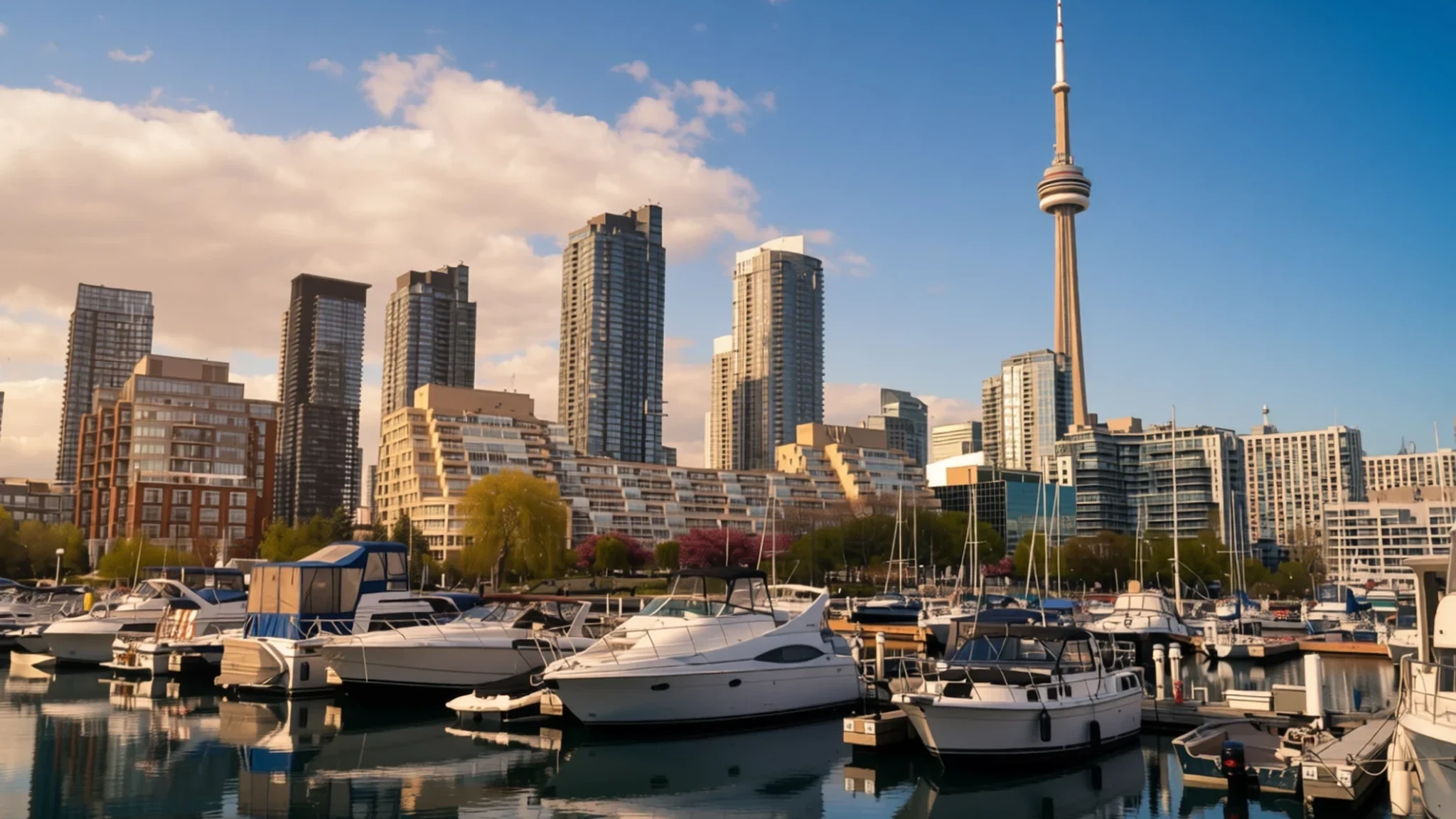
Toronto gives you big-city culture, a remarkable range of food and easy access to the lakeshore, all within walking or tram distance of downtown.
The place
Toronto is Canada's most populous city and the capital of Ontario. It sits on a harbour on the northwestern shore of Lake Ontario, and the city proper holds about 2.8 million people. The wider Greater Toronto Area spreads into the surrounding regions of Peel, York, Durham and Halton, so the urban area feels far bigger than the city limits suggest. Downtown is dense and walkable, while the outer neighbourhoods feel like separate small towns linked by highways and rail lines.
Business, finance, film and television, the arts and professional sport all run at a brisk pace here, and the city is a major national hub. Few cities of its size mix so many cultures. Chinatown, Little Portugal and the Danforth each have their own rhythm, and you can eat your way across several continents in a single afternoon.
The landscape is quieter than the skyline suggests. The city sits on a broad, gently sloping plateau cut by rivers and deep ravines that run down to the lake. Much of the green space lives in those valleys, so a short walk from a busy street can leave you among trees and creeks. Summers are warm and can be humid, winters are cold, and the lake softens the weather along the waterfront.
Expect the waterfront and the big festivals to be busy on summer weekends. Plan for changeable weather, and carry a card, because cash is less necessary than it once was.
Its story
People have lived on this stretch of lakeshore for thousands of years. Long before European traders arrived, the Wendat farmed the land for generations. Then the Haudenosaunee, who came from the south side of Lake Ontario, invaded and drove the Wendat out in a campaign of violence that scattered the community.
The Haudenosaunee built villages on the rivers, one near the mouth of the Rouge and another by the Humber. By the end of the Beaver Wars they had mostly withdrawn to their homeland in what is now New York state. The Mississaugas, an Anishinaabe people from the north, moved into the area and made it their own as hunters, fishers and traders.
French traders set up Fort Rouillé on the lakeshore, but they abandoned it during a European war, and the site later became part of the Exhibition grounds. Much later, after a land deal with the Mississaugas that is still disputed today, the British took control of the area. They founded a town called York and chose it as the capital of Upper Canada, the colony that later became Ontario.
The town's early years were not quiet. During a war with the United States, American troops attacked York, won the Battle of York, and occupied the town for a short time, causing heavy damage that is still part of local memory. The town rebuilt and grew, and the name Toronto eventually replaced York as the city grew into a major commercial centre.
What to see
- Royal Ontario Museum — Bloor Street, Yorkville and Midtown
The Royal Ontario Museum on Bloor Street is the city's largest museum, with collections covering world cultures, natural history and archaeology. Its galleries are spread across several floors, so allow a few hours and plan around the areas you care about most. The building mixes older stone with a striking modern extension, and the crystal-like addition is a good place to pause. Check the official site for current opening times and ticket options before you visit.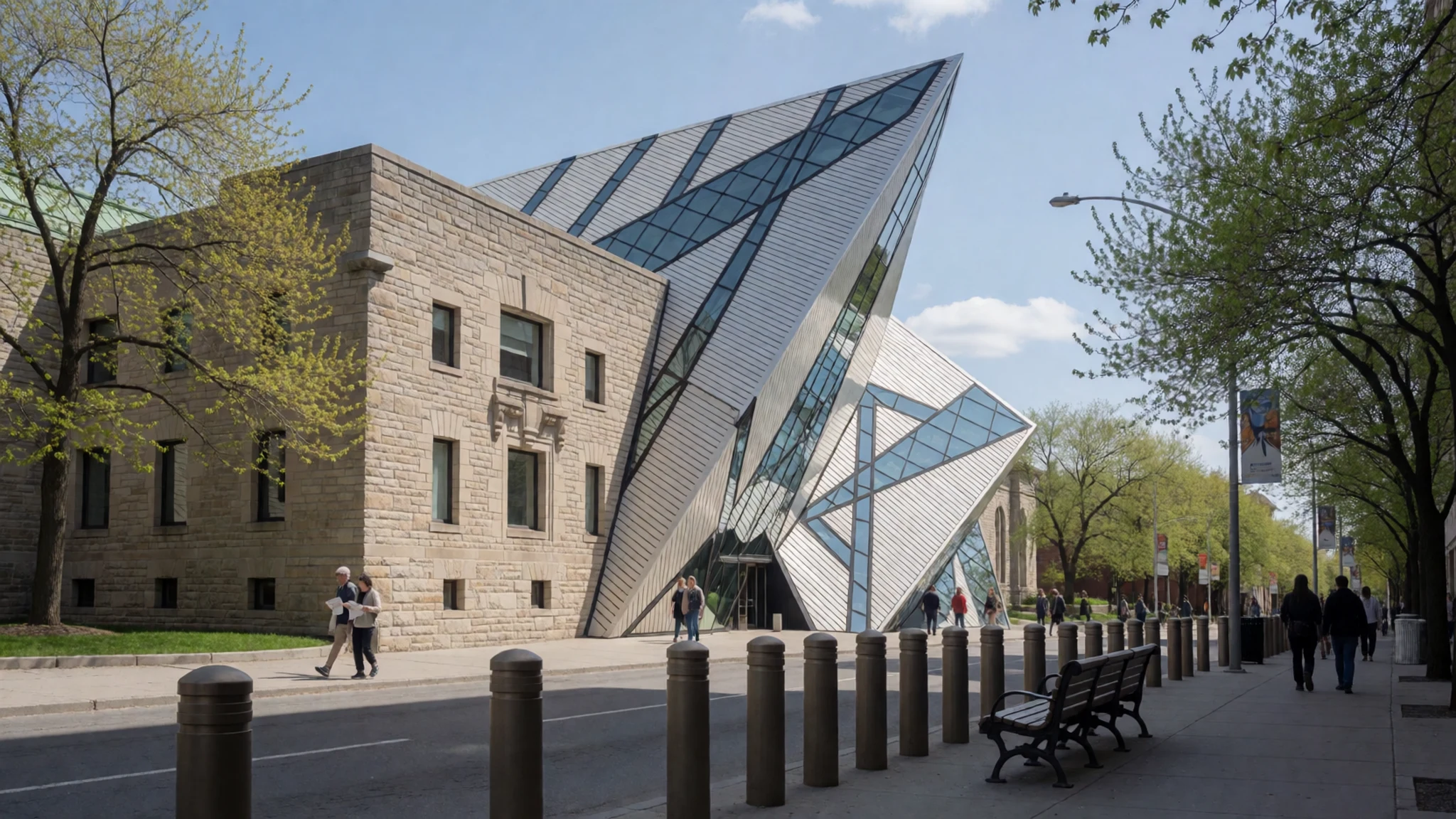
- Casa Loma — Midtown, near Davenport Road
Casa Loma is a castle-style mansion on a hill in midtown, built as a private home in the early twentieth century. Its towers, gardens and underground passages give a good sense of how the city's wealthy lived at the time. The house is busiest on weekends and in summer, so going early or on a weekday makes the rooms more comfortable to walk through. Check the official site for tour times and booking.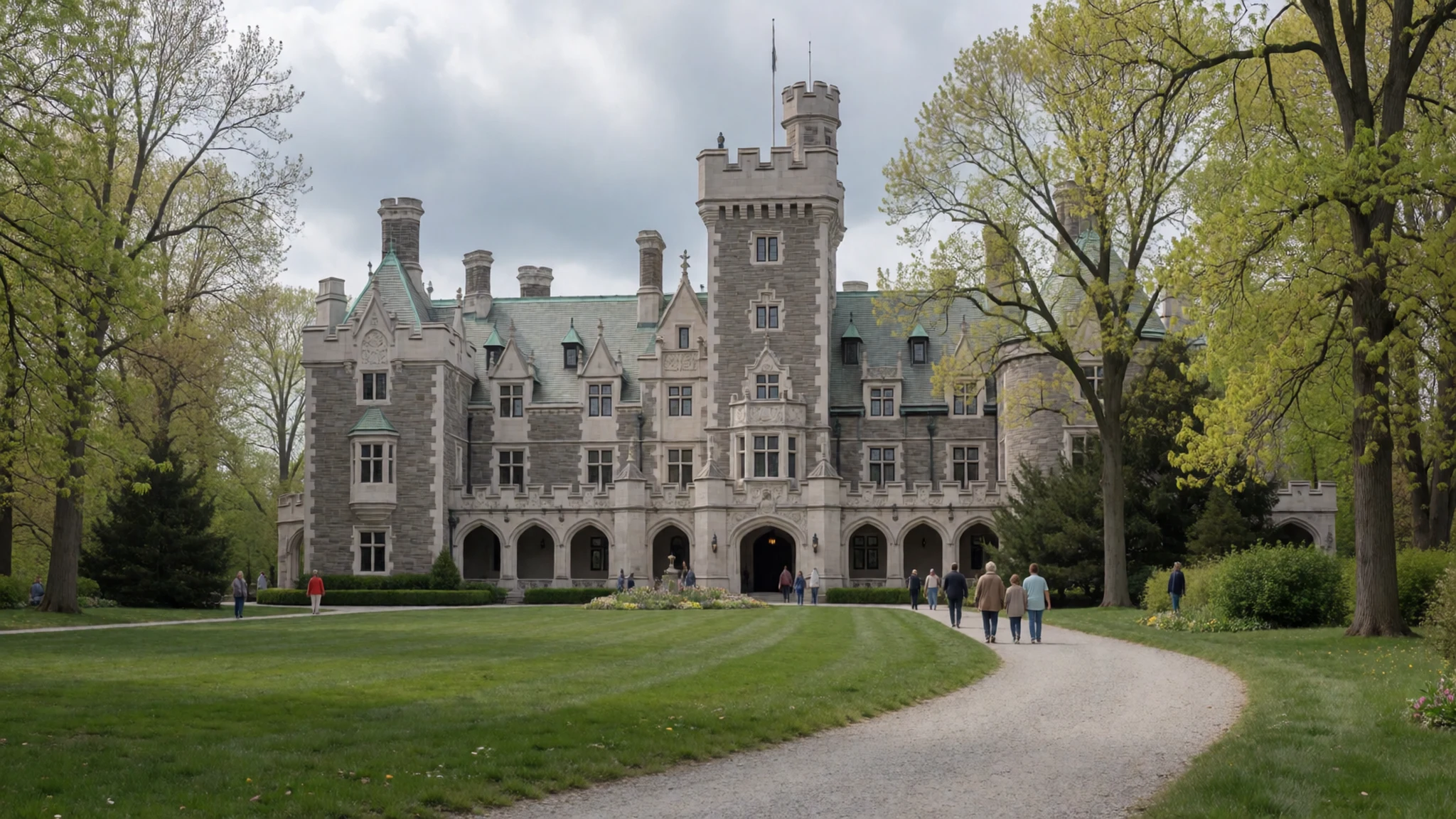
- Ontario Legislative Building — Queen's Park, north of the University of Toronto
The Ontario Legislative Building stands in Queen's Park, a green space that feels like a surprising pocket of calm in the middle of the city. The Romanesque Revival building houses the provincial parliament, and its south side faces the park's lawns and trees. Guided tours are sometimes available when the legislature is not sitting, so check the official site before you go. The park is pleasant for a slow walk between museums.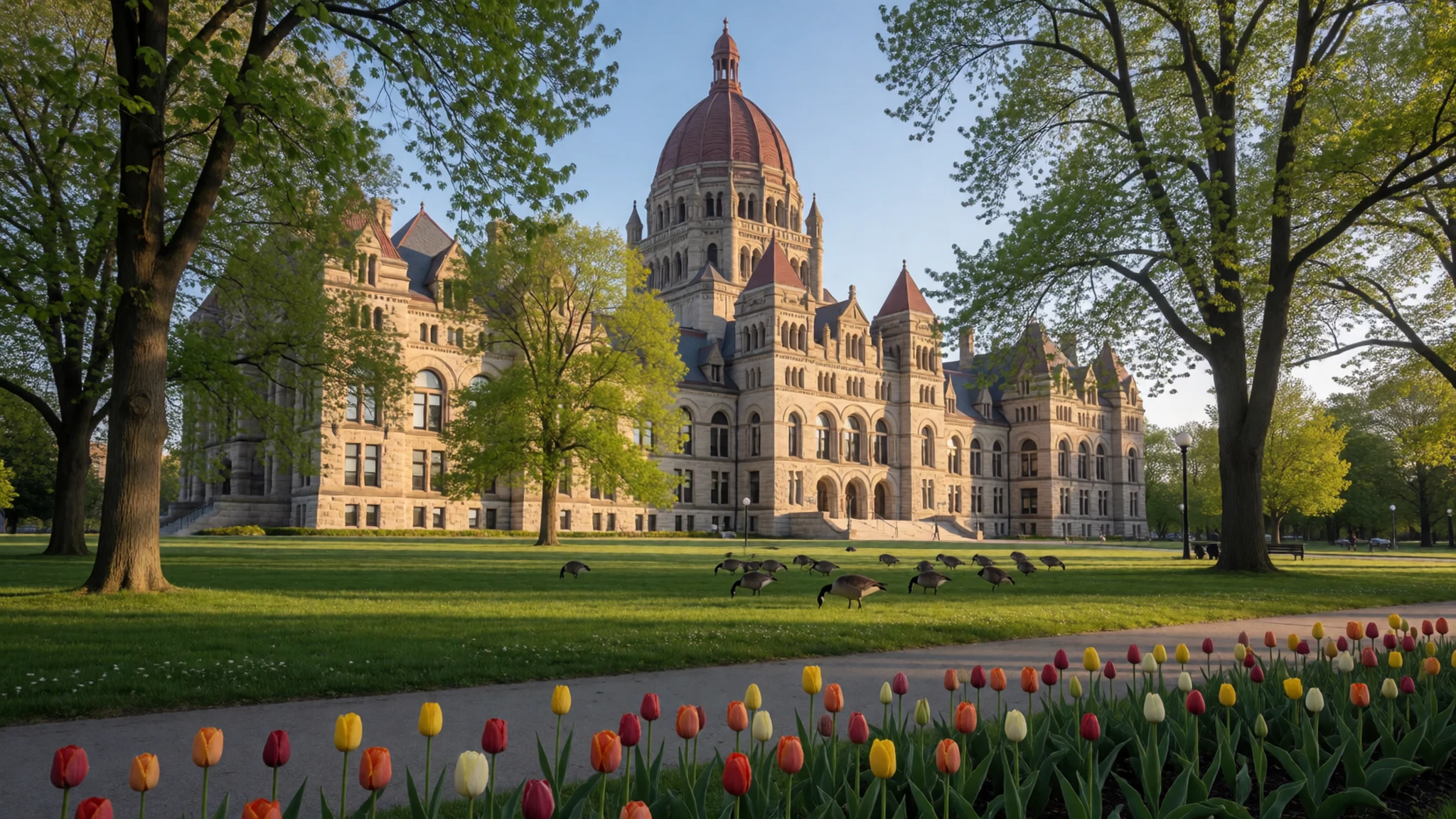
- The Toronto Islands and the skyline — Ferries from the waterfront near Bay Street
A short ferry ride from downtown takes you to the Toronto Islands, a chain of sandy, car-free islands that give the best views back to the skyline. The islands have beaches, bike paths and quiet lagoons, and in summer they are a welcome escape from the heat of the streets. Sunset from the water is the classic view. Ferries run regularly in season, and it is worth checking the official site for the latest sailing times.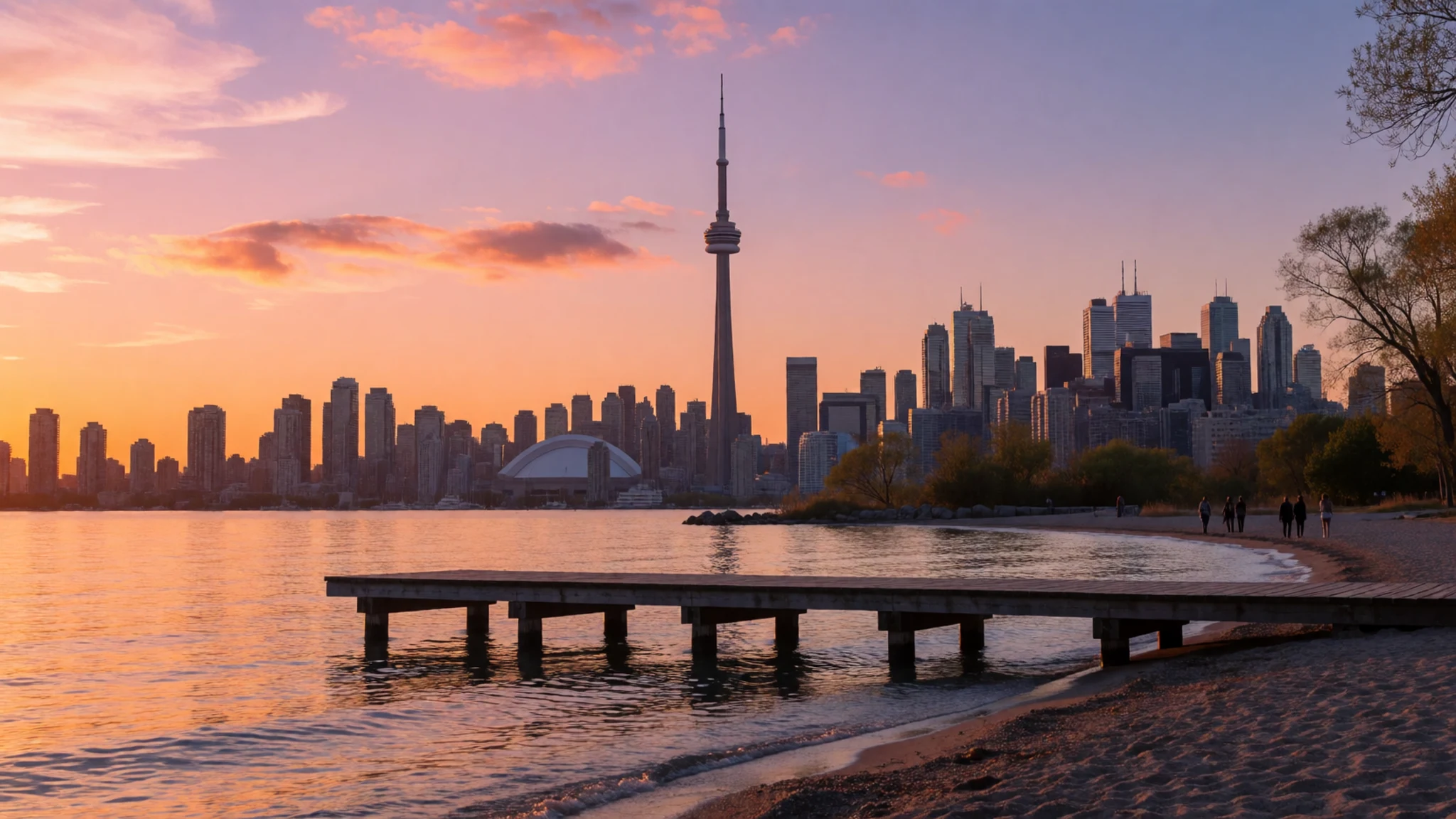
- Humber Bay Arch Bridge — Western waterfront, Humber Bay
The Humber Bay Arch Bridge is a pedestrian and cycling bridge on the western waterfront, framed by the lake and the city skyline in the distance. The walk along the water is a good way to see how the lakeshore has been reshaped for residents. It is quiet in the early morning and the evening, and it works well as part of a longer walk along the lake path.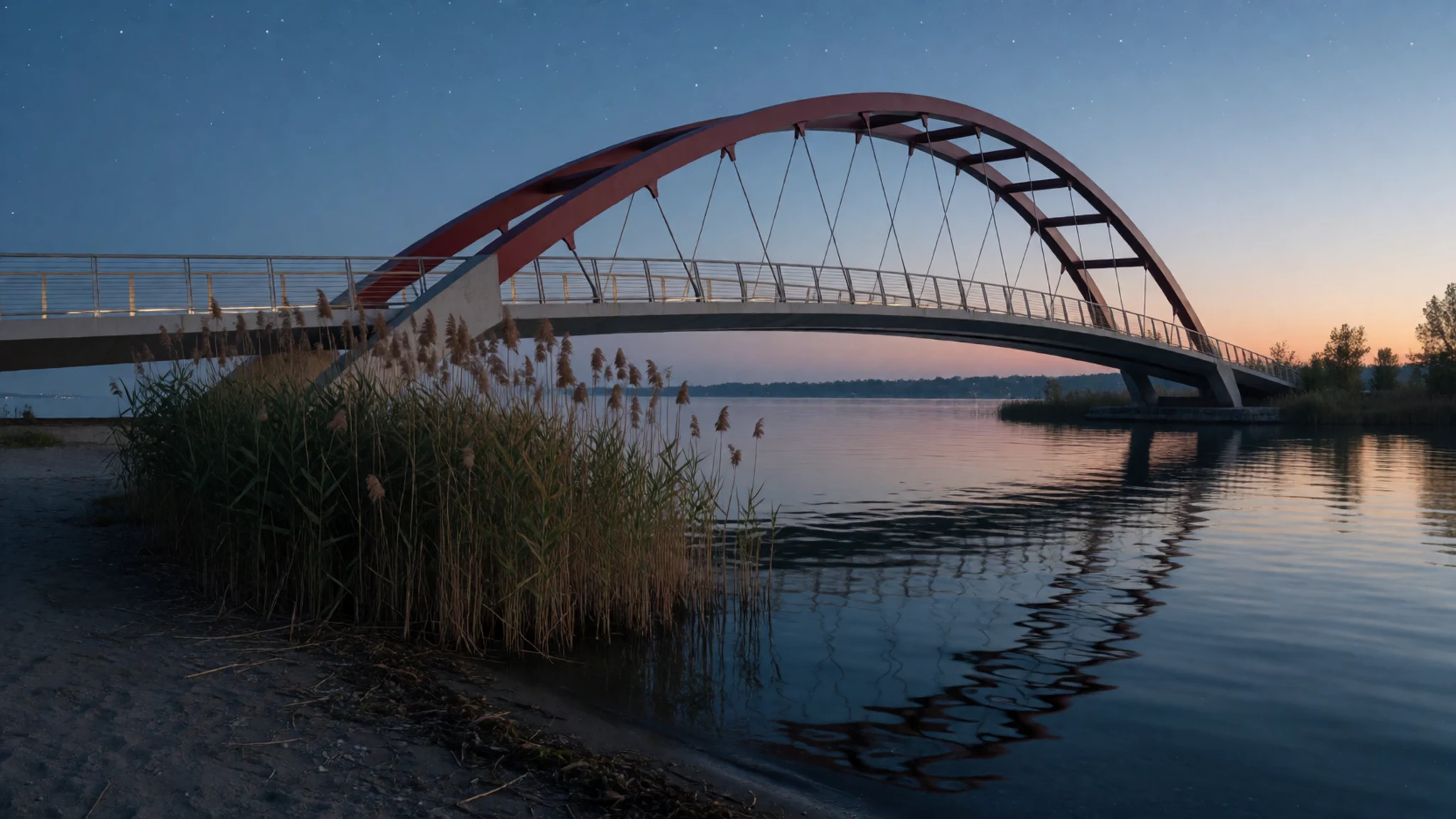
Culture
Toronto's performing arts scene is one of the largest in North America, with a deep bench of dance companies, opera companies and orchestras. The National Ballet of Canada, the Canadian Opera Company and the Toronto Symphony Orchestra all perform regularly, often in the Four Seasons Centre for the Performing Arts or at Roy Thomson Hall. Smaller venues like Massey Hall, and theatres along Yonge Street, host touring shows and local companies alike. Music is everywhere, from clubs to summer concerts in the parks.
The city's identity is built on its many communities, which is why it hosts so many cultural festivals. Pride Toronto is one of the most visible, with a parade that draws crowds from across the region. The annual Doors Open weekend, held in late May, lets visitors into more than a hundred buildings of architectural or historical interest, many of them normally closed to the public.
Local life is friendly and fairly relaxed, but people here value their personal space and their queues. Tipping is customary in restaurants and bars, so budget for it. At festivals and on busy streets, ask before photographing people close up, and always queue properly at theatre doors and on transit platforms.
What to wear
Toronto has no single traditional dress, because the city's people come from every part of the world. The Indigenous peoples of the area, including the Anishinaabe and Haudenosaunee, have their own dress traditions. At powwows and ceremonies you may see ribbon shirts, beaded regalia, and moccasins decorated with traditional patterns. These clothes are worn for ceremony and celebration, and they carry meaning for the communities who make them, so ask before photographing someone in regalia.
For everyday wear, people in Toronto dress for the weather and for the city's pace. In summer you will see light clothes, shorts and sandals on the streets and islands, while office workers favour smart casual. Winter brings long coats, boots, hats and gloves, and the city's underground walkways and heated transit make layering easy. Style is practical and understated rather than showy.
For a visitor, the best choice is layers. Summer days can be warm and humid, but lakeside evenings often cool quickly, so carry a light jacket. Comfortable walking shoes are essential, because the city is large and the ravines and waterfront paths are uneven. When you visit places of worship or formal venues, dress modestly, covering shoulders and knees, and take a light scarf or wrap to make this easy.
What to eat
- Peameal bacon sandwich — St. Lawrence Market, a long-running public market in the old town
A Toronto staple: lean back bacon rolled in cornmeal and fried, served in a bun, often with mustard. It is best eaten at a market stall with a coffee in hand, while you watch the crowds go past. Its name is local, and the sandwich is a useful introduction to the city's cheerfully unfussy food culture.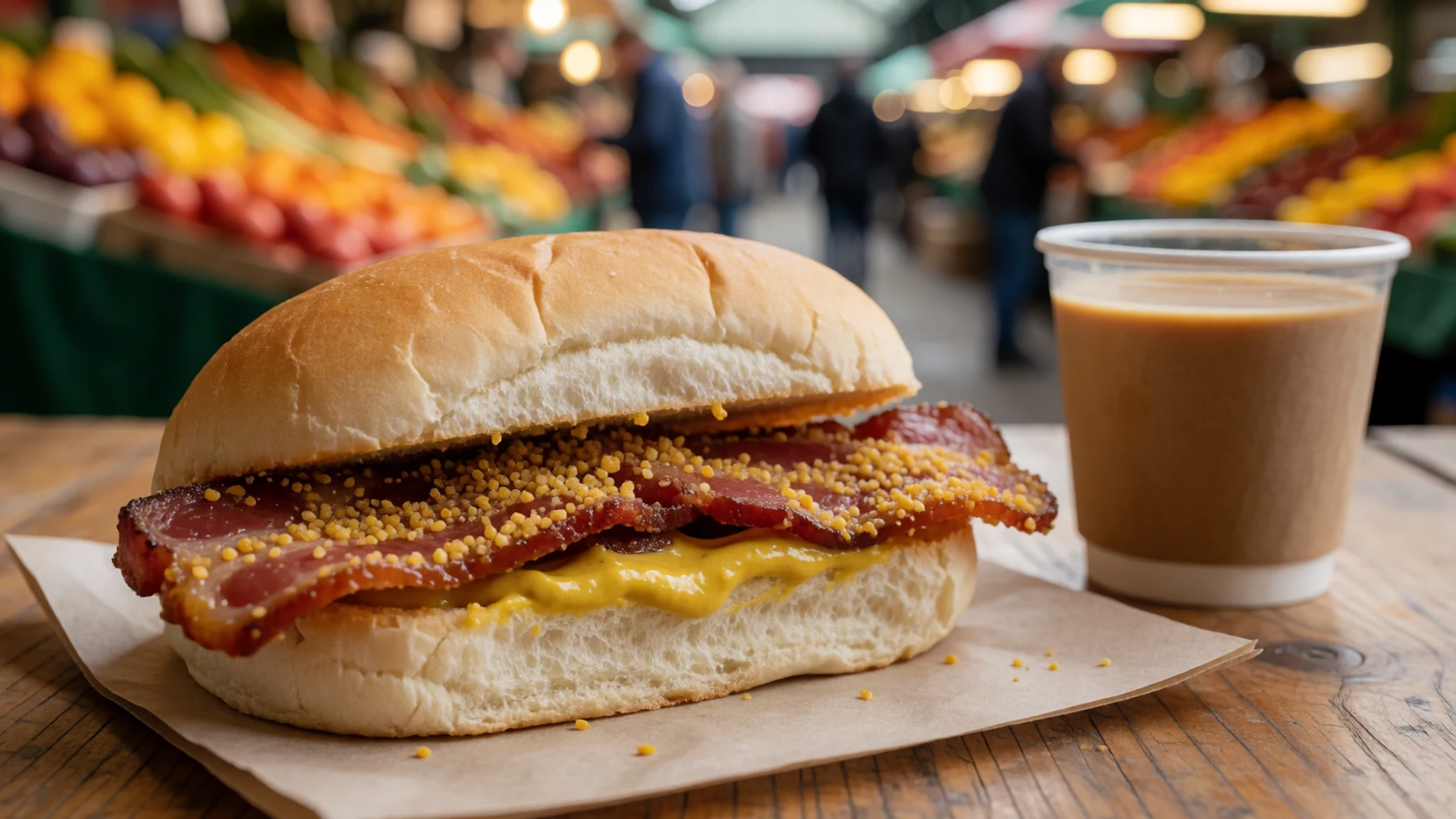
- Dim sum — Chinatown along Dundas Street West
Weekend dim sum in Chinatown means steamed baskets of dumplings, buns and rice rolls, ordered from carts or menus and shared around a table. Arrive early on a weekend, because the busiest places fill quickly and are noisy by late morning. The area along Dundas Street West is full of bakeries and tea shops if you want to continue the tour.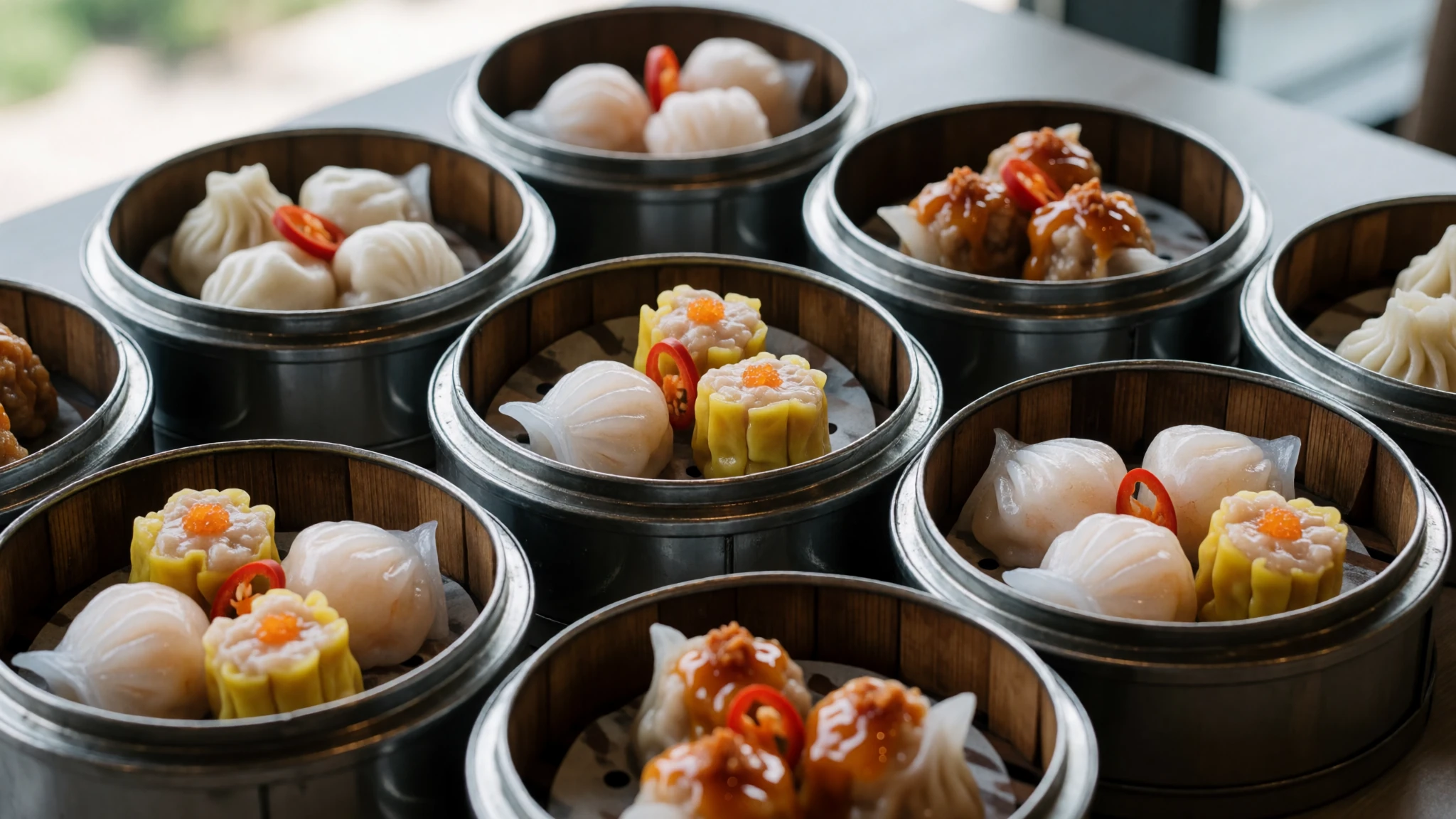
- Portuguese piri-piri chicken — Little Portugal, along College Street
Charcoal-grilled chicken brushed with chilli and garlic is the signature of Portuguese cooking in the city, and it is often served with rice, salad and crusty bread. Little Portugal's family-run restaurants serve it in relaxed rooms, and many have terraces in summer. Go for the chicken, but leave room for a custard tart from a nearby bakery. - Greek souvlaki and grilled meats — The Danforth, the Greek-speaking neighbourhood east of downtown
Skewers of pork or chicken, pita, tzatziki and salad are the classic plate on the Danforth, the long street known as Greektown. Eat at an open-fronted restaurant on a summer evening, when the street is busy and the grills smoke into the air. The food is simple, fresh and filling, and it is good value for the area. - Espresso and a pastry — Any Aroma or Balzac's cafe, found across the city's neighbourhoods
Toronto's coffee scene runs from big chains to small independents. The city's own cafe chains, including Aroma and Balzac's, are good places to try espresso that is well made and often served with a light pastry. Sit by the window and watch the neighbourhood go by, which is a good way to understand how the streets fit together.
Plan it
Best time. June to September is the warm season, best for lakeside walks, the islands and outdoor festivals. Late spring and early autumn are gentler options with fewer crowds. Winter is cold and dark early, though the indoor arts, museums and markets remain good.
How long. 3–4
Getting there. Toronto Pearson, in Mississauga, is the main international airport, and a train into downtown is quicker than a car in heavy traffic. Billy Bishop Airport sits on the islands just across from downtown, linked by a pedestrian tunnel and a free ferry, which is the shortest regular ferry route in the world.
Budget. mid
Tips
- If you are flying on to the United States from Pearson, allow extra time, because US customs is cleared before you board.
- Visit the Toronto Islands on a clear morning in summer, before the afternoon crowds arrive.
- Carry water when walking the ravines and waterfront paths in summer heat.
- Check the official site at toronto.ca for current hours, festival dates and transit updates.
Etiquette
- Keep to the right on escalators and stand clear of the doors on transit platforms.
- Ask before photographing people close up, especially at festivals and in cultural events.
- Tipping is customary in restaurants and bars, so allow for it.
Nearby
Sources
- Wikidata Q172 (CC0)
- Wikipedia: Toronto (rev 1382616627) (CC BY-SA 4.0)
- Wikivoyage: Toronto (rev 5405347) (CC BY-SA 4.0)
- Sunset Toronto Skyline Panorama, Jchmrt (CC BY-SA 4.0)
- Toronto Skyline from Snake Island, Dillan Payne (CC BY-SA 4.0)
- Ontario Legislative Building, Toronto, DXR (CC BY-SA 4.0)
- Nathan Phillips Square, Jeff Hitchcock (CC BY 2.5)
- Humber Bay Arch Bridge, Wladyslaw (CC BY 3.0)
- Casa Loma, Larry Koester (CC BY 2.5)
- Royal Ontario Museum in Fall 2021, Maksim Sokolov (CC BY-SA 4.0)
- Scarborough Bluffs, Benson Kua (CC BY-SA 2.0)


