Toledo, Spain
Toledo, Spain, Spain
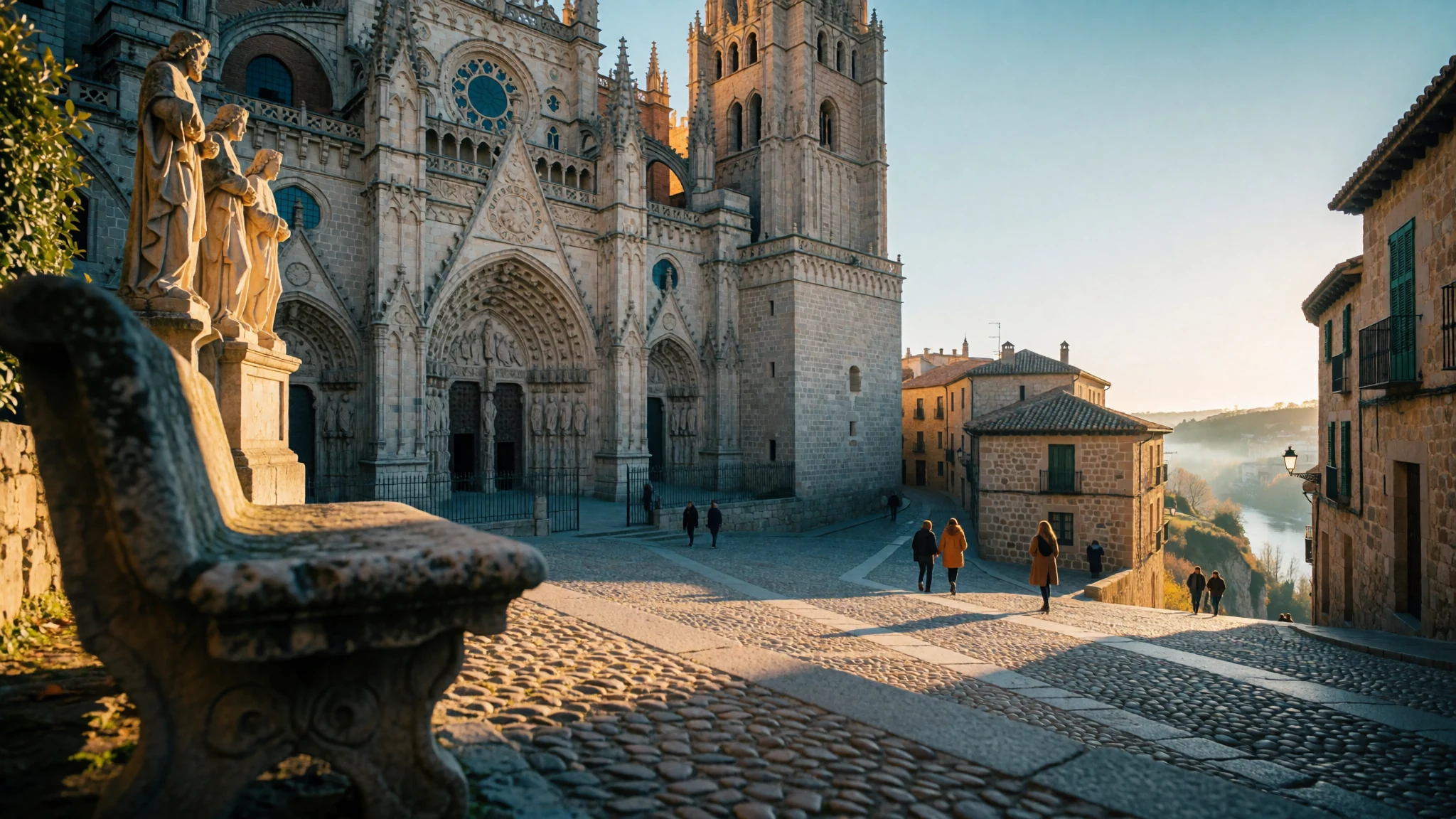
Toledo is a hilltop city of layered history, where Roman, Visigothic, Islamic and Christian buildings stand close together above a bend of the Tagus.
The place
Toledo sits on a rocky hill in central Spain, where the Tagus River curls almost all the way around the old city. That bend gave the place its shape and much of its defence, and the historic centre still feels like a fortress town: narrow lanes climb between stone walls, and the skyline is crowned by the cathedral and the Alcázar. The municipality has a population of around 87,000 and lies about 523 metres above sea level, so the air is drier and the summers fiercer than in the coastal cities.
The city is the capital of Toledo province and holds the seat of the regional government of Castilla–La Mancha, though most visitors come for the old town rather than the modern districts that have grown up beyond the walls. Expect a steady flow of day-trippers, many arriving by train from Madrid, so the central squares fill up by late morning and empty again once the coaches leave. Early and late hours are the quiet times.
What makes the place distinctive is its layering. Roman walls, Visigothic foundations, Islamic-era houses and Christian churches sit close together, and several religious buildings were converted from mosque to church, keeping their brick arches and decorative plasterwork. Walking is the only real way to explore, and the streets are steep, cobbled and sometimes slippery. Early spring and late autumn are the most comfortable seasons, while midsummer afternoons can be punishing.
Its story
The hill was settled long before Rome arrived, but the city's recorded history begins with the Romans. The Roman historian Livy judged it modest in size yet well protected by its site above the river. A Roman general fought a coalition of Celtic tribes nearby and took a local king prisoner, and afterwards the town was folded into the Roman system, first as a tributary community and later with fuller legal rights for its officials.
Under Rome the town acquired the usual public machinery: walls, baths, a water supply with storage, and a large circus. That circus was among the biggest in the Iberian provinces, able to seat a large crowd, and inscriptions show that wealthy citizens paid for games there well into late antiquity. It is a useful clue to the city's prosperity at a time when many Roman towns were shrinking.
In late antiquity Toledo grew in importance again. It became the Visigothic capital, and its bishops gained wide authority, so the church councils held here shaped religious policy across the kingdom. Those councils also brought harsh measures against baptised Jews who returned to their old faith, and the record of that period is uncomfortable as well as proud.
Later, under Islamic rule, Toledo often resisted central authority in Córdoba, yet it became a meeting point for scholars from Muslim and Christian lands, who translated texts between Arabic, Hebrew and Latin. The Christian conquest did not end this exchange, though the balance of its communities changed. The silk trade kept the city afloat after it lost political weight to Madrid, but a long decline followed in the early modern period, and the medieval centre survived largely intact as a result. That preservation, more than any single monument, is why Toledo reads so clearly as a history book in stone.
What to see
- Cathedral — Old town, on the high ground
Toledo's cathedral is the centrepiece of the city and sits high on the hill, which makes it look more modest from outside than it really is. Inside, the scale becomes clear: gold-leaf reliefs, large oil paintings and a long line of portraits of Toledo's cardinals. Allow a good while for the main nave and side chapels, and check the official site for opening times and any separate tickets.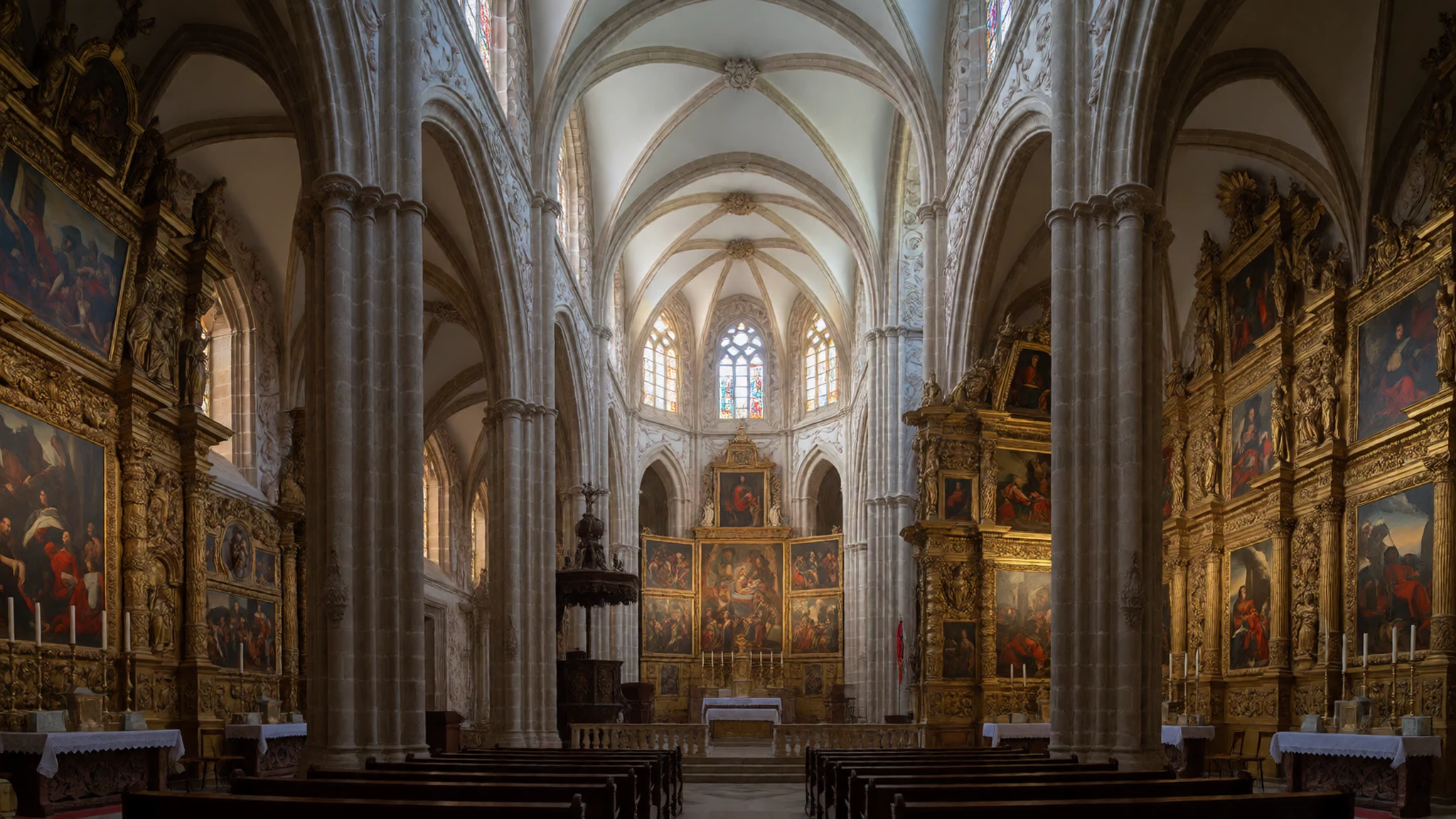
- Iglesia de los Jesuitas — Highest point of the old town
The Jesuit church stands on the highest point in the city, and its twin spires give some of the best views over the rooftops, the river bend and the surrounding countryside. It makes an easy stop after the cathedral, when the crowds thin a little. Opening hours change between the winter and summer seasons, so check before you climb.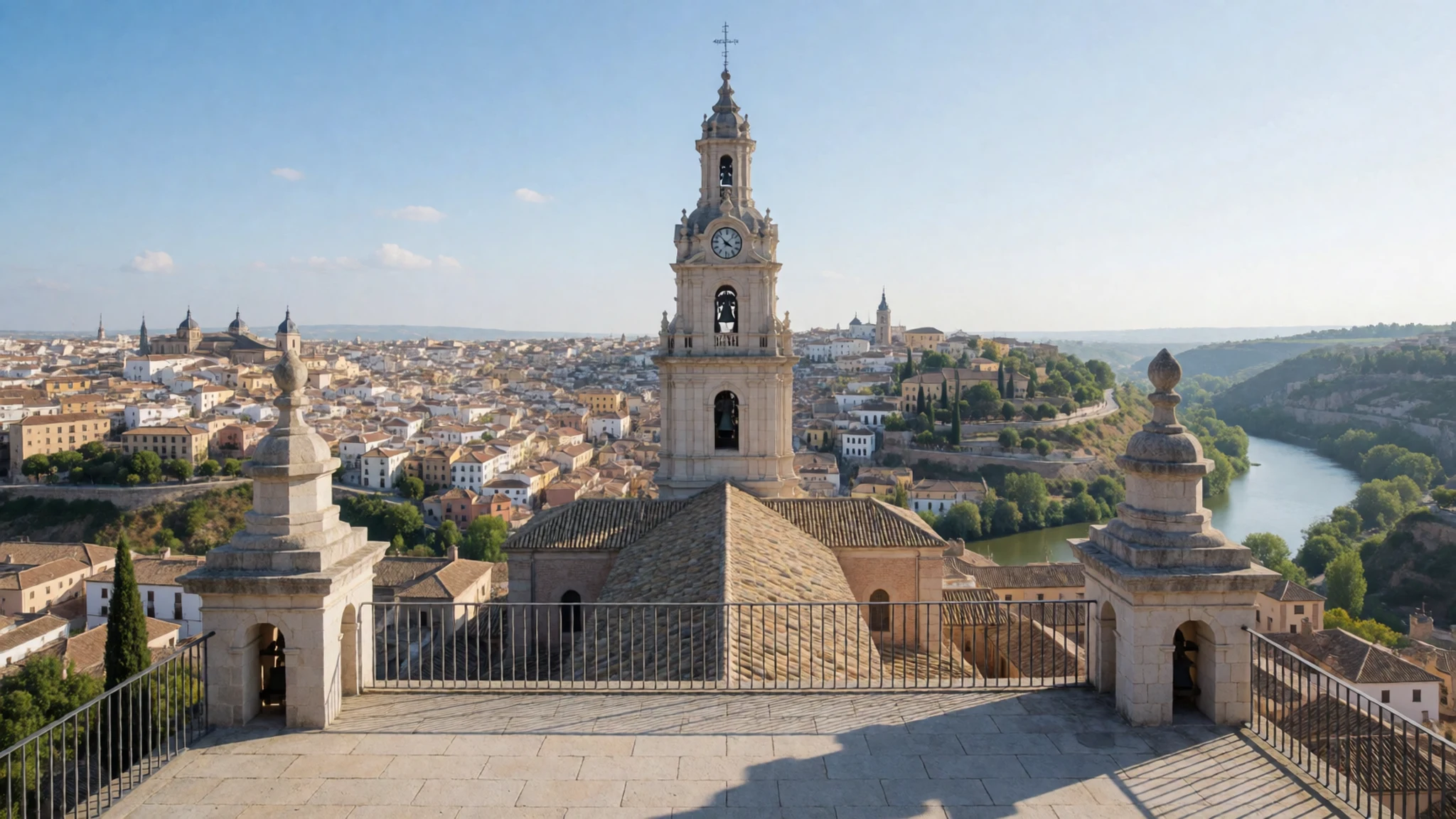
- Mosque of Cristo de la Luz — Lanes north-west of the cathedral
Built as a small mosque in the Islamic period, the building was later converted into a church, and it now blends both traditions. Its style is primarily Mudéjar, with early Christian paintings added on the walls. It is compact, so a short visit suits most people, and quieter early or late in the day makes it easier to look closely at the decoration.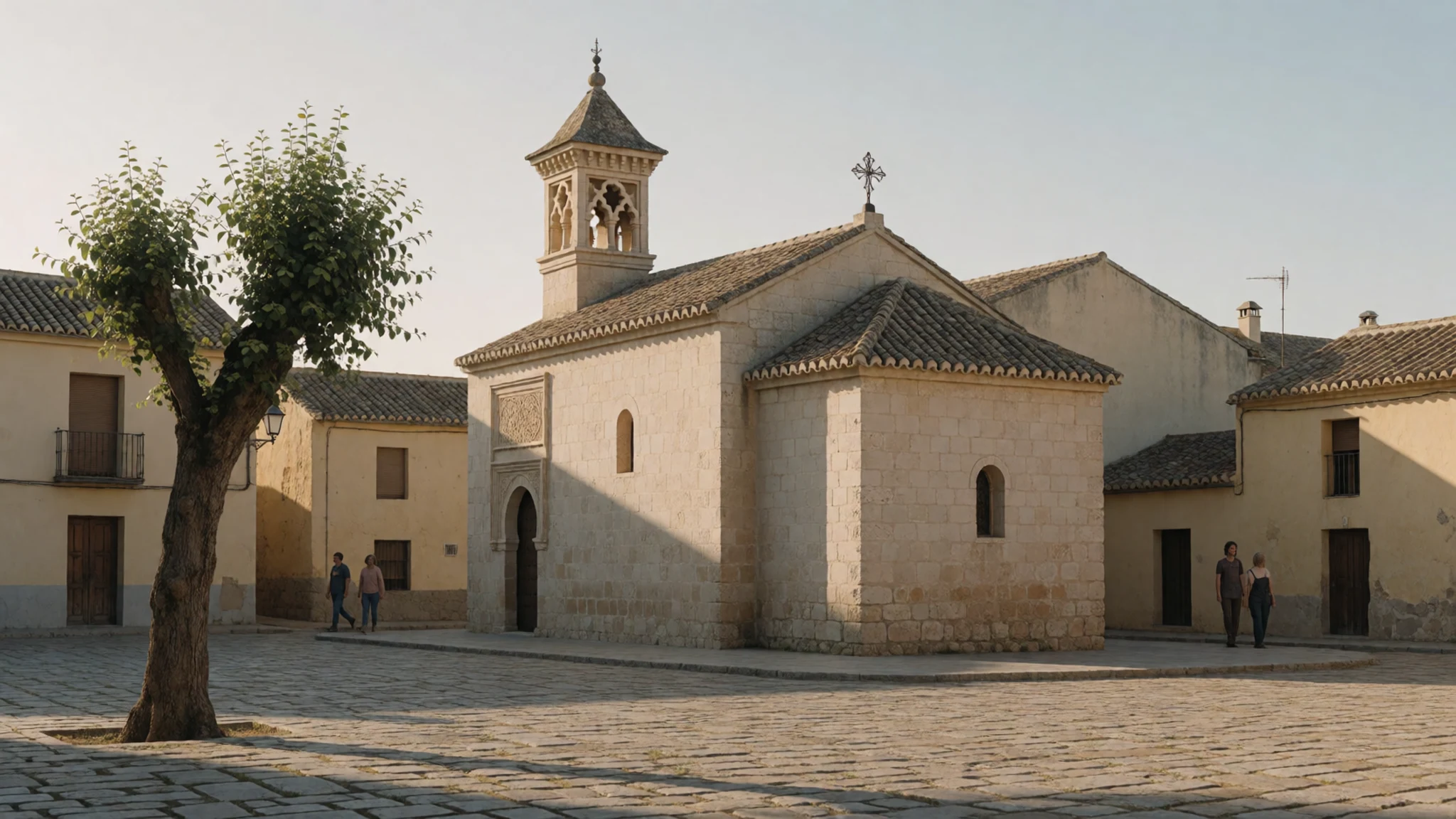
- Iglesia del Salvador — Old town, near the Zocodover
Like the Cristo de la Luz, this was a mosque that became a church, but here the architecture is more varied. Mudéjar detailing sits alongside Visigothic and Roman-style features, so the building shows how several periods were layered onto one structure. It tends to be less busy than the cathedral, and it is a good place to slow down.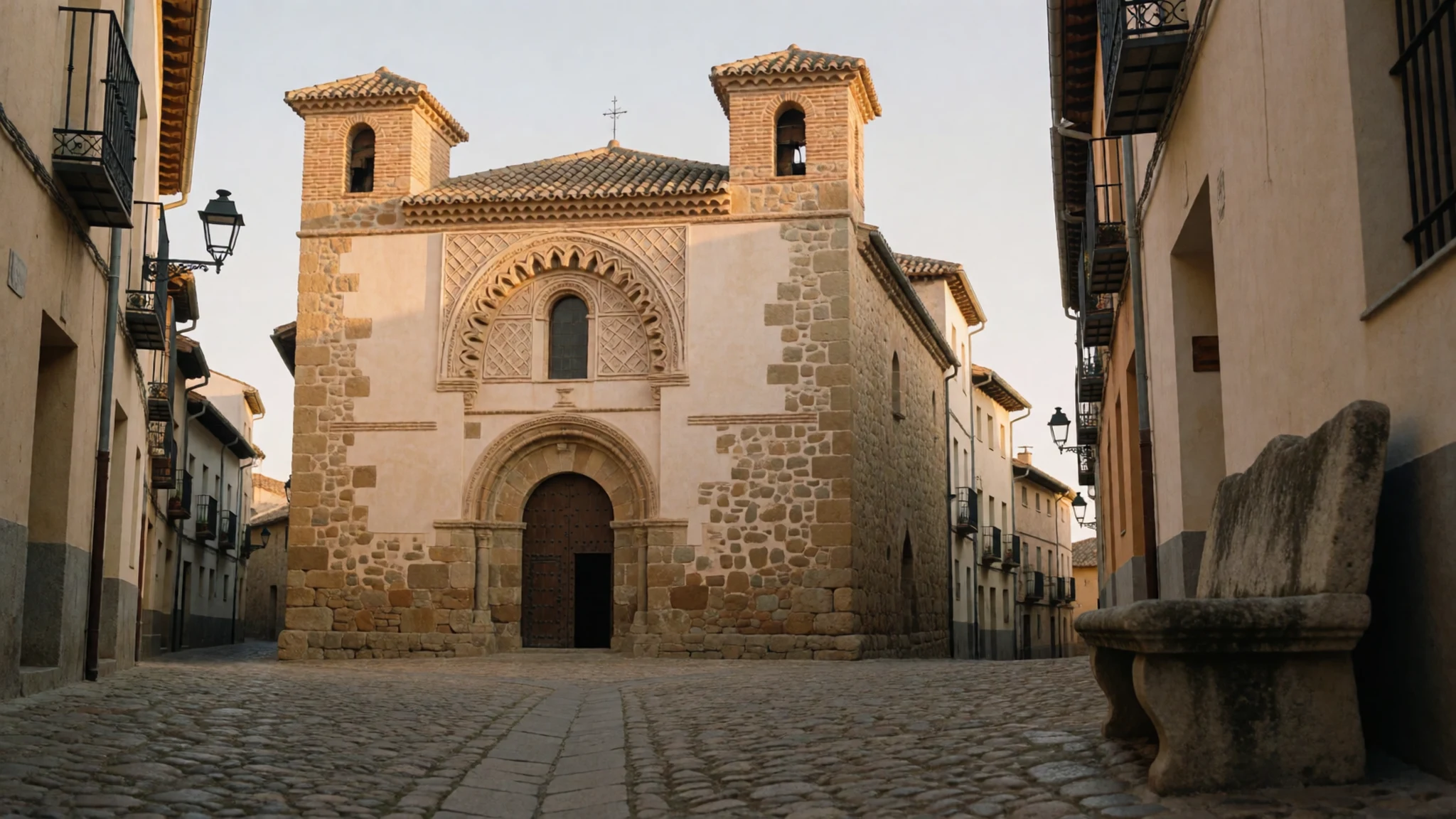
- The Burial of the Count of Orgaz — Church of Santo Tomé, old town
This El Greco painting hangs in the church of Santo Tomé and is one of the artist's best-known works. Its composition divides a funeral scene between earthly and heavenly spheres, and the crowd of portrayed figures rewards slow looking. Photography rules are strict in many churches, so ask staff before taking pictures.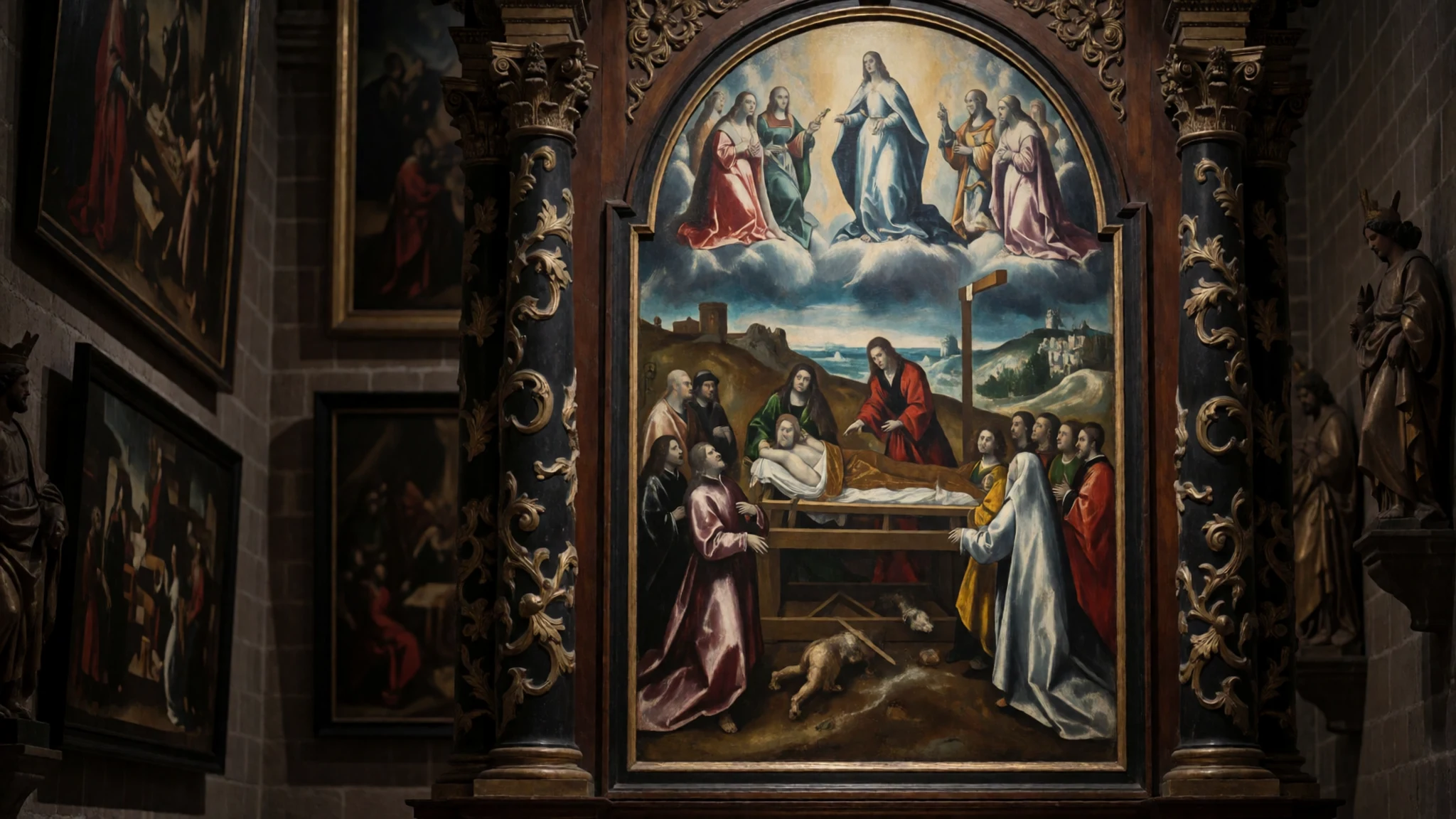
Culture
Toledo has been a meeting place of faiths for centuries, and its churches still carry the marks of that history. Councils of church leaders met here repeatedly in the centuries after Rome, setting rules for worship across the Visigothic kingdom. Later the city held large Muslim and Jewish communities, whose buildings were converted, adapted or lost. Today the old town is a living place, with residents shopping in the streets around the Zocodover, the central square, and families eating late into the evening.
Daily life follows a Spanish rhythm. Lunch is the main meal of the day, some shops close for a long midday break, and dinner starts late. Many visitors find the city calmer on weekday mornings, when locals are out in the market streets before the day-trip coaches arrive.
Religious sites are working places as well as monuments, and services can begin without warning. Keep your voice low and switch off flash inside the churches, and never photograph people praying without asking first.
What to wear
Toledo has no regional costume that people wear day to day, but its craft traditions are visible in what visitors carry home. The city is known for damascene, the technique of inlaying fine gold or silver wire into dark steel, and for its sword-making, which has a long reputation across Spain. Textiles are part of the story too: the silk industry sustained the city for a time, and that weaving history survives mainly in museums and in the names of old streets. Spanish regional dress appears mostly at festivals elsewhere in the country, not as everyday wear here.
Locals dress much as people do in Madrid or any Spanish town: smart casual, darker colours in winter, and light fabrics and sandals in summer. Many people wear comfortable trainers for the steep lanes.
For a visit, the practical choices matter most. Wear closed shoes with good grip, because the cobbles are uneven and the hill is steep. In summer, choose loose, breathable cotton or linen and carry a hat, since midday sun on pale stone is strong. In winter, a warm layer and a windproof jacket help, as evenings are cool. For the cathedral and the churches, cover shoulders and knees, and leave beachwear for the coast.
What to eat
- Carcamusas — Family taverns in the old town, a few streets from the Zocodover
A rich stew of pork and peppers in a tomato-based sauce, and the classic dish of Toledo's family taverns. Good versions have a spicy edge and a sauce you will want to mop up with bread. Order it at a small tavern in the old town, where the kitchen cooks to a set recipe.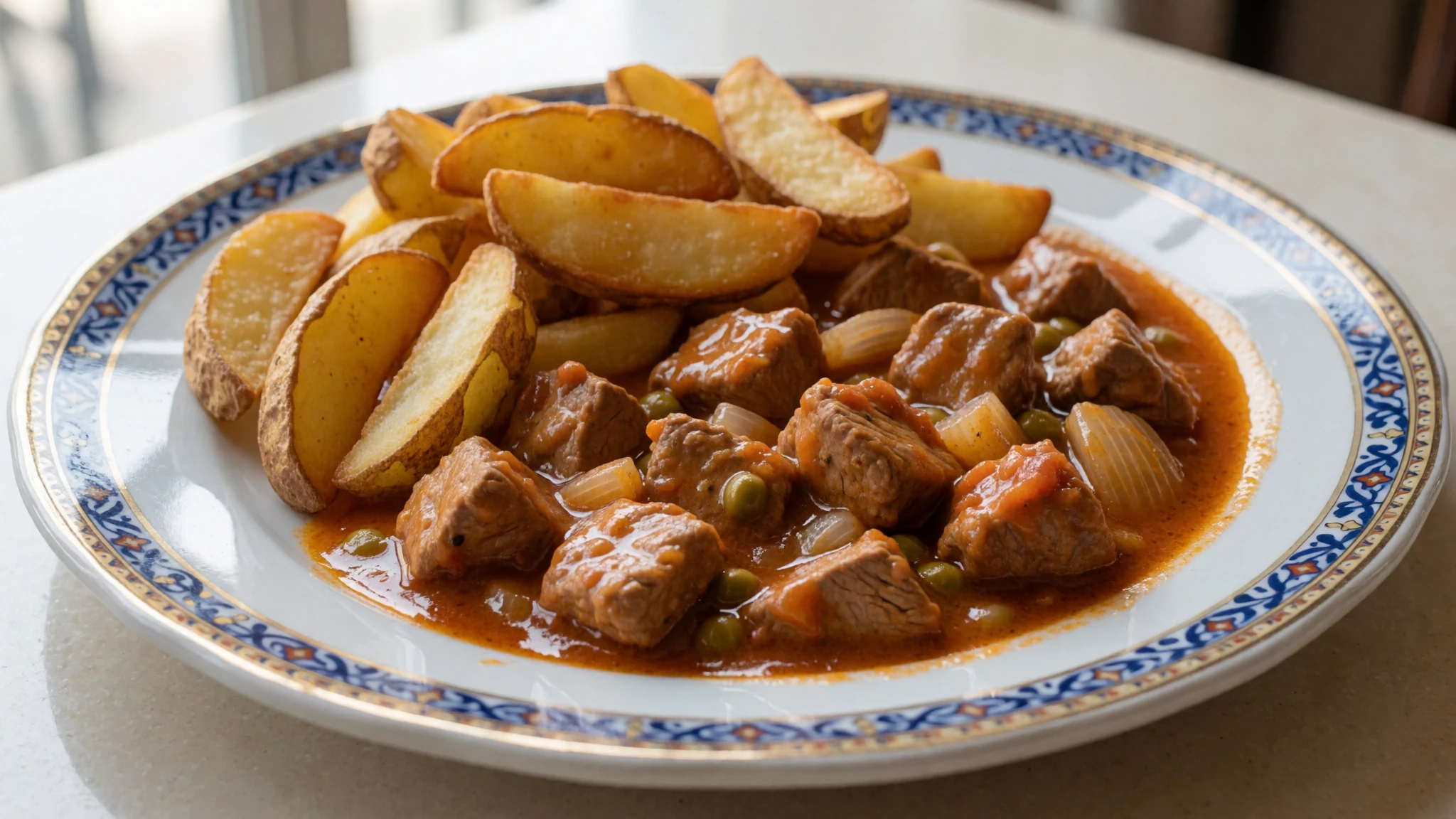
- Baked potatoes — Casual potato bars in the old town, near the central squares
Potatoes baked in the oven and served with a range of toppings, cooked in a way that is distinctive compared with the rest of Spain. Vegan options are often available. It is a casual, quick meal, good for a light lunch between sights.
- Castilian casseroles — Tapas bars and dining rooms around the Zocodover
Slow-cooked casseroles built on local ingredients appear on many menus across the city, often alongside the carcamusas. Ask what the cazuela of the day is, since it is usually the most honest dish on the board. It suits a cold day in autumn or winter. - Tapas — Bars along the lanes around the Zocodover
Small plates in Toledo tend to be simple and generous, and bars on the narrow lanes serve them with a drink at the counter. Order one or two at a time and move between bars on the same street. Locals eat standing up, so a stool is not guaranteed at busy times. - Traditional Castilian roasts — Quieter family dining rooms on the side streets, away from the cathedral
Roasts and hearty stews from the wider Castilian table turn up in the quieter family dining rooms on the side streets. These places tend to be unassuming, with mostly local customers and a menu that changes little. It is a good choice when you want a long, unhurried meal.
Plan it
Best time. March and November are the most comfortable months, with mild days, cool evenings and easy walking. Summers are very hot and dry, and the record high is 44.2 °C (111.6 °F), so avoid the middle of the day then. Winters are cool, and most of the rain falls between mid-autumn and mid-spring.
How long. 2–3
Getting there. Trains run from Madrid. Buy tickets on the Renfe website, or at a staffed booth a day ahead, since booths may not have the seat or time you want. From Toledo station, urban buses stop in front of the building and run to Plaza de Zocodover, the last stop on the route. The walk back down to the station is pleasant and takes about half an hour.
Budget. mid
Tips
- Stay overnight if you can; the centre is much quieter after the day-trip coaches leave.
- Check the official site for church and cathedral hours, which change by season, and book tickets online where that is possible.
- Carry water and a hat in summer, because the hill offers little shade.
- Avoid the red Cercanías ticket machines unless you are sure of the route; the Renfe website is simpler.
- Take the bus up to Zocodover and walk down the steep lanes rather than up them.
Etiquette
- Keep voices low inside churches and avoid flash photography.
- Dress modestly for the cathedral and the other churches.
- Ask before photographing people, especially during services.
Nearby
Sources
- Wikidata Q5836 (CC0)
- Wikipedia: Toledo, Spain (rev 1377254055) (CC BY-SA 4.0)
- Wikivoyage: Toledo (rev 5357317) (CC BY-SA 4.0)
- Photo: Toledo — Dmitry Dzhus (CC BY 2.5)
- Photo: Toledo Cathedral from Plaza del Ayuntamiento — Nikthestunned (CC BY 3.0)
- Photo: Alcázar of Toledo, Spain. May, morning — Ввласенко (CC BY 3.0)
- Photo: Baño Árabe, Toledo — Antonio.velez (CC BY-SA 3.0 es)
- Photo: Toledo, Braun & Hogenberg engraving (Public domain)
- Photo: Inauguración del ferro-carril de Toledo — Federico Ruiz / Bernardo Rico (CC BY 4.0)
- Photo: Espadas de Toledo — Marcio (CC BY 2.5)
- Photo: Toledo City Council — Fernando (CC BY-SA 4.0)


