Tirana
Tirana, Albania
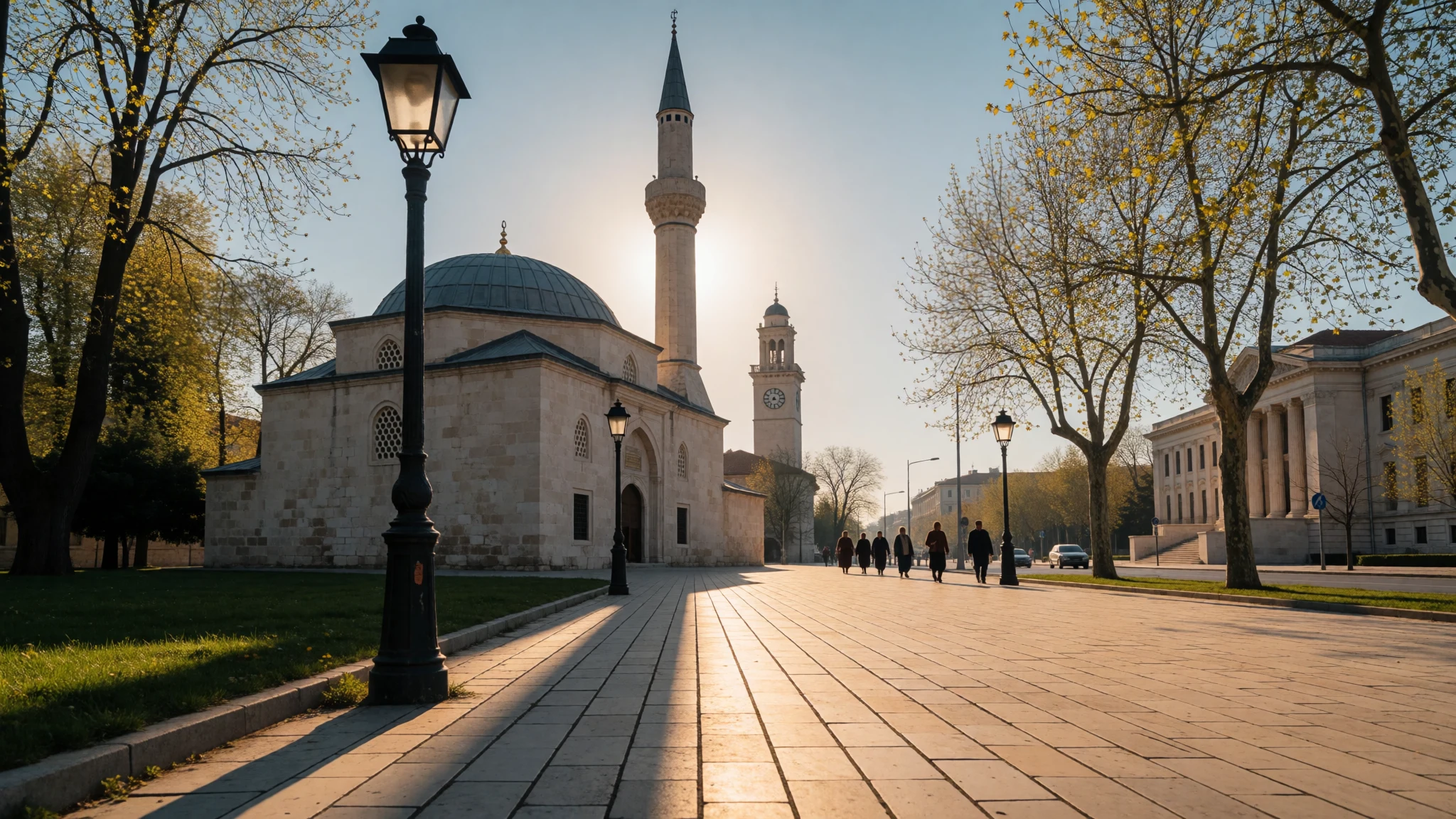
Tirana is a sunny, walkable Balkan capital where Ottoman mosques, Orthodox domes and brightly painted façades share the same few streets.
The place
Tirana is the capital of Albania and its largest city, home to roughly 389,000 people at an elevation of about 110 m. It sits near the middle of the country in a shallow basin, with hills closing in on most sides and the bulk of Mount Dajti standing over the eastern edge. To the northwest the ground opens into a valley that points towards the Adriatic, which stays out of sight from the streets but shapes the weather. By European standards the city is both sunny and wet: winters bring rain, while summers bring long bright days and real heat. The centre is compact and mostly flat. Skanderbeg Square anchors it, with a museum, a mosque and government buildings around its edges, and a broad boulevard runs south from there towards a large park and an artificial lake. Beyond that core the city spreads into neighbourhoods of apartment blocks, repainted façades and café terraces. Traffic is dense, and pavements can be uneven or blocked by parked cars, so walking takes some attention. Tirana also works well as a base. It is the hub for buses to the coast and the south, and the slopes of Dajti are close enough for a half-day escape. Most of its character lies in ordinary streets rather than in single monuments, so it rewards a slow stay of a few days more than a rushed checklist. Mosques, churches and cafés sit within a few minutes' walk of one another.
Its story
Tirana's human story begins well before its official founding. Finds in a cave at Pëllumbas show that people lived here in the Palaeolithic, and the site was occupied through the Iron Age, probably as part of the lands of the Illyrian Taulantii, a people whose territory stretched inland from the Adriatic port of Epidamnus. After Rome conquered Illyria, the area was absorbed into the empire. The oldest surviving structure from that era is a Roman house, later converted into a church with a mosaic floor. A fortress attributed to the Byzantine emperor Justinian, possibly called Tirkan, was repaired many centuries afterwards by a local Ottoman governor, Ahmed Pasha Toptani. Medieval Venetian records mention a villager from Tirana, and early Ottoman land registers describe a cluster of settlements with several thousand inhabitants. The city is formally dated to 1614, when the Ottoman Albanian nobleman Sylejman Pasha Bargjini built a mosque and a türbe, with the services needed around them, and gave the settlement a centre. For a long time Tirana stayed a modest provincial town. Its rise in status came after Albanian independence, when a congress at Lushnjë named it the national capital. The decades that followed brought ministries, wide avenues, the isolation of communist rule and, more recently, a colourful and sometimes chaotic reinvention that anyone can still read in the streets.
What to see
- Skanderbeg Square — City centre
Tirana's main square is a wide open plaza where the city's roads converge, with the National Historical Museum, the Et'hem Bey Mosque and the clock tower all within sight. It is best crossed slowly in the early evening, when families and friends gather and the light softens on the surrounding buildings.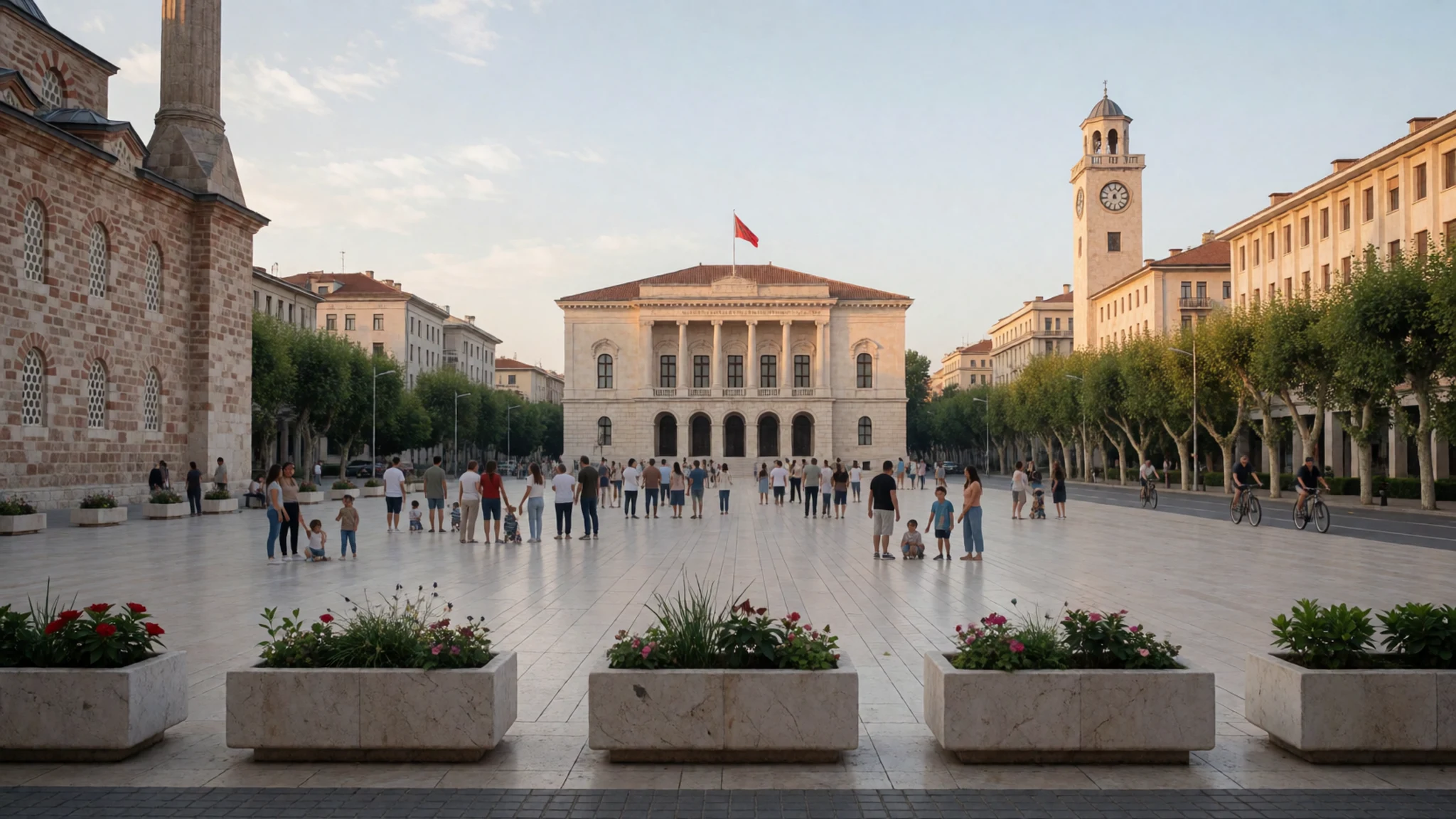
- Et'hem Bey Mosque — Skanderbeg Square
This Ottoman-era mosque stands on the edge of Skanderbeg Square and is admired for the painted decoration inside, with floral and landscape motifs unusual for a mosque. It is a working place of worship, so visits fit around prayer times; check locally before going in.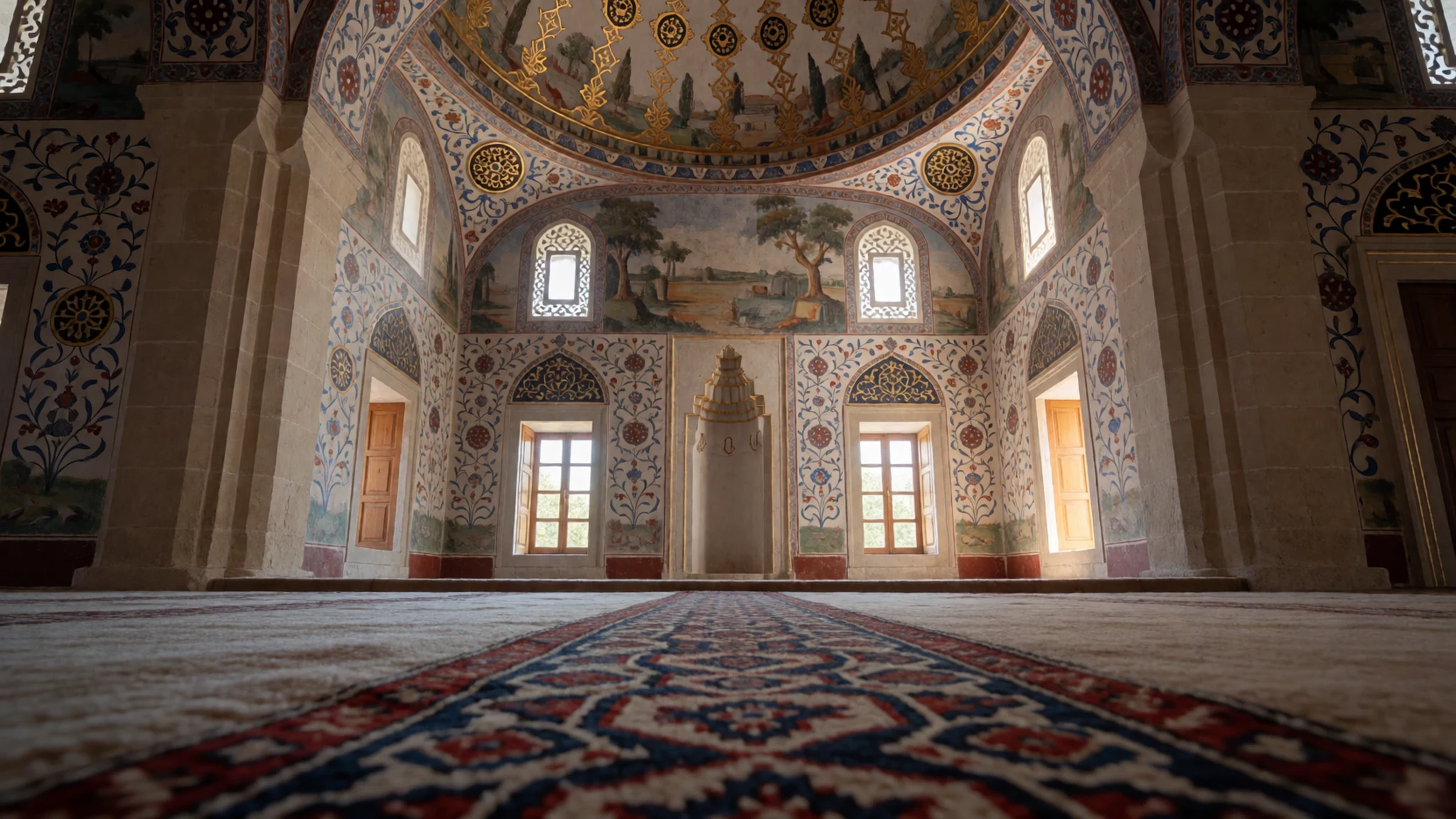
- Clock Tower — Skanderbeg Square
Beside the mosque, the slender clock tower is a small landmark that helps with orientation in the centre. Climbing it, where access is open, gives a view over the square and the surrounding rooftops towards the hills. Opening arrangements change, so check the city's official site for current details.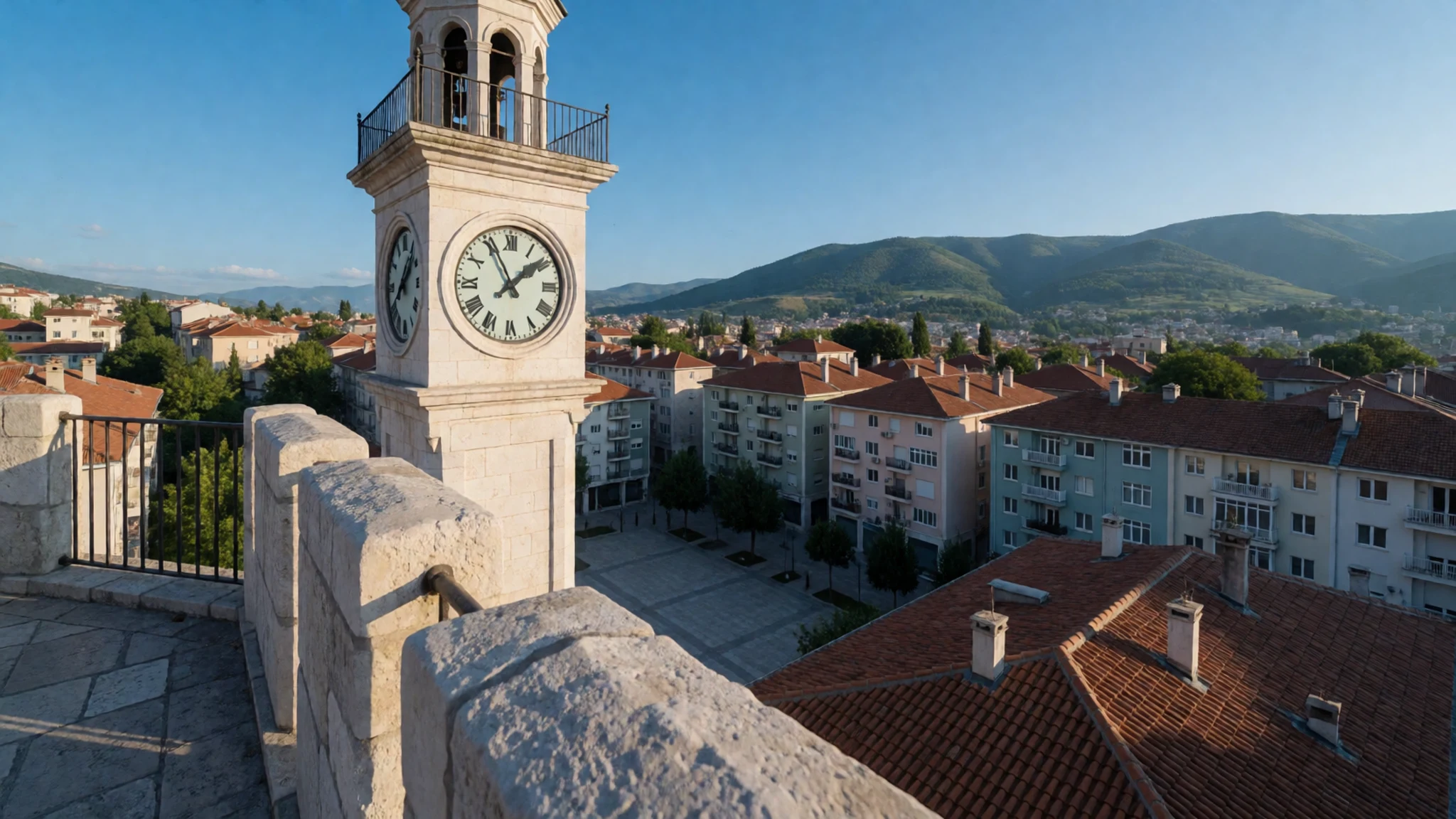
- National Historical Museum — Skanderbeg Square
Facing the square, the museum tells Albania's story from antiquity to the modern era, led by a large mosaic across its front. Its displays are a useful starting point for making sense of the country before travelling further. Opening times and ticketing vary, so check before planning a visit.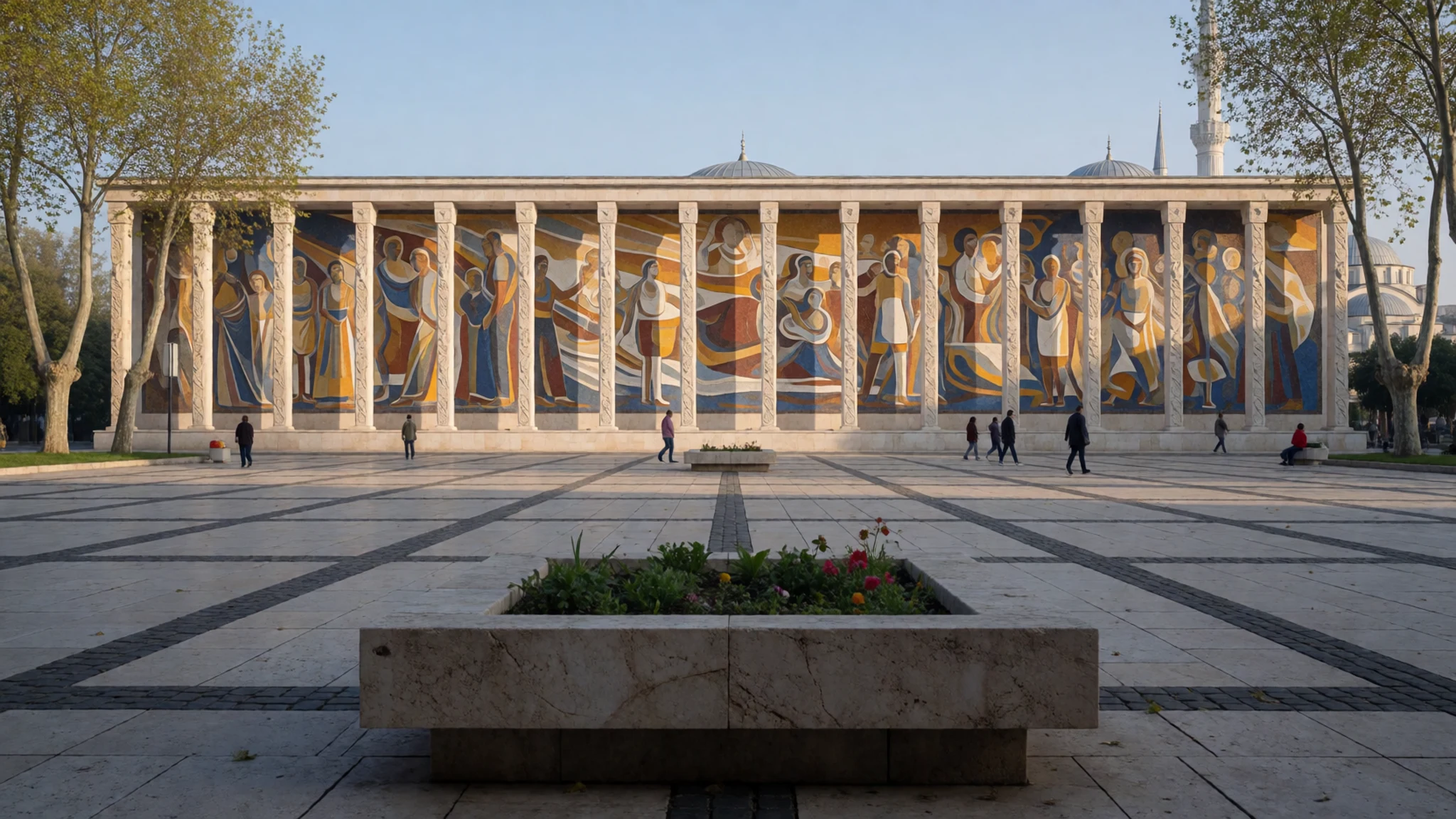
- Resurrection of Christ Orthodox Cathedral — Central Tirana
This modern Orthodox cathedral is topped by a tall dome and holds rich iconography inside. Its bright, spacious interior contrasts with the older Ottoman buildings elsewhere in the centre. Dress modestly and keep voices low, since services take place here and visitors are expected to be discreet.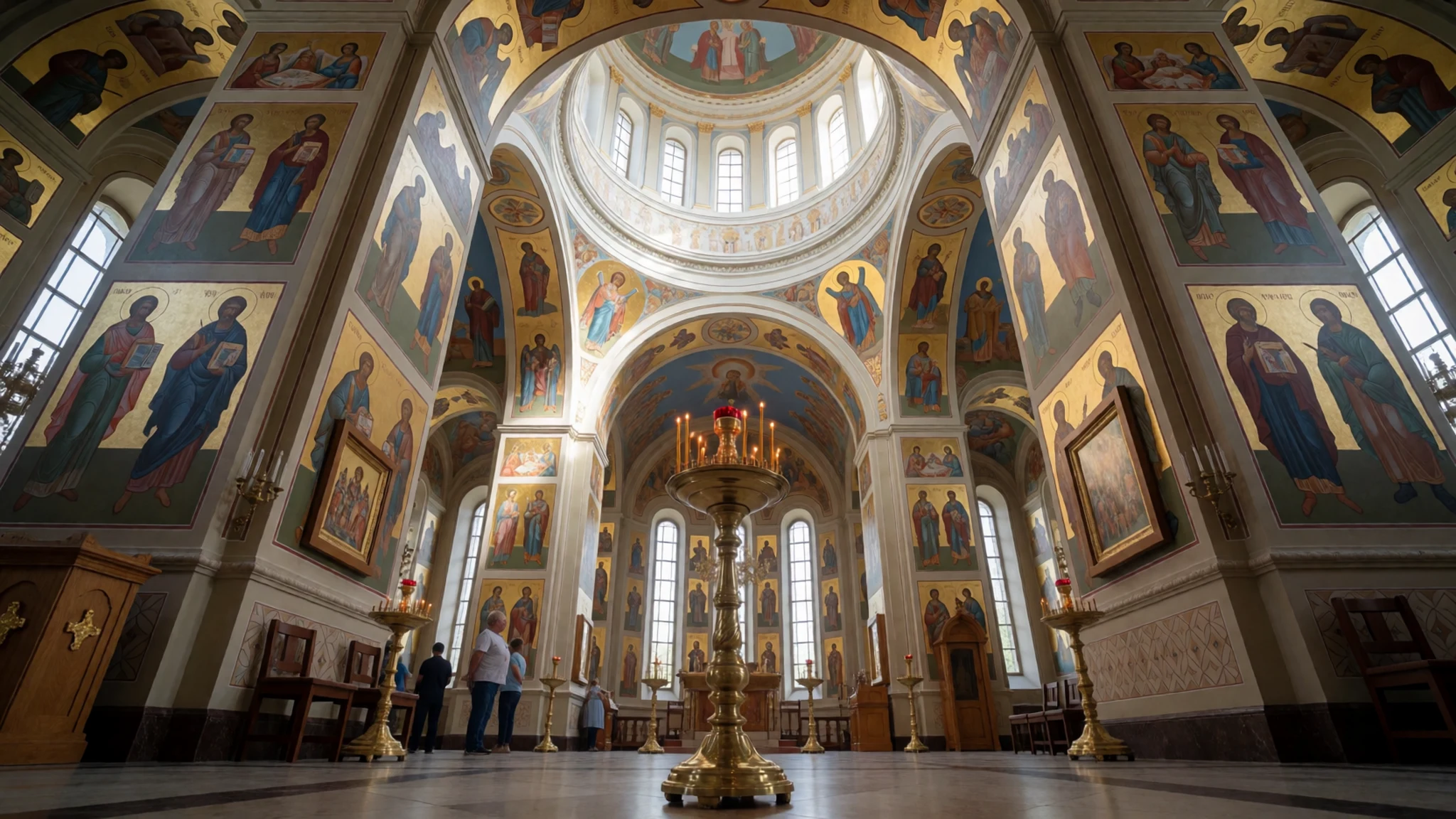
- Pyramid of Tirana — Near the boulevard
A concrete pyramid built in the communist era, once a museum and later left to decay, has been reworked as a public space after reconstruction. Visitors can climb its sloping sides for views over the nearby towers and boulevard. It is a frank reminder of how the city's uses of its buildings have changed.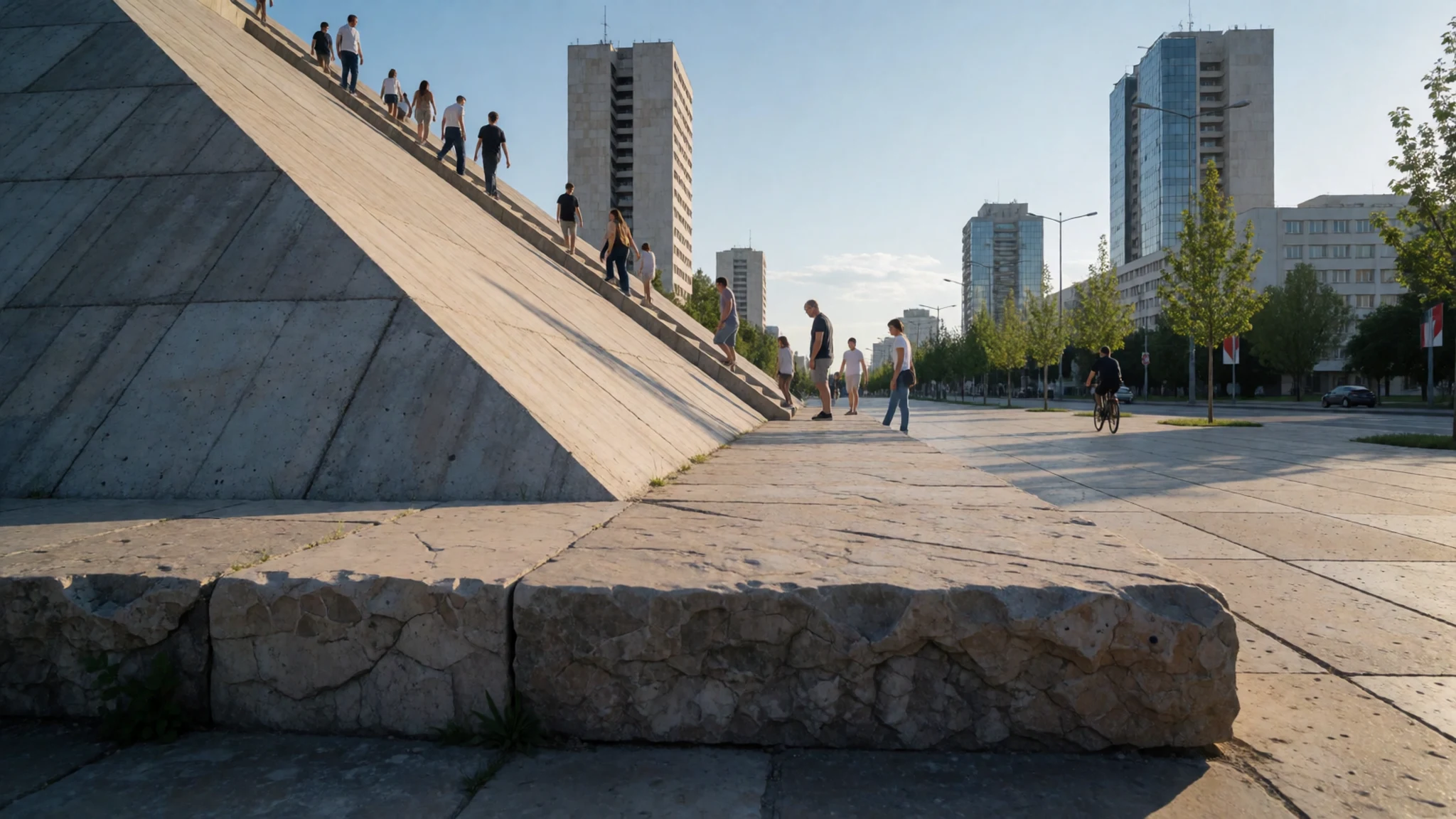
Culture
Tirana is a city where several faiths share the same neighbourhoods. Ottoman mosques, Orthodox and Catholic cathedrals and a Bektashi teqe, the Sheh Dyrri Teqe, stand within a short walk of one another, and the calendar reflects that mix. Christmas, Eid, Hanukkah and Nowruz are all marked, and Dita e Verës in mid-March celebrates the end of winter with the arrival of spring. Several mosques survived the communist decades only because they were turned into storehouses or shops, and they have since returned to worship, which gives the old centre a layered feel. Everyday life revolves around coffee. Cafés fill from the morning, and in the evening many people join the xhiro, the slow social stroll along the main boulevards and around the square. The city keeps a national library, a number of museum-houses preserved from older times, and cultural centres run by foreign institutions such as the British Council and the Goethe-Institut, so there is no shortage of talks, exhibitions and concerts. Hospitality matters. A host will often offer coffee, raki or something sweet, and refusing outright can feel abrupt, so it is better to accept a small amount. Visitors who are at ease with slow conversations will find the city very easy to enjoy. At mosques and teqes, remove your shoes before stepping onto the carpet, cover your shoulders and knees, and ask before photographing anyone at prayer.
What to wear
Traditional dress in Albania varies by region, and Tirana's collections draw on the central and northern styles. Men's costume centres on the fustanella, a pleated kilt-like garment, worn with an embroidered waistcoat and a white felt cap known as the qeleshe. Women's dress in the north includes the xhubleta, a bell-shaped skirt made of wool, along with embroidered aprons, silver or filigree jewellery and woven belts. Heavy wool, felt, linen and cotton were the main materials, chosen for mountain winters. These outfits now appear mainly at weddings, folk festivals, school performances and national holidays rather than in daily life. On the street, Tirana dresses much like other southern European capitals. Smart-casual is normal, with well-cut jackets, trainers and sunglasses. Young people follow current fashion, and café-goers often dress up a little for the evening xhiro. For a visitor, the sun is the main consideration from late spring to early autumn: light, breathable cotton or linen, a hat and sunscreen are sensible, and an umbrella or light rain jacket is worth packing for the wetter months. Comfortable shoes with grip matter, since pavements are uneven and marble surfaces can be slippery when wet. For mosques and churches, carry a scarf or light layer that covers shoulders and knees, and wear shoes that slip off easily.
What to eat
- Byrek — Neighbourhood bakeries and counter shops
Flaky filo pastry baked with fillings such as spinach, cheese or minced meat, eaten for breakfast or as a quick snack. Bakeries and small counter shops across the city sell it by the slice, usually with yoghurt or a glass of ayran.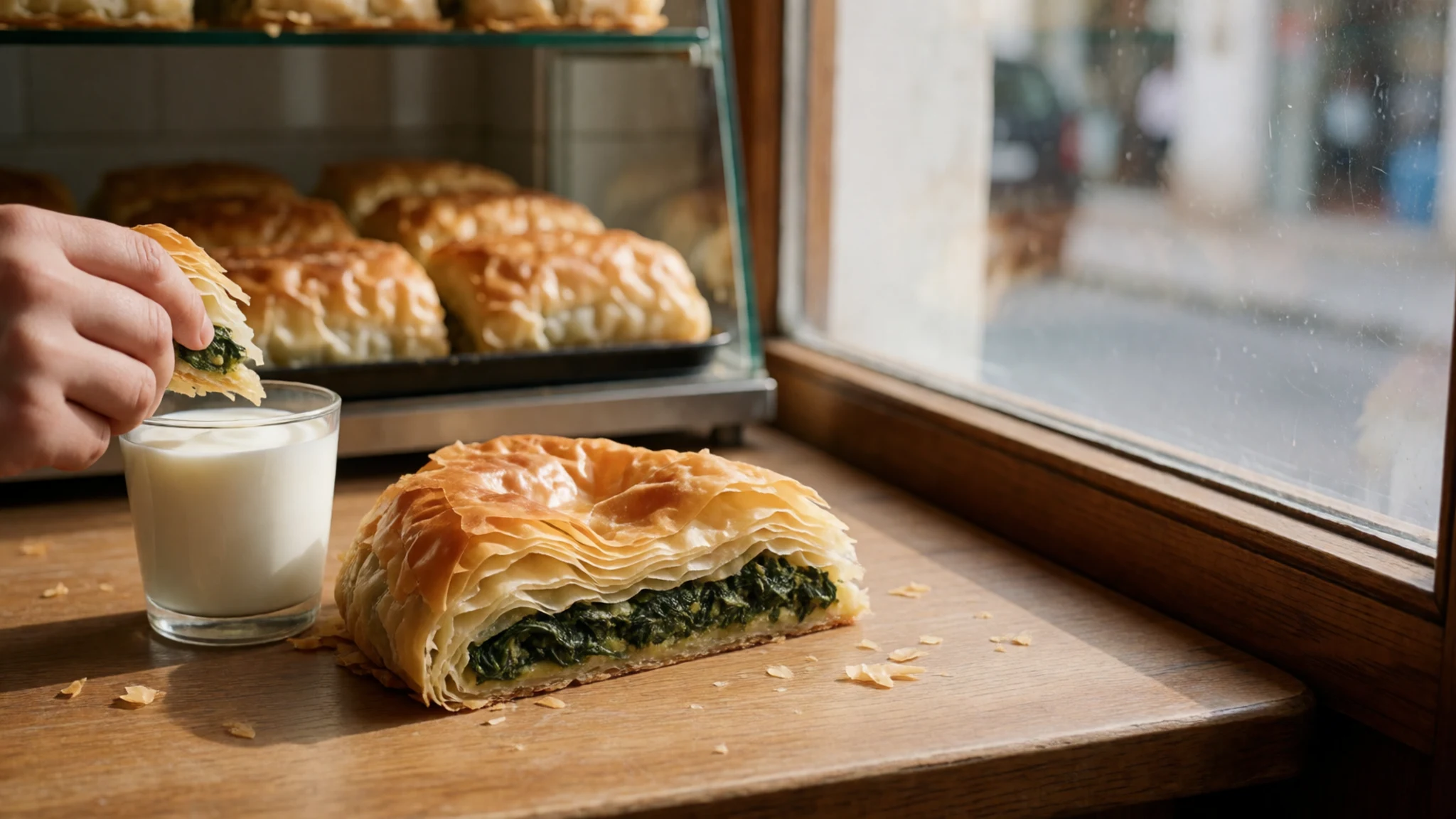
- Fërgesë — Traditional Albanian restaurants and canteen-style eateries
A baked dish of peppers, tomatoes and soft cheese, sometimes with liver or other meat, served bubbling in a clay dish. It is rich and rustic, and a good way to taste home-style Albanian cooking.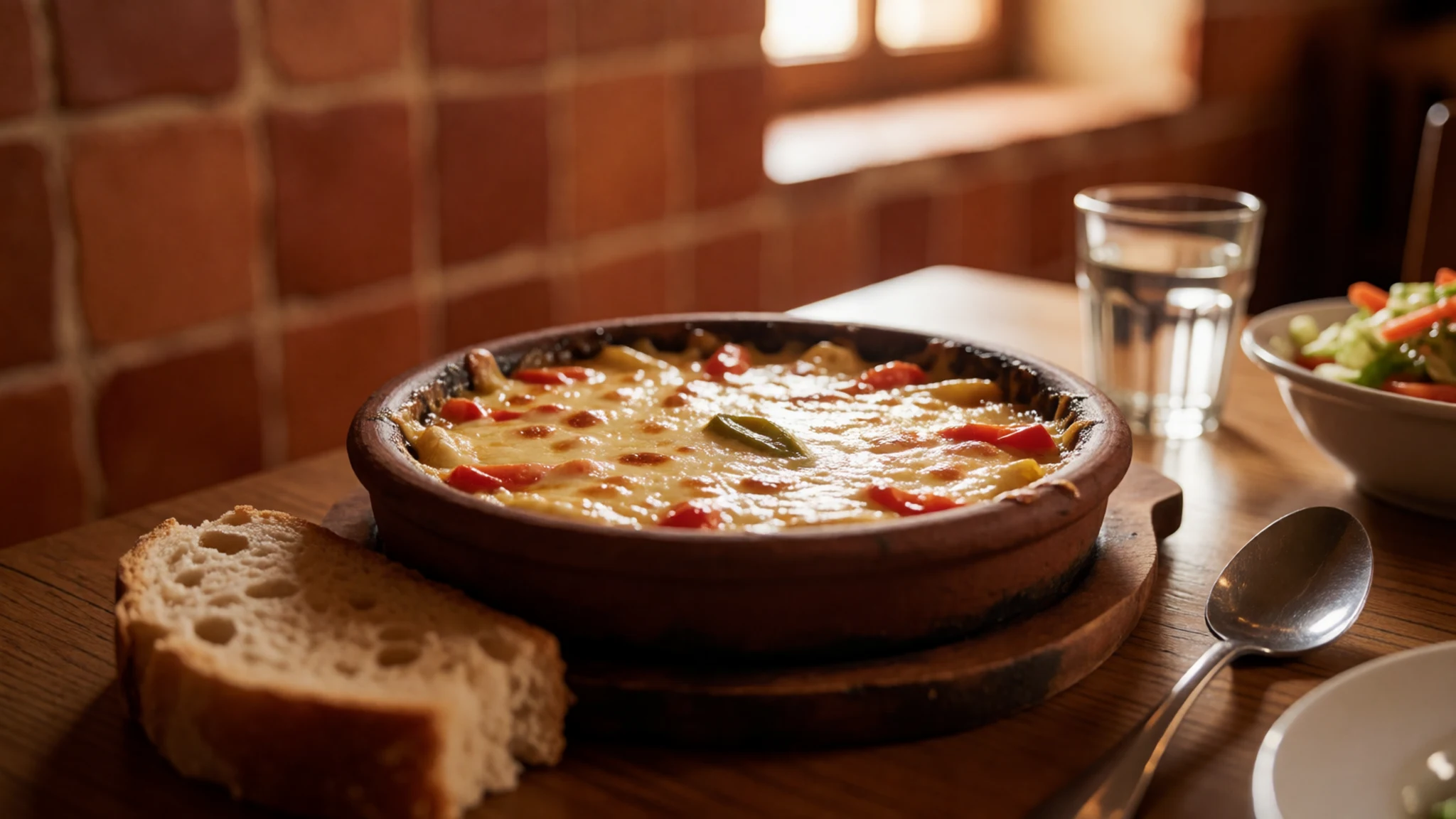
- Tavë kosi — Family-run restaurants serving daily lunch menus
Lamb baked under a thick layer of egg-enriched yoghurt until golden on top. It is often described as a national dish, and the sour creaminess of the topping balances the tender meat. - Supë pule — Simple lunch places and canteen-style eateries
A plain, comforting chicken soup, widely served as a starter or a light meal. It is worth ordering on a rainy day, when the city's wet side shows, and it pairs well with bread and a salad of tomatoes and cucumber. - Qofte and grilled meats — Grill houses and everyday eateries around the centre
Seasoned meatballs and skewers cooked over charcoal, often served with chips, salad and flatbread. Tashqebab, a meat-and-vegetable stew, appears on similar menus and suits those who want a hearty, slow-cooked dish. - Turkish-style coffee — Neighbourhood cafés and terraces on the main boulevards
Strong coffee served in small cups is central to daily life, along with espresso. Sit for as long as the conversation lasts, since staff rarely hurry guests. It is the easiest way to join the local rhythm.
Plan it
Best time. April–May and September–October, when days are mild to warm and the city is pleasant to walk. Summer is hot and bright, and winter brings regular rain.
How long. 2–3
Getting there. Fly into Tirana International Airport, from which buses run to the city, Durrës, Shkodër and Fier. Within Albania, buses and furgons (minibuses) link Tirana to most towns from two main terminals. Check the city's official site, https://www.tirana.al, for current transport information.
Budget. low
Tips
- Arrive early for intercity buses, as they can leave sooner or later depending on how full they are
- Use Google Maps to check intercity bus connections, but do not rely on the last bus of the day, especially for far destinations such as Saranda
- Carry some cash for small cafés, bakeries and market stalls, though larger places usually take cards
- Sightsee in the morning and evening in summer, when the middle of the day is hot
- Look down on pavements, which are often uneven or blocked by parked cars
Etiquette
- Dress modestly and remove shoes before entering mosques and teqes
- Accept offers of coffee or a small drink when invited, and thank your host
- Ask before photographing people, especially during prayer
Nearby
Sources
- Wikidata Q19689 (CC0)
- Wikipedia: Tirana (rev 1383962817) (CC BY-SA 4.0)
- Wikivoyage: Tirana (rev 5420205) (CC BY-SA 4.0)
- Tirana from South — Albinfo (CC BY-SA 2.5)
- Tirana Skanderbeg Square — Chris Walts (CC BY-SA 2.0)
- National Historical Museum, Tirana — Diego Delso (CC BY 3.0)
- Pyramid of Tirana — BBB2021 (CC BY-SA 4.0)
- Cathedral of Christ's Resurrection, Tirana — Diego Delso (CC BY 3.0)
- The Great Mosque of Tirana — P4Jags (CC BY-SA 2.0)
- Petrela Castle — Diego Delso (CC BY 3.0)
- Clock Tower of Tirana — aXeLuS (CC BY-SA 2.0)


