Paro Taktsang
Paro Taktsang, Bhutan
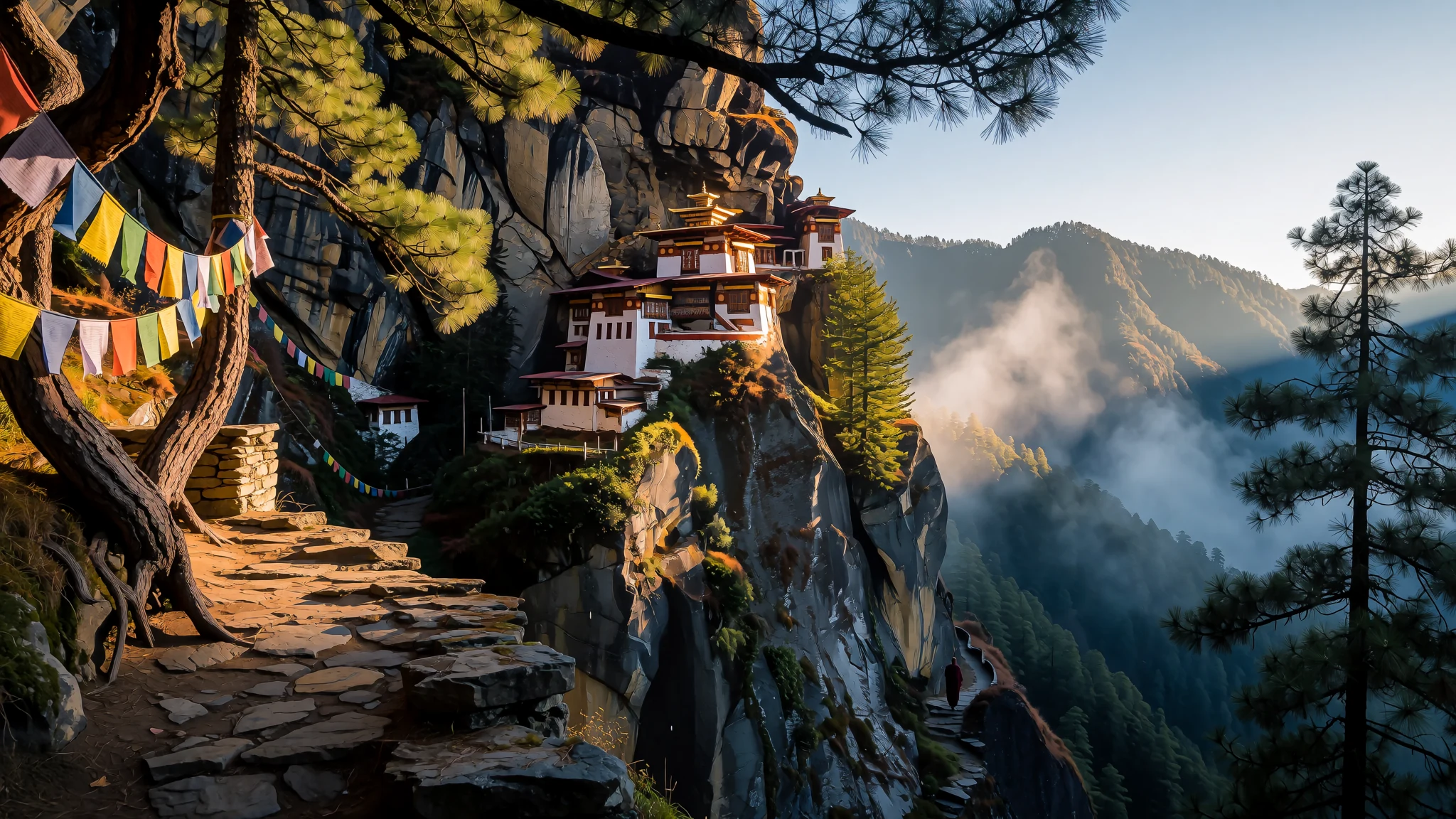
Clinging to a sheer vertical precipice above the Paro valley, Paro Taktsang is an extraordinary Himalayan Buddhist sanctuary rich in legend.
The place
Paro Taktsang stands as a remarkable Vajrayana Buddhist sanctuary tucked into the steep rock face of the upper Paro valley in Bhutan. Often referred to as the Tiger's Nest, the monastery complex clings precariously to a cliff high above the valley floor, surrounded by soaring mountain ridges and pine forests. Visitors approaching the site must navigate steep, winding mountain paths that weave through pine woods and past fluttering prayer flags, revealing sudden, dramatic glimpses of the monastic buildings anchored directly into the living stone. The complex itself is an intricate assembly of white-walled halls, golden roofs, timber staircases, and shadowy alcoves where butter lamps flicker continuously in the mountain air. Outside, the sheer drop into the canyon below offers vast, sweeping views across the valley, while the crisp alpine breeze carries the steady hum of chanting and the ringing of bells. Every structure is carefully integrated into the natural contours of the cliffside, making architecture and geology appear as a single entity. The setting feels entirely removed from the ordinary world, demanding physical effort to reach yet offering a profound sense of quietude to those who complete the ascent. It has rightly earned its reputation as the most celebrated cultural landmark in the kingdom, drawing pilgrims and travellers from across the globe to witness its extraordinary mountain perch.
Its story
Paro Taktsang traces its spiritual origins to the early historical period when Vajrayana Buddhism was first introduced to the region. According to sacred accounts and traditional narratives, the revered master Padmasambhava, also known as Guru Rinpoche, travelled to this dramatic cliffside location. Tradition holds that he arrived flying on the back of a tigress, choosing the precipitous cave to meditate and subdue the malicious spirits that inhabited the surrounding mountains. In one prominent version of the legend, a former royal consort transformed herself into the creature to carry the teacher safely from Tibet to this remote Himalayan sanctuary. Inside the cliffside caves, the master emerged in various manifestations, consecrating the ground and establishing its enduring holiness as a lair of the tiger. Centuries later, the site underwent significant architectural development when a substantial monastery complex was established around the sacred Taktsang Senge Samdup cave. This major construction was initiated by Tenzin Rabgey, who served as a prominent leader and was widely regarded by devotees as a reincarnation of the original master. Over subsequent generations, the complex has been carefully maintained and restored following fires and weather damage, preserving its historical significance and its deep connection to the foundational era of Bhutanese religious heritage.
What to see
- Taktsang Main Monastery — Upper Paro valley cliff face
Paro Taktsang forms the heart of the cliffside complex, featuring interconnected shrines, steep wooden ladders, and flickering butter lamps nestled directly against the ancient meditation caves carved deep into the rock.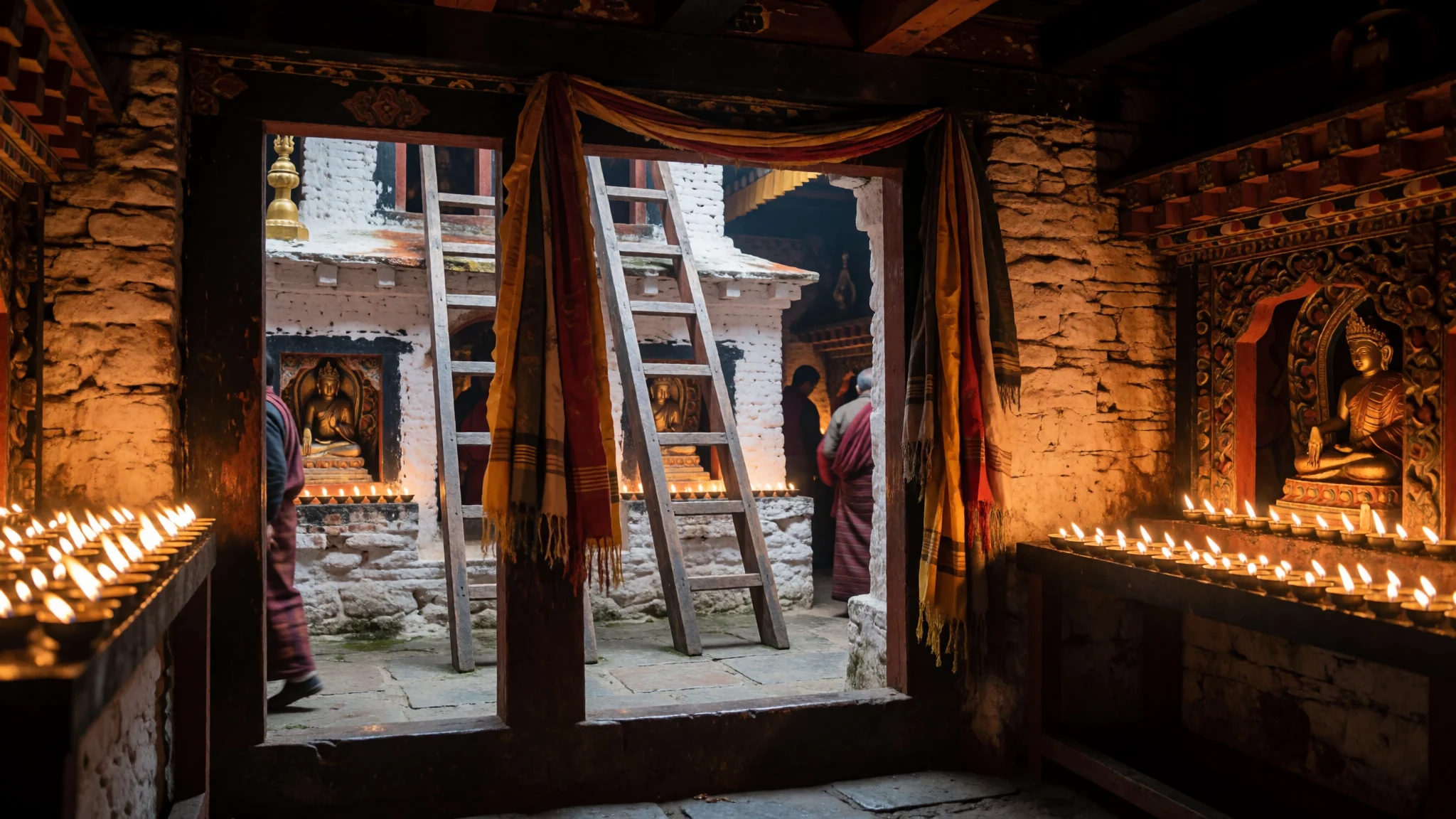
- Cave of Padmasambhava — Inner monastic sanctuary
Located deep within the lowest levels of Paro Taktsang, this sacred chamber marks the spot where the master practised, and it is opened to visitors only once a year, when pilgrims offer prayers in its cool, echoing dark.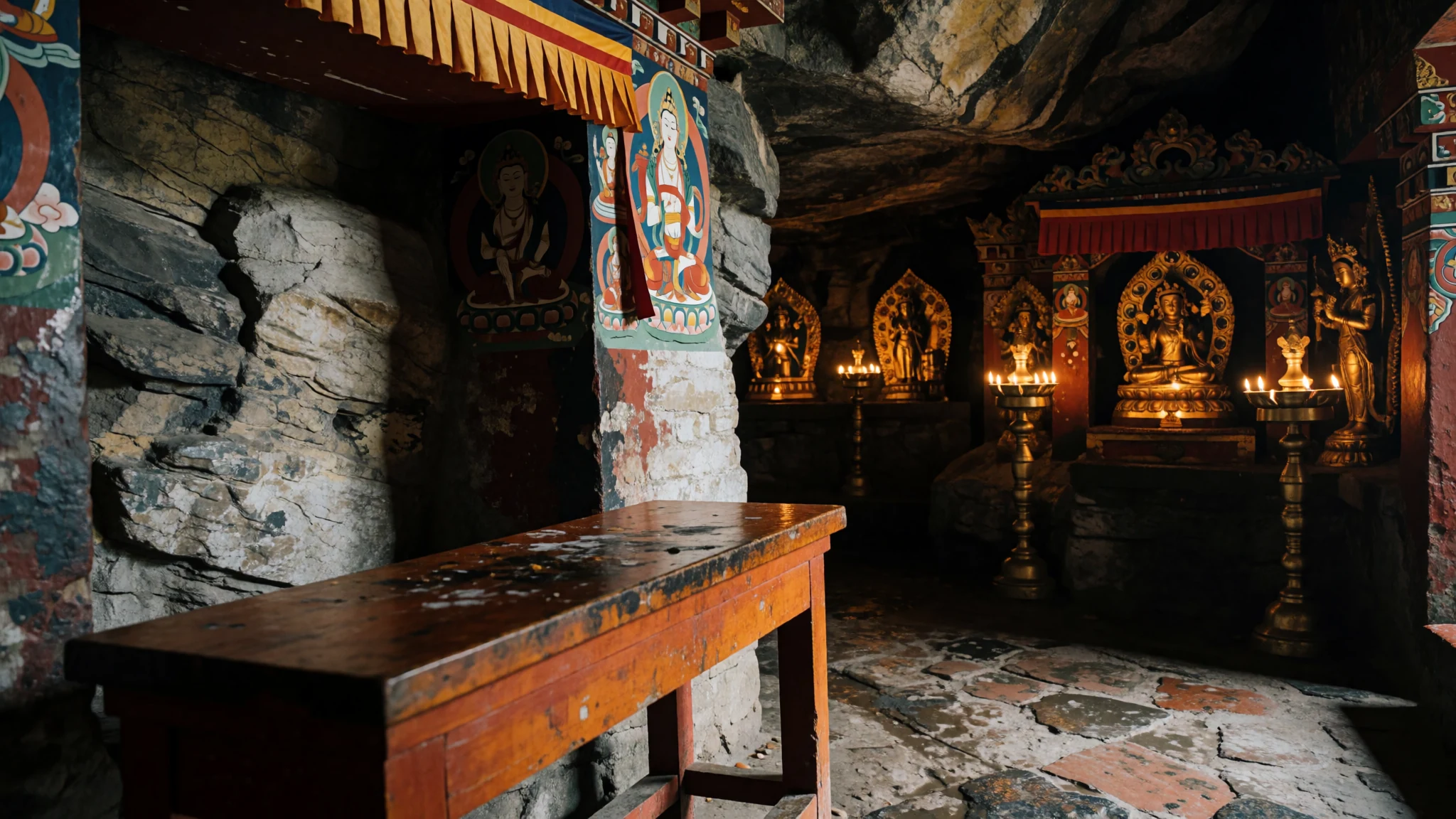
- Shrine of the Guru with Eight Manifestations — Central temple courtyard
This elegant sanctuary at Paro Taktsang is dedicated to the distinct forms assumed by the teacher during his time in the Himalayas, featuring intricate sacred art and murals.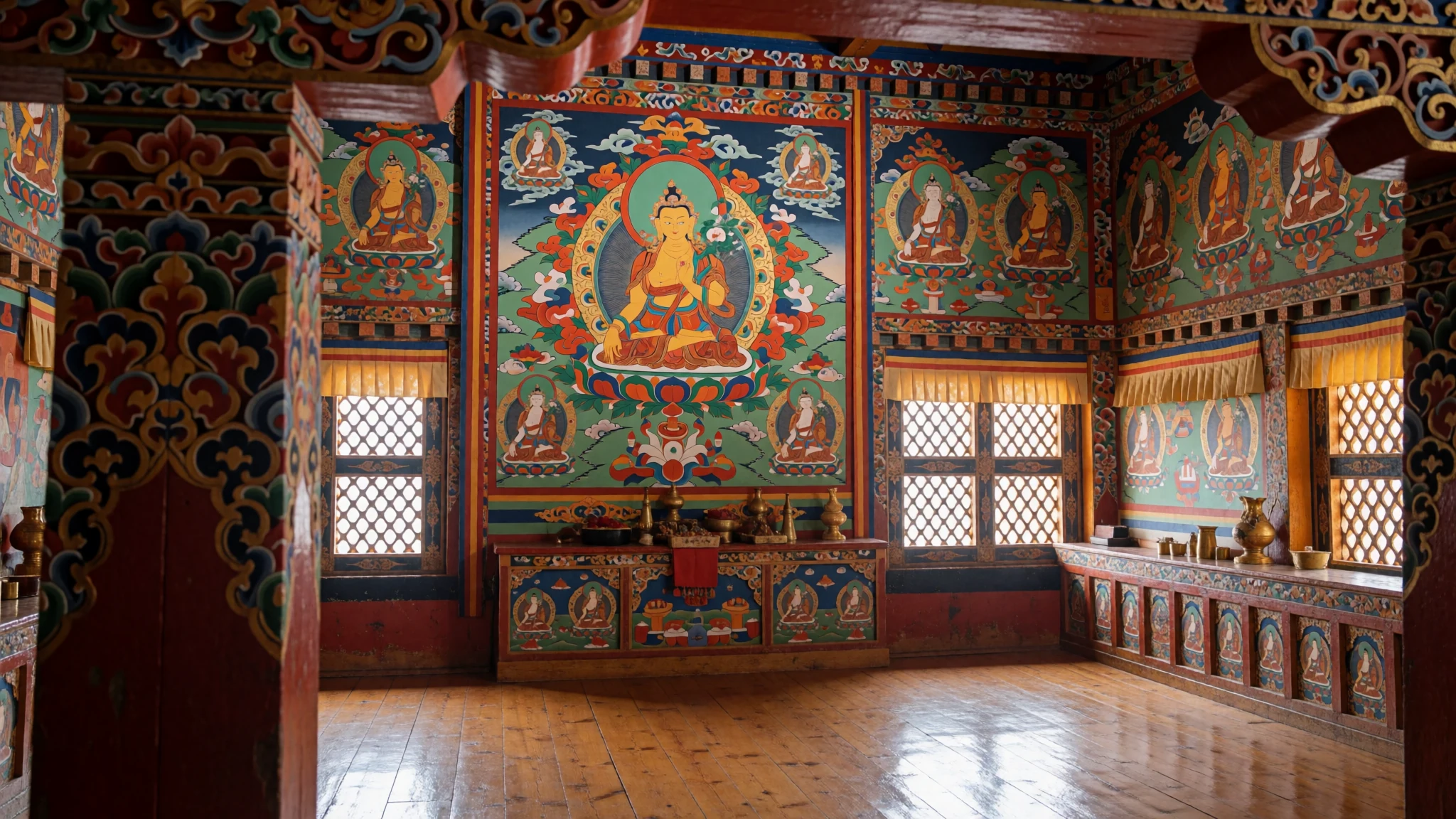
- The Waterfall Lookout — Mid-mountain trail bridge
Positioned along the upper approach trail to Paro Taktsang, this dramatic vantage point provides a stunning view of a roaring cascade plunging past the monastery into the deep gorge below.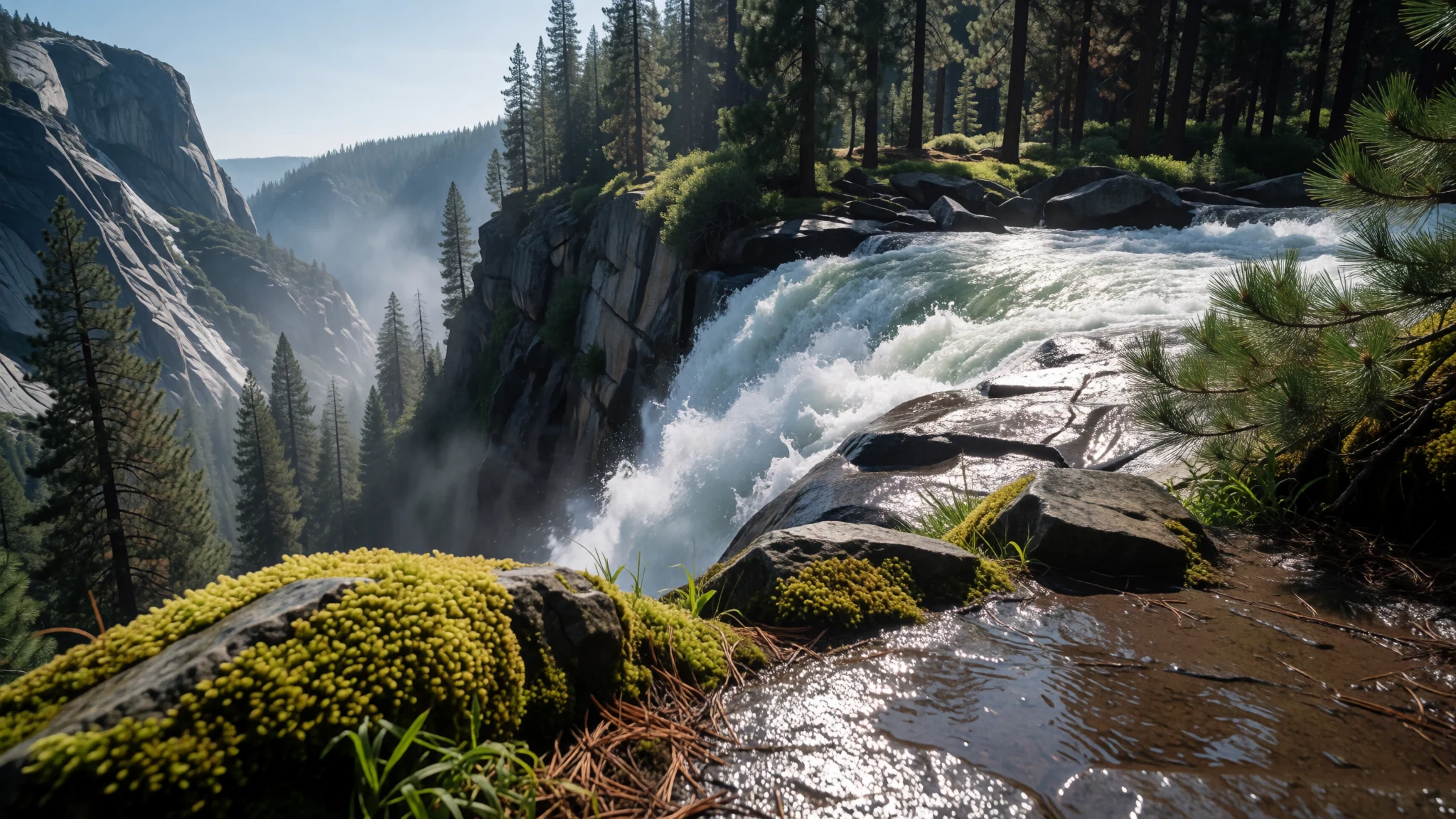
- Cafeteria Ridge — Midpoint resting terrace
Situated midway up the mountain slope facing Paro Taktsang, this resting area offers the first clear, unobstructed perspective of the entire cliffside complex across the wide canyon.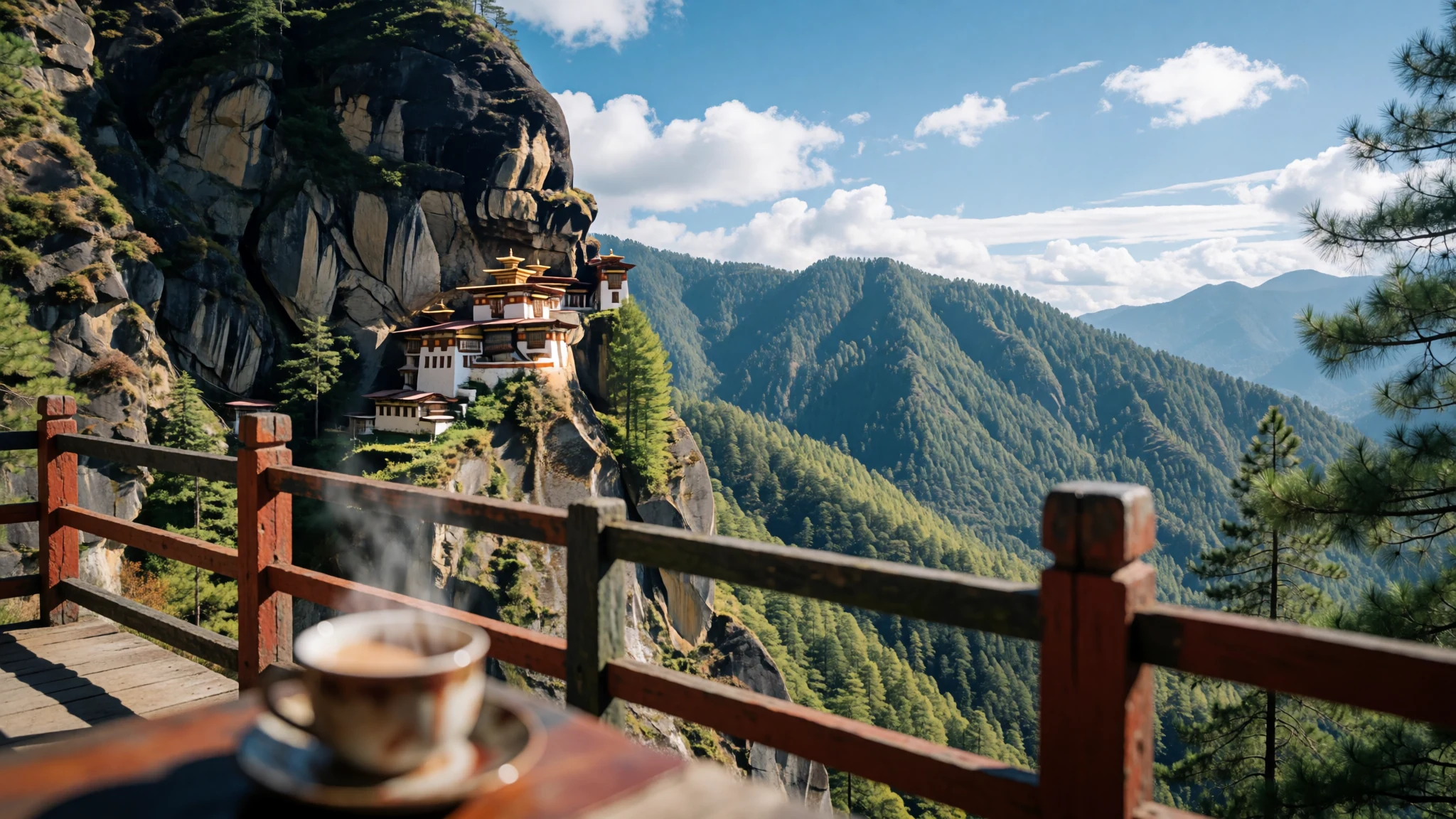
Culture
Social interactions around Paro Taktsang and throughout the wider kingdom are shaped by a deep-rooted respect for tradition, seniority, and spiritual practice. The monarchy and the royal family hold a position of immense regard among local residents, and speaking disrespectfully of them is considered deeply offensive. Age and social hierarchy dictate daily etiquette, requiring visitors to show proper deference when speaking with elders or community leaders. Religion permeates everyday life, with prayer wheels, spinning mantras, and monastic rituals marking the rhythm of the day. While the state religion is Vajrayana Buddhism, constitutional protections safeguard freedom of worship, though proselytising remains strictly forbidden by law. Visitors exploring sacred areas should observe local customs carefully. Always remove your shoes before entering any temple hall or shrine room.
What to wear
Traditional attire remains a vibrant part of daily life across Paro Taktsang and the rest of the kingdom, reflecting national identity and cultural pride. Men traditionally wear the gho, a knee-length robe tied at the waist with a woven cloth belt, while women wear the kira, a long, ankle-length dress wrapped around the body and secured with brooch-like fasteners, paired with a short jacket known as a toego. These garments are crafted from handwoven textiles featuring intricate geometric patterns and rich colours. In contemporary settings, younger generations often blend these traditional pieces with modern jackets and everyday footwear. For visitors heading up to the monastery, practical considerations take precedence: sturdy walking shoes or hiking boots with good grip are essential for the steep dirt trails and uneven stone steps. Modest dress is required at all religious sites, meaning shoulders and knees must be fully covered, and hats or sunglasses should be removed before entering any indoor prayer hall.
What to eat
- Ema Datshi — Traditional town restaurants and village teahouses
Considered the national dish of Bhutan, this fiery preparation combines large green or red chillies simmered in a rich, bubbling sauce of local cow or yak milk cheese. It is found in every local eatery and roadside farmhouse.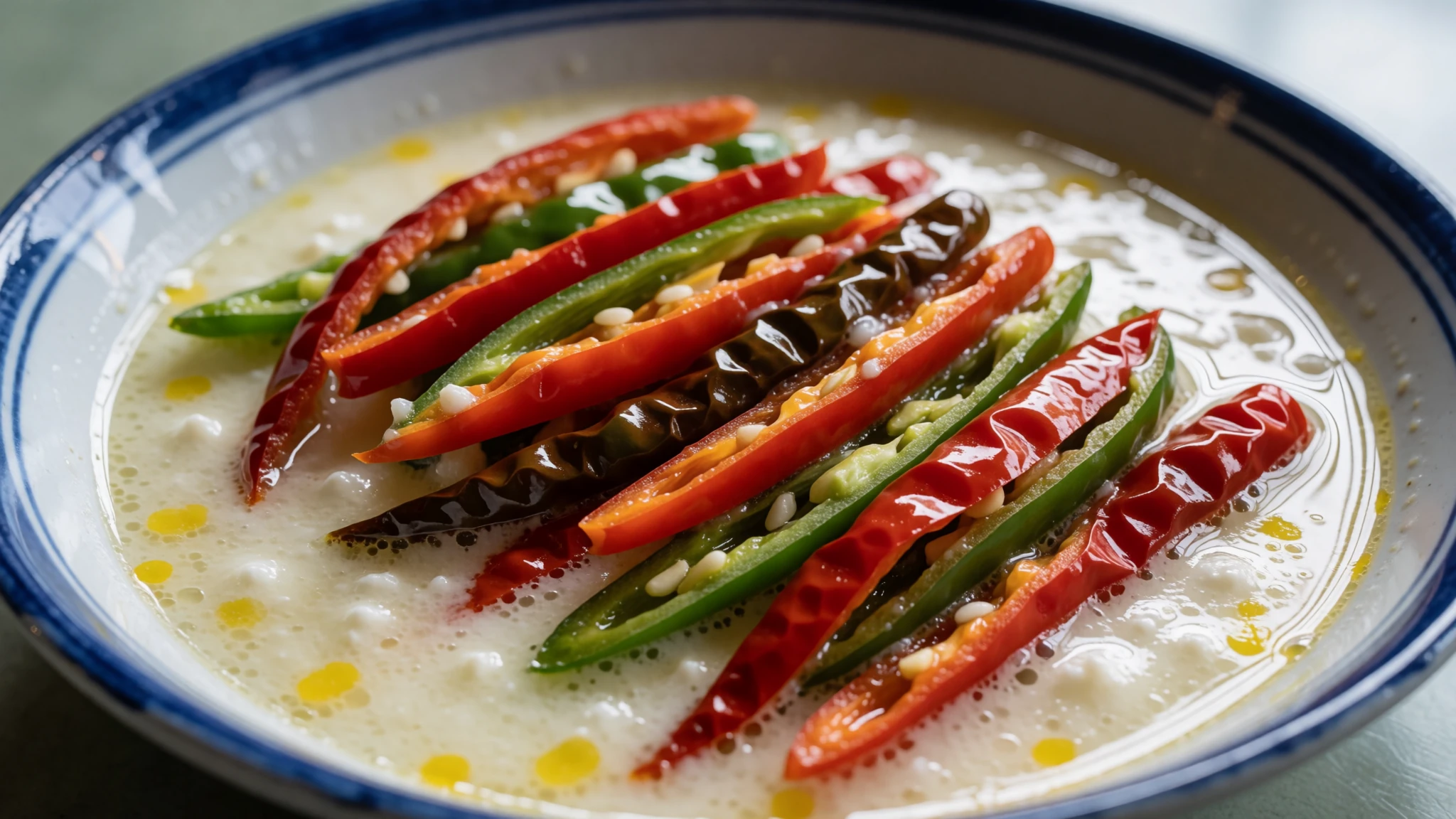
- Red Rice — Local markets and family-run dining rooms
This nutty, medium-grain indigenous rice is a staple accompaniment to almost every meal across the region, absorbing rich sauces and stews perfectly while providing a hearty base for active hikers.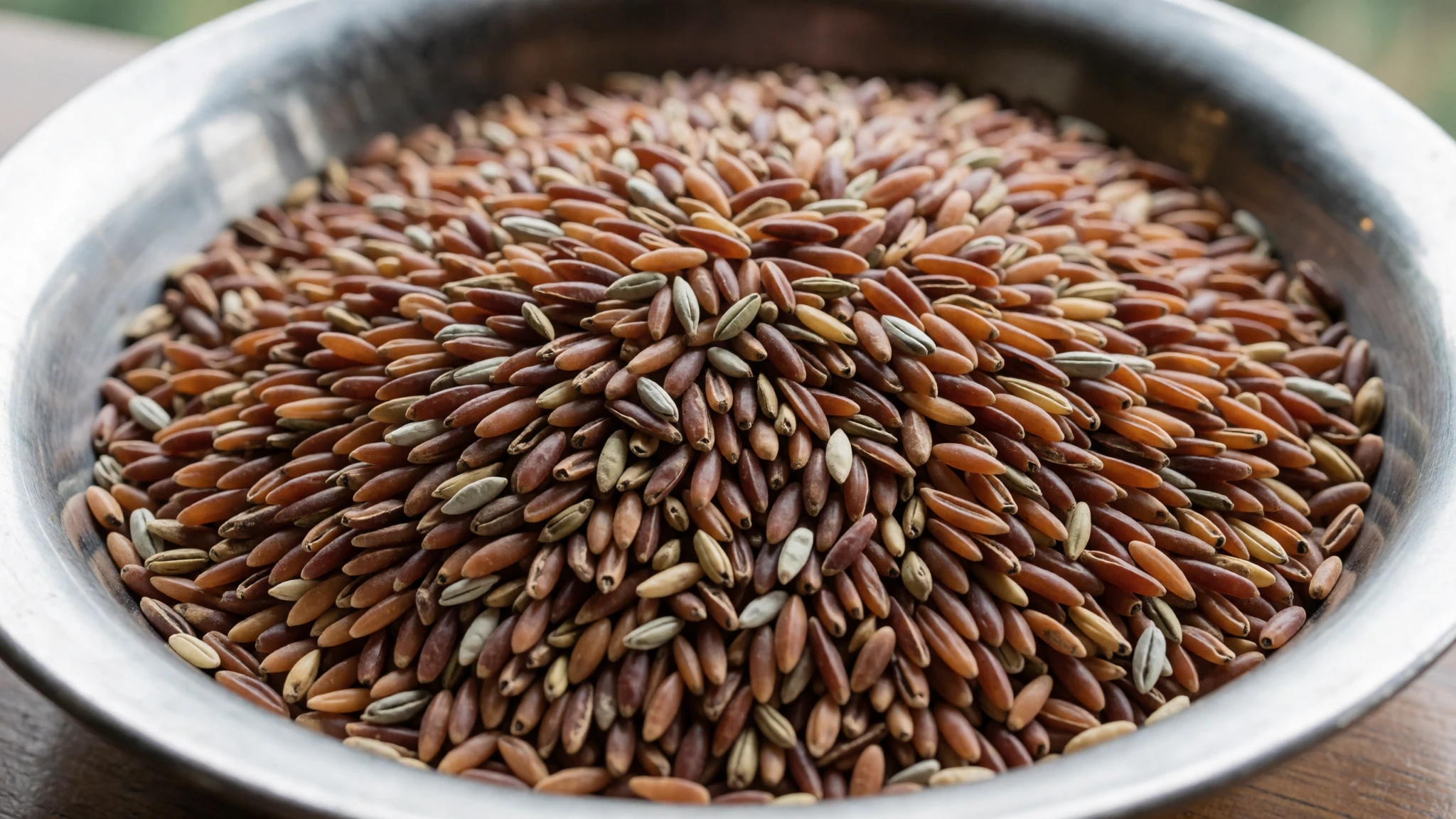
- Kewa Datshi — Valley roadside eateries and hotel dining halls
A comforting variation on the classic cheese dishes, featuring sliced potatoes cooked with melted local cheese, onions, and small amounts of chilli for a milder, savoury flavour profile. - Shakam Paa — Paro market stalls and local lunch spots
Tender strips of dried beef stewed with radishes, dried chillies, and sometimes garlic or onions, offering a concentrated, savory flavour developed through traditional mountain preservation methods. - Suja (Butter Tea) — Mountain teahouses and monastery rest stops
A warming, traditional beverage brewed from fermented tea leaves, churned with fresh yak butter and a pinch of salt to help stave off the chill of high-altitude mountain winds.
Plan it
Best time. March to April for blossoming wildflowers and clear skies, or October to November for crisp autumn air and stable weather.
How long. 2–3
Getting there. Fly into Paro International Airport, then take a local taxi or arranged vehicle for the short drive to the trailhead at the base of the mountain.
Budget. high
Tips
- Start the ascent early in the morning to beat the midday sun and catch the best mountain light
- Acclimatise to the elevation for a day or two in the valley before attempting the steep hike
- Carry a walking pole or hire a wooden staff at the trailhead to assist with the steep, uneven steps
- Bring plenty of drinking water and lightweight layers, as mountain temperatures fluctuate quickly
- Keep local currency in cash for small purchases at teahouses along the trail
Etiquette
- Remove your shoes and hats before entering any temple hall or sacred shrine room
- Refrain from taking photographs inside monastic sanctuaries where images are prohibited
- Show respect for elders and maintain modest attire covering shoulders and knees at all times
Nearby
Sources
- Wikidata Q2209873 (CC0)
- Wikipedia (CC BY-SA 4.0)
- Wikivoyage (CC BY-SA 4.0)