Tiger Leaping Gorge
Tiger Leaping Gorge, People's Republic of China
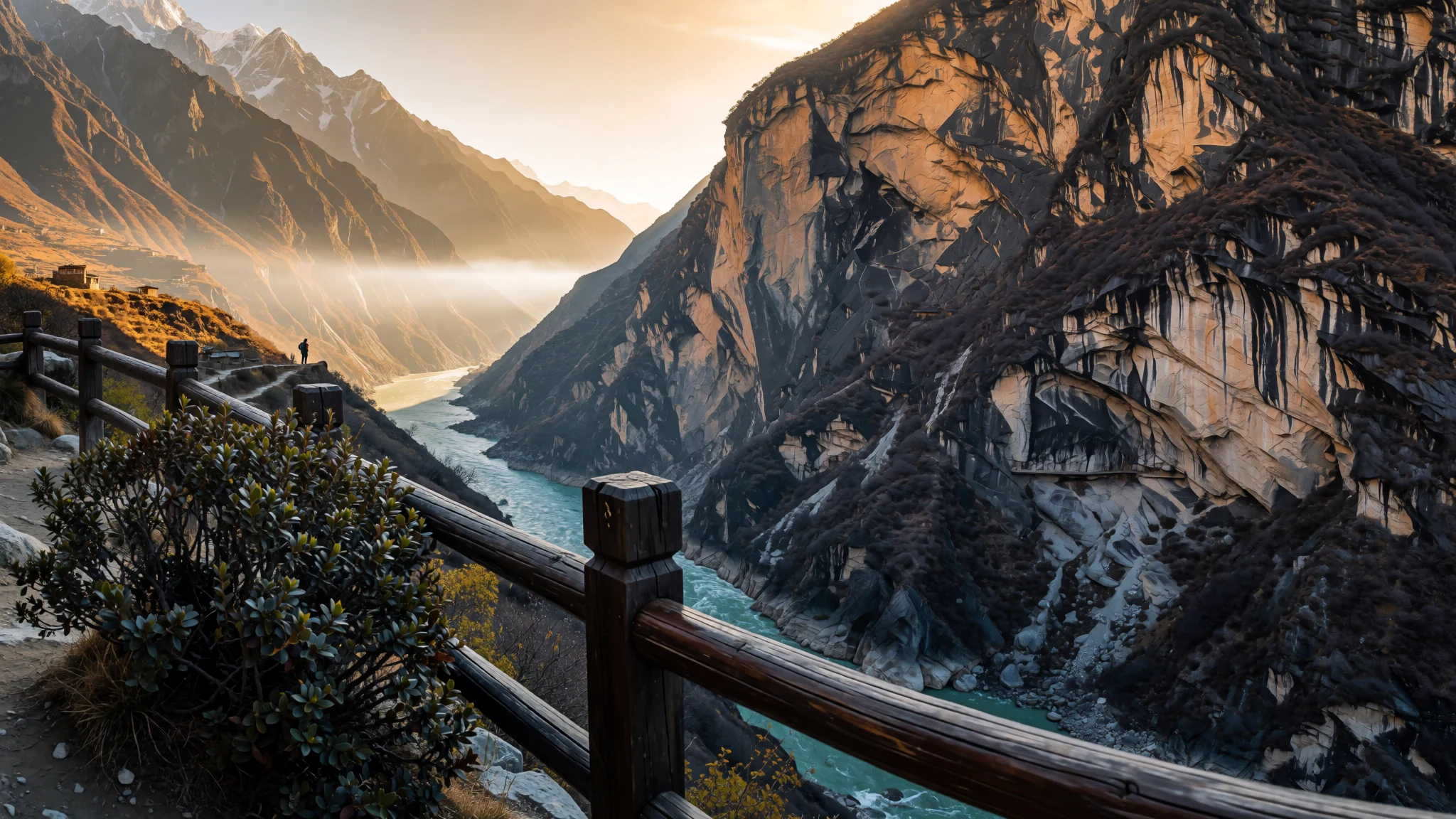
Come for one of the deepest river canyons anywhere, a serious walk along a cliff-side trail, and mountain views above the Jinsha River.
The place
Tiger Leaping Gorge is a river canyon on the Jinsha River, a major tributary of the upper Yangtze, lying about 60 kilometres north of Lijiang in Yunnan. The gorge stretches roughly 15 kilometres between two snow mountains, Jade Dragon and Haba, where the river tumbles through rapids under cliffs around 2,000 metres high. Measured from the water to the peak above, the vertical drop reaches approximately 3,790 metres, which ranks it among the deepest river canyons known. At its narrowest the channel is about 25 metres wide, a gap so slim that the name is tied to a legend of a tiger leaping across it.
Most of the people living in the gorge belong to the Nakhi community, who occupy a few small hamlets on the slopes. They grow grain on terraced land and, increasingly, earn a living from walkers who come to hike the mountainside. The river itself marks an administrative boundary. The right bank falls under Yulong Naxi Autonomous County of Lijiang, while the left bank lies in Shangri-La County of the Dêqên Tibetan prefecture.
The gorge forms part of the Three Parallel Rivers of Yunnan Protected Areas, a World Heritage property. For most visitors the draw is the famous high trail, which follows the northern wall well above the water. Walking it asks for steady legs and a reasonable head for exposed ledges, but it does not need technical climbing gear.
Its story
The story of Tiger Leaping Gorge begins with a hunting legend. A tiger chased by hunters is said to have escaped by springing across the river, using a rock in the middle of the narrow channel as a stepping stone. The tale is still told locally and gave the canyon its name.
For most of its modern history the gorge was a barrier rather than a route. In the early 1980s four rafters tried to run the rapids and were never seen again. Only in 1986 did a team sail through successfully, as part of the first expedition to float the full length of the Yangtze, starting from its source at the Gelandandong glacier lake.
Overland travel came slowly. Backpackers began arriving during the 1980s, drawn by the trails above the river, and foreign visitors were formally welcomed from 1993. Since then the local economy has shifted from grain farming towards walking tourism, a change that brings guesthouses and income along with pressure on paths and villages.
Development is the sensitive part. Officials have proposed upgrading trails and roads and bringing in tour buses, and residents hold strongly varied views, from firm opposition to enthusiastic support. Mining of natural crystals in and around the gorge adds another layer to the local economy. The practical trailhead has also moved: a new highway and construction shifted the start about 3 km east to Changsheng Village, leaving the old starting point at Qiaotou largely bypassed.
What to see
- The narrowest point — the upper high trail, above the narrows
The narrowest point of Tiger Leaping Gorge is where the Jinsha River squeezes to about 25 metres between rock walls, and the stone midstream is what the legend turns on. Viewpoints along the upper path give the clearest look at the water below. The roar of the river carries long before you see it, so keep a firm grip on railings near the edge and stay back from loose ground.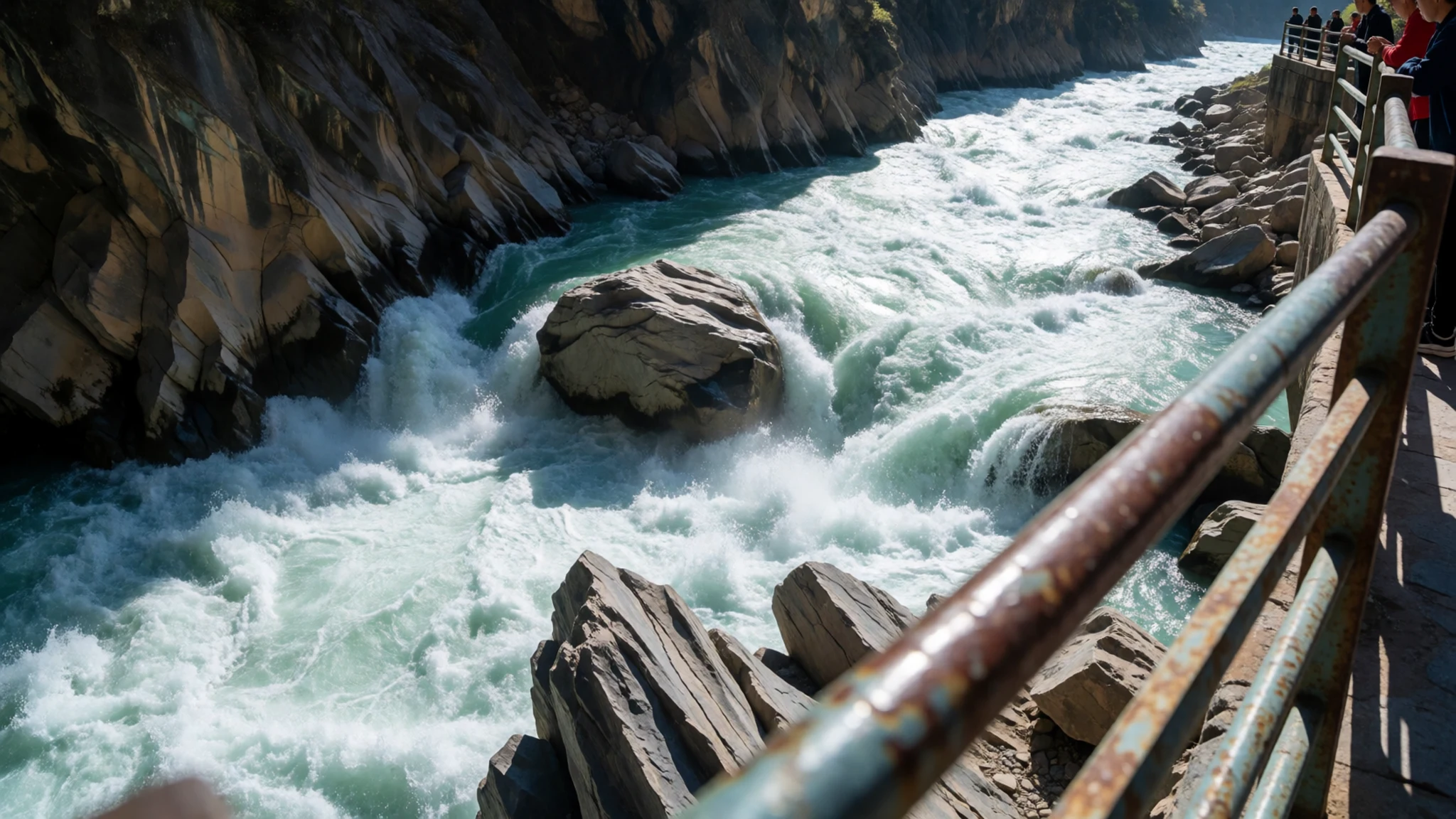
- Tina's Guesthouse and Walnut Grove — the eastern end of the high trail
Tina's Guesthouse marks where the high trail meets the road, making it a convenient end and transport point. Some walkers continue down into the middle gorge towards Walnut Grove, a few kilometres further along the road, which makes a longer and rougher route. The descent to Tina's can be steep and slippery, so avoid it after dark.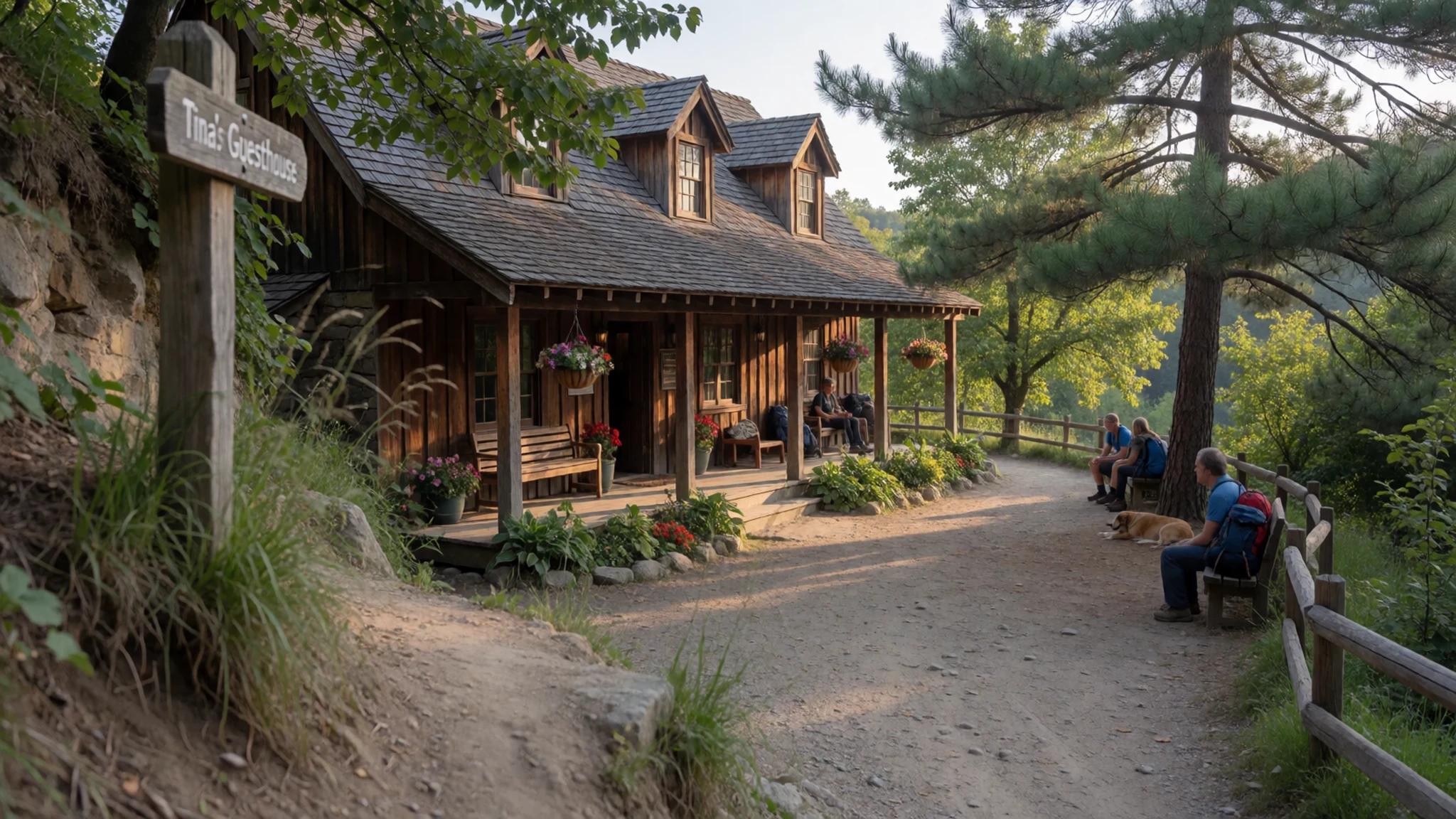
- The 28 Bends ridge — between the Naxi and Tea Horse guesthouse villages
The 28 Bends is the best-known climb on the high trail, a zigzag of switchbacks above the river that tests fitness on the way up and knees on the way down. The climb rewards you with growing views across the gorge. Go slowly, take breaks at the bends, and remember that the descent is harder than it looks.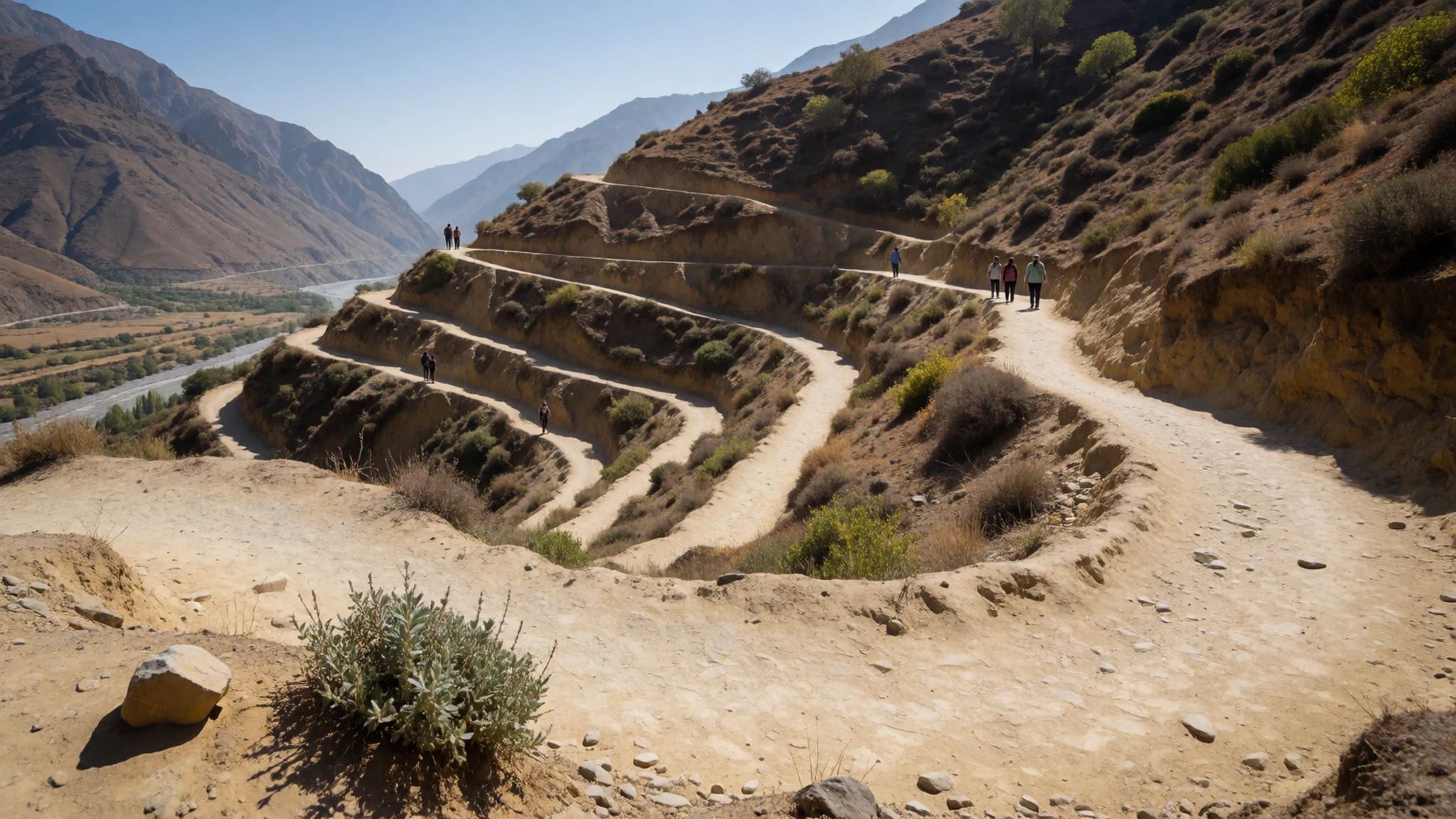
- Changsheng to Naxi ridge — from Changsheng Village, the current trailhead
The ridge between Changsheng Village and Naxi Guesthouse is the quieter stretch, which most walkers now skip, although it runs through pastoral country with few other people. The route climbs over the first ridge and descends to the guesthouse. It is a good place to slow down, watch the farmland below and see local people working the fields.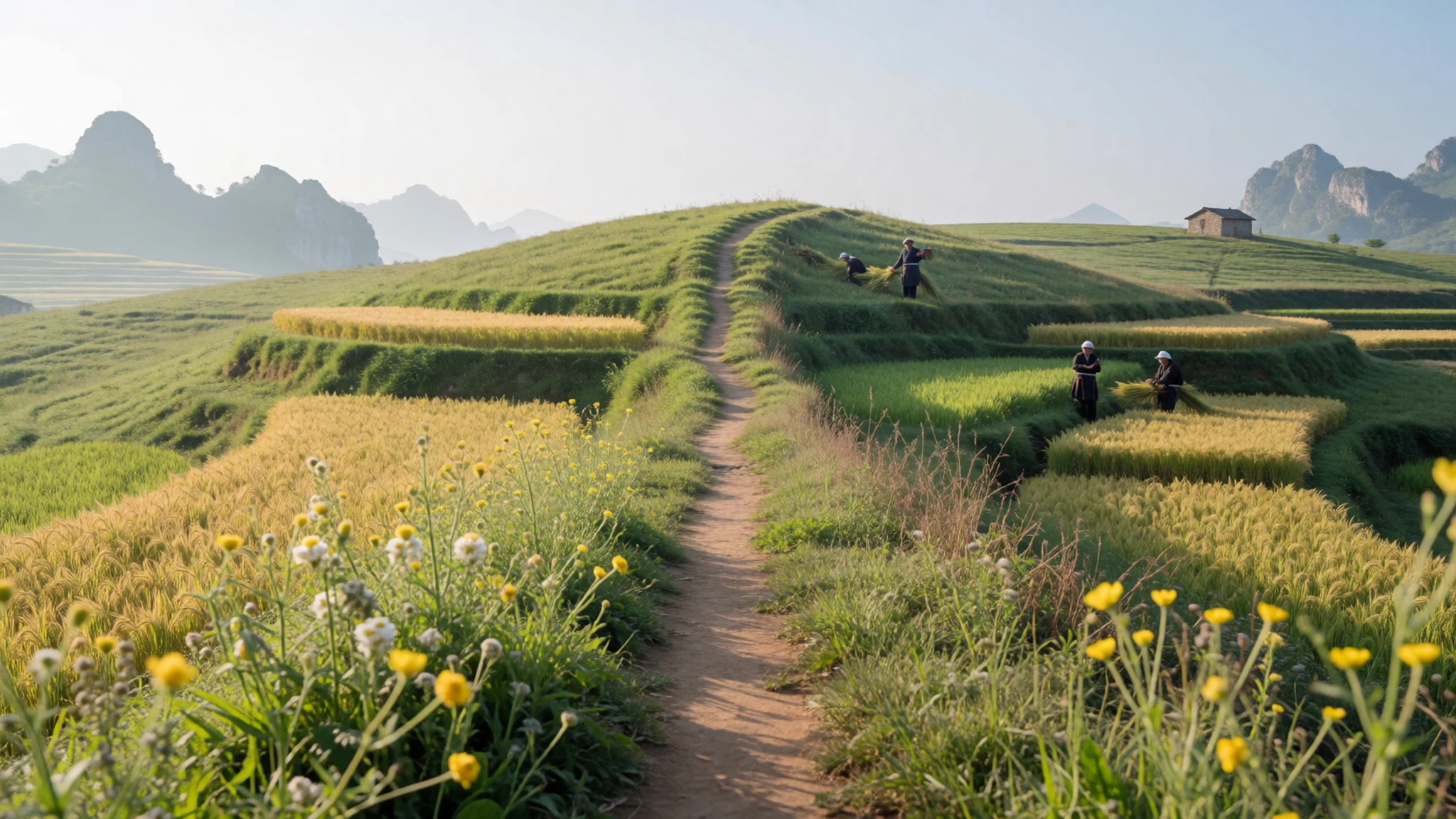
- The Jinsha River rapids from the high trail — open ledges on the northern side of the gorge
From the high trail the Jinsha River appears far below, running through a series of rapids between steep cliffs. Those rapids are the reason the gorge is not considered navigable, and the view changes with light and cloud. Stop at the open ledges on the north wall, where the water is most visible.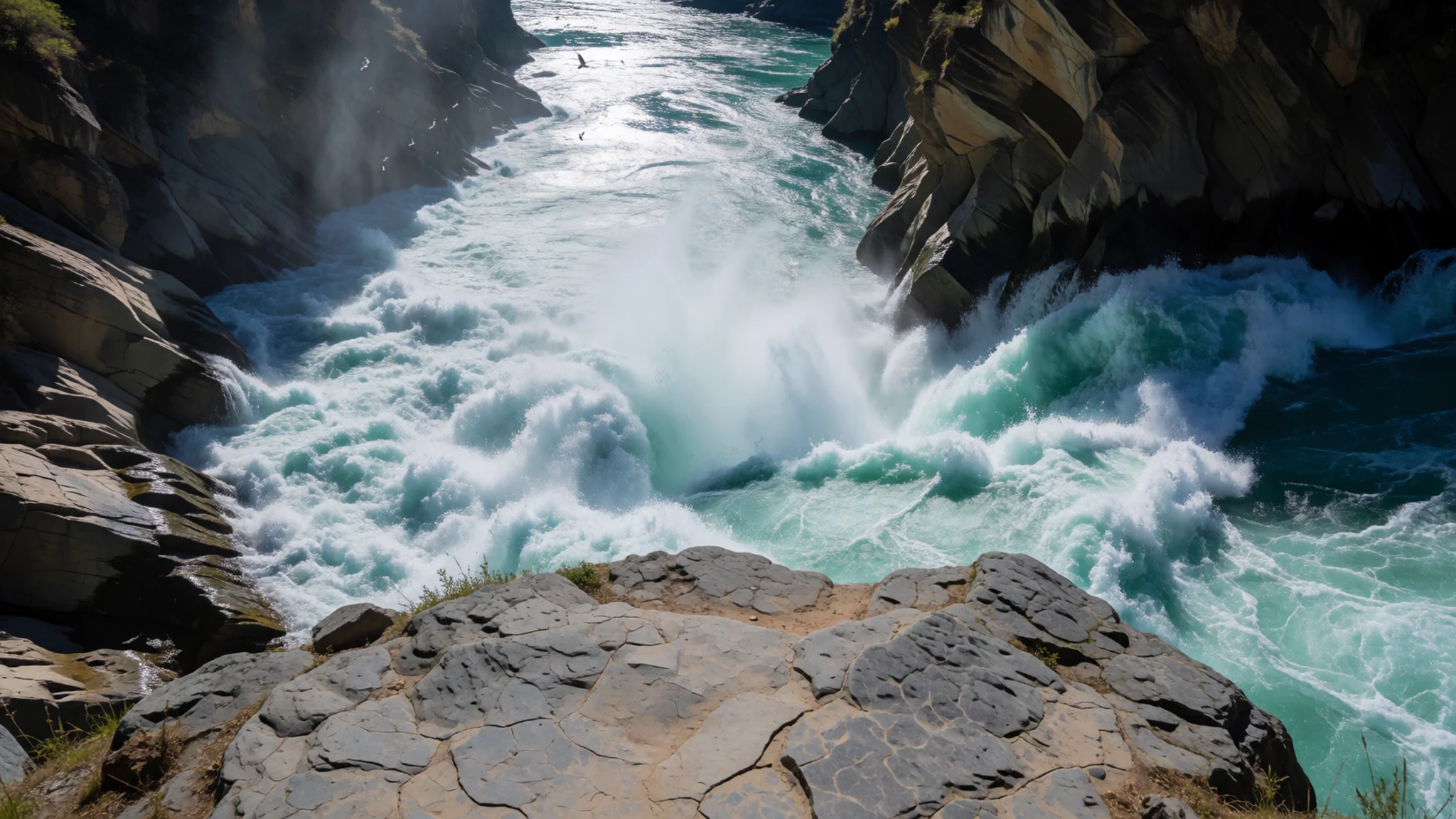
Culture
Tiger Leaping Gorge sits in country shared by Nakhi villages on the Lijiang side and Tibetan communities across the river. The hamlets along the trail depend on guesthouses run by families who host walkers in their own homes. Greetings are simple and friendly, and hosts are usually glad to talk about the walk, the weather and the harvest. Many guesthouses are small, with shared kitchens and a family table in the evening, so expect to eat communally and to order from a short menu.
Mountain paths are also working routes for farmers and mules. Step aside for animals and for people carrying loads, and on steep sections let those going uphill pass first. Many shrines and Buddhist sites in the wider region are active places of worship, so keep your visit brief and quiet when you come across one.
Photography needs care. Landscapes are fine to shoot freely, but ask before photographing villagers, their children or their homes. Waste is a real issue on a popular trek, so carry your rubbish out with you rather than leaving it in a guesthouse bin that may not be emptied. Ask before photographing villagers, their children, or their homes, and carry your rubbish back down the trail.
What to wear
Around Tiger Leaping Gorge, traditional dress follows Nakhi custom, which is seen more in cultural displays and festivals than in everyday life. Women's traditional clothing typically combines a dark cloth garment, often a cape or jacket worn over layers, with a belt. The cloth is usually a locally woven fabric in plain dark tones with decorative trim. These outfits are worn in full mainly at festivals, weddings and performances, and the cut and cloth can vary between valleys, so ask locally rather than assume.
Day to day, villagers wear practical clothing: quilted or fleece jackets, work trousers, and sturdy shoes for fields and tracks, with warm layers for mornings and evenings. Many younger people dress like city residents in Lijiang and Kunming, in jeans, trainers and synthetic outdoor jackets, while older women may still wear traditional pieces at home or at market.
A visitor should dress for the terrain and the climate. Temperatures on the trail are mild, but the sun on exposed ridges can be strong, so layer with a light waterproof, a fleece for the high sections and sun protection. Footwear with good grip matters more than anything, because the path has steep, slippery descents. In villages and around shrines, cover shoulders and knees out of respect.
What to eat
- Guesthouse dinners on the trail — any village guesthouse on the high trail
Most walkers eat at their guesthouse, where meals are usually a set family dinner of rice, stir-fried greens, potatoes and eggs or pork, served at shared tables. Order early, because kitchens may close once the light fades and cooks work by hand over small stoves.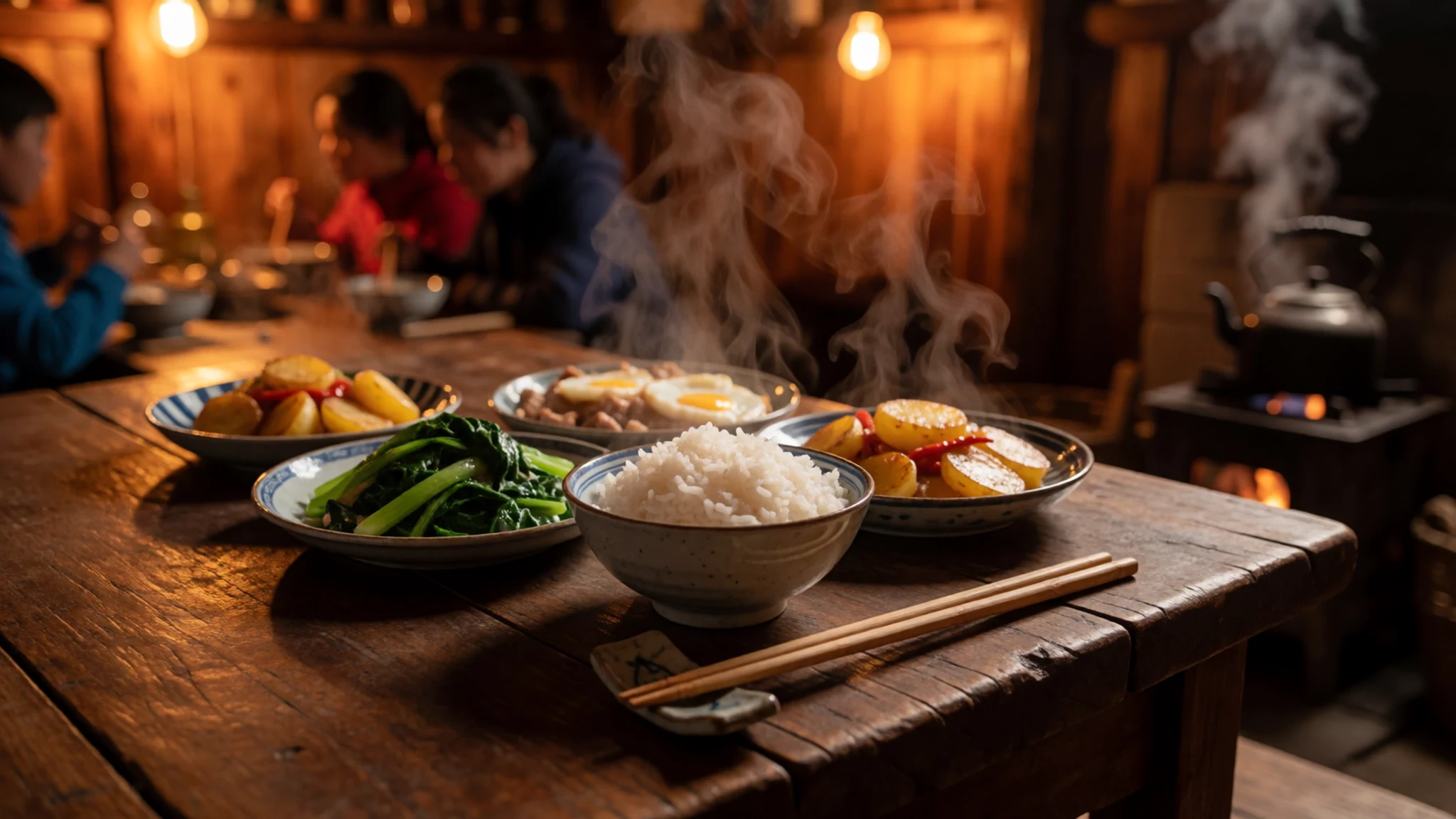
- Noodle bowls at Qiaotou — the small eateries around the Qiaotou bus stop
Qiaotou, the bus stop below the trail, has simple noodle counters serving rice noodles in clear broth with vegetables, chilli oil and sliced meat. It makes a quick, inexpensive lunch before or after the bus ride, and the bowls are filling enough for a day on the path.
- Stir-fries and rice — family-run restaurants in Lijiang and along the main road
Lijiang-style home cooking brings stir-fried vegetables, tofu and mildly spiced dishes, usually with plain steamed rice. Dishes arrive in sequence and are shared, which makes it easy to try several things at once and keep the cost down. - Breakfast before the climb — the dining room of your guesthouse, served before the walk
Walkers fuel up with fried eggs, steamed buns, rice porridge and hot tea before setting out. Breakfast is usually served early at guesthouses, so ask the evening before if you need a packed lunch for the walk. - Lijiang Old Town dinners — the lanes and courtyard eateries of Lijiang Old Town
Lijiang's old town offers grilled skewers, mushroom dishes and Naxi baked breads in lanes and courtyards. It makes a relaxed evening after the bus, though quality and atmosphere vary widely from one street to the next.
Plan it
Best time. Late March to April and October to November suit the trail best, with mild temperatures and clearer skies after the rains. The rainy season brings landslide risk and swollen cascades, so avoid the high trail after heavy rain, and in the wetter months check conditions before you set out.
How long. 2–3
Getting there. Fly to Lijiang, then take a morning bus to Qiaotou. Buses run roughly every 30 to 60 minutes and the journey takes about 2 to 2½ hours. Buy a ticket to Qiaotou only, then arrange a short ride up to Changsheng Village, the current trailhead.
Budget. mid
Tips
- Start early, since the walk is long and the day needs margin
- Book a guesthouse ahead in spring and autumn, when walkers arrive in numbers
- Carry cash for guesthouses and small eateries, as cards are rarely accepted
- Ask at guesthouses about current trail conditions, because their advice can conflict
- Take more water than you think and sun protection for the exposed ridges
Etiquette
- Step aside for mules and farmers on narrow paths
- Ask before photographing people and their homes
Nearby
Sources
- Wikidata Q1460797 (CC0)
- Wikipedia, Tiger Leaping Gorge (rev 1369169851) (CC BY-SA 4.0)
- Wikivoyage, Tiger Leaping Gorge (rev 5403066) (CC BY-SA 4.0)
- Photo: 虎跳峡, Gisling (CC BY-SA 2.5)
- Photo: Yunnan Terraces, Peter Morgan (CC BY 2.5)
- Photo: Tiger Leaping Gorge Canyon Close Up View, Tdxiang (Public domain)
- Photo: Tiger Leaping Gorge Bridge, Tdxiang (Public domain)
- Photo: Tiger Leaping Gorge.jpg, unknown author (CC BY-SA 2.5)
- Photo: Tiger Leaping Gorge, December 2006, Tdxiang (Public domain)
- Photo: panoramio Caihm (5), Caihm (CC BY 3.0)
- Photo: 56752-Tiger-Leaping-Gorge, xiquinhosilva (CC BY 2.5)


