Tibesti Mountains
Tibesti Mountains, Libya
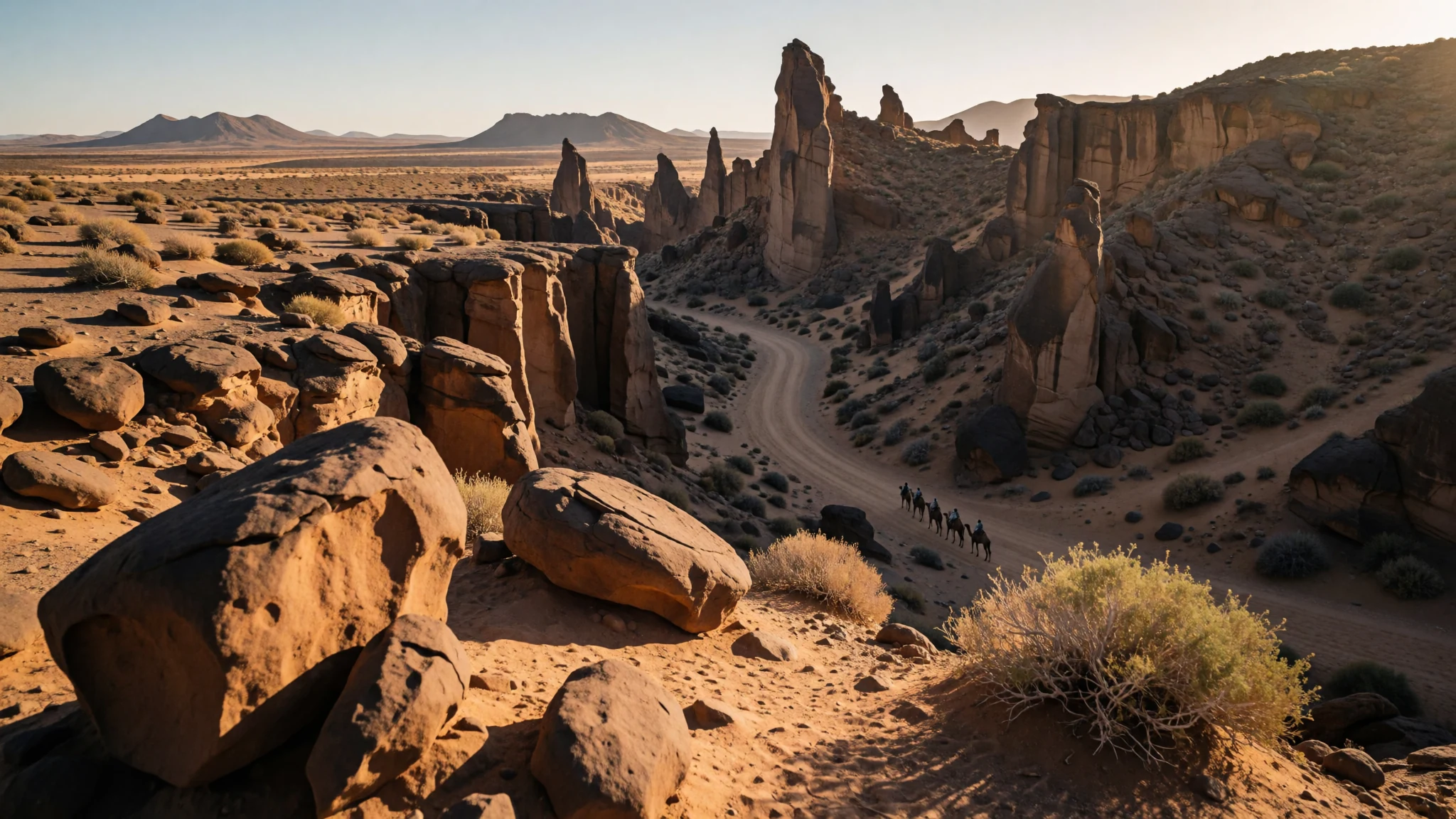
A remote volcanic sanctuary in the heart of the central Sahara, defined by vast dark plateaus, deep canyons and ancient Toubou heritage.
The place
The Tibesti Mountains form an isolated volcanic realm emerging from the sands of the central Sahara. Spanning northern Chad and reaching into southern Libya, this stark landscape features vast sandstone plateaus overlain by massive volcanic crests. At the heart of the range rise five major volcanic structures, topped by immense depressions, hot springs, mud pools, sulfur deposits and steaming vents that betray ongoing geothermal activity beneath the desert floor. Over millions of years, water and wind have etched deep canyons and steep volcanic spires through the rock, creating a complex labyrinth of basalt, sandstone and granite.
Despite the intense heat of the surrounding Saharan plains, the high elevation ensures that mountain ridges remain noticeably cooler. Rainfall is rare and highly unpredictable, but when sporadic storms arrive, water gathers in natural rock basins known as gueltas or sweeps down dry valley channels before vanishing into porous sands. These scattered pockets of moisture nourish date palms, small grain fields and remote green oases sheltered along wadi floors. Home to the resilient Toubou people, the region functions as a natural highland fortress. Its soaring caldera walls, expansive dark plains and hidden palm sanctuaries make the Tibesti Mountains one of the most formidable mountain environments on the African continent.
Its story
Human history in the Tibesti Mountains reaches back to ancient times when a wetter Saharan climate supported grasslands and abundant game. Archaeological remains, including thousands of prehistoric rock engravings and paintings carved into stone cliffs, record early pastoral communities hunting animals and tending cattle. The native Toubou people established themselves across the mountain valleys thousands of years ago, adapting to the harsh highland desert and turning the rugged terrain into a natural citadel that resisted external conquest.
Classical Mediterranean writers recorded early encounters with the inhabitants of these remote highlands. Greek historians noted regional trading networks, while Roman expeditions pressed south into the mountains alongside allied North African kingdoms. In later centuries, Arab geographers and chroniclers written during medieval times described camel-herding societies residing in the range, noting the spread of Islam and the established trade routes carrying salt, livestock and goods across desert corridors.
Over time, migrating clans entered the valleys in successive waves, competing for access to scarce pasture and water holes. Through generations of negotiation and conflict, local clans formed the cultural fabric of modern Toubou society. The capital village of Bardaï emerged as an administrative and trade centre within the deep mountain interior. Isolated by distance and rugged geography, the Tibesti Mountains preserved an enduring tradition of highland autonomy, where survival relied on intimate knowledge of secret water sources, mountain passes and seasonal grazing grounds.
What to see
- Emi Koussi — Southern Tibesti
Rising as the highest summit in the Sahara, Emi Koussi is a massive volcanic shield located in the southern Tibesti range. Its vast caldera contains deep secondary craters, salt flats and dark lava fields. Reaching the rim requires an arduous multi-day trek alongside local guides, offering views across the central Saharan plateau.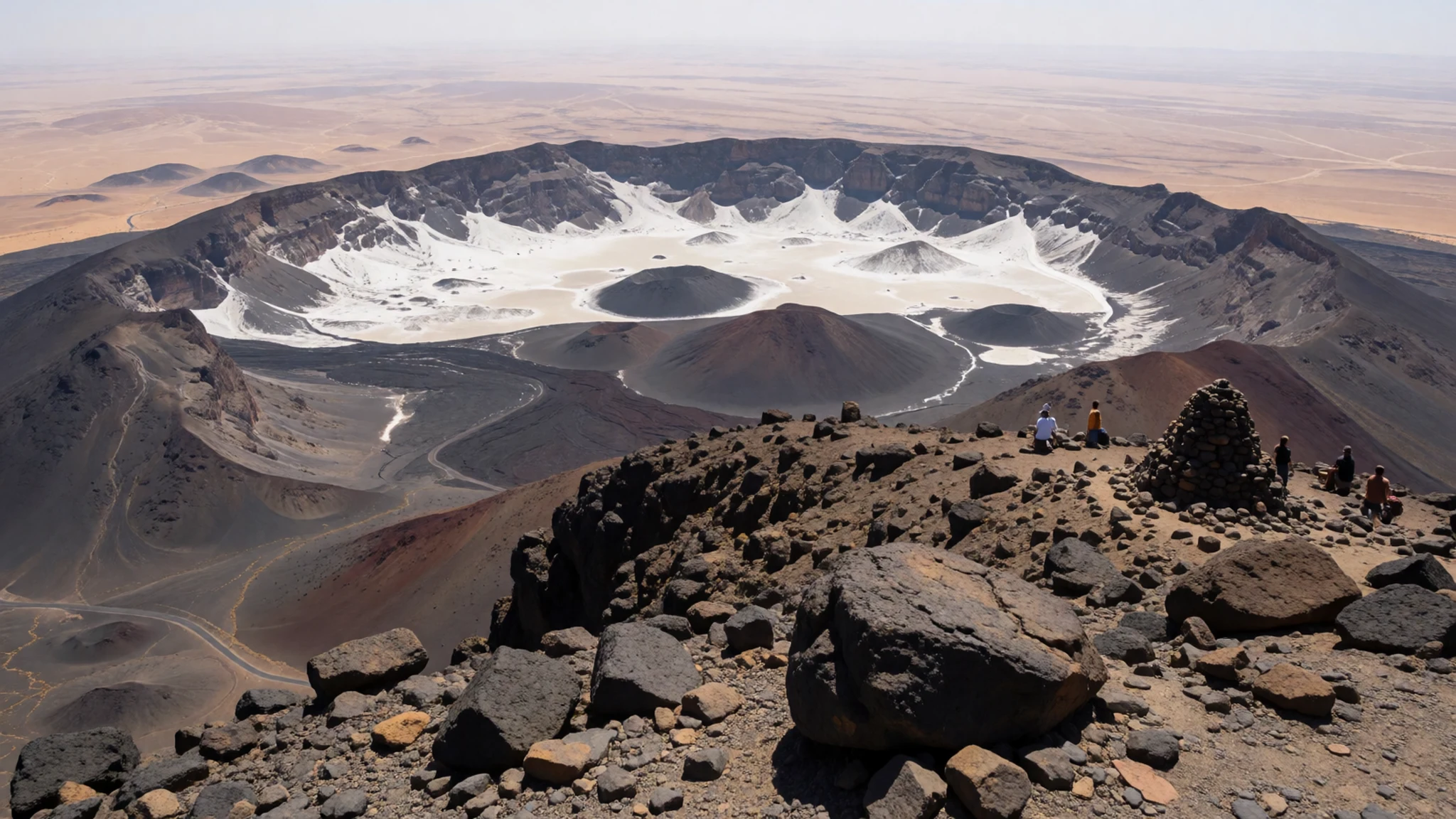
- Bardaï — Northern Tibesti
Nestled along a northern wadi, Bardaï serves as the principal settlement and regional heart of the Tibesti region. Surrounded by sandstone cliffs and date palm groves, the village offers a glimpse into traditional oasis life, mud-brick dwellings and local camel markets that feel largely untouched by modern development.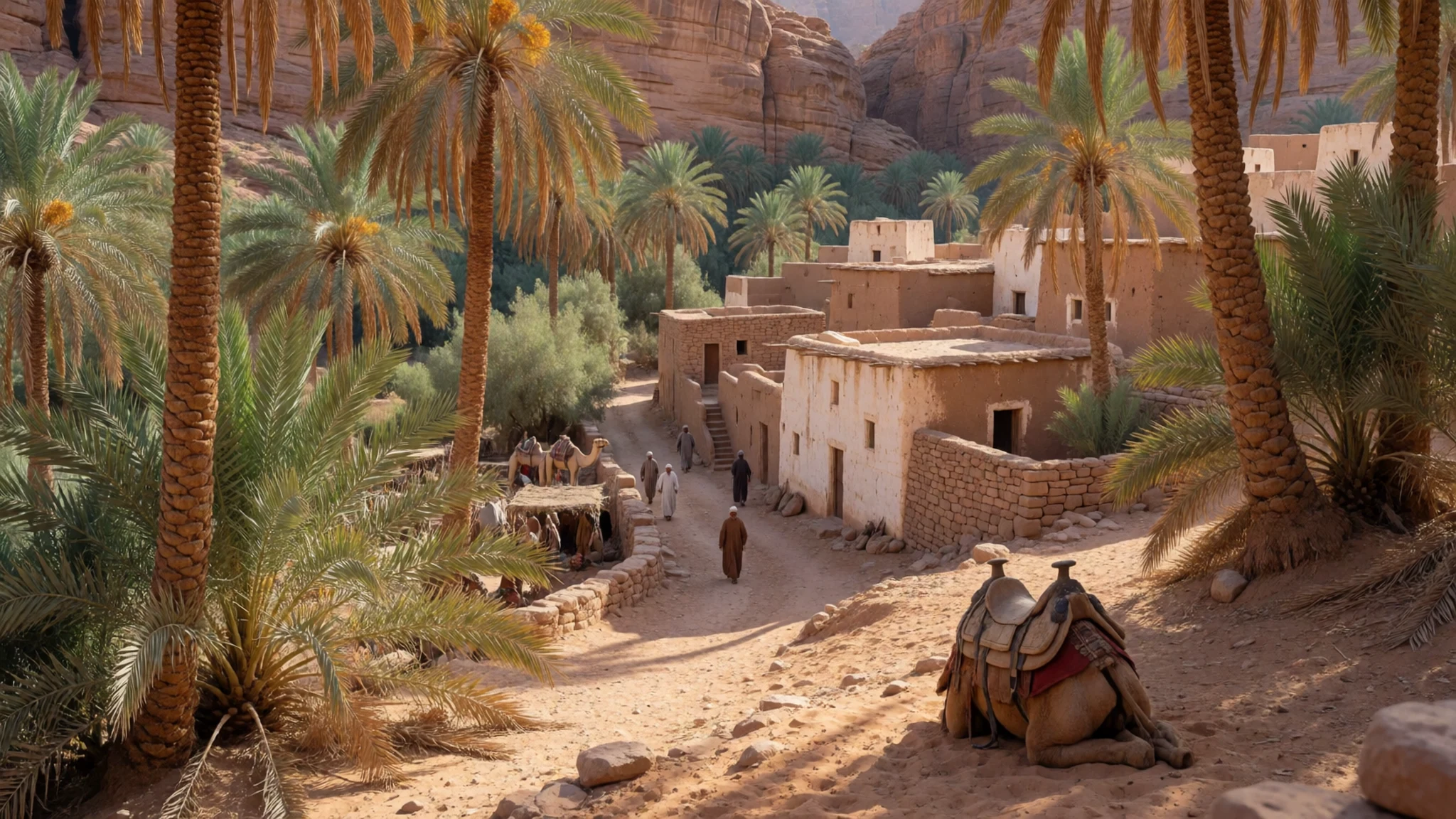
- Toussidé — Western Tibesti
Toussidé is a prominent volcanic peak in the western Tibesti known for its perfectly formed conical shape and dark basalt slopes. Near its base lies the Trou au Natron, a striking white volcanic crater encrusted with sodium carbonate crusts that creates a stark contrast against the black volcanic rock.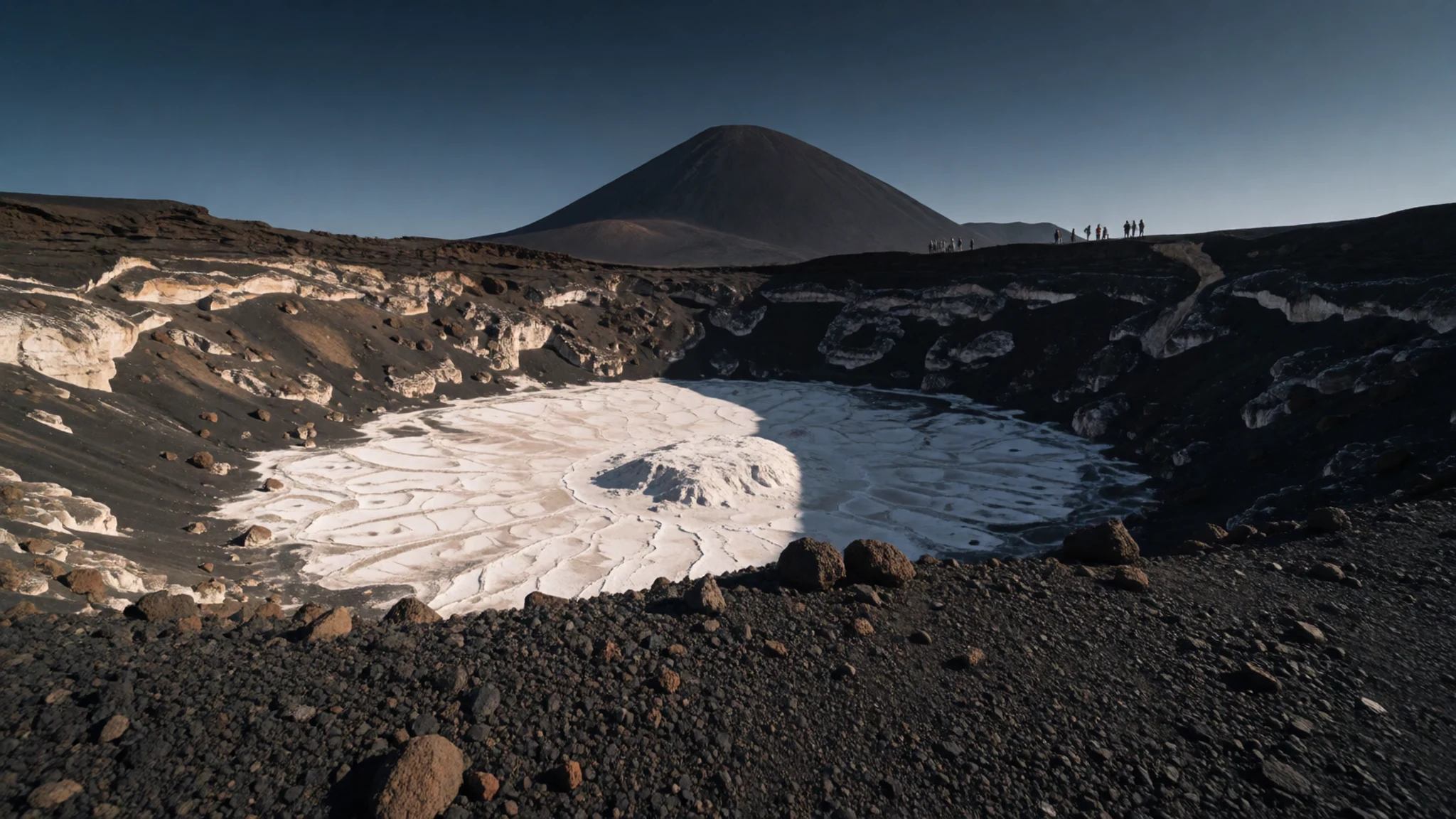
- Soborom Geothermal Field — Central Tibesti
Located in the central highlands, Soborom is an active geothermal area filled with bubbling mud pools, steaming vents and mineral-rich hot springs. Renowned among Toubou locals for their healing properties, these thermal waters have been used for generations to soothe ailments in an extraordinary open-air desert setting.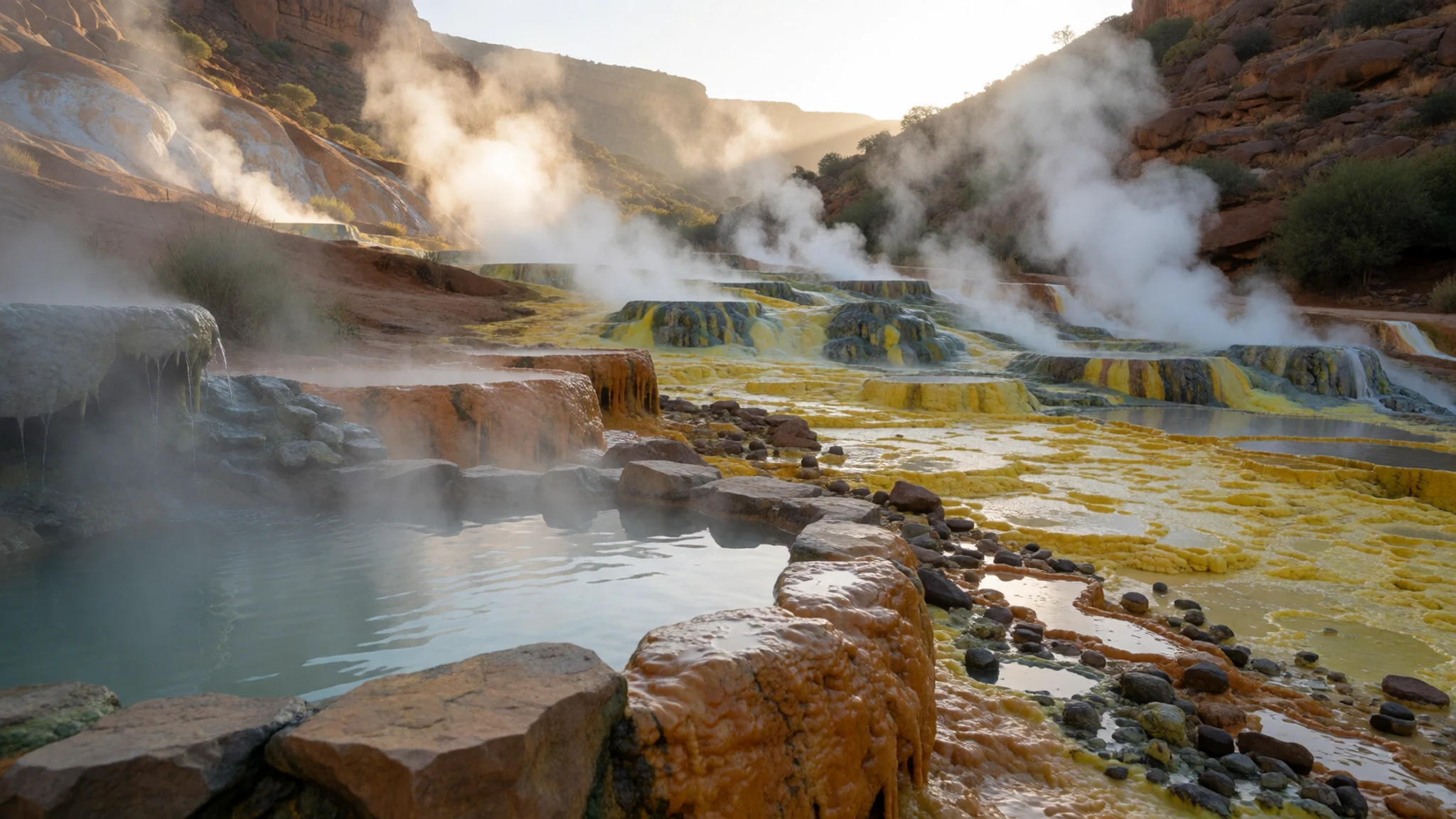
- Sahara Rock Art Sites — Across the mountain wadis
Scattered across sandstone overhangs and cliff faces, the region holds hundreds of ancient petroglyphs and painted rock shelters. These artworks depict elephants, giraffes, cattle and human figures, preserving a visual chronicle of the Saharan landscape from prehistoric eras when green pastures covered the mountain valleys.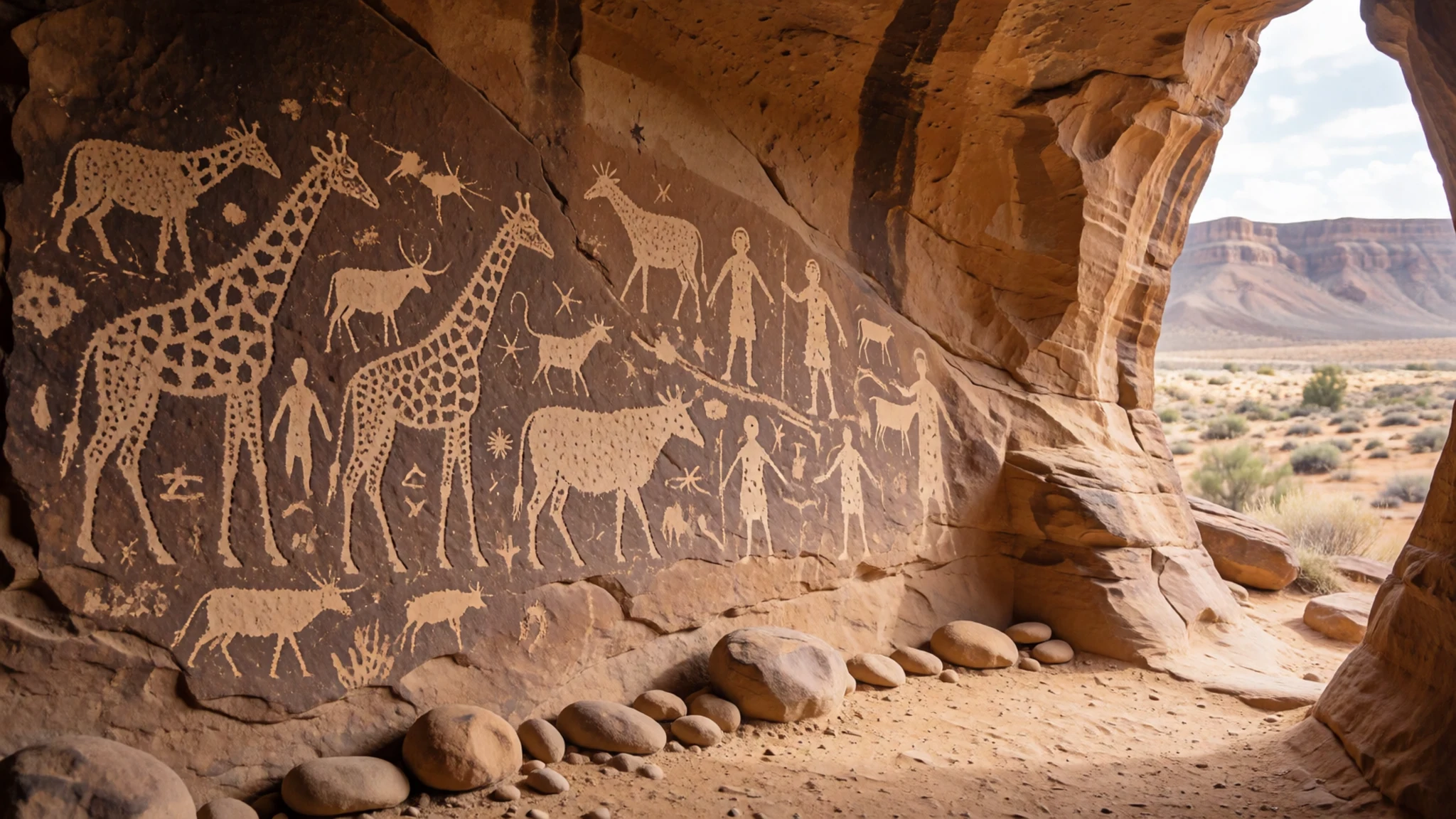
Culture
Life in the Tibesti Mountains is anchored in the resilient culture of the Toubou people, specifically the Teda group who inhabit the northern highlands. Shaped by centuries of survival in one of the world's most severe desert environments, Toubou social structure is organised around clan lineages, mutual obligation and self-reliance. Respect for elders and mastery of desert navigation are paramount. Livestock, particularly camels and goats, represent both economic security and social prestige, while salt gathering and palm cultivation in wadi oases provide essential subsistence.
Gueltas and natural springs hold sacred value, governed by strict traditional rules regarding water sharing and conservation. Music and oral poetry play a major role in preserving history, recounting ancestral genealogies, tribal heroic deeds and land boundaries across generations. Guests are received with formal desert hospitality, centred around the sharing of tea, goat milk and dates. When visiting remote encampments or oases in the range, always seek explicit permission from local clan elders before taking photographs of people or private dwellings.
What to wear
Traditional attire in the Tibesti Mountains is designed for extreme temperature swings and high desert winds. Toubou men traditionally wear the boubou, a flowing cotton robe, paired with light trousers and a tagelmust, a long cotton turban wrapped securely around the head and face to protect against blowing sand and desert sun. Toubou women wear dark, lightweight cotton gowns or wraps that cover the body, often accompanied by headscarves or shawls crafted from soft woven fabrics. Leather sandals and hand-carved leather amulets are traditionally worn during travel across stone plateaus.
Today, local residents combine traditional robes with practical modern garments. Men frequently wear durable cotton tunics or shirts over trousers, retaining the cotton headscarf for wind protection, while sturdy rubber or leather sandals remain universal footwear for daily work around oases and livestock.
Visitors entering the Tibesti range must dress for conservative modesty and severe weather conditions. Loose-fitting, full-length cotton or linen clothing that covers arms and legs is essential for both sun protection and cultural respect. High-top trekking boots with thick soles are mandatory to navigate sharp basalt rocks and unpaved terrain. Pack warm insulating layers and a windproof jacket, as nighttime temperatures in the high desert can plunge near freezing.
What to eat
- Millet Porridge — Oasis settlements and desert encampments
Staple grain porridge served across desert encampments and oasis settlements, often paired with clarified butter, wild herbs or milk sauce. It provides essential nutrition for high-altitude trekking and long livestock journeys through the mountains.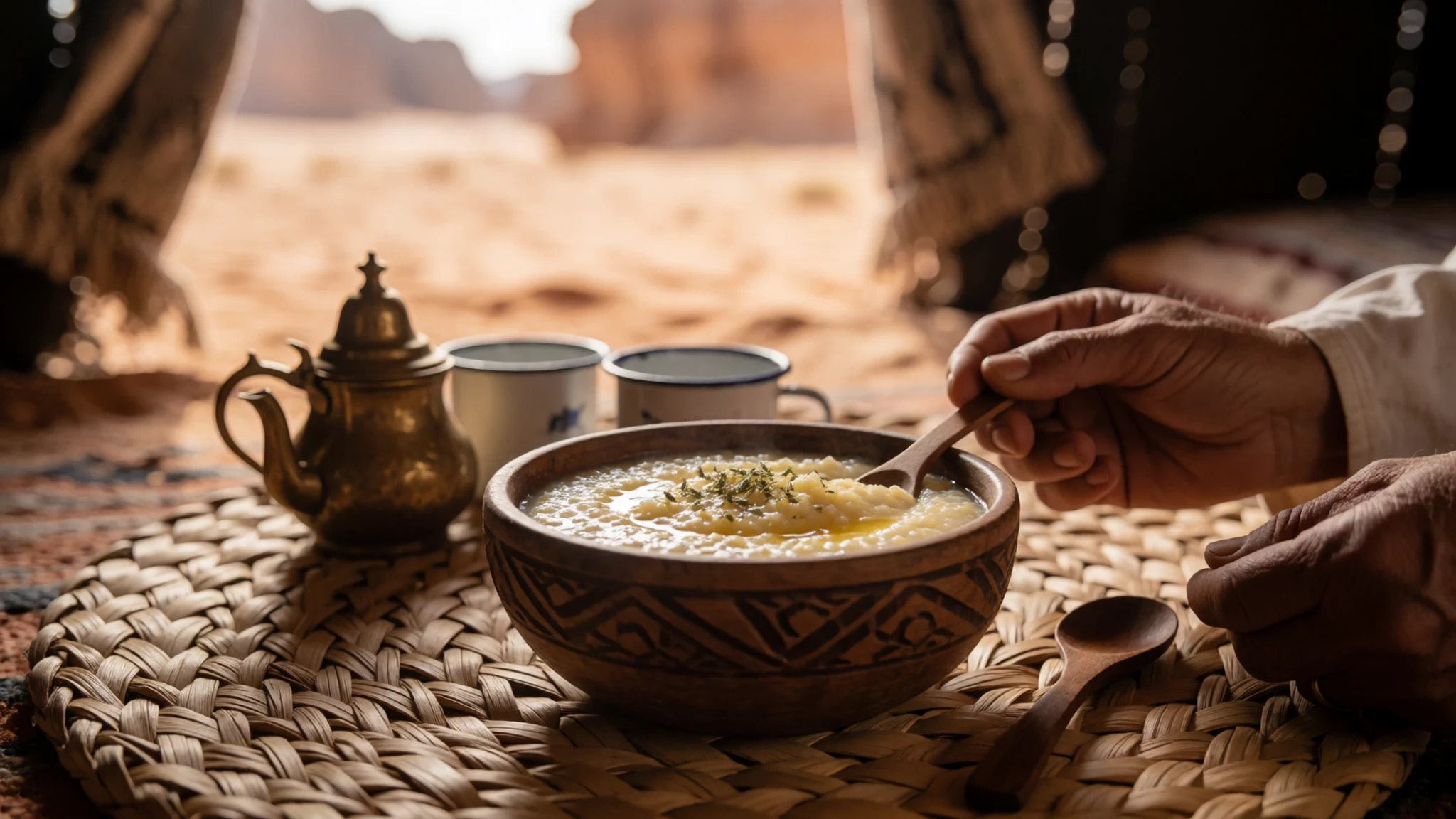
- Dried Dates and Goat Milk — Wadi oases and village homes
Harvested from date palm groves in wadi oases like Bardaï, dried dates paired with fresh or fermented goat milk form the core daytime sustenance offered to travellers and guests in traditional village homes and desert camps.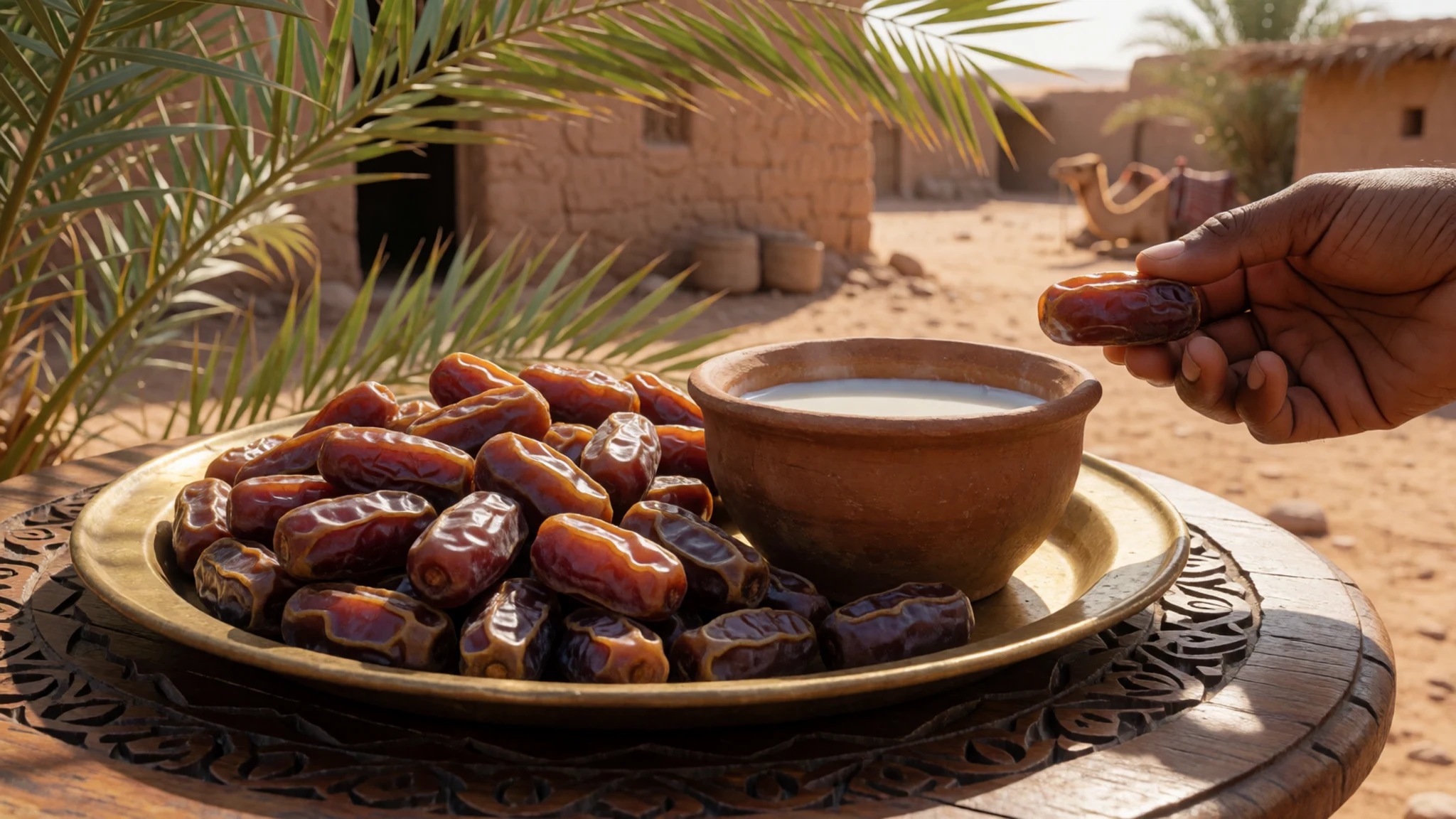
- Taguella Flatbread — Campfires during overland mountain treks
A traditional desert bread baked beneath ash and hot sand, taguella is prepared at campfire stops during long mountain expeditions. Broken into pieces, it is served mixed with vegetable stews, goat meat or broth. - Slow-Cooked Goat Stew — Village gatherings in Bardaï
Prepared during special occasions or family gatherings in oasis villages, goat meat is simmered slowly over wood fires with dried peppers, onions and local spices, served alongside flatbread or grain. - Mint Tea — Desert camps and local homes
Strong green tea boiled with sugar and fresh mint leaves, served in small glass cups after meals and during desert greetings. Shared in three distinct brew rounds, it is an essential ritual of Saharan hospitality.
Plan it
Best time. November to February offers cool daytime temperatures suitable for desert trekking; summer months bring extreme Saharan heat.
How long. 7–10
Getting there. Fly to N'Djamena International Airport, then arrange a guided four-wheel-drive expedition across northern Chad with specialised desert tour operators.
Budget. high
Tips
- Travel only with an experienced local guide and official permits due to extreme isolation and security risks
- Carry all necessary water, fuel, medical supplies and satellite communication equipment
- Stay strictly on known trails and guided routes to avoid unexploded ordnance in former conflict zones
- Carry cash in Central African CFA francs as credit cards and digital payments are not accepted
Etiquette
- Always ask permission from clan elders before photographing individuals or settlement areas
- Accept offered tea with your right hand as a sign of respect for local hospitality traditions
Nearby
Sources
- Wikidata Q309104 (CC0)
- Wikipedia (rev 1373877780) (CC BY-SA 4.0)
- Wikivoyage (rev 5311173) (CC BY-SA 4.0)