Thimphu
Thimphu, Bhutan
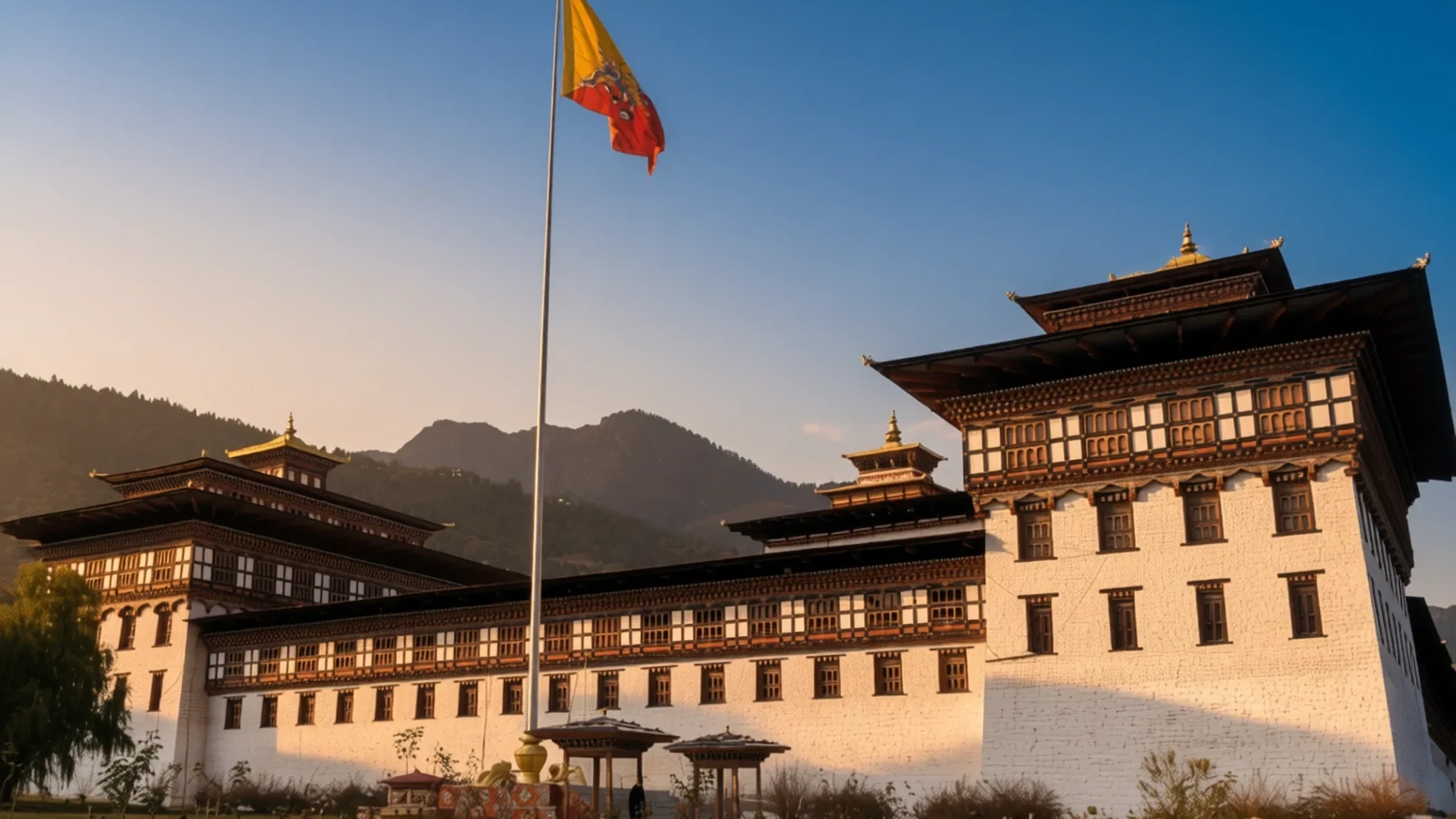
Bhutan's capital is a small, unhurried city where Buddhist temples, a fortress-monastery and a hillside bronze Buddha sit among ordinary streets.
The place
Thimphu is the capital of Bhutan and its largest city, set in the western central part of the country. It sits on the west bank of a broad valley shaped by the Wang Chhu, the river that flows south and eventually becomes the Raidāk on its way into India. The city stretches north to south along the valley floor, with forested ridges rising on either side and newer districts climbing the slopes.
At roughly 2,300 metres above sea level, Thimphu is high enough that the air feels thin on the first morning, and evenings turn cool even when days are mild. The population is 114,551, a modest size for a national capital. The centre is walkable, but taxis are the practical choice for the outlying districts.
Thimphu replaced Punakha as the seat of government in the 1950s, and it still holds most of the country's important political buildings. The National Assembly meets here, and the royal residence lies to the north of the city. Agriculture and livestock remain central to the local economy, and the farming base shows in the markets. Tourism is deliberately limited and managed, so the city feels more like a working administrative centre than a resort. Its character comes from the blend of old and new: dzongs and chortens stand beside shops, cafés and government offices, and prayer wheels turn beside the traffic on Norzin Lam.
Its story
Before Thimphu became the capital, the valley held a scattering of hamlets. Motithang, Changangkha, Changlimithang, Langchupakha and Taba were separate settlements with their own fields and households, and several now form districts of the city. Thimphu grew by drawing these places into one administrative centre.
A turning point came in 1885, when a battle at what is now the Changlimithang sports ground decided the contest for the valley. The result gave Ugyen Wangchuck, the country's first king, the chance to bring most of Bhutan under his control. The field kept its importance afterwards. Footballers and cricketers play there, archery contests are held there, and the modern stadium on the site dates from 1974.
The Wangchuck monarchs who followed were reformers. The third king, Jigme Dorji Wangchuck, reached into bonded labour, landholding and the tax system, and he created new executive, legislative and judicial bodies. The decision to move the seat of power from Punakha to Thimphu was made in 1952. It took formal shape in 1961, when the third king declared Thimphu the capital of the kingdom.
His successor, Jigme Singye Wangchuck, opened the country to modern development, and assistance from India provided much of the early momentum. The memorial chorten raised in 1974 honours the third king, and it remains one of the places where the city's older and newer histories meet.
What to see
- Changangkha Lhakhang — Changangkha, north of the centre
Changangkha Lhakhang is one of the oldest temples in the Thimphu valley, built in the 13th century and dedicated to Avalokiteshvara, the bodhisattva of compassion. It stands on a ridge above the town in the Changangkha district, reached by a walk past houses and prayer flags. Mornings are the best time, when locals circle the shrine and light butter lamps. Shoes come off at the threshold, and visitors walk clockwise.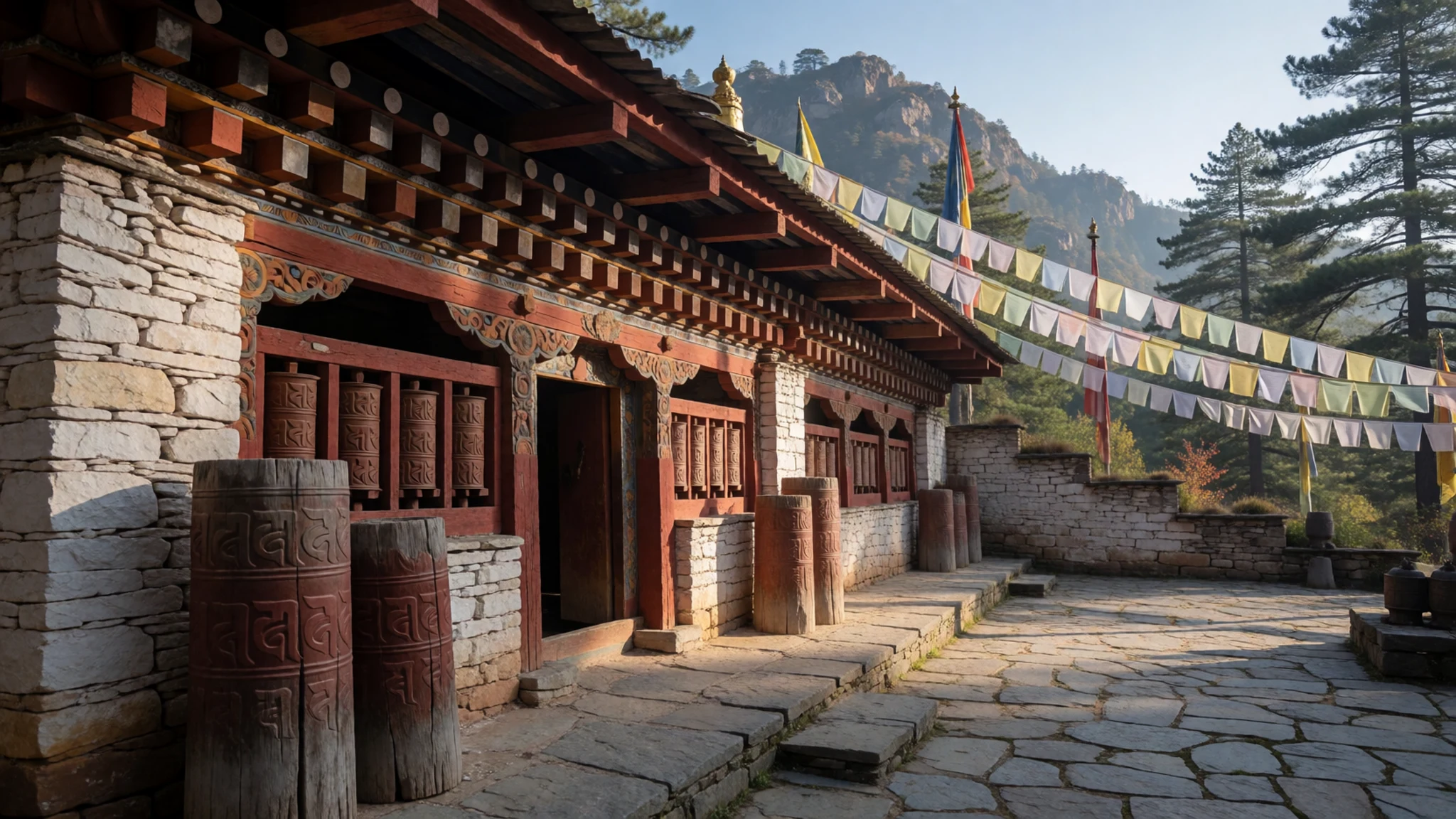
- Buddha Dordenma — Kuensel Phodrang hill, above the city
Perched on Kuensel Phodrang hill, the bronze Shakyamuni Buddha is 51.5 metres tall. The statue sits above the valley, so the drive up is part of the visit. The viewpoint takes in the whole city, and sunset is especially fine. Go before dusk to watch the town lights come on below.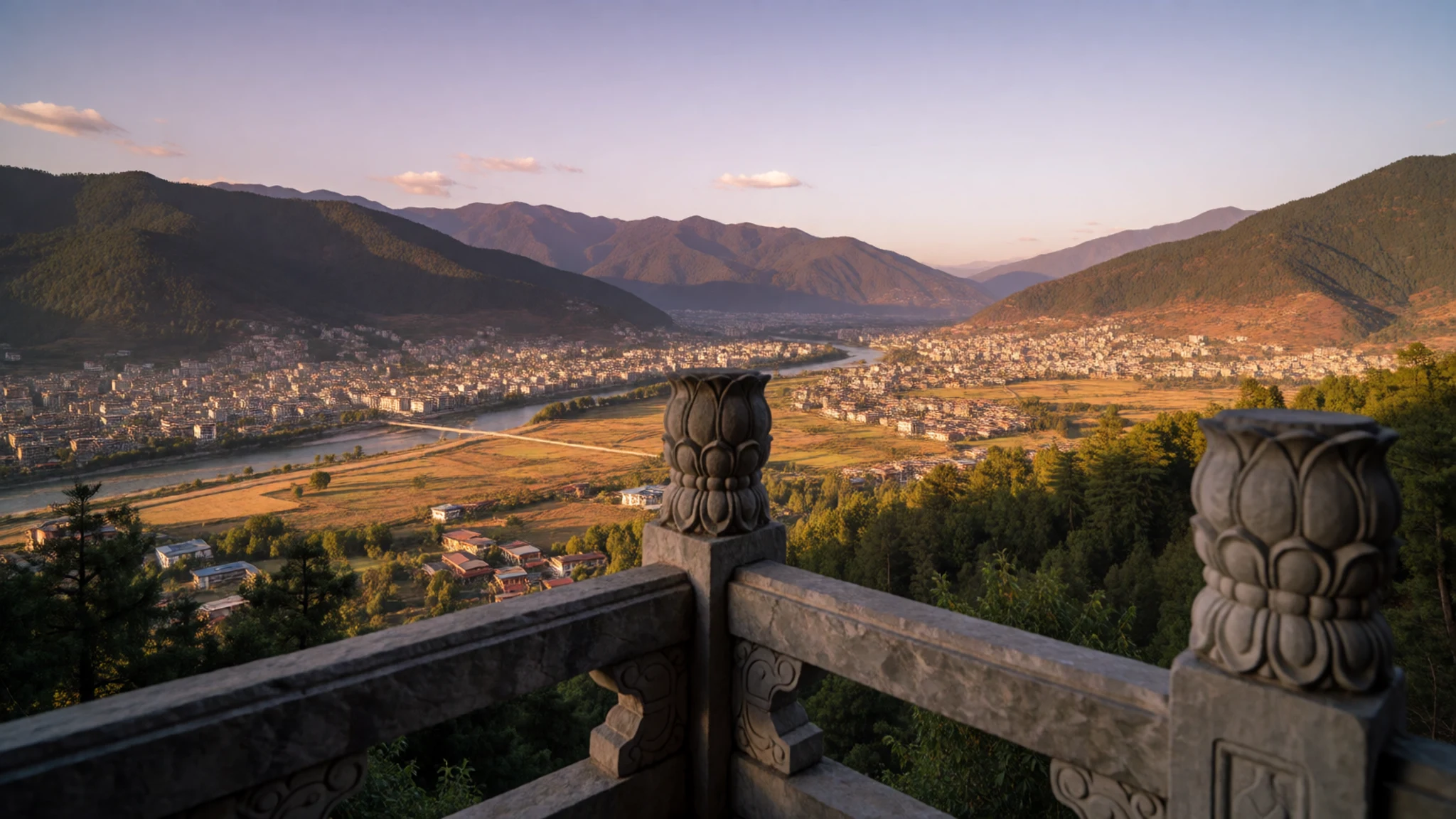
- Thangtong Dewachen Nunnery — Thangtong hill, north-west of the centre
Thangtong Dewachen Nunnery was built in 1976 and is home to more than 60 nuns. It is the seat of the 17th emanation of Thangtong Gyalpo, and a large statue of him stands inside. From the grounds there are views over Thimphu Dzong. Visitors are often made warmly welcome, so a friendly chat is common, but keep questions polite and photographs discreet.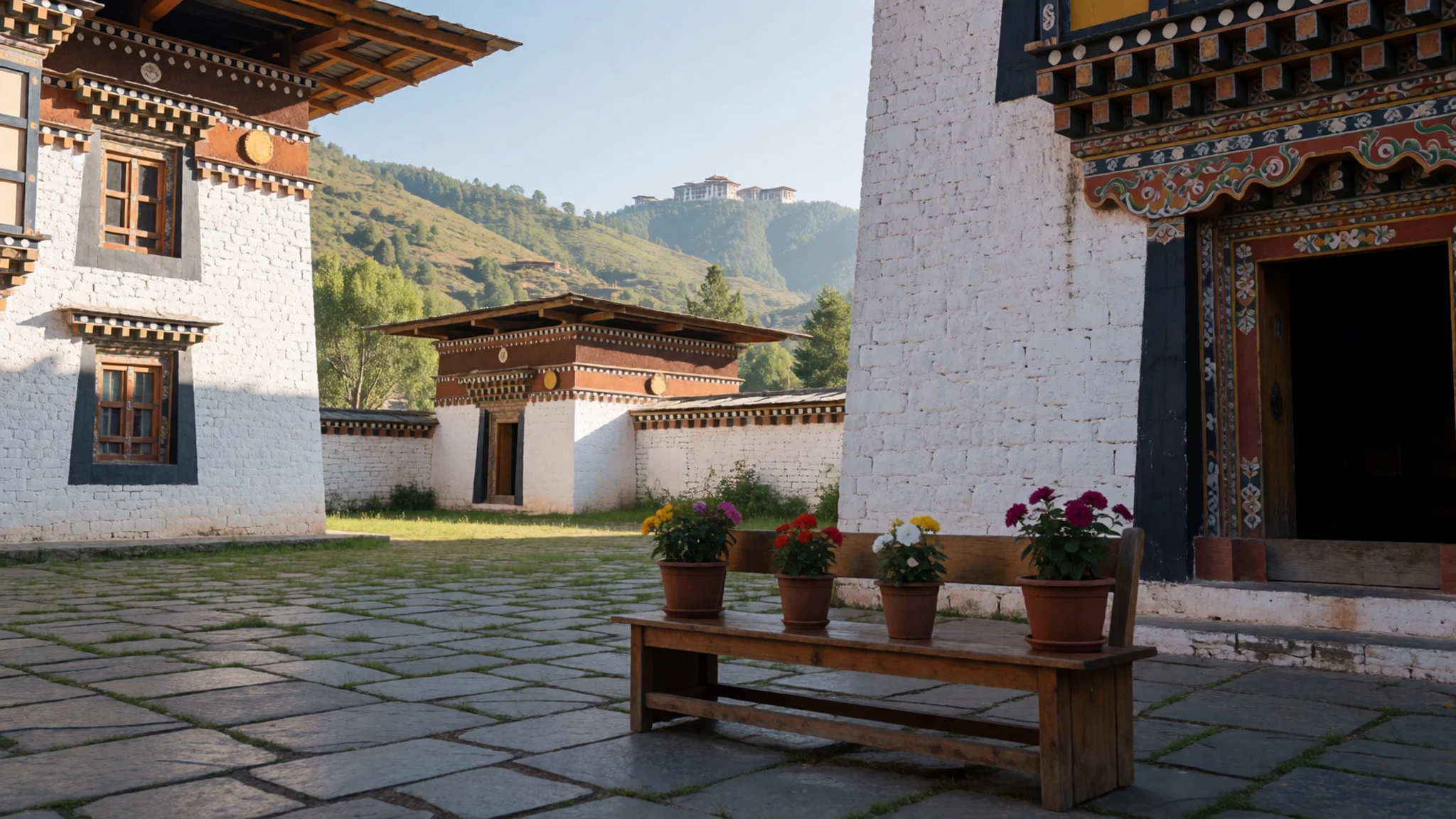
- National Memorial Chorten — Central Thimphu, near the old town
The National Memorial Chorten was built in 1974 in memory of the third king. It is best visited in the evening, when local people come to make their prayers, walking the circuit around the white stupa and turning prayer wheels. The atmosphere is quiet and devotional rather than touristy. Keep voices low and stay on the outer path, away from the platform where worshippers gather.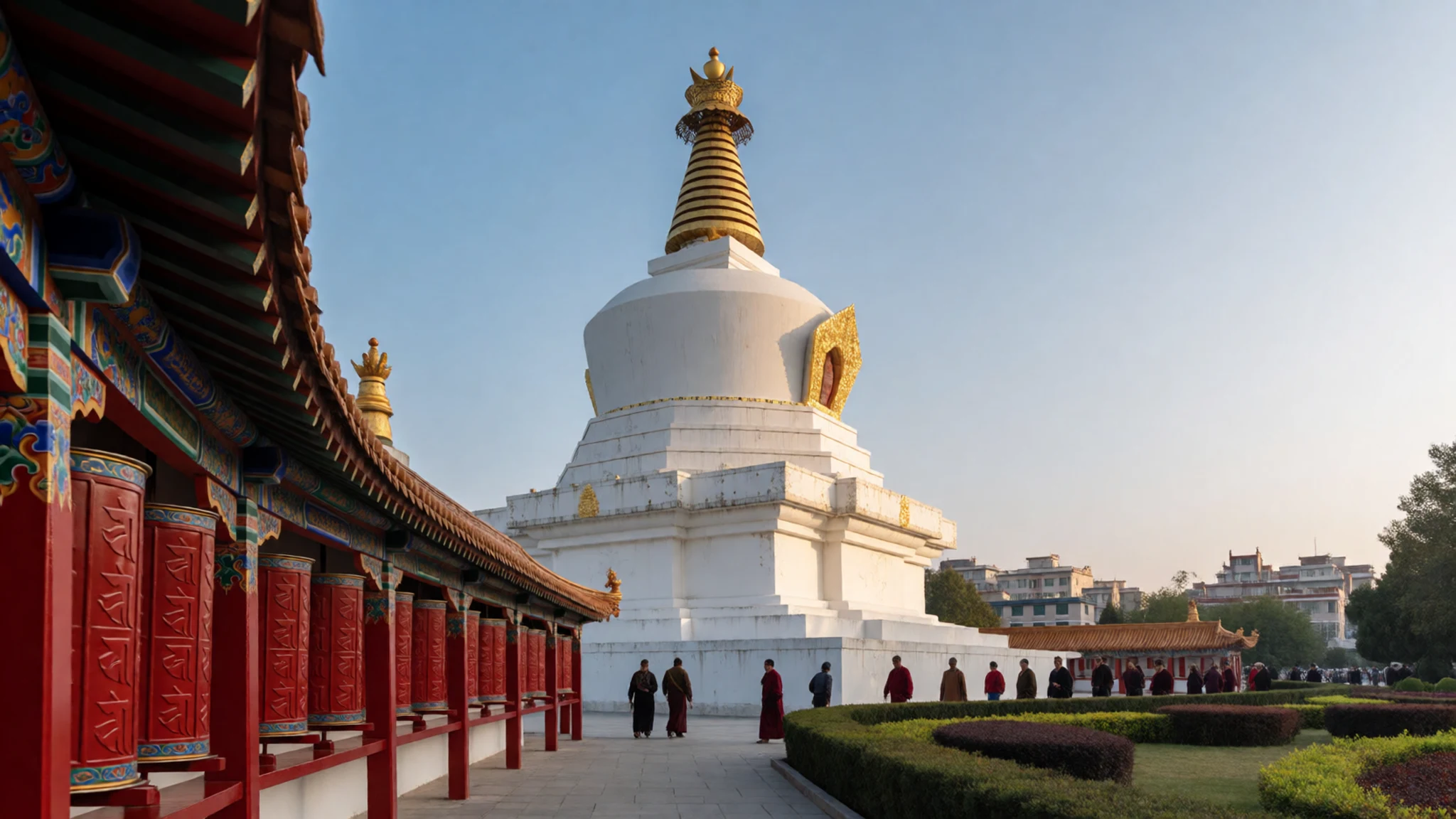
- National Folk Heritage Museum — Central Thimphu
The National Folk Heritage Museum occupies a traditional rural house and shows how farming families lived before the capital grew. The building itself is the main exhibit, with its interior arranged to show everyday rural life. It is a useful counterpoint to the grand dzongs elsewhere in the city. Check the official site for current opening times.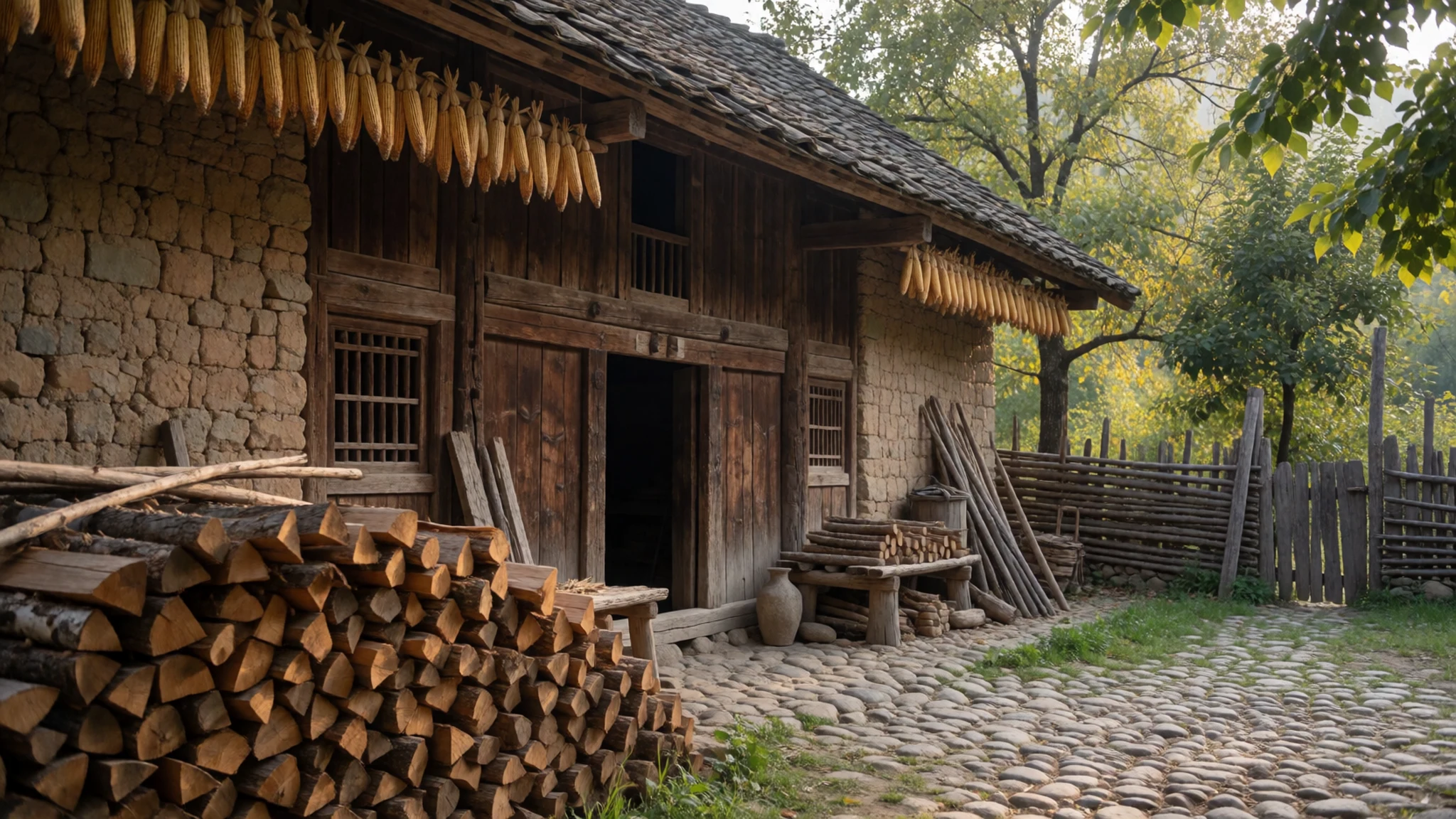
Culture
Thimphu is where Bhutan's culture is most visible in everyday life. The Buddhist ethos runs through the city alongside modern offices, cafés and traffic, and national dress is common in government buildings and on formal occasions. Literature has deep roots here. Ancient texts are kept at the National Library, where handmade paper books and their bindings are displayed. Bhutanese writing uses jo yig, a local script that grew out of Tibetan letters and was established by the 16th century. Religion is practised openly, with monasteries, shrines and prayer wheels part of the streetscape, and many people walk the chortens in the evening. Modern writing is still developing, though religious biographies of women, called delog, remain popular. Music and dance are tied to religious festivals and the dzong calendar, so performances tend to come at particular times of year. Remove your shoes at the threshold of any dzong or temple, and ask before photographing monks or people at prayer.
What to wear
In Thimphu, traditional dress is still widely worn. Men wear the gho, a knee-length robe gathered at the waist with a belt, while women wear the kira, a long wrap-around dress worn over a woven blouse and topped with a short jacket. Both are usually made from handwoven cotton or silk, often in checked or patterned designs. Who wears what varies. Government staff, schoolchildren and people visiting dzongs often wear national dress, while many younger people pair it with jeans, trainers and modern jackets. For a visitor, the sensible choice is a layered outfit. Days can be mild and evenings cold at altitude, so pack a warm jacket and a light waterproof. Cover shoulders and knees at dzongs, temples and chortens, and bring slip-on shoes, since shoes come off at many shrines and some museums.
What to eat
- Momos — Any momo stall or small eatery along Norzin Lam
Dumplings filled with minced meat, vegetables or cheese, served with a fiery chilli dipping sauce. Momo shops are plentiful in Thimphu, and some are very good. Kuka and pakoras are reliable companions, while thukpa, a noodle soup, makes a warming follow-up on a cold day.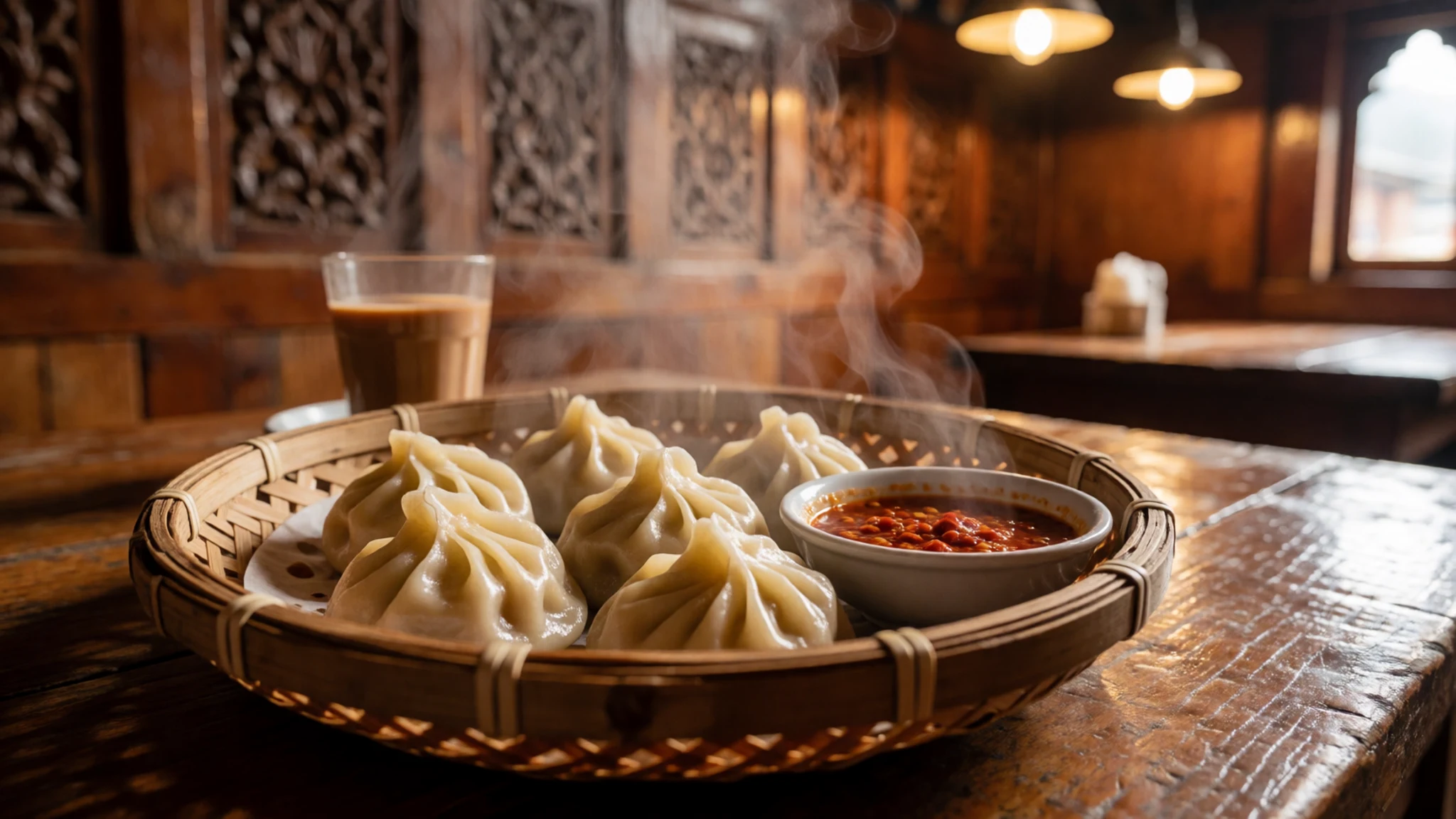
- Ema datshi — Traditional Bhutanese eateries, especially those with floor seating
Green chillies and local cheese stewed together into a thick, spicy sauce and eaten with red rice. Most traditional Bhutanese eateries serve it, and it shows how much heat the cuisine tolerates. Floor seating in older restaurants adds to the experience.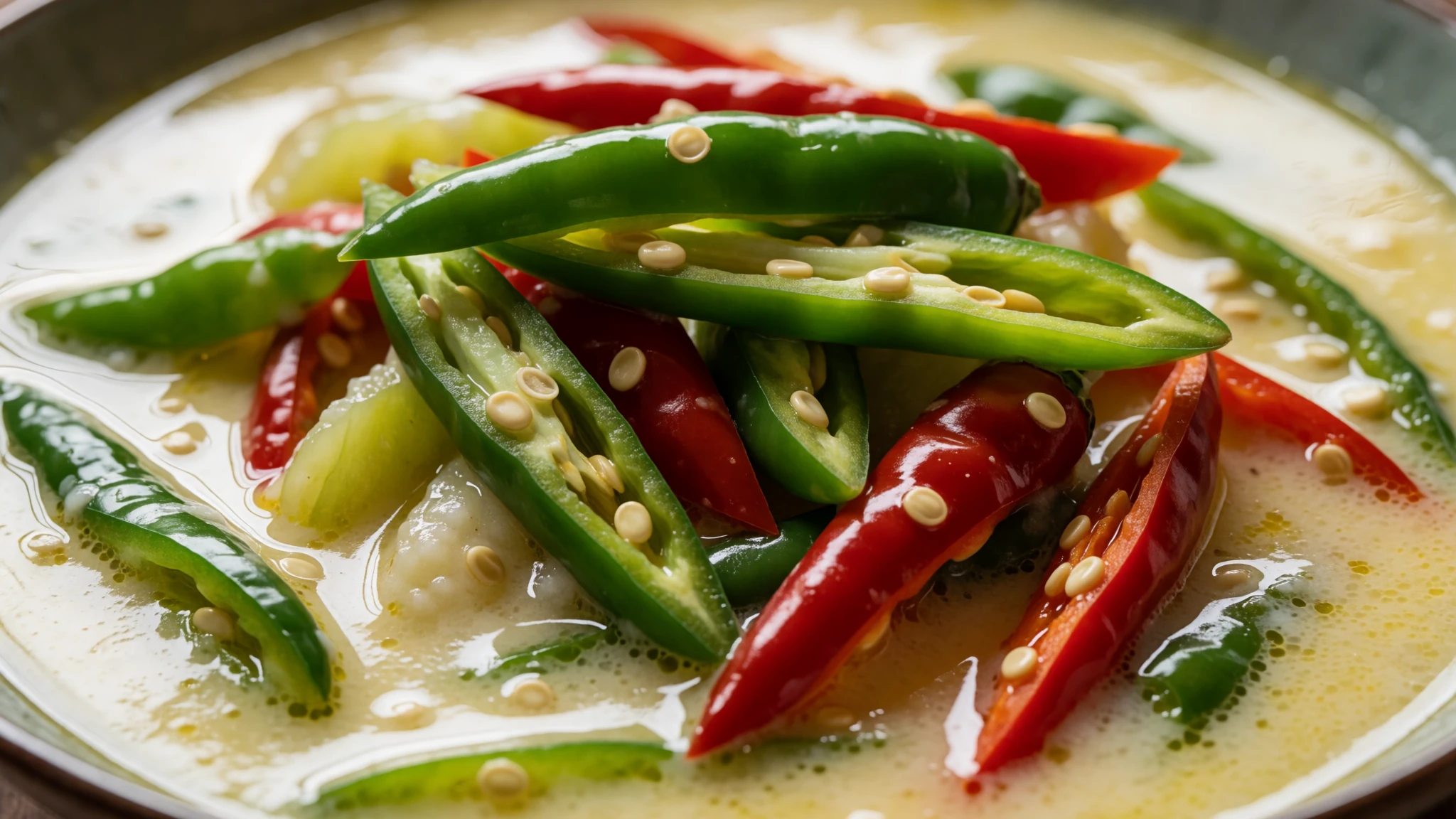
- Kewa datshi — Home-style kitchens and lunchtime eateries near the town's markets
Potatoes cooked in the same cheese sauce, a milder and more filling partner to ema datshi. It suits colder days at altitude and is often ordered alongside rice and a vegetable side. - Jasha maru — Casual eateries near the weekend market
Chicken fried with onion, garlic, tomato and plenty of chilli, usually served with rice. It is quick to cook and widely available, a good marker of everyday Bhutanese food. - Suja — Traditional restaurants, teahouses and homestays
Butter tea made from tea leaves, salt and yak butter, churned until creamy. It tastes unfamiliar to many visitors, but it is often offered in homes and teahouses as a warming drink in the cold months.
Plan it
Best time. March–April and October–November give clear skies and mild days, which suit walking between sights at this altitude. Winter is cold, with snow possible on higher ground. Summer is the wet season.
How long. 2–3
Getting there. Thimphu has no airport of its own. Paro International Airport is about 52 km away, a 45-minute to 1-hour drive along the road into the city. Overland, buses run from Phuentsholing to Thimphu in about 5 hours, and the journey from Siliguri takes 9–10 hours with a change at Phuentsholing.
Budget. mid
Tips
- Book flights and tour arrangements well ahead, since demand peaks in the best months.
- Start the hilltop sights early, when the light is clearest and crowds are smaller.
- Carry cash for small eateries and shops, and check the official site on card acceptance.
- Drink bottled or filtered water and carry layers, since evenings are cold.
- Take a slow first day to adjust to the altitude before climbing to viewpoints.
Etiquette
- Walk clockwise around chortens and temples.
- Dress modestly at dzongs and temples.
- Ask before photographing people, especially monks and those at prayer.
Nearby
Sources
- Wikidata Q9270 (CC0)
- Wikipedia: Thimphu (rev 1382548423) (CC BY-SA 4.0)
- Wikivoyage: Thimphu (rev 5393568) (CC BY-SA 4.0)
- Photo: View of Thimphu city (CC BY-SA 4.0)
- Photo: Tashichödzong in winter (CC BY 3.0)
- Photo: National Library of Bhutan in snowfall (CC BY 3.0)
- Photo: View of the centre of Thimphu (CC BY 3.0)
- Photo: Thimpu Bazar (CC BY-SA 4.0)
- Photo: Tashichho Dzong (CC BY 3.0)
- Photo: Astronaut photo of Thimphu (Public domain)
- Photo: View of Thimphu from the south (CC BY 3.0)


